Reviewed · WALKING TOURS
Berlin: Walking Tour of the Top 10 Sightseeing Attractions
Berlin reveals itself quickly on this two-hour walking tour, which links the government quarter, Brandenburg Gate, Unter den Linden, Gendarmenmarkt, and Museum Island in one brisk route. It is a useful first look at a city where Prussian kings, Nazi rule, Cold War division, and reunification all occupy the same few streets.
I like the clear route and the human touch. You get a strong city overview without spending half a day, and the guides add Berlin humor instead of delivering a dry list of dates. I also like that the tour pauses at major landmarks for photos and questions. The tradeoff is pace: about 4 kilometers in 120 minutes leaves little time for long visits or museum interiors.
Key points to know before booking
- Start beside the Federal Chancellery: Meet at Paul-Löbe-Haus, opposite the Chancellery, at 10:00 AM or 2:00 PM.
- Cover the historic center quickly: The route includes the Reichstag, Brandenburg Gate, Holocaust Memorial, Potsdamer Platz, Gendarmenmarkt, Bebelplatz, Lustgarten, Berlin Cathedral, and Museum Island.
- Expect a brisk outdoor tour: Most of the experience is walking, storytelling, and viewing buildings from outside rather than entering attractions.
- Hear Berlin’s major turning points: Guides discuss the Nazi era, the Cold War, the fall of the Wall, Prussian history, and reunification.
- Choose your language and group style: Tours run in English, Spanish, or German, with private and small-group options.
- Bring good shoes: The route covers roughly 4 kilometers and operates in all weather.
A fast route through Berlin’s big story
This tour works best as a get your bearings fast experience. In two hours, you move from the modern government district to the old royal boulevard and then across the historic center toward Museum Island. The route is packed, but it follows a sensible line through Berlin’s main sights.
You are not simply checking off buildings. The guide connects them to the city’s changing identity. The Reichstag points to modern German democracy. The Brandenburg Gate recalls monarchy, division, and reunification. Bebelplatz confronts Nazi book burnings, while Museum Island and the City Palace point back to Prussian power and Berlin’s older roots.
That range is the tour’s main strength. Berlin can feel scattered, especially on a first visit. This walk gives you a usable mental map and helps you decide which places deserve a longer return visit.
The advertised price is $82 per person. That is not a low-cost stroll, so the value depends on what you want. For a private tour or a very small group, the fee buys focused attention, questions answered on the spot, and a local guide’s running explanation of the city. For a larger group, the price feels harder to justify unless you value the tight schedule and the convenience of seeing so many central sights in one outing.
Other walks around Berlin:
- Discover Berlin Half-Day Walking Tour
★ 5.0 · 9,624 reviews - Berlin: Third Reich and Cold War 2 Hour Walking Tour
★ 4.9 · 6,830 reviews - Berlin: Discover Berlin Walking Tour
★ 4.9 · 5,998 reviews
Meeting Paul-Löbe-Haus in the government district

The walk begins in front of the main entrance to Paul-Löbe-Haus at Konrad-Adenauer-Straße 1, opposite the Federal Chancellery. This is a modern start, far removed from the old stone facades most people picture when they think of Berlin.
Take a moment here before setting off. You can see the Federal Chancellery, Berlin Central Station, and the Bell Tower in Tiergarten. The opening view places present-day Germany at the center of the story. This is the seat of a modern parliamentary government, not merely a monument to the past.
The meeting point is specific, but government buildings can look similar when you are in a hurry. Arrive early and look for a Tourguideme guide. The tour begins daily at 10:00 AM and 2:00 PM, so you have two useful time choices for fitting the walk around meals, trains, or another visit.
Reichstag and the modern German state
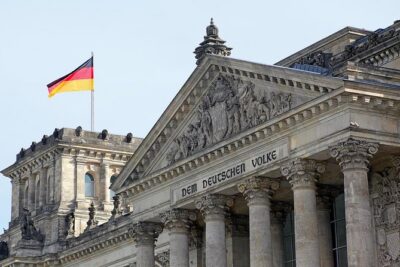
From Paul-Löbe-Haus, the route heads toward the Reichstag, home of the German Parliament. The building is one of Berlin’s clearest examples of old and new sharing the same address. Its history reaches back to imperial Germany, while its current role belongs to the Federal Republic.
Your guide provides the historical frame as you walk. This matters because the Reichstag can otherwise seem like another grand government building. Here, it becomes a starting point for understanding how Germany moved through empire, dictatorship, war, division, and democratic renewal.
The stop is mainly guided sightseeing. Do not assume that this walking tour includes a visit inside the Reichstag. The information describes an outdoor route, and the listed sights are treated as stops along the walk. If the dome or parliamentary interior is high on your list, plan that as a separate activity.
Brandenburg Gate, Berlin’s most useful history lesson
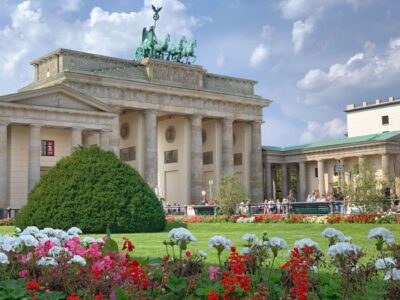
The Brandenburg Gate is the tour’s major visual moment. It is also the place where Berlin’s political story becomes easiest to grasp. Once a royal entrance to the city, it later became a symbol of division near the Berlin Wall and then a powerful image of reunification.
Your guide can point out the American and French embassies, Hotel Adlon, the Victory Column in the distance, and the Soviet War Memorial. These nearby sights add context to the gate. You are not looking at an isolated monument. You are standing in a district shaped by diplomacy, war, occupation, and twentieth-century power.
This is the scheduled photo stop, and the guide allows time for pictures. That small detail matters. A rushed group can turn Brandenburg Gate into a quick glance and a crowded photograph. Here, you should have enough breathing room to take in the scale of the square and ask questions.
Same base, a different kind of day out:
- Berlin: Reichstag, Dome and Government District Guided Tour
★ 4.7 · 18,288 reviews - Berlin: 1-Hour City Tour by Boat with Guaranteed Seating
★ 4.3 · 16,993 reviews - Berlin: Boat Tour Along the River Spree
★ 4.4 · 11,252 reviews - Berlin: Hop-on Hop-off Bus Tour with Live Commentary
★ 4.3 · 8,579 reviews
The Holocaust Memorial and Potsdamer Platz
The route continues to the Holocaust Memorial, a place that demands a change in tone. The memorial’s concrete blocks create a powerful setting for discussing the murder of Europe’s Jews under the Nazi regime. The tour presents this as part of Berlin’s larger story, not as a disconnected stop.
Because this is a guided walk, you can hear the historical context while standing in the city center where ordinary streets now surround the memorial. The location makes the past difficult to keep at a safe distance. You should expect a serious explanation here, even though the tour as a whole uses humor and an energetic style.
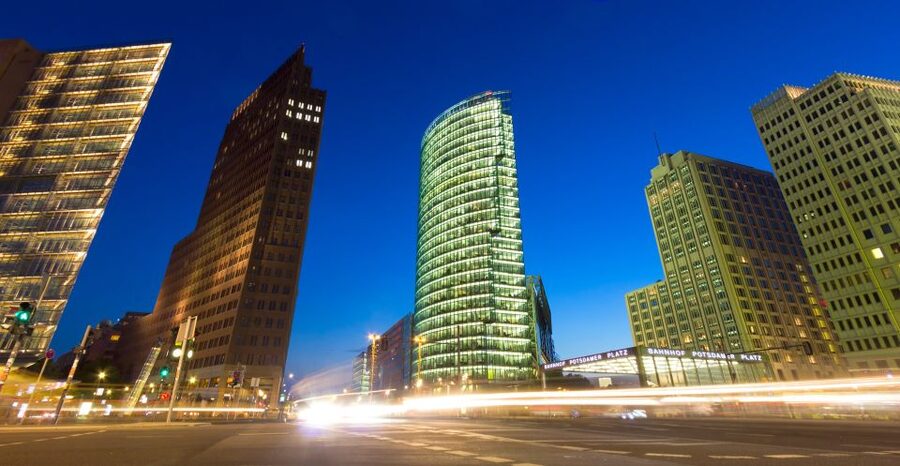
Potsdamer Platz brings you into another chapter. Once divided by the Berlin Wall, it became a major symbol of the rebuilt city. Its modern architecture contrasts sharply with the memorial and the older buildings along Unter den Linden. The pairing helps you see how Berlin rebuilt itself while keeping reminders of its darkest years in public view.
Unter den Linden toward Gendarmenmarkt
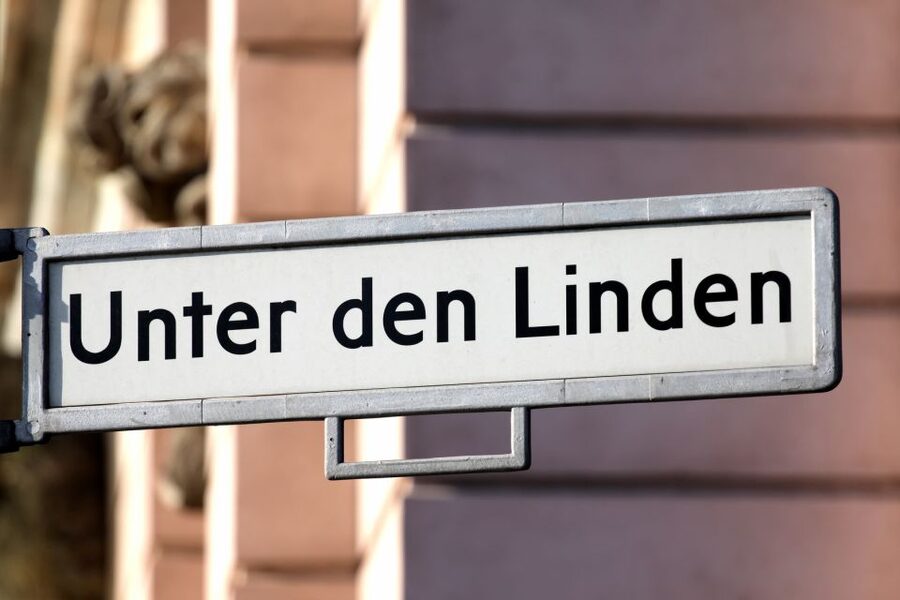
The walk along Unter den Linden shifts the mood again. This famous boulevard leads through Berlin’s historic core and carries the imprint of emperors, military power, public ceremony, and political change. It is one of the best stretches for understanding how the old city was arranged.
The guide’s storytelling is especially useful here. A broad boulevard can blur into a series of handsome buildings unless someone explains who shaped it and why. The tour promises historical anecdotes, hidden details, and Berlin humor, so the walk should feel more like a conversation than a formal lecture.
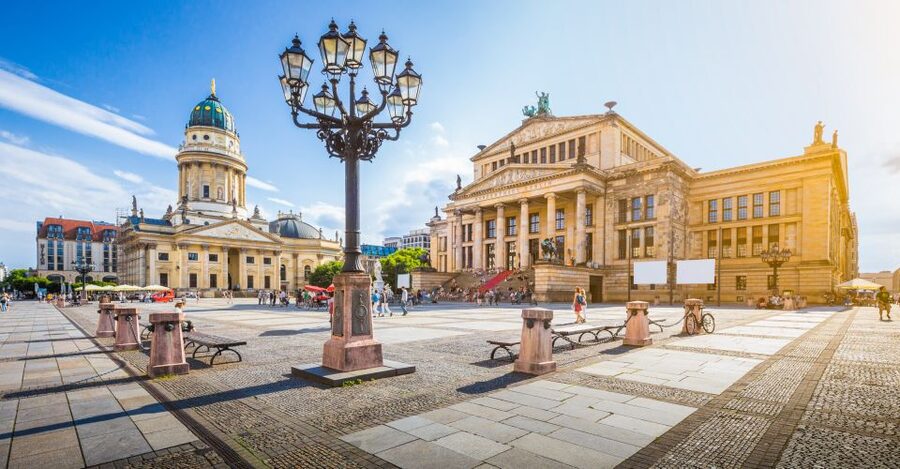
Gendarmenmarkt is one of the route’s finest architectural stops. The square brings together the German Cathedral, French Cathedral, and Konzerthaus. The three buildings create a balanced setting that rewards a slow look, even during a fast tour.
The limitation is time. You will see the square and hear its story, but the two-hour schedule does not allow for a long architectural study or an interior visit. If you care about concert halls, domes, or detailed design, mark Gendarmenmarkt for a later return.
Bebelplatz and the weight of the book burning
Bebelplatz is a smaller stop with a heavy story. It is associated with the Nazi book burning of 1933, when books deemed politically or culturally unacceptable were destroyed. The square forces you to consider how public spaces can be used for both ceremony and intimidation.
This is one of the places where a good guide adds real value. The facts are easy to find, but the setting gives them force. You are standing in the middle of Berlin’s historic center, surrounded by major buildings, while discussing an act designed to control thought and culture.
The itinerary allows some free time here, which is welcome. Bebelplatz deserves more than a passing sentence. Use the pause to look around and absorb the contrast between the elegant square and the event connected to it.
Lustgarten, the Cathedral, and Museum Island
The route then reaches Lustgarten, an open space beside Berlin Cathedral and Museum Island. This area brings together royal power, religious architecture, museums, and public life. It is one of the city’s best places for seeing how Berlin’s old center was built around institutions that shaped the state.
Berlin Cathedral is hard to miss. Its large dome and ornate exterior make it one of the most recognizable buildings on the route. The tour includes guided sightseeing here, but it does not promise entry. If you want to explore the interior, climb the dome, or spend time with the church’s art and memorials, reserve a separate visit.
Museum Island adds another layer. The island is home to major museums and is one of Berlin’s key cultural areas. A walk past it gives you an overview, not a museum day. That distinction is important when you plan your schedule. The tour tells you where the museums are and why the district matters, then leaves you to decide which collection deserves your time.
The route also includes views toward the New City Palace and the TV Tower. From this part of the center, the old palace setting and the modern tower help you read Berlin’s changing skyline. Nearby Nikolaiviertel is identified as the birthplace of Berlin, with roots reaching back to 1237. The walk finishes at Friedrichsbrücke, a practical point near the Spree and Museum Island.
What the guides add to the walk
The experience depends heavily on the guide. The company offers English, Spanish, and German tours, and the description emphasizes personal storytelling, local humor, and questions along the way.
Max is one guide specifically praised for answering questions and allowing time for photographs and reflection. Another guide extended the tour beyond the planned time, while other feedback highlights friendly service, clear explanations, and a strong overview of Berlin. Those details suggest that the best part of the tour is not simply the route. It is the guide’s ability to adjust the pace and respond to what interests you.
That said, individual guide style can vary. A witty, energetic presentation will suit you if you like history delivered with personality. If you prefer long, quiet periods at each monument, a private tour is likely the better choice, since a standard two-hour walk has to keep moving.
Pace, comfort, and weather
The route covers about 4 kilometers. That is manageable for most people, and the activity is described as suitable for all ages and fitness levels. Still, two hours across a central city means steady walking with limited idle time.
Wear comfortable shoes and bring water. A camera is useful, especially at Brandenburg Gate, Gendarmenmarkt, the Cathedral, and the government district. Tours run in all weather, so bring protection from rain or sun rather than assuming the walk will be postponed.
The activity is wheelchair accessible, according to the supplied details. If you have specific mobility needs, a private or small-group format may make it easier to manage pauses and questions while staying with the group.
Who will get the most from this tour
I would choose this walk early in a Berlin visit. It gives you the city’s central framework before you spend hours in museums or travel farther out to places connected with the Wall and the Nazi period.
It suits first-time visitors, families, seniors, and anyone with limited time. The route includes enough variety to hold attention: modern government buildings, royal streets, memorials, squares, churches, museums, and city views.
It is less suited to someone who wants detailed access to interiors. You will see many important places, but most are viewed from outside. It is also not the best match if you want a slow photographic walk. The schedule is designed for coverage and context.
Private and small-group choices improve the experience for families and people who want to ask many questions. If you are traveling alone or watching costs closely, compare the $82 fee with a general group option before booking. The fixed price has no hidden costs listed, but the value rests on group size and the guide’s personal attention.
Should you book the Berlin Top 10 walking tour?
Book it if you want a sharp introduction to central Berlin, enjoy history told with humor, and would rather follow a clear route than piece the sights together yourself. The combination of Brandenburg Gate, the Reichstag, the Holocaust Memorial, Gendarmenmarkt, Bebelplatz, and Museum Island gives you a solid first picture of the city.
I would especially recommend the tour for a first morning or afternoon in Berlin. You can use the guide’s explanations to choose where to return later, particularly Museum Island, the Reichstag, Berlin Cathedral, or Gendarmenmarkt.
Skip it if you want long interior visits, a slow pace, or a low-cost self-guided walk. At $82, it is a paid orientation rather than a basic stroll. For visitors who value a personable guide, direct answers, local humor, and a well-planned route, it can earn that price.
FAQ
How long does the walking tour last?
The tour lasts two hours, or 120 minutes.
How far do you walk?
The route covers approximately 4 kilometers.
Where does the tour begin?
Meet in front of the main entrance of Paul-Löbe-Haus at Konrad-Adenauer-Straße 1, opposite the Federal Chancellery.
Where does the tour finish?
The walk finishes at Friedrichsbrücke.
What time does the tour start?
Tours run daily at 10:00 AM and 2:00 PM.
Which languages are available?
The live tour is available in English, Spanish, and German.
Is the tour wheelchair accessible?
Yes. The activity is listed as wheelchair accessible.
Does the tour run in bad weather?
Yes. Tours operate in all weather conditions.
Is this a private tour?
Private and small-group options are available.
Can I cancel the booking?
You can cancel up to 24 hours in advance for a full refund. The activity also offers reserve now and pay later booking.
Just added in Berlin
- Private One way Airport Transfer Berlin Airport To Berlin★ 3.5 · 17 reviews
- Private Walking Tour: Berlin Wall, Cold War and Checkpoint Charlie★ 5.0 · 37 reviews
- Modern Berlin Private Walking Tour: Diverse, Vibrant and Exciting German Capital★ 5.0 · 13 reviews
- Private Day Trip to Potsdam from Berlin by Train★ 4.5 · 27 reviews
- City Explorer: Potsdam Private Day Trip★ 4.5 · 10 reviews
- Berlin Private Custom 5-Hour Tour by Car★ 5.0 · 30 reviews
- Private Half-Day Sightseeing Tour in Berlin★ 3.5 · 6 reviews
- Berlin Private Custom Tour in a Minivan, East and West★ 5.0 · 123 reviews
Walking Tours, compared.

Third Reich Berlin: Hitler and WWII Walking Tour
Read our review →