Reviewed · WALKING TOURS
Berlin: The Time of National Socialism Walking Tour
Berlin’s Nazi past is not tucked away in a distant museum. It sits along the grandest streets in the capital, beside the Brandenburg Gate, the Reichstag, the Holocaust Memorial, and the government quarter. This two-hour walking tour connects those places and shows you where propaganda, dictatorship, resistance, and wartime destruction unfolded.
I like the small group limit of 10, which gives a guide room to answer questions and adjust the pace. I also like the route’s mix of famous sights and less obvious traces, from Soviet T-34 tanks to the Johann Georg Elser Memorial. The main thing to consider is the language: the live tour is listed in German, so it may not suit you if you need English commentary.
Key points to know
- Brandenburg Gate begins the story: See how Berlin’s best-known landmark was used for Nazi propaganda marches.
- The route links power and persecution: Walk from the Reichstag and former government district to the SS headquarters area and the Topography of Terror.
- World War II traces remain visible: Soviet T-34 tanks and artillery are displayed at the Tiergarten memorial.
- The guide matters here: Carlo, also named Carlos in some booking details, is praised for clear explanations, lively storytelling, and helpful answers.
- Expect a serious outdoor tour: It runs in all weather, so wear shoes and clothing suited to two hours outside.
- The price buys context, not entry tickets: At $43 per person, the value rests on the guide’s historical explanation and the compact route.
Berlin’s Nazi past begins at Pariser Platz
Meet your guide at the exit of S+U Brandenburger Tor station, exit B, toward Pariser Platz and Straße des 17. Juni. Look for the Get Your Guide, You in Berlin flag. The nearby Call a Bike location is also associated with the start, but the specific meeting instructions point you to the metro exit.
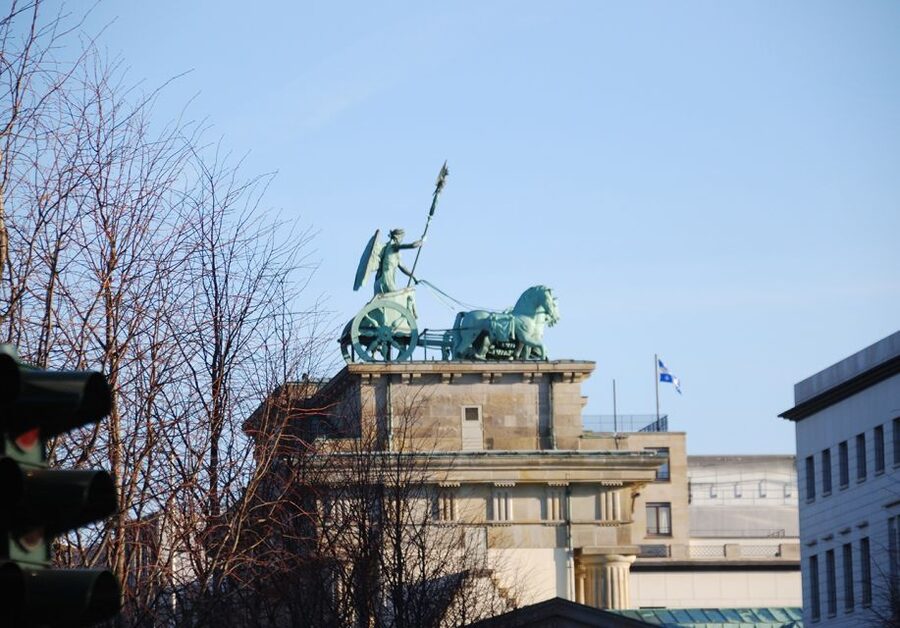
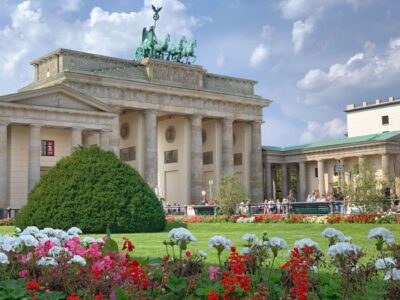
Pariser Platz is an effective place to begin because the setting looks ceremonial and polished today. The Brandenburg Gate frames the square, with broad streets leading toward the government district. Your guide uses this familiar landmark to explain how the Nazis turned public space into a stage for political power.
The Brandenburg Gate was used for propaganda marches during the National Socialist period. That detail changes how you see the monument. It was not just a grand entrance to Berlin, but part of the imagery and public theater of the dictatorship.
I appreciate that the tour starts with a place you can easily locate rather than an obscure side street. You get your bearings quickly, then move into the more difficult questions: how a modern state gave way to one-party rule, how public buildings were used, and how ordinary city spaces became linked to persecution and war.
Other walks around Berlin:
- Discover Berlin Half-Day Walking Tour
★ 5.0 · 9,624 reviews - Berlin: Third Reich and Cold War 2 Hour Walking Tour
★ 4.9 · 6,830 reviews - Berlin: Discover Berlin Walking Tour
★ 4.9 · 5,998 reviews
The Reichstag and the road to power in 1933
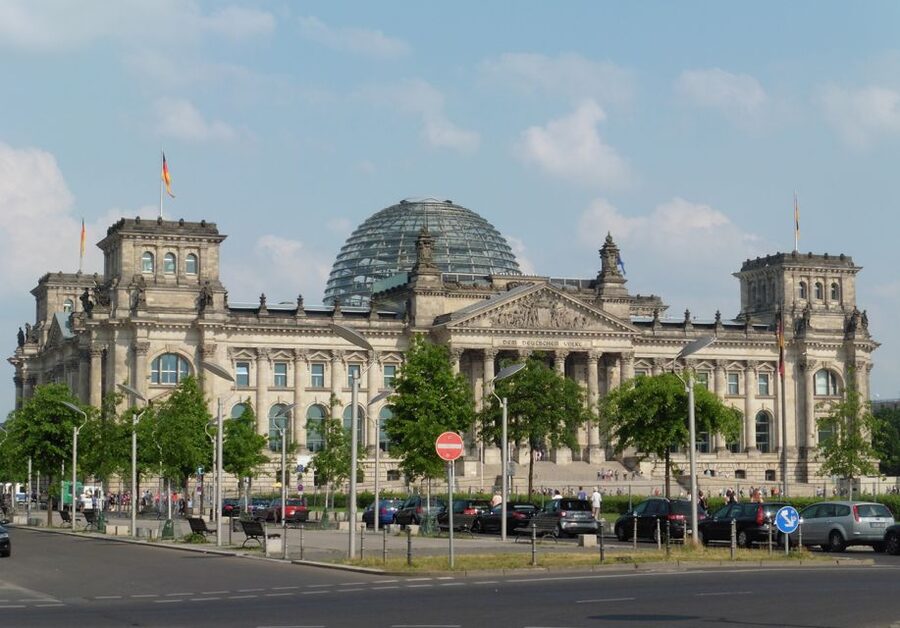
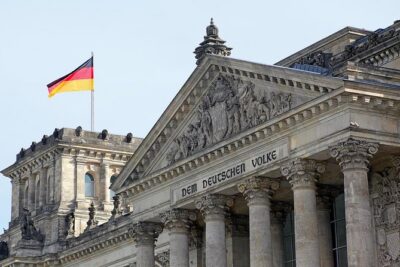
The next stop is the Reichstag, now the seat of the German Parliament. The tour connects this building with the rise of the Nazi Party, known as the NSDAP, and Adolf Hitler’s appointment as chancellor in 1933.
You should not expect an interior visit to the Reichstag. The stop is about the building’s place in Berlin’s political geography and the events that brought the Nazi leadership to power. That distinction matters. You are looking at the setting from the outside while your guide supplies the political context.
This part of the walk is especially useful if your knowledge of the period begins with the war itself. The tour helps place the war inside a longer sequence of political change, propaganda, and dictatorship. It also shows why Berlin’s government quarter is central to understanding the period.
The guide-led format has real value here. A plaque or museum label can tell you what a building is, but it rarely explains how separate places fit together. On foot, you move between them while the guide builds the connections.
Soviet tanks in the Tiergarten
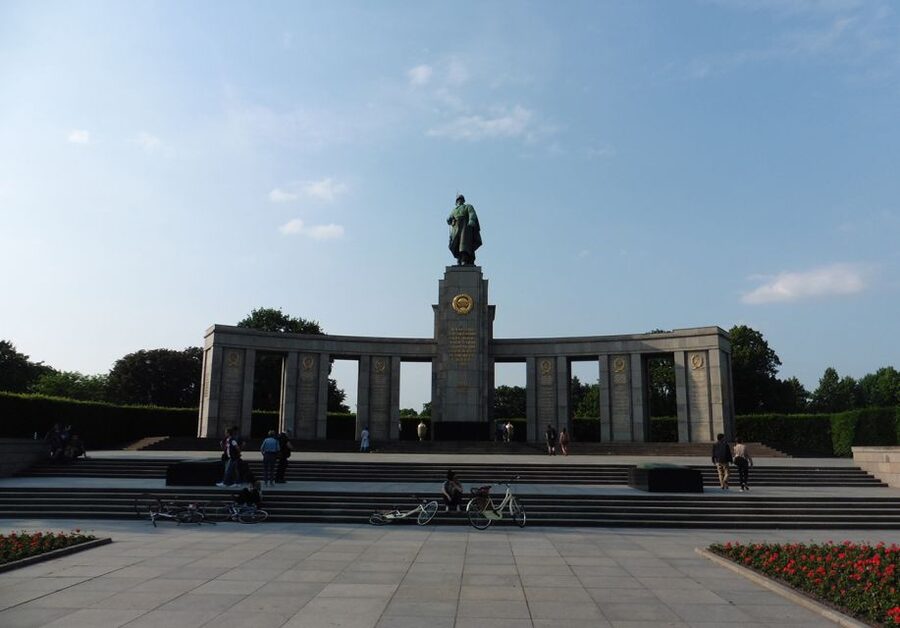
From the Reichstag, the route continues into the Tiergarten, Berlin’s large inner-city park. At the Soviet War Memorial, you see Soviet T-34 tanks and artillery from World War II.
This is one of the walk’s most concrete stops. Instead of only discussing military history in the abstract, you see the machines connected to the final battles for Berlin. The tanks and guns give the war a physical presence, and the setting makes a useful contrast with the nearby government buildings and formal avenues.
The memorial also adds another layer to Berlin’s story. The same central area contains monuments tied to Nazi power, Soviet victory, German reunification, and remembrance of the murdered Jews of Europe. A guide can help you read those layers without treating them as isolated sights.
The drawback is practical rather than historical. Berlin weather can be harsh, and this stop comes while you are still outside and on foot. One January tour took place in very cold weather with icy streets, yet guide Carlo adjusted carefully so the group could move safely. That is a good reminder to wear shoes with a firm grip and dress for the forecast.
The Holocaust Memorial and the space of remembrance
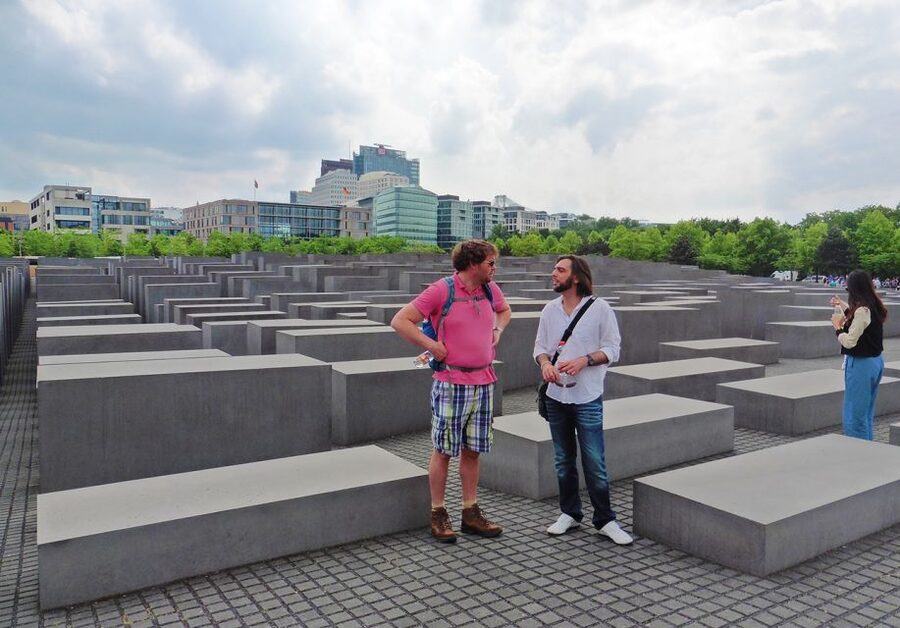
The walk then reaches the Memorial to the Murdered Jews of Europe, commonly called the Holocaust Memorial. The field of concrete blocks occupies a highly visible site close to the Brandenburg Gate and the former government quarter.
The memorial is not presented as a quick photo stop. Its location matters. You are standing near the places where the Nazi government operated, yet the memorial directly confronts the murder of Europe’s Jews. That physical relationship is one of the strongest parts of the route.
Your guide can give the site historical meaning before you continue. Since this is a walking tour rather than a museum visit, you should not expect a long indoor exhibition or a full museum program. The value comes from seeing the memorial in its urban setting and linking it to the buildings and decisions nearby.
Approach this stop with the right mood. It is a place for attention and respect, not a backdrop for a rushed sightseeing checklist. The tour’s subject is difficult, and the best part of the experience is the way it places human suffering beside the machinery of government.
Same base, a different kind of day out:
- Berlin: Reichstag, Dome and Government District Guided Tour
★ 4.7 · 18,288 reviews - Berlin: 1-Hour City Tour by Boat with Guaranteed Seating
★ 4.3 · 16,993 reviews - Berlin: Boat Tour Along the River Spree
★ 4.4 · 11,252 reviews - Berlin: Hop-on Hop-off Bus Tour with Live Commentary
★ 4.3 · 8,579 reviews
Hitler’s bunker site and the vanished Chancellery
The route continues to the place where Adolf Hitler’s bunker and the New Reich Chancellery were located. Much of what once shaped the Nazi government has disappeared, been rebuilt, or changed purpose, so this portion depends heavily on your guide’s explanation.
That absence is important. You do not get a grand ruin that neatly tells the story. You get a modern city and a location whose meaning has to be reconstructed through maps, photographs, and spoken history. The tour shows you how a site can matter even when very little of the original structure remains.
This is also where the route moves beyond famous landmarks. Many people know the Brandenburg Gate and the Holocaust Memorial, but fewer can place the bunker or the New Reich Chancellery on a present-day map. Seeing the locations helps you understand the scale of the former government district and how close its buildings were to one another.
I would pay close attention here, because it is easy to walk past an unremarkable modern setting without realizing what once occupied it. The guide is the key to this stop. Without the explanation, the site may seem like an empty space; with it, the absence becomes part of the story.
Resistance at the Johann Georg Elser Memorial
The Johann Georg Elser Memorial adds a different voice to the tour. Elser attempted to assassinate Hitler in 1939 by planting a bomb at Munich’s Bürgerbräukeller. The memorial recalls his resistance to the dictatorship.
The supplied route specifically includes this memorial, and the broader tour promises stories about German resistance. That balance matters. The experience is not only about Nazi institutions, military power, and state crimes. It also recognizes Germans who opposed the regime, even when resistance brought enormous personal risk.
You may find this stop particularly useful if you want to understand why resistance was difficult and dangerous rather than assuming that opposition was simple. A guide can put individual acts beside the broader system of surveillance and repression.
The memorial also breaks up the succession of major buildings. It gives the walk a human focus and helps prevent the history from becoming only a list of ministries, offices, and military sites.
Detlev-Rohwedder-Haus and Berlin’s government quarter
The route passes the Detlev-Rohwedder-Haus, another important building connected with the former government district. The stop is part of the larger effort to show where the machinery of the Nazi state operated during World War II.
You may not recognize the building immediately as a key historical site, which is exactly why it benefits from a guided walk. The point is not only to admire architecture. It is to understand how ministries, administrative offices, and security agencies occupied the center of Berlin.
The guide’s job here is to explain how the district functioned. By this stage, you have seen symbolic public spaces, military evidence, memorials, and former leadership sites. The government buildings help connect those elements to the practical work of administration and control.
For me, this is where the tour earns its price. A self-guided walk can take you past the same façades, but it is harder to know which building mattered, what happened there, and how the sites relate to one another.
The Topography of Terror: the tour’s strongest finish
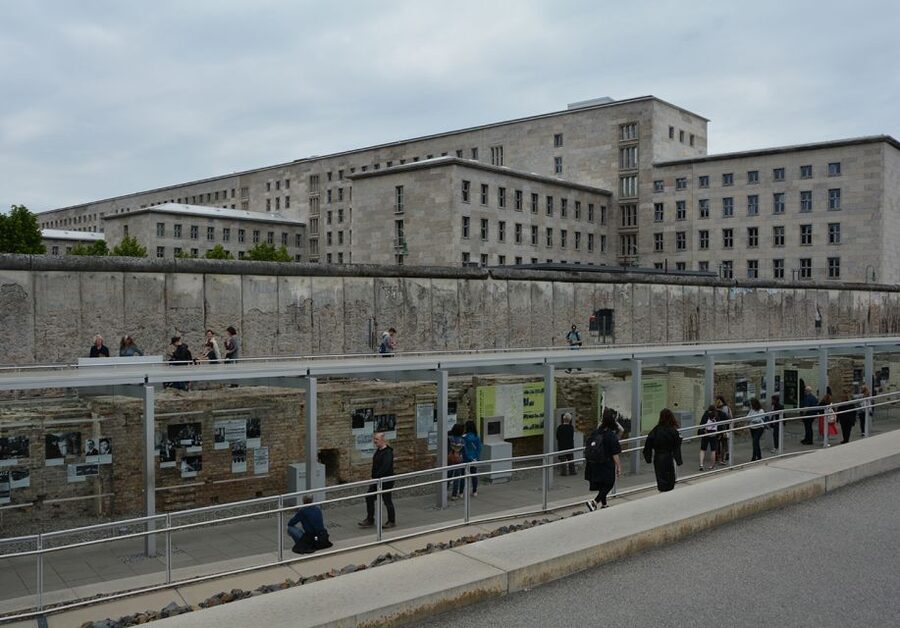
The walk ends at the Topography of Terror Documentation Center, built on the former site of major Nazi institutions. Here you learn about the headquarters of the SS, the Secret State Police, the Reich Security Main Office, and the Reich Aviation Ministry.
This is a powerful finish because it brings the route’s themes together. The Brandenburg Gate showed public propaganda. The Reichstag represented political power. The memorials addressed war, murder, and remembrance. At the Topography of Terror, the focus turns to the agencies that enforced persecution and organized repression.
The tour ends here rather than leading you through the documentation center as a separate museum visit. That gives you a useful option: continue exploring the center on your own if you have the time and interest. The guided walk provides the surrounding context, while the documentation center can add further detail.
Allow yourself a few quiet minutes at the end. The route covers a lot in two hours, and the final stop is not a light sightseeing finish. It is a place to think about how ordinary administrative systems supported a criminal dictatorship.
What $43 buys you in two hours
The cost is $43 per person. That is not the price of a simple orientation walk, and it is more than you would pay for an unstructured stroll through central Berlin. The value comes from the guide’s historical framing, the carefully connected route, and the chance to ask questions in a group limited to 10 people.
A small group can make a major difference on a subject like this. You are less likely to lose the guide in a crowd, and a guide such as Carlo or Carlos has more room to explain a point or respond to a question. Several recent sessions were effectively private tours because only one or two people attended, though you should not assume that will happen on your date.
The tour does not include museum admission, food, transport, or entry to the Reichstag. You are paying for the live walking experience and the guide. If you want a full day of indoor exhibits, this is not enough on its own. If you want a compact introduction before visiting more museums, it is a useful first step.
The cancellation terms help reduce the risk: you can cancel up to 24 hours in advance for a full refund, and you can reserve now and pay later. Those details are useful if your Berlin schedule is still shifting.
Who will get the most from this walk
This experience suits you if you want to understand Berlin through places rather than only through museum displays. It is a strong choice for adults, older teenagers, and anyone interested in political history, World War II, German resistance, or the way a city remembers a criminal past.
The guide’s lively style also appears well suited to younger people. One recent family group felt the subject could work well for teenagers and young adults, which makes sense because the route keeps moving and uses real locations rather than asking you to sit through a long lecture.
You should think twice if you need English commentary. The activity information identifies German as the live tour language, even though the general description refers to a multilingual guide. Confirm the language before booking if that point is essential.
You should also be comfortable walking outdoors for two hours. The tour runs in all weather and on public holidays. Wear suitable clothing, bring weather protection, and use sensible shoes. Wheelchair access is listed, but Berlin streets and weather can still affect comfort, so it is wise to clarify any specific mobility needs before you go.
My take: book it for context, not a checklist
Book this tour if you want a focused, serious introduction to Nazi-era Berlin and can follow a German-language guide. The route is compact but full of important stops, and the combination of major landmarks, surviving military objects, resistance history, and former government sites gives you a clearer picture than visiting each place at random.
I would especially choose it early in a Berlin stay, before spending more time at the Topography of Terror or other historical museums. You will have a map in your head and a better sense of why the central district matters.
Skip it if you want a relaxed city stroll, an English tour, or substantial time inside museums. At $43, the tour is worthwhile when you value interpretation and conversation. Its best feature is not any single monument. It is the way guide Carlo or Carlos ties Berlin’s scattered traces into one difficult, understandable story.
FAQ
Where does the tour meet?
Meet the guide at the exit of S+U Brandenburger Tor station, exit B, in the direction of Pariser Platz and Straße des 17. Juni. Look for the Get Your Guide, You in Berlin flag.
Where does the tour finish?
The tour finishes at the Topography of Terror Documentation Center.
How long does the tour last?
The walking tour lasts two hours.
What language is the tour in?
The live tour guide language is German. The activity information also lists German as the available language.
How much does the tour cost?
The price is $43 per person.
How large is the group?
The group is limited to 10 participants.
Is the tour wheelchair accessible?
Yes. The activity information lists the tour as wheelchair accessible.
Does the tour run in bad weather?
Yes. The tour takes place in all weather conditions and on public holidays. Wear suitable clothing and shoes for an outdoor walking tour.
Can I cancel or pay later?
You can cancel up to 24 hours in advance for a full refund. You can also reserve your place and pay later.
Just added in Berlin
- Private One way Airport Transfer Berlin Airport To Berlin★ 3.5 · 17 reviews
- Private Walking Tour: Berlin Wall, Cold War and Checkpoint Charlie★ 5.0 · 37 reviews
- Modern Berlin Private Walking Tour: Diverse, Vibrant and Exciting German Capital★ 5.0 · 13 reviews
- Private Day Trip to Potsdam from Berlin by Train★ 4.5 · 27 reviews
- City Explorer: Potsdam Private Day Trip★ 4.5 · 10 reviews
- Berlin Private Custom 5-Hour Tour by Car★ 5.0 · 30 reviews
- Private Half-Day Sightseeing Tour in Berlin★ 3.5 · 6 reviews
- Berlin Private Custom Tour in a Minivan, East and West★ 5.0 · 123 reviews
Walking Tours, compared.

Third Reich Berlin: Hitler and WWII Walking Tour
Read our review →