
Reviewed · WALKING TOURS
Berlin Off-the-Beaten-Path Walking Tour: Kreuzberg, Mitte and Friedrichshain
Berlin’s alternative spirit is the real subject of this four-and-a-half-hour walking tour. You move through Kreuzberg, Mitte, Friedrichshain and nearby districts while tracing the city’s Turkish food culture, Jewish past, squatting years, punk scene, street art and music life. It is less about famous monuments and more about how ordinary Berliners reshaped their neighborhoods.
I like the way the tour connects food with social history, from currywurst and doner kebab to the Turkish community in Kreuzberg. I also like the range: urban farms, guerrilla gardens, small art spaces, Prater Garten, graffiti-covered lanes and Yaam Beach. The main drawback is simple: you spend much of the afternoon outdoors, and cold or wet weather can make the long walk tiring.
Key points at a glance
- Kreuzberg’s food and community life: Learn how Turkish Berlin helped shape the city, with time to buy currywurst or another snack.
- Counterculture with context: Hear about student protests, the Baader-Meinhof group, punk, the May 1 riots and the Love Parade.
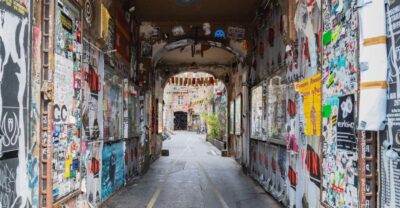
- Street art beyond the postcard view: Explore alleys, walls and creative spaces that are easy to miss on your own.
- Public transport expands the route: Two or three sections may use tram, train or U-Bahn, so buy an AB ticket before starting.
- Strong guide-led experience: Guides such as Reese, Jake, Jason, Lee and Ben have been praised for humor, personal stories and passion for Berlin.
- A full afternoon for $30.25: The price is fair if you want orientation and context, but food, drinks and transport cost extra.
Why this tour feels different from standard Berlin sightseeing
Berlin offers plenty of tours about the Nazi era, the Berlin Wall and the Cold War. Those subjects matter, but they can make the city feel fixed in the past. This walk looks at what happened after the official history books end: how artists, immigrants, punks, students, squatters and musicians changed the city block by block.
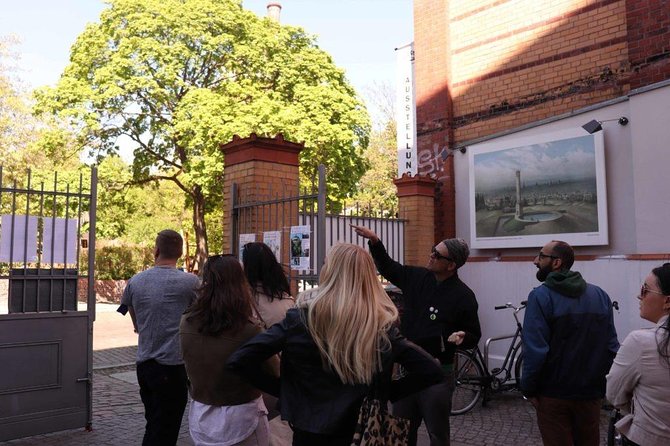
You begin at Vapiano am Alex near Alexanderplatz at noon. From there, the route moves into central Berlin and then toward neighborhoods shaped by migration, protest and creative life. The exact order can vary with the guide, but the aim is clear: show you parts of Berlin that are usually left out of a first visit.
I see this as a useful second-day tour. If you have already visited the Brandenburg Gate, the Reichstag and the Wall memorials, this experience gives you a different way to read the city. It also works early in a stay if you want local suggestions for the rest of your visit.
The group can contain up to 20 people. That is large enough for an easy social atmosphere, but small enough for a guide to speak with the group rather than perform for a crowd. Several guides have led this route, including Reese, Jake, Jason, Lee, Ben and Antonio. The personality matters here because much of the value comes from anecdotes and interpretation, not from simply reaching a set of sights.
Other walks around Berlin:
- Discover Berlin Half-Day Walking Tour
★ 5.0 · 9,624 reviews - Berlin: Third Reich and Cold War 2 Hour Walking Tour
★ 4.9 · 6,830 reviews - Berlin: Discover Berlin Walking Tour
★ 4.9 · 5,998 reviews
Kreuzberg, Turkish Berlin and food with a story
Kreuzberg is one of the tour’s strongest sections. You explore the Turkish community that has helped give the district its food, shops and daily character. This is not just a stop for a quick photograph. The guide explains how immigration shaped Berlin and how different communities share the same streets.
The food portion is practical and informal. You can buy currywurst at your own expense, the fried sausage served with curry-flavored ketchup that has become one of Berlin’s best-known casual foods. You also hear about doner kebab, the Turkish-style sandwich and meat dish that became a major part of Berlin’s food culture.
That connection is worth paying attention to. Food here is not treated as a separate tourist attraction. It helps explain how modern Berlin grew through movement between countries and neighborhoods. If you are hungry, bring some cash or a card for a snack, but the tour price does not include food or drinks.
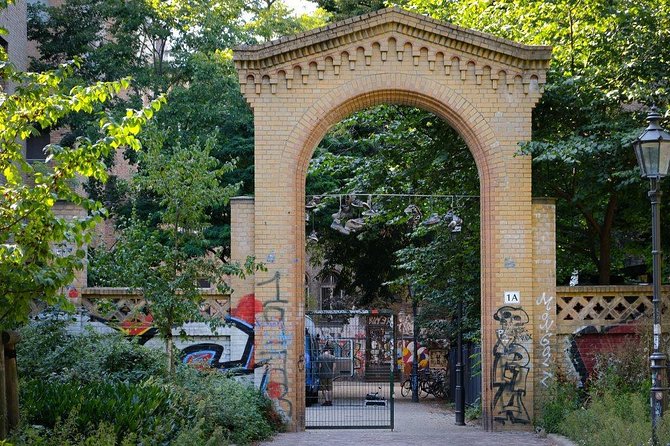
Kreuzberg also brings together urban farms, guerrilla gardens, organic markets and alternative art galleries. These places show a side of the city built from the ground up, often through volunteer work, shared space and experimental projects. You should not expect every stop to be open or operating in the same way every day. The value is in seeing how the neighborhood has used spare lots, walls and abandoned spaces.
The district can be busy, rough around the edges and visually untidy. That is part of its appeal, but it may not suit you if you want polished streets and a quick list of grand buildings. Wear shoes that can handle pavement and keep your schedule loose.
Mitte and Berlin’s Jewish quarter
The route also covers Mitte and Berlin’s Jewish quarter, adding another layer to the city’s changing identity. Here, the guide links the built environment with the people who lived, worked and organized in these areas.
The tour is not presented as a specialist memorial walk, and it does not replace a dedicated Jewish Berlin or Holocaust tour. Instead, this section helps place local communities within the larger story of Berlin. That broader setting matters because the afternoon is about how the city keeps changing, not about treating any one era as separate from the next.
You may find that the guide spends more time telling stories than pointing out formal monuments. That is a strength for me. Berlin can be hard to understand if you only visit official sites. The personal stories, political arguments and neighborhood changes give you a better sense of why these districts look and feel as they do.
One practical point: the tour covers several districts, so it is not one continuous walk from start to finish. Public transport forms part of the route. That makes the afternoon less physically demanding than four and a half hours of nonstop walking, while also allowing the guide to compare former East and West Berlin.
Prater Garten and the everyday side of Berlin
A stop at Prater Garten adds a more relaxed note. It is known as Berlin’s oldest beer garden, and it offers a useful break from the city’s heavy political themes. Depending on the timing and the guide’s plan, this may be a place to pause and talk rather than a formal attraction with a long visit.
Do not assume that beer or a meal is included. Food and drinks are extra, as is everything else you buy along the way. Still, the stop helps pace the afternoon, especially since the tour includes substantial time outside.
The route also includes a lunch break of roughly 20 to 30 minutes according to the tour experience described by participants. That is enough time for a quick bite, not a leisurely restaurant meal. I would eat a light breakfast and carry water so you can use the break as intended.
Same base, a different kind of day out:
- Berlin: Reichstag, Dome and Government District Guided Tour
★ 4.7 · 18,288 reviews - Berlin: 1-Hour City Tour by Boat with Guaranteed Seating
★ 4.3 · 16,993 reviews - Berlin: Boat Tour Along the River Spree
★ 4.4 · 11,252 reviews - Berlin: Hop-on Hop-off Bus Tour with Live Commentary
★ 4.3 · 8,579 reviews
Protest, punk and the city’s unruly side
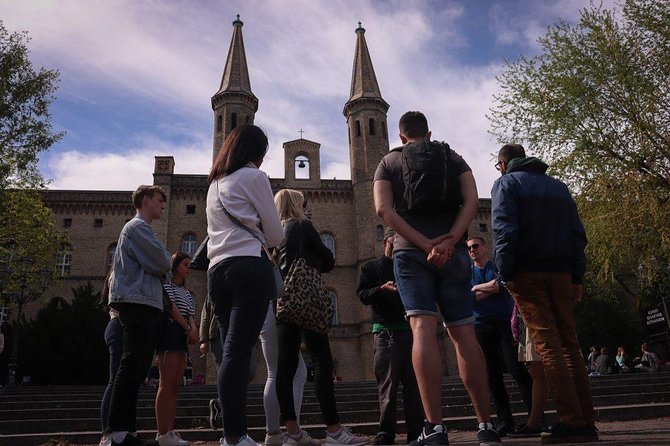
The most memorable part for many people will be the section on Berlin’s counterculture. The guide covers the 1960s student protest movement, the Baader-Meinhof group in the 1970s, the growth of punk and the May 1 riots of the 1980s.
These subjects give the route its edge. You hear how music, art and political dissent affected Berlin’s identity, especially in districts where young people challenged authority and tested the limits of public space. The guide also discusses the Love Parade, the electronic music festival that became one of Berlin’s best-known cultural events.
This is not a neat, comfortable version of the city. You will hear about conflict, rebellion and uncomfortable choices. The discussion can include socialism, resistance and the people who fought oppression in different ways. Guides such as Reese have been praised for a rebellious sense of humor, while Jake has been described as energetic and packed with anecdotes. That style will suit you if you enjoy a strong personality and a lively talk.
The tradeoff is that this is not a quiet, purely historical walk. Some topics are political, and a guide’s interpretation shapes how they are presented. If you want a strictly neutral lecture with dates and formal monuments, choose a conventional city history tour instead.
Street art, music and the route to Yaam Beach
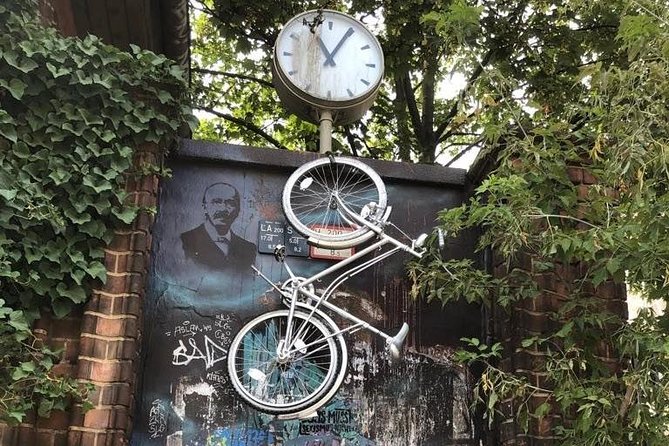
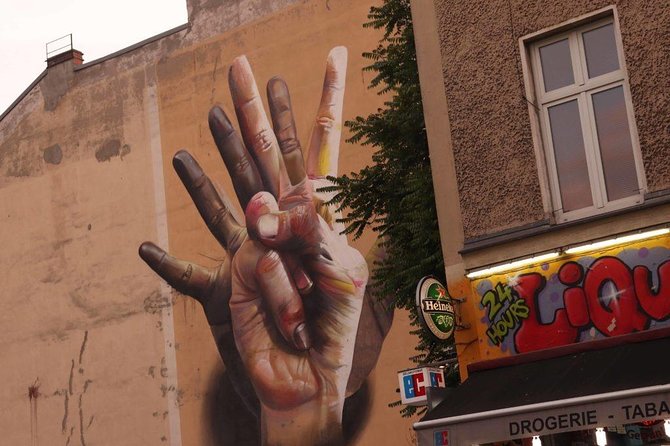
Street art becomes a running theme as you move through the neighborhoods. You see painted walls, alleys and creative spaces while learning why art became such a visible part of Berlin’s public life.
The point is not just to identify famous artists or photograph large murals. The guide explains how art and punk contributed to social change and how creative communities used vacant buildings and neglected corners. One distinctive stop described by a participant was a playground built largely by children aged 6 to 16, with sections burned down each year to make room for new construction. That unusual example captures the experimental spirit the tour is trying to show.
Music takes the route toward Yaam Beach, associated with reggae, hip-hop and Rastafarian culture. The tour ends at Yaam Beach on Stralauer Allee, in the Friedrichshain area. It is a fitting finish because the final stop brings together music, migration, youth culture and open-air Berlin.
The published ending is Stralauer Allee 34, but one person found the actual finish a little farther into Kreuzberg. If you have a dinner booking or a train to catch, confirm the final location with your guide before the walk ends. The tour is designed as an afternoon experience, not as a tightly timed transfer.
How much walking and public transport to expect
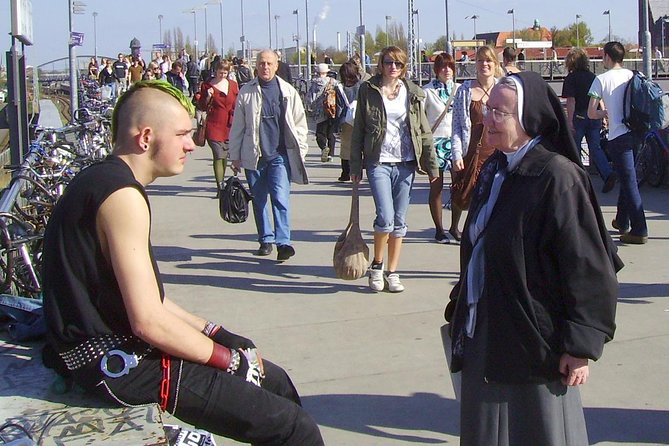
The title says walking tour, and you should take that seriously. Bring comfortable shoes. You cover a lot of ground, although two or three sections may use tram, train or U-Bahn.
An AB public transport ticket is required for the tour, and a day pass is recommended. This is an important extra cost to factor into the $30.25 price. The transport is not a minor detail: it lets the guide connect neighborhoods that would be too far apart on foot and gives you a useful lesson in getting around Berlin.
The route lasts about four hours and 30 minutes, including the transport legs and lunch pause. Several participants found that the time passed quickly because the guide kept the conversation moving. Still, cold weather can make the outdoor portions uncomfortable. Dress for the forecast, and do not count on indoor shelter between every stop.
Most people can take part, and service animals are allowed. The experience meets near public transportation, but hotel pickup and drop-off are not included. You need to reach the Alexanderplatz meeting point yourself.
Is $30.25 a fair price?
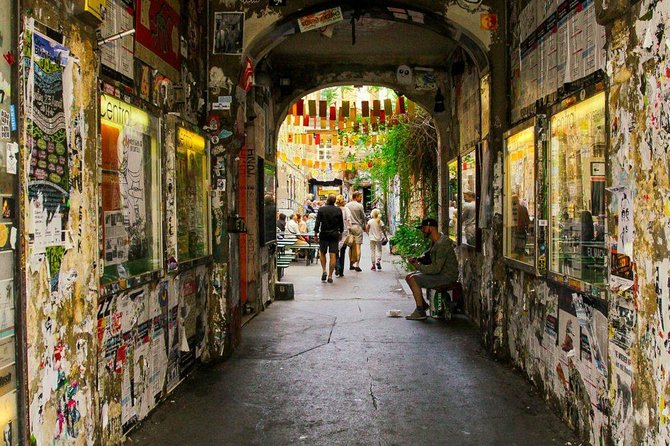
At $30.25 per person, this is a good value if you want more than a basic neighborhood stroll. You get a local English-speaking guide, a broad route, historical context, food suggestions and practical orientation across several districts.
The price looks even better when you consider the subject range. In one afternoon, you cover Turkish Berlin, the Jewish quarter, alternative gardens, Prater Garten, protest movements, punk, street art, electronic music and Yaam Beach. You could visit some of these areas independently, but you would spend time working out the route and would miss much of the connection between them.
The extra costs are public transport, food and drinks. A currywurst or doner kebab stop can make the experience more enjoyable, but budget for it separately. I would also treat the tour as an introduction rather than a complete study of each neighborhood. You may leave with a list of places you want to revisit, which is one sign that the route has done its job.
Free cancellation is available if you cancel at least 24 hours before the start time. Changes or cancellations inside that window are not accepted for a refund.
Who should book this walk?
I would choose this tour if you:
- Want modern Berlin rather than another pass through the major war and Cold War sights
- Enjoy street art, music, food culture and political history
- Prefer local stories and neighborhood detail to grand monuments
- Are comfortable walking outdoors for much of an afternoon
- Want suggestions for areas to explore after the tour
- Like guides who use humor, personal anecdotes and strong opinions
I would think twice if you need a fully indoor activity, dislike public transport, have a fixed appointment immediately afterward or want a formal museum-style presentation. Families and older participants may manage it well, but the route still requires a fair amount of walking and standing.
My verdict on the Berlin alternative neighborhoods tour
Book it if you want to understand why Berlin feels different from other European capitals. The strongest material is the link between communities, protest, art, music and daily life. Guides such as Reese, Jake, Jason, Lee and Ben have brought the route to life with humor and personal perspective, though the exact guide is not guaranteed.
The tour is not polished sightseeing, and that is the point. You may walk through untidy streets, pause for a quick snack and spend time discussing movements that challenged the city’s authorities. Bring good shoes, an AB day pass and weather-ready clothing. If that sounds like your kind of afternoon, $30.25 buys a useful, unusual introduction to Berlin.
FAQ
Where does the tour start?
The tour starts at Vapiano am Alex, Rathausstraße 6, 10178 Berlin, at 12:00 pm.
Where does the tour finish?
It is scheduled to finish at Yaam Beach, Stralauer Allee 34, 10245 Berlin.
How long does the tour last?
The experience lasts approximately four hours and 30 minutes.
Is the tour offered in English?
Yes. The tour includes an English-speaking local guide.
Is public transportation included?
No. You need an AB public transport ticket, and a day pass is recommended. Tram, train or U-Bahn sections may form part of the route.
Are food and drinks included?
No. Food and drinks are at your own expense. The route may include opportunities to try currywurst, and it discusses doner kebab and Berlin food culture.
How many people can join the tour?
The maximum group size is 20 people.
Can I cancel for a full refund?
Yes, if you cancel at least 24 hours before the scheduled start time. Cancellations or changes made less than 24 hours before the start are not accepted for a refund.
Just added in Berlin
- Berlin: Energizing 2-Hour Morning Segway Tour★ 4.7 · 35 reviews
- Berlin: Thrilling E-Scooter Adventure Tour★ 4.4 · 66 reviews
- Beelitz-Heilstätten: Baum&Zeit Tree Top Walk Entry Ticket★ 4.9 · 7 reviews
- Beer Bike & Party Bike: Unforgettable Berlin City Tour incl. pickup★ 5.0 · 5 reviews
- AXE THROWING EXPERIENCE IN BERLIN★ 4.7 · 24 reviews
- Alternative Berlin / Street art tour – Private group★ 5.0 · 6 reviews
- Berlin: Alternative & Street Art Tour★ 4.5 · 6 reviews
- Berlin: 2.5-Hour Beer & Sunset Sightseeing Boat Cruise★ 4.6 · 61 reviews
Walking Tours, compared.


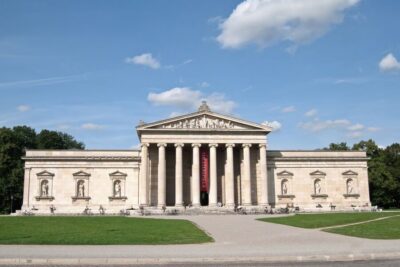
Third Reich Berlin: Hitler and WWII Walking Tour
Read our review →
Browse the lists this tour appears in