Reviewed · WALKING TOURS
Berlin: Guided Walking Tour in English
Berlin’s story makes more sense when you walk it in order, from the small medieval settlement near Alexanderplatz to the divided city and the open Brandenburg Gate. This 2.5-hour English walking tour links major sights with the political events that shaped them, rather than treating each monument as an isolated photo stop.
I like the route’s clear progression and the chance to see both grand landmarks and sobering sites, especially Museum Island, Checkpoint Charlie, and the former bunker location. I also like that guides such as J.R., Jule, Ru, and Will have been praised for adding useful city advice to the historical talk. The main consideration is simple: this is a walking tour with no food, drinks, or hotel pickup, so plan your comfort and timing before you arrive.
Key points to know before you book
- A chronological route: Begin with medieval Berlin at Alexanderplatz and finish with the Brandenburg Gate and modern German unity.
- Major sights without museum admissions: See Museum Island, Berlin Cathedral, Gendarmenmarkt, Checkpoint Charlie, and the former bunker site from the streets.
- A strong guide makes the difference: J.R., Jule, Ru, and Will have each received especially warm praise for clear, engaging talks.
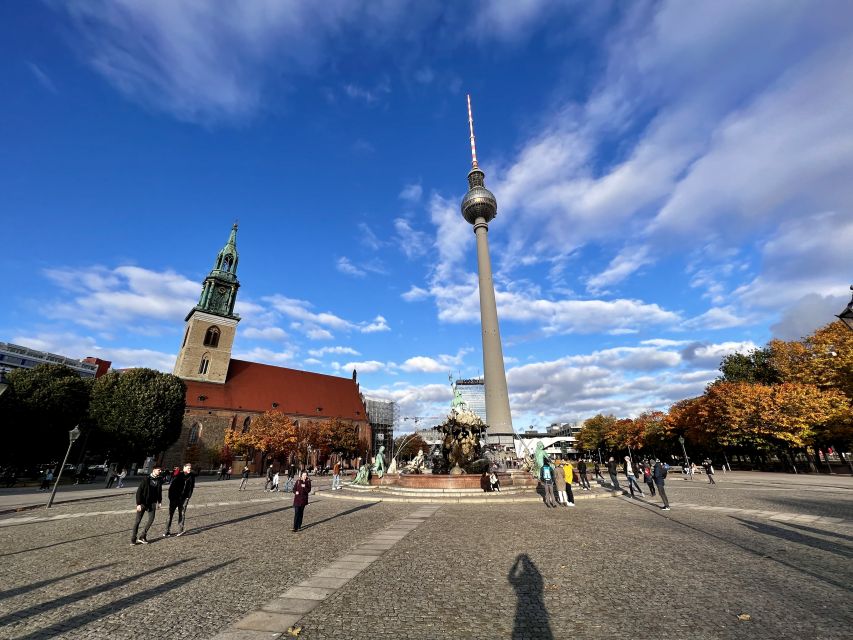
- A central meeting point: Meet in front of the Red Town Hall, near the TV Tower and Neptune Fountain.
- Good value for a history-first introduction: The $31 price covers the reservation and guide payment for a 2.5-hour tour.
- Come prepared to walk: Wear weather-appropriate clothing and arrive 10 minutes early.
Starting at Alexanderplatz and the Red Town Hall
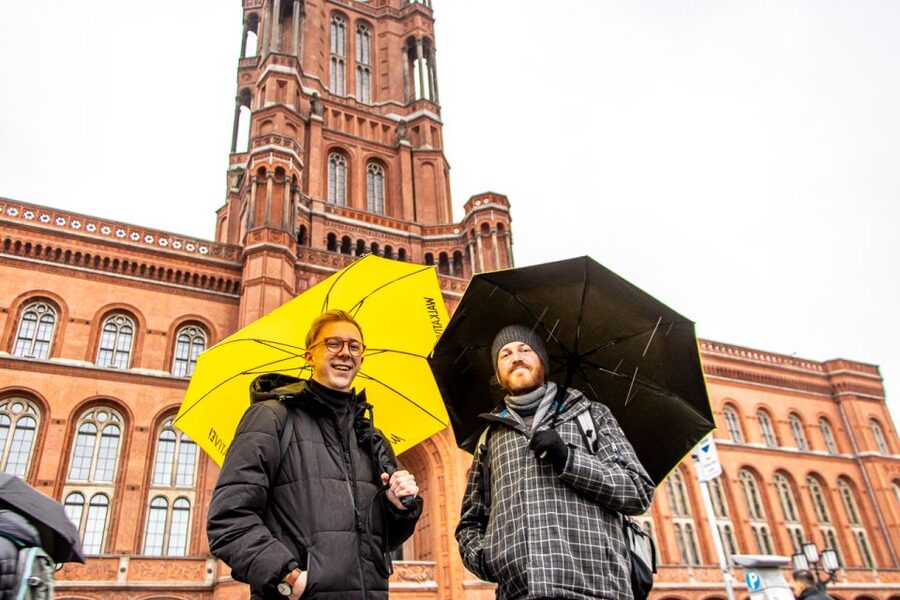
The tour begins in front of the Red Town Hall, or Rotes Rathaus, close to Berlin’s TV Tower and Neptune Fountain. This is a useful starting point because you are not dropped into Berlin’s story halfway through. You begin near the area where the city developed from a modest medieval settlement.
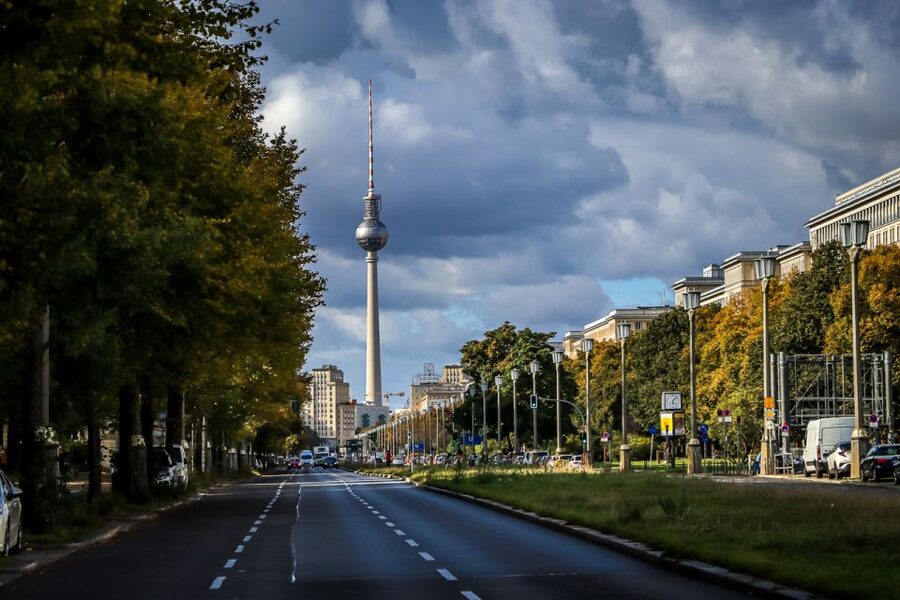
The TV Tower provides an immediate reminder of another chapter: East Berlin and the former German Democratic Republic. You will not simply be looking at a tall landmark. The opening section gives you a sense of how Berlin grew, changed rulers, and later became the capital of a divided country.
Starting at Alexanderplatz also helps you get oriented. From here, the route crosses the historic center on foot, so you can see how close many of Berlin’s key sites are to one another. I like this approach for a first day in the city because the tour gives you a mental map before you begin visiting museums or exploring on your own.
The Red Town Hall is easy to identify, but arrive 10 minutes before the start. The meeting point is outdoors, so check the weather and dress accordingly. In cold weather, the experience can feel much better with a warm coat, gloves, and comfortable shoes.
Other walks around Berlin:
- Discover Berlin Half-Day Walking Tour
★ 5.0 · 9,624 reviews - Berlin: Third Reich and Cold War 2 Hour Walking Tour
★ 4.9 · 6,830 reviews - Berlin: Discover Berlin Walking Tour
★ 4.9 · 5,998 reviews
Museum Island and the view of Berlin Cathedral
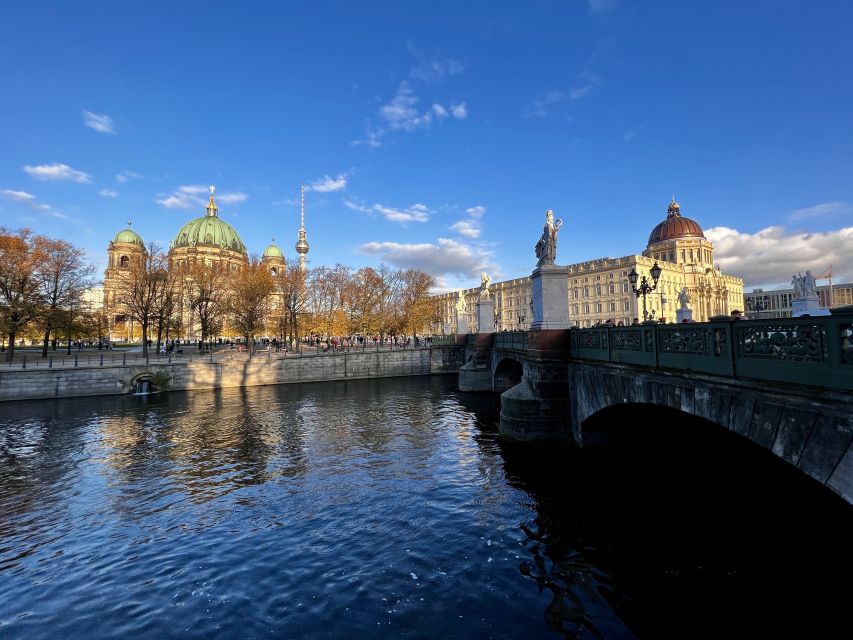
From the older center, the walk moves toward the former Royal Palace of the Hohenzollerns. The palace was reconstructed after the original building was destroyed, and its return has been debated. That dispute is part of what makes the site interesting: Berlin often presents its past through buildings that were damaged, removed, rebuilt, or reinterpreted.
Next comes Museum Island, one of the most memorable sections of the route. The open space gives you room to pause and take in Berlin Cathedral. The setting is grand, but the guide’s historical thread keeps it from becoming just another impressive building.
You should not expect entry to the museums as part of this activity. The value here is the outdoor context and the explanation of how the center of Berlin was shaped by royalty, religion, scholarship, war, and reconstruction. If you plan to visit one of the museums later, the walk can help you decide which area deserves more of your time.
I especially like this part for first-time visitors because it places several major sights in relation to one another. You get the broad picture first, then you can return for a slower visit. The possible drawback is that anyone hoping for long interior visits will need to arrange those separately.
Humboldt University and the central streets
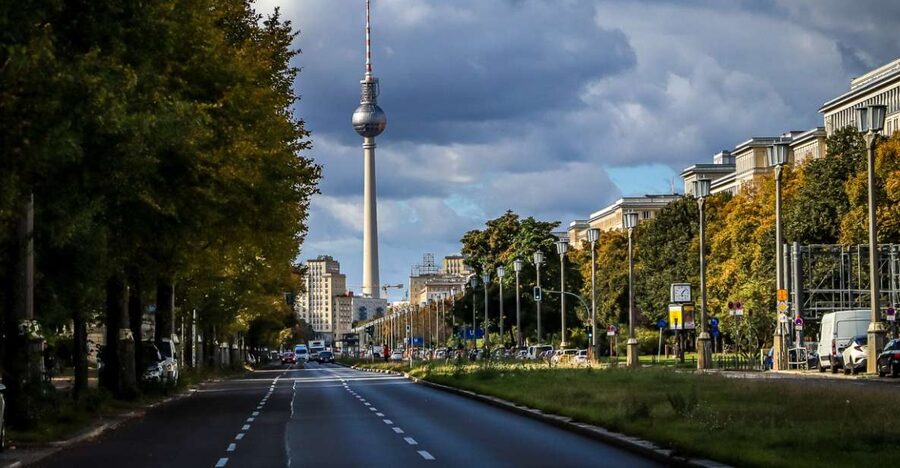
The route continues past Humboldt University and then moves through the central streets toward Gendarmenmarkt. This section is less about one major photo stop and more about connecting the city’s institutions and public spaces.
A good walking guide can make these transitions useful. Instead of rushing from landmark to landmark, you get time to notice the changing character of the center. The tour’s chronological design means the streets become part of the story, not just the space between attractions.
This is also where the guide’s personality matters most. J.R. has been described as entertaining and informative, while Will has been praised for combining history with practical suggestions for the rest of a Berlin stay. Jule and Ru have also received strong praise for clear, attentive guiding. Guide assignments can change, so you should not book on the assumption that one named guide will lead your particular departure.
The walk is wheelchair accessible, which makes the central route available to a wider range of visitors. Still, anyone with mobility concerns should consider that the experience lasts two and a half hours and takes place outdoors. The activity information confirms accessibility, but it does not provide details about seating, restroom stops, or the exact length of each walking section.
Gendarmenmarkt, Berlin’s elegant public square
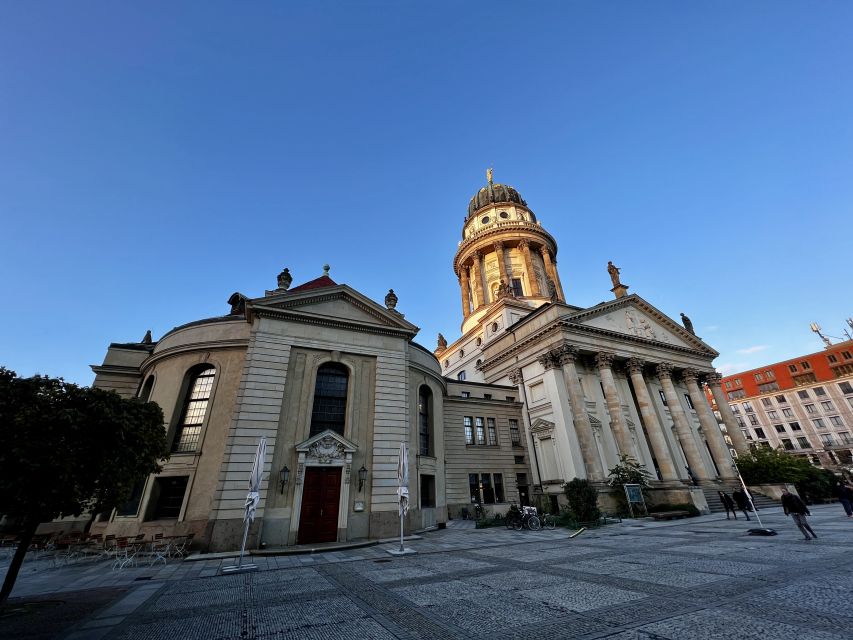
Gendarmenmarkt is often considered one of Berlin’s prettiest squares, and it provides a welcome change from the heavier political sites later in the walk. Its architecture gives you a look at Berlin’s grand urban planning and the city’s taste for formal public spaces.
The square works well in the middle of the tour. By this point, you have seen medieval traces, royal buildings, Museum Island, and a major university. Gendarmenmarkt adds another side of the capital: polished, spacious, and designed to impress.
This is a good place to listen for the details that a guide can supply. A walking tour cannot replace time spent inside Berlin’s museums, but it can explain why a square matters before you return to it independently. You can then decide if you want photographs, a longer look, or a nearby break after the tour.
There is no food or drink included. You may find cafés and other options in the city, but the tour does not promise a stop for refreshments. Since one guest specifically wished the booking information had made restroom and drink timing clearer, use facilities before meeting and carry water if you need it.
A few more things to do in Berlin worth a look
- Berlin: Reichstag, Dome and Government District Guided Tour
★ 4.7 · 18,288 reviews - Berlin: Government District around the Reichstag Guided Tour
★ 4.7 · 8,447 reviews - Berlin: Hidden Backyards Guided Walking Tour
★ 4.8 · 5,360 reviews - Berlin: 1-Hour Boat Tour with Bilingual Live Guide
★ 4.7 · 3,629 reviews
Checkpoint Charlie and the Berlin Wall
The route then turns toward Checkpoint Charlie, one of Berlin’s best-known Cold War locations. The site is tied to the Berlin Wall and to the division between East and West Berlin. It is also a place where the difference between historical importance and present-day atmosphere can be striking.
Checkpoint Charlie has become highly visited and photographed, so the guide’s context is especially useful. You will learn about the wall and the divided city rather than seeing only the famous sign and guardhouse-style display. The broader story helps explain how Berlin functioned as a city split by ideology, borders, and competing political systems.
This stop is valuable because it links the earlier parts of the tour to a more recent past. The royal center and Museum Island can feel distant from the Cold War, but the walking route shows that they belong to the same city. You are moving through layers of Berlin rather than jumping between unrelated attractions.
Do not expect a museum visit or a long section of preserved wall to be included. The stated experience is a guided outdoor walk past the location and related sites. If the Berlin Wall is one of your main interests, you may want to plan a separate visit to a dedicated wall memorial after you understand the basic story here.
The former bunker site and Berlin’s darkest chapter
One of the most serious stops comes at the place where Hitler’s former bunker stood. The physical site is not a grand monument, and that is part of the point. The location is tied to one of the darkest periods in German history, but the emphasis is on learning what happened rather than turning the place into a spectacle.
A thoughtful guide can help you understand why Berlin handles such sites with restraint. You may encounter ordinary streets and modern buildings around a location that carries enormous historical weight. The contrast can be unsettling, but it also shows how the city has had to live with its past.
This section may not suit anyone seeking a light sightseeing stroll. The subject matter is serious, and the tour includes several difficult chapters of German history. For many people, though, that honesty is one of the main reasons to choose this route. Berlin is not only grand squares and famous gates, and the tour does not shy away from that fact.
Finishing at the Brandenburg Gate
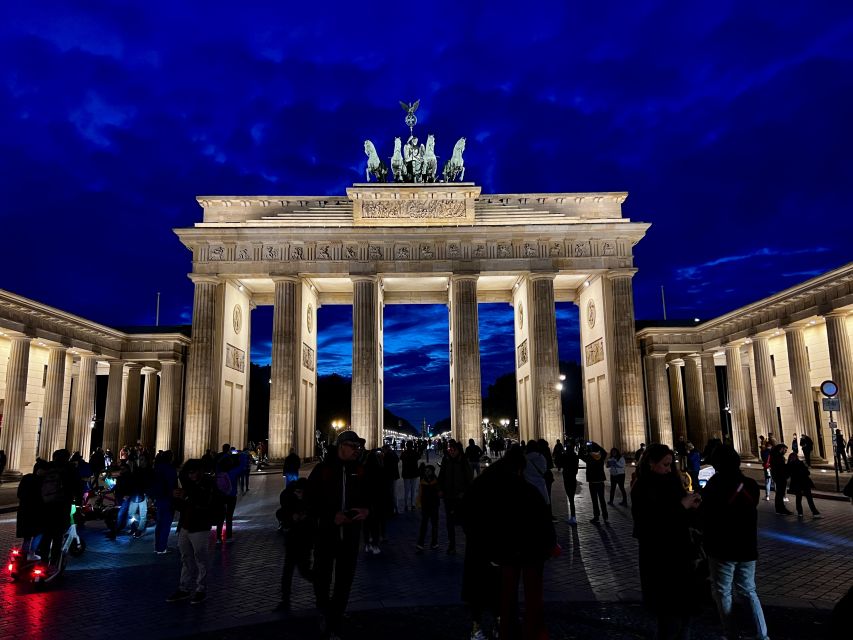
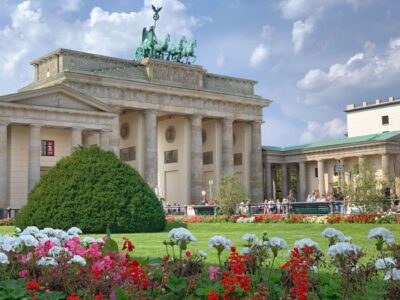
The final stop is the Brandenburg Gate, where the route reaches a fitting conclusion. Its classical archways once symbolized a divided city and later came to represent German and European unity.
Ending here gives the tour a clear emotional and historical shape. You start near the early city, pass through royal and cultural Berlin, confront dictatorship and division, and finish at a monument linked with a new era. That sequence is the tour’s strongest feature.
The Brandenburg Gate is also a practical place to continue your day. The tour does not include hotel drop-off, so you will make your own way onward, but the central location makes it easy to keep sightseeing. You might continue toward nearby government buildings or return to another part of the center, depending on your plans.
What the $31 price really covers
At $31 per person, this is not a free walking tour, although it follows a pay-as-you-wish format. The payment covers the reservation fee and the guide’s payment, so you are not expected to add a separate reward at the end.
For two and a half hours with an English-speaking local guide, the price is reasonable if you want a structured introduction to Berlin. You are paying for the narrative and the guide’s ability to connect locations, not for admissions, transport, meals, or hotel service.
That distinction matters. If you want to enter museums, sit down for lunch, or travel between distant neighborhoods, this is not the right product by itself. If you want to understand the central sights before exploring them on your own, the cost makes better sense.
The strongest value comes when you take the guide’s practical advice seriously. J.R. in particular has been praised for offering useful tips for the days that follow. A good first-day tour can help you avoid wandering without context and can point you toward places worth revisiting.
Who will get the most from this walk
I would choose this tour for a first visit to Berlin, especially if you want the city’s major historical themes explained in one sitting. It suits adults, older children, students, and anyone who learns more from streets and buildings than from a classroom-style talk.
It is also a useful choice if you have limited time. In 2.5 hours, you see a large portion of the historic center and finish at one of Berlin’s most important symbols. You will not master the city in one walk, but you will know where its main chapters took place.
History fans should appreciate the chronological design. The route covers medieval Berlin, the Hohenzollern monarchy, cultural institutions, Nazi Germany, the Berlin Wall, the Cold War, and reunification. That range is broad, so the guide cannot give every subject equal depth. Think of it as a strong overview rather than a specialist tour of any single period.
You might choose another activity if you dislike walking, want extensive time inside museums, or prefer a small subject-specific tour. The tour is also less suitable for anyone expecting food, drinks, hotel pickup, or a dedicated Berlin Wall memorial experience.
Practical advice for a smoother morning or afternoon
Wear shoes you can walk in comfortably and dress for the weather. The route includes open public spaces, including Museum Island and the Brandenburg Gate area, where wind and cold can be noticeable.
Arrive 10 minutes early at the Red Town Hall. The meeting point is near easy-to-recognize landmarks, but arriving early gives you time to locate the group without starting the tour stressed.
Use a restroom before the start and bring water if needed. The activity does not promise a refreshment or restroom break, so do not assume one will be built into the schedule.
Keep your schedule flexible after the tour. The walk may leave you wanting more time at Museum Island, the Berlin Wall, or the Brandenburg Gate. Since the tour is an overview, plan separate visits if you want to enter museums or study specific sites in detail.
Free cancellation is available up to 24 hours before the activity, and you can reserve now while paying later. The tour is listed as wheelchair accessible. Since individual accessibility needs vary, confirm any detailed requirements before booking.
Should you book this Berlin walking tour?
Book it if you want Berlin’s central sights arranged into one clear story. The route is especially useful at the start of a stay, when Alexanderplatz, Museum Island, Checkpoint Charlie, the former bunker site, and the Brandenburg Gate may otherwise feel like disconnected stops.
The best reasons to choose it are the chronological structure, the serious treatment of Berlin’s difficult past, and the practical advice that guides such as J.R., Jule, Ru, and Will have brought to the walk. The main limits are just as clear: no interior admissions, no refreshments, no hotel pickup, and plenty of time on your feet.
At $31, I consider it a good buy for a history-focused introduction. Arrive prepared, wear suitable clothing, and use the tour as a foundation for the rest of your Berlin visit.
FAQ
How long does the Berlin walking tour last?
The tour lasts 2.5 hours.
What language is the tour conducted in?
The tour is conducted in English by a live local guide.
Where does the tour meet?
The meeting point is in front of the Red Town Hall, or Rotes Rathaus, near the TV Tower and Neptune Fountain.
What sights are included on the walking route?
The route includes Alexanderplatz, the TV Tower area, medieval remnants of Berlin, the reconstructed Hohenzollern Royal Palace, Museum Island, Berlin Cathedral, Humboldt University, Gendarmenmarkt, Checkpoint Charlie, the former bunker site, and the Brandenburg Gate.
Does the tour include museum admission?
No. The experience includes a guided outdoor walk, but museum entry is not included.
Is food or drink included?
No. Food and drinks are not included in the activity.
Is hotel pickup provided?
No. You need to make your own way to the Red Town Hall meeting point.
Can I cancel the booking?
Yes. You can cancel up to 24 hours before the activity for a full refund. You can also reserve now and pay later.
Just added in Berlin
- Private One way Airport Transfer Berlin Airport To Berlin★ 3.5 · 17 reviews
- Private Walking Tour: Berlin Wall, Cold War and Checkpoint Charlie★ 5.0 · 37 reviews
- Modern Berlin Private Walking Tour: Diverse, Vibrant and Exciting German Capital★ 5.0 · 13 reviews
- Private Day Trip to Potsdam from Berlin by Train★ 4.5 · 27 reviews
- City Explorer: Potsdam Private Day Trip★ 4.5 · 10 reviews
- Berlin Private Custom Tour in a Minivan, East and West★ 5.0 · 123 reviews
- Berlin Private Custom 5-Hour Tour by Car★ 5.0 · 30 reviews
- Private Half-Day Sightseeing Tour in Berlin★ 3.5 · 6 reviews
Walking Tours, compared.



Third Reich Berlin: Hitler and WWII Walking Tour
Read our review →