Reviewed · WALKING TOURS
Berlin: City-West Walking Tour with a Real Berliner
Berlin’s City-West is more than shopping streets and grand buildings. With native Berliner Carlo, you get the story of how this part of the city became an isolated western outpost during the Cold War, then grew into a center for culture, design, food, and nightlife. Kurfürstendamm and Breitscheidplatz provide the big sights, while the guide’s personal connection gives the walk its human scale.
I like the small groups of no more than 10 and the chance to ask questions without shouting across a crowd. I also like the useful local advice, especially where to find typical Berlin food and what other parts of the city deserve your time. The main drawback is simple: two hours gives you a strong introduction, but not enough time to explore the major buildings in depth or linger at every stop.
Key points at a glance
- A native Berliner leads the walk: Carlo brings personal stories about life in West Berlin during the city’s division.
- The route covers City-West essentials: See KaDeWe, the Europa-Center, Kurfürstendamm, the Kaiser Wilhelm Memorial Church, and Savignyplatz.
- The Cold War is the central thread: Learn why this area became the practical and symbolic center of West Berlin.
- A small group keeps the walk personal: The maximum of 10 participants makes questions and conversation easier.
- Evening departures can be especially pleasant: One participant found summer evening light and cooler temperatures ideal for walking.
- The route ends at Savignyplatz: This gives you a useful place to continue with food or drinks after the tour.
Why City-West deserves two hours of your Berlin time
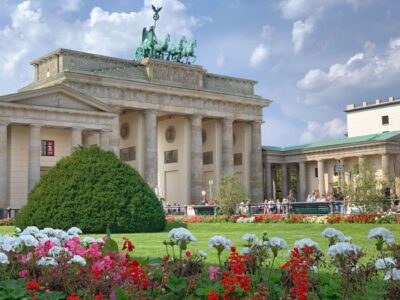
Many first visits to Berlin focus on the former eastern center: Museum Island, the Brandenburg Gate, the Reichstag, and the Berlin Wall. That makes sense, but it can leave out a major part of the city’s modern story. City-West tells you what happened on the other side of the divide.
After World War II, West Berlin was surrounded by East Germany and cut off from the rest of West Germany by land. Yet it remained a western-controlled island inside a communist state. Kurfürstendamm, the area around Zoologischer Garten, and Breitscheidplatz became the public face of that unusual political reality.
You can see the results in the architecture. Some buildings point back to the imperial and prewar city. Others reflect the commercial confidence of West Berlin. Still others carry the marks of war and division. This mix gives the walk more substance than a simple parade of shops.
I would use this tour early in your Berlin stay. The guide explains the city’s basic layout, and that helps you make sense of later visits to neighborhoods and sights on both sides of the former border.
Other walks around Berlin:
- Discover Berlin Half-Day Walking Tour
★ 5.0 · 9,624 reviews - Berlin: Third Reich and Cold War 2 Hour Walking Tour
★ 4.9 · 6,830 reviews - Berlin: Discover Berlin Walking Tour
★ 4.9 · 5,998 reviews
Starting at Wittenbergplatz and KaDeWe
The meeting point is outside Wittenbergplatz U-Bahn station, at the Tauentzienstrasse exit. Look for the guide carrying the Get Your Guide, You in Berlin flag. This is a busy part of town, so arriving at the correct exit matters. Give yourself enough time to come up from the station and orient yourself before the walk begins.
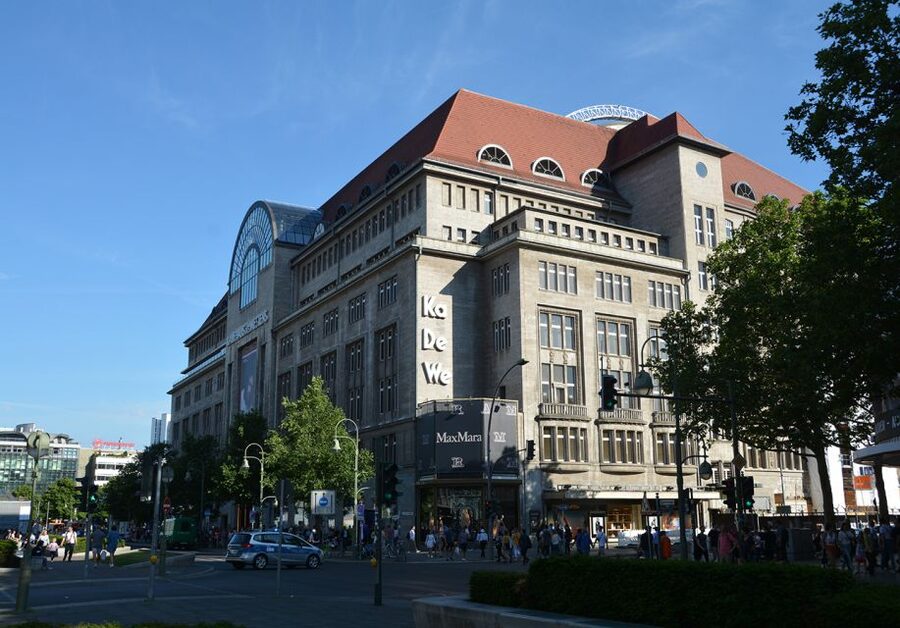
The first major sight is KaDeWe, short for Kaufhaus des Westens. It is one of Europe’s best-known department stores and a symbol of West Berlin’s commercial life. The building is not just a place to shop. During the division of Berlin, a major western department store in this location also sent a clear message about consumer choice and the contrast between the two political systems.
You will hear about the store as part of the city’s larger story, not simply as a retail stop. If you want to return later, allow extra time beyond the two-hour tour. The walk gives you context, but it does not turn into a full department-store visit.
This opening area is also useful for practical reasons. It is easy to reach by U-Bahn, and it places you close to several shops, restaurants, and streets that you may want to revisit. I would not plan a heavy meal before meeting the guide, since the route continues through several busy central areas and includes plenty of walking.
Europa-Center and the face of postwar West Berlin
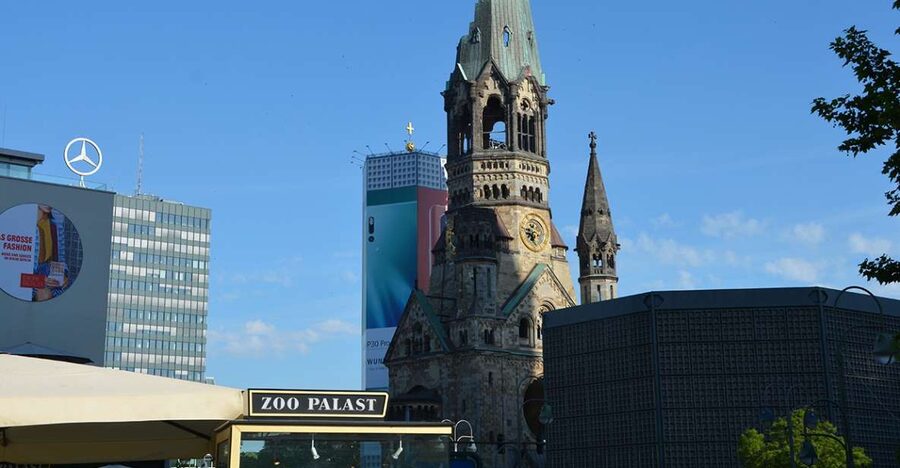
From KaDeWe, the route moves toward the Europa-Center. This complex became one of the recognizable symbols of West Berlin and remains part of the visual identity of City-West.
The Europa-Center helps explain how West Berlin presented itself during the Cold War. The city needed a modern commercial center, and this part of town served that role. The contrast with older landmarks nearby is part of the appeal. In a short distance, you move from a historic department store to postwar commercial architecture and then toward the church that has become the area’s most powerful reminder of wartime destruction.
This is one place where a guide adds real value. On your own, you can photograph the buildings. With Carlo, you get the political and social reasons they matter. He also speaks English, German, and Italian, so you can choose the language that suits you best.
The walk does not promise a detailed architectural lecture. Instead, it connects the buildings to the changing role of City-West. That approach works well if you want a clear story rather than a list of dates and design terms.
Kurfürstendamm, Berlin’s grand western avenue
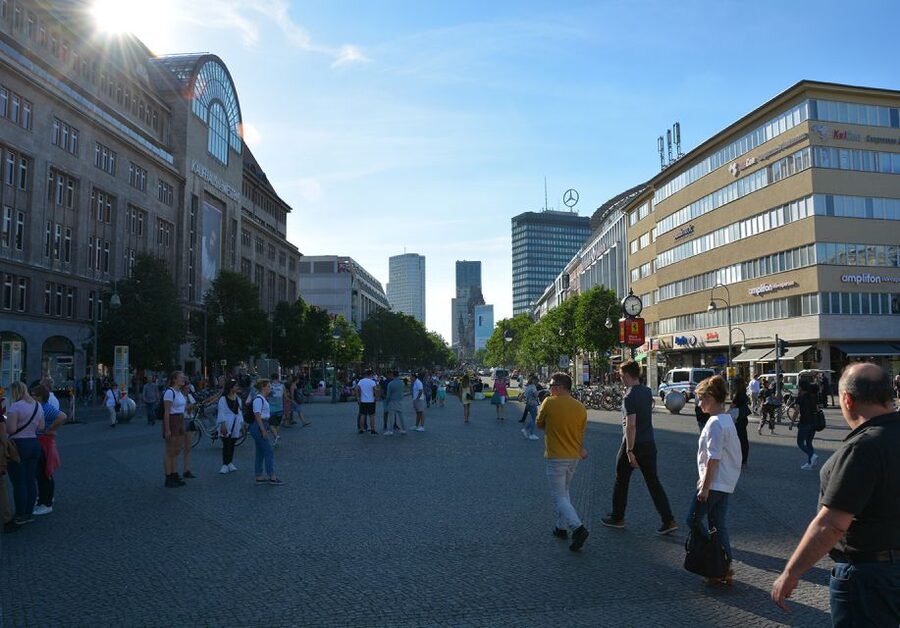
Kurfürstendamm, often shortened to Ku’damm, is the route’s main artery. This broad avenue is tied to shopping, cafés, hotels, theaters, and the public life of West Berlin.
The guide places the street in a longer timeline, including Berlin’s famous 1920s. The city’s golden twenties brought nightlife, art, theater, new social freedoms, and an appetite for modern culture. That era is only one part of Berlin’s story, but it helps explain why the western center became linked with style, entertainment, and experimentation.
Then the tour brings you forward to the Cold War. Kurfürstendamm was not merely a pleasant avenue. It was part of the working center of a city surrounded by another country. Its shops, signs, traffic, and public spaces carried political meaning.
I like this part of the walk because it avoids treating Berlin as a museum frozen in the past. You see a living avenue while learning how its role changed across several periods. At the same time, the street can be crowded and noisy. If you prefer quiet lanes and small historic buildings, this portion may feel more urban and commercial than expected.
A few more things to do in Berlin worth a look
- Berlin: 1-Hour City Tour by Boat with Guaranteed Seating
★ 4.3 · 16,993 reviews - Berlin: City Sightseeing Hop-On Hop-Off Bus Tour
★ 4.1 · 4,233 reviews - Berlin: 1-Hour City Sightseeing Cruise
★ 4.4 · 2,210 reviews - Berlin City Hop-on Hop-off Tour with Optional Cruise
★ 3.5 · 1,155 reviews
Kaiser Wilhelm Memorial Church at Breitscheidplatz
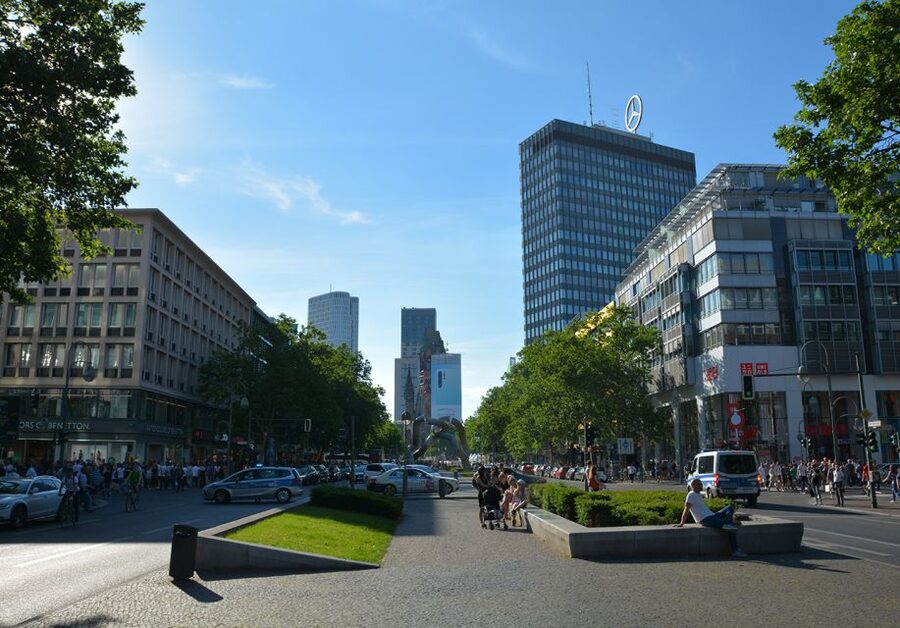
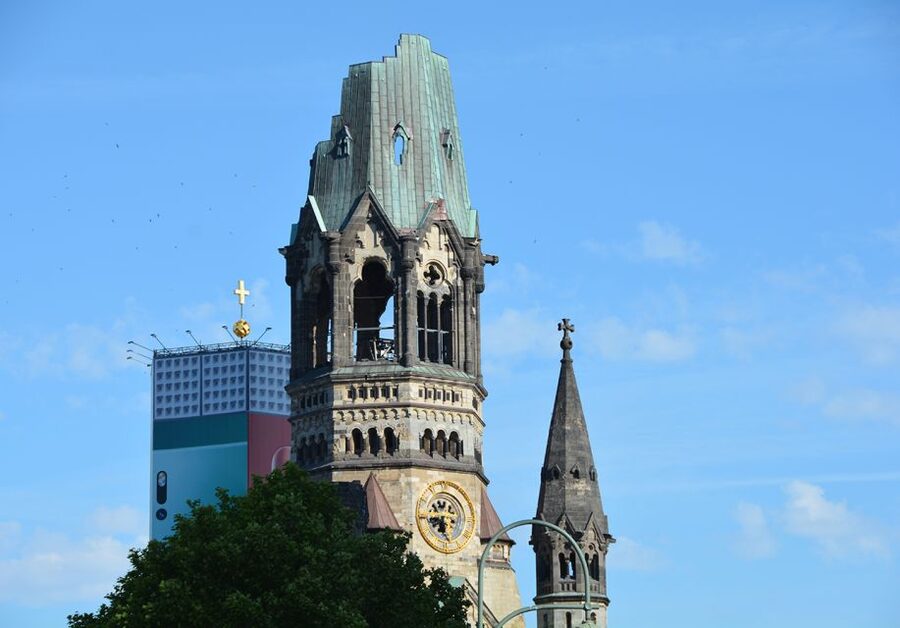
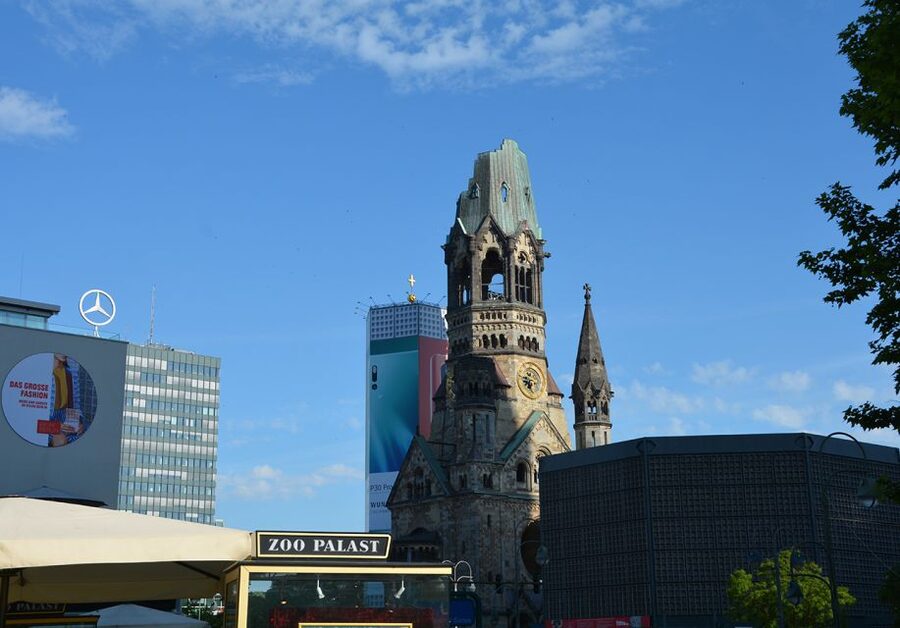
The Kaiser Wilhelm Memorial Church is the emotional center of the route. Its damaged tower was left in place after World War II, creating a direct and memorable reminder of destruction. A modern church was built beside it, giving the square a striking combination of old damage and postwar design.
At Breitscheidplatz, you can better understand how memory works in Berlin. The ruined tower is not hidden away. It sits in the middle of one of the city’s busiest commercial areas, surrounded by shops, traffic, and daily life. That contrast is exactly what makes the stop powerful.
The tour includes guided sightseeing here, but the format is a walking introduction rather than an extended indoor visit. If you want more time inside the church or its memorial spaces, plan to return on your own. The two-hour schedule keeps moving, and the guide needs to cover the whole route.
This stop also gives you a chance to pause and take in the area. Bring water, especially in warm weather. One participant specifically appreciated that the guide was willing to stop for water or a restroom break when needed, a small courtesy that matters on a city walk.
Zoologischer Garten and the Cold War city center
The area around Zoologischer Garten was one of West Berlin’s key traffic centers. Its railway station, U-Bahn links, buses, shops, and nearby streets made it a natural point of connection. The station’s importance also helped shape the wider district.
The guide explains why this part of town became the center of West Berlin during the division. It was not chosen simply because it looked attractive. It had transport links, commercial space, public institutions, and a role in the daily life of a city cut off from its surrounding region.
This is where personal stories about West Berlin can make the history easier to grasp. Political division can sound abstract in a textbook. It becomes more understandable when connected to where people shopped, changed trains, met friends, and spent evenings.
You should also expect a modern urban setting rather than a preserved Cold War zone. Much of Berlin has changed, and the tour helps you read the clues that remain. That makes it useful for first-time visitors, but anyone looking for untouched historical streets should set expectations accordingly.
From the western center to Savignyplatz
The final section leads toward Savignyplatz, where the tour ends. This area feels different from the large commercial spaces around KaDeWe and Breitscheidplatz. It is a good endpoint because you can continue your evening without needing to cross the city immediately.
The guide also offers advice about typical Berlin food in the western part of town. The information is practical rather than formal: you learn where to look for local dishes and how the city’s food culture fits into its wider identity.
Berlin’s western districts are known for more than shopping. The tour connects food, art, culture, tolerance, lifestyle, and creative work to the city’s changing identity. That gives you ideas for the rest of your stay, especially if you want to eat and explore beyond the standard sights.
Savignyplatz is also a useful place to stop after the walk. The tour does not include a meal, so budget separately if you want to follow the guide’s food suggestions. The endpoint gives you flexibility, but you may need to decide on your next stop yourself.
What Carlo adds to the experience
Carlo is the guide most closely associated with this experience. He is described as a native Berliner, a professional guide, and a speaker of German, English, and Italian. His role is not only to point out buildings. He connects them to the experience of living in a divided city.
That personal angle is the tour’s strongest feature. One person booked and ended up receiving what was almost a private walk, while another praised Carlo’s friendly manner, preparation, and willingness to answer questions. You should not assume you will have the group to yourself, but the 10-person limit keeps the setting small.
The tone appears to be conversational and flexible. You can ask about the sights, the city’s layout, other places to visit, and local food. The guide may also adjust the pace for reasonable needs, including a water or restroom stop.
A guide cannot turn two hours into a full course on Berlin. Carlo’s value is in helping you see connections quickly. You leave with a clearer sense of why City-West matters and how it fits into the rest of the capital.
Is $43 a fair price for two hours?
At $43 per person, this is not Berlin’s cheapest way to see the area. You can walk along Kurfürstendamm and photograph the church without paying for a guide. The question is what you want from the visit.
The price makes better sense if you value context, personal stories, and local orientation. The route covers several major points in one outing, and the small group allows questions that are harder to ask on a large bus tour. You are also paying for a guide who can explain the Cold War story while showing you the physical places connected to it.
The value is weaker if you want long interior visits, extensive free time, or a food tasting. The activity includes a professional guide, but food, shopping, and admission costs are not included. Think of it as a focused introduction to City-West, not a full-day sightseeing package.
The flexible booking terms help if your schedule is still changing. You can reserve and pay later, and cancellation is free up to 24 hours before the start time. The tour runs in all weather and on public holidays, so your clothing choice matters.
Who should book this City-West walk?
I would recommend it to you if:
- You want to understand West Berlin’s Cold War role.
- You prefer walking to riding through the city.
- You like asking questions in a small group.
- You want a native Berliner’s perspective.
- You are staying near City-West, Kurfürstendamm, or Zoologischer Garten.
- You want local tips before exploring on your own.
- You can walk outdoors for two hours in changing weather.
It is also a good fit for repeat visitors who have seen the Brandenburg Gate and Museum Island but have not spent much time in the western center. The route fills an important gap without requiring a full day.
I would choose another activity if your main goal is museum interiors, a detailed architectural study, or a food tour with tastings. This walk is strongest when you want the city’s story tied to its streets and public spaces.
Should you book it?
Book this tour if you want a compact, personal introduction to the part of Berlin shaped most clearly by the Cold War. KaDeWe, the Europa-Center, Kurfürstendamm, the Kaiser Wilhelm Memorial Church, Zoologischer Garten, and Savignyplatz make a logical route, and Carlo’s personal connection gives the walk more life than a basic sightseeing loop.
The best timing may be early in your stay, or on a summer evening when the air is cooler and daylight lasts late. Choose comfortable clothing and shoes, and leave room afterward for food around Savignyplatz.
Skip it if you already know City-West well or want a slow visit inside each major attraction. For most first-time visitors, though, the two hours and small group offer a useful introduction to Berlin beyond the familiar eastern landmarks.
FAQ
Where does the Berlin City-West walking tour begin?
The tour begins at Wittenbergplatz U-Bahn station, at the Tauentzienstrasse exit. Look for the guide carrying the Get Your Guide, You in Berlin flag.
Where does the tour finish?
The walk finishes at Savignyplatz, at 10629 Berlin, Germany.
How long does the walking tour last?
The tour lasts two hours.
Which sights are included on the route?
The route includes KaDeWe, the Europa-Center, Kurfürstendamm, the Kaiser Wilhelm Memorial Church, the area around Zoologischer Garten, and Savignyplatz.
Which languages are available?
The live guide leads tours in German, English, or Italian.
How large is the group?
The group is limited to 10 participants.
Does the tour operate in bad weather?
Yes. The tour takes place in all weather conditions and on public holidays, so wear suitable clothing for an outdoor walking tour.
Just added in Berlin
- Private Walking Tour: Berlin Wall, Cold War and Checkpoint Charlie★ 5.0 · 37 reviews
- Modern Berlin Private Walking Tour: Diverse, Vibrant and Exciting German Capital★ 5.0 · 13 reviews
- Private One way Airport Transfer Berlin Airport To Berlin★ 3.5 · 17 reviews
- Private Day Trip to Potsdam from Berlin by Train★ 4.5 · 27 reviews
- City Explorer: Potsdam Private Day Trip★ 4.5 · 10 reviews
- Berlin Private Custom 5-Hour Tour by Car★ 5.0 · 30 reviews
- Private Half-Day Sightseeing Tour in Berlin★ 3.5 · 6 reviews
- Berlin Private Custom Tour in a Minivan, East and West★ 5.0 · 123 reviews
Walking Tours, compared.

Third Reich Berlin: Hitler and WWII Walking Tour
Read our review →