
Reviewed · WALKING TOURS
Berlin: 2.5-Hour Walking Tour through Kreuzberg 61
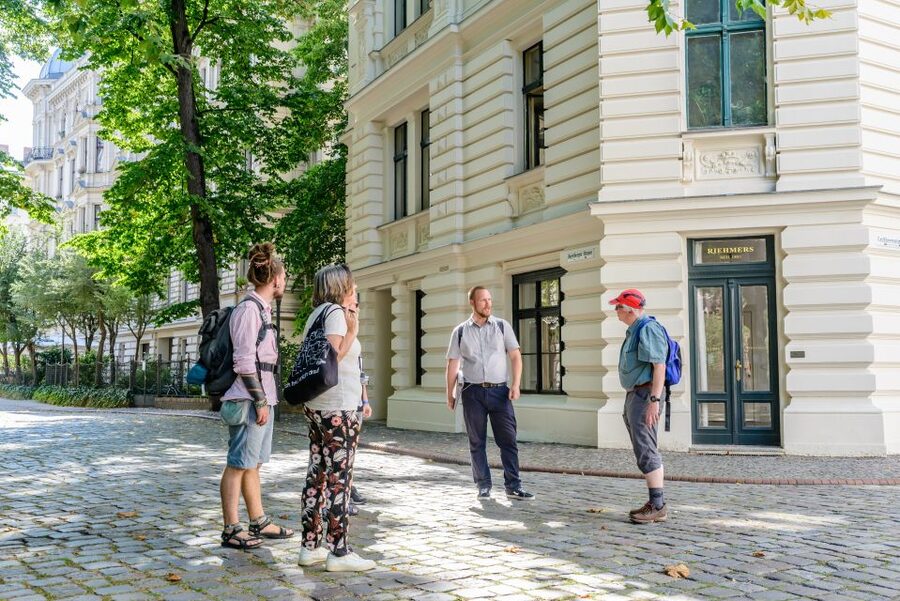
Kreuzberg 61 is the quieter, more residential side of one of Berlin’s best-known districts. This 2.5-hour walk moves from Platz der Luftbrücke to Bergmannstrasse, with grand 19th-century buildings, tucked-away courtyards, a hilltop view, and the waterfall in Viktoriapark along the way. It is less about checking off famous sights and more about learning how this part of Berlin took shape.
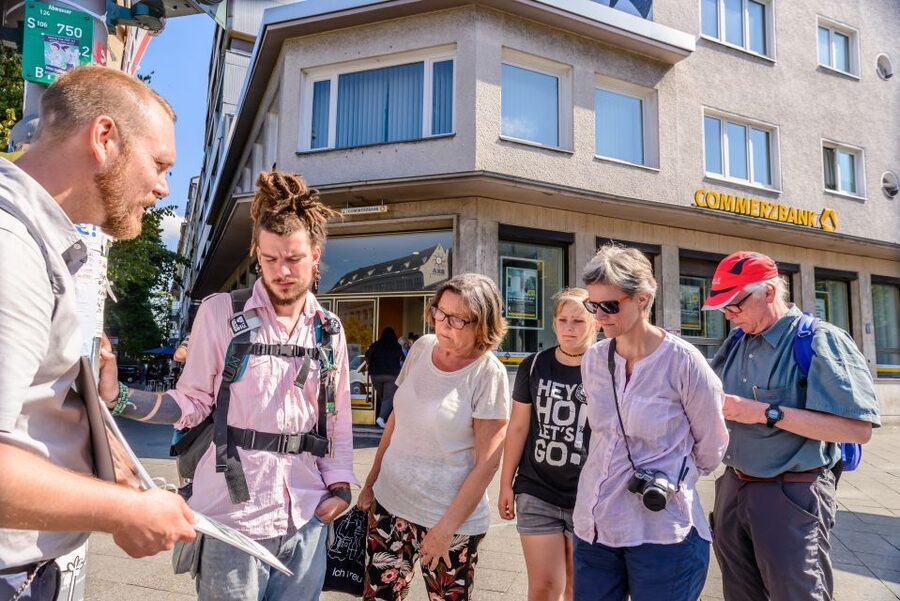
I like two things in particular: the strong focus on architecture and urban history, and the way the route includes small places you could easily pass without noticing. Guides such as Tobias Schwabe add personal stories and background on politics, German life, and the district’s changing identity. The main drawback is simple: you walk for most of 2.5 hours, and there is only a short scheduled break, so wear good shoes and plan a drink afterward.
Key points to know before booking
- Start at Platz der Luftbrücke: The route opens with Berlin’s 19th-century military and civic past before moving into residential Kreuzberg.
- Climb Viktoriapark: The waterfall, hilltop setting, and Prussian monument provide the tour’s best scenery and city views.
- Look closely at the courtyards: Riehmers Hofgarten, the Sarotti courtyards, and a half-timbered courtyard show a side of Kreuzberg many visitors miss.
- Expect an architecture-led walk: This is a good pick if you want more than the usual artists-and-Turkish-restaurants picture of Kreuzberg.
- Finish near Bergmannstrasse: The final stretch brings you into the district’s multicultural daily life, shops, and Marheineke Markthalle.
- Best value at $23: The price is modest for a live, two-language walking tour lasting two and a half hours.
Why Kreuzberg 61 deserves a closer look
Kreuzberg is often reduced to a few familiar ideas: nightlife, street art, immigrant food, and alternative culture. Those things are part of the district, but Kreuzberg 61, the western section around Bergmannstrasse and Viktoriapark, offers a broader picture.
Here you see apartment blocks, former military sites, formal squares, private courtyards, and traces of changing political thought. The route shows how the district grew in the 19th century, how Berlin’s architecture reflected social life, and how old buildings now share space with shops, markets, and newer uses.
I like this approach because it gives you a better set of questions. Who built these blocks? Why does this square feel so different from the next one? How did a military edge of Berlin become a mixed residential and commercial neighborhood? A good guide turns those questions into a walk rather than a lecture.
The tour is also useful if you already know central Berlin. Several people who live in the city have used it to see corners they had never noticed. That tells you what kind of experience this is: not a fast parade past major landmarks, but a close look at a neighborhood’s details.
Other walks around Berlin:
- Discover Berlin Half-Day Walking Tour
★ 5.0 · 9,624 reviews - Berlin: Third Reich and Cold War 2 Hour Walking Tour
★ 4.9 · 6,830 reviews - Berlin: Discover Berlin Walking Tour
★ 4.9 · 5,998 reviews
Starting at Platz der Luftbrücke
The walk begins at or near Mehringdamm 129, with the exact meeting point depending on the option booked. The first major stop is Platz der Luftbrücke, a broad square tied to Berlin’s military and transport history.
You spend about 25 minutes here, with time for guided sightseeing and walking nearby. The square helps set the tone for the rest of the tour. Instead of beginning with a famous postcard view, you begin with buildings and public spaces that explain how western Kreuzberg developed.
The surrounding military buildings are part of the area’s 19th-century character. From here, the tour leads toward the Verband der deutschen Buchdrucker monument, where you spend roughly 10 minutes. This stop adds a labor and professional-history angle to the route. It is a reminder that Berlin’s story is not only about kings, wars, and grand government buildings. Workers, trades, and organized professions also shaped the city.
That broader view is one of the walk’s strengths. You are not asked to treat architecture as decoration. Buildings become evidence of how people lived, worked, and organized themselves.
Small corners before Viktoriapark
The route then reaches Sixtusgarten, a brief stop of about 10 minutes. This is the kind of location that makes the tour worthwhile for repeat visitors. It is not necessarily a headline attraction, but the guide helps you understand why the place matters and what to notice.
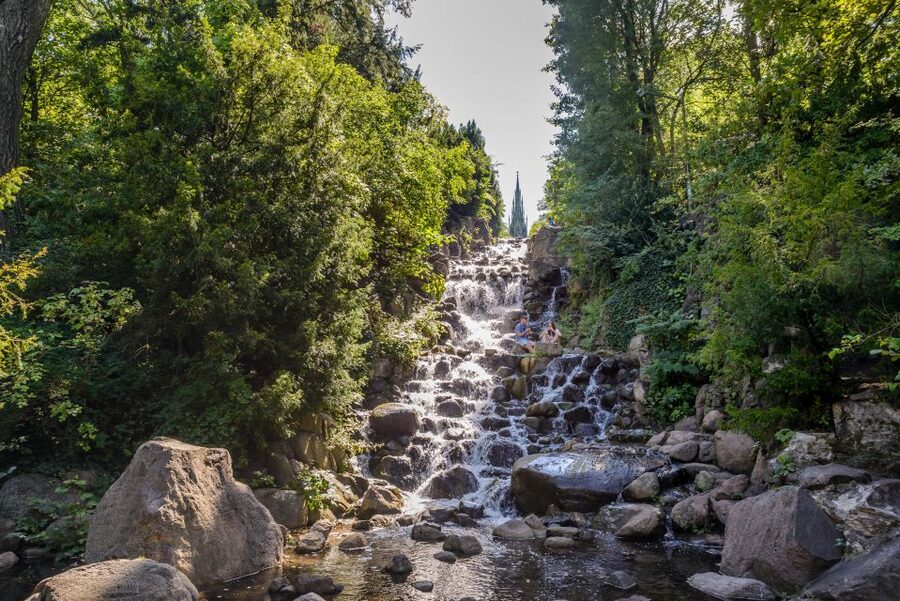
The next major section is Viktoriapark, where the tour spends about 35 minutes. This is the longest stop, and with good reason. The park offers a break from apartment blocks and traffic, with a waterfall, paths, scenic views, and the hill that gives Kreuzberg its name.
The park is an oasis of calm within the city. You may stop for photographs, but the guide also explains the setting and its place in Berlin’s development. The hill gives you a wider view across the city, while the waterfall creates a surprisingly natural-feeling scene.
Do not expect a long rest stop here. This is still a walking tour, and the time includes sightseeing and commentary. Still, Viktoriapark is likely to feel like the route’s most refreshing pause. I would especially want this section in spring, summer, or early autumn, when the park is easier to enjoy. The tour also runs in colder months, and one past participant found the walk worthwhile even in very cold weather, but you should dress for the conditions.
Schinkel’s monument and the view over Berlin
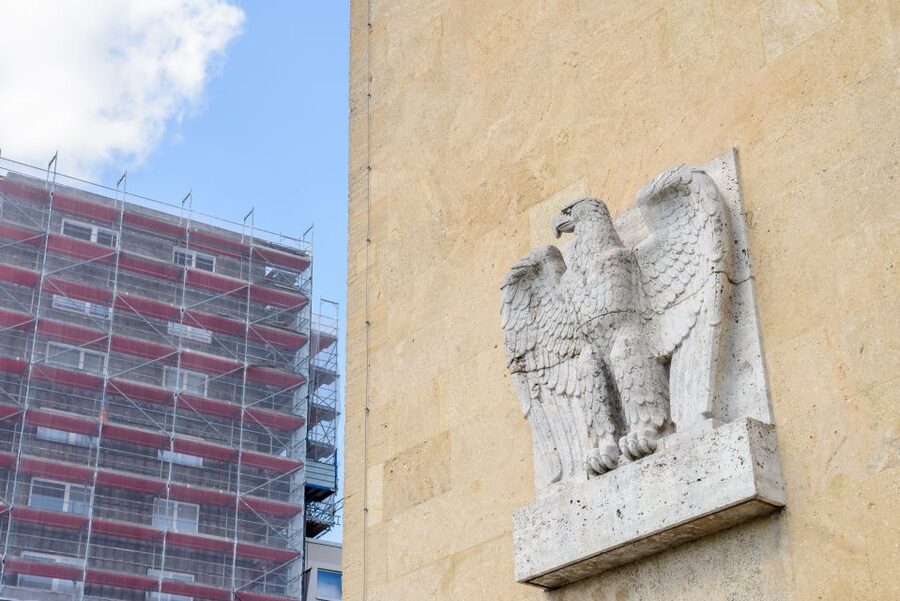
Within Viktoriapark, the route includes the Prussian Monument for the Liberation Wars. The monument is associated with Karl Friedrich Schinkel, one of Berlin’s most important architects.
This stop gives the guide a chance to connect the park’s scenic appeal with Prussian history, public memory, and Berlin’s architectural tradition. You get about 10 minutes here, with photographs and views along the way.
The monument is not simply something to point at and leave behind. Its position on the hill matters. From this high ground, the city opens out, and you can understand why the site has such a strong visual presence above the apartment blocks.
If you enjoy architecture, monuments, or the way cities use public space, this part should be a highlight. If you prefer only contemporary Berlin, the Prussian material may feel more formal than the rest of the walk. The guide’s role matters here. Tobias Schwabe, named by several participants, is particularly associated with explaining how architecture, history, politics, and daily life connect.
Same base, a different kind of day out:
- Berlin: Reichstag, Dome and Government District Guided Tour
★ 4.7 · 18,288 reviews - Berlin: 1-Hour City Tour by Boat with Guaranteed Seating
★ 4.3 · 16,993 reviews - Berlin: Boat Tour Along the River Spree
★ 4.4 · 11,252 reviews - Berlin: Hop-on Hop-off Bus Tour with Live Commentary
★ 4.3 · 8,579 reviews
Riehmers Hofgarten and the private side of Kreuzberg
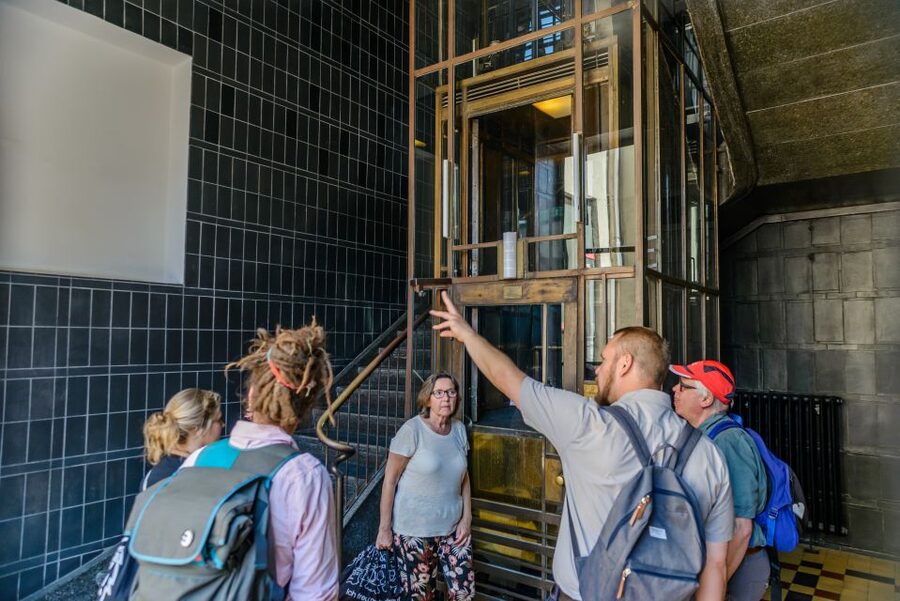
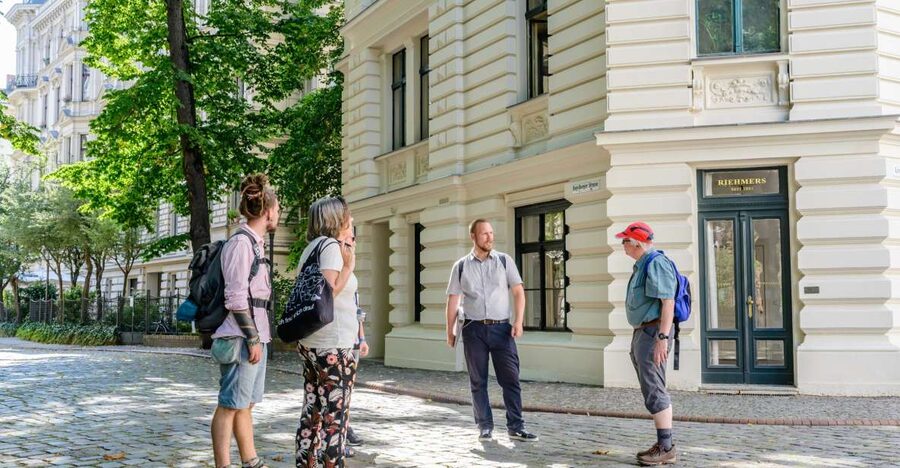
After Viktoriapark, the route moves into the residential area and stops at Riehmers Hofgarten for about 10 minutes. Hofgarten means courtyard garden, and the name points to the type of urban space you are about to see: a more enclosed, carefully planned setting behind the street frontage.
This is where the tour shifts from public monuments to residential design. Berlin’s old apartment blocks can look stern from the street, but courtyards often reveal a different side. They show how buildings were organized beyond the main façade and how residents experienced their homes.
Riehmers Hofgarten also helps explain the contrast within Kreuzberg 61. You can have a busy street nearby, then enter a quieter architectural space only a short distance away. That change of mood is one of the pleasures of the route.
Because the stop is guided and relatively short, you should listen closely rather than expect a long independent visit. The value comes from knowing what you are looking at and why it was built in this form.
Sarotti courtyards and the district’s changing uses
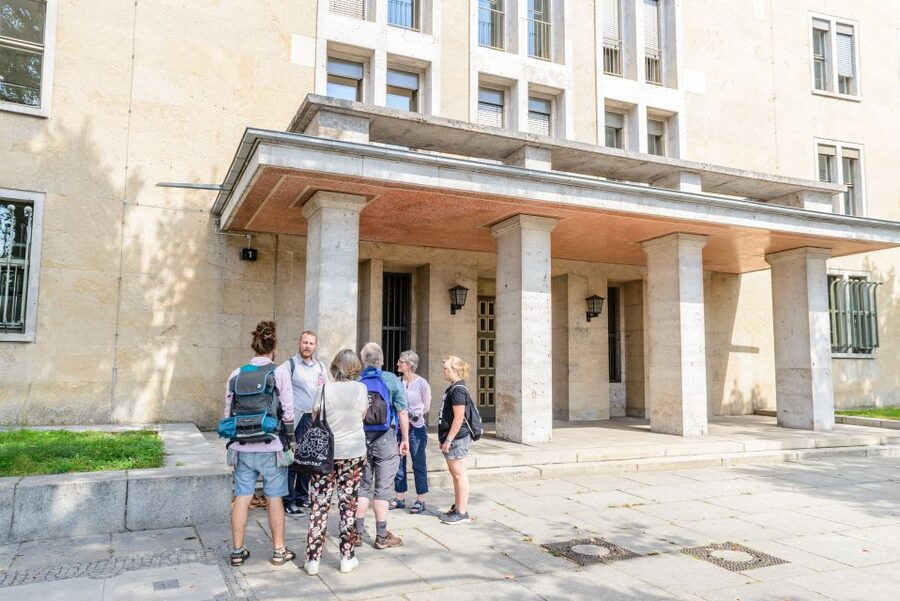
The next stop is Schmelzwerk in the Sarottihöfen, another 10-minute photo and sightseeing stop. The former Sarotti chocolate works add an industrial and commercial layer to the walk.
This location helps prevent the tour from becoming only a parade of grand homes and monuments. Kreuzberg’s identity was also shaped by production, business, and working life. The present use of the site gives you a chance to think about how older industrial places can acquire new roles.
The route’s pattern is now clear. One stop may focus on a public monument, the next on a garden courtyard, then an industrial complex. The guide keeps linking these pieces so the district feels like one evolving place rather than a collection of unrelated addresses.
That is also why this tour can work for Berlin residents. You do not need to be new to the city to find value in it. The experience rewards close attention, and it puts ordinary streets into a larger frame.
Bergmannstrasse and the everyday face of Kreuzberg
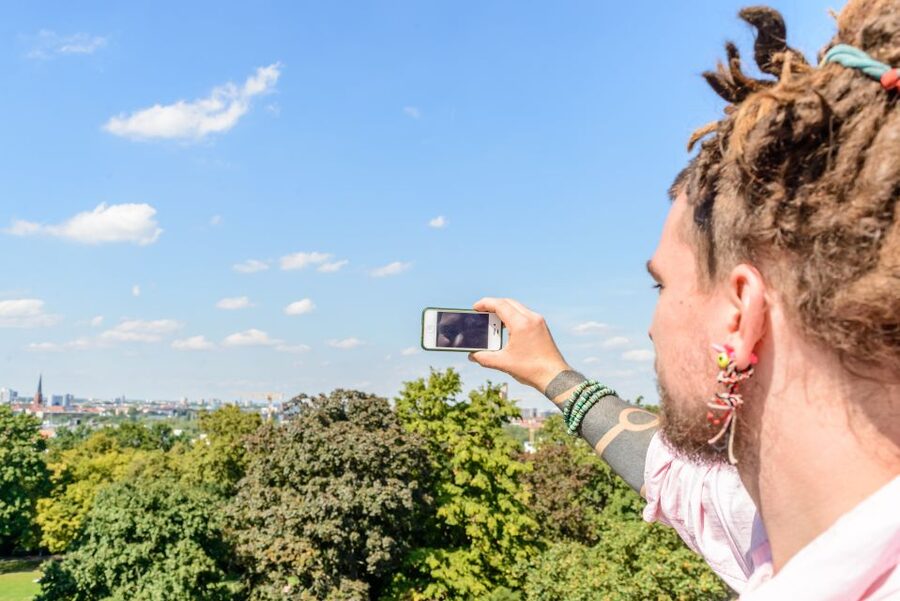
The walk spends about 20 minutes around Bergmannstrasse. This is the most obviously active commercial stretch on the route, with shopping, sightseeing, and the multicultural atmosphere associated with Kreuzberg.
You will see a different side of the district here. The earlier stops focus on monuments, courtyards, and planned spaces. Bergmannstrasse brings you back to shops, restaurants, passing pedestrians, and everyday urban life.
It is useful that this comes late in the tour. You reach the street with a better sense of what surrounds it. Instead of seeing Bergmannstrasse as an isolated food and shopping area, you can understand it as part of a neighborhood shaped by older housing, industry, migration, and changing local tastes.
The tour does not promise a food tasting, and this is not a restaurant crawl. If you want to eat afterward, the area gives you a practical place to continue on your own. Since the listed tour includes only a short break, I would not count on a full café stop during the walk.
The Fachwerkhof and Chamissoplatz
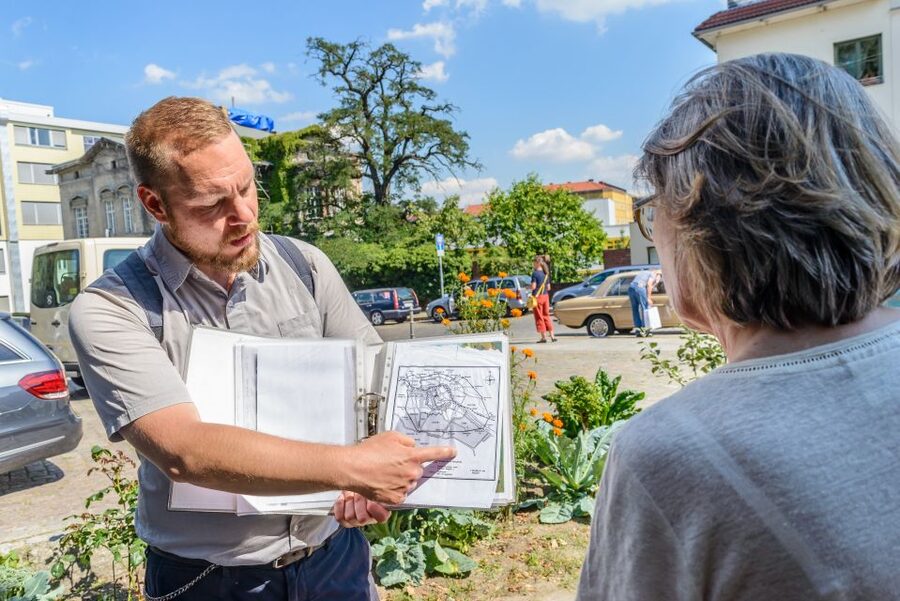
The Fachwerkhof in Berlin Kreuzberg is a quick five-minute stop. Its half-timbered construction adds another architectural note to the route, especially after the large apartment blocks and more formal public buildings.
You may find the stop brief, but that is part of the tour’s design. The guide is showing you a series of contrasts rather than giving every place a long visit. A short look at an unusual courtyard can be enough to make you more alert to similar details elsewhere in Berlin.
Chamissoplatz receives another five minutes of guided sightseeing. This charming square is one of the route’s best examples of a preserved residential setting. The well-kept architecture and quieter atmosphere make it a useful counterpoint to Bergmannstrasse.
I would pay attention to the street scale here. The appeal is not a single grand attraction, but the way the buildings and square form a coherent neighborhood space. This is the sort of place that can disappear into a general city walk unless someone points it out.
The short timing also means you should not expect an extended private visit or a long photo session at every stop. The reward is range: in one afternoon, you see monuments, parks, courtyards, industrial buildings, shops, and a market.
Ending at Marheineke Markthalle
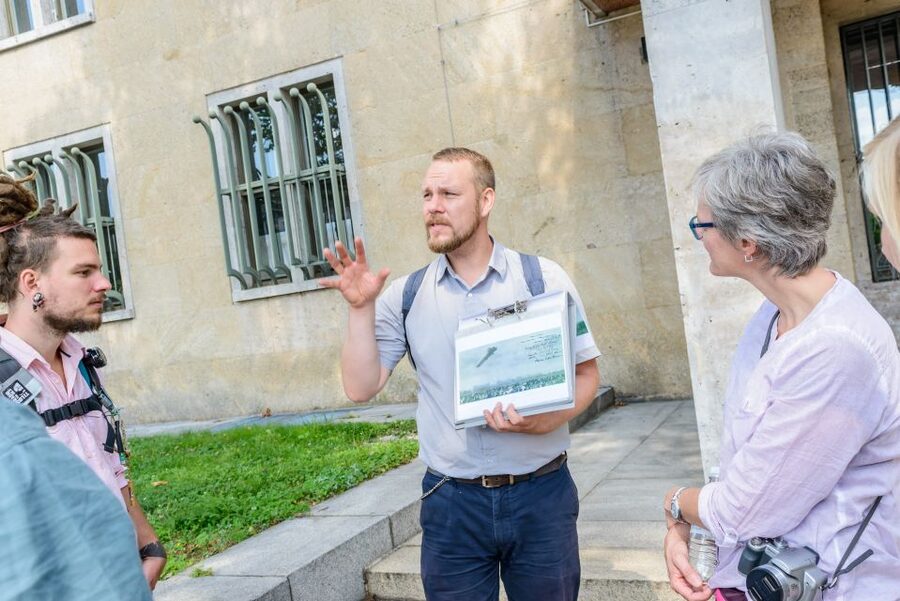
The final stop is Marheineke Markthalle, with about five minutes listed as break time, guided sightseeing, and shopping. It is a sensible finish because it brings the tour back to local daily life.
A market hall is also a useful place to end a walking route. You can look around, continue shopping, or use the area as a starting point for your own plans. The tour itself does not include a meal or tasting, so treat the market as an opportunity to explore rather than a guaranteed food experience.
The route ends with Bergmannstrasse and the market area rather than returning you to the starting point. Keep that in mind when planning your afternoon. The meeting point may vary by booking option, and a special date, time, or meeting point can be arranged for a group on request.
The guide makes the difference
This is an educational walk, so the guide is not a minor detail. The strongest praise has gone to guides who explain places clearly, share personal and historical stories, and answer questions without making the walk feel stiff.
Tobias Schwabe is specifically named by several participants. His approach is described as friendly, professional, and able to connect Berlin’s architecture with politics, history, and ordinary German life. That mix matters because Kreuzberg 61 can otherwise look like a pleasant collection of old buildings.
The tour is offered in English and German. It may suit you especially well if you want context beyond the usual World War II and Cold War focus. One of the tour’s useful qualities is its attention to older urban history, architecture, culture, and present-day buildings.
The guide also appears to adapt well to different audiences. The experience is suitable for visitors, residents, solo participants, couples, and groups. Still, remember that the exact group size is not specified, so you should not book expecting either a private tour or a small group unless your selected option says so.
Is $23 good value?
At $23 per person, the tour is good value if you want a guided neighborhood study rather than a quick sightseeing loop. You receive 2.5 hours with a professional guide, and the route covers a wide mix of places across western Kreuzberg.
The price is especially fair for people who care about buildings, urban planning, and local stories. A self-guided walk could take you past the same streets, but you would miss much of the explanation that gives them meaning.
There are limits. The tour does not list transport, food, entrance tickets, or personal expenses as included. It is also not designed around a major museum or interior visit. You are paying for the guide’s interpretation and the route’s carefully chosen public spaces.
Free cancellation up to 24 hours before the start and reserve-now-pay-later booking make it easier to fit into a changing Berlin schedule. Check the available start times, since the tour runs for a fixed 2.5 hours.
Who should book this Kreuzberg walk?
I would choose this tour if you have already seen central Berlin’s main sights and want a closer look at neighborhood life. It is also a strong choice for architecture fans, repeat visitors, and locals who want a fresh route through a familiar city.
You should be comfortable walking for most of the afternoon. The itinerary includes parks, streets, courtyards, monuments, and shopping areas, with a short break near the market hall. Good walking shoes are sensible, and cold or wet weather will affect how enjoyable the outdoor stops feel.
I would not choose it if you want nightlife, a food tour, or a fast list of famous landmarks. The route is slower in spirit, even though it covers many stops. Its reward is the explanation of places that would otherwise seem ordinary.
FAQ
How long does the Kreuzberg 61 tour last?
The tour lasts 2.5 hours.
What languages are available?
The live tour guide is available in English and German.
How much does the tour cost?
The listed price is $23 per person.
Where does the tour start?
The listed starting option is Mehringdamm 129. The meeting point may vary depending on the option booked.
Can a special meeting point or time be arranged?
Yes. A special meeting point, date, and time can be arranged for you and your group upon request when booking.
What are the main sights on the route?
The route includes Platz der Luftbrücke, Viktoriapark, the Prussian Monument for the Liberation Wars, Riehmers Hofgarten, Schmelzwerk in the Sarottihöfen, Bergmannstrasse, Chamissoplatz, and Marheineke Markthalle.
Is food included?
No food or meal is listed as included. The route ends at or near Marheineke Markthalle, where you can shop independently.
Can I cancel for a full refund?
Yes. You can cancel up to 24 hours in advance for a full refund.
Should you book it?
Book this walk if you want the Kreuzberg behind the headline attractions. You will see the hill, waterfall, monument, courtyards, squares, industrial traces, and shopping streets, but the real payoff is learning how they fit together.
At $23, it offers a lot of guided time for the money. Choose it for architecture, local history, and a thoughtful look at western Kreuzberg. Skip it only if you want a food-focused outing, indoor attractions, or a short and easy stroll.
Just added in Berlin
- Berlin: Energizing 2-Hour Morning Segway Tour★ 4.7 · 35 reviews
- Berlin: Thrilling E-Scooter Adventure Tour★ 4.4 · 66 reviews
- Beelitz-Heilstätten: Baum&Zeit Tree Top Walk Entry Ticket★ 4.9 · 7 reviews
- Beer Bike & Party Bike: Unforgettable Berlin City Tour incl. pickup★ 5.0 · 5 reviews
- AXE THROWING EXPERIENCE IN BERLIN★ 4.7 · 24 reviews
- Alternative Berlin / Street art tour – Private group★ 5.0 · 6 reviews
- Berlin: Alternative & Street Art Tour★ 4.5 · 6 reviews
- Berlin: 2.5-Hour Beer & Sunset Sightseeing Boat Cruise★ 4.6 · 61 reviews
Walking Tours, compared.

Third Reich Berlin: Hitler and WWII Walking Tour
Read our review →
Browse the lists this tour appears in