
Reviewed · WALKING TOURS
Berlin: Alternative Berlin Walking Tour
Berlin’s alternative identity is not tucked away in one museum. It runs through street art, squats, cafés, music venues, immigrant districts, and repurposed spaces. This four-hour walk follows that thread from Mitte through Kreuzberg and on toward Friedrichshain, showing how Berlin’s divided past helped shape its famously independent present.
I like two things in particular: the tour connects everyday places to bigger social changes, and it takes you well beyond the standard parade of Cold War checkpoints and grand monuments. Guides such as Rhys, Reece, Jake, Damien, Jonathan, Ben, and Antonio are praised for humor, personal insight, and strong storytelling. The drawback is practical: the pace can be brisk, and you may need public transport during the route, so it is not the best fit if you want a slow stroll or have mobility limits.
Key points to know before booking
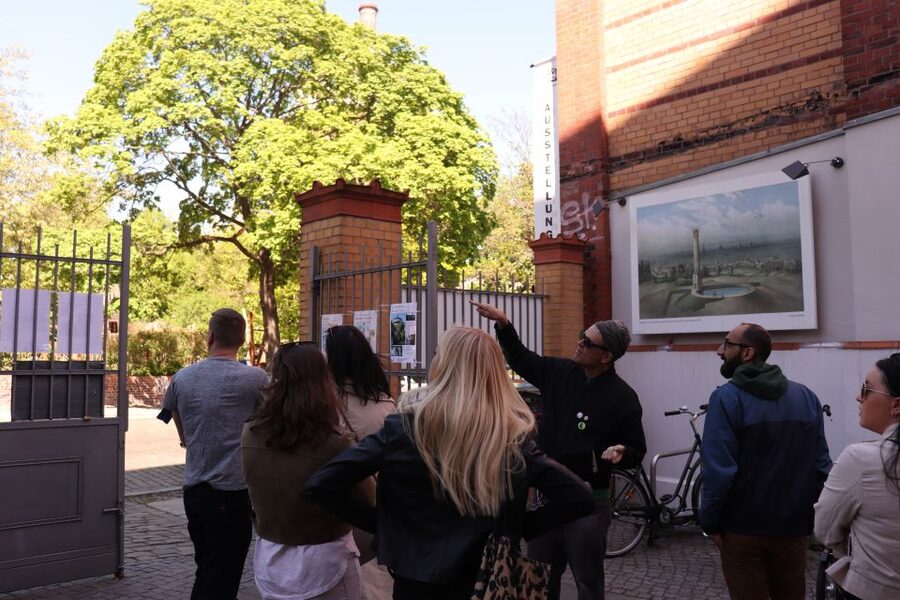
- Mitte to Kreuzberg on foot: See cafés, shops, street art, community spaces, and parts of Berlin that many first-time visitors miss.
- A social history of the city: Learn how migration, protest, music, squatting, graffiti, and politics shaped modern Berlin.
- Food with a story: Discover the origins of currywurst and döner, with a possible stop at a local fast-food spot.
- A guide-led view of counterculture: Stories may cover punk, dance music, graffiti artists, LGBTQ+ life, and long-running squats.
- Four hours in all weather: Wear practical shoes and clothing, since the tour runs year-round and may include walking and transit.
- Transport matters: An AB public transport ticket may be needed, unless you book the option that includes BVG travel.
What this Berlin walk is really about
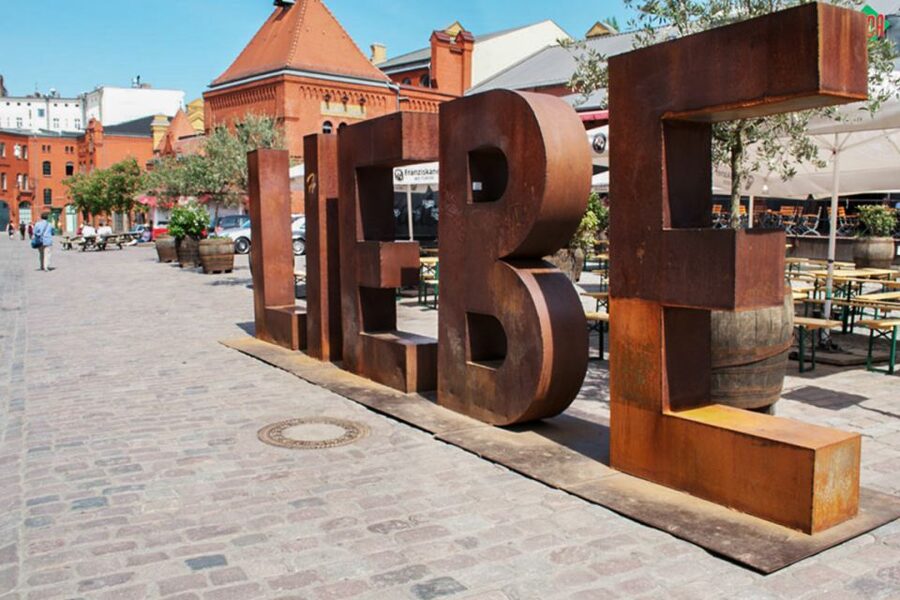
This is not a tour of Berlin’s famous headline sights. You begin near the TV Tower at Alexanderplatz, but the focus soon shifts from symbols of the capital to the people and movements that made its neighborhoods distinctive.
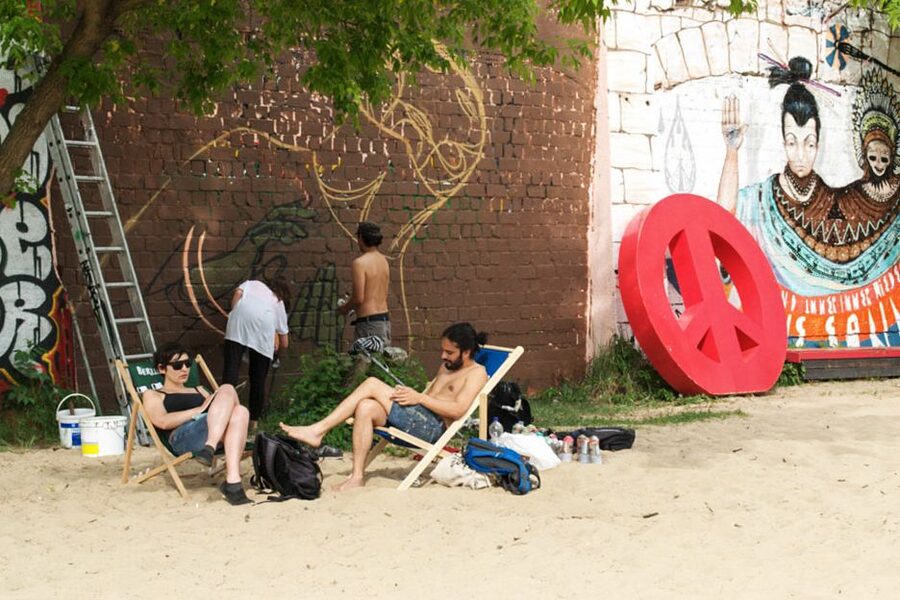
The tour looks at Berlin through its alternative culture: artists using empty buildings, communities reclaiming neglected spaces, immigrant families shaping food and commerce, musicians building scenes outside the mainstream, and residents pushing back against official plans. That gives you a useful second view of the city.
I especially like the way the experience ties small details to larger forces. A painted wall can lead to a story about an artist, a former squat can open a discussion about housing, and a food stop can explain how migration changed what Berliners eat. You are not just collecting odd sights. You are learning why they are there.
The four-hour length gives the guide time to make connections, but it also requires stamina. This is a real walking tour, not a short neighborhood loop. One participant described the route as fast paced, and that is worth taking seriously if you need frequent rest stops.
Other walks around Berlin:
- Discover Berlin Half-Day Walking Tour
★ 5.0 · 9,624 reviews - Berlin: Third Reich and Cold War 2 Hour Walking Tour
★ 4.9 · 6,830 reviews - Berlin: Discover Berlin Walking Tour
★ 4.9 · 5,998 reviews
Starting at Alexanderplatz and entering Mitte
The meeting point is in front of Vapiano by the Alexanderplatz TV Tower. This is an easy landmark to find, though Alexanderplatz can feel busy and confusing, so arrive with enough time to locate the group.
Beginning here creates a useful contrast. The TV Tower and broad square represent official, planned Berlin, while the tour soon turns toward less polished spaces shaped by local communities and creative groups. Your guide uses Mitte to explain how the former East Berlin center has changed, including its café districts, shopping streets, galleries, and cultural spaces.
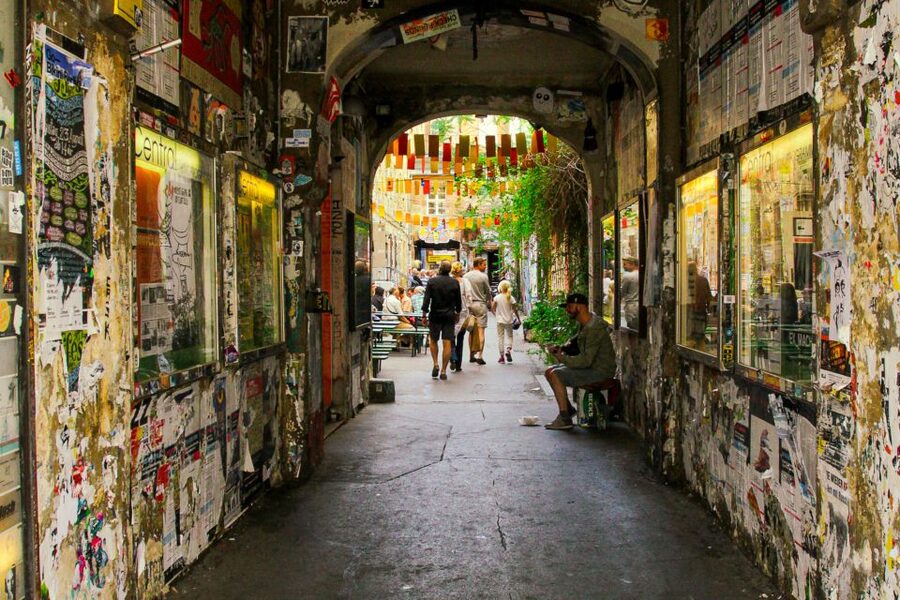
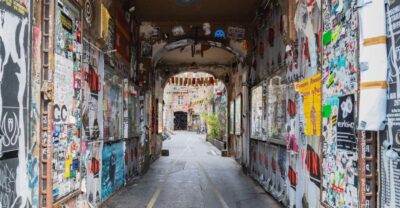
The Mitte section lasts about an hour. Expect a guided walk rather than a list of formal monuments. You may see striking graffiti, small galleries, repurposed buildings, and corners that look ordinary until the guide explains their role in Berlin’s cultural life.
This is also where the tour begins comparing East and West Berlin. The point is not to claim that one side had a single character. It is to show how different political systems, building patterns, and economic conditions left different marks on the city.
Mitte can be fashionable and expensive in places, but the tour looks beyond its current image. You get a sense of how a district can shift from neglected or divided territory into a center for cafés, shopping, art, and nightlife. That makes the walk useful even if you plan to return later on your own.
Kreuzberg, migration, and the city’s creative edge
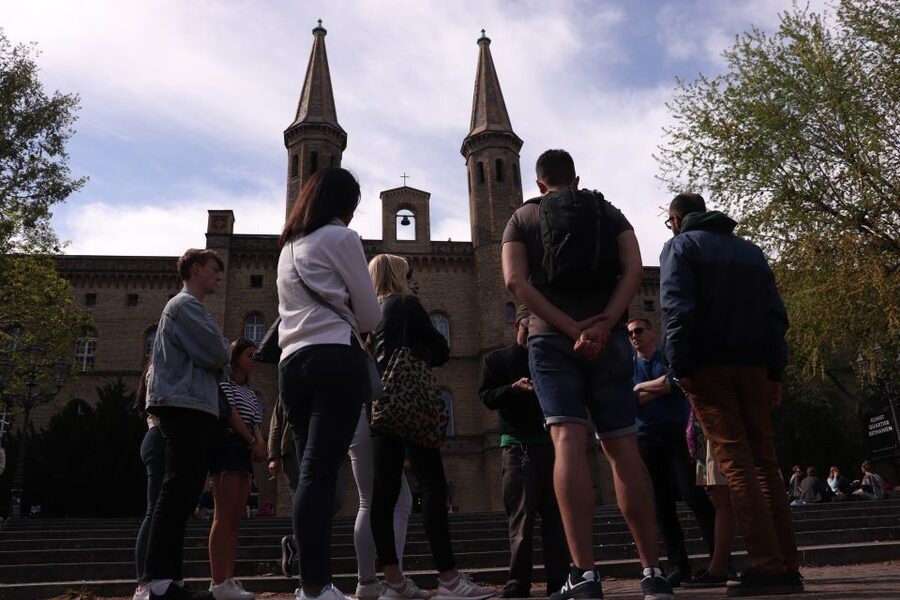
The longest section takes place in Kreuzberg, with roughly two hours of guided exploration. This is where the tour’s social themes become most visible.
Kreuzberg is strongly linked with Turkish immigration, and the route stops in Turkish neighborhoods to explain how communities from outside Germany helped shape local food, shops, streets, and daily life. The tour also touches on Berlin’s African communities and former Jewish communities, placing today’s multicultural city within a longer story of migration, loss, renewal, and exchange.
The value here is that you are not treating culture as decoration. A market, café, food shop, or music venue can show how people build a sense of home in a city that has changed repeatedly. The guide helps connect those visible details to Berlin’s political and social past.
You also learn about the origin of the Berliner currywurst and döner. These are not presented as random snack stops. They are part of the city’s shared food culture and reflect the way Berlin’s residents have influenced one another. A local fast-food stop may include currywurst, but food is not guaranteed as a full meal, so do not arrive expecting lunch to be covered.
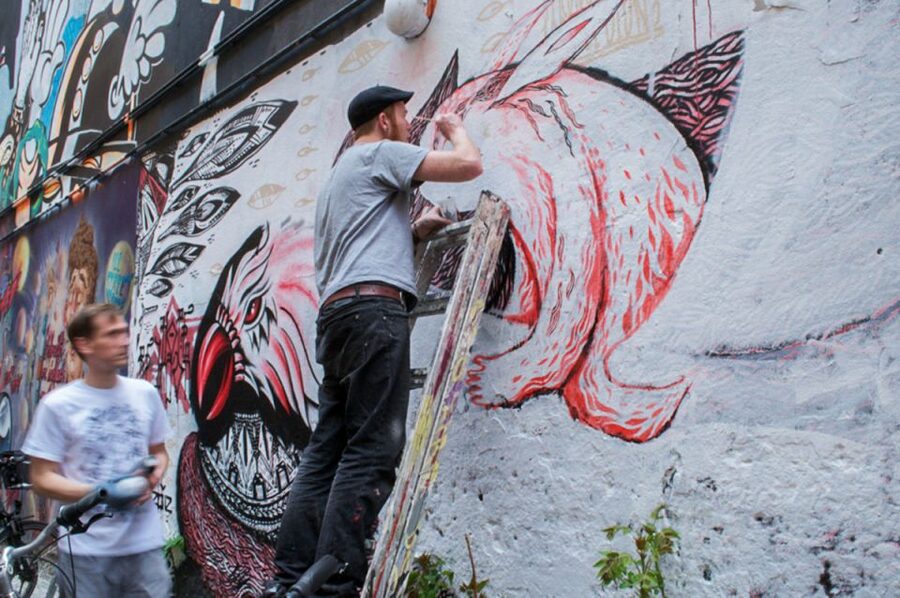
Kreuzberg also brings the street art. Berlin’s graffiti and murals are more than colorful backdrops for photographs. They can signal political views, neighborhood identity, artistic ambition, or a claim to public space. Your guide may explain the work of particular graffiti artists and how the city’s permissive attitude toward creative expression helped shape its reputation.
Squats, punk, music, and repurposed Berlin

One of the strongest parts of this tour is its attention to alternative housing and long-running squats. Berlin’s squatting culture cannot be reduced to a quirky tourist story. It grew from vacant buildings, housing pressure, political protest, and communities trying to create a different way of living.
The guide explains how some spaces were occupied, defended, legalized, or transformed. You may also hear about punk record shops, music scenes, political activism, and the role of clubs and informal venues in the city’s identity.
That context helps explain why Berlin can feel both mainstream and unconventional at the same time. Ideas that might remain marginal elsewhere have sometimes moved into public view here. The city’s alternative reputation is not only about nightlife. It also concerns who gets to use buildings, make art, organize communities, and shape neighborhood life.
The music section may include stories about Berlin’s dance scene and a stop at an African beach bar and market. That mix is typical of the tour’s approach. It does not treat Berlin culture as one neat category. Instead, it shows how different communities, styles, and political ideas overlap.
A guide’s delivery matters a great deal on a route like this. Rhys and Reece are repeatedly praised for comic timing, clear narration, and enthusiasm. Jake is noted for adapting well in snow and keeping the group warm and engaged. Damien, Jonathan, Ben, Antonio, and AD are also praised for bringing personal experience and strong local context.
The guide assigned to your departure can vary, so do not book on the assumption that one specific person will lead every tour. The consistent need is a guide who can keep a moving group focused while explaining complicated subjects without turning the walk into a lecture.
Same base, a different kind of day out:
- Berlin: Reichstag, Dome and Government District Guided Tour
★ 4.7 · 18,288 reviews - Berlin: 1-Hour City Tour by Boat with Guaranteed Seating
★ 4.3 · 16,993 reviews - Berlin: Boat Tour Along the River Spree
★ 4.4 · 11,252 reviews - Berlin: Hop-on Hop-off Bus Tour with Live Commentary
★ 4.3 · 8,579 reviews
Canals, urban farms, galleries, and slower details
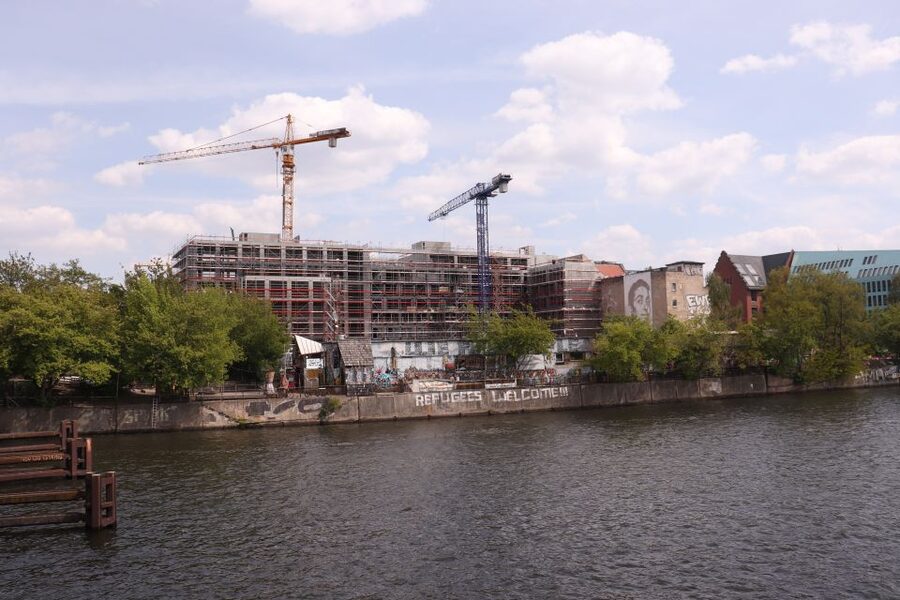
The advertised route includes relaxing canals, underground galleries, and community-funded urban farms. These stops matter because they widen the definition of alternative Berlin.
The canals offer a pause from the city’s streets and a chance to see how open space fits into neighborhood life. The urban farms show another form of local action: residents using land for food, community work, and shared projects rather than leaving every spare plot unused.
Underground galleries and informal art spaces add another layer. They point to the way artists have often worked outside major institutions, especially in buildings or districts that once seemed too rough, empty, or uncertain for commercial use.
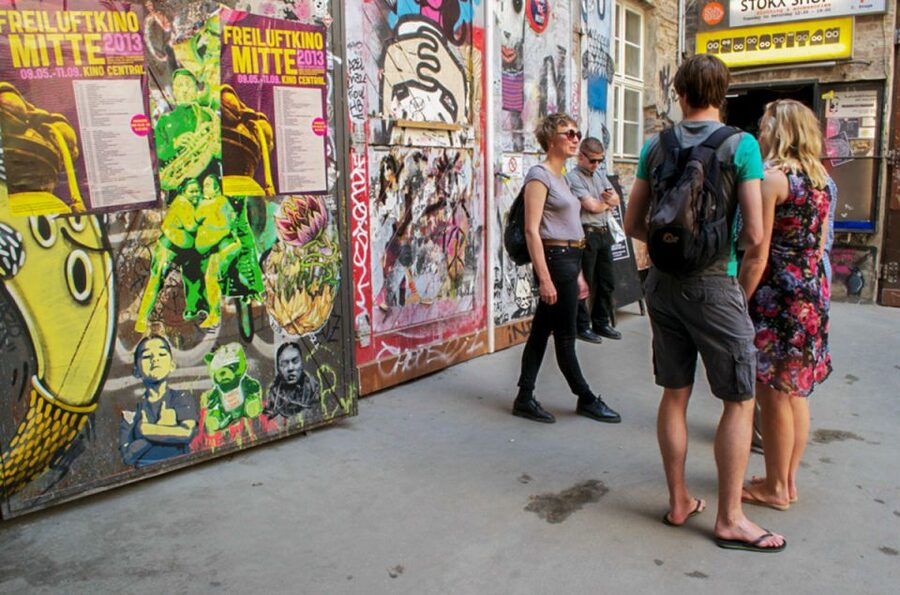
Do not expect every stop to look polished. Some of the appeal lies in seeing rough walls, improvised projects, changing murals, and places that may be temporary. The tour is best for you if you enjoy asking why a place looks the way it does, not only photographing the prettiest view.
You will also get photo opportunities and refreshment breaks selected by the tour team. The exact stops can change with the route and current conditions, so bring water and do not count on every food or drink need being met by the tour.
LGBTQ+ Berlin and communities often left out
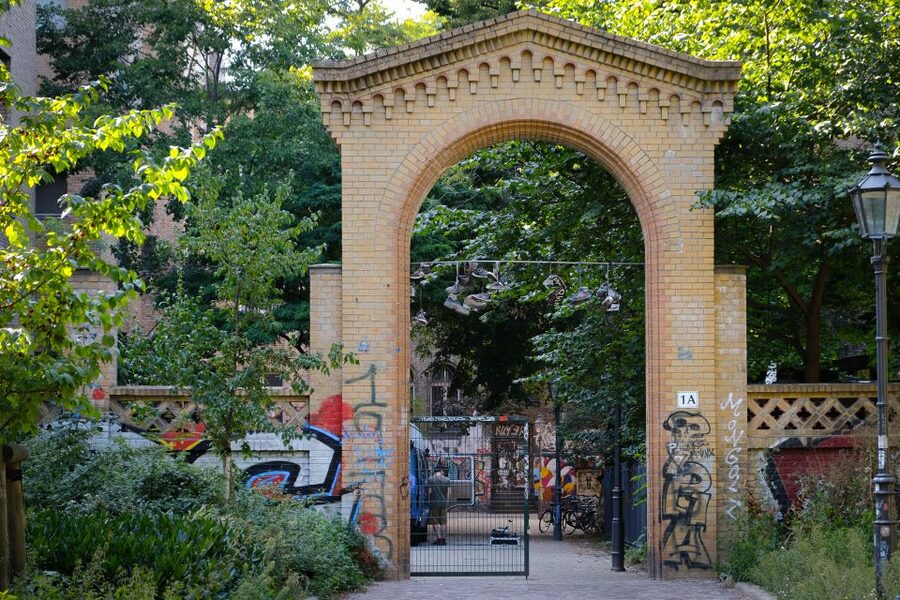
The route includes a look at Berlin’s gay community and an extravagant neighborhood associated with that side of the city. This is a useful part of the experience because it shows that alternative Berlin is not limited to graffiti and punk.
Berlin’s LGBTQ+ culture has helped shape nightlife, public identity, art, and politics. The guide places that community alongside the city’s immigrant, African, Jewish, musical, and activist stories. The result is a broader picture of how groups claim space and create belonging.
The tour does not present Berlin as a finished success story. Its themes include conflict, changing neighborhoods, political tension, and the pressure that comes when once-independent areas become popular. That balance is important. It keeps the walk from turning into a simple celebration of cool cafés and colorful walls.
If you prefer only major monuments and famous historical dates, some of this material may feel less direct. If you want to understand how Berliners live, organize, party, argue, and create, it is likely to be the most useful part of the day.
The final stretch toward Friedrichshain
The tour finishes in Friedrichshain, not back at Alexanderplatz. That matters for planning. You are not simply returning to your starting point, and you may need to use public transport afterward.
Friedrichshain gives the route a fitting ending. Like Kreuzberg and Mitte, it has its own mix of cafés, creative spaces, nightlife, street art, and changing housing patterns. The final location also leaves you near another part of Berlin worth exploring independently.
Because the exact route can change according to current art and tour conditions, think of the neighborhoods as the reliable framework rather than a fixed checklist of every stop. You will receive local tips for continuing your day, which is helpful if you want to visit a bar, shop, food place, or cultural site introduced during the walk.
Price, transport, and the real value
At $29 per person, this is fairly priced for a four-hour guided walk, especially if you value interpretation rather than simple sightseeing. You are paying for a substantial amount of guide time, neighborhood coverage, local context, and route planning.
The value is strongest if you are new to Berlin’s alternative culture or have already seen the major historical sights. A standard city tour may explain the Wall, the Nazi period, and the Cold War. This experience adds the social and cultural story that those tours often leave out.
The transport detail deserves attention. Depending on the route, you may need an AB metro ticket. The instructions indicate that some participants may need more than one ride, and one practical approach is to buy a suitable day ticket. If you do not want to arrange tickets yourself, book the option that includes BVG travel.
The tour runs in all weather and throughout the year. Summer should make long walks easier, but the route is designed to operate in rain, cold, and snow too. Wear shoes with good support, bring weather protection, and dress for standing outdoors. A winter departure may be memorable, but it will not feel relaxed if you arrive without warm layers.
You can cancel up to 24 hours before the start for a full refund, and the reserve-now-pay-later option keeps you from paying at once. Those policies make it easier to fit the tour into a changing Berlin schedule.
Who should book this tour?
I would choose this tour if you want Berlin beyond the usual WWII and Cold War frame. It suits curious first-time visitors, repeat visitors who think they have already seen the city, solo travelers who enjoy meeting an international group, and anyone interested in music, food, street art, migration, housing, or social change.
It also works well early in a Berlin visit. The guide’s local tips can help you decide where to return later, and the neighborhood comparisons give you a better map of the city’s character.
I would hesitate if you dislike four-hour walks, need a slow pace, or want guaranteed access to indoor sites. The tour includes outdoor walking, possible public transport, changing stops, and a broad range of subjects. It is not a formal museum tour, and the route may be tiring.
Should you book the Alternative Berlin Walking Tour?
Book it if you want the Berlin of currywurst stalls, graffiti walls, community farms, African markets, punk spaces, LGBTQ+ neighborhoods, canals, cafés, and arguments about who gets to shape a city.
The best reason to go is the combination of places and explanation. You may pass some sites without noticing them on your own. A strong guide such as Rhys, Reece, Jake, Damien, Jonathan, Ben, Antonio, or AD can turn those places into a connected story about Berlin’s past and present.
Bring comfortable shoes, allow for transport costs, and expect a brisk four hours. If that sounds like your kind of city exploration, $29 buys a useful and unusual introduction to Berlin.
FAQ
How long is the Alternative Berlin Walking Tour?
The tour lasts four hours.
How much does the tour cost?
The listed price is $29 per person.
Where does the tour start?
It starts at Vapiano in front of the Alexanderplatz TV Tower.
Where does the tour finish?
It finishes in Friedrichshain, Berlin.
Which neighborhoods does the tour visit?
The route includes Mitte and Kreuzberg, with the finish in Friedrichshain. The exact route may depend on current art and tour conditions.
What language is the tour conducted in?
The live guided tour is conducted in English.
Is public transport included?
An AB metro ticket may be required, depending on the route. You can buy your own ticket or book an option that includes BVG travel.
Does the tour operate in bad weather?
Yes. Tours run all year and in all weather.
Can I cancel for a refund?
Yes. You can cancel up to 24 hours in advance for a full refund. A reserve-now-pay-later option is also available.
Just added in Berlin
- Berlin: Energizing 2-Hour Morning Segway Tour★ 4.7 · 35 reviews
- Berlin: Thrilling E-Scooter Adventure Tour★ 4.4 · 66 reviews
- Beelitz-Heilstätten: Baum&Zeit Tree Top Walk Entry Ticket★ 4.9 · 7 reviews
- Beer Bike & Party Bike: Unforgettable Berlin City Tour incl. pickup★ 5.0 · 5 reviews
- AXE THROWING EXPERIENCE IN BERLIN★ 4.7 · 24 reviews
- Alternative Berlin / Street art tour – Private group★ 5.0 · 6 reviews
- Berlin: Alternative & Street Art Tour★ 4.5 · 6 reviews
- Berlin: 2.5-Hour Beer & Sunset Sightseeing Boat Cruise★ 4.6 · 61 reviews
Walking Tours, compared.

Third Reich Berlin: Hitler and WWII Walking Tour
Read our review →
Browse the lists this tour appears in