
Reviewed · BERLIN WALL & COLD WAR TOURS
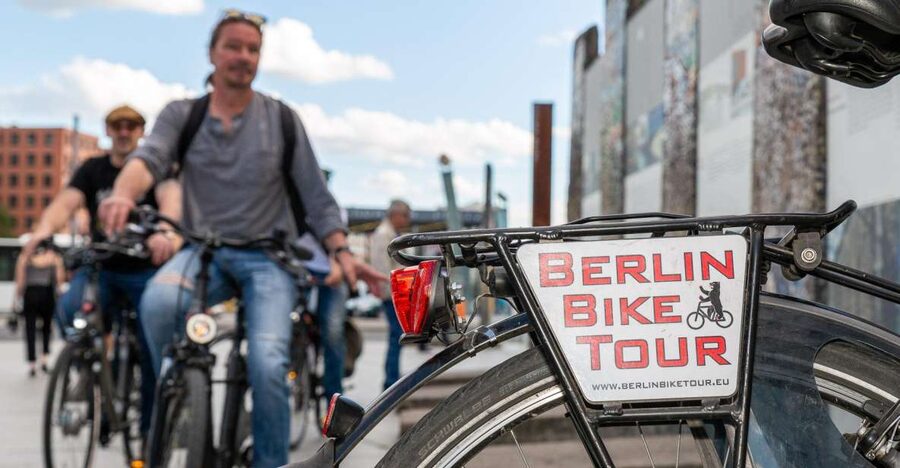
Berlin Wall History Small Group Cycling Tour
Berlin’s Wall is mostly gone, but its route still cuts through the city in fragments: a watchtower here, a strip of open ground there, and memorials where ordinary people once risked everything to cross. This four-hour cycling tour links those scattered pieces into one readable story, from the first border crossing at Bornholmer Straße to Checkpoint Charlie.
I like the small group size, limited to eight people, and the way the ride uses quieter streets even in central Berlin. I also like that guides such as Marcus and Kathrin bring personal insight to the history rather than simply pointing at concrete and reciting dates. The main consideration is that the tour runs in all weather, and the live guiding is in German, so it is best for German speakers who are comfortable cycling for several hours.
Key points at a glance
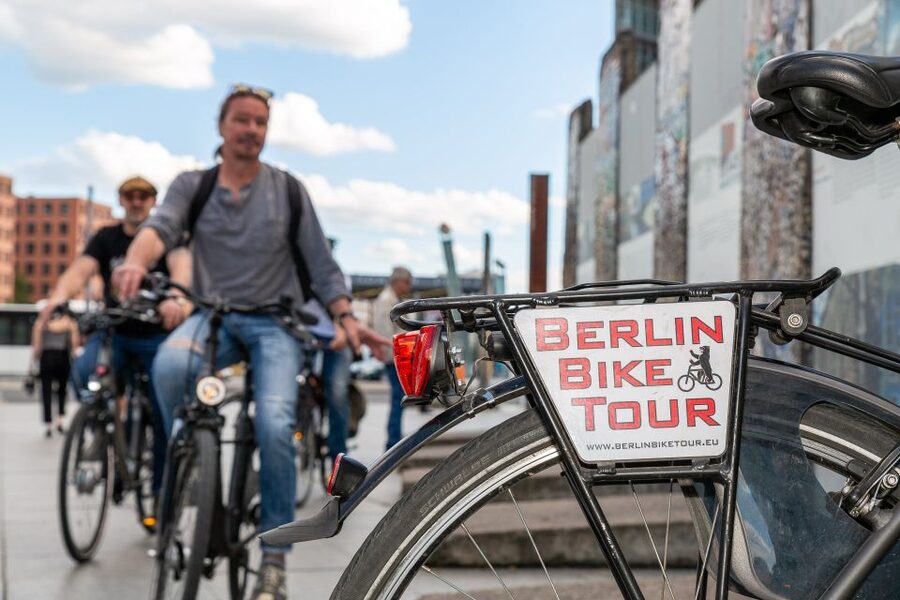
- Begin where the Wall first opened: Start at the Square of the 9th November 1989, beside the former Bornholmer Straße border crossing.
- See more than surviving concrete: The route includes a watchtower, sections of the former Death Strip, memorials, border stations, and a ghost-station.
- Ride through Berlin’s changing center: Mauerpark, Bernauer Straße, the Government Bank, Museum Island, Brandenburg Gate, and Potsdamer Platz all fit into one continuous route.
- Small groups keep the history personal: With only 3 to 8 participants, you can follow the guide’s explanations without the feel of a large sightseeing convoy.
- The price is sensible for a half-day: At $36 per person, your fee covers the bicycle, guide, entrance fees, and a rain poncho if needed.
- Pack light and dress for the forecast: Large bags are not allowed, and the ride goes ahead in rain or shine.
Starting at Bornholmer Straße, where the border opened
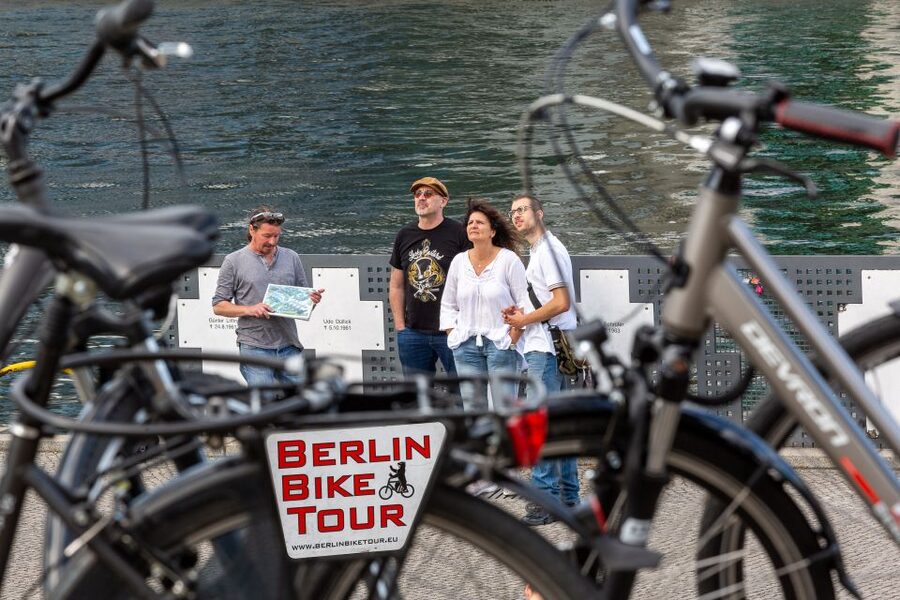
The tour begins at 75 Bornholmer Straße, at the Square of the 9th November 1989. This is a strong place to start because it connects the route to the moment the Berlin Wall began to fail.
On the night of November 9, 1989, East German citizens crossed here after the border rules were announced in confused and hurried fashion. The first major crossing happened at Bornholmer Straße, making this more than a convenient meeting point. You are starting at one of the places where the Wall’s end became real.
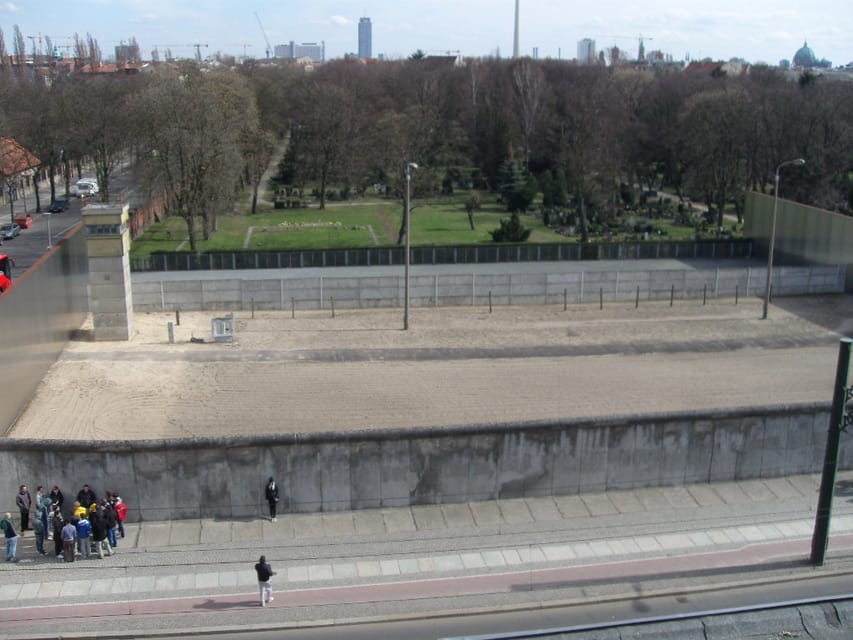
The guide traces what happened here before leading you toward the remains of the border zone. You can see the original watchtower and part of the former Death Strip, the cleared zone between defensive barriers where guards watched for escape attempts. The surviving pieces help you picture how much space and control once separated East and West Berlin.
The cherry trees along Bornholmer Straße add a gentler detail to a grim site. Their presence is tied to a gift of cherry trees from Japan after reunification, and the guide explains how they came to line this former border area. It is a small but memorable reminder that the city has tried to replace division with something living.
Getting here is easy. Tram stops Björnsonstraße is about a minute away, served by M1, M13, and M50. S-Bahn station Bornholmer Straße is about two minutes away, with S1, S2, S8, S25, and S85. You can also walk from Schönhauser Allee station in about ten minutes.
Other divided-city history in Berlin:
- Berlin: Third Reich and Cold War 2 Hour Walking Tour
★ 4.9 · 6,830 reviews - Berlin’s Best: 2 Hour Walking Tour Third Reich and the Cold War
★ 5.0 · 5,486 reviews - Skip-the-Line: Berlin Wall Museum at Checkpoint Charlie
★ 4.1 · 2,041 reviews
Mauerpark and the Wall’s northern traces
From Bornholmer Straße, you cycle through Mauerpark. The name means Wall Park, and its open ground follows part of the former border strip. Today it is a public green space, but the route encourages you to read the park as a former controlled zone rather than simply a place for recreation.
This shift in perspective is one of the strengths of a bicycle tour. On foot, the various Wall sites can feel disconnected. By bike, you follow the line itself and see how the old border cut through neighborhoods, parks, railway routes, and major roads.
The route also follows rabbit pictures painted on the ground. These images refer to the rabbits that lived in the no-man’s-land between the barriers, an oddly ordinary detail from a heavily guarded place. Such details make the story easier to grasp. The Wall did not divide an empty frontier. It passed through a city where people lived, worked, went to school, and watched wildlife move through forbidden space.
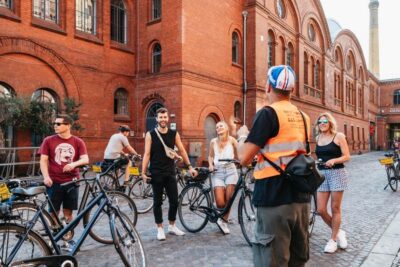
The ride is designed for a small group of at least three and no more than eight people. That matters here because the guide can pause at a site without creating a large cluster in the street. The experience is still active sightseeing, though, so you should be ready to keep moving between stops.
Bernauer Straße and the clearest memorials
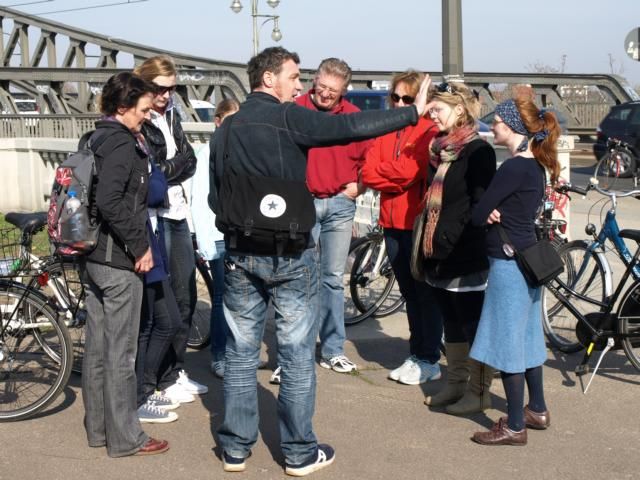
Bernauer Straße offers some of the most powerful Wall remains in Berlin. The street became famous because the border ran directly along it, with buildings on one side and the Wall on the other. The area contains Wall memorials that explain the division through photographs, surviving structures, and the stories of people affected by it.
You will see remnants of the former border system and hear about the human cost of escape attempts. The tour’s focus is not only on political leaders or Cold War strategy. It also includes tragic and fateful stories tied to specific places, which gives the route a more personal scale.
Bernauer Straße is especially useful if you have visited other Berlin sites and found the Wall story confusing. Here, the physical layout makes the division easier to understand. The guide can show where barriers stood, how the border zone operated, and how an ordinary street became an international symbol.
One practical point: this is a history tour on bicycles, not a museum visit with long indoor stops. You should expect explanations outdoors and from the saddle, with time to look at the sites along the way. If you want to read every display at the memorial in detail, you may need a separate visit.
Chausseestraße, the ghost-station, and border control
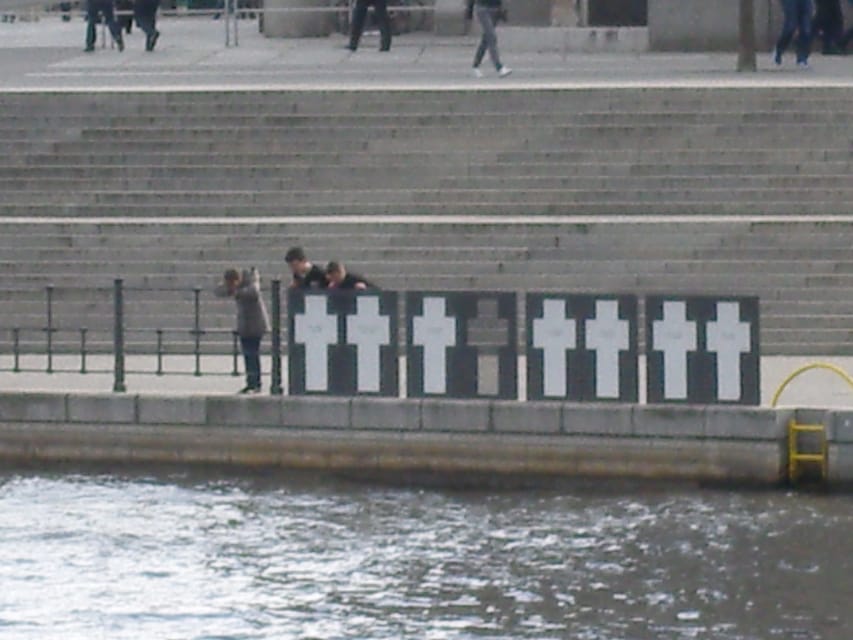
The route continues toward Chausseestraße, where you encounter another former border crossing and a ghost-station. During Berlin’s division, some underground stations in West Berlin were closed when their lines passed through East Berlin. Trains went through without stopping, creating sealed platforms that became known as ghost-stations.
The stop at Chausseestraße helps show that the Wall was not only a line of concrete above ground. It also affected public transport and the daily movement of people beneath the city. A station could remain physically present yet be removed from everyday life.
You also pass the Old Berlin Post Office and the New Synagogue. These stops broaden the tour beyond the Wall itself. Berlin’s central streets hold layers of political, religious, and civic history, and the cycling route places the Cold War story among those older city landmarks.
This portion is useful for anyone who wants more than the famous Wall photographs. You are not simply moving from one surviving slab to another. You are seeing how border controls shaped streets, transport, buildings, and routines.
Other rides around Berlin:
- Berlin: Sights and Highlights Bike Tour with a Local Guide
★ 4.8 · 2,698 reviews - Berlin Highlights 3-Hour Bike Tour
★ 5.0 · 948 reviews - Berlin City Bike Tour with Beer Garden Stop
★ 5.0 · 917 reviews - Berlin Highlights: 3-Hour Bike Tour
★ 4.9 · 809 reviews
Invaliden Graveyard and the former Invalidenstraße crossing
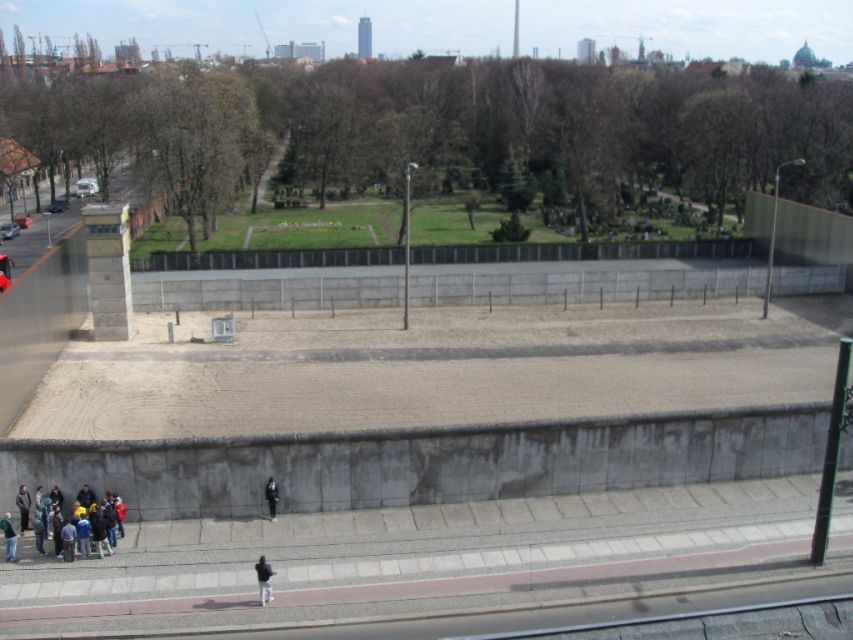
The Invaliden Graveyard provides another sobering stop. Its connection with the former border area adds a different tone from the open parks and central squares. Here, the tour brings together the city’s older military past and the twentieth-century division that followed.
You also see the former border crossing at Invalidenstraße. Border crossings were carefully controlled points, and each one had its own function and atmosphere. Looking at several crossings during the ride helps you understand that the Wall was a broad system of gates, patrol routes, barriers, and inspection points, not just a single wall.
The guide’s role is particularly important at places like this, where little may remain to explain what once happened. A good explanation turns an ordinary street into a historical site. Marcus is praised for guiding the group carefully through the city and for making the four hours both informative and relaxed. Kathrin is also noted for adding personal insight to her explanations.
The German-language format is worth considering before you book. The activity information identifies German as the tour language, so you should be able to follow detailed spoken history in German. If you need English guiding, this is not the safest choice.
Along the Government Bank to the Parliament of Trees
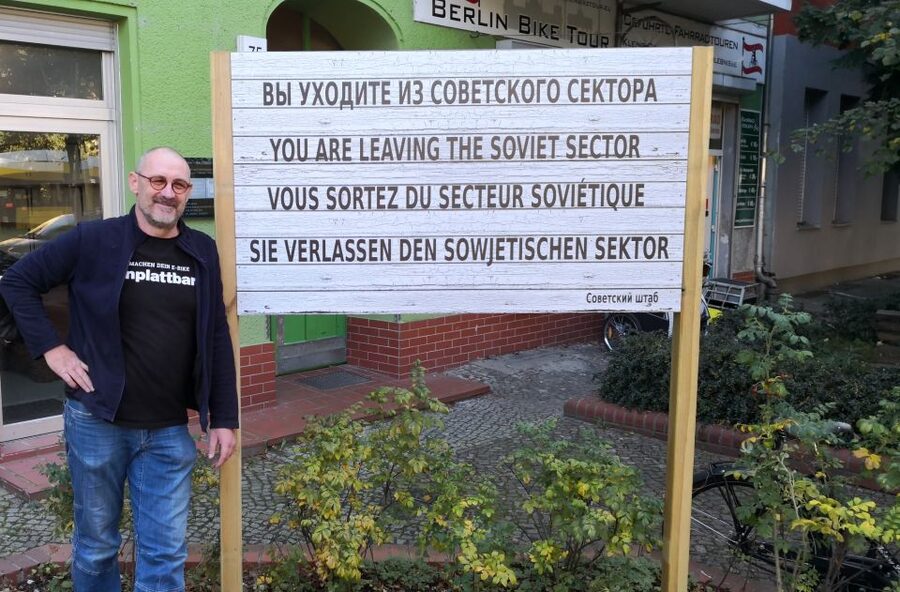
The route then follows the Government Bank and continues to the Parliament of Trees. This stretch gives you a sense of how the former border ran through areas now tied to the reunified government district.
The Parliament of Trees is a memorial made from trees and artwork connected with victims of the Berlin Wall. It offers a quieter pause in a part of the city that can otherwise feel dominated by large official buildings. The contrast matters: political power sits nearby, while this memorial keeps individual lives at the center.
Cycling makes this section easier than covering the same ground on foot. You can connect the open memorial spaces with the major central sights without spending the entire day walking between them. The pace also lets you see how quickly the city changes from former border ground to modern government Berlin.
Brandenburg Gate, the Tränenpalast, and Museum Island
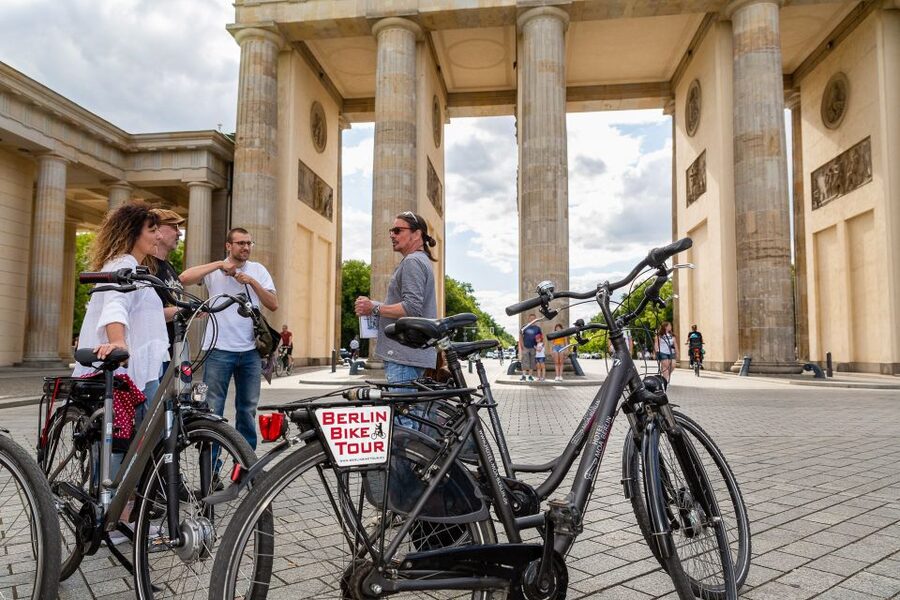
The route reaches Brandenburg Gate, perhaps Berlin’s most famous symbol of division and reunification. During the Cold War, the gate stood in the restricted border zone near the Wall. Today, it is one of the clearest reminders that a place once associated with separation can return to the center of city life.
You cycle through the gate and continue to the Tränenpalast on Friedrichstraße. Its name, Palace of Tears, comes from the farewells that took place there when people crossed between East and West. The building served as a border-control point for departures from East Berlin, and its emotional history is easy to understand even before you hear the full explanation.
The ride also passes the Friedrichstadt Palace, Museum Island, and the New Synagogue. These sights are not all Wall memorials, but they show how the former border route cuts through Berlin’s cultural center. You get a useful overview of the city rather than spending four hours in one isolated memorial zone.
The guide points out rabbit images on the ground as the route approaches Brandenburg Gate. That small visual thread links the northern Wall sites with the central landmarks and gives the ride a sense of continuity.
Potsdamer Platz, Checkpoint Charlie, and the end of the route
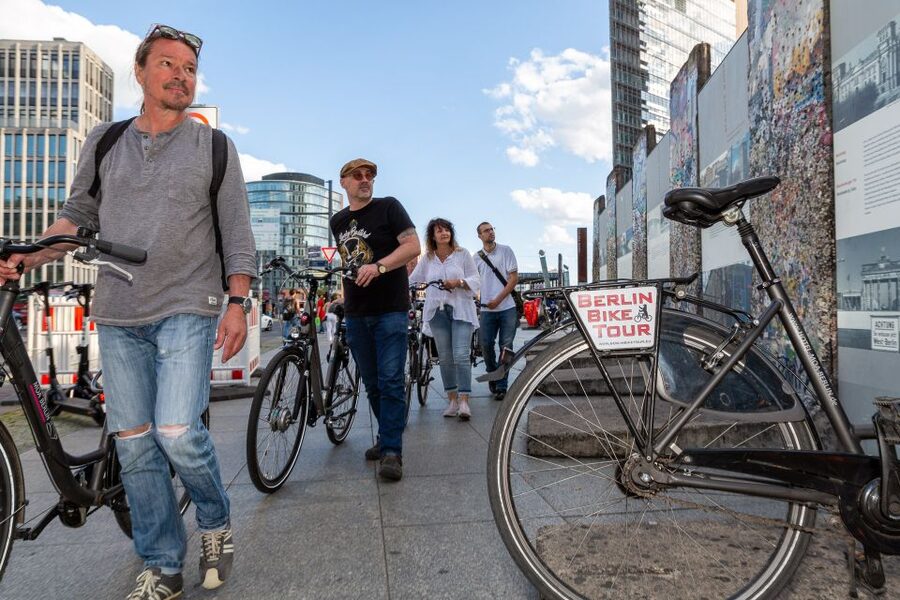
The final part includes Potsdamer Platz and Checkpoint Charlie. Potsdamer Platz was divided and heavily damaged during the twentieth century, then rebuilt after reunification as a major modern district. Its present-day architecture makes the former border difficult to see, which is exactly why the guide’s explanation matters.
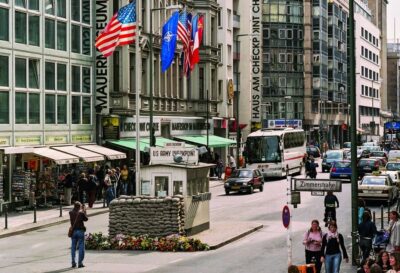
Checkpoint Charlie is the best-known former crossing in Berlin. It was a crossing point for foreign visitors and allied personnel, and its name has become shorthand for the Cold War itself. The site is now surrounded by central-city activity, so do not expect a preserved border scene. Think of it as a place where the historical meaning is stronger than the remaining physical fabric.
The tour ends back at the starting point on Bornholmer Straße. That means you need to allow for the return ride when planning the rest of your day. The activity lasts four hours, and it is not a one-way drop-off at Checkpoint Charlie.
What the $36 price includes
At $36 per person, this is a good-value half-day for anyone who wants both transportation and historical interpretation. Your bicycle, guide, fees, and a rain poncho when necessary are included. You are paying for a moving city tour that covers a broad route, not simply a short stop at one memorial.
The value is strongest if you want to connect sites that are spread across Berlin. Public transport can take you between districts, but it will not give you a continuous view of the former Wall route. Walking would let you linger longer at individual memorials, but covering this many locations on foot would take much more time and energy.
Food and drinks are not included. Bring what you need for four hours, while keeping in mind that large bags and luggage are not allowed. A small day bag is the practical choice, though the rules specifically prohibit large bags and luggage.
Who should book this cycling tour?
I would choose this tour if you want a clear introduction to Berlin’s Wall history and prefer seeing the city actively rather than sitting on a bus. It suits people who enjoy a steady ride, outdoor explanations, and a mix of major landmarks and less obvious border traces.
It is also a good fit if you have already seen Brandenburg Gate or Checkpoint Charlie but still do not understand how the Wall shaped the whole city. The route fills in the gaps by connecting northern memorials with the central districts.
I would think twice if you want long, quiet visits inside museums, or if you need an English-language guide. The tour is conducted in German and takes place outdoors in every kind of weather. Rain ponchos are supplied on wet days, but you should still dress for the forecast and bring sunglasses and a sun hat when conditions call for them.
The small group format is a real advantage. With three to eight people, the guide can keep the ride relaxed and respond to questions more easily than on a large group excursion. The strongest praise centers on the clear explanations, calm pacing, and the ability to show quiet streets even near central Berlin.
Practical details before you reserve
Meet at 75 Bornholmer Straße, Berlin 10439. Tram stop Björnsonstraße is about one minute away, and S-Bahn station Bornholmer Straße is about two minutes away. The tour finishes at the same location.
Bring a passport or ID card, sunglasses, a sun hat, and a camera. The requirement for identification is worth noting even though this is a city ride. Keep your belongings light because luggage and large bags are not permitted.
You can cancel up to 24 hours before the activity for a full refund, and you can reserve now and pay later. Starting times vary, so check availability for the date you want. The tour operates in all weather, with a rain poncho provided when needed.
Should you book it?
Book this tour if you want the Berlin Wall explained as a connected route rather than a handful of famous photo stops. The combination of Bornholmer Straße, Mauerpark, Bernauer Straße, the ghost-station, Parliament of Trees, Brandenburg Gate, Tränenpalast, Potsdamer Platz, and Checkpoint Charlie gives you a broad view in four hours.
Skip it if you require English guiding, dislike cycling in rain, or prefer to spend most of your time indoors reading detailed museum displays. For German speakers who want a small, well-paced ride with serious history and a useful city overview, $36 is a fair price.
FAQ
How long does the Berlin Wall cycling tour last?
The tour lasts four hours. Check availability for the starting time on your chosen date.
Where does the tour start?
The meeting point is 75 Bornholmer Straße, Berlin 10439, at the Square of the 9th November 1989.
Where does the tour finish?
The activity ends back at the same meeting point on Bornholmer Straße.
What language is the tour conducted in?
The live tour guide speaks German.
How many people are in the cycling group?
The group has a minimum of three participants and a maximum of eight.
Is a bicycle included?
Yes. The bicycle, tour fees, and city guide are included in the price.
What happens if it rains?
The tour runs in all weather. A rain poncho is provided on rainy days.
More history to see in Berlin
- Berlin: Natural History Museum Entrance Ticket
★ 4.6 · 3,382 reviews - Berlin: World Heritage Cruise to Potsdam
★ 4.5 · 1,435 reviews - Berlin Historical Highlights Walking Tour
★ 4.9 · 657 reviews - Berlin Private Complete History All Day Walking Tour
★ 5.0 · 474 reviews
Just added in Berlin
- Private One way Airport Transfer Berlin Airport To Berlin★ 3.5 · 17 reviews
- Private Walking Tour: Berlin Wall, Cold War and Checkpoint Charlie★ 5.0 · 37 reviews
- Modern Berlin Private Walking Tour: Diverse, Vibrant and Exciting German Capital★ 5.0 · 13 reviews
- Private Day Trip to Potsdam from Berlin by Train★ 4.5 · 27 reviews
- City Explorer: Potsdam Private Day Trip★ 4.5 · 10 reviews
- Berlin Private Custom Tour in a Minivan, East and West★ 5.0 · 123 reviews
- Berlin Private Custom 5-Hour Tour by Car★ 5.0 · 30 reviews
- Private Half-Day Sightseeing Tour in Berlin★ 3.5 · 6 reviews
Berlin Wall & Cold War Tours, compared.

Skip-the-Line: Berlin Wall Museum at Checkpoint Charlie
Read our review →
Cold War, Berlin Wall, Spies and the East Side Gallery
Read our review →
Guided Bike Tour of the Berlin Wall and Third Reich
Read our review →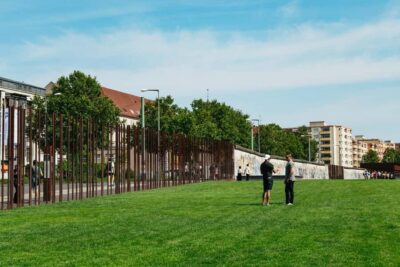
East Berlin and the Berlin Wall 2-Hour Walking Tour
Read our review →Browse the lists this tour appears in