
Reviewed · BERLIN WALL & COLD WAR TOURS
Berlin Wall: City Tour of Divided Germany
Berlin’s divided past becomes much clearer when you follow the old border on foot. This two-hour German-language tour starts at Friedrichstraße station, once the Cold War’s single border station, then traces the former frontier through places where the Wall shaped work, family life, travel, and death.
I like the route for two reasons: it connects famous sights such as Brandenburg Gate and Checkpoint Charlie instead of treating them as isolated photo stops, and it includes less obvious places along the Spree and former border strip. The main consideration is simple: the tour is in German, and the walking route needs comfortable shoes.
Key points
- Friedrichstraße station sets the tone: Begin at the Palace of Tears, the former crossing point where visitors and residents faced the harsh rules of divided Berlin.
- The route follows the former border: Walk past the parliament and government district, Brandenburg Gate, the Holocaust Memorial, and Potsdamer Platz.
- Personal stories add human scale: Guides including Stefan or Stephan bring individual fates and daily experiences into the political story.
- Several major sights fit into two hours: You see the old border from central Berlin to Checkpoint Charlie without spending a full day on a museum visit.
- The tour stays focused and active: Expect a walking history lesson rather than a bus ride or a stop-by-stop sightseeing loop.
- The price is modest: At $21 per person, the tour offers useful context for the cost of a museum ticket or a casual Berlin activity.
Starting at Friedrichstraße and the Palace of Tears
Meet at the entrance of Tränenpalast, or the Palace of Tears, in front of Friedrichstraße station on Reichstagufer. The building has only one entrance, so you do not need to circle the station looking for a meeting point. Look for the entrance by the station rather than assuming the tour begins inside the railway complex.
This is a strong place to begin because Friedrichstraße was not just a transport hub. During the Cold War, it served as the single border station between East and West Berlin. People could arrive by train, but crossing the border involved strict controls, separation, and uncertainty.
The name Palace of Tears captures the emotional side of that process. Families and friends could meet there, then face painful goodbyes when one person was allowed to leave and another had to remain behind. You start the tour with a physical place tied to ordinary human decisions, not just speeches and maps.
That opening helps you understand the tour’s main idea: the Wall was not only a concrete barrier. It reached into commutes, family visits, friendships, shopping, school, and the simple choice of which side of the city to enter.
Other divided-city history in Berlin:
- Berlin: Third Reich and Cold War 2 Hour Walking Tour
★ 4.9 · 6,830 reviews - Berlin’s Best: 2 Hour Walking Tour Third Reich and the Cold War
★ 5.0 · 5,486 reviews - Skip-the-Line: Berlin Wall Museum at Checkpoint Charlie
★ 4.1 · 2,041 reviews
Following the Spree toward the government district
From Friedrichstraße, the route follows the Spree toward the parliament and government district. This part of Berlin can look polished and modern today, which makes the earlier border line harder to picture. The guide’s job here is to point out how some buildings and open spaces once sat beside, or partly along, the border strip.
I like this section because it forces you to read the city rather than simply look at monuments. The river, public buildings, roads, and open ground all took on a different meaning when Berlin was split between two hostile political systems.
You may find this part less visually dramatic than the Wall itself. There is no single giant structure to photograph at every stop. Its value comes from learning where the border ran and how close it came to places now associated with the united German state.
A live guide matters here. A printed map can show a line, but a guide can explain how that line affected movement and daily routines. Personal accounts are especially useful, and Stefan or Stephan is associated with the tour’s direct, personal style. The name appears in slightly different forms, so do not be surprised if the guide’s name is written as Stefan or Stephan.
Brandenburg Gate, once trapped beside the border
Brandenburg Gate is one of Berlin’s essential sights, but this tour asks you to see it in a less familiar way. The gate became a symbol of division because the border ran directly through this area. It was not a welcoming entrance between two parts of a city. It was a controlled and politically charged boundary.
Today, the gate is open and surrounded by visitors, traffic, and grand civic buildings. During the division, its location gave it a very different role. The guide can use the site to explain how Berlin’s most famous monument became linked with the fate of the entire city.
This is one of the route’s strongest stops for first-time visitors. You get the photograph everyone expects, but you also learn why the setting mattered. The point is not simply that the Wall was nearby. The point is that a famous public space had become part of a sealed border system.
Keep your attention on the explanation, not just the monument. Brandenburg Gate is often crowded, and the group may need to gather at a practical spot nearby. The tour’s German language also means you should be comfortable following spoken explanations in an open public area.
The Holocaust Memorial and the former death strip
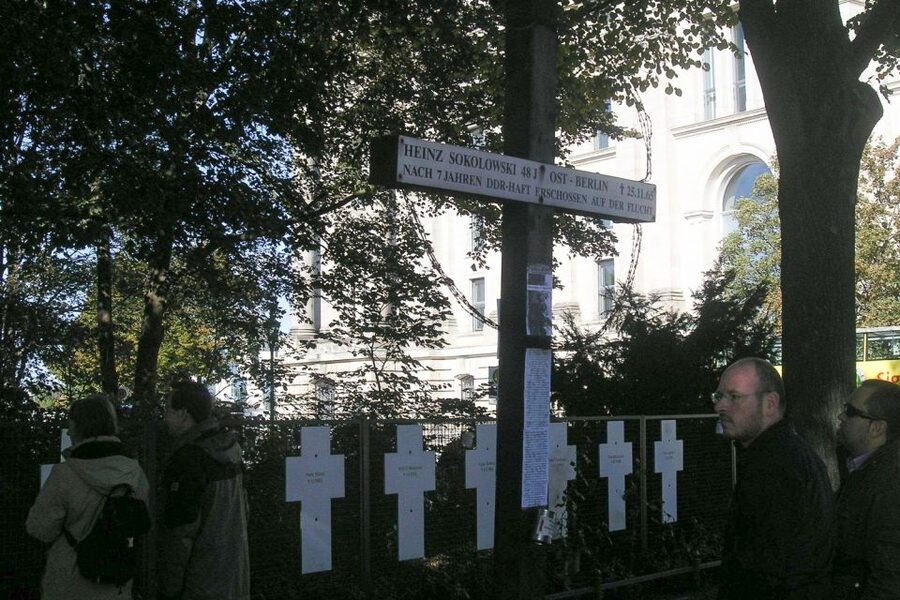
The route continues to the Holocaust Memorial, located in the area of the former death strip. This is a serious shift in subject and mood. The memorial itself addresses the murder of Europe’s Jews, while the surrounding ground also helps explain the physical geography of the Berlin Wall.
It is important not to treat the two stories as interchangeable. The Holocaust and the division of Berlin were different events with different victims and causes. The tour places them in the same urban area because the former border ran through a city already marked by the crimes of Nazi Germany.
This stop rewards a slower look at the setting. Instead of presenting Berlin’s past as a series of unrelated monuments, the route shows how layers of history occupy the same streets. You are asked to hold more than one difficult story in mind.
The former death strip also makes the Wall system easier to understand. The barrier was not merely one upright wall. Border controls used cleared areas and controlled zones to prevent escape. At this point, you can better picture why crossing was so dangerous.
A few more things to do in Berlin worth a look
- Berlin: 1-Hour City Tour by Boat with Guaranteed Seating
★ 4.3 · 16,993 reviews - Berlin: City Sightseeing Hop-On Hop-Off Bus Tour
★ 4.1 · 4,233 reviews - Berlin: 1-Hour City Sightseeing Cruise
★ 4.4 · 2,210 reviews - Berlin City Hop-on Hop-off Tour with Optional Cruise
★ 3.5 · 1,155 reviews
Potsdamer Platz and the Tiergarten Triangle
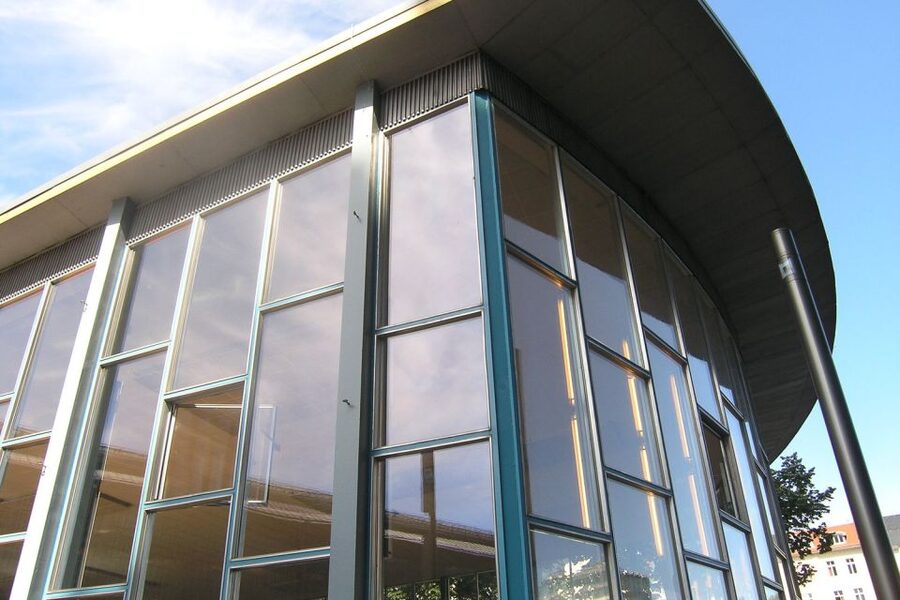
At Potsdamer Platz, the division becomes especially clear in the former Tiergarten Triangle. The square is now known for modern architecture and busy city life, but the tour directs your attention to the way the area was split and interrupted by the border.
This is another place where present-day Berlin can hide its own past. New buildings and broad public spaces make it hard to see the empty, restricted areas that once cut across the city. You might find the contrast more useful than a preserved ruin because it shows how completely Berlin has changed.
The tour does not ask you to study a single exhibit for an hour. Instead, it uses the streets as evidence. You walk from one site to the next while the guide joins up the political story, the border layout, and the effect on residents.
That format suits you if you prefer context while moving through the city. It is less suitable if you want long, quiet museum time or a detailed architectural tour of Potsdamer Platz. The focus remains divided Germany and the people caught between its systems.
The longest remaining Wall section
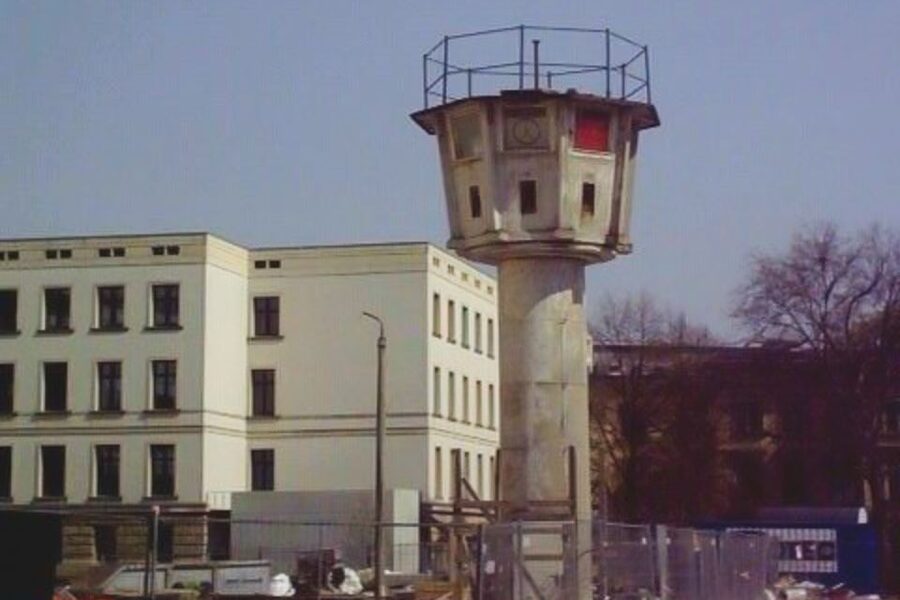
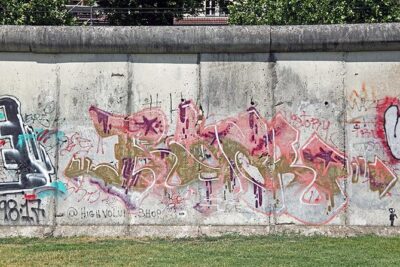
The route includes the longest remaining stretch of the Berlin Wall. This gives you a chance to see the barrier as a substantial structure rather than a small souvenir fragment or painted piece displayed in isolation.
A surviving section can make the scale of the division easier to grasp. You see how the Wall occupied public space and separated areas that were once part of one city. The guide can also connect the physical remains to the escape attempts, controls, and personal decisions that defined life near the border.
This is likely to be one of the tour’s most satisfying visual moments. At the same time, do not expect every section of the route to look untouched. Berlin has rebuilt, repaved, and redeveloped much of the former border. The tour’s value comes from combining what remains with what the guide explains.
The route’s mixture of preserved Wall, marked former border, and rebuilt city is useful. It prevents a false idea that the division survives only in a few museum pieces. Much of the story now depends on knowing where to look and what the street plan once meant.
Ending at Checkpoint Charlie
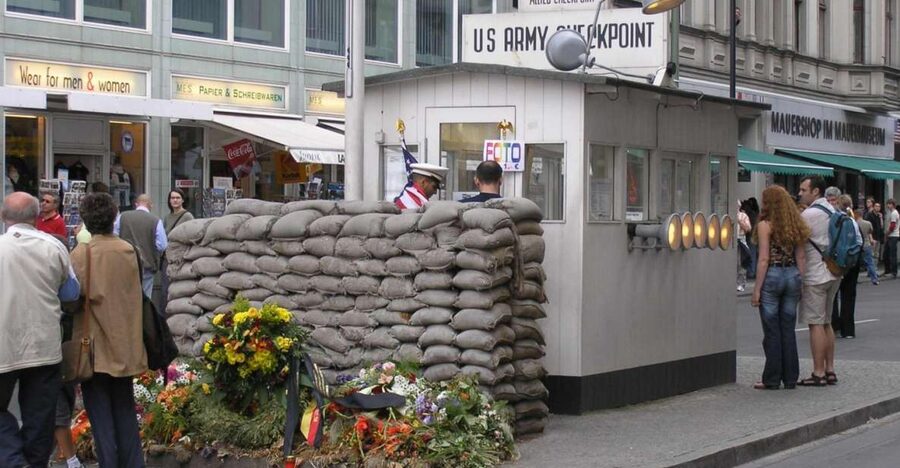
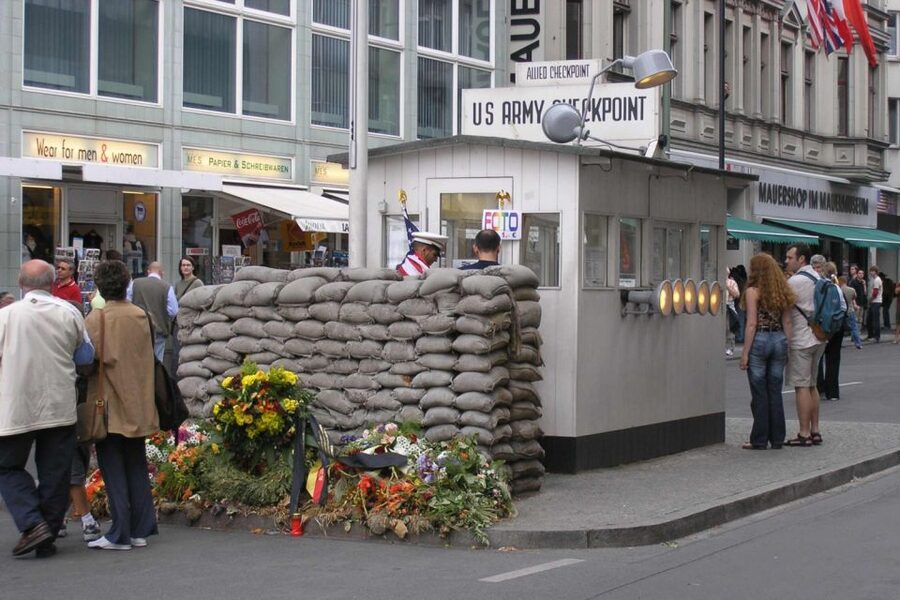
Checkpoint Charlie is the tour’s final major stop. The name is famous around the world, but its present appearance can feel more theatrical than historical. That makes the guide’s context important.
The checkpoint was one of the best-known crossing points between East and West Berlin. Its role connected military power, international tension, and the daily reality of people trying to pass between two political systems. By reaching it after Friedrichstraße, Brandenburg Gate, the former death strip, and Potsdamer Platz, you can place it within the wider border rather than treating it as the whole story.
I appreciate that the route does not begin and end at Checkpoint Charlie. Starting there can leave you with a narrow picture of the Wall, focused on a single guardhouse and photo opportunity. This tour shows how many parts of central Berlin were shaped by the border.
Checkpoint Charlie is also a practical ending point for continuing your day. The supplied information does not specify a particular onward route or end time beyond the two-hour duration, so plan your schedule with a little flexibility. The walking pace and time spent answering questions can vary.
What the two-hour format really gives you
Two hours is enough to cover a broad central route, but not enough for every detail. You will get a clear framework, the major locations, and selected stories about people affected by division. You will not get a complete account of every escape tunnel, political crisis, museum collection, or neighborhood along the Wall.
That limit is a strength if you have only part of a day in Berlin. At $21 per person, the price is reasonable for a live walking tour that connects several major sights. You are paying less for admission to a single major attraction and gaining a guide who interprets the streets between those attractions.
The value depends heavily on language. The tour is conducted in German, and no other language is listed. If German is not comfortable for you, the price will not compensate for missing the explanations. If you follow German well, the focused route and personal stories make the cost appealing.
The group can also affect the feel of the outing. One booking note describes a small group and an especially intensive tour, with the guide extending it by an hour. That is not a guaranteed feature, so treat the advertised two hours as the safe planning figure. Still, it suggests that the guide may allow extra time when the group and schedule permit.
Personal stories and the human side of division
The strongest praise centers on the guides’ personal storytelling. That matters because Berlin’s division can become an overload of dates, government names, and political terms. Personal accounts give the facts a human scale.
A guide such as Stefan or Stephan can help you connect the border station, the Wall, and the former death strip to real choices made by people living in the city. You may hear about separation, restrictions, fear, or the ways residents adapted their routines. The supplied information does not give the details of each story, so do not expect a fixed script of named individuals at every stop.
The tour also appears to work well in cold weather, but dress for the season. One enthusiastic note specifically mentions being satisfied despite low temperatures. You will be outdoors for the full route, and comfortable shoes are listed as essential. Warm layers, rain protection, and a willingness to walk will make the experience much easier, though only comfortable shoes are formally specified.
Who should book this Berlin Wall tour?
I would choose this tour if you want a compact introduction to divided Berlin and prefer streets, landmarks, and spoken explanation over a long indoor visit. It is particularly useful on a first visit, when you need a clear map of how Friedrichstraße, the government district, Brandenburg Gate, Potsdamer Platz, the Wall remains, and Checkpoint Charlie fit together.
It also suits you if personal accounts help you remember history. The guides’ individual approach is one of the experience’s strongest features, especially for a subject that can otherwise feel abstract.
I would think twice if you need an English-language tour, want a slow museum experience, or dislike walking between several central sights. The route covers serious subjects, so it is not a light sightseeing stroll. You should be ready for difficult stories about state control, separation, escape, and death.
Should you book it?
Book this tour if you can follow German and want a well-priced, tightly focused walk through the former border of Berlin. The route does more than tick off Brandenburg Gate and Checkpoint Charlie. It shows how the Wall ran through working parts of the city and affected ordinary life.
Skip it if German is not suitable for you or if you want a tour built around extensive indoor exhibits. For the right audience, the $21 price is strong value, the two-hour length is easy to fit into a Berlin itinerary, and the personal storytelling gives the city’s divided past a human face.
FAQ
How long is the Berlin Wall City Tour of Divided Germany?
The advertised duration is two hours. One tour may run longer when the guide and group have time, but you should plan around the stated two-hour schedule.
What language is the tour conducted in?
The tour is conducted in German. German is the only language listed for the live guide.
Where is the meeting point?
Meet at the entrance of Tränenpalast, the Palace of Tears, in front of Friedrichstraße station on Reichstagufer, 10117 Berlin, Germany.
Does Tränenpalast have more than one entrance?
No. Tränenpalast has only one entrance, which makes the meeting point easier to identify.
What sights are included on the route?
The route includes Friedrichstraße station, the former border station, the Spree, the parliament and government district, Brandenburg Gate, the Holocaust Memorial, Potsdamer Platz, the former Tiergarten Triangle, the longest remaining stretch of the Wall, and Checkpoint Charlie.
What should I bring?
Bring comfortable shoes. The activity is a walking city tour.
How much does the tour cost?
The listed price is $21 per person.
Can I cancel for a full refund?
Yes. You can cancel up to 24 hours in advance for a full refund.
Do I have to pay when I reserve?
No. The reserve-now, pay-later option lets you book your place and pay nothing at the time of reservation.
Just added in Berlin
- Private One way Airport Transfer Berlin Airport To Berlin★ 3.5 · 17 reviews
- Private Walking Tour: Berlin Wall, Cold War and Checkpoint Charlie★ 5.0 · 37 reviews
- Modern Berlin Private Walking Tour: Diverse, Vibrant and Exciting German Capital★ 5.0 · 13 reviews
- Private Day Trip to Potsdam from Berlin by Train★ 4.5 · 27 reviews
- City Explorer: Potsdam Private Day Trip★ 4.5 · 10 reviews
- Berlin Private Custom 5-Hour Tour by Car★ 5.0 · 30 reviews
- Private Half-Day Sightseeing Tour in Berlin★ 3.5 · 6 reviews
- Berlin Private Custom Tour in a Minivan, East and West★ 5.0 · 123 reviews
Berlin Wall & Cold War Tours, compared.

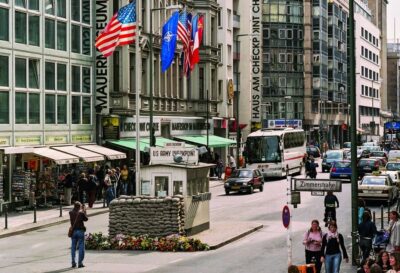
Skip-the-Line: Berlin Wall Museum at Checkpoint Charlie
Read our review →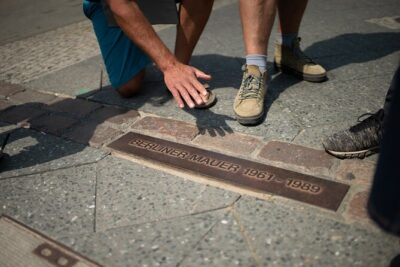
Cold War, Berlin Wall, Spies and the East Side Gallery
Read our review →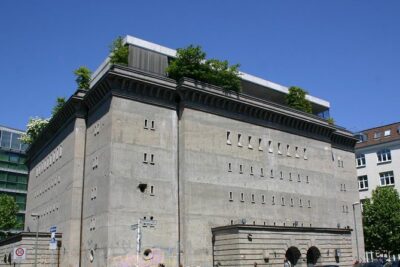
Guided Bike Tour of the Berlin Wall and Third Reich
Read our review →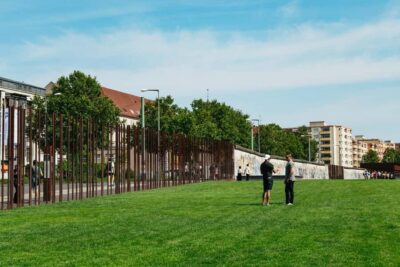
East Berlin and the Berlin Wall 2-Hour Walking Tour
Read our review →Browse the lists this tour appears in