

Reviewed · WALKING TOURS
Berlin: walking tour about Charité
Berlin’s Charité is more than a hospital. It is a window into 300 years of medicine, from plague control and early anatomy to Nobel Prize research and the grim years when doctors worked with the Nazi regime. This two-hour walk makes that complicated story the main event.
I like the clear route and the strong cast of medical figures, including Rudolf Virchow, Robert Koch, Emil von Behring, and Ferdinand Sauerbruch. I also like that the tour ends inside the Animal Anatomical Theatre, a rare surviving teaching building with an unusual setting. The main drawback is simple: you do not enter the modern Charité hospital or its campus, and the tour is conducted in German.
Key points to know
- Three centuries of medicine: Follow Berlin’s medical story from an 18th-century plague house to a major university hospital.
- Famous doctors in context: Learn how Virchow, Koch, Behring, and Sauerbruch shaped medicine and Berlin.
- A serious look at the Nazi era: The tour also covers the institution’s cooperation with the Nazi regime.
- The Animal Anatomical Theatre: Step inside Berlin’s oldest surviving teaching building, subject to opening hours.
- Outdoor hospital viewing: See the Charité Bed House from the outside, but do not enter the hospital grounds.
- German-language format: Plan on a live guide speaking German for about two hours.
Why the Charité tells Berlin’s medical story so well

The Charité began in the 18th century as a plague house. That starting point gives the tour a useful frame. Medicine here was not born in a polished research center. It grew from a city trying to manage disease, death, overcrowding, and public fear.
As you walk, the Charité becomes a record of changing ideas. Early medical practice relied heavily on observation and anatomy. Later generations brought laboratory science, public health, bacteriology, surgery, and new treatments. The hospital’s story follows the larger movement from uncertain remedies toward modern scientific medicine.
I find this approach more useful than a simple parade of famous names. You hear what these physicians did, but also why their work mattered. The tour connects their careers to the buildings, streets, and university setting around you.
That context also keeps the story honest. The Charité is linked to major discoveries and celebrated doctors, but its past includes moral failures. The discussion of Nazi-era cooperation prevents the tour from turning into a polished tribute to medical progress.
Other walks around Berlin:
- Discover Berlin Half-Day Walking Tour
★ 5.0 · 9,624 reviews - Berlin: Third Reich and Cold War 2 Hour Walking Tour
★ 4.9 · 6,830 reviews - Berlin: Discover Berlin Walking Tour
★ 4.9 · 5,998 reviews
Meeting at Charitéplatz and starting with the Bed House

The tour begins in front of the Charité Tower, at the crossroads of Schumannstraße, Charitéplatz, and Charitéstraße. Arrive early enough to find the exact point, since the tour starts on time.
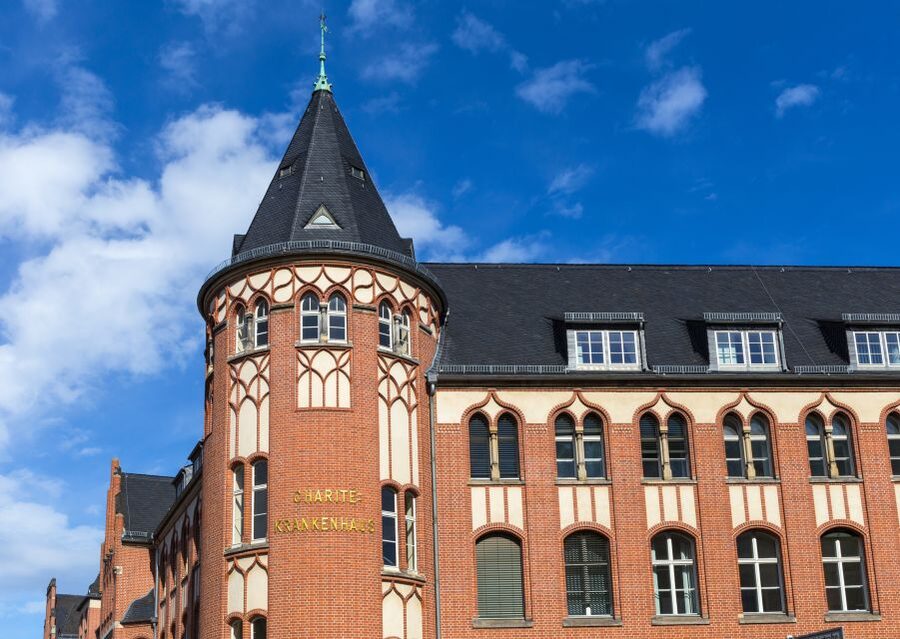
The first major sight is the Charité Bed House. You view it from outside. This is an important practical detail: the building is an active hospital facility, so hygiene and safety rules prevent group tours from going inside.
That limitation may disappoint anyone expecting a hospital tour. Still, the exterior gives your guide a clear place to explain how the institution developed and how its medical role changed over time. You are looking at a working medical complex, not a preserved museum set.
The opening section should suit you if you like city walks that use buildings as evidence. Instead of hearing a detached lecture, you begin with the institution itself and then follow the story through nearby streets and university spaces.
Along Luisenstraße with Virchow, Koch, and Behring
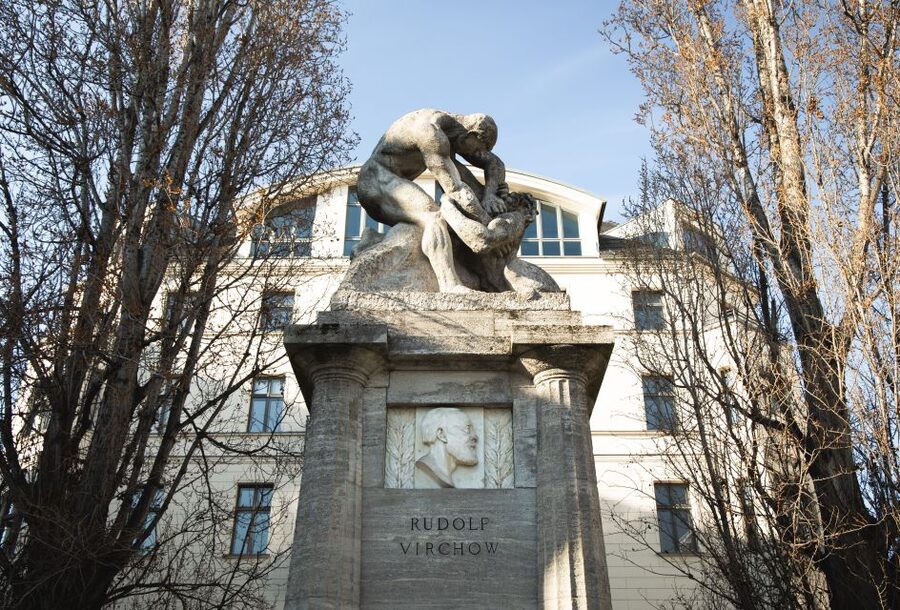
From the Charité area, the route continues along Luisenstraße and across the university campus. The walk brings in some of Berlin medicine’s best-known figures: Rudolf Virchow, Emil von Behring, Robert Koch, and Ferdinand Sauerbruch.
Each name represents a different part of the medical story. The value here is not just memorizing who won a Nobel Prize or who held an important post. You learn how doctors and scientists built reputations within Berlin’s hospitals, laboratories, and teaching institutions.
Rudolf Virchow is especially important to the Charité story. He is closely associated with pathology and with the idea that disease must be studied through the body’s cells and wider social conditions. Robert Koch points the story toward bacteriology and the effort to identify the causes of infectious disease. Emil von Behring represents early breakthroughs in immunity and treatment.
Ferdinand Sauerbruch brings the story into surgery. His name helps show how medical progress was not limited to laboratories. It also depended on new surgical methods, hospital systems, and doctors willing to work at the limits of what their era could manage.
The tour uses these figures to explain Berlin’s medical culture rather than treating them as isolated heroes. That is one of its strongest features. If you already know something about European medical history, you may enjoy the extra connections. If you do not, the names give the walk a clear structure.
The campus route, with an important boundary
You cross the university campus, but the Charité Campus Mitte itself is not open to group tours. This means the route is an outside view of the institution rather than a walk through hospital wards, courtyards, or research spaces.
You should set your expectations before booking. The tour is about the Charité and its setting, but it is not an inside hospital visit. You will not tour the Bed House, and you will not enter the hospital grounds as part of the group.
For some people, this is a weakness. Anyone hoping to see modern medical facilities or historic hospital interiors will find the access limited. For others, the restriction keeps the focus on history, public streets, and buildings that can be visited without interfering with patient care.
The walk also lets the guide explain Berlin’s less obvious medical past. The city’s connection with medicine is not always visible in the grand sights most people visit. A tour like this gives you a reason to pay attention to a street, a campus building, or an old institution that you might otherwise pass without a thought.
Same base, a different kind of day out:
- Berlin: Reichstag, Dome and Government District Guided Tour
★ 4.7 · 18,288 reviews - Berlin: 1-Hour City Tour by Boat with Guaranteed Seating
★ 4.3 · 16,993 reviews - Berlin: Boat Tour Along the River Spree
★ 4.4 · 11,252 reviews - Berlin: Hop-on Hop-off Bus Tour with Live Commentary
★ 4.3 · 8,579 reviews
The Animal Anatomical Theatre and its unusual setting
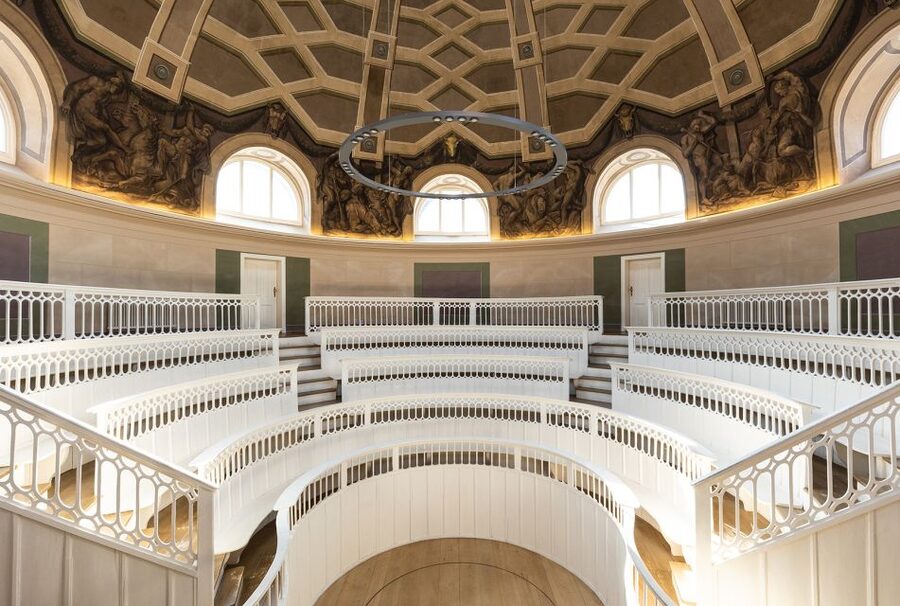
The final major stop is the Animal Anatomical Theatre, often shortened to TAT. You visit it from inside, making this the tour’s clearest indoor highlight.
The building is described as Berlin’s oldest surviving teaching building. Its purpose and setting give the tour a different mood from the opening walk around the modern hospital. This is where medical education took place in an earlier era, when anatomy lessons depended on direct study of bodies and specimens.
The name itself can sound mysterious, and the building’s unusual character helps explain why it is memorable. It is not simply another university room. It represents the old teaching side of medicine, when architecture, observation, and demonstration were central to training doctors.
This stop also gives the walk a satisfying shape. You begin with an active hospital viewed from outside, move through the city’s medical and academic history, and finish in a preserved teaching building. The route connects present-day medicine with the institutions that helped form it.
There is one scheduling warning. The TAT can change its opening hours at short notice for closed events, and it is closed on public holidays. If seeing the interior is your main reason for booking, check the tour details for your date and keep this possible change in mind.
The difficult chapter: medicine under the Nazi regime
The tour does not present Berlin medicine as a simple story of progress. It also addresses the dark period when doctors collaborated with the Nazi regime.
That part matters. A city known for scientific achievement also has a medical past that raises hard questions about professional duty, obedience, racism, and the misuse of institutions. The Charité’s history cannot be understood properly without facing those subjects.
You should expect the tone to shift here. The tour includes stories of life and death, and the Nazi-era material is likely to be serious rather than light sightseeing. This is not a drawback for anyone seeking an honest account of the institution, but it may not suit you if you want a casual walk with only celebratory stories.
I value this balance. Famous doctors and Nobel Prize winners are worth learning about, but their achievements should not erase the people harmed by medical systems. Including the Nazi period makes the tour more responsible and gives the scientific story moral weight.
What the German-language format means for you
The live guide speaks German. That is the most important language detail to consider before you book.
If you understand German well, the format should let you follow the medical terms, historical arguments, and darker parts of the story without relying on a translation. If your German is limited, the tour may be difficult to enjoy fully because its value depends on spoken explanation rather than simply seeing buildings.
The supplied information does not name the individual guide, so you should not book expecting a particular person. The experience is built around a live German-language guide and the places along the route.
The route lasts two hours. That is long enough to cover several centuries without turning into an all-day commitment. You should still expect a walking experience rather than a quick photo stop. Comfortable shoes make sense, though no special equipment is listed.
Is $27 a fair price?
At $27 per person, the tour sits in a reasonable range for a specialized two-hour city walk. You are paying for a focused subject, a live guide, access to the Animal Anatomical Theatre, and an organized story that would be hard to assemble on your own.
The value is strongest if you already have an interest in medicine, science, architecture, or Berlin’s less familiar past. A general Berlin sightseeing walk will cover more major landmarks, but it will not give you this level of attention to hospitals, doctors, teaching buildings, and medical ethics.
The price is less attractive if you mainly want to enter the Charité hospital or explore the campus. Those areas are not included, and the Bed House is viewed only from the outside. In that case, the tour may feel narrower than expected.
The overall rating is 4.4 out of 5 from 537 ratings, which fits the experience’s appeal as a focused historical walk. Its strongest quality is the medical background and the way it links famous scientists to a real place. The German-only format and restricted hospital access are the main limits.
Free cancellation is available up to 24 hours before the start, and you can reserve now and pay later. Those terms help if your Berlin plans are still shifting, though the more important decision is whether the language and subject suit you.
Who should book this Charité walk?
I would choose this tour if you like history that goes beyond royal palaces, wars, and famous squares. It should also suit medical professionals, students, science fans, and anyone curious about how hospitals shaped Berlin.
You will get the most from it if you enjoy listening closely and thinking about complicated subjects. The tour is not built around entertainment or a long list of photo opportunities. Its reward is a better understanding of how medical ideas, institutions, and ethical choices changed over time.
Families with older children might find the subject interesting, but the serious medical and Nazi-era material should be considered first. Very young children may not get much from a two-hour German-language history walk.
You should skip it if you need an English-language tour, want full access to the Charité campus, or expect to visit hospital interiors. The tour description is clear about those limits, and they are central to the experience.
My verdict on the two-hour route
This is a specialized Berlin walk with a clear purpose. Its best moments come from the medical stories, the famous doctors, the discussion of the Nazi period, and the visit inside the Animal Anatomical Theatre.
I like that the tour shows both achievement and failure. You see how Berlin became a center of medical research, but you also hear how respected institutions can become involved in terrible policies. That balance gives the walk more value than a simple tribute to old doctors.
Book it if you understand German and want a thoughtful look at Berlin through medicine. Treat the Charité Bed House as an exterior landmark, not an interior visit, and confirm that the TAT is open on your date. With those expectations, $27 is a fair price for a focused two-hour experience.
FAQ
How long is the Charité walking tour?
The tour lasts two hours. Check availability for the starting times offered on your chosen date.
Where does the tour begin?
It begins in front of the Charité Tower at the crossroads of Schumannstraße, Charitéplatz, and Charitéstraße.
Where does the tour end?
The activity ends back at the meeting point.
Is the tour conducted in English?
No. The live tour guide speaks German.
Can I enter the Charité Bed House?
No. You view the Charité Bed House from the outside because it is an active hospital facility with hygiene and protection rules.
Can I visit the Animal Anatomical Theatre?
The tour includes an inside visit to the Animal Anatomical Theatre, but its opening hours can change for closed events. The building is closed on public holidays.
Just added in Berlin
- Berlin: Energizing 2-Hour Morning Segway Tour★ 4.7 · 35 reviews
- Berlin: Thrilling E-Scooter Adventure Tour★ 4.4 · 66 reviews
- Beelitz-Heilstätten: Baum&Zeit Tree Top Walk Entry Ticket★ 4.9 · 7 reviews
- Beer Bike & Party Bike: Unforgettable Berlin City Tour incl. pickup★ 5.0 · 5 reviews
- AXE THROWING EXPERIENCE IN BERLIN★ 4.7 · 24 reviews
- Alternative Berlin / Street art tour – Private group★ 5.0 · 6 reviews
- Berlin: Alternative & Street Art Tour★ 4.5 · 6 reviews
- Berlin: 2.5-Hour Beer & Sunset Sightseeing Boat Cruise★ 4.6 · 61 reviews
Walking Tours, compared.




Third Reich Berlin: Hitler and WWII Walking Tour
Read our review →
Browse the lists this tour appears in