Reviewed · WALKING TOURS
Berlin: Sightseeing Walking Tour of the Top 20 Attractions
Berlin’s past is packed into this three-hour, 6-kilometre walk. You move from the modern government district to the Reichstag, Brandenburg Gate, Holocaust Memorial, Checkpoint Charlie, the Topography of Terror, and Museum Island. It is a lot of ground, but the route gives you a useful map of Berlin’s divided and reunited city.
I like the personal guide format, especially for first-time visitors who want more than a list of monuments. I also like the mix of major sights and hard history, from Nazi terror to the Cold War and the Wall’s fall. The tradeoff is simple: this is a brisk walk, not a leisurely stroll, and three hours can feel tiring by the finish.
The Berlin highlights worth knowing before you book
- Six kilometres on foot: You cover a wide central route, so wear proper walking shoes and bring water.
- History with personality: Guides use Berlin humor, personal stories, and clear explanations rather than only dates and names.
- A strong first-day route: The tour links the government quarter, Nazi memorial sites, former Wall locations, Prussian monuments, and Museum Island.
- Small or private groups: The guide can adapt the discussion to your interests, with English, Spanish, or German available.
- Well-known guides: Carlos and Carlo have been praised for warmth, personal Berlin stories, and a willingness to run beyond the planned three hours.
- A view from outside, not museum entry: You see major buildings and memorials, but the experience is built around walking and guiding rather than extended indoor visits.
Why this route works for a first look at Berlin
Berlin can be confusing at first. Its best-known sights are spread across several districts, and the city’s story does not follow one neat timeline. A Prussian palace may sit a short walk from a Nazi-era memorial, while a Cold War checkpoint is only minutes from grand 19th-century architecture.
This tour brings those pieces together. You begin opposite the Federal Chancellery, walk past the seat of modern German government, and finish near Museum Island. Along the way, your guide connects the imperial capital, Nazi dictatorship, divided Berlin, and present-day Germany.
That broad sweep is the main reason to book. You will not study every site in detail, but you will leave with a mental map. You can then return to the places that caught your attention, perhaps with a museum visit or a longer walk of your own.
The tour runs daily at 10:00 AM and 2:00 PM. The morning departure gives you the rest of the day for museums or neighborhoods. The afternoon option works well if you arrive late or want a slower start.
Other walks around Berlin:
- Discover Berlin Half-Day Walking Tour
★ 5.0 · 9,624 reviews - Berlin: Third Reich and Cold War 2 Hour Walking Tour
★ 4.9 · 6,830 reviews - Berlin: Discover Berlin Walking Tour
★ 4.9 · 5,998 reviews
Starting at the Paul-Löbe-Haus and the government district
Meet in front of the main entrance of the Paul-Löbe-Haus at Konrad-Adenauer-Straße 1, opposite the Federal Chancellery. Look for a TourguideMe guide near the entrance. This is a practical meeting point, but allow time to reach it, since the government quarter is not right beside every central hotel or station.
The opening walk introduces modern Berlin. You see the Paul-Löbe-Haus and the German Chancellery, then continue toward the Reichstag. The area has a clean, formal feel, and it provides a useful contrast with the older streets ahead.
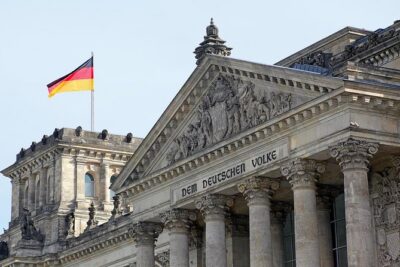
The Reichstag is one of Berlin’s essential sights. Its glass dome has become a symbol of modern German democracy, while the building itself carries the weight of the country’s political past. Your guide explains the building from outside and places it within the story of Berlin’s government.
This first section is not about entering the Reichstag. It is a guided exterior visit, so do not book the tour expecting a dome visit or a long stop indoors.
Brandenburg Gate and the Holocaust Memorial
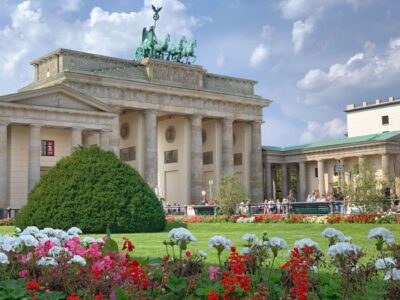
The Brandenburg Gate is the classic Berlin photograph, but it is more interesting when you know how its meaning changed. It began as a royal gateway and later became a symbol of division when the Wall ran nearby. After reunification, it became a sign of a single Berlin again.
The guide uses the gate as a starting point for explaining Berlin’s political shifts. This is one of the tour’s strongest moments because the monument is easy to admire, yet its meaning is tied to several very different chapters of German history.
Nearby, the Holocaust Memorial changes the mood. The field of concrete blocks invites you to walk through it, and the experience becomes more unsettling as the ground drops and the blocks rise around you. The tour includes guided time here, with some free time to look around.
Give this stop your attention. The memorial is not a place for a quick photograph and immediate departure. The guide’s explanation helps, but the layout itself is meant to make you think and feel disoriented. You may want to return later when you have more time.
Potsdamer Platz and the marks of division
Potsdamer Platz shows how quickly Berlin can change from solemn memorials to modern city life. It is a major urban center with contemporary buildings and open public spaces, built up again after the Wall divided the area.
The guide uses the square to explain the physical and political changes that followed reunification. It is not as old-looking as the Brandenburg Gate or Museum Island, but that is the point. Berlin’s center is a record of rebuilding, new architecture, and competing memories.
The pace begins to matter here. You are still early in the route, but you have already covered several significant stops. If you like to take many photographs, tell your guide. One private departure gave two people enough time to photograph the main sights, but a larger group may move more quickly.
Same base, a different kind of day out:
- Berlin: Reichstag, Dome and Government District Guided Tour
★ 4.7 · 18,288 reviews - Berlin: 1-Hour City Tour by Boat with Guaranteed Seating
★ 4.3 · 16,993 reviews - Berlin: Boat Tour Along the River Spree
★ 4.4 · 11,252 reviews - Berlin: Hop-on Hop-off Bus Tour with Live Commentary
★ 4.3 · 8,579 reviews
Checkpoint Charlie and the Topography of Terror
Checkpoint Charlie is one of Berlin’s most famous Cold War locations. The former crossing point between East and West Berlin now sits in a busy central area, with signs and displays that recall the city’s divided years.
The site can feel more commercial than solemn, so the guide’s context is useful. You learn what the checkpoint represented and how Berlin functioned when a wall cut through streets, neighborhoods, and families. The stop works best as part of the larger route, rather than as a stand-alone attraction.
The nearby Topography of Terror is more serious. It occupies the grounds of the former Gestapo and SS headquarters and documents Nazi persecution and state terror. The memorial and exhibition area gives the tour a needed historical anchor after the lighter visual appeal of central Berlin.
This section is valuable for anyone who wants the tour to deal honestly with the 20th century. It also means the experience is not simply a parade of attractive buildings. You will encounter difficult subjects, and the guide’s tone matters. The tour description promises humor, but the strongest guides know when to use it and when to be quiet.
Gendarmenmarkt, Bebelplatz, and Unter den Linden
Gendarmenmarkt brings you back to grand Berlin architecture. The square is framed by the French Cathedral, the German Cathedral, and the Konzerthaus. Even if you are not entering the buildings, the layout gives you a clear sense of the city’s Prussian and 19th-century ambitions.
From there, the route continues toward Bebelplatz. This square is tied to the Nazi book burning of 1933, and a memorial below ground level recalls the event. The empty library is easy to miss if you do not know where to look, which is why a guide adds real value here.
Bebelplatz also sits beside several important buildings, including St. Hedwig’s Cathedral and the former royal library. The stop combines architecture with a warning about how public spaces can be used for propaganda and control.
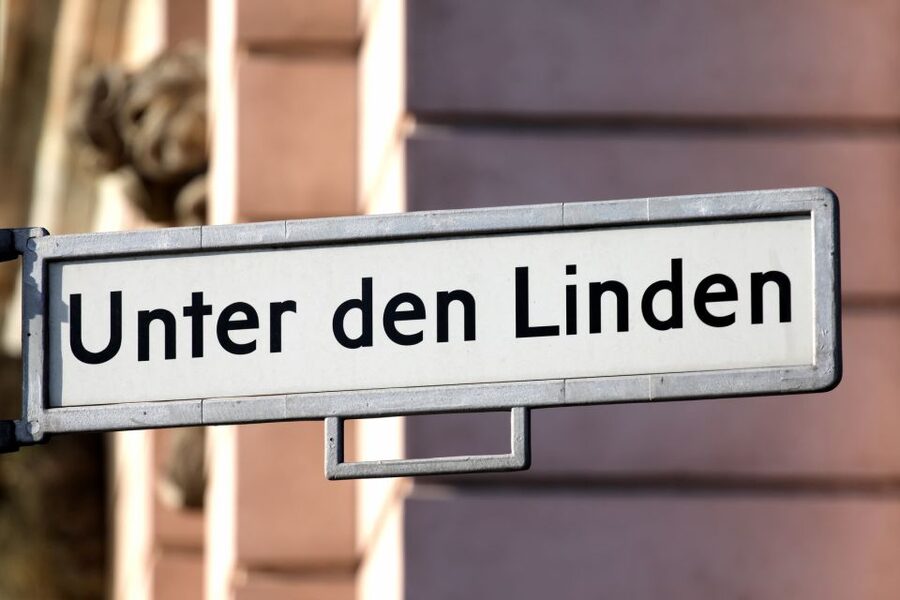
You then follow Unter den Linden, Berlin’s grand boulevard. The walk helps you see how the city’s main axis connects royal history, state power, university life, and present-day tourism. At this point, a guide can also point out details you might otherwise pass without notice.
One of the most useful promises of this experience is the chance to ask about everyday Berlin, food, nightlife, and neighborhoods. Use that opportunity. The route gives you the broad picture, while your questions can make the advice more personal.
The New City Palace, Lustgarten, and Berlin Cathedral
The New City Palace, also called the Humboldt Forum, represents Berlin’s complicated approach to reconstruction. Its exterior recreates much of the old palace appearance, while its modern interior serves present-day cultural uses. The building raises questions about monarchy, war damage, East German planning, and the decision to rebuild historic facades.
The guide can help you understand why this building matters instead of treating it as just another pretty stop. If you have time after the tour, you may want to return for a closer look, but the walking experience focuses on the outside.
Lustgarten opens up the route before Berlin Cathedral. The square sits between the cathedral, the Old Museum, and the former palace site, making it one of the best places to see how Berlin’s imperial and cultural center was arranged.
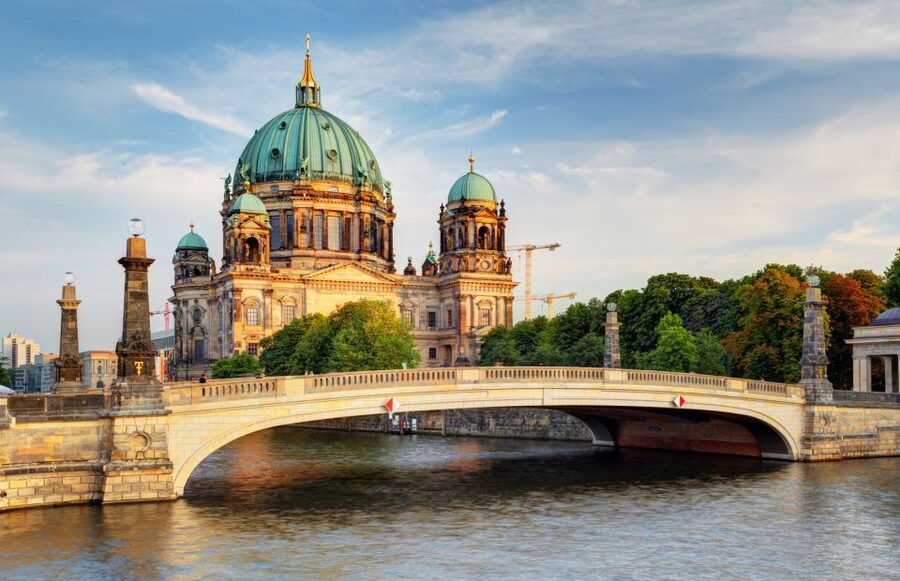
Berlin Cathedral is one of the route’s most striking buildings. Its large dome dominates the area, and the riverside setting makes it a strong photo stop. Again, this is an exterior sightseeing visit, not a cathedral tour or dome climb.
That distinction matters. The tour gives you orientation and stories. It does not provide the time needed for full visits to the cathedral, museums, or memorial exhibitions.
Museum Island and the finish at Friedrichsbrücke
Museum Island is the natural final chapter. The complex includes several major museums, and the route passes the Alte Nationalgalerie along with other cultural landmarks. Your guide explains the island’s place in Berlin’s cultural center and helps you understand how the buildings relate to one another.
The finish at Friedrichsbrücke is convenient for continuing on foot. You are near Museum Island, the river, and central transport connections. It is a useful place to stop for a meal, continue sightseeing, or return to one of the museums you passed.
By now, you will have walked about six kilometres. That is manageable for many people, but it is not a short city walk. Several past participants found the three hours tiring, even while considering the effort worthwhile. Plan a break afterward rather than scheduling a demanding museum visit immediately at the finish.
What the guide adds to the experience
The guide is the main variable in a tour like this. Berlin has too many stories for a single fixed script, so a good guide must choose what to explain and when to move on.
The guide team has included Carlos, Carlo, Antonella, and Max. Carlos and Carlo have been praised for warm conversation, strong English, and personal connections to Berlin’s modern history. Carlo, described as a native Berliner, shared memories that made the Wall’s fall feel less like a distant textbook event.
That kind of personal detail can make a major difference. You still need accurate context, but lived experience can help you picture how a divided city felt to ordinary people. One guide also kept the group going in cold rain and stopped for a hot drink, showing the practical side of a good walking guide.
The tour is available in English, Spanish, and German. Private and small-group formats are offered, and the route can adapt to your interests. If you care most about Nazi history, Cold War Berlin, architecture, or present-day neighborhoods, say so at the start.
Is $94 a fair price?
At $94 per person, this is not Berlin’s cheapest walking tour. The value depends on group size and what you want from the guide.
For a private tour or a very small group, the price can make sense. You receive three hours of direct attention, a route covering much of central Berlin, and the freedom to ask questions. One small booking turned into a one-on-one experience, with time for photographs and extra explanations.
For a larger group, the value is less obvious if you only want to see the buildings. You can walk past many of these sights without paying for a guide. The fee earns its keep through the historical connections, local recommendations, and time saved planning your own route.
The tour includes no hidden costs and offers free cancellation up to 24 hours before departure. You can also reserve and pay later. Those terms help if your Berlin plans are still changing.
Who should book this walking tour?
I would choose this experience for a first visit to Berlin, especially if you want a strong overview before deciding which museums and memorials deserve more time.
It also suits couples, families, friends, small teams, and curious locals. The route is listed as suitable for all ages and fitness levels, and it is wheelchair accessible. Still, six kilometres over three hours is a serious amount of walking, so check that the pace and route suit your own needs.
You should also book it if you enjoy history explained through stories rather than a lecture. The best moments come from connections: how the Reichstag relates to modern democracy, how Brandenburg Gate changed meaning, how Checkpoint Charlie fits into the divided city, and how Bebelplatz recalls a dangerous act of censorship.
I would skip it if you want long indoor visits, a slow photography walk, or a tour limited to Berlin’s prettiest buildings. You will spend much of the time moving between sights, and the route covers difficult history as well as famous landmarks.
Practical advice for the three-hour route
Wear comfortable shoes with good support. Bring water, a camera, and clothing suited to the forecast because the tours run in all weather.
Arrive at the Paul-Löbe-Haus meeting point a little early. The guide meets in front of the main entrance, opposite the Federal Chancellery, and the government district can take time to reach.
Keep your schedule flexible after the tour. Guides have sometimes continued beyond the planned three hours when the group wanted more detail, but you should not count on an extension if you have a timed booking afterward.
Ask questions early, not only at the final stop. The guide can adapt to your interests, and a request about food, nightlife, or neighborhoods may be most useful while you are still near the part of the city you plan to explore next.
Should you book it?
Book this tour if you want Berlin’s major sights tied into one clear story. The combination of Brandenburg Gate, the Reichstag, the Holocaust Memorial, Checkpoint Charlie, Topography of Terror, Gendarmenmarkt, Bebelplatz, and Museum Island gives you an unusually broad first look in three hours.
The best reason to pay $94 is the guide. Carlos, Carlo, Antonella, and Max represent the warm, personal style this experience aims for, with history, humor, and practical local advice. Just expect a brisk pace and tired legs.
If you can walk six kilometres and want orientation more than museum time, this is a useful first-day choice. If you prefer a slower, deeper visit to one period or one monument, choose a shorter specialist tour instead.
FAQ
How long is the Berlin walking tour?
The tour lasts three hours, or 180 minutes, and covers approximately six kilometres on foot.
Where does the tour meet?
Meet in front of the main entrance of the Paul-Löbe-Haus, opposite the Federal Chancellery, at Konrad-Adenauer-Straße 1 in Berlin.
What time does the tour start?
Tours are offered daily at 10:00 AM and 2:00 PM.
Which sights are included?
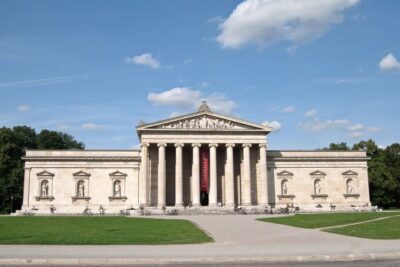
The route includes the government district, German Chancellery, Reichstag, Brandenburg Gate, Holocaust Memorial, Potsdamer Platz, Checkpoint Charlie, Martin-Gropius-Bau, Topography of Terror, Gendarmenmarkt, Bebelplatz, Unter den Linden, the New City Palace, Lustgarten, Berlin Cathedral, Museum Island, Alte Nationalgalerie, and Friedrichsbrücke.
What languages are available?
The tour is available in English, Spanish, and German.
Is the tour private or wheelchair accessible?
Private and small-group options are available, and the activity is listed as wheelchair accessible. Since the route covers about six kilometres, you should confirm that the walking distance suits your needs before booking.
Just added in Berlin
- Private One way Airport Transfer Berlin Airport To Berlin★ 3.5 · 17 reviews
- Private Walking Tour: Berlin Wall, Cold War and Checkpoint Charlie★ 5.0 · 37 reviews
- Modern Berlin Private Walking Tour: Diverse, Vibrant and Exciting German Capital★ 5.0 · 13 reviews
- Private Day Trip to Potsdam from Berlin by Train★ 4.5 · 27 reviews
- City Explorer: Potsdam Private Day Trip★ 4.5 · 10 reviews
- Berlin Private Custom 5-Hour Tour by Car★ 5.0 · 30 reviews
- Private Half-Day Sightseeing Tour in Berlin★ 3.5 · 6 reviews
- Berlin Private Custom Tour in a Minivan, East and West★ 5.0 · 123 reviews
Walking Tours, compared.

Third Reich Berlin: Hitler and WWII Walking Tour
Read our review →