
Reviewed · CONCENTRATION CAMP MEMORIAL TOURS
Dachau Small-Group Half-Day Tour from Munich By Train
Dachau is not a sightseeing stop in the usual sense. It is a place for careful attention, quiet reflection, and hard historical truth. This five-hour guided visit connects Munich’s Nazi-era story with the actual grounds of the first concentration camp established by the regime.
I like two things especially: public transportation is handled for you, and a guide gives the visit structure and context. Guides such as James and Samuel have been praised for explaining the train and bus connections, keeping groups together, and making good use of waiting time. The main consideration is emotional: this is a painful place, and the site includes a fair amount of walking outdoors on gravel and concrete.
Key points to know before booking
- Meet at Marienplatz by 8:45 a.m. The group leaves at 9:00 sharp and cannot wait for late arrivals.
- Train and bus transport are included, which removes much of the confusion from reaching the memorial site.
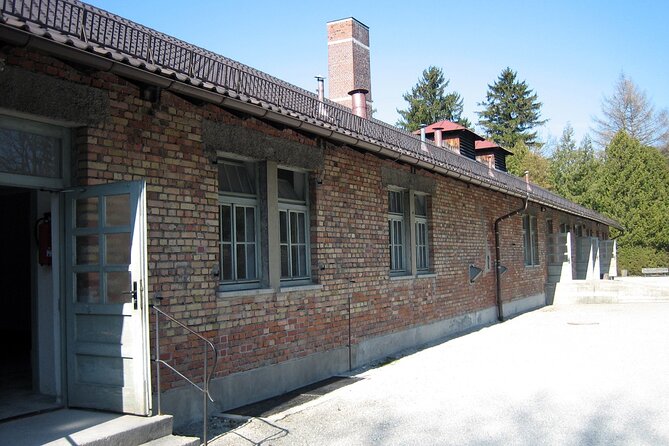
- The camp visit covers the main public areas, including the Jourhaus gate, prisoner registration, barracks area, crematorium area, and memorials.
- The guide supplies the larger context, from Hitler’s rise and the Reichstag fire to Dachau’s role in the concentration camp system.
- Groups are limited to 20 people, small enough to hear the guide in most parts of the visit.
- Children under 14 cannot join guided tours at the memorial site, and food and drinks are not provided during the tour.
Why Dachau needs a guide
You can reach Dachau Memorial Site on your own, but the journey and the place itself are easier to handle with a good guide. The site is large, emotionally demanding, and filled with information that can be difficult to organize without help.
This tour begins at Munich’s Marienplatz, where you meet the guide and travel together by public transportation. The route includes a train and then a bus, so the guide’s role begins before you reach the camp. Guides have been praised for knowing where to wait on the platform, reducing unnecessary delays, and keeping the group moving through the connections.
That practical help matters. You are not spending your morning wondering which train carriage to board or which bus stop comes next. The guide can also use the journey to explain the rise of the Nazi Party, the early concentration camp system, and the political changes that made Dachau possible.
The tour is offered in English and has a maximum group size of 20. That is not a private tour, but it is small enough for the guide to answer questions and check that people can hear. At a site crowded with school groups and other organized visits, this makes a real difference.
More Concentration Camp Memorial Tours in Munich
- Dachau Concentration Camp Memorial Site Tour from Munich by Train
★ 4.5 · 5,637 reviews - From Munich: Dachau Memorial Site Day Tour
★ 4.8 · 2,723 reviews - From Munich: Dachau Memorial Site Half-Day Trip
★ 4.7 · 2,526 reviews
The 9:00 a.m. departure from Marienplatz
The meeting point is Marienplatz 15 in central Munich. Arrive by 8:45 a.m., not at 8:59. The group leaves at 9:00 sharp, and late arrivals cannot be accommodated.
Marienplatz is easy to reach by Munich’s public transportation system, but give yourself extra time if you are unfamiliar with the city center. The tour provider asks you to check in 15 minutes early, and this is one instruction worth taking seriously.
The first portion of the tour sets the political stage. You will cover Hitler’s rise during the 1920s, his appointment as Chancellor in 1933, the burning of the Reichstag, and the formation of the first concentration camps. This background helps you see Dachau not as an isolated prison, but as part of a system built through law, propaganda, intimidation, and organized state power.
The train and bus ride also gives the guide time to explain how Dachau became a model for later camps. That early context is useful because the memorial site can otherwise feel like a series of buildings and open spaces without a clear timeline.
Entering through the Jourhaus gate
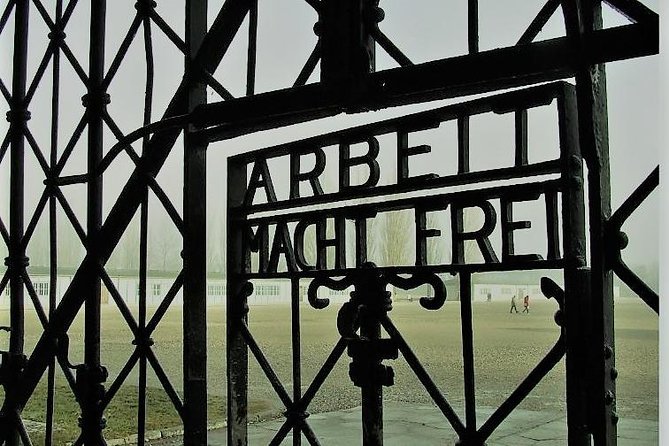
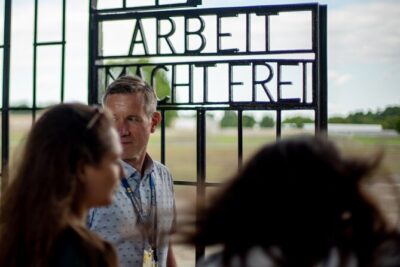
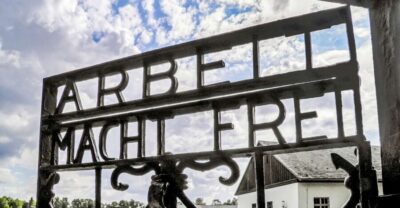
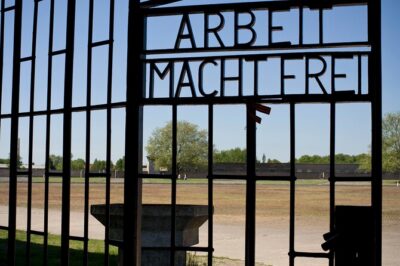
At the memorial site, the tour begins with the main gatehouse, known as the Jourhaus. The gate carries the notorious words Arbeit Macht Frei, a phrase used by the Nazi regime to disguise imprisonment and terror as labor.
This is one of the most recognizable parts of Dachau, but it should not be treated as a photo stop. The guide explains what the gate represented and how prisoners entered a system designed to control every part of their lives.
Dachau operated in three major phases, and the tour places the camp within that changing structure. Its role grew over time, and the camp became a training facility for the SS as well as a model for other concentration camps. That detail is especially important: Dachau was not only a place where prisoners were held. It also helped shape the methods and administration used across the wider camp network.
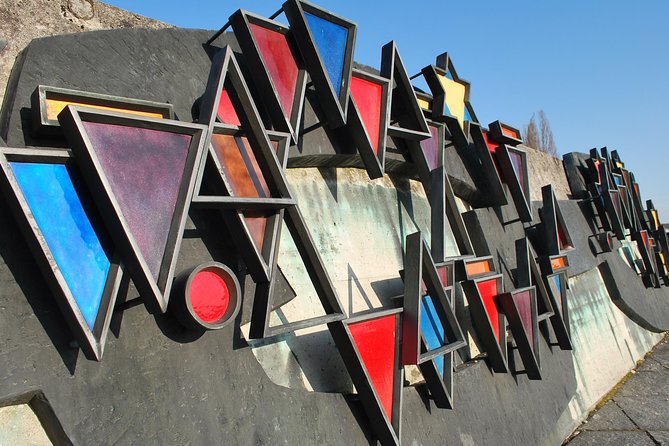
The guide then explains the different prisoner categories and how people were registered. Prisoners were classified with colored markings on their uniforms, and these categories affected how they were treated. The system was built to divide people, label them, and make persecution appear orderly.
Understanding daily life and the camp system
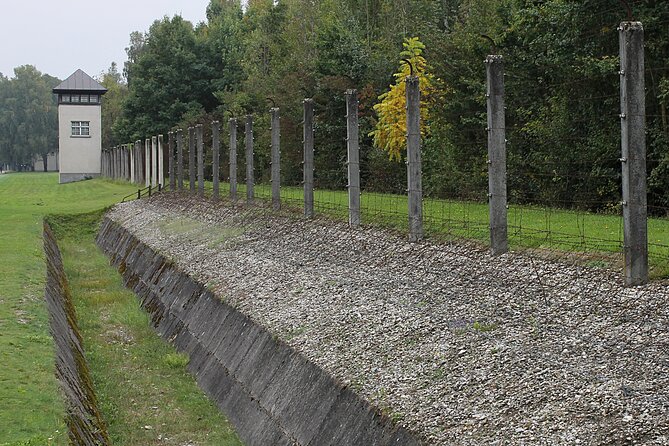
The visit covers the prisoner area and the public sections of the memorial. You will learn about registration, camp organization, the barracks, prisoner life, and the ways people were brought into the concentration camp system.
The tour also places Dachau beside other types of Nazi detention sites, including ghettos and extermination camps. That comparison matters. The Nazi system was not one single kind of institution, and the terms are not interchangeable. A guide can explain how the various parts worked together and where Dachau fit within that larger structure.
Kristallnacht, the anti-Jewish pogrom of November 1938, receives special attention. It brought a major influx of Jewish prisoners to Dachau and marked a sharp escalation in Nazi persecution. Connecting that event to the camp’s prisoner population helps you understand how public violence, arrests, imprisonment, and later mass murder developed through linked stages.
This is also where a guide’s pacing matters most. The site contains more material than you can absorb in a single morning. The strongest part of the tour is not simply seeing the grounds, but hearing the events arranged in a clear sequence.
Past groups have especially valued guides such as James for explaining the Nazi Party, the Holocaust, and Dachau without losing sight of the people imprisoned there. Samuel has also been praised for connecting the site’s lessons with present-day questions about government and injustice. You should not expect the same guide on every departure, but the named guides show the level of historical and moral attention the company aims to provide.
Other memorial sites within reach of Munich:
- From Munich: Dachau Memorial Site Full-Day Tour
★ 4.9 · 1,406 reviews - Dachau Concentration Camp Memorial Tour with Train from Munich
★ 4.5 · 955 reviews - Early-Start Dachau Memorial Half-Day Tour from Munich
★ 5.0 · 942 reviews - Guided Dachau Concentration Camp Memorial Site Tour with Train from Munich
★ 5.0 · 920 reviews
The memorial buildings and the emotional weight
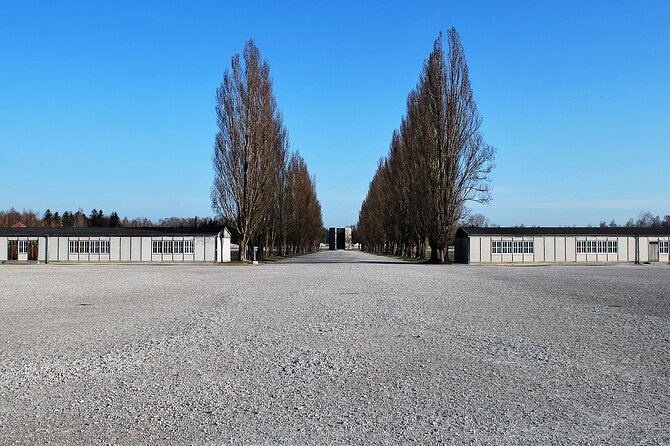
Dachau is a place where the physical setting can seem quiet. That can be difficult. There may be no dramatic visual cue to tell you how to feel, and ordinary life continues outside the memorial grounds.
The tour helps bridge that gap between the present setting and the crimes committed there. The guide describes how the camp was organized, how prisoners arrived, how they were categorized, and what daily life looked like. You move through a place that is orderly in appearance but carries the evidence of a system built on terror.
The memorial includes reconstructed and preserved elements, religious memorials, and the crematorium area. The experience is not designed as entertainment, and it should not be approached as a quick checklist of buildings. Allow yourself quiet time when the guide pauses or gives the group a chance to look around independently.
Several people have found the visit emotionally intense, particularly at the gate and in the crematorium area. That reaction is normal. You may want to prepare teenagers in advance, especially if they know little about Nazi persecution. The memorial site does not permit children under 14 on guided tours.
The tour is a mixture of indoor and outdoor time. Dress for the weather, and wear comfortable shoes. One useful detail is that the grounds include gravel and concrete, so thin sandals or uncomfortable footwear can make a serious day harder than it needs to be.
Liberation, aftermath, and the memorial created in 1965
The story does not end with the camp’s liberation. The guide covers the liberation itself and what happened at Dachau between 1945 and the opening of the Documentation Center in 1965.
That later period is easy to overlook, but it is essential to understanding how societies remember mass violence. The site changed function over time, and the creation of the memorial reflected a growing effort to document what happened and preserve the grounds for public education.
The tour also explains the aftermath for the camp and its prisoners. This gives the visit a fuller arc, from the political conditions that created Dachau to the difficult question of how the place would be treated after the war.
I appreciate this part of the route because it prevents the memorial from becoming frozen in 1933 to 1945. Dachau is also a place shaped by postwar decisions, public memory, and the duty to teach future generations.
How the transportation works in practice
The journey from central Munich takes place by train and bus. The guide leads the group from Marienplatz through both parts of the route, then brings everyone back to the original meeting point at the end.
You do not need to purchase separate public transportation for this outing. Round-trip transport costs are included in the price, along with the licensed professional guide. Admission to the memorial site itself is free, so the $60.46 price mainly pays for the guide’s time, planning, group coordination, and transportation.
That is fair value if you want the historical explanation and the reassurance of not handling the connections alone. It is less attractive if you prefer to move at your own pace, read every exhibit in detail, or spend a full day at the memorial.
The tour lasts about five hours, including the journey from Munich. The schedule gives you a focused morning rather than an open-ended visit. A few people have wished for more time to read inside the museum, so keep that limitation in mind. You will receive a guided overview with some independent time, but this is not a slow, self-paced museum day.
Price, group size, and practical comfort
At $60.46 per person, the cost is moderate for a half-day guided excursion from Munich. The price includes the train and bus transport and a fully licensed guide, which means the comparison should be made against the cost of arranging transportation and hiring an independent guide, not against free entry alone.
The maximum of 20 people keeps the group from becoming unwieldy. At crowded points, the guide may need to adjust the order of the visit. That flexibility has been useful on busy days, allowing the group to avoid standing in long queues while still seeing the main areas.
Food and drinks are not supplied. You can buy refreshments at several locations around the meeting area, but do not count on a planned meal break during the tour. Eat beforehand and carry what you need, especially since the morning combines outdoor walking with public transportation.
Service animals are allowed, and the activity is near public transportation. Most people can participate, but the site’s walking surfaces and the emotional demands are worth considering before booking.
Free cancellation is available up to 24 hours before the start time. Changes or cancellations made less than 24 hours in advance are not accepted for a refund. The tour also requires a minimum number of participants, and if that minimum is not reached, you will be offered another date or experience, or a full refund.
Who will get the most from this visit
This tour suits you if you want a structured introduction to Dachau and the Nazi concentration camp system. It is particularly useful for first-time visitors, people staying in Munich for a short visit, and families with older teenagers who are ready for serious historical material.
It is also a good choice if public transportation in an unfamiliar city makes you uneasy. The guide handles the route and keeps the group together, which lets you concentrate on the memorial rather than the timetable.
You may prefer an independent visit if you need long stretches of quiet reading time or want to set your own pace. The guided route is detailed, but five hours is still a limited window for a site with this much material.
This is not a light excursion to place between lunch and shopping. You should expect a somber day, not a pleasant distraction. The value comes from understanding what happened, seeing the site with proper context, and giving the subject the attention it deserves.
Should you book the Dachau half-day tour?
I would book this tour if you want a serious, well-organized visit and prefer not to manage the train and bus connections yourself. The guide-led format is the main reason to choose it. A strong guide can explain the Nazi rise to power, the camp structure, prisoner categories, liberation, and the memorial’s later development in a way that individual plaques cannot always do.
The $60.46 price is reasonable for the included transportation and five hours of professional guidance. Go prepared for outdoor walking, limited food options, and an emotionally difficult experience. If you do, this can be one of the most important historical visits you make from Munich.
FAQ
Where does the Dachau tour begin?
The tour begins at Marienplatz 15, 80331 Munich, Germany. You should arrive by 8:45 a.m. for check-in.
What time does the tour leave Munich?
The group departs at 9:00 a.m. The tour cannot wait for late arrivals.
Is transportation to Dachau included?
Yes. Public transportation costs to and from the memorial site are included. The route uses a train and a bus.
How long does the experience last?
The tour lasts approximately five hours and ends back at the original meeting point in Munich.
What language is the tour offered in?
The tour is offered in English.
Can children join the guided tour?
Children under 14 are not permitted to join guided tours at the memorial site. Students can select the youth price category but must show valid identification on the day.
Are food and drinks included?
No. Food and drinks are not included, and refreshments are not provided during the tour. You can purchase refreshments at several locations near the meeting area.
More train journeys from Munich
- Nuremberg Guided Day Trip from Munich by Train
★ 4.5 · 546 reviews - From Munich: Nuremberg Day Trip by Train
★ 4.4 · 357 reviews - Nuremberg: City Tour with the Bimmelbahn Train
★ 4.4 · 2,475 reviews - Würzburg: City Tour with the Bimmelbahn Train
★ 4.4 · 1,322 reviews
Just added in Munich
- 2 Hours Munich: VIP Private Segway Tour★ 4.9 · 5 reviews
- “Comedykills” – das Open Mic im Glockenbachviertel★ 4.1 · 51 reviews
- From Munich: Herrenchiemsee Palace and Boat Trip Day-Tour★ 4.8 · 129 reviews
- Munich: Classical Concert at the Residenz Palace★ 4.5 · 148 reviews
- Munich: City Highlights Guided Segway Tour★ 4.6 · 266 reviews
- From Munich: Guided Group Tour to Eagle’s Nest★ 4.8 · 303 reviews
- From Munich: Dachau Memorial Site Tour in Spanish★ 4.9 · 300 reviews
- From Munich: Nuremberg Day Trip by Train★ 4.4 · 357 reviews
Concentration Camp Memorial Tours, compared.
Sachsenhausen Concentration Camp Tour in English
Read our review →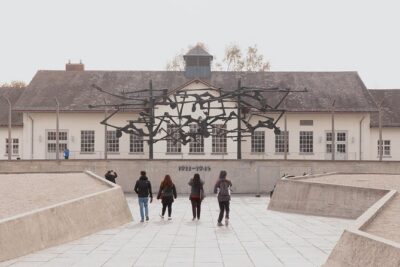
Dachau Concentration Camp Memorial Site Tour from Munich by Train
Read our review →
Sachsenhausen Concentration Camp Memorial Tour
Read our review →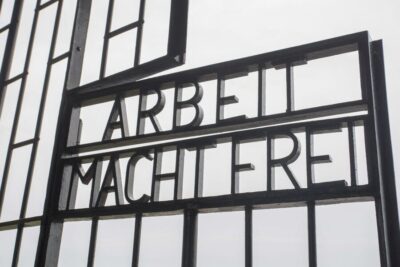
Sachsenhausen Concentration Camp Bus Tour in English from Berlin
Read our review →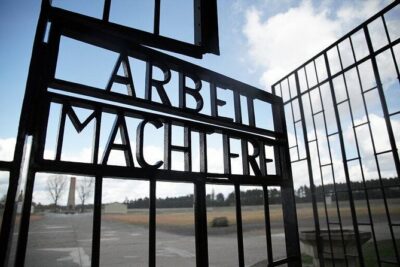
Sachsenhausen Concentration Camp Memorial Tour (Max. 15 Guests)
Read our review →
Sachsenhausen Concentration Camp and Potsdam Tour
Read our review →Browse the lists this tour appears in