
Reviewed · BERLIN WALL & COLD WAR TOURS
Berlin: Muro,Guerra Fría y Museo de la Stasi
Berlin’s Cold War story becomes clearest when you see it on the ground. This four-hour Spanish-language tour links the remaining Berlin Wall and Death Strip with Bernauer Strasse, former ghost stations, Frankfurter Allee, and the Stasi Museum. It is less about postcard sights and more about how a divided city worked day by day.
I like two things in particular: the tour uses public transport to connect places spread across Berlin, and it gives the history a human scale through escape attempts, surveillance, and daily life in East Berlin. Guides including Constantino and Jordi have earned praise for their clear, engaged storytelling. The main point to consider is that you must buy an AB transport ticket, and the exact format of the Stasi Museum visit should be confirmed if you expect a dedicated guided tour inside.
Key points at a glance
- The Death Strip makes the Wall’s danger visible: You see more than a surviving section of concrete. The route explains the guarded zone that separated the two Berlins.
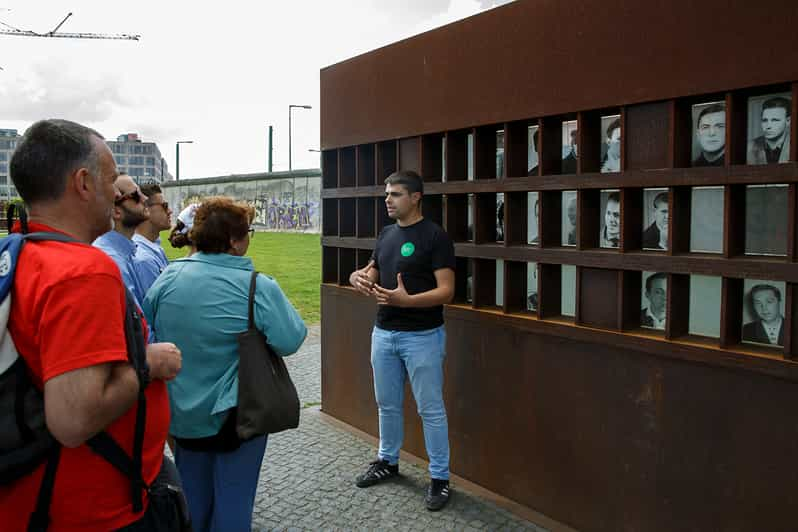
- Bernauer Strasse shows the Wall’s human cost: This memorial connects the physical barrier with escape attempts and the sudden division of homes and streets.
- Former ghost stations add an unusual detail: You learn how underground lines passed through East Berlin without stopping during the division.
- The Stasi Museum reveals state control: The museum focuses on the methods used by East Germany’s secret service to monitor and control the population.
- A Spanish-speaking guide shapes the experience: Constantino and Jordi are among the guides associated with especially strong feedback for detail and enthusiasm.
- Your AB ticket is separate: A one-day Berlin AB transport card is necessary and is not covered by the $41 price.
Why this Cold War tour is different
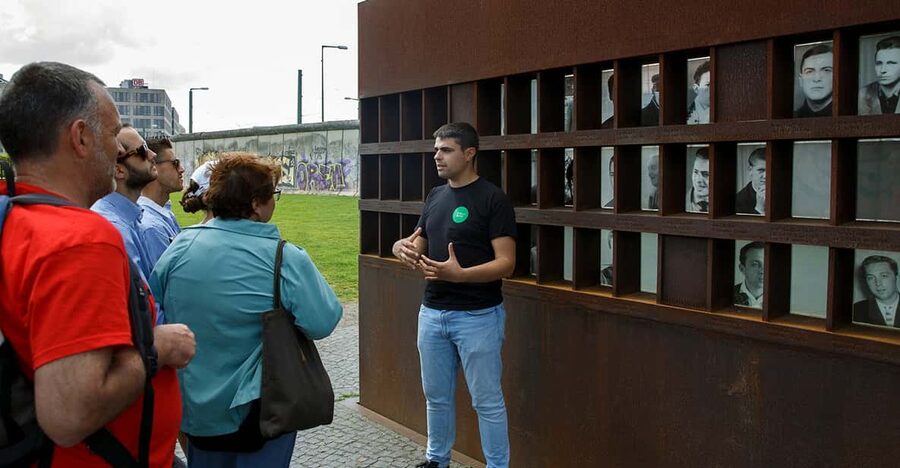
Many Berlin history tours concentrate on famous sections of wall and a few familiar memorials. This one takes a wider view. You move through several locations tied to the Cold War, then use those places to understand how the city functioned when Berlin was split between East and West.
That wider route matters because the Wall was never just one barrier. It was a system of walls, fences, patrol roads, watchtowers, open ground, and controlled crossings. Seeing the remains of the Death Strip helps you understand why crossing was so dangerous, even when the concrete wall itself looked climbable.
You also learn why the Wall was built, how people tried to escape, and why it finally fell. The tour then brings the story into the present by looking at how Berlin changed after reunification and how daily life changed for Berliners.
The subject can be heavy. That is not a flaw, but you should know what you are booking. This is a serious history walk with transport between stops, not a light sightseeing outing. The reward is a stronger sense of place and a clearer understanding of events that shaped modern Berlin.
Other divided-city history in Berlin:
- Berlin: Third Reich and Cold War 2 Hour Walking Tour
★ 4.9 · 6,830 reviews - Berlin’s Best: 2 Hour Walking Tour Third Reich and the Cold War
★ 5.0 · 5,486 reviews - Skip-the-Line: Berlin Wall Museum at Checkpoint Charlie
★ 4.1 · 2,041 reviews
Meeting at Alexanderplatz
The meeting point is easy to find, but Alexanderplatz can be crowded and confusing, especially if you arrive through the large railway station. Look for a green flag marked tours en español beside the only entrance to the Fernsehturm, Berlin’s television tower.
The meeting spot is between the television tower and Alexanderplatz railway station, next to Espresso House. Give yourself a little extra time to locate the flag. The key landmark is the tower, not a particular train platform.
The tour is offered in Spanish, so it suits you best if you want to discuss German history in Spanish or prefer not to follow a fast English explanation. A live guide leads the experience rather than an audio recording. That gives you the chance to ask questions, an especially useful feature for a subject with many names, dates, and political terms.
Seeing the Wall and the Death Strip
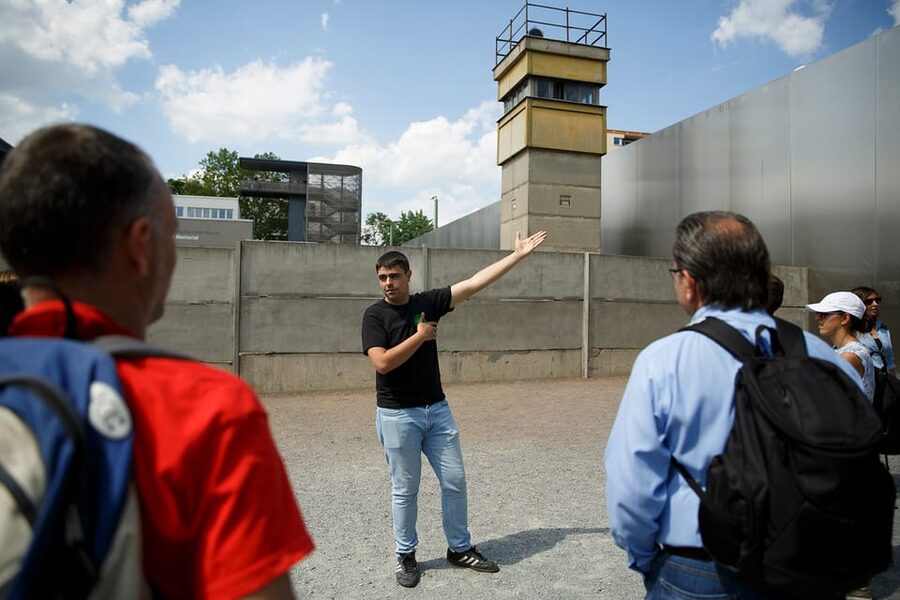
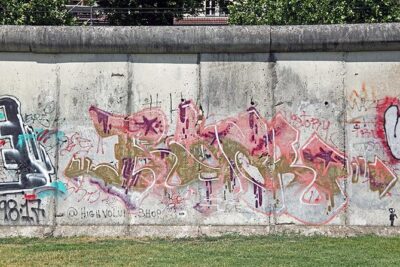
The remaining Wall sections are most useful when the guide explains what is no longer there. Concrete alone can seem oddly modest. The surrounding security system tells the real story: restricted ground, patrol routes, surveillance, and the danger faced by anyone trying to cross.
Here you learn why the East German government built the Wall and how it affected movement between East and West Berlin. The tour also covers the inventive and often desperate methods used by Berliners who tried to get across. These stories give the Wall a personal scale without turning the subject into a simple collection of escape tales.
I like this part because it corrects a common misunderstanding. The Wall did not merely separate two neighborhoods. It cut through streets, families, workplaces, and familiar routes. The tour asks you to picture Berlin as a divided city where an ordinary journey could suddenly become impossible.
You should expect some walking and movement between sites. The four-hour length allows the guide to explain the places rather than rushing past them, but it also means you are committing a half-day to one historical theme. Wear shoes you can walk in, though no special equipment is required.
Bernauer Strasse and the human side of division
Bernauer Strasse Wall Memorial is one of the most important stops because the street shows how brutally the division entered ordinary life. Buildings and sidewalks were caught on opposite sides of the border, turning a familiar residential area into a controlled frontier.
The memorial helps connect political decisions with the people who lived beside the barrier. The tour covers escape attempts and the ingenuity used by some Berliners to cross. It also helps you understand why this section has become such a powerful place for learning about the Wall.
I find Bernauer Strasse more useful than a quick photo stop because it supplies context. You are not just looking at a preserved wall fragment. You are considering how a street changed when the border arrived and how residents adapted to a new system of control.
The guide’s role is important here. Constantino has been praised for his passion and anecdotes, while Jordi has been praised for detailed, committed explanations. The exact guide depends on the departure, but the experience is designed around live Spanish commentary rather than a set of labels you read alone.
Same base, a different kind of day out:
- Berlin: Reichstag, Dome and Government District Guided Tour
★ 4.7 · 18,288 reviews - Berlin: 1-Hour City Tour by Boat with Guaranteed Seating
★ 4.3 · 16,993 reviews - Berlin: Boat Tour Along the River Spree
★ 4.4 · 11,252 reviews - Discover Berlin Half-Day Walking Tour
★ 5.0 · 9,624 reviews
Frankfurter Allee and East Berlin’s public face

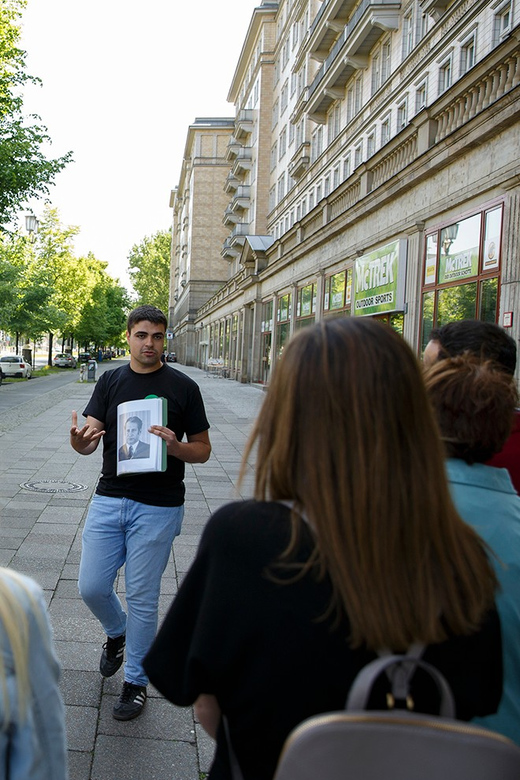
Frankfurter Allee brings the story into the planned public world of East Berlin. The avenue is tied to the city’s socialist period and gives the tour a setting beyond the Wall itself.
This stop helps you see that Cold War Berlin was not only about border guards and escape tunnels. It was also about how governments presented power through major roads, housing, public buildings, and urban design. The guide uses the avenue to explain the East German setting and the way the city was shaped during division.
Details about the stop are not specified in full, so do not expect a long independent visit to every building along the avenue. Its value comes from the explanation you receive while moving through the area. If you like urban history, this part will likely add more than another photograph of the Wall.
Passing Berlin’s former ghost stations
The former ghost stations are one of the tour’s more unusual subjects. During Berlin’s division, underground lines could pass through East Berlin while trains from West Berlin were not allowed to stop at certain stations. These sealed or heavily controlled stations became a strange part of daily life beneath the divided city.
This detail shows how the border worked in three dimensions. Above ground, the Wall cut across streets. Below ground, transport routes continued through the city, but access was controlled. You get a sense of how political division affected even a simple train journey.
The tour does not present the ghost stations as a separate museum visit. Instead, they form part of the broader route and explanation. Your AB transport ticket matters here because public transport is part of how the tour connects Berlin’s spread-out Cold War sites.
The Stasi Museum and life under surveillance

The Stasi Museum focuses on East Germany’s Ministry for State Security, commonly called the Stasi. You learn how the secret service monitored the population and what methods it used to control East Berlin.
This is a valuable counterpoint to the Wall. The border controlled movement, but surveillance controlled information, trust, and private life. The museum helps explain the pressure that existed inside East Germany, not only at the frontier.
The Stasi Museum is included as an entrance on this experience. One point deserves attention before you book: the information confirms a Spanish guide for the tour, but it does not clearly promise a fully guided museum visit from beginning to end. One person who misunderstood the format expected a guided Stasi Museum visit. If that detail matters to you, ask the provider whether the guide accompanies you inside or provides an introduction before you explore the museum.
The museum is best for you if you want the political and social side of the Cold War, not just the architecture of the Wall. It may feel more demanding than a standard sightseeing museum because the subject is surveillance and state control. Still, it gives the tour a strong finish by showing how the East German system operated behind the border.
How much value do you get for $41?
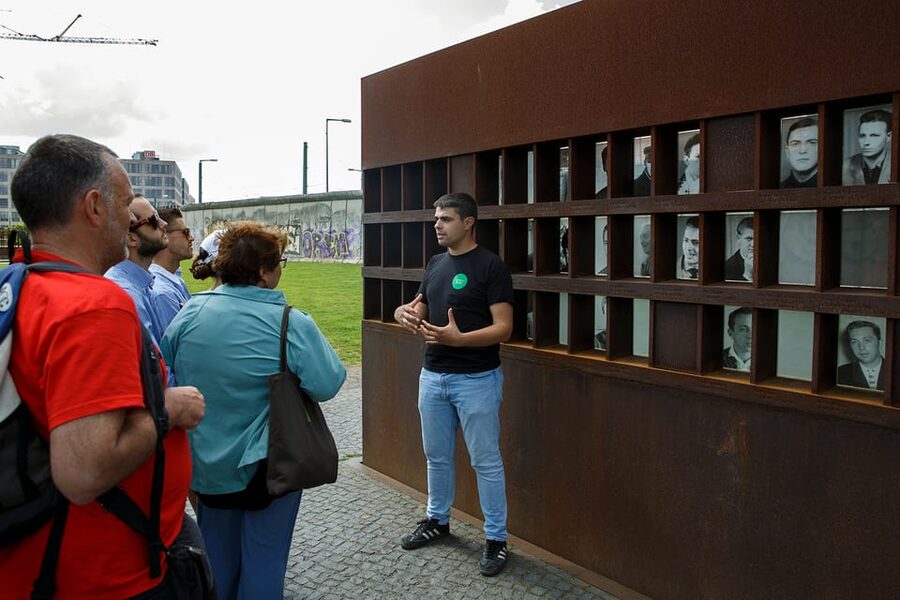
At $41 per person, the price is reasonable if you want a guided, Spanish-language history experience covering several parts of Berlin. You are not paying only for admission to one museum. You are paying for four hours of interpretation, route planning, and connections between sites that are difficult to understand as isolated stops.
The public transport ticket is extra. You need a Berlin AB one-day transport card, so add that cost when comparing the total price with a private walking tour or a self-guided visit. The separate ticket is also practical because the tour covers locations spread across the city.
The value depends on your interests. If you only want a quick look at the Wall, the four-hour commitment may be too much. If you want to understand why the Wall existed, how Berliners lived with it, and how the Stasi maintained control, the route covers a lot for one half-day.
The activity offers free cancellation up to 24 hours before the start, and you can reserve now and pay later. Those policies are useful if your Berlin schedule is still changing, though the transport ticket remains your own responsibility.
Who should book this experience?
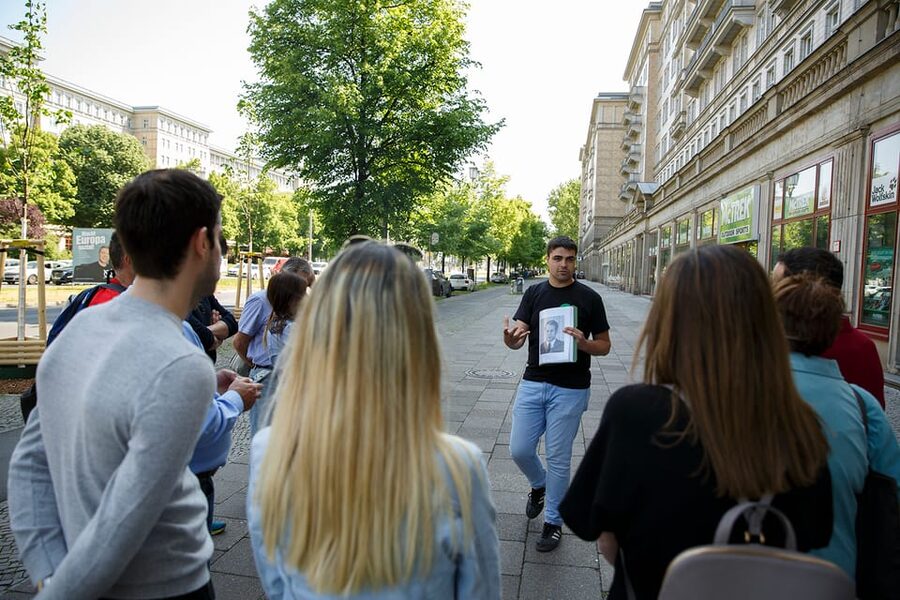
I would choose this tour if you:
- Want a Spanish-language explanation of Berlin’s Cold War period
- Prefer real locations to a general city overview
- Want to visit the Bernauer Strasse memorial and Stasi Museum in one outing
- Enjoy political, social, and urban history
- Prefer asking a guide questions as you go
- Are comfortable using Berlin public transport during a four-hour route
You may want another option if you prefer a short walking tour, dislike moving between several sites, or want a museum visit led in detail from entrance to exit. Families with older children may find the Wall and escape stories useful, but the surveillance material can be serious and should match your group’s interest.
The activity is wheelchair accessible. Since public transport is part of the route, confirm the practical details for your chosen departure if you need a particular access arrangement.
Spanish guides and the tone of the experience
The strongest feature is the guide. Constantino is described as passionate about his work, with anecdotes that make the subject easier to follow. Jordi is associated with detailed, committed tours of the Wall and strong command of Berlin’s history.
The available feedback gives the experience a 4.9 rating from 18 ratings. The praise focuses on detailed explanations, enthusiasm, and the ability to discuss Berlin’s history. One person rated it four stars after expecting a guided Stasi Museum visit, which is a useful warning to clarify that part before booking.
The tour is also suitable for people with different levels of background knowledge. You do not need to arrive with a full timeline of the Cold War. The route itself supplies the order: division, control, escape attempts, surveillance, the fall of the Wall, and Berlin after reunification.
Should you book the Berlin Cold War tour?
Book it if you want Berlin’s Cold War story explained in Spanish and you would rather connect several meaningful places than visit one isolated wall section. The combination of the Death Strip, Bernauer Strasse, ghost stations, Frankfurter Allee, and the Stasi Museum gives you a strong half-day view of both the border and life behind it.
Before paying, budget for the AB transport ticket and confirm how the Stasi Museum portion works. With those points clear, this is a good-value choice for anyone who wants serious history, a well-planned route, and a guide who can turn Berlin’s divided past into something you can picture on the streets.
FAQ
What language is the tour conducted in?
The live tour guide speaks Spanish. The activity is designed for Spanish-language visitors.
How long does the tour last?
The tour lasts four hours.
How much does the tour cost?
The listed price is $41 per person.
Where is the meeting point?
Meet beside the only entrance to the Fernsehturm at Alexanderplatz, between the television tower and Alexanderplatz railway station, next to Espresso House. Look for a green flag marked tours en español.
Is public transport included?
No. You must buy a Berlin AB transport ticket separately. A one-day AB transport card is necessary for the tour.
Is entrance to the Stasi Museum included?
Yes. Entrance to the Stasi Museum is included. The available information does not clearly state whether the guide provides a full guided visit inside, so confirm this if it is important to you.
Is the tour wheelchair accessible?
Yes, the activity is listed as wheelchair accessible.
Can I cancel the booking?
Yes. You can cancel up to 24 hours in advance for a full refund. You can also reserve now and pay later.
Just added in Berlin
- Private One way Airport Transfer Berlin Airport To Berlin★ 3.5 · 17 reviews
- Private Walking Tour: Berlin Wall, Cold War and Checkpoint Charlie★ 5.0 · 37 reviews
- Modern Berlin Private Walking Tour: Diverse, Vibrant and Exciting German Capital★ 5.0 · 13 reviews
- Private Day Trip to Potsdam from Berlin by Train★ 4.5 · 27 reviews
- City Explorer: Potsdam Private Day Trip★ 4.5 · 10 reviews
- Berlin Private Custom 5-Hour Tour by Car★ 5.0 · 30 reviews
- Private Half-Day Sightseeing Tour in Berlin★ 3.5 · 6 reviews
- Berlin Private Custom Tour in a Minivan, East and West★ 5.0 · 123 reviews
Berlin Wall & Cold War Tours, compared.

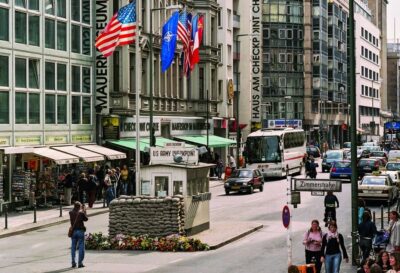
Skip-the-Line: Berlin Wall Museum at Checkpoint Charlie
Read our review →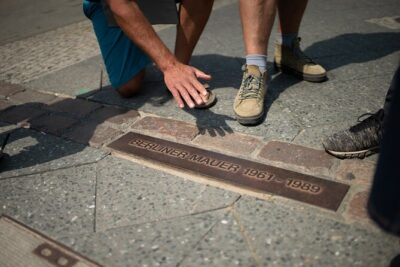
Cold War, Berlin Wall, Spies and the East Side Gallery
Read our review →
Guided Bike Tour of the Berlin Wall and Third Reich
Read our review →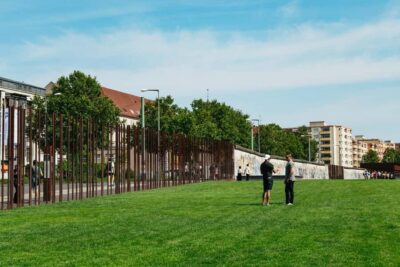

East Berlin and the Berlin Wall 2-Hour Walking Tour
Read our review →Browse the lists this tour appears in