
Reviewed · WALKING TOURS
Berlin: Hidden Backyards Guided Walking Tour
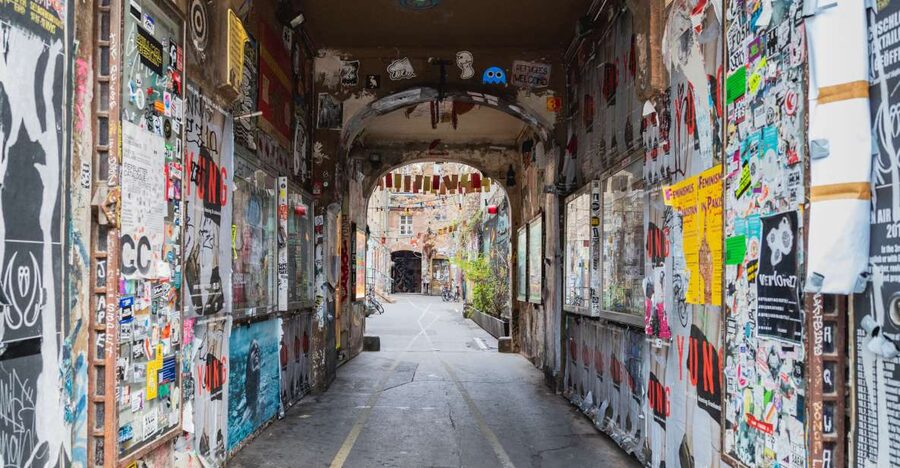
Berlin’s best stories are often behind the street frontage. This two-hour walk leads you through the courtyards of Spandauer Vorstadt, where old tenements, art studios, Jewish landmarks, ivy-covered passageways, and street art sit just steps from busy Mitte streets. Haus Schwarzenberg is the gritty highlight, with its battered walls and working art spaces.
I like two things here: first, the tour connects architecture with the people who lived and worked in these buildings; second, it takes you to places you would probably pass without noticing. Guides such as Nick, Nicolas, Susanne, and Lydia have earned praise for making the past easy to follow. The main drawback is language uncertainty. English and German are listed, but some departures have been German only, so confirm before booking if English is essential.
Key points at a glance
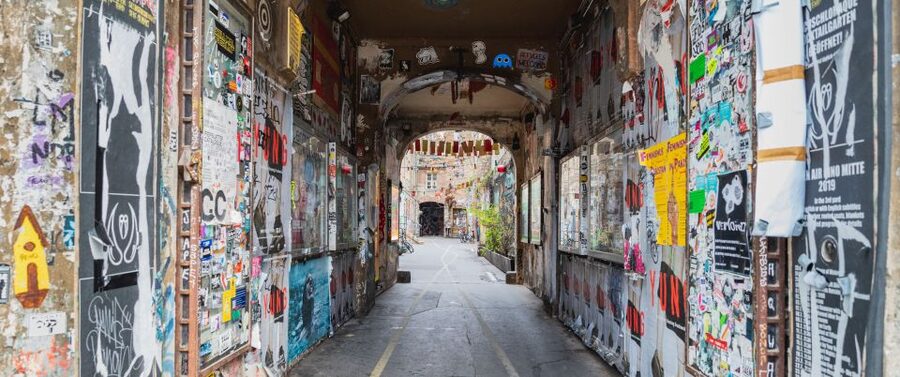
- Haus Schwarzenberg: See a worn, artistic courtyard covered with street art and filled with creative studios.
- Jewish Berlin: Learn how the area around the New Synagogue became a center of Jewish life.
- Several courtyards: Visit Hackesche Höfe, Rosenhöfe, and Heckmann-Höfe, each with a different mood and history.
- A manageable walk: The tour lasts two hours and is described as an easy stroll through central Berlin.
- Strong guiding: Nick, Nicolas, Susanne, Lydia, and other guides are praised for clear stories, humor, and local context.
- Weather matters: The walk runs rain or shine, so bring suitable clothing and shoes.
Why Berlin’s courtyards tell a better story
Spandauer Vorstadt can look like a polished shopping district at first glance. Around Hackescher Markt, you see cafés, boutiques, and the famous brick façades of Hackesche Höfe. But the real character is tucked behind gates and narrow entrances.
The courtyards reveal how Berlin buildings worked. They were not simply decorative spaces. They connected homes, workshops, businesses, factories, studios, and places of worship. The tour uses these spaces to explain how the neighborhood grew and changed over several centuries.
That is the value of having a guide here. On your own, you may notice a painted wall or a handsome staircase, but miss the connection between the building’s design and Berlin’s social history. A good guide turns a collection of courtyards into a story about work, migration, religion, war, division, and renewal.
The route also gives you a useful counterpoint to Berlin’s major sights. You are not spending two hours at a famous museum or monument. Instead, you are seeing the ordinary spaces where city life happened, and still happens today.
Other walks around Berlin:
- Discover Berlin Half-Day Walking Tour
★ 5.0 · 9,624 reviews - Berlin: Third Reich and Cold War 2 Hour Walking Tour
★ 4.9 · 6,830 reviews - Berlin: Discover Berlin Walking Tour
★ 4.9 · 5,998 reviews
Starting at Hackescher Markt
Meet in front of the BUTLERS shop at Hackescher Markt 4. This is a practical starting point because Hackescher Markt is easy to reach and puts you right in the middle of the district.
Expect a short orientation before the walking begins. The guide introduces the Spandauer Vorstadt and explains how this part of Mitte developed. The focus is not only on old buildings. You also learn about the district’s transformation into a fashionable, international part of Berlin.
The meeting point is in a busy area, so arrive with enough time to find the shop. Once the group moves away from the main square, the atmosphere changes quickly. The tour’s appeal begins with that contrast: public Berlin outside, quieter courtyards inside.
Haus Schwarzenberg and Berlin’s creative edge
Haus Schwarzenberg is one of the most memorable stops. Its courtyard feels rougher and less polished than the nearby commercial complexes. The walls carry layers of street art, and the buildings now house art studios and other creative spaces.
This is not a restored showpiece. Its worn appearance is part of the experience. The courtyard shows how old buildings can take on new uses without losing every mark of their past.
Your guide explains the site’s changing functions and places it within the wider story of Berlin. That context is important. Without it, Haus Schwarzenberg is simply an unusual courtyard with colorful walls. With it, you can see how spaces in Berlin have been repeatedly adapted by different communities and generations.
I especially like this stop for visitors who want a less polished side of the city. It has an informal, creative feel, but it is still a working place. Give studios and people using the courtyard room, and treat the street art as part of a living setting rather than a staged attraction.
Hackesche Höfe and the grander side of Mitte

Hackesche Höfe offers a different picture. Compared with Haus Schwarzenberg, it is more formal and visually finished. The complex is known for its courtyards, architecture, and central place in the Hackescher Markt district.
Here, the guide helps you read the buildings rather than simply admire them. Pay attention to how the courtyards are connected and how their design differs from the rougher spaces elsewhere on the route.
This stop can be busy, especially because Hackescher Markt is a popular part of Berlin. The crowd is part of the setting, but it may make it harder to hear if you wander away from the guide. Stay close during explanations and save your photographs for pauses.
The contrast with Haus Schwarzenberg is useful. One courtyard feels improvised and artistic. The other presents a more orderly, architectural face of Mitte. Together, they show that Berlin’s courtyards are not all alike.
A few more things to do in Berlin worth a look
- Berlin: Reichstag, Dome and Government District Guided Tour
★ 4.7 · 18,288 reviews - Berlin: Government District around the Reichstag Guided Tour
★ 4.7 · 8,447 reviews - Berlin: 1-Hour Boat Tour with Bilingual Live Guide
★ 4.7 · 3,629 reviews - Berlin: Sights and Highlights Bike Tour with a Local Guide
★ 4.8 · 2,698 reviews
Rosenhöfe, Sophienkirche, and the Jewish quarter
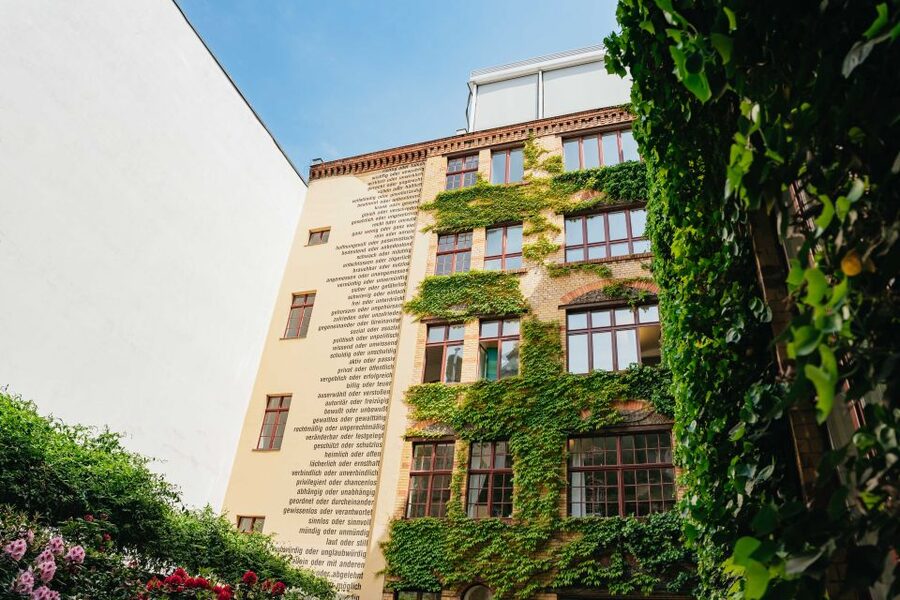
The route continues through Rosenhöfe and toward Sophienkirche. These stops help connect the courtyard story to the wider neighborhood rather than treating each passage as a separate curiosity.
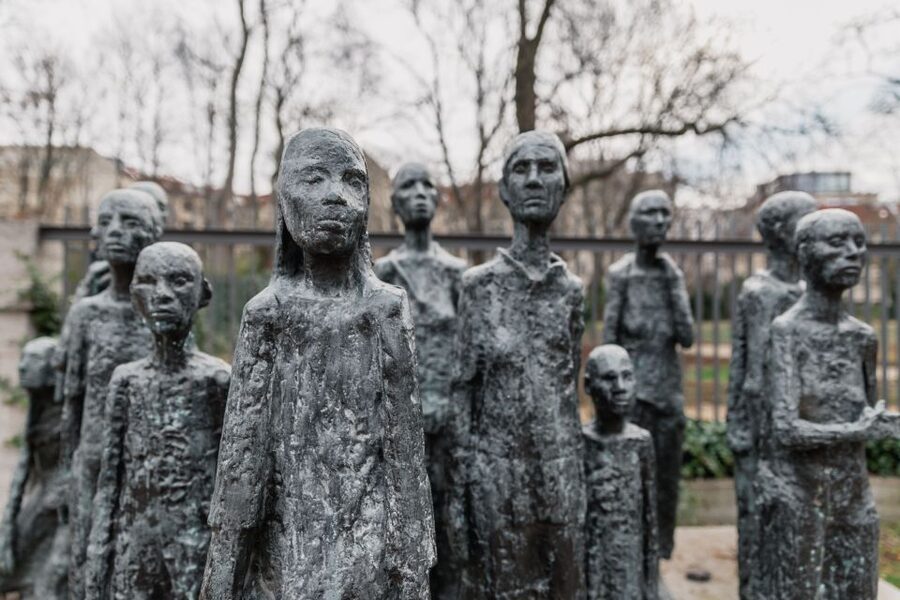
The area around the New Synagogue is central to the tour’s historical theme. You learn how Spandauer Vorstadt became a center of Jewish life and how that identity shaped the streets, buildings, and institutions around it.
The New Synagogue itself is not listed as a formal stop, so do not book this walk expecting an interior visit. The focus is on the surrounding quarter and the way the guide explains its development.
Sophienkirche adds another layer to the route. Religious buildings, courtyards, and residential streets sit close together here, making it easier to understand how different parts of urban life overlapped. The guide’s job is to connect these pieces without turning the walk into a dry architecture lecture.
One detail that has made this tour especially memorable for some participants is the attention to overlooked stories, including the history of the first female rabbi. Details like this give the neighborhood a human scale. You are not just learning dates and building styles. You are hearing about the people who challenged customs, built communities, and shaped the area.
Auguststraße and the changing face of Berlin
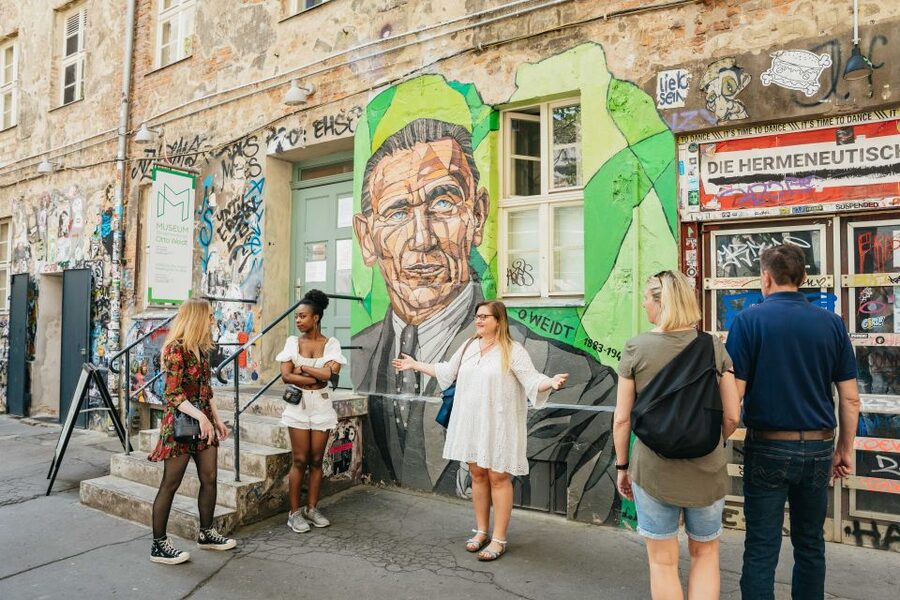
Auguststraße provides another look at the district’s transformation. The route uses the street and its passages to explain how this part of Berlin became trendy, colorful, and international.
That change is worth thinking about as you walk. The neighborhood is not frozen in one period. Its courtyards have served different purposes over time, and their current cafés, studios, shops, and cultural spaces are part of an ongoing process.
This is also where the tour can help you avoid a common mistake. It is easy to see Berlin’s creative districts as if they appeared fully formed. The guide instead shows the layers beneath the current style.
You may find this section less dramatic than Haus Schwarzenberg or Heckmann-Höfe. Its strength is explanation. If you enjoy understanding how a neighborhood changes, rather than collecting only photogenic stops, Auguststraße adds real value.
Heckmann-Höfe, a quieter end to the walk
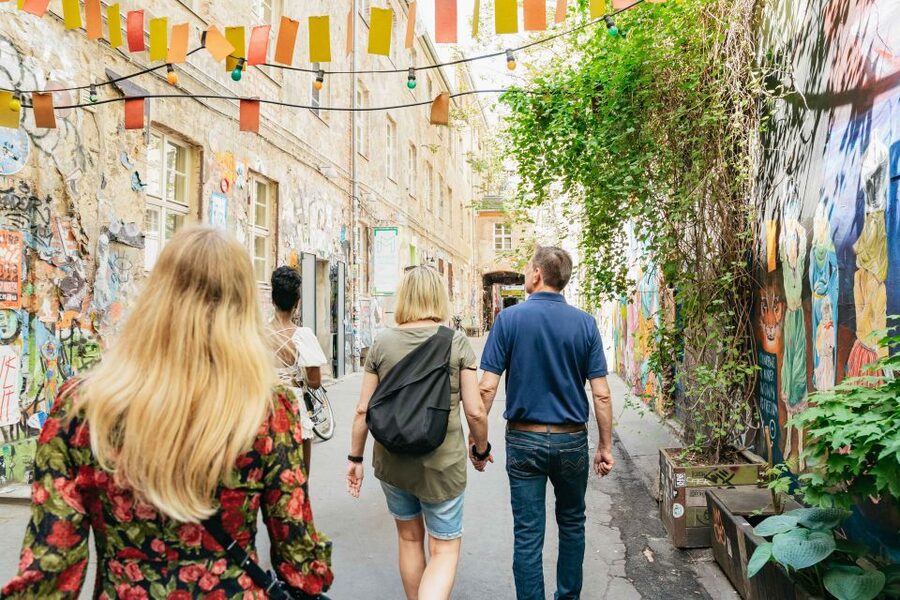
Heckmann-Höfe is one of the route’s most pleasant spaces. Trees, ivy-covered buildings, and colorful details give the courtyard a softer mood than Haus Schwarzenberg. It feels like a small pause from the surrounding streets.
The complex dates to the 19th century, and the guide explains how such courtyards functioned within the city. Today, it is a popular local meeting place with a relaxed atmosphere.
This is a good spot to slow down and look around. Notice how the courtyard creates shelter from the noise outside. The appeal is not one grand monument. It is the way architecture, plants, color, and everyday activity form a comfortable urban pocket.
The tour finishes with drop-off options on Oranienburger Straße. That is convenient for continuing your day in Mitte, visiting nearby sights, or stopping for food and a drink. Food and drinks are not included, so plan to choose your own place afterward.
The guides make or break this walk
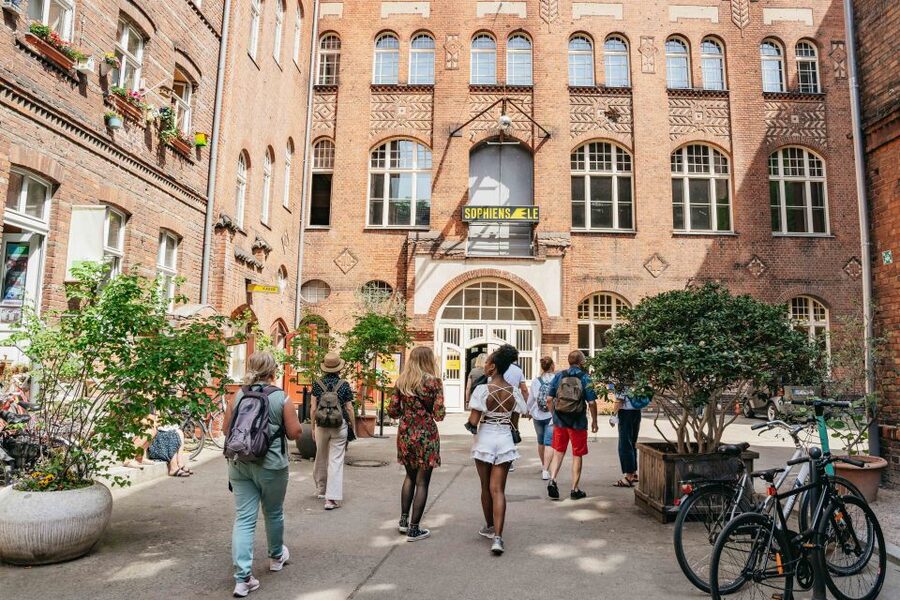
The strongest part of the experience is the guiding. Names that appear repeatedly in the tour’s feedback include Nick, Nicolas, Susanne, Lydia, and Alex. Nick and Nicolas are praised for friendly, informal explanations and for linking architecture to Berlin’s social history. Susanne is described as a lively presenter, while Lydia is noted for adding context beyond the courtyards themselves.
The exact guide depends on the departure, so do not book expecting one particular person. What you can reasonably expect is a live guide in English or German, with the quality depending on the individual style and language used that day.
There is one important warning. Although English and German are given as the available languages, at least some departures have been conducted only in German. One English-speaking participant with intermediate German managed to follow along, while another person who expected a bilingual experience could not understand the historical explanations.
If you need English, check the departure language before paying. This is not a minor issue. The courtyards are interesting on their own, but much of the tour’s value comes from the stories behind them.
How difficult is the two-hour walk?
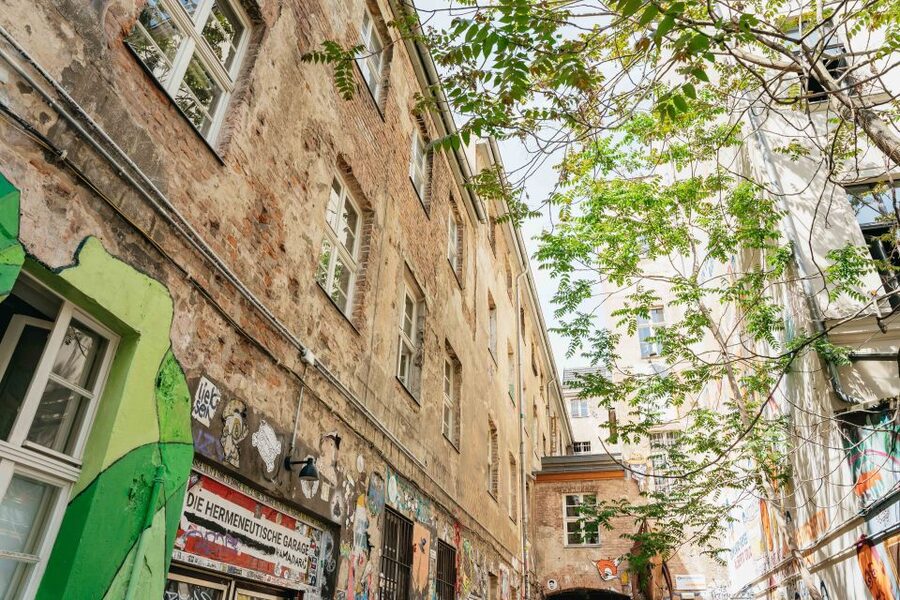
The experience is described as an easy walk, and the route stays within central Berlin. You move between courtyards, streets, and passageways rather than covering a huge distance.
Comfortable shoes are still a good idea. Berlin’s older areas can include uneven surfaces, and you may spend time standing while the guide speaks. The tour is wheelchair accessible, which makes it a practical choice for many visitors, though the specific conditions of individual courtyards can vary.
The walk takes place rain or shine. Bring a rain jacket or umbrella if the forecast looks uncertain. Several stops are open courtyards, so bad weather will affect your comfort even if it does not cancel the tour.
Winter can be cold. A December participant enjoyed the walk despite bitter temperatures, but that is a reminder to dress properly rather than assume a short city tour will feel warm.
Is $23 a fair price?
At $23 per person, this is good value if you want interpretation rather than a self-guided stroll. You can visit parts of Hackescher Markt and see some courtyards without paying, but you will miss much of the background that makes them meaningful.
The price covers the two-hour walking tour and guide. Food and drinks are extra, but that keeps the cost clear and lets you choose where to stop afterward.
The value is highest for first-time visitors who want to understand Mitte, and for repeat visitors who have already seen Berlin’s major sights. It is also useful early in a stay, since the guide may point out courtyards, streets, and places you can revisit later.
If you only want photographs, $23 may feel unnecessary. If you enjoy architecture, Jewish Berlin, urban change, and small stories about how people used buildings, the fee is reasonable.
Who should book this walk?
I would choose this tour for:
- First-time visitors who want more than the standard Berlin landmarks.
- Repeat visitors who have already explored Museum Island, the Brandenburg Gate, and the main memorials.
- Architecture fans interested in how courtyards shaped city life.
- History-minded visitors who want context about Jewish life and the changing Mitte district.
- Art lovers drawn to working studios and street art.
- Independent explorers who like finding places they might not notice alone.
Families can also enjoy it if children are comfortable listening while standing. The tour is not described as a special children’s program, so younger children may find the historical explanations long.
It is less suitable if you want a private tour, a food walk, or access inside the New Synagogue. It is also not the best choice if you cannot confirm an English-language departure and do not understand German.
Practical details before you go
You meet in front of BUTLERS at Hackescher Markt 4. The tour lasts two hours and ends with drop-off options on Oranienburger Straße.
English and German are listed as tour languages. Confirm the language at booking, especially if you need English. The experience is wheelchair accessible and runs in all weather.
You can cancel up to 24 hours before the start for a full refund, and the reserve-now, pay-later option allows you to hold a place without paying immediately. Those policies are useful when your Berlin schedule is still moving around.
Wear shoes suited to city walking and dress for the forecast. Since there is no included food or drink, carry water and plan a café or meal after the walk.
Should you book the Hidden Backyards tour?
Book it if you want Berlin’s smaller-scale story: courtyards instead of grand boulevards, working studios instead of only museums, and neighborhood change instead of a list of famous sights.
The best reasons to go are Haus Schwarzenberg, the Jewish quarter context, the variety of courtyards, and the guides’ ability to turn ordinary spaces into meaningful places. The main caution is the language. Confirm that your chosen departure will be in English if that matters to you.
At $23 for two hours, this is a sensible way to see a side of Mitte that is easy to miss. It will not replace Berlin’s major museums or memorials, but it can make the city feel more understandable when you walk through it afterward.
FAQ
How long does the Hidden Backyards tour last?
The tour lasts two hours.
Where does the tour begin?
Meet your guide in front of the BUTLERS shop at Hackescher Markt 4 in Berlin.
Where does the tour end?
The tour has two drop-off options on Oranienburger Straße.
What languages are available?
The listed languages are English and German. Some departures may be conducted only in German, so confirm the language before booking if you need English.
Is the tour wheelchair accessible?
Yes, the activity is listed as wheelchair accessible.
Does the tour run in bad weather?
Yes. The walk takes place rain or shine.
What places are included on the route?
The route includes Haus Schwarzenberg, Hackesche Höfe, Rosenhöfe, Sophienkirche, Auguststraße, and Heckmann-Höfe.
Are food and drinks included?
No. Food and drinks are not included in the tour price.
Can I cancel the booking?
Yes. You can cancel up to 24 hours in advance for a full refund. A reserve-now, pay-later option is also available.
Just added in Berlin
- Berlin: Energizing 2-Hour Morning Segway Tour★ 4.7 · 35 reviews
- Berlin: Thrilling E-Scooter Adventure Tour★ 4.4 · 66 reviews
- Beelitz-Heilstätten: Baum&Zeit Tree Top Walk Entry Ticket★ 4.9 · 7 reviews
- Beer Bike & Party Bike: Unforgettable Berlin City Tour incl. pickup★ 5.0 · 5 reviews
- AXE THROWING EXPERIENCE IN BERLIN★ 4.7 · 24 reviews
- Alternative Berlin / Street art tour – Private group★ 5.0 · 6 reviews
- Berlin: Alternative & Street Art Tour★ 4.5 · 6 reviews
- Berlin: 2.5-Hour Beer & Sunset Sightseeing Boat Cruise★ 4.6 · 61 reviews
Walking Tours, compared.


Third Reich Berlin: Hitler and WWII Walking Tour
Read our review →
Browse the lists this tour appears in