Reviewed · WALKING TOURS
Modern Berlin Private Walking Tour: Diverse, Vibrant and Exciting German Capital
Berlin’s recent past is best understood by walking through the places where the city changed first. This private tour links Mitte, the East Side Gallery, Prenzlauer Berg, Kreuzberg, and Friedrichshain, showing how a divided capital became one of Europe’s most creative cities.
I like two things here: the guide can adjust the conversation to your interests, and a private group lets you go down streets that coaches cannot reach. The chance to see Berlin through guides such as Josh, Maria, Joerg, Stefano, and Juan Montiel adds a useful human layer to the city’s story.
The main consideration is the price: at $179.84 per person, this is a serious spend for a three- to four-hour walk. It makes the most sense for a small group that values personal attention, rather than for a solo visitor watching every dollar.
Key points to know before you book
- Five very different Berlin districts: You move from historic Mitte to the alternative energy of Kreuzberg and the polished streets of Prenzlauer Berg.
- A private English-language walk: Only your group participates, so the guide can adjust pace, detail, and focus.
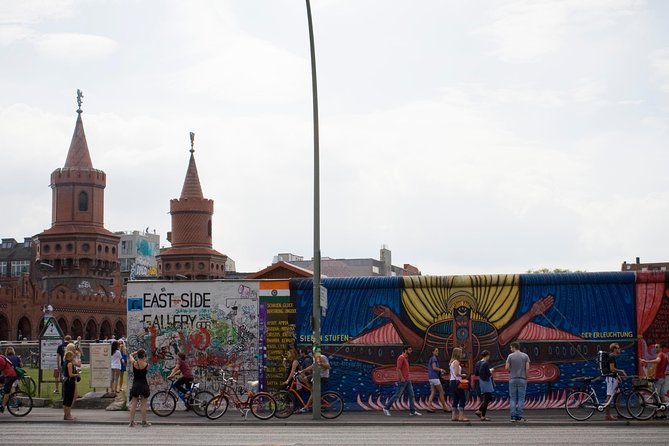
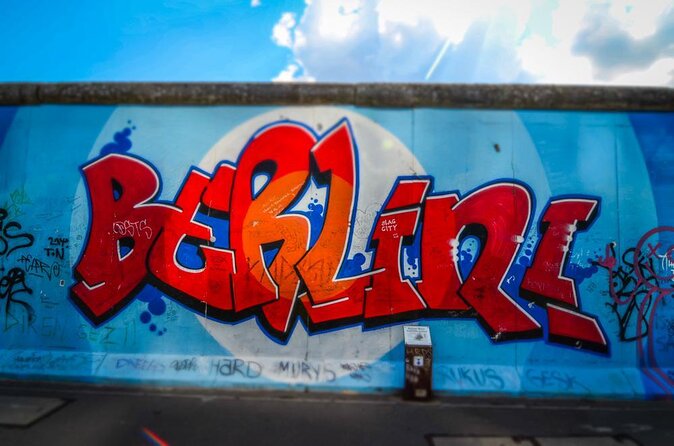
- The East Side Gallery adds visual impact: The former Berlin Wall becomes an open-air art display stretching about 1.3 kilometers.
- Hotel pickup is available: You can meet at the listed central starting point or arrange pickup from your accommodation.
- The tour focuses on modern Berlin: This is less about checking off museum interiors and more about neighborhoods, change, identity, and city life.
- The pace is flexible but still active: Most of the experience is on foot, in all weather, with several neighborhood stops.
Why this walking tour works for understanding modern Berlin
Berlin can feel like several cities sharing the same address. A grand monument may sit near a rough patch of wall, a quiet courtyard, a Turkish bakery, or a former industrial space turned into a café. This tour gives you a way to connect those contrasts.
The focus is the period since German reunification in 1990. You will hear how neighborhoods changed after the Wall fell, how artists and immigrants shaped local identity, and how gentrification brought restored buildings, new businesses, and debate about who the city is for.
I especially like this focus for a second day in Berlin. If you have already seen the Brandenburg Gate, the Reichstag, and Museum Island, this route helps you understand the city beyond its major sights. It also works well for families and older children. One published experience specifically notes that even two 15-year-old daughters found the commentary engaging.
This is not a museum tour with long indoor stops. Admission is free at each listed stop, but you should expect to spend much of the time walking outside. Good shoes, water, and clothing suited to the forecast will matter more than formal sightseeing clothes.
Other walks around Berlin:
- Discover Berlin Half-Day Walking Tour
★ 5.0 · 9,624 reviews - Berlin: Third Reich and Cold War 2 Hour Walking Tour
★ 4.9 · 6,830 reviews - Berlin: Discover Berlin Walking Tour
★ 4.9 · 5,998 reviews
Mitte: from divided capital to city center
The tour begins at Reichstagufer 17, 10117 Berlin, unless you arrange a different central meeting point or hotel pickup. Mitte is scheduled for about 30 minutes, enough time for the guide to set the city’s political and social story in motion.
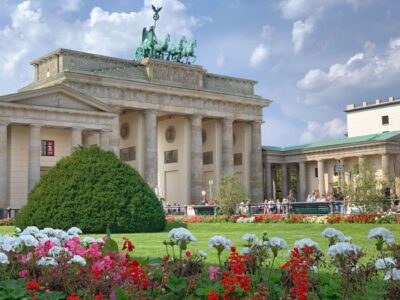
Mitte was once split by the Berlin Wall. Since reunification, it has become the central meeting point of old Berlin and new Berlin. Historic places such as the Brandenburg Gate and Museum Island share space with cafés, galleries, small shops, and newer creative businesses.
What makes this stop useful is the contrast. You are not simply looking at famous buildings. You are looking at a district that had to redefine itself after division ended. The guide can explain how empty or damaged spaces gained new uses, and how restoration changed the feel of the center.
The drawback is time. Thirty minutes passes quickly in a district packed with major landmarks. If you want long visits inside museums or detailed architectural study, this tour will only provide an introduction. Its strength is the wider story, not extended time at one monument.
The tour description also points toward courtyards in Mitte, an appealing detail if you want to see more than the formal avenues. Courtyards can reveal a quieter side of central Berlin, though the exact route may vary with the guide and your meeting arrangement.
East Side Gallery: art along 1.3 kilometers of Wall
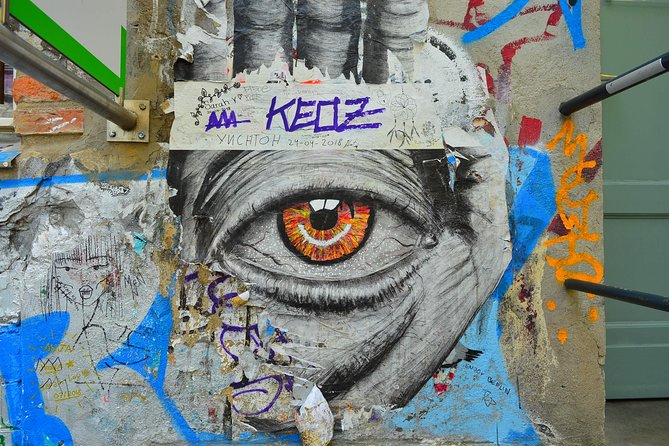
The East Side Gallery is a short scheduled stop of about 20 minutes, but it carries considerable weight. This is a surviving 1.3-kilometer section of the former Berlin Wall, now covered with murals made by artists from around the world in 1990.
The murals address freedom, peace, hope, and political change. Their bright colors make the wall accessible, but the setting keeps the subject serious. You are looking at art painted on a structure built to separate people, families, and political systems.
I like this stop because it explains Berlin’s memory in a direct way. The Wall is not presented only as a relic behind glass. It remains part of the city, alongside streets and modern buildings, with public art helping shape how people remember reunification.
Twenty minutes is enough for an introduction and several photographs, but it is not enough to study the full length of the gallery. The section stretches far beyond what you can cover at a relaxed pace in one short stop. If you want to examine every mural, you would need additional time on your own.
The location sits in the Friedrichshain-Kreuzberg area, which helps bridge the tour’s historic center with its more alternative districts. Pay attention to the guide’s explanation of how the wall changed from a tool of separation into a public artwork. That shift is one of the clearest symbols of modern Berlin.
Prenzlauer Berg: polished streets with a bohemian past
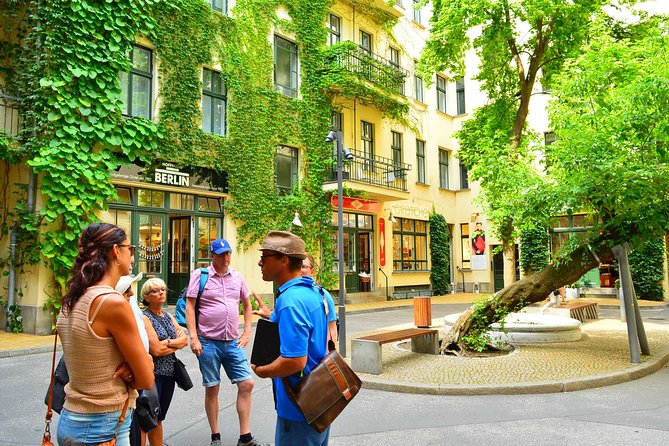
You spend about 40 minutes in Prenzlauer Berg, a former East Berlin district that changed sharply after 1990. It was once associated with artists, students, and affordable housing. Restored historic buildings, cafés, boutique shops, and restaurants later attracted professionals and young families.
This is a good place to discuss gentrification without reducing it to a simple success story. Restored buildings and new businesses can make a neighborhood more attractive, but they can also change prices, residents, and the local culture. A guide who knows the district can connect the visible renovations with those less visible questions.
Prenzlauer Berg still has links to its artistic past through galleries, cultural centers, and community spaces. The interesting part is the blend. You can see a more polished Berlin here, but the district has not lost every trace of the bohemian character that shaped it.
The 40-minute stop gives the guide enough time to explain the neighborhood rather than simply point out a street. Still, you should not expect a full food tour or time to shop. Food and drinks are not included, and the tour’s purpose is orientation and context.
This section may suit you if you are curious about how Berlin’s districts changed after reunification. It may be less appealing if you want the roughest, most alternative side of the city. For that, Kreuzberg offers a stronger contrast.
A few more things to do in Berlin worth a look
- Berlin: Private Reichstag and Glass Dome Tour
★ 4.8 · 2,226 reviews - Berlin Private Complete History All Day Walking Tour
★ 5.0 · 474 reviews - Private Walking Tour Berlin Third Reich Hitler and World War II
★ 5.0 · 360 reviews - Private Berlin: Iconic Sights and Hidden Gems Walking Tour
★ 5.0 · 292 reviews
Kreuzberg: migration, protest, and creative energy
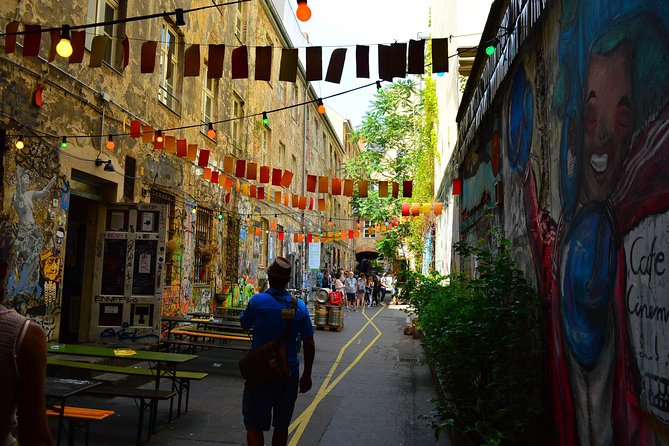
Kreuzberg receives about 35 minutes. The district grew on the former edge of West Berlin and became associated with artists, activists, immigrants, and alternative communities. That background still shapes its reputation.
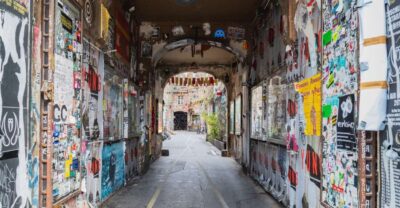
Today, Kreuzberg mixes street art, cafés, galleries, international restaurants, music, and older industrial spaces. The district has changed, but it has not become uniform. Its cultural identity comes from the mix of communities and the long record of activism.
This is one of the tour’s most useful stops for understanding Berlin as a city shaped by migration. The area is not simply a collection of trendy businesses. Its character comes from people who arrived, settled, organized, created art, and made the district their own.
A Spanish-language experience specifically praised an alternative route through Mitte and Kreuzberg, including the area associated with the creation of the döner kebab and Hasir. That detail gives you a sense of how the guide can move beyond standard monuments and connect food with Berlin’s immigrant story. The exact food stop is not included in the price, so you should treat it as a point of context rather than a promised meal.
The practical drawback is that Kreuzberg can demand more than 35 minutes. Its streets, food culture, public art, and social history could fill an entire afternoon. Here, you get a useful introduction and a list of places to return to later.
Friedrichshain: a route detail worth clarifying
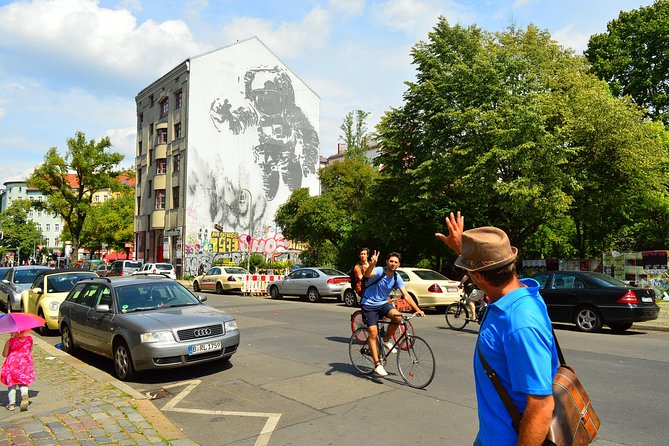
The final stop is listed as Friedrichshain and lasts about 35 minutes. However, the supplied description repeats the explanation of Kreuzberg rather than giving separate detail about Friedrichshain. This is worth clarifying when you book, especially if a particular district is your main reason for choosing the tour.
Friedrichshain is also closely linked with the East Side Gallery and the former Wall zone, so the route may connect naturally with the themes already introduced. Still, you should not assume the final section will provide a full, separate tour of every part of Friedrichshain.
The broader value is the connection between neighboring districts. Berlin’s borough names can be confusing, and Friedrichshain and Kreuzberg are now joined administratively as Friedrichshain-Kreuzberg. A guide can help you understand how former East and West Berlin areas meet, overlap, and differ.
This is a good moment to ask questions. Private tours are useful partly because you can stop the guide and say what you want to understand better. If your interest is nightlife, street art, migration, architecture, the Wall, or post-reunification politics, tell the guide early.
What the private format adds at $179.84
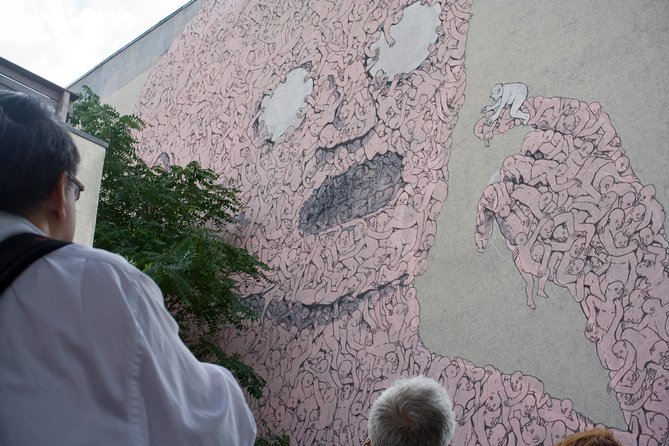
At $179.84 per person, this tour is not a budget walk. Its value depends on group size and how much you care about a tailored experience.
For one person or a couple, the price may feel high compared with a standard group walk. For a family or a small group splitting the cost, the private format becomes easier to justify. You are paying for a local professional guide, hotel pickup, a private group, and the ability to adjust the pace and conversation.
The guide’s role matters more than the free admission at the stops. You can see the East Side Gallery without paying an entry fee, but you cannot get the same context from a quick photograph. The useful part is learning how the Wall, neighborhoods, migration, art, and gentrification fit together.
The published score is 5 from 13 ratings, with 100 percent recommending the experience. The strongest praise centers on the guides’ clear explanations, personal manner, and ability to adapt. Josh is described as personable and engaging for a family with teenagers. Maria delivered a focused modern Berlin tour. Joerg adjusted the rhythm to suit both intellectual and physical needs. Stefano created an alternative route for people who had already seen the standard sights. Juan Montiel was praised for welcoming questions.
That pattern gives you a practical booking tip: tell the company what you have already seen and what you want next. The tour can be much more useful when the guide knows whether you want political history, neighborhood life, food culture, art, or a lighter overview.
Timing, pickup, and walking conditions
The experience lasts approximately three to four hours. Different departure times are available, and you select one when booking. The advertised starting point is Reichstagufer 17, with the option to meet somewhere central or request pickup from your accommodation.
The tour ends back at the meeting point. If you use hotel pickup, confirm how the return arrangement works for your group, since the stated end point is the meeting location.
This is an outdoor activity that operates in all weather. Wear shoes you can walk in for several hours and bring clothing suited to rain, wind, or sun. The tour is near public transportation, which helps if you are meeting centrally or continuing to another district afterward.
Most people can participate, and service animals are allowed. The private format can help with pacing, but the route remains a walking tour, so ask about your group’s needs before booking if anyone has limited mobility.
Who should book this Berlin experience?
I would choose this tour if you want Berlin’s recent story explained through real neighborhoods rather than only through major monuments. It is especially useful for a first or second visit when you want to understand how reunification changed daily life and urban identity.
Families may like the private setting because the guide can adjust the level of detail. Teenagers can ask questions without feeling trapped in a large group, and adults can focus on more complex subjects such as migration or gentrification.
It also suits repeat visitors. If you have already seen the Brandenburg Gate, Reichstag, and Museum Island, the route gives you a different view of Berlin. Ask for an alternative emphasis, as Stefano did for a group that had completed the typical sightseeing circuit.
I would hesitate if your priority is museum admission, extensive time at the Wall, or a low-cost introduction. The tour only offers short stops, and food and drinks are not included. You also need to accept a fairly active outdoor schedule.
Free cancellation is available up to 24 hours before the start time. Changes or cancellations made less than 24 hours in advance are not accepted for a refund. Confirmation is normally issued at booking, though bookings made within two days of departure may receive confirmation within 48 hours, subject to availability.
Should you book it?
Book this private walk if you want a guide to connect Berlin’s past with its present, and if you value a flexible conversation more than a bargain price. The mix of Mitte, the Wall, Prenzlauer Berg, Kreuzberg, and Friedrichshain gives you a strong introduction to the city’s changing identity.
Before paying, make sure the price fits your group and ask how the Friedrichshain portion will be handled. If you want personal attention, hotel pickup, and a guide who can respond to your questions, this is a sound choice. If you prefer a cheap group tour or long visits at individual sights, choose another format.
FAQ
How long does the Modern Berlin Private Walking Tour last?
The tour lasts approximately three to four hours.
What neighborhoods are included?
The route includes Mitte, the East Side Gallery, Prenzlauer Berg, Kreuzberg, and Friedrichshain.
Is the tour private?
Yes. Only your group participates in the activity.
Is the tour offered in English?
Yes. The experience is offered in English.
Can I request hotel pickup?
Yes. Pickup from your accommodation is available, or you can meet at Reichstagufer 17 in central Berlin.
Where does the tour end?
The activity ends back at the meeting point.
Are admission tickets included?
The listed stops have no admission charge. The experience includes a local professional guide, but food and drinks are not included.
Does the tour operate in bad weather?
Yes. It operates in all weather conditions, so you should dress appropriately.
Can I bring a service animal?
Yes. Service animals are allowed.
Can I cancel for a full refund?
Yes, if you cancel at least 24 hours before the experience start time. Cancellations made less than 24 hours in advance are not refunded.
Just added in Berlin
- Private One way Airport Transfer Berlin Airport To Berlin★ 3.5 · 17 reviews
- Private Walking Tour: Berlin Wall, Cold War and Checkpoint Charlie★ 5.0 · 37 reviews
- Private Day Trip to Potsdam from Berlin by Train★ 4.5 · 27 reviews
- City Explorer: Potsdam Private Day Trip★ 4.5 · 10 reviews
- Berlin Private Custom 5-Hour Tour by Car★ 5.0 · 30 reviews
- Private Half-Day Sightseeing Tour in Berlin★ 3.5 · 6 reviews
- Berlin Private Custom Tour in a Minivan, East and West★ 5.0 · 123 reviews
- Private Day Tour of Wannsee and Potsdam from Berlin★ 5.0 · 21 reviews
Walking Tours, compared.

Third Reich Berlin: Hitler and WWII Walking Tour
Read our review →