Reviewed · WALKING TOURS
Kreuzberg Private Walking Tour: Immigrants, Artists & Hipsters
Kreuzberg is where Berlin’s rough edges meet its creative pulse. This private walk connects street art, Turkish culture, and Cold War history with the neighborhood’s uncertain future. I like the mix of big subjects and small details, from Wall fragments to local food tips, and I like having a private guide who can shape the walk around your interests. The main drawback is that some distances require public transport, so this is not a nonstop stroll from one nearby sight to the next.
I also like the flexible pace. Guide Klaus has been praised for being friendly, fun, and good with families, including a 12-year-old visitor. At $450 per group, the price makes the most sense for several people sharing the cost. A solo visitor or couple may find it expensive for three hours, while a group of eight to ten gets much better value.
Key points to know before booking
- Three hours in Kreuzberg: The walk covers SO36, Oranienstrasse, Viktoriapark, Oberbaumbrücke, Wall remnants, and creative spaces.
- A private historian guide: Your guide can adjust the pace and focus on your interests rather than follow a fixed group routine.
- A neighborhood with many layers: Expect workers’ district history, immigrant communities, anarchist politics, artists, Cold War divisions, and new development.
- Public transport is part of the plan: Some key places are too far apart to reach comfortably on foot.
- Best value for a group: Up to 10 people can share the $450 price, which brings the cost to $45 each with a full group.
- A useful family option: The route can work for older children when they enjoy stories, street art, and city history.
Why Kreuzberg makes a good three-hour walk
Kreuzberg rewards a guide because its story is not confined to one monument. The neighborhood changed from a 19th-century workers’ district into part of West Berlin, then became a place shaped by immigrants, artists, anarchists, wartime destruction, Cold War pressure, and rising property interest.
I like this kind of city walk because the streets themselves are the main exhibit. You are not simply ticking off a church or palace. You are reading old buildings, blank walls, murals, independent shops, public spaces, and construction plans as pieces of one ongoing story.
The eastern section, known as SO36 after its former postal code, is especially useful for understanding Kreuzberg. It carries the area’s counterculture image, but it is also a real residential and commercial district. Turkish businesses, cafes, markets, boutiques, bars, and art spaces sit beside traces of a far less polished past.
That contrast is the point. Kreuzberg is not presented as a frozen bohemian quarter. You will hear how abandoned buildings and unused plots helped artists find room to work, while also learning why new investment threatens to change the character that made the area attractive in the first place.
Other walks around Berlin:
- Discover Berlin Half-Day Walking Tour
★ 5.0 · 9,624 reviews - Berlin: Third Reich and Cold War 2 Hour Walking Tour
★ 4.9 · 6,830 reviews - Berlin: Discover Berlin Walking Tour
★ 4.9 · 5,998 reviews
Starting near Oberbaumbrücke
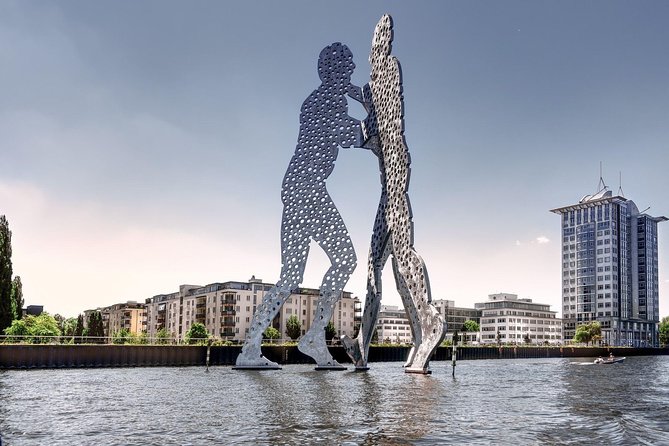
The walk begins at Schlesische Strasse 18, close to public transport, with the exact route unfolding through Kreuzberg. One of the first major sights is Oberbaumbrücke, the red-brick double-decker bridge over the Spree.
The bridge gives you a strong opening view of the district. It is a major Berlin landmark, but here it also works as a marker between neighborhoods and eras. Your guide introduces the main sights of SO36 and explains how the eastern part of Kreuzberg got its name.
I would not treat this as a quick photo stop only. The bridge helps you understand the geography before the walking begins in earnest. If you arrive early, use the time to get your bearings, since the route later includes several different parts of the district.
The starting area can feel more urban and active than the green spaces later in the walk. That shift is useful. You begin with the river, bridge, and city infrastructure, then move into streets where local commerce, murals, and neighborhood politics take center stage.
Berlin Wall traces and the marks of division
Kreuzberg’s Cold War story is easy to miss if you only visit central Berlin’s best-known memorials. The Wall once passed through this area, and pieces of that dividing line still help explain the shape of the neighborhood.
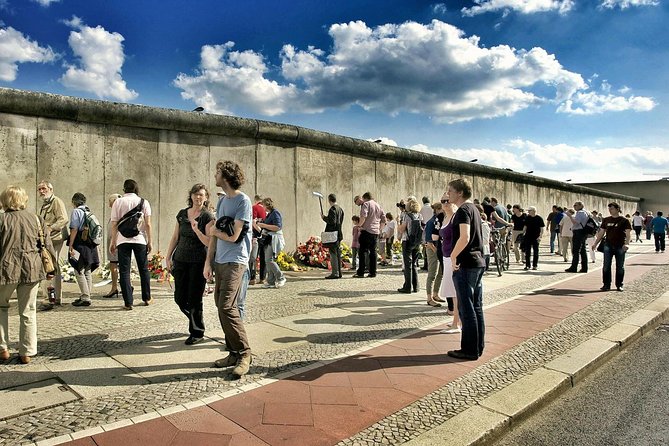
The tour includes about 25 minutes focused on the Memorial of the Berlin Wall and nearby remnants. The value here comes from the setting. You are not looking at the Wall as an isolated museum object. You are seeing how it cut through an everyday district and affected the buildings, empty lots, and movement patterns around it.
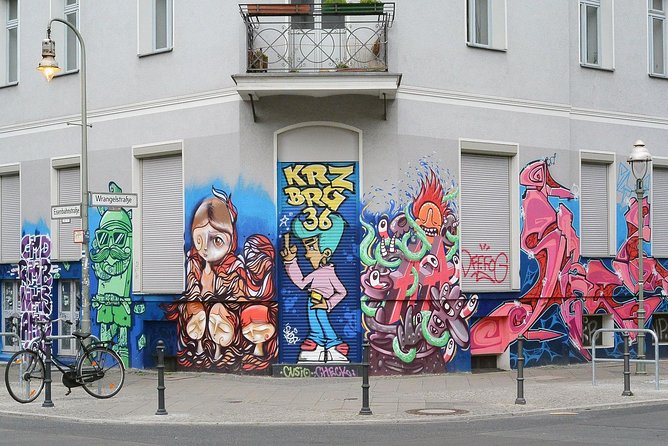
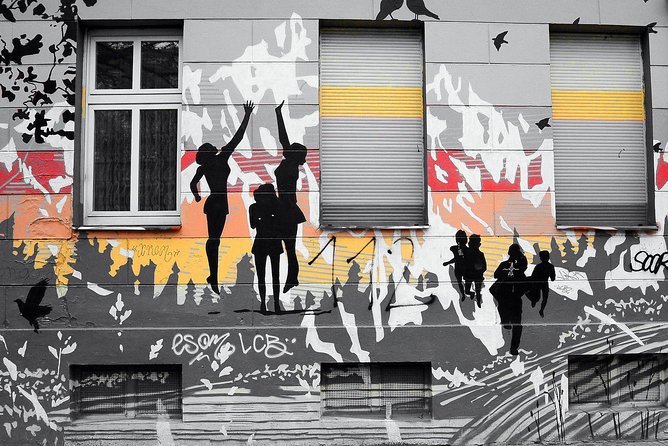
Your guide also connects these remains with the street art culture that developed in spaces left behind by war and division. Abandoned buildings and unused plots offered room for creative work, and the area’s reputation drew artists and counterculture figures. David Bowie is among the famous names associated with Berlin’s creative era, though the focus here remains on the neighborhood rather than celebrity sightseeing.
I like this part for visitors who want more than a standard Wall stop. You get a clearer sense of how political borders can shape a city long after the physical barrier is gone. The limitation is that Wall fragments are not a complete museum visit. If you want extensive documentation, indoor exhibits, or a large collection of artifacts, you will need a separate Berlin Wall museum experience.
SO36 and Oranienstrasse

The tour spends about 35 minutes in SO36, including Oranienstrasse, one of Kreuzberg’s best-known streets. This is where the walk’s mix of history and present-day life becomes easiest to see.
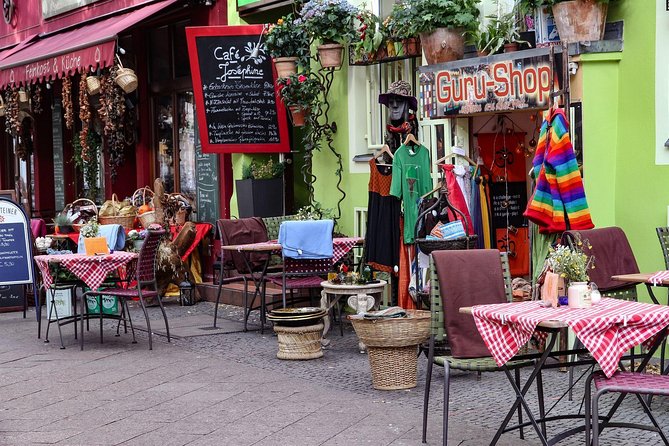
Oranienstrasse is lined with cafes, boutiques, and businesses connected to the district’s immigrant communities. Turkish culture is an important part of Kreuzberg’s identity, and the street helps you see that influence through everyday shops and food rather than through a staged cultural display.
The street also carries a more combative history. It was associated with clashes between anarchists and police around the turn of the century. That past helps explain why Kreuzberg became linked with protest, alternative politics, and resistance to development.
I would give this section your full attention. It is tempting to focus only on murals and attractive storefronts, but the guide’s historical context is what turns the street into more than a shopping stop. You learn how different groups and pressures shaped the district over time.
The route also gives you time to notice how quickly a neighborhood can change. Trendy retailers and creative businesses may sit close to long-established immigrant shops. That mix is part of Kreuzberg’s appeal, but it also raises hard questions about rents, ownership, and who gets to remain as investment increases.
A few more things to do in Berlin worth a look
- Berlin: Private Reichstag and Glass Dome Tour
★ 4.8 · 2,226 reviews - Berlin Private Complete History All Day Walking Tour
★ 5.0 · 474 reviews - Private Walking Tour Berlin Third Reich Hitler and World War II
★ 5.0 · 360 reviews - Private Berlin: Iconic Sights and Hidden Gems Walking Tour
★ 5.0 · 292 reviews
Viktoriapark, a change of pace
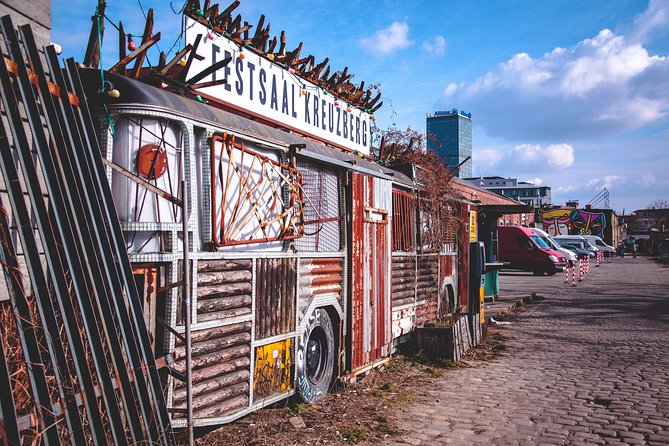
Viktoriapark offers a welcome break from the denser streets. The stop lasts about 20 minutes and brings you into one of Kreuzberg’s best-known green spaces.
I like having a park on this route because three hours of urban history can become tiring, especially for families. The park gives you room to pause while your guide explains another side of the district. You are still in Kreuzberg, but the pace becomes calmer and the hard surfaces give way to a more open setting.
The park should not be treated as a separate destination requiring a long visit. It is a short stop within a wider neighborhood tour. If you want a slow picnic, extended photography time, or a long break, the schedule may feel brief.
Still, it adds balance. The walk is not all contested streets, Wall remnants, and development news. Viktoriapark shows that Kreuzberg also has places for rest and local recreation.
The future of a changing neighborhood
One of the most useful parts of this experience is the attention given to Kreuzberg’s future. The tour discusses a planned riverside development project and the possibility that it could speed up gentrification.
That topic matters because Kreuzberg’s appeal creates its own pressure. Artists, independent businesses, immigrant communities, and visitors helped make the district desirable. New money then follows, bringing development and higher prices that can threaten the same character people came to enjoy.
I appreciate that the guide does not treat gentrification as a simple good or bad story. The changes involve jobs, housing, investment, public space, and local identity. You can look at the neighborhood with more care when you understand those competing interests.
This also makes the tour useful for repeat visitors. You may have seen Berlin’s grand museums and major memorials already. Kreuzberg gives you a way to think about the city as a place still being argued over and reshaped.
The exact future is not promised, and plans can change. Still, the development discussion gives the walk a current purpose. You are not just studying what Kreuzberg was. You are considering what it may become.
What the private format changes
The private setup is the clearest reason to choose this experience instead of a standard group walk. The maximum is 10 people, and the guide can adjust the pace and subject matter to your interests.
That flexibility matters in Kreuzberg because the district contains several stories that may appeal to different people. One person may care most about the Berlin Wall. Another may want street art and music history. A family may prefer shorter explanations and more time to look at shops, parks, and public spaces.
Klaus is specifically praised for matching the pace to the group and pointing out sites that fit personal interests. He was also described as friendly and fun, with a useful tip about where to find good spaetzle. That sort of local food advice can make a walking tour feel more practical, especially if you want to eat nearby afterward.
The private format does not guarantee that every stop will be long. The tour still has a three-hour limit, and public transport is needed between some locations. But you have more control over how those three hours are used.
Price, transport, and practical value

The cost is $450 for the group, with up to 10 people. At full capacity, that works out to $45 per person. For six people, it is $75 each. For two people, it is $225 each, which is a much harder price to justify unless you place high value on private guiding.
The tour includes the historian guide and the private walk. It does not include food, drinks, public transport fares, or the optional bike rental, which costs $10 per person. Since several locations are too far apart to walk comfortably, budget for local transport and allow time for those transfers.
You can choose a morning or afternoon departure. A morning start may suit you if you want to continue exploring Kreuzberg afterward. An afternoon walk may work better if you prefer a slower start, though the tour schedule itself remains about three hours.
Wear comfortable shoes. The experience is primarily on foot, and the route covers streets, public spaces, and park paths. Most people can take part, and the meeting point is near public transport.
Confirmation is provided within 48 hours of booking, subject to availability. Free cancellation is available until 24 hours before the start time. Changes or cancellations made later do not qualify for a refund.
Who should book this Kreuzberg tour?
I would choose this tour if you want Berlin explained through a living neighborhood rather than through a list of famous monuments. It is a good fit for first-time visitors who want social and political context, and for return visitors who have already seen the central sights.
It also suits families with older children who can follow a three-hour walk. The experience with Klaus and a 12-year-old suggests that the route can work well when the guide adjusts the pace and connects the history to things children can see around them.
The tour is less suitable if you want a relaxed cafe crawl, a dedicated street art workshop, or a museum-style presentation. It also may not offer good value for a solo visitor or couple unless private guiding is a top priority.
Should you book it?
Book this Kreuzberg walk if you want a thoughtful look at immigration, art, protest, Cold War division, and gentrification in one neighborhood. The private format, flexible pace, and historian guide are the strongest reasons to choose it.
I would book it for a group of four or more, when the shared price becomes easier to defend. If you are traveling alone or as a couple, compare the cost with a regular Berlin walking tour and consider how much you value private attention.
For a well-matched group, this is a useful three-hour introduction to Kreuzberg’s past and possible future. Just arrive ready to use public transport, walk between several distinct areas, and look beyond the murals to the people and pressures shaping the district.
FAQ
How long is the Kreuzberg private walking tour?
The tour lasts approximately three hours.
How many people can join the private tour?
The tour allows a maximum of 10 people.
Where does the tour start?
The meeting point is Schlesische Strasse 18, 10997 Berlin, Germany.
Does the tour include public transportation?
No. You need to use public transport a few times because some key sites are too far apart to walk comfortably.
Is food included?
No. Food and drinks are not included unless specifically stated. An optional bike rental is available for 10 EUR per person.
Can I cancel for a full refund?
Yes. You can cancel at least 24 hours before the experience start time for a full refund. Cancellations or changes made less than 24 hours before the start time are not accepted for a refund.
Just added in Berlin
- Private One way Airport Transfer Berlin Airport To Berlin★ 3.5 · 17 reviews
- Private Walking Tour: Berlin Wall, Cold War and Checkpoint Charlie★ 5.0 · 37 reviews
- Modern Berlin Private Walking Tour: Diverse, Vibrant and Exciting German Capital★ 5.0 · 13 reviews
- Private Day Trip to Potsdam from Berlin by Train★ 4.5 · 27 reviews
- City Explorer: Potsdam Private Day Trip★ 4.5 · 10 reviews
- Berlin Private Custom 5-Hour Tour by Car★ 5.0 · 30 reviews
- Private Half-Day Sightseeing Tour in Berlin★ 3.5 · 6 reviews
- Berlin Private Custom Tour in a Minivan, East and West★ 5.0 · 123 reviews
Walking Tours, compared.

Third Reich Berlin: Hitler and WWII Walking Tour
Read our review →