Reviewed · WALKING TOURS
Private Walk with Berlin Tour Guides (Din EN 15565)-Taylor Made
Berlin is easiest to understand when its major sights are linked in one clear route, and this private tour does exactly that. You move from the old royal center to Nazi-era memorials, former Wall crossings, and the modern government district, with the guide adjusting the day to your interests. The biggest strength is the private format, which lets you linger at Bebelplatz or move quickly past a place you already know.
I like the choice of transport, especially for a six-hour route that would be tiring on foot. I also like the chance to ask for extra stops or a less familiar side of Berlin after the main sights. The main consideration is cost: at $175.07 per person, the tour makes the most sense for a small group that values personal attention, and private transportation costs extra.
Key points to know before booking
- A private route through central Berlin: Your guide can shape the outing around your interests, pace, and available time.
- Four ways to get around: Travel on foot, by bike, rickshaw, or minivan, depending on the plan and transport arrangement.
- Major sights in one sweep: The route can include Museum Island, Bebelplatz, Gendarmenmarkt, Checkpoint Charlie, the Wall, Brandenburg Gate, and the Reichstag.
- Useful early in your stay: A guide can help you get oriented and offer ideas for the rest of your time in Berlin.
- Two to six hours: A short tour can cover selected highlights, while a longer booking allows more stops and off-route sights.
- Hotel pickup is offered: Confirm the pickup details when booking, since private transportation itself is not included.
A private introduction to Berlin’s complicated center
This is not a fixed group walk where you follow a guide at one set pace. You begin by telling the guide what matters to you, how long you have, and how much ground you want to cover. The route can focus on famous landmarks, historical sites, less familiar places, or a mix of all three.
The standard sequence moves through Berlin Mitte, the city center where several different eras sit close together. A single afternoon can take you from Prussian royal planning to the rise of National Socialism, the Cold War division of Berlin, and the reunited German government.
That range is the tour’s real value. Berlin’s sights can feel scattered if you see them one at a time. A private guide can connect them into a story and help you understand why a square, road, or building matters beyond its appearance.
The two-hour version should be selective. The full route includes many stops, and even brief photo pauses add up. If you want time to look closely at memorials, ask questions, or add museums and galleries, six hours is the better choice.
Other walks around Berlin:
- Discover Berlin Half-Day Walking Tour
★ 5.0 · 9,624 reviews - Berlin: Third Reich and Cold War 2 Hour Walking Tour
★ 4.9 · 6,830 reviews - Berlin: Discover Berlin Walking Tour
★ 4.9 · 5,998 reviews
Fernsehturm and Museum Island: Berlin’s old center
The tour begins near the Berliner Fernsehturm, the tall television tower that anchors Alexanderplatz. The listed stop is short, about five minutes, and does not include admission to the tower. Treat it as a meeting point and orientation stop rather than a tower visit.
From there, the route passes the Red Town Hall, Marien Church, and Neptune’s Fountain before reaching Museum Island. This opening gives you a quick look at Berlin’s older civic center, then shifts toward the former royal quarter along Unter den Linden.
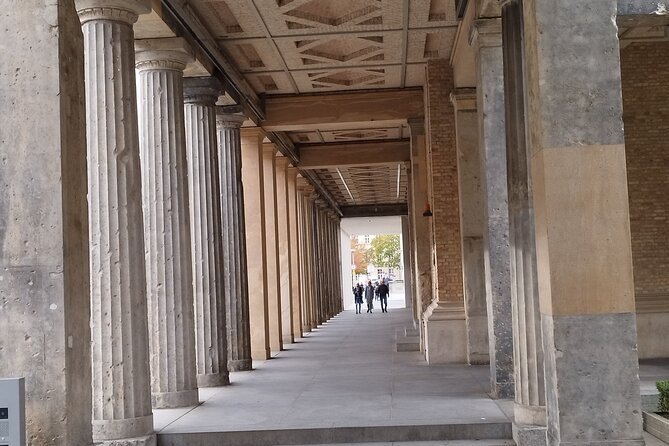
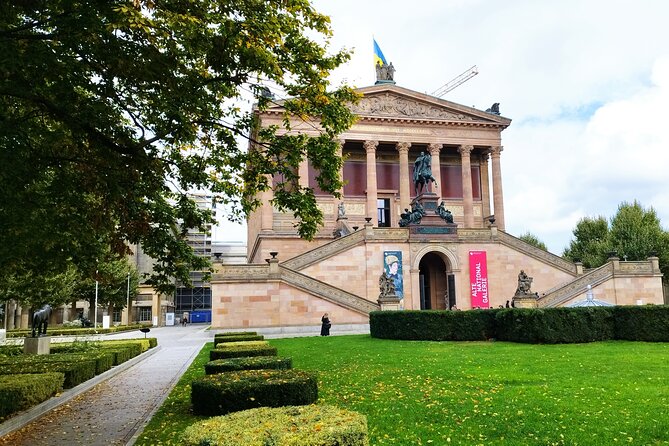
Museum Island is a UNESCO World Heritage Site and one of Berlin’s key cultural areas. The complex includes the Altes Museum, Neues Museum, Alte Nationalgalerie, Bode-Museum, and Pergamonmuseum. Admission is not included, so this tour is mainly about seeing the buildings and understanding the setting, not spending hours inside the collections.
That distinction matters. If you want museum interiors, say so when planning the route. The tour can include inside visits to museums or galleries on a longer booking, but the time and entry arrangements need to fit the day.
The route across the island also gives you a useful piece of Berlin’s physical story. The island was gradually connected to both banks of the Spree with soil and rubble. Bridges, royal buildings, museums, and war damage all shaped the area you see today.
Bebelplatz and the Book Burning Memorial
After Museum Island, the tour reaches the Forum Fridericianum and Bebelplatz. This handsome area includes the State Opera, Humboldt University, the State Library, and St. Hedwig’s Cathedral, identified here as Berlin’s first Catholic church.
Bebelplatz is also the site of the 1933 Nazi book burning, when about 25,000 books were burned. A memorial beneath the square recalls that event. The memorial is easy to miss if you do not know where to look, which makes a guide especially useful here.
I would give this stop more than a quick photograph. The square looks formal and elegant, but its history is disturbing. That contrast is part of what makes Berlin important to visit: public spaces often carry several layers of meaning at once.
The listed visit takes about ten minutes and admission is free. If this subject matters to you, tell the guide early. A private tour gives you a better chance to pause and ask questions than a large group outing would.
Gendarmenmarkt and the polished royal city
Gendarmenmarkt is one of the most impressive squares on the route. The former Royal Concert Hall sits between the German Cathedral and French Cathedral, creating a carefully balanced architectural setting.
This is the part of central Berlin that feels most formal and polished. It helps explain the ambition of the old royal city, with grand civic buildings arranged to create a powerful sense of order.
The stop lasts about ten minutes and costs nothing to visit. It works well as a photo stop, but you should not expect a long architectural tour unless you request one. If your interests lean toward buildings, city planning, or Berlin’s royal past, this is a good place to slow the pace.
A few more things to do in Berlin worth a look
- Berlin: Private Reichstag and Glass Dome Tour
★ 4.8 · 2,226 reviews - Berlin Private Complete History All Day Walking Tour
★ 5.0 · 474 reviews - Private Walking Tour Berlin Third Reich Hitler and World War II
★ 5.0 · 360 reviews - Private Berlin: Iconic Sights and Hidden Gems Walking Tour
★ 5.0 · 292 reviews
Checkpoint Charlie and the former Wall border
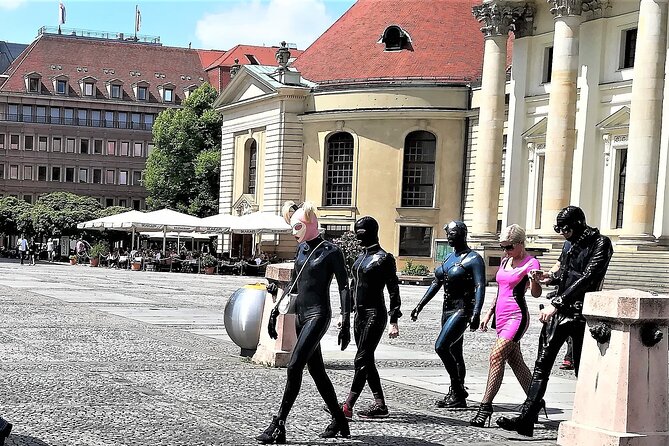
Checkpoint Charlie is one of Berlin’s best-known Cold War sites. It was a famous crossing point through the Berlin Wall and became associated with a tense confrontation that nearly triggered a third world war.
The stop is brief, about ten minutes. Its fame also means it can feel more symbolic than atmospheric. You are seeing a major name from the Cold War, but the original Wall border environment has largely changed. For a clearer sense of the former border, the next stop, along the old strip near the Topography of Terror, is important.
A private guide can help place Checkpoint Charlie in the larger pattern of divided Berlin. You can ask how the border worked, who used it, and how the city changed after reunification. Those questions are more useful than simply taking a picture at the sign.
Topography of Terror and surviving Wall sections
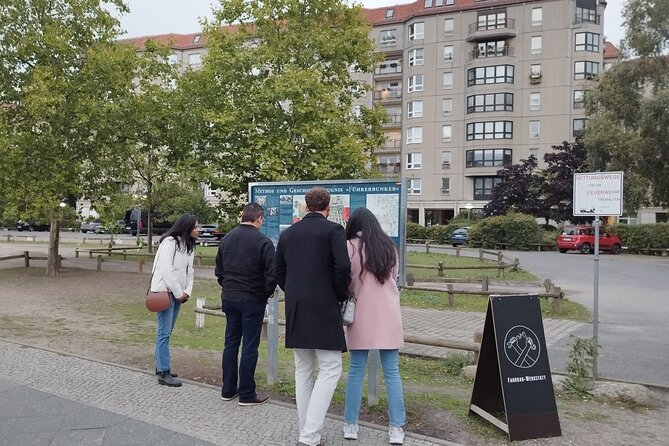
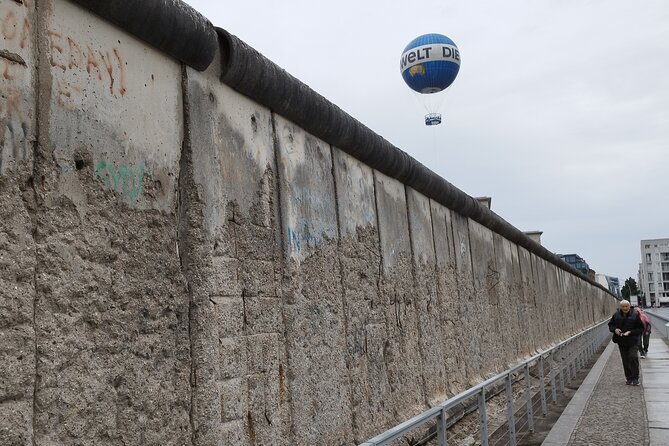
Along the former border strip, the tour passes original parts of the Berlin Wall and the Topography of Terror documentation center. The center occupies the former headquarters area of the SS and Gestapo and is one of the most visited places documenting National Socialism.
The listed stop is five minutes, with free admission. That is enough for a quick orientation, but not enough for a serious visit to the documentation center. If you want to read the exhibits, plan extra time and make that clear when setting the itinerary.
This is one of the strongest places to ask for a longer pause. The Wall is often the focus of Berlin sightseeing, but the Nazi history of the site adds another, earlier layer. Seeing both in one area reminds you that Berlin’s twentieth century was shaped by two dictatorships, not only by the Cold War.
The Holocaust Memorial and its difficult silence
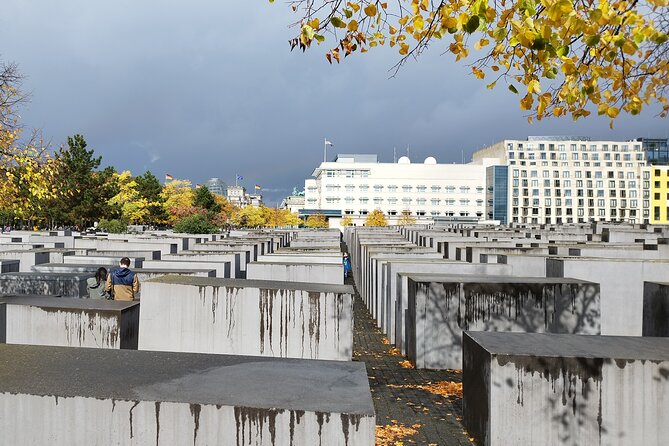
The Memorial to the Murdered Jews of Europe sits close to the Brandenburg Gate. Opened in 2005, it commemorates the murder of more than six million Jews during National Socialism.
The memorial consists of concrete slabs arranged across a large open area. The experience changes as you move among them, but the tour information does not promise a long walk through the site. The scheduled stop is about ten minutes, so ask for more time if you want to experience the memorial at your own pace.
This is a place where a guide should provide context without rushing you. The memorial is not a conventional monument with a simple inscription and a single viewpoint. Its effect comes from walking through the space and considering the scale of the crime it recalls.
The stop is free. As with the Topography of Terror, admission is not the issue. Time is. A short tour can show you the location, while a longer private booking gives you room for reflection.
Brandenburg Gate and the road to the Reichstag
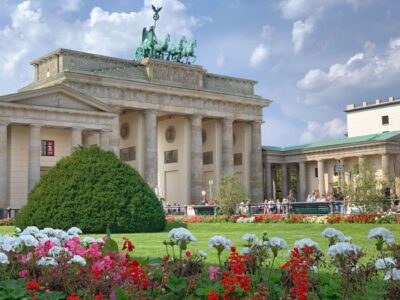
Brandenburg Gate is one of Berlin’s essential landmarks and a natural turning point in the route. From here, the tour leaves the former eastern side of the city and continues toward the Memorial to the Murdered Sinti and Roma and the government district.
The gate has represented different versions of Berlin over time. It once marked an entrance to the royal city, later became a powerful Cold War symbol, and now represents a reunified capital. Your guide can connect the gate to the sights that came before it, rather than treating it as an isolated photo stop.
The nearby Memorial to the Murdered Sinti and Roma is easy to overlook when the Brandenburg Gate attracts most of the attention. If you want the tour to include lesser-known memorials, mention that at pickup. The tailor-made format is best used for precisely these choices.
The Reichstag and modern German government
The Reichstag is one of Berlin’s most recognizable buildings. Designed by Paul Wallot, it was built in the 1890s and later suffered damage during World War II. After Germany’s parliament moved from Bonn to Berlin in 1998, the building became one of the clearest symbols of the modern capital.
The building houses the Bundestag. The German parliamentary system also includes the Bundesrat, which represents the country’s 16 states. The Reichstag’s restored dome is especially prominent and has become a familiar part of Berlin’s skyline.
The listed stop lasts about ten minutes and does not include an interior visit. Do not assume that a quick look at the building includes entry to the dome or parliament. If you want to go inside, ask about it before the tour and allow enough time for the visit.
The government district is a fitting final chapter for this route. You have moved from royal Berlin through dictatorship, division, and reunification, then arrived at the institutions of present-day Germany.
Walking, bike, rickshaw, or minivan
Your transport choice changes the feel of the outing. Walking offers the clearest connection between the memorials and streets, but covering the full route on foot can take about six hours. It is the best choice if you enjoy stopping often and want to notice details between the major landmarks.
A bike can cover more ground while keeping you close to the streets. A rickshaw offers a more relaxed way to move between stops, especially if you want a private ride without handling the route yourself. A minivan is the practical choice for a longer itinerary, mobility needs within the group, or a plan that reaches beyond central Berlin.
Private transportation is not included in the price, so clarify how your chosen option affects the total cost. The tour offers hotel pickup, and the activity ends back at the meeting point. Confirm the exact pickup and return arrangement before the day begins.
Price, timing, and who gets the best value
At $175.07 per person, this is not a bargain sightseeing loop. You are paying for a licensed guide, private attention, and the ability to shape the route. For a couple, family, or small group with similar interests, the cost can be reasonable because you are not being carried through a standard script.
The value drops if you only want a quick look at the Brandenburg Gate and Reichstag. Many stops are brief, and the price does not include museum tickets or private transportation. You can get more from the booking by using the guide for context, planning help, and places that are less obvious than the headline sights.
I would book it early in a Berlin stay. The guide can help you get oriented and offer information for the days that follow. That is useful in a city where the sights are spread out and where the historical order is not always obvious from the street.
The tour is offered in English and is available for groups with service animals. It is near public transportation, and most people can participate. Confirmation is provided at booking, and free cancellation is available up to 24 hours before the start time.
Should you book this Berlin tour?
Book it if you want a flexible private introduction to Berlin and prefer a guide who can adjust the route instead of leading everyone through the same schedule. It is particularly suitable for first-time visitors, families, small groups, and anyone who wants help linking Berlin’s royal, Nazi, Cold War, and modern government sites.
Choose the longer option if you want museums, galleries, extra memorials, or time at the Wall. Pick a shorter tour only if you are happy with quick stops and a broad overview.
The named guide Levent is described as accommodating, and the experience is built around that quality. Still, ask clear questions about transport, interior visits, and the exact pickup plan before paying. If you want a personal route and can accept the extra costs, this is a useful way to get your Berlin bearings fast.
FAQ
How long does the private Berlin tour last?
The tour lasts approximately two to six hours. The guide adjusts the route based on your interests, pace, and the distance you want to cover.
What sights are included?
Possible stops include the Berliner Fernsehturm, Museum Island, Bebelplatz, Gendarmenmarkt, Checkpoint Charlie, the Topography of Terror, the Holocaust Memorial, Brandenburg Gate, and the Reichstag.
Can I choose the places I visit?
Yes. The tour is private and can be tailored to your interests. You can request historical highlights, less familiar places, museums, galleries, or an off-the-main-route plan.
What transport options are available?
You can travel by bike, rickshaw, minivan, or on foot. Private transportation is not included in the price.
Is hotel pickup available?
Yes. Pickup from your Berlin hotel is offered. Confirm the exact pickup details when arranging the tour.
Are museum admission tickets included?
No. Admission to the listed stops is generally not included, and the tour information specifically notes that the Fernsehturm ticket is not included. Museum or gallery visits can be added to a longer plan.
Is the tour conducted in English?
Yes. The experience is offered in English and includes a licensed guide.
Just added in Berlin
- Private One way Airport Transfer Berlin Airport To Berlin★ 3.5 · 17 reviews
- Private Walking Tour: Berlin Wall, Cold War and Checkpoint Charlie★ 5.0 · 37 reviews
- Modern Berlin Private Walking Tour: Diverse, Vibrant and Exciting German Capital★ 5.0 · 13 reviews
- Private Day Trip to Potsdam from Berlin by Train★ 4.5 · 27 reviews
- City Explorer: Potsdam Private Day Trip★ 4.5 · 10 reviews
- Berlin Private Custom 5-Hour Tour by Car★ 5.0 · 30 reviews
- Private Half-Day Sightseeing Tour in Berlin★ 3.5 · 6 reviews
- Berlin Private Custom Tour in a Minivan, East and West★ 5.0 · 123 reviews
Walking Tours, compared.

Third Reich Berlin: Hitler and WWII Walking Tour
Read our review →