Reviewed · WALKING TOURS
Kreuzberg Walking Tour: Immigrants, Artists & Hipsters
Kreuzberg is where Berlin’s past and present collide. This three-hour tour takes you from Oberbaumbrücke and Berlin Wall remains to graffiti, Turkish markets, old squats, creative building projects, and the disputed riverside plans shaping the district’s future. It is not a postcard tour. It is a street-level look at how a rough Cold War border district became one of Berlin’s most sought-after neighborhoods.
I like the small group size, which gives you room to ask questions and follow a story instead of marching behind a flag. I also like the mix of history and daily life: you may be discussing rock stars who wandered through Kreuzberg during the Cold War one moment, then choosing a piece of spinach-and-cheese gözleme at a market the next.
The main consideration is the price, $153.85 per person, which is high for a three-hour walk. You will also need public transport between some stops, and food, drinks, and bike rental are extra.
Key points to know before booking
- Cross Oberbaumbrücke first: The tour opens with one of Berlin’s most attractive bridges and a useful introduction to Kreuzberg’s divided past.
- Choose walking or cycling: The bike version covers more ground within the district, with rental costing an additional €10 per person.
- Expect a history lesson with street-level detail: Berlin Wall traces, SO36, abandoned buildings, graffiti, and redevelopment all fit into the route.
- Taste Kreuzberg’s Turkish influence: Markets, spices, flowers, small shops, and hot gözleme bring the neighborhood’s immigrant culture into focus.
- Small groups help: The advertised group size is six, though the booking information also lists maximums of eight and ten, so confirm the exact number when booking.
- Guides shape the day: Peter is praised for his local stories and recommendations, while Ronan is known for patient conversation and thoughtful answers.
Why Kreuzberg is worth three hours
Kreuzberg is not Berlin’s grand museum district. You come here for layers. The neighborhood grew up beside the Berlin Wall, with a large immigrant population, inexpensive housing, artists, squatters, musicians, political activists, and later a wave of cafés, shops, and fashionable apartments.
That mix is the point of the tour. You are not simply looking at murals or ticking off a market. You are learning why Kreuzberg looks the way it does, who shaped it, and what may be lost as land prices rise.
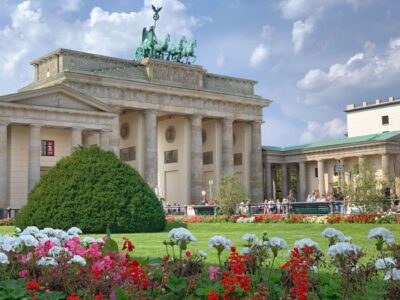
The route also gives you a break from central Berlin’s major sights. If you have already seen the Brandenburg Gate, Reichstag, and Museum Island, Kreuzberg offers a more ordinary and complicated side of the city. I find that especially useful on a longer Berlin visit, when you want to understand how people live rather than collect another grand building.
Other walks around Berlin:
- Discover Berlin Half-Day Walking Tour
★ 5.0 · 9,624 reviews - Berlin: Third Reich and Cold War 2 Hour Walking Tour
★ 4.9 · 6,830 reviews - Berlin: Discover Berlin Walking Tour
★ 4.9 · 5,998 reviews
Starting at Oberbaumbrücke
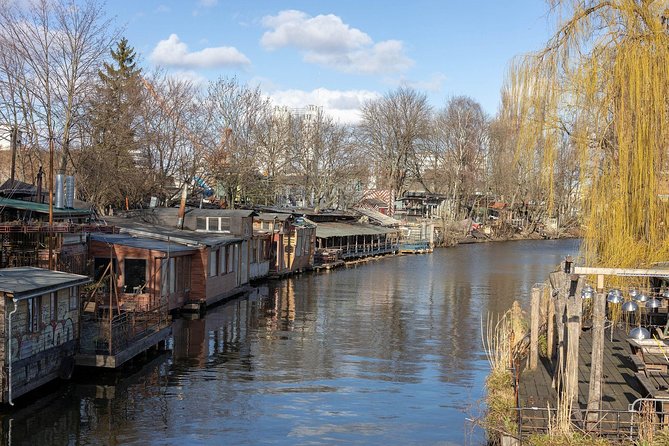
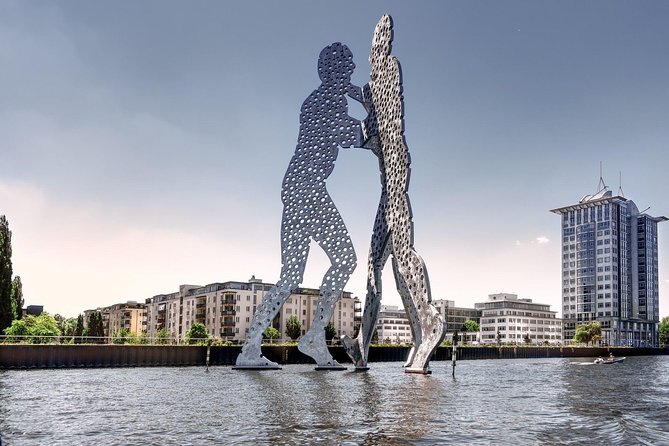
The tour begins at Schlesische Str. 18, near public transport, and quickly takes you toward Oberbaumbrücke. This red-brick bridge is one of Berlin’s most recognizable crossings, linking Kreuzberg with Friedrichshain over the Spree.
It is a smart place to begin. The bridge helps explain the old division between East and West Berlin, while the view gives you an immediate sense of the city’s changing waterfront. Your guide can set up the political and social background before the tour turns into smaller streets.
The crossing is also a pleasant opening walk. You get a major Berlin view without spending the day in a formal museum. If you choose the bicycle option, you will still cross and explore the district, but the bike lets you connect more locations in the same three-hour period.
The exact balance between riding and walking will matter to you. This is not described as a long-distance bike trip, and the tour stays within Kreuzberg. The extra rental fee is €10 per person, a reasonable add-on if you are comfortable cycling, but walking is better if you want more time to pause and talk.
SO36 and Kreuzberg’s rough past
From Oberbaumbrücke, the route moves through SO36, the name linked to the old postal district and now commonly used for eastern Kreuzberg. This part of Kreuzberg has long carried a reputation for rebellion, music, immigration, and hard-edged urban life.
Your guide explains how the neighborhood became a Cold War-era no-go zone and why that isolation helped shape its character. Cheap rents drew people who could not or did not want to live in more polished parts of West Berlin. Artists, political groups, musicians, and immigrant families all added their own marks.
The stories about rock legends who walked these streets during the Cold War make the history personal, but the tour does not stop at celebrity anecdotes. The stronger subject is the ordinary life around them: who could afford to stay, who had power, and why Kreuzberg developed such a strong sense of independence.
This is where a good guide matters. Peter is described as someone who loves the neighborhood and offers practical suggestions for the rest of your time in Berlin. Ronan is noted for patient answers and thoughtful discussion. If you enjoy asking questions rather than simply listening, this format should suit you.
Berlin Wall remains and creative reuse
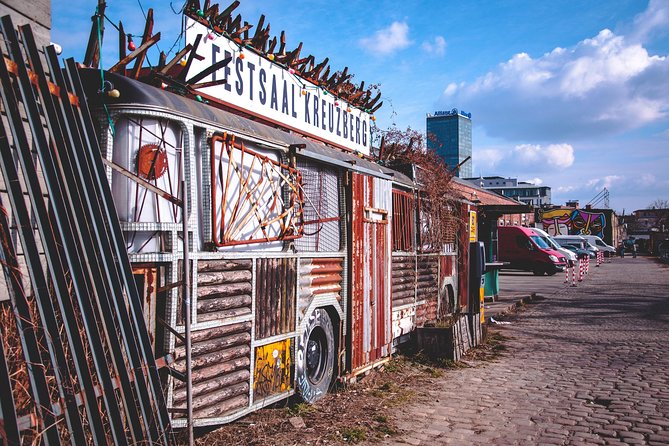
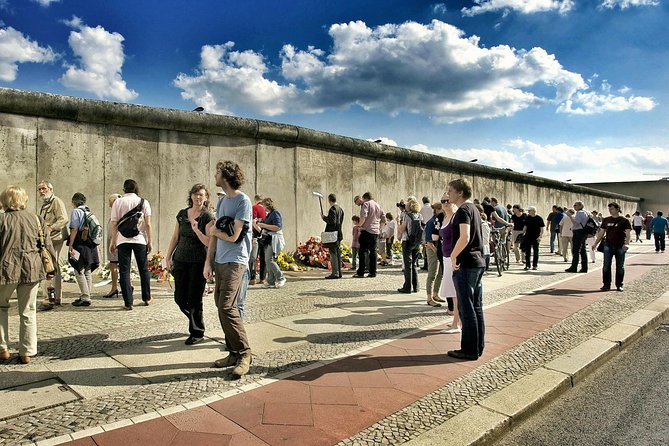
Kreuzberg still carries physical traces of the Wall. You will see remaining sections or related sites while your guide explains how the border affected streets, buildings, and everyday movement.
The Wall story here is less about a single famous section and more about its effect on the neighborhood. For decades, Kreuzberg sat at the edge of West Berlin, surrounded on several sides by East Germany. That position made it feel cut off, but it also allowed unusual projects and subcultures to take root.
The tour then looks at abandoned buildings and empty plots that found new uses. These places could become artist spaces, gardens, community projects, or informal gathering points. The important lesson is that Kreuzberg’s appeal did not arrive fully formed. It grew from people making use of spaces that the city or private owners had left behind.
You should expect some discussion rather than a series of formal entrances. The tour is about seeing a district through its streets and hearing how its uses changed. That makes comfortable shoes and weather-ready clothing sensible choices. One account describes the route continuing through cold and rain because the guide had enough stories to keep the group interested, but poor weather can still make outdoor sightseeing harder.
Same base, a different kind of day out:
- Berlin: Reichstag, Dome and Government District Guided Tour
★ 4.7 · 18,288 reviews - Berlin: 1-Hour City Tour by Boat with Guaranteed Seating
★ 4.3 · 16,993 reviews - Berlin: Boat Tour Along the River Spree
★ 4.4 · 11,252 reviews - Berlin: Hop-on Hop-off Bus Tour with Live Commentary
★ 4.3 · 8,579 reviews
Graffiti as local language
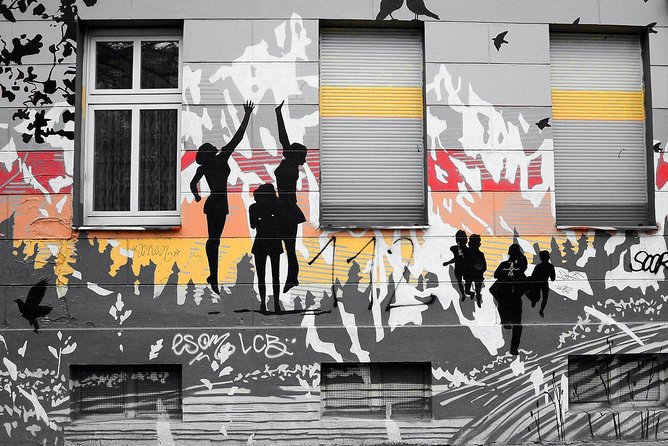
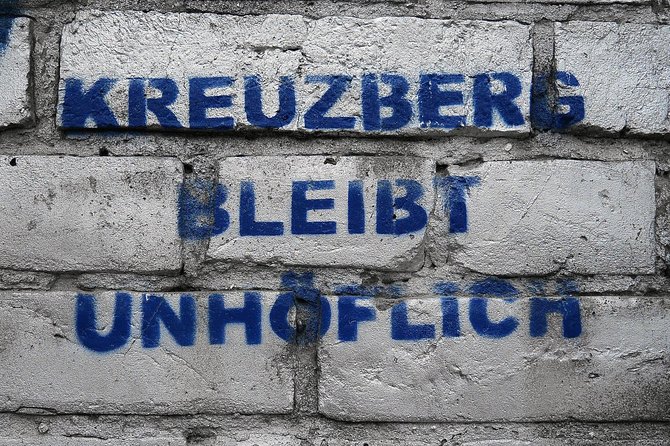
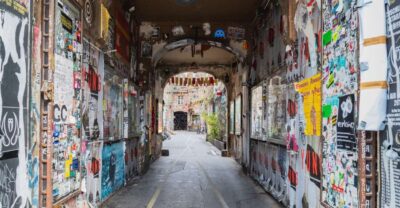
Kreuzberg’s graffiti and street art are not decoration added after the fact. They are part of the neighborhood’s public conversation. Tags, murals, political images, and changing walls show who feels entitled to claim space and how quickly the district’s mood can shift.
Your art historian guide gives this visual material context. That is more useful than a simple list of famous murals, since street art can change or disappear. You will learn to pay attention to placement, scale, subject, and the difference between a large commissioned work and an unofficial mark.
This section should appeal to anyone interested in Berlin’s creative culture, but it is also a good test of your expectations. You are not booking a gallery tour with a fixed collection. You are walking through a neighborhood where the sights remain exposed to weather, construction, and local debate.
The emphasis on art makes the tour feel different from a standard political history walk. You see how old factories, vacant lots, walls, and shopfronts become part of Kreuzberg’s identity. That combination of social history and visual culture is one of the strongest reasons to book.
Görlitzer Park and Markthalle 9
Görlitzer Park gives the tour a change of pace. The park occupies the former site of a railway terminus and is one of the district’s best-known public spaces. The supplied details emphasize its graceful character, but the main value here is seeing how a dense neighborhood uses open land.
Your guide can connect the park to the wider story of Kreuzberg: limited space, community use, public arguments, and the pressure created by rising popularity. It is not just a green pause between urban sights. It shows how public land affects daily life in a packed district.
The route also includes Markthalle 9, a market hall about 120 years old. Its iron-and-glass market setting helps you see an older side of the neighborhood, while the stalls and food bring you back to modern Kreuzberg.
Food is not included, so budget for anything you want to try. A useful choice is gözleme, a Turkish flatbread filled with ingredients such as spinach and cheese, then cooked and served hot. That small purchase adds something a guidebook cannot: a taste of the area’s Turkish influence in the middle of the walk.
You will also pass colorful markets and shops filled with flowers, spices, and takeaway food. These stops give the tour a human scale. Instead of treating immigrant culture as a museum subject, you see it in businesses, ingredients, and the food people buy.
Turkish Kreuzberg beyond the postcard
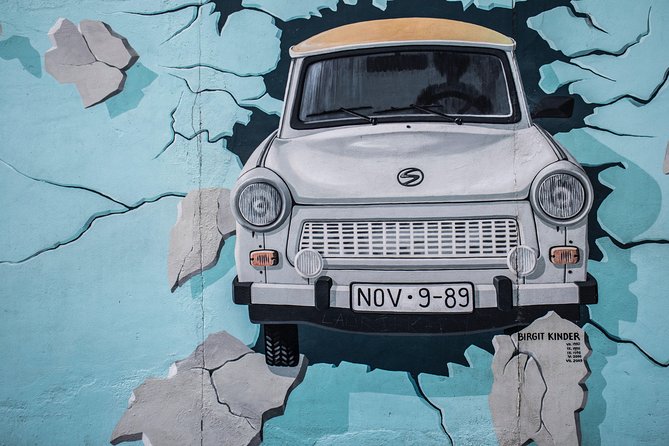
Kreuzberg’s Turkish culture is central to the district’s character. The tour uses shops and markets to show how migration shaped the neighborhood’s food, commerce, language, and street life.
That matters because Berlin’s immigrant story is often reduced to a few restaurant recommendations. Here, the food is linked to the larger history of families building lives in a district that once sat on the city’s edge. The market details, from spices to flowers, make that story concrete.
I would keep an open mind about the food stop. The tour does not include a formal meal or a set tasting menu. You choose and pay for any snack yourself, so it works best if you are happy with an informal bite rather than expecting a food tour with several courses.
This is also a good section for questions. You can ask about how the neighborhood’s identity changed after 1989, how immigrant businesses fit into the newer creative scene, and what happens when an area becomes fashionable. A small group makes those conversations easier than on a large coach or crowded scheduled walk.
The riverside debate and Kreuzberg’s future

The final topic is the proposed development along the river. Your guide discusses controversial plans for the waterfront and the competing interests behind them.
This is a fitting ending because Kreuzberg’s story is still being written. The same qualities that attracted artists and visitors, open space, old buildings, unusual projects, and a strong local identity, also attract developers. New construction can bring jobs and housing, but it can also raise prices and push out the people and uses that made the area appealing.
One of the tour’s strengths is that it does not present Kreuzberg as a finished product. You are encouraged to think about what should be protected and who gets to decide. A separate account of the route ended at the Friedrichshain-Kreuzberg Museum, which suggests the guide may sometimes connect the walk with a museum visit or use it as a final point. Confirm the exact ending if that matters to your plans, since the stated end point is simply Berlin.
What the $153.85 price buys you
At $153.85 per person, this is not a bargain walking tour. The price makes the most sense if you value a specialist guide, a small group, and a conversation-led route rather than a simple introduction to Kreuzberg.
You are paying for an art historian guide and a tailored look at a complicated neighborhood. With a group of six, there is more chance to ask about a building, stop for a photo, or follow an unexpected question. That personal attention is harder to get on a large, low-cost tour.
The value drops if you only want a quick orientation or a food crawl. You still pay for public transport when needed, food and drinks are extra, and the optional bike rental costs €10. There is no hotel pickup or drop-off.
The booking information gives several group limits: six for the small-group tour, eight people per booking, and a maximum of ten participants. Because those figures do not match perfectly, I would confirm the actual group size before paying. The smaller the group, the better this tour’s price makes sense.
Free cancellation is available if you cancel at least 24 hours before the start time. Changes or cancellations inside that window are not refunded, so keep the local cut-off time in mind.
Who will enjoy this Kreuzberg walk
I would choose this tour if you want to understand Berlin through neighborhoods, migration, art, and political change. It suits people who enjoy asking questions and looking closely at ordinary streets.
It is especially useful after you have seen Berlin’s central sights. The tour gives you a different view of the city, one shaped by the Wall, low-cost housing, immigrant businesses, artists, and redevelopment.
You should also enjoy outdoor walking for three hours. The route uses public transport a few times because some sites are too far apart to walk. Children can participate, but they must be accompanied by an adult.
The bike version suits you if you want to cover more of Kreuzberg and are comfortable cycling. The walking version is better if you prefer a slower pace, more conversation, and fewer practical concerns.
Should you book it?
Book it if you want a thoughtful, local look at Kreuzberg and are willing to pay for a small group with an art historian guide. The strongest parts are the links between Cold War history, Turkish culture, street art, abandoned spaces, and the neighborhood’s uncertain future.
Skip it if your budget is tight, you want a formal food tour, or you prefer Berlin’s famous sights over social and urban history. Also confirm the group size, final stopping point, and transport details before booking.
For the right person, this is a useful three-hour reset from central Berlin. You leave with more than photographs of murals and a bridge. You understand why Kreuzberg became Kreuzberg, and why keeping that identity is not simple.
FAQ
How long does the Kreuzberg Walking Tour last?
The tour lasts approximately three hours.
Is the tour offered in English?
Yes. The tour is offered in English.
Can I take the tour by bicycle?
Yes. A bicycle option is available and covers more ground within Kreuzberg. Bike rental costs an additional €10 per person.
Is food included in the tour price?
No. Food and drinks are not included unless specifically stated. You can buy items such as gözleme at the markets during the route.
How many people can join the tour?
The tour is described as a small-group experience with six people, while the booking details also list a maximum of eight per booking and ten participants overall. Confirm the exact group size when booking.
What is the cancellation policy?
You can cancel at least 24 hours before the start time for a full refund. Cancellations or changes made less than 24 hours before the start time are not accepted or refunded.
Just added in Berlin
- Modern Berlin Private Walking Tour: Diverse, Vibrant and Exciting German Capital★ 5.0 · 13 reviews
- Private One way Airport Transfer Berlin Airport To Berlin★ 3.5 · 17 reviews
- Private Walking Tour: Berlin Wall, Cold War and Checkpoint Charlie★ 5.0 · 37 reviews
- Private Day Trip to Potsdam from Berlin by Train★ 4.5 · 27 reviews
- City Explorer: Potsdam Private Day Trip★ 4.5 · 10 reviews
- Berlin Private Custom 5-Hour Tour by Car★ 5.0 · 30 reviews
- Private Half-Day Sightseeing Tour in Berlin★ 3.5 · 6 reviews
- Berlin Private Custom Tour in a Minivan, East and West★ 5.0 · 123 reviews
Walking Tours, compared.

Third Reich Berlin: Hitler and WWII Walking Tour
Read our review →