
Reviewed · BERLIN WALL & COLD WAR TOURS
Cold War and Berlin Wall Tour in Italian
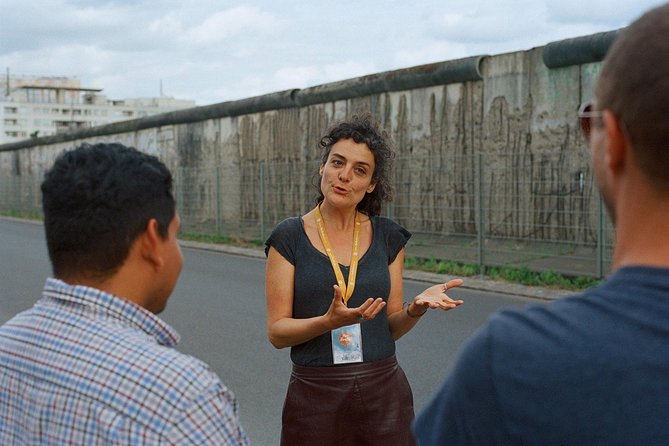
Berlin’s Cold War story makes the most sense when you follow it across the city, from a hidden subway station to the surviving Wall and the murals of the East Side Gallery. This Italian-language walking tour links those places in one half-day route, with a guide explaining how division shaped daily life in East and West Berlin.
I like the way the tour combines major sights with less obvious history, especially Nordbahnhof’s ghost stations and the Stalinist buildings along Karl-Marx-Allee. I also like the clear route: you do not need to plan several separate stops or work out the city’s Cold War geography on your own.
The main drawback is that transportation and food are not included, and the tour ends across town at the East Side Gallery. You will need to be comfortable walking for three and a half hours and using public transport between sections of the route.
Key points at a glance
- Italian commentary from Potsdamer Platz: Meet under the blue bicycle and Vive Berlin Tours flag at 10:00 a.m.
- Nordbahnhof’s ghost stations: Hear why some Berlin subway platforms were sealed and watched during the divided-city years.
- Berlin Wall Memorial: Spend the longest stop looking at the Wall’s construction, escape systems, and stories of people killed trying to cross.
- Alexanderplatz and the TV Tower: Connect East German architecture with the huge 1989 demonstration that helped bring down the Wall.
- Karl-Marx-Allee: See broad avenues and grand Stalinist-era apartment blocks tied to the early German Democratic Republic.
- East Side Gallery finale: Finish beside the longest surviving section of the Wall, now covered with murals associated with freedom.
Why this Italian tour works for Berlin’s Cold War story
The Cold War can feel scattered in Berlin. One memorial sits north of the center, Alexanderplatz lies farther east, and the East Side Gallery is well beyond the historic core. This route gives those places a clear order.
You begin at Potsdamer Platz, once divided by the Wall and now one of Berlin’s modern business districts. From there, the group uses public transportation to reach the northern part of the city, then continues through central and eastern Berlin. The route ends at the East Side Gallery, so the tour works best as a morning plan followed by more exploring in Friedrichshain.
The guide’s role matters here. You are not simply walking past concrete, apartment blocks, and large public squares. You are learning how each place fits into the larger story: the sealed subway network, the Wall’s physical design, the GDR’s public architecture, mass protest in 1989, and the Wall’s later transformation into an open-air art site.
The Italian language is the central reason to choose this particular experience. If you understand Italian more easily than English, you can follow complicated political and personal details without having to translate in your head. The tour has a maximum of 25 people, large enough to feel social but still manageable for a walking guide.
Other divided-city history in Berlin:
- Berlin: Third Reich and Cold War 2 Hour Walking Tour
★ 4.9 · 6,830 reviews - Berlin’s Best: 2 Hour Walking Tour Third Reich and the Cold War
★ 5.0 · 5,486 reviews - Skip-the-Line: Berlin Wall Museum at Checkpoint Charlie
★ 4.1 · 2,041 reviews
Starting at Potsdamer Platz with a simple meeting point
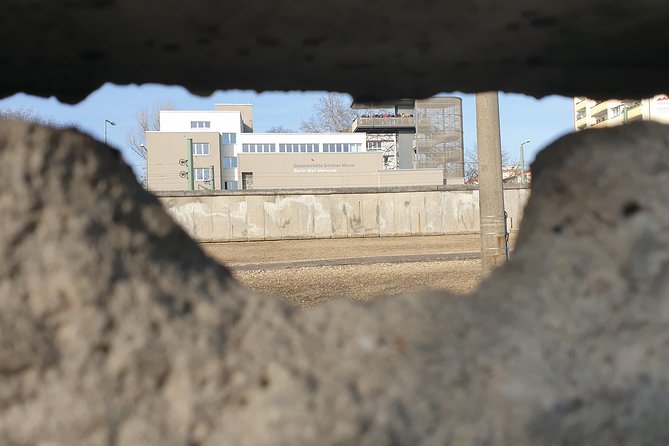
The tour begins at 10:00 a.m. at Potsdamer Platz 10. Look for the blue bicycle and the Vive Berlin Tours flag. That visual marker is useful in a busy city square, especially if you are arriving by the S-Bahn or U-Bahn.
There is no hotel pickup. You make your own way to the meeting point, and the tour also does not include transportation fares, food, or drinks. Bring a public transport ticket that covers the route, since the schedule includes a subway stop and the guide directs you between parts of the city.
The opening meeting takes about 10 minutes. That is enough time to find the guide and group without using up much of the sightseeing time. Since the tour begins in a central location, it is easy to pair with other Potsdamer Platz sights on another day, rather than trying to fit them in before the start.
Nordbahnhof and Berlin’s sealed subway stations
The first major history stop is Berlin-Nordbahnhof. The guide explains the city’s ghost stations, a strange result of Berlin’s division.
When the Wall split the city, some subway and railway lines still passed through East Berlin while serving West Berlin routes. Certain stations were closed, platforms were sealed, and trains moved through without stopping. The term ghost station captures the eerie idea, but the subject also shows how political division reached into ordinary travel.
This is a short stop of about 10 minutes, so you should not expect a museum visit or a long exploration of the station. Its value is the explanation. Without a guide, you might pass through a station and never realize that the network once had forbidden platforms and controlled crossings beneath the city.
The stop also prepares you for the rest of the tour. Berlin’s Cold War story is not only about the visible Wall. It is also about boundaries placed in streets, train lines, workplaces, neighborhoods, and family routines.
Fifty minutes at the Berlin Wall Memorial
The Berlin Wall Memorial is the tour’s longest stop, with about 50 minutes set aside for it. That extra time is well used because this is the place where the Wall becomes more than a symbol.
The guide explains how the Wall was built and how its defensive system worked. You learn about the layers used to control movement and the methods people attempted in order to escape. The stop also addresses the tragic stories of people who died trying to cross.
I value this part of the route because it gives you time to connect physical remains with individual lives. The Wall was not a single slab of concrete. It was a system designed to block movement, and its construction changed streets and buildings on both sides.
The guide’s Italian commentary is especially useful here. The subject includes political choices, escape attempts, and personal loss. A good explanation can help you understand why a narrow stretch of preserved Wall carries such weight.
The memorial is also a better place to study the Wall than the famous painted section at the East Side Gallery. The East Side Gallery is striking and easy to photograph, but its murals tell a later story of freedom and public art. At the memorial, the emphasis is on division, control, and the human cost.
Same base, a different kind of day out:
- Berlin: Reichstag, Dome and Government District Guided Tour
★ 4.7 · 18,288 reviews - Berlin: 1-Hour City Tour by Boat with Guaranteed Seating
★ 4.3 · 16,993 reviews - Berlin: Boat Tour Along the River Spree
★ 4.4 · 11,252 reviews - Discover Berlin Half-Day Walking Tour
★ 5.0 · 9,624 reviews
Alexanderplatz and the public face of East Germany
The route then moves to Alexanderplatz for about 15 minutes. Here the focus shifts from the Wall itself to the German Democratic Republic and its typical architecture.
Alexanderplatz was a major public space in East Berlin. Its broad scale and surrounding structures reflect the GDR’s preference for monumental urban design. Your guide also explains the large popular demonstration held here in 1989, one of the public events that helped push the country toward the fall of the Wall.
This stop is brief, but it gives the 1989 story a real setting. Rather than treating the Wall’s fall as a sudden event at a single checkpoint, you see how public pressure grew in East Germany. The square connects architecture, politics, and protest.
There is no scheduled interior visit here. Think of Alexanderplatz as an outdoor history lesson, with the guide directing your attention to the buildings and the square’s role in the city. If you want time for shopping, food, or a closer look at the area, plan to return later.
The Berlin TV Tower from the outside
The Berlin TV Tower is next, with about 10 minutes spent viewing it from outside. The tower is one of the most recognizable structures associated with East Berlin and remains the tallest building in the city.
Its importance is partly practical and partly symbolic. The GDR built it as a major state-era structure, designed to project technical confidence and modernity. Today, it helps you read the shape of the former East Berlin from a distance.
The tour does not include entry to the tower. That keeps the schedule moving and the cost low, but it also means you will not visit the observation area or restaurant. If a tower visit is high on your list, you will need to arrange it separately.
The outdoor stop is still useful because the guide places the building in the context of GDR public life. It is not just a photo opportunity. It is part of the visual language of the former East German capital.
Karl-Marx-Allee and the GDR’s grand beginnings
The 20-minute stop at Karl-Marx-Allee adds another layer to the architectural story. This broad boulevard is lined with buildings from the Stalinist era, and the guide uses it to explain the early years of the GDR.
The scale is the point. The avenue was planned to project order, strength, and a new socialist future. Its apartment blocks are not merely residential buildings in this tour’s telling. They show how a government used urban design to express its political ideals.
I like this stop because it moves beyond the usual Wall photographs. If you only visit checkpoints and memorials, you can miss how East Germany tried to build a public identity. Karl-Marx-Allee gives you a visual example of that effort.
The stop lasts 20 minutes, so the guide provides context while you view the boulevard rather than arranging a long architectural walk. Wear comfortable shoes and be ready to keep moving. This is a sightseeing walk, not a bus tour with long seated stretches.
East Side Gallery and the Wall’s artistic afterlife
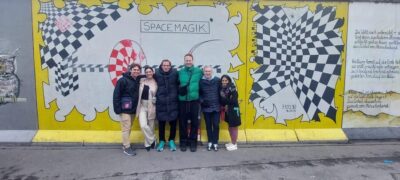
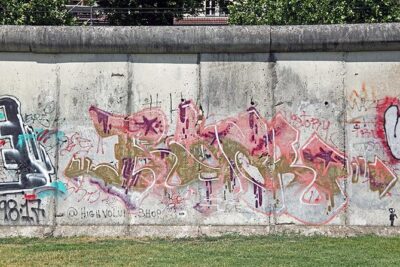
The tour ends at the East Side Gallery, where you see the longest remaining section of the Berlin Wall. The section is famous for its murals, many of which became symbols of freedom after the Wall fell.
This is the most colorful part of the route, but it works best after the earlier stops. By the time you arrive, you have learned what the Wall controlled, how people tried to escape, and how protests helped bring it down. The paintings then feel like a new chapter, showing how a barrier became a public place for art and political expression.
The scheduled visit lasts about 20 minutes. That gives you time to walk along a section and hear the guide’s explanation, but it may not be enough for a detailed look at every mural. If you want to study the artwork or take many photographs, plan to stay after the tour ends.
The endpoint is listed at East Side Gallery, 10243 Berlin. This is not a return to Potsdamer Platz. The guide can advise you about public transport from the end of the tour, which is helpful if you are heading to another part of Berlin.
What the $27.87 price includes
At $27.87 per person, the cost is reasonable for a three-and-a-half-hour guided route covering several separated sites. You are paying mainly for the Italian-speaking guide and the time saved in planning the sequence.
The value is strongest if you want historical context. You could visit the Wall Memorial, Alexanderplatz, Karl-Marx-Allee, and East Side Gallery on your own, but you would need to research the connections and manage the transport. This tour handles the order and gives you one continuous explanation.
The price does not cover public transportation, meals, drinks, or entry to paid attractions. Since the TV Tower is visited only from outside, there is no tower admission to consider. Bring your own water and arrange a transport ticket separately.
The tour is often booked about 24 days ahead. That pattern suggests you should not leave it until the last morning if you need an Italian guide on a particular date. Confirmation arrives when you book, and free cancellation is available until 24 hours before the start time. Cancellations inside that window are not refunded.
Who will get the most from this route
This experience suits you if you want Berlin’s Cold War story explained in Italian and prefer a guide to independent research. It is also a good match if you want to see several areas in one morning rather than spend a full day building your own route.
The tour is particularly useful for:
- Italian-speaking visitors who want detailed explanations in their strongest language
- First-time Berlin visitors who need help connecting sites across the city
- Adults and older children interested in politics, architecture, and recent European history
- Anyone who wants the Berlin Wall Memorial and East Side Gallery in the same outing
- People comfortable walking for several hours and using public transportation
It may be less suitable if you want to enter the TV Tower, spend a long time at each mural, or explore every stop at your own pace. It is also not the right choice if you need hotel pickup or an all-inclusive excursion.
The available information says service animals are allowed, the tour is near public transportation, and most people can participate. Since it is a walking route with several outdoor stops, check your own comfort with the duration before booking.
Should you book the Italian Cold War and Berlin Wall tour?
Book it if you want a focused, well-organized introduction to Berlin’s divided past, especially in Italian. The strongest parts are the Berlin Wall Memorial, the explanation of Nordbahnhof’s ghost stations, and the way Alexanderplatz, Karl-Marx-Allee, and the East Side Gallery fit into one story.
Guide Antonella has been singled out for bringing the emotions of 1989 to life, which points to the tour’s best quality: personal, clear explanation rather than a bare list of dates. The consistently high rating, with 81 reviews and a 100 percent recommendation rate, also supports choosing it for a language-specific experience.
Skip it if you want a slow museum day, private guiding, or included transport. For a modest price, though, this is a practical way to put Berlin’s Cold War sites in order and leave with a clearer sense of how the Wall shaped the whole city.
FAQ
Where does the tour begin?
It begins at Potsdamer Platz 10, 10785 Berlin, near the Potsdamer Platz S-Bahn and U-Bahn station. Look for the blue bicycle and the Vive Berlin Tours flag.
What time does the tour start?
The start time is 10:00 a.m.
How long does the tour last?
The tour lasts approximately three hours and 30 minutes.
Is the tour conducted in Italian?
Yes. The experience includes an Italian-speaking guide.
Which Berlin Wall sites are included?
The route includes the Berlin Wall Memorial and the East Side Gallery, as well as Cold War-related stops at Nordbahnhof, Alexanderplatz, the Berlin TV Tower, and Karl-Marx-Allee.
Does the tour include transportation?
No. Transportation to and from the attractions is not included. The guide can advise you about public transportation at the end of the tour.
Does the tour visit the Berlin TV Tower interior?
No. The TV Tower is visited from outside only.
Where does the tour end?
The tour ends at the East Side Gallery in Berlin, postal code 10243. The guide can suggest public transport for your onward journey.
Just added in Berlin
- Private One way Airport Transfer Berlin Airport To Berlin★ 3.5 · 17 reviews
- Private Walking Tour: Berlin Wall, Cold War and Checkpoint Charlie★ 5.0 · 37 reviews
- Modern Berlin Private Walking Tour: Diverse, Vibrant and Exciting German Capital★ 5.0 · 13 reviews
- City Explorer: Potsdam Private Day Trip★ 4.5 · 10 reviews
- Private Day Trip to Potsdam from Berlin by Train★ 4.5 · 27 reviews
- Berlin Private Custom 5-Hour Tour by Car★ 5.0 · 30 reviews
- Private Half-Day Sightseeing Tour in Berlin★ 3.5 · 6 reviews
- Berlin Private Custom Tour in a Minivan, East and West★ 5.0 · 123 reviews
Berlin Wall & Cold War Tours, compared.

Skip-the-Line: Berlin Wall Museum at Checkpoint Charlie
Read our review →
Cold War, Berlin Wall, Spies and the East Side Gallery
Read our review →
Guided Bike Tour of the Berlin Wall and Third Reich
Read our review →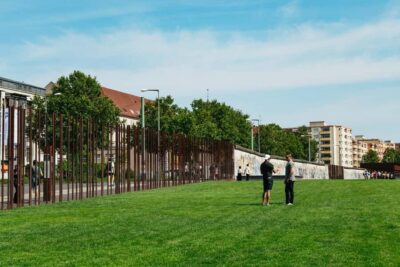
East Berlin and the Berlin Wall 2-Hour Walking Tour
Read our review →Browse the lists this tour appears in