
Reviewed · BERLIN WALL & COLD WAR TOURS
Explore The Berlin Wall: Cold War Berlin and Behind the Berlin Wall
Berlin’s Wall is scattered across the city, and this tour helps you find the pieces that matter. In about three hours, you move from the preserved death strip at the Berlin Wall Memorial to Checkpoint Charlie, a watchtower, and the rebuilt heart of Potsdamer Platz. The sharpest part is how the guide links each place to real escape attempts and daily life under Communist rule.
I like two things here. First, the route shows both the physical remains and the huge changes that followed reunification. Second, guides including Ciaran, Eugen, Paul, Steve, and Aurel bring old photographs, personal connections, and clear explanations to a difficult subject. The main consideration is pace: you cover a lot of ground, often by public transport and on foot, so comfortable shoes and a willingness to keep moving matter.
Key points
- The Berlin Wall Memorial offers the tour’s strongest look at the original wall system, including a preserved cross-section of the wall and death strip.
- Small groups make questions easy, with the published group limit listed as 15 in one place and 21 in another, so confirm the current size when booking.
- Escape stories give the history a human face, especially at sites linked to tunnels, crossings, and failed attempts.
- The route shows a changed Berlin, from empty border land at Potsdamer Platz to a modern business and entertainment district.
- Public transport is part of the experience, helping you connect separate Wall locations rather than seeing one isolated fragment.
- The price is modest for a guided history tour, at $32.67 per person, with no separate admission charge at most stops.
Why this Berlin Wall route works
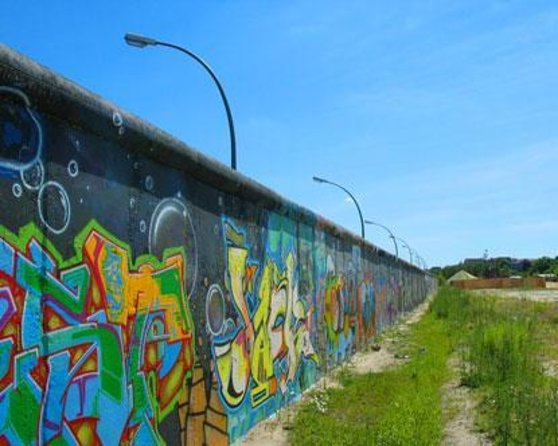
The Berlin Wall is not one single attraction. It was a long border system, and most of it disappeared after 1989. Today, fragments sit beside apartment blocks, offices, roads, museums, and busy squares. That can make a self-guided visit feel scattered.
This tour solves that problem by joining several surviving sections and former border sites into one morning. You do not spend your time hunting for a piece of concrete that may be less meaningful than expected. Instead, you get the setting, the political background, and the stories that explain why each stop matters.
The route also avoids treating the Wall as a simple Cold War postcard. It connects the division of Berlin to the lives of people who tried to cross, the authorities who stopped them, and the physical changes that followed reunification.
The guides are central to the experience. Ciaran is praised for bringing old photographs and family connections into the discussion. Eugen is known for answering questions in detail and using the subway and tram to connect sites. Paul explains the tangled politics in a clear way, while Steve brings a public historian’s approach to the differences between East and West Berlin. Aurel has a personal connection to the subject and explains the political conditions with care.
The exact guide varies, so you should not book expecting one particular person. Still, the range of guide styles is a strength. This is not a tour built around a memorized speech. The guides are expected to answer questions, and that matters when you want to understand why the Wall was built, how it was enforced, and why it finally fell.
Other divided-city history in Berlin:
- Berlin: Third Reich and Cold War 2 Hour Walking Tour
★ 4.9 · 6,830 reviews - Berlin’s Best: 2 Hour Walking Tour Third Reich and the Cold War
★ 5.0 · 5,486 reviews - Skip-the-Line: Berlin Wall Museum at Checkpoint Charlie
★ 4.1 · 2,041 reviews
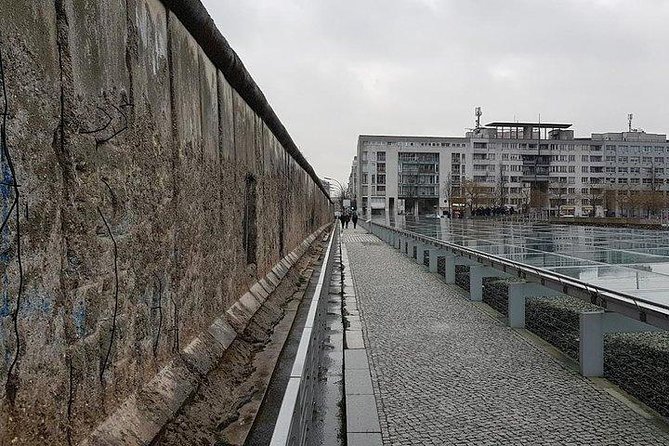
The Berlin Wall Memorial and the preserved death strip
The tour spends about 1 hour and 20 minutes at the Berlin Wall Memorial, making it the main stop of the morning. That generous amount of time is useful. The site is more than a short wall fragment and a photo opportunity.
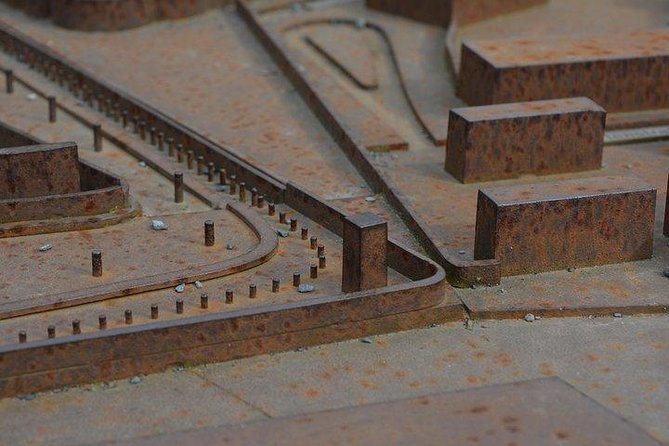
Here, you can see the only preserved complete cross-section of the Berlin Wall and its death strip. That cross-section helps you understand the Wall as a layered security system rather than a simple barrier. The border included more than the concrete section most people picture. Its design created controlled space between East and West Berlin and made crossing extremely dangerous.
This is also the place where the emotional side of the subject comes through most strongly. The memorial recalls people who died while trying to reach the West, along with daring escapes that succeeded. A good guide can use the physical remains to explain how those attempts worked and why some failed.
I would give this stop your full attention. It is the part of the route best suited to careful questions and a slower pace. If you already know the broad Cold War timeline, this is where the tour can add detail and human scale. If the subject is new to you, it gives you the framework needed for the rest of the morning.
The memorial also helps correct a common misunderstanding. The Wall did not merely divide a city into two tidy halves. It cut through streets, neighborhoods, families, workplaces, and ordinary routines. The preserved border line lets you see how an international conflict became a daily fact for Berlin residents.
Checkpoint Charlie and the 1961 standoff
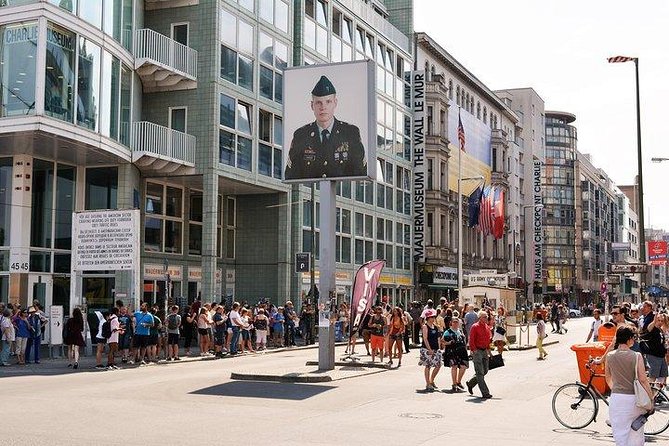
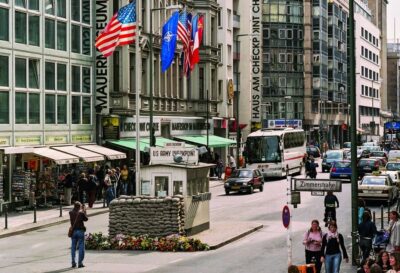
Checkpoint Charlie takes only about 15 minutes, but its importance is out of proportion to the stop’s length. This was the best-known crossing point between East and West Berlin and the scene of both escape attempts and a direct confrontation between American and Soviet forces in autumn 1961.
You should expect this to be a quick orientation stop rather than a long museum visit. The value comes from the guide’s explanation of what happened here and why the crossing became such a powerful Cold War symbol.
Checkpoint Charlie can feel more commercial and crowded than the Wall Memorial. That is part of the point. The site has become a famous name, but the modern surroundings can make it hard to picture the controlled crossing that once stood here. A strong explanation restores that context.
Ask questions if you want to understand the difference between a border crossing for approved traffic and an escape attempt. The tour’s focus on successful and failed escapes adds meaning to the location. It also shows why the Wall was not simply a line that people could casually step across.
The Topography of Terror and one surviving fragment
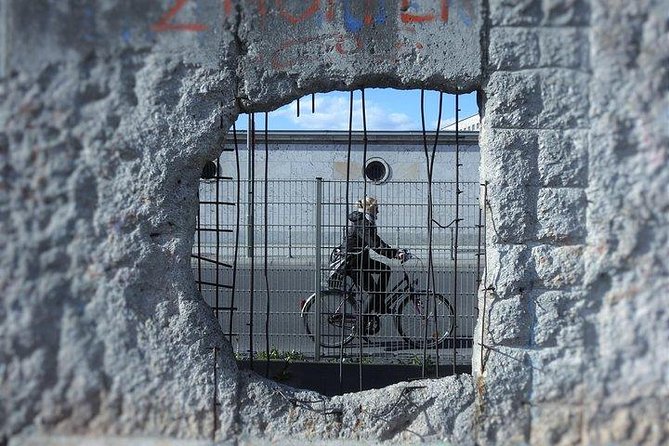
The stop at the Topography of Terror lasts about 10 minutes. That is brief, but it places the Wall in a wider story of Berlin’s political violence.
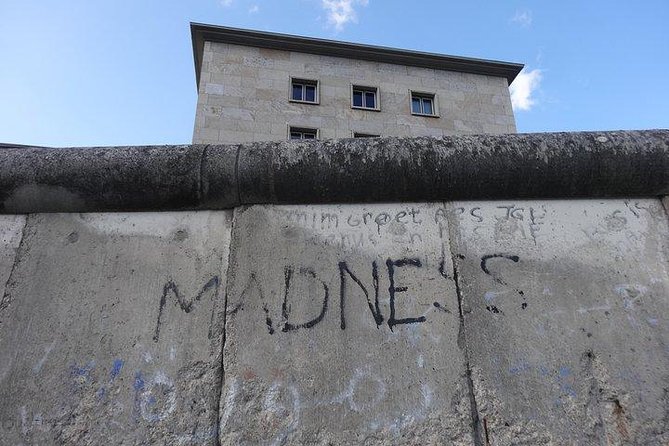
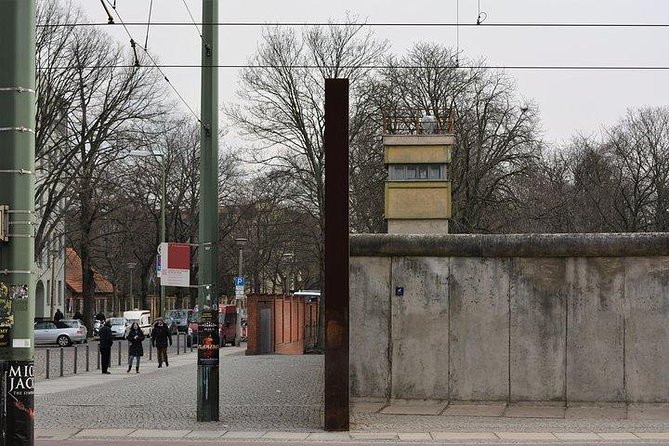
The surviving section on Niederkirchnerstrasse is the only remaining fragment of the Wall in this part of the city. It sits beside the former Luftwaffe headquarters, a building later used during the East German period as the House of Ministries.
That setting creates a striking contrast. The same part of Berlin carries evidence from different periods of dictatorship and division. The Wall fragment is not isolated from the city’s political past. It sits beside buildings tied to state power, war, and government.
The stop also connects to one of the more remarkable escapes into West Berlin. You may not spend long here, but the story gives the concrete fragment a specific purpose. Instead of seeing another remnant, you see a place where geography, government buildings, and personal risk came together.
Because the visit is short, listen closely and save broader questions for the walking sections. The guide’s role is especially important here, since the fragment itself does not explain much without context.
Same base, a different kind of day out:
- Berlin: Reichstag, Dome and Government District Guided Tour
★ 4.7 · 18,288 reviews - Berlin: 1-Hour City Tour by Boat with Guaranteed Seating
★ 4.3 · 16,993 reviews - Berlin: Boat Tour Along the River Spree
★ 4.4 · 11,252 reviews - Discover Berlin Half-Day Walking Tour
★ 5.0 · 9,624 reviews
A rare GDR watchtower near the former border
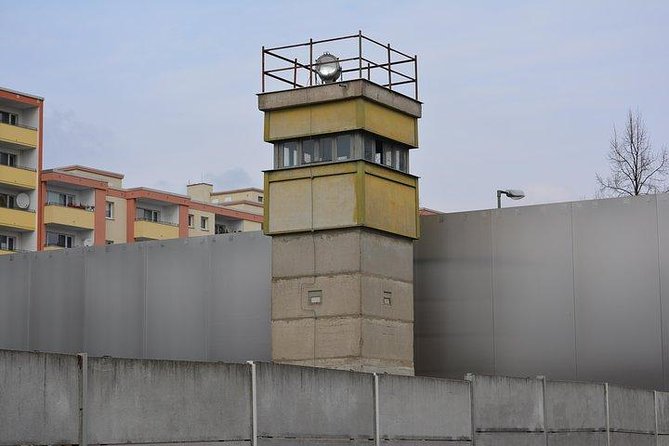
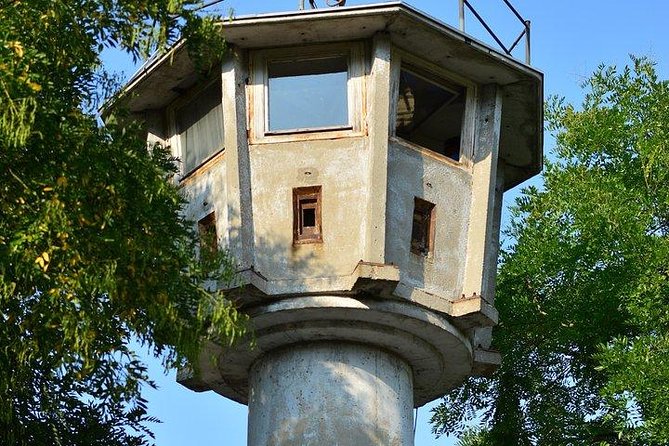
The GDR watchtower is one of the route’s more unusual stops. It is the last surviving BT-variant watchtower that once formed part of the defenses surrounding West Berlin. A private initiative saved it, and you may be able to ascend it.
That possibility is worth noting, but it is not guaranteed by the information provided. Treat the tower as an important exterior stop first, with access dependent on the conditions that day.
The tower helps you picture the surveillance system around West Berlin. Most visitors recognize the wall itself, but watchtowers, patrol routes, and observation points were just as important to border control. Seeing one of the remaining towers makes that system easier to understand.
This stop lasts about 15 minutes. It is also a good reminder that the Wall was not only a concrete slab through the city center. Its security structures surrounded West Berlin and shaped the city’s edges.
Potsdamer Platz and the city rebuilt
Potsdamer Platz gets around 10 minutes, yet it provides the route’s clearest before-and-after image. During the division, this was a desolate area within and beside the death strip. Today, it is a high-rise business and entertainment quarter.
The change is easy to grasp because the modern buildings make such a sharp contrast with the border zone that once occupied the area. You are not simply looking at a monument to the past. You are looking at a city that filled in an empty space after reunification.
I like this part of the route because it keeps the story from ending at tragedy. The tour shows what happened after the Wall came down and how quickly Berlin’s center changed. At the same time, the short visit means you will not get a long architectural tour of Potsdamer Platz. Its purpose is the transformation, not detailed building analysis.
Bring a camera if you want a useful comparison point, especially if your guide has old photographs. Ciaran, for example, has used family images from visits to the Wall in the early 1980s to show how the same places look now. That kind of side-by-side view can make the changes at Potsdamer Platz and elsewhere much easier to grasp.
A history tour that uses buses, trains, and trams
This is not a stationary walking talk. The route covers several parts of Berlin, and guides have used the subway and tram to connect them. That saves time and lets you see more than one section of the former border.
It also means you should plan for movement. One guide was specifically praised for covering a lot of ground, and another tour included several types of public transportation. The exact transport sequence is not specified, so do not expect a fixed vehicle-by-vehicle plan.
The transport is useful in another way. Berlin’s division was spread across the city, and moving between sites helps you understand that scale. You are not being shown a single reconstructed exhibit. You are traveling through the city where the border once operated.
The tradeoff is simple: the more ground you cover, the less time you have at each smaller stop. The Memorial gets the longest visit, while Checkpoint Charlie, the Topography of Terror, the watchtower, and Potsdamer Platz are shorter. If you prefer one museum explored at length, this is not that kind of outing.
Price, group size, and what to bring
At $32.67 per person, the tour offers good value if you want a guided route through several separate Wall locations. Most stops have no admission charge, and the guide’s expertise is the main thing you are paying for. The watchtower is the one listed stop with admission included.
The price is less compelling if you only want to photograph Checkpoint Charlie or see a single remaining wall section. You can reach many Berlin sites independently. The tour earns its cost by saving research time and explaining how the places connect.
The meeting point is Birchys Berlin Tours, Ebertstraße 24, 10117 Berlin. The start time is 10:00 am, and the activity ends back at the meeting point. Confirmation is provided when you book, and you can show a paper or electronic voucher.
The supplied details list a maximum of 15 people in one place and a maximum of 21 in another. That inconsistency is worth checking before you reserve. Either way, it is presented as a relatively small group, not a large coach outing.
Wear shoes suited to walking and bring water. Snacks and bottled water are not included. Most people can take part, and service animals are allowed. The tour is near public transportation, which fits the route’s use of Berlin’s transit system.
Free cancellation is available up to 24 hours before the start time for a full refund. Changes or cancellations inside that 24-hour window are not accepted for a refund. The tour also needs a minimum number of participants. If that minimum is not reached, you are offered another date or experience, or a full refund.
Who will get the most from this tour
I would choose this tour if you want the Cold War explained through places rather than a book or a single museum. It is especially suited to people interested in 20th-century politics, escape stories, the history of divided cities, and the way Berlin changed after 1989.
It also works well for families with older children and teenagers. One guide used old photographs and lively explanations to keep a teenage participant interested. The subject is serious, but the tour is not presented as a dry lecture.
You will get the most from it if you already know a little about World War II and the Cold War, since the route moves through several political layers. Beginners are welcome, but the pace and amount of information may feel brisk.
I would skip it if you dislike walking, public transportation, short stops, or outdoor history sites. The tour is not designed around indoor comfort, food breaks, or long free time. Cold weather can also make the morning harder, so dress for the forecast.
Should you book the Berlin Wall tour?
Book it if you want a clear, human explanation of Berlin’s division and do not want to spend hours finding scattered remains yourself. The Memorial, escape stories, watchtower, and Potsdamer Platz create a strong three-hour arc from border control and loss to reunification and rebuilding.
The best reason to choose it is the guide-led context. Ciaran, Eugen, Paul, Steve, and Aurel are all associated with a style that welcomes questions and explains difficult material in plain terms. Confirm the group size and prepare for steady walking, then this is a strong-value choice for anyone who wants more than a quick photo of the Wall.
FAQ
How long is the Berlin Wall tour?
The experience lasts approximately three hours.
What time does the tour start?
The tour starts at 10:00 am.
Where does the tour meet?
It starts at Birchys Berlin Tours, Ebertstraße 24, 10117 Berlin, Germany.
Where does the tour end?
The activity ends back at the meeting point.
Is admission included?
Admission is free at the Berlin Wall Memorial, Checkpoint Charlie, the Topography of Terror, and Potsdamer Platz. Admission to the GDR watchtower is included.
Is the tour offered in English?
Yes. The experience is offered in English.
Can I cancel for a full refund?
Yes, if you cancel at least 24 hours before the experience start time. Cancellations or changes made less than 24 hours in advance are not accepted for a refund.
Just added in Berlin
- Private One way Airport Transfer Berlin Airport To Berlin★ 3.5 · 17 reviews
- Private Walking Tour: Berlin Wall, Cold War and Checkpoint Charlie★ 5.0 · 37 reviews
- Modern Berlin Private Walking Tour: Diverse, Vibrant and Exciting German Capital★ 5.0 · 13 reviews
- Private Day Trip to Potsdam from Berlin by Train★ 4.5 · 27 reviews
- City Explorer: Potsdam Private Day Trip★ 4.5 · 10 reviews
- Berlin Private Custom 5-Hour Tour by Car★ 5.0 · 30 reviews
- Private Half-Day Sightseeing Tour in Berlin★ 3.5 · 6 reviews
- Berlin Private Custom Tour in a Minivan, East and West★ 5.0 · 123 reviews
Berlin Wall & Cold War Tours, compared.

Skip-the-Line: Berlin Wall Museum at Checkpoint Charlie
Read our review →
Cold War, Berlin Wall, Spies and the East Side Gallery
Read our review →
Guided Bike Tour of the Berlin Wall and Third Reich
Read our review →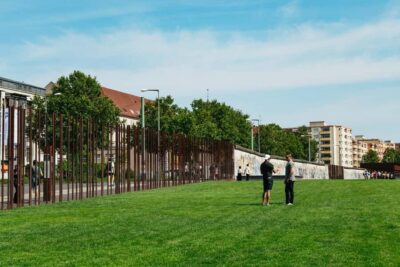
East Berlin and the Berlin Wall 2-Hour Walking Tour
Read our review →Browse the lists this tour appears in