Reviewed · WALKING TOURS
Queer Berlin Walking Tour
Berlin’s queer story is not tucked away in one museum. It runs through Schöneberg streets, old nightlife addresses, the Tiergarten, memorials, and the lives of figures from Friedrich the Great to Klaus Wowereit. This walking tour gives you that wider picture, with history that reaches far beyond a standard sightseeing route.
I like the focus on Magnus Hirschfeld and the Institute for Sexual Science, a remarkable part of Berlin’s past that many visitors miss. I also like the balance between famous names, such as Marlene Dietrich and Christopher Isherwood, and lesser-known stories about lesbian bars, trans people, persecution, and daily life. The main drawback is the length: 3.5 hours on foot can feel demanding, especially in poor weather or if you are carrying a heavy bag.
Key points to know before you book
- Schöneberg is the main stage: Walk through Berlin’s best-known queer neighborhood and see sites linked to nightlife, cabaret, and LGBTQIA+ life.
- The former Eldorado adds a vivid nightlife connection: Learn about one of the city’s oldest queer and trans bars.
- Magnus Hirschfeld gets proper attention: Hear how his Institute for Sexual Science offered support and challenged narrow ideas about gender and sexuality.
- The Tiergarten changes the mood: This famous meeting place brings the tour into the open air, with a more personal look at queer life and persecution.
- The story includes both courage and cruelty: You will hear about Section 175, Nazi persecution, and the memorial to homosexual people sent to concentration camps.
- The guides shape the experience: Past guides including Tom, Tobi, Finn, Beth, Jared, and Kyle have been praised for humor, care, clear explanations, and useful answers.
Why queer Berlin is best understood on foot
This is not simply a tour of gay bars. It is a walk through the political and social history of Berlin, using real streets and former meeting places as the setting. That matters because queer life here has never been separate from the city’s larger story. Cabaret, censorship, war, division, gentrification, protest, and modern politics all overlap.
You begin in or near Schöneberg, depending on the option and meeting point booked. The exact starting place can vary, so check your confirmation rather than assuming the group meets at one fixed address. At the meeting point, look for the guide wearing a blue Original Berlin Walks name badge.
The walking format suits Berlin well. Many of the important places are not grand monuments. They are former businesses, street corners, residential addresses, and public spaces. A guide helps you understand what is no longer visible, which is often the key to this subject.
Other walks around Berlin:
- Discover Berlin Half-Day Walking Tour
★ 5.0 · 9,624 reviews - Berlin: Third Reich and Cold War 2 Hour Walking Tour
★ 4.9 · 6,830 reviews - Berlin: Discover Berlin Walking Tour
★ 4.9 · 5,998 reviews
Schöneberg and the old queer nightlife
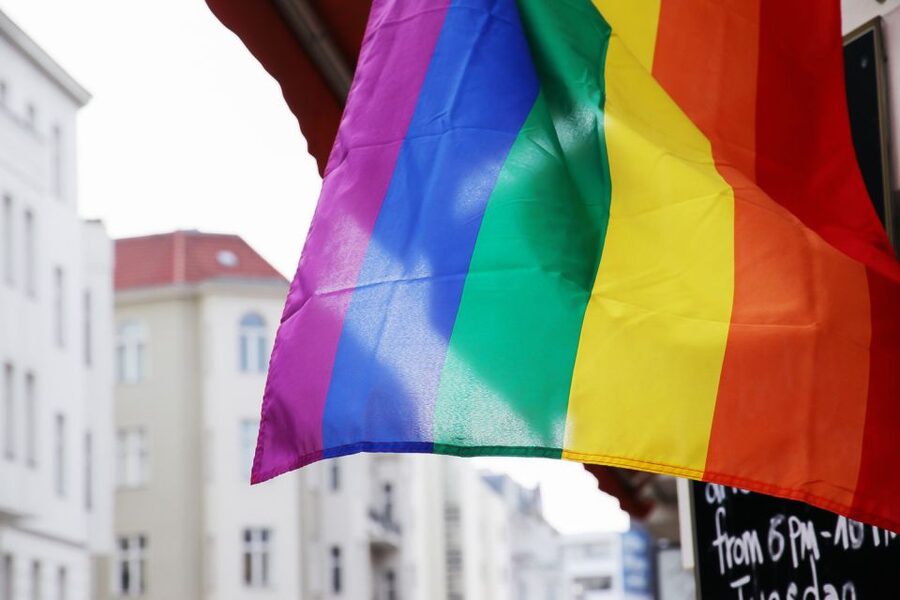
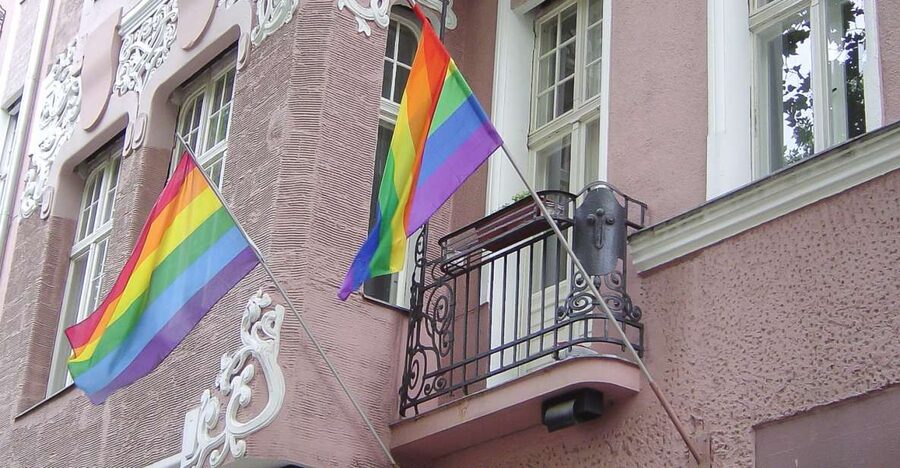
Schöneberg has long been closely linked with Berlin’s queer identity. On this part of the walk, you hear how the neighborhood became known for gay and lesbian nightlife, and how its bars and clubs gave people places to meet, work, perform, and build community.
The former Eldorado is one of the most useful stops because it turns an abstract story about nightlife into a physical address. It was one of Berlin’s oldest queer and trans bars, and its name connects you with an era when the city was famous for cabaret, performance, and unconventional social life.
This is also where Marlene Dietrich and Christopher Isherwood help bring the period to life. Dietrich is linked with Berlin’s performing world, while Isherwood chronicled its nightlife and cabaret scene. The tour also connects these surroundings with the work of artist Otto Dix, whose images captured the sharp edges of Weimar-era Berlin.
Do not expect every historic building to look as it did in the past. That is part of the point. Berlin has changed dramatically, and some former venues are gone or used for other purposes. The guide fills in those gaps without asking you to treat the street as a preserved museum.
The tour also makes room for women’s history. That is important because queer walking tours can sometimes focus too heavily on gay male figures. This one includes former lesbian bars and the politics of inclusion and resistance, giving you a broader view of the community.
Magnus Hirschfeld and the Institute for Sexual Science
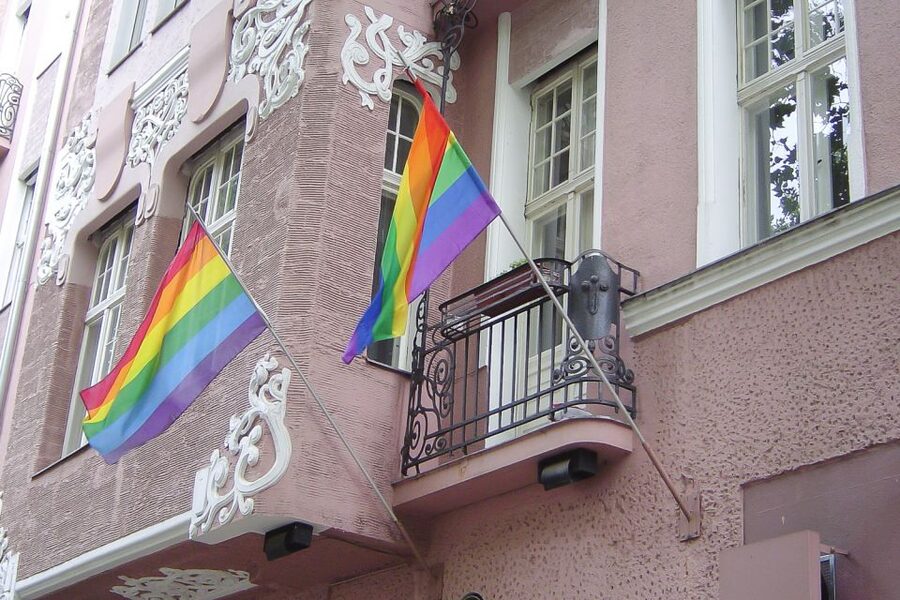
Magnus Hirschfeld is one of the most important figures on this walk. His work gives you a way to understand Berlin’s role as a pioneer in gay and lesbian rights and in early research into sexuality and gender.
Hirschfeld helped openly queer and transgender people find support through his Institute for Sexual Science. The institute was shut down in 1933, and its library was destroyed during the Nazi book burnings. Those facts make the subject painfully concrete: books, research, records, and personal histories were not just ignored. They were deliberately attacked.
You will not visit an intact institute, because it no longer exists in that form. Instead, the guide explains what the institution did and why it mattered. That approach is valuable because it shows both the progress made in Berlin and how quickly that progress could be crushed.
I find this section especially useful if you know Berlin mainly through its clubs and nightlife. It adds the work of doctors, researchers, organizers, and advocates to the familiar story of performers and artists. You see queer history as social action, not only as entertainment.
The tour also places Hirschfeld’s work beside Section 175, the German penal code provision that criminalized male homosexuality for decades after World War II. This helps explain why Berlin’s queer culture cannot be reduced to a simple tale of early freedom. The city could be pioneering and dangerous at the same time.
Memorials, Nazi persecution, and the harder parts of the story
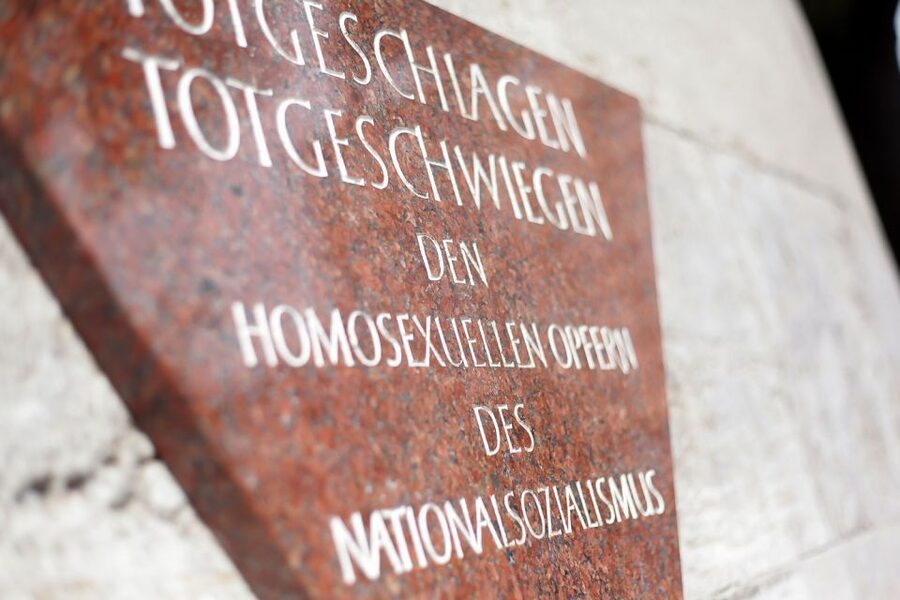
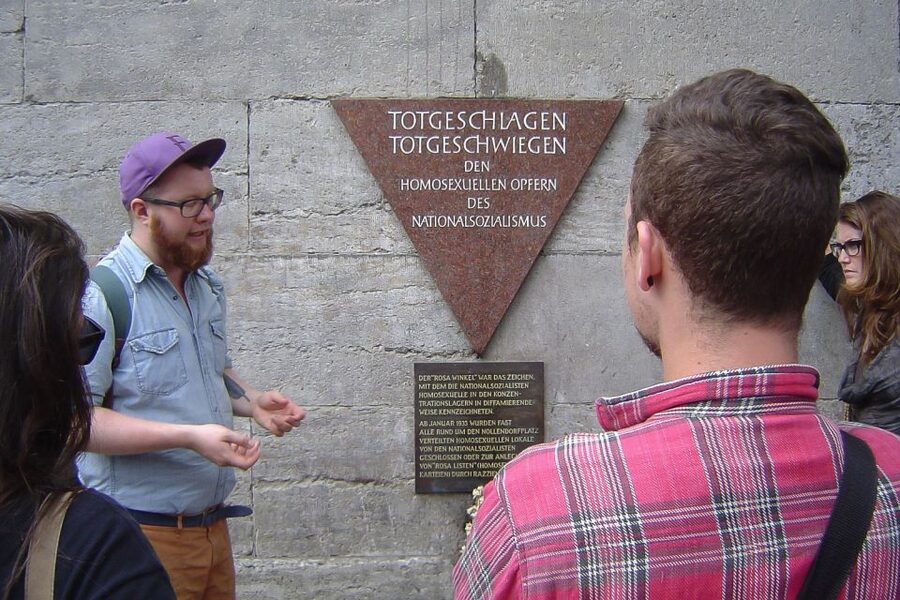
The walk includes a poignant memorial to homosexual people persecuted by the Nazis and sent to concentration camps. This is one of the points where the tone changes. The cabaret stories and colorful nightlife give way to state violence, imprisonment, and loss.
That contrast is useful. A good historical tour should not present queer Berlin as a continuous march toward greater freedom. The city’s past includes bold experimentation, legal repression, Nazi persecution, and the long work of rebuilding community afterward.
You also hear about an openly gay Nazi leader, an unsettling subject that complicates easy assumptions about identity and politics. The broader lesson is that a person’s sexuality does not automatically determine their beliefs or their actions. The guide uses this story to make the history less tidy and more human.
The memorial works best when you allow yourself a quiet pause. This is not just another photo stop. It gives the earlier stories about bars, writers, and researchers a darker frame and helps explain what was at stake for the people who lived through the period.
Same base, a different kind of day out:
- Berlin: Reichstag, Dome and Government District Guided Tour
★ 4.7 · 18,288 reviews - Berlin: 1-Hour City Tour by Boat with Guaranteed Seating
★ 4.3 · 16,993 reviews - Berlin: Boat Tour Along the River Spree
★ 4.4 · 11,252 reviews - Berlin: Hop-on Hop-off Bus Tour with Live Commentary
★ 4.3 · 8,579 reviews
The Tiergarten and Berlin’s public queer life
The route continues through the Tiergarten, Berlin’s best-known gay meeting spot. Here the tour moves from buildings and former businesses into a public park setting, where queer life has also taken place through encounters, coded behavior, community, and risk.
The park is described in the context of the Berlin Wall, which gives this section another layer. Berlin’s division shaped where people could go, how they met, and how the city’s neighborhoods developed. You are not only learning about queer history, but also about the way the Cold War altered Berlin itself.
This part of the walk can feel less defined than the Schöneberg stops. There may not be a clearly marked attraction at every point, so your enjoyment depends heavily on listening to the guide and imagining the past. If you prefer famous buildings and indoor exhibits, this may feel less satisfying. If you enjoy reading a place through stories, it is one of the tour’s most revealing sections.
The route also connects past figures with recent public life, including former Berlin mayor Klaus Wowereit. His presence in the story shows how queer identity moved from something discussed in private or coded language into a visible part of city politics.
A guide-led experience with room for questions
The guide is a major part of the value here. Past guides have included Tom, Tobi, Finn, Beth, Jared, and Kyle, and the strongest common thread is their ability to explain complicated material in a clear, friendly way.
Tom has been praised for combining humor with careful answers and for balancing LGBTQIA+ history with the larger history of Berlin. Tobi has led a tour covering many different parts of queer Berlin. Finn was described as personable, while Beth brought both historical detail and attention to current queer life.
The tour is not presented as a lecture with no room for conversation. Guides have answered questions, adjusted to practical problems, and helped participants connect again if someone arrived late. That flexibility matters during a long walking tour.
You may also get useful suggestions for a night out. The tour is historical first, but the subject naturally leads to questions about current queer culture and nightlife. Treat any recommendations as a helpful starting point rather than the main reason to book.
Because the group can include people with different levels of knowledge, expect a mix of basic context and more unusual stories. You do not need to arrive as an expert. A curious attitude will serve you better than a long list of names.
What the 3.5-hour walk feels like
Three and a half hours is enough time to cover several neighborhoods and historical periods, but it is still a long walk. Bring comfortable shoes, water, and a small snack. One past participant specifically advised packing light and carrying a cool drink, sensible advice for a route that keeps moving through city streets and park paths.
The tour runs in all weather. Berlin rain, summer heat, and cold wind can change the experience, so check the forecast and dress for the conditions. There is no promise of a long indoor break, and entrance fees are not included.
Public transport is also not included if it is needed. The route may work mostly on foot, but you should keep a transport ticket or payment option available rather than assuming every connection is covered by the tour price.
The exact meeting point varies with the option you choose. That is a small but important planning detail, especially if you are booking close to another activity. Allow time to find the starting place and look for the blue name badge.
Is $23 a fair price?
At $23 per person, this is good value if you want a focused history walk rather than a general city tour. You are paying for 3.5 hours with a live English- or German-speaking guide, access to stories tied to real locations, and a subject that is difficult to research quickly on your own.
The value is strongest for visitors who want context. The former Eldorado, Hirschfeld’s institute, Section 175, Nazi persecution, lesbian bars, the Tiergarten, and modern politics form a broad subject. A short museum visit could cover one part of that story, but not the connections between them.
There are limits. The price does not include public transport or entrance fees, though the main experience is the walk itself. You also should not expect admission to every former site or a visit inside a preserved historic venue. Many stops are explained from the street.
Free cancellation up to 24 hours before the tour and the option to reserve now and pay later make the booking less rigid. Those terms are useful if your Berlin plans are still shifting, but you should still check the exact conditions when booking.
Who should book this queer Berlin walk?
I would recommend it most strongly to:
- First-time Berlin visitors who want a social history route beyond the usual monuments
- LGBTQIA+ visitors looking for historical and current context
- Anyone interested in Magnus Hirschfeld, Weimar-era cabaret, or Berlin nightlife
- People who enjoy stories attached to streets, parks, and former buildings
- Visitors who want both gay and lesbian history included
- Repeat visitors who have already seen the main sights and want a more focused theme
You may want to skip it if you dislike long walks, outdoor tours in uncertain weather, or history that includes persecution and death. It is not a party crawl, and it is not mainly about current bars and clubs.
My verdict on the Queer Berlin Walking Tour
Book this tour if you want to understand why Berlin became such an important queer city, and how fragile that progress has been. The best parts are the connections between Schöneberg nightlife, Hirschfeld’s pioneering work, Nazi destruction, the Tiergarten, and modern public life.
The tour is strongest when the guide adds human detail and makes space for questions. Guides such as Tom and Tobi have been especially well regarded for clear explanations, humor, and thoughtful handling of practical issues. Pack light, wear comfortable shoes, and arrive ready to walk in the weather.
For $23, I think this is a worthwhile choice for anyone who wants more than a list of former bars. You will leave with a clearer sense of the people, places, risks, and acts of courage that shaped queer Berlin.
FAQ
How long does the Queer Berlin Walking Tour last?
The tour lasts 3.5 hours.
What languages are available?
The tour is offered in English and German.
How much does the tour cost?
The listed price is $23 per person.
What is included in the price?
An English- or German-speaking live guide is included.
Are public transport and entrance fees included?
No. Public transport, if needed, and entrance fees are not included.
Does the tour run in bad weather?
Yes. The tour runs in all weather, so dress appropriately and bring suitable shoes.
Where does the tour meet?
The meeting point may vary depending on the option booked. Your guide will be wearing a blue Original Berlin Walks name badge.
Just added in Berlin
- Private One way Airport Transfer Berlin Airport To Berlin★ 3.5 · 17 reviews
- Private Walking Tour: Berlin Wall, Cold War and Checkpoint Charlie★ 5.0 · 37 reviews
- Modern Berlin Private Walking Tour: Diverse, Vibrant and Exciting German Capital★ 5.0 · 13 reviews
- Private Day Trip to Potsdam from Berlin by Train★ 4.5 · 27 reviews
- City Explorer: Potsdam Private Day Trip★ 4.5 · 10 reviews
- Berlin Private Custom 5-Hour Tour by Car★ 5.0 · 30 reviews
- Private Half-Day Sightseeing Tour in Berlin★ 3.5 · 6 reviews
- Berlin Private Custom Tour in a Minivan, East and West★ 5.0 · 123 reviews
Walking Tours, compared.

Third Reich Berlin: Hitler and WWII Walking Tour
Read our review →