
Reviewed · THIRD REICH & WWII TOURS
Nuremberg: Historischer Kunstbunker WWII Art Bunker Tour
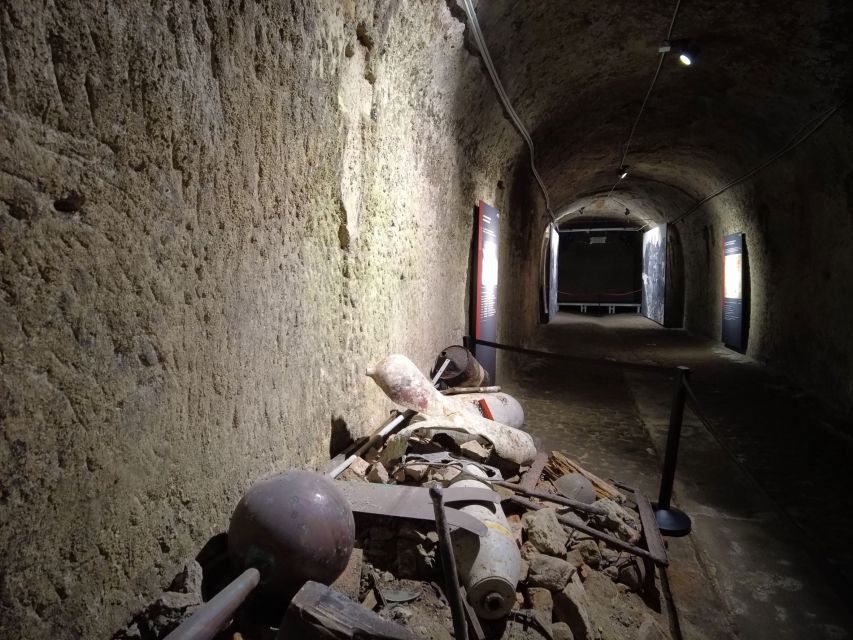
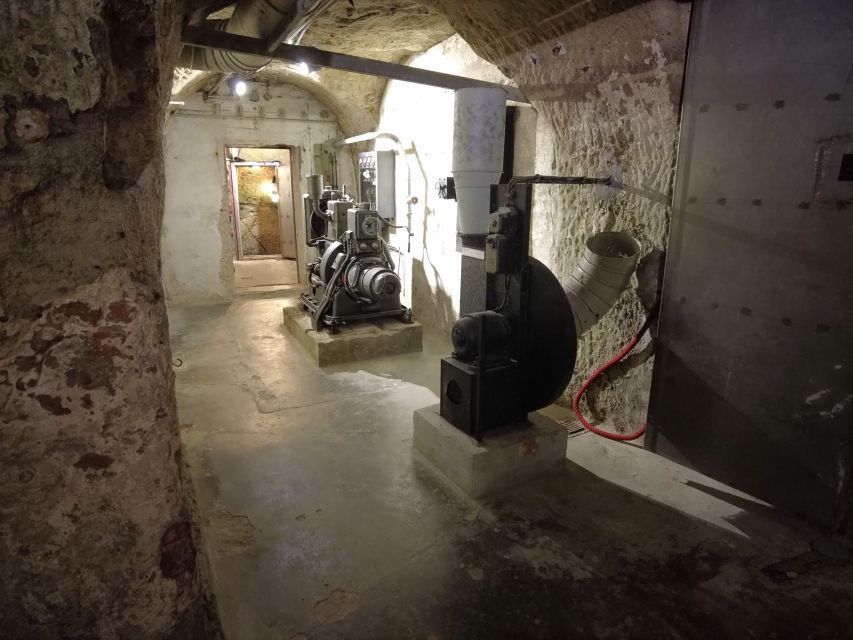
Nuremberg’s Historischer Kunstbunker is not a polished museum with broad galleries. It is a cold, narrow network beneath the Old Town, where priceless art was kept safe while the city above burned. The setting does much of the teaching: rough cellar walls, low passages, and the knowledge that this underground space once held treasures such as the Veit Stoss Altarpiece and the Frauenkirche’s automaton clock.
I like the way the tour connects art preservation with Nuremberg’s wartime destruction, rather than treating the bunker as a simple underground curiosity. I also like the local angle. Guides such as Andreas, Michael, Marianne, Ralf, and Jana have been praised for clear explanations, humor, and personal knowledge of the city. The main drawback is physical: the cellar stays around 10 to 12°C, and groups can feel crowded in the tighter spaces.
Key points to know before entering
- Art saved below the Old Town: Learn how important works linked to Albrecht Dürer, Veit Stoss, the Codex Manesse, and the Frauenkirche were protected from bombing.
- A real medieval cellar: The tunnels began as spaces used to store beer before being adapted for wartime protection.
- A powerful city story: The tour explains how bombing destroyed about 90 percent of Nuremberg’s medieval Old Town and how the city was rebuilt.
- One hour, with plenty of time afterward: The short tour fits neatly into a day of sightseeing around the Old Town.
- Cold and confined conditions: Wear warm clothing, and avoid this tour if you have serious claustrophobia or mobility limitations.
- Strong guide-led experience: The quality depends on your guide, but English and German guides such as Andreas, Michael, and Marianne have received especially warm praise for making difficult history clear and human.
Entering Nuremberg’s wartime art shelter
Meet your guide at the entrance to the Historischer Kunstbunker Museum in the Old Town. There is no transportation included, so plan to reach the meeting point under your own power. Its central setting makes it easy to pair with a walk through Nuremberg’s historic streets before or after the tour.
The first part of the experience places the bunker in its older setting. These underground spaces were used for beer storage in medieval times, long before they became a wartime shelter. That detail matters because you are not entering a purpose-built modern museum. You are walking through a cellar network that was later adapted for a very different and urgent job.
The atmosphere changes as the guide explains the threat from air raids. Nuremberg was a major target during World War II, and much of the medieval center was destroyed. About 90 percent of the medieval Old Town was reduced to rubble, making the decision to protect its art more than a technical exercise. The bunker became a place where pieces of the city’s cultural identity could survive even if the buildings around them did not.
Your guide leads the group through the tunnels and explains how the space was prepared to house important works. The route is not about viewing a long series of original paintings in gallery conditions. Instead, it helps you understand the shelter itself, the methods used to protect art, and the scale of the risk above ground.
More Third Reich and WWII Tours in Nuremberg
- Nuremberg: Walking Tour of Former Nazi Party Rally Grounds
★ 4.7 · 1,665 reviews - Nuremberg Old Town and Nazi Party Rally Grounds Walking Tour in English
★ 4.5 · 504 reviews - Nuremberg Old Town and Nazi Rally Grounds Walking Tour
★ 4.7 · 377 reviews
How the bunker protected priceless works
The most memorable part of the tour is the link between ordinary underground construction and objects of extraordinary value. The guide explains how artworks and church treasures were moved into protected spaces during the bombing campaign.
You hear about works associated with Albrecht Dürer, one of Nuremberg’s most important artists. You also learn about the Altarpiece of Veit Stoss, the automaton clock from the Frauenkirche, and the Codex Manesse. These names give the tour a clear focus. You are not simply looking at a tunnel. You are seeing the kind of place chosen to protect objects that could not easily be replaced.
The tour also gives useful context about the Nazis’ role in organizing the protection of cultural property. The subject is complicated, and a good guide helps you hold two ideas at once: important works were protected from destruction, while the same period was marked by dictatorship, war, and enormous human suffering.
That balance is one reason the tour works well for anyone interested in WWII history. It does not reduce the story to military dates or famous leaders. It shows how the war affected a city’s buildings, art, identity, and later rebuilding.
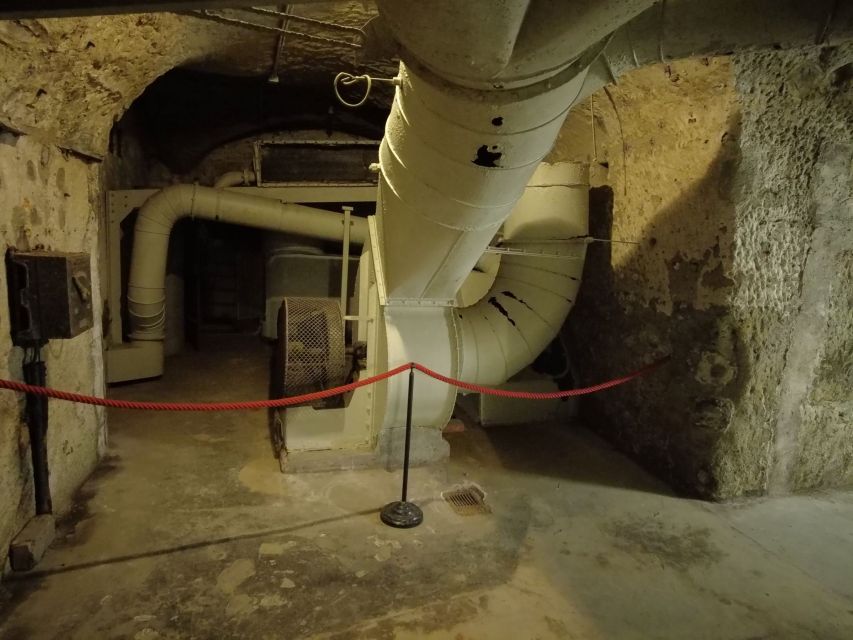
The cellar’s physical design adds weight to the explanation. You can see why an underground space was useful during air raids, but you can also understand its limits. The passages are enclosed, the temperature is low, and a full group may feel crowded at certain points.
A one-hour route with a strong sense of place
The advertised duration is one hour. I consider that a useful length for Nuremberg. You receive a focused account of the bunker and the city without giving up half a day that could be spent at the castle, churches, museums, or Old Town squares.
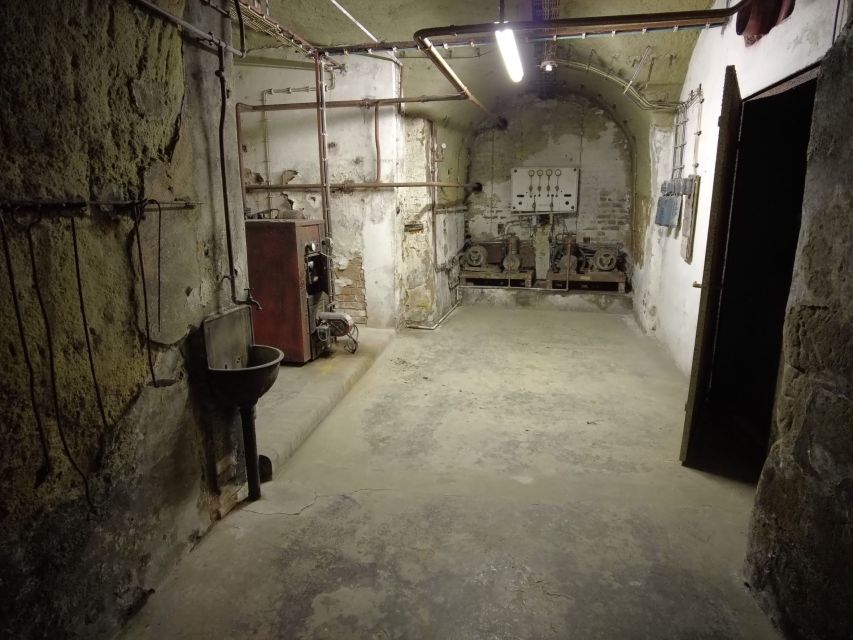
The route is guided throughout. You follow the local guide through the tunnel network, which is important because this is not a place where you would want to wander alone. The guide provides the order, explains the changing uses of the cellar, and points out how the underground spaces relate to the city above.
Expect the experience to be more about listening and looking than handling or closely studying art objects. The original treasures discussed on the tour are not all sitting in front of you as a conventional exhibition. The value lies in seeing the protective setting and understanding the rescue operation.
A strong guide can make a major difference here. Andreas has been praised for connecting the bunker with other Nuremberg sites, while Michael has been described as both humorous and well prepared. Marianne has received praise for clear English, enthusiasm, and keeping younger members of a group engaged. Other guides, including Jana, Ralf, Allen, Owen, Stefan, and Adrian, have also been singled out for answering questions and bringing local background into the presentation.
Guide assignments can vary, so you should not book on the promise of one particular person. Still, the repeated strength of the guiding is a good sign for an experience that depends heavily on spoken explanation.
What the destruction of Nuremberg means here
The bunker makes the damage to Nuremberg easier to understand. You may see restored streets and attractive squares above ground, but below them is a place shaped by fear of complete loss.
The guide explains that the medieval Old Town was devastated during the war and later rebuilt. That creates a useful contrast with the architecture you see outside. Nuremberg’s restored appearance can suggest continuity, but the bunker reminds you that much of the city had to be reconstructed after the bombing.
This is especially useful if you visit other WWII sites in Nuremberg. The tour pairs well with the city’s larger Nazi-era and wartime history because it shifts attention from rallies and political power to preservation, damage, and recovery.
One particularly useful approach is to visit another major historical site earlier in the day, then use the bunker to add a smaller, more personal layer. A visitor who first dismissed the idea of seeing a tunnel later found the connection to Nuremberg’s wartime history especially rewarding. That is a fair description of the tour’s strength: the underground rooms may seem modest at first, but the story gives them importance.
Other trips into the same period in Nuremberg:
- Nuremberg Third Reich Tour in Spanish
★ 5.0 · 355 reviews - Berlin: Third Reich and Cold War 2 Hour Walking Tour
★ 4.9 · 6,830 reviews - Munich: Third Reich & WWII Walking Tour
★ 4.6 · 6,181 reviews - Berlin’s Best: 2 Hour Walking Tour Third Reich and the Cold War
★ 5.0 · 5,486 reviews
The temperature and the tight spaces
Take the warning about warm clothing seriously. The bunker remains around 10 to 12°C, regardless of summer weather outside. A light jacket or sweater is enough for many people, but if you feel the cold easily, bring an extra layer. Several people have found the cellar surprisingly chilly, and an hour in a cold tunnel can feel long without proper clothing.
The space is also not suitable for everyone. The tour is listed as unsuitable for people with mobility impairments, wheelchair users, and people with claustrophobia. Narrow passages and underground conditions are part of the experience, not minor side notes.
Group size can affect comfort. Groups of around 20 or more may feel cramped in some sections, especially when everyone gathers to hear the guide. This does not cancel out the historical value, but it can make it harder to stand at the front or hear every detail.
The tour takes place rain or shine, though the underground setting means weather is less important once you are inside. Your real preparation is comfortable clothing and an honest assessment of how you handle enclosed spaces.
Is $14 a fair price?
At $14 per person, I consider this a good-value hour in Nuremberg, especially if you have an interest in WWII, architecture, historic preservation, or medieval art.
The price includes entry to the Historischer Kunstbunker and a live guide in English or German. It does not include transport, food, or drinks, but those exclusions are easy to manage because the tour is short and centrally located.
The strongest value comes from the guide’s interpretation. Without explanation, a series of cellar passages would not mean much. With a clear account of the art rescue effort, the bunker becomes a direct link between the city’s medieval past, wartime destruction, and postwar rebuilding.
I would be more cautious if your main goal is to see original masterpieces up close. This is not a substitute for a fine arts museum. It is a place-based history tour about where important works were stored and why the shelter mattered.
The one-hour format also improves the value. You can fit it between other Old Town activities, and the nearby streets offer plenty of options for continuing your day afterward.
Who will get the most from this tour?
I would recommend the bunker especially to:
- People interested in WWII and Third Reich history
- Visitors who enjoy unusual historic sites rather than standard museum rooms
- Art lovers who want to understand how major works survived the war
- Families with older children and teenagers who can follow a guided historical explanation
- Anyone who has already visited major Nuremberg sights and wants a different angle on the city
- Visitors looking for a short activity that leaves time for other sightseeing
It can also work for people with only a general interest in history, provided they are comfortable underground. The guides often use humor, local stories, and personal knowledge to keep the subject accessible rather than overly academic.
I would skip it if you dislike enclosed spaces, struggle with cold temperatures, or need a fully accessible route. You should also avoid expecting a large art collection on display. The experience is about the bunker, its wartime purpose, and the works it helped save.
The tour is suitable for children old enough to engage with serious wartime history, but the material concerns destruction and air raids. Parents should decide if that subject fits their family.
Practical planning for your Nuremberg day
Allow a little time to find the entrance and arrive ready to begin. The meeting point is directly at the entrance of the Historischer Kunstbunker Museum, and transportation is not part of the activity.
Wear comfortable shoes and warm clothing. The supplied information specifically advises warm layers, and the cellar temperature is a constant issue even during warm weather.
English and German tours are available. If language is important to your decision, check the selected departure carefully when booking.
You can cancel up to 24 hours before the activity for a full refund, and a reserve-now, pay-later option is available. That flexibility is useful when your Nuremberg schedule depends on train times, weather, or a busy sightseeing day.
The tour provider is Förderverein Nürnberger Felsengänge e.V., the association connected with Nuremberg’s historic rock passages. The experience feels local in the best sense: it is not a generic WWII presentation moved into a basement, but a guided account tied to the actual spaces beneath the city.
Should you book the Historischer Kunstbunker?
Yes, if you want a compact, unusual history experience with a strong connection to Nuremberg itself. The combination of medieval beer cellars, wartime art protection, the destruction of the Old Town, and postwar rebuilding gives you far more than a simple walk through tunnels.
Book it with warm clothing and realistic expectations. You will spend an hour underground, sometimes in tight quarters, listening to a guide rather than viewing a large collection of original art. For people who enjoy place-based history, that is exactly the point.
At $14, the tour offers a useful amount of context for a modest cost. I would put it high on the list for WWII history enthusiasts and anyone curious about how Nuremberg’s cultural treasures survived the war. If you are claustrophobic or need step-free access, choose another city activity instead.
FAQ
How long does the Historischer Kunstbunker tour last?
The tour lasts one hour. That makes it easy to fit into a day of sightseeing around Nuremberg’s Old Town.
How much does the tour cost?
The price is $14 per person.
What languages are available?
The live tour guide may lead the experience in English or German.
Where do I meet the guide?
Meet your guide at the entrance of the Historischer Kunstbunker Museum.
What is included in the price?
The price includes entry to the Historischer Kunstbunker Museum and a live guide.
Should I bring warm clothing?
Yes. The cellar stays around 10 to 12°C, regardless of the weather outside, so bring a warm layer.
Is the tour suitable for wheelchair users?
No. The tour is listed as unsuitable for wheelchair users and people with mobility impairments.
Can I cancel for a full refund?
Yes. You can cancel up to 24 hours in advance for a full refund. A reserve-now, pay-later option is also available.
Just added in Nuremberg
- Nuremberg’s Mystery Morning: Breakfast & Escape Game★ 4.4 · 57 reviews
- Nuremberg: The Old Town in Evening Light – IN GERMAN★ 4.7 · 353 reviews
- Nuremberg Third Reich Tour in Spanish★ 5.0 · 355 reviews
- Nuremberg Old Town and Nazi Rally Grounds Walking Tour★ 4.7 · 377 reviews
- Nuremberg Old Town and Nazi Party Rally Grounds Walking Tour in English★ 4.5 · 504 reviews
- Nuremberg: Hop-On Hop-Off Bus Tour★ 4.3 · 763 reviews
- Nuremberg: PLAYMOBIL®- FunPark★ 4.7 · 863 reviews
- Medieval Tour in Nuremberg in Spanish★ 5.0 · 1,374 reviews
Third Reich & WWII Tours, compared.

Third Reich Berlin: Hitler and WWII Walking Tour
Read our review →
Walking Tour of Former Nazi Party Rally Grounds
Read our review →
Berlin Third Reich Sites: Half-Day Walking Tour
Read our review →
Birthplace of the Third Reich Guided Walking Tour
Read our review →
Munich World War II Sites Including Dachau Concentration Camp
Read our review →Browse the lists this tour appears in