
Reviewed · CONCENTRATION CAMP MEMORIAL TOURS
Munich: Dachau Concentration Camp Memorial Site Tour by Car
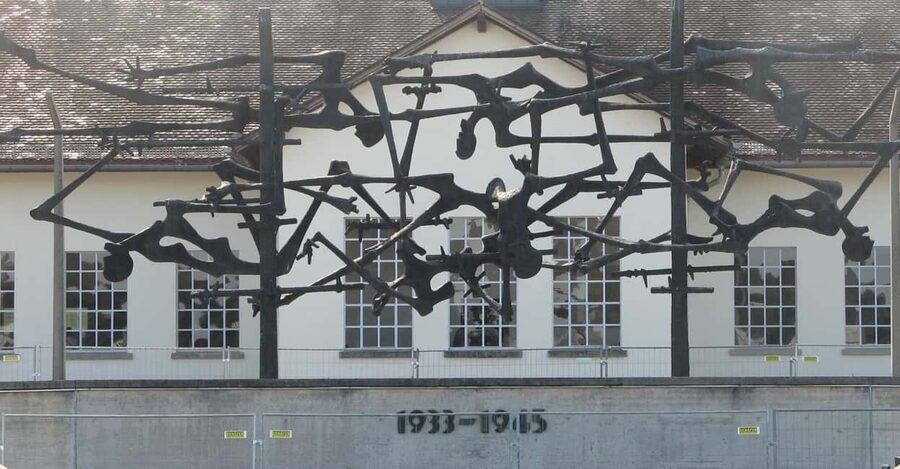
Dachau is not a sightseeing stop in the usual sense. It is the site of the first Nazi concentration camp, opened in 1933 and later used as a training ground for the SS. This tour gives you three hours at the memorial, enough time to confront the site carefully rather than rush through it.
I like the small group of up to four and the door-to-door SUV service from Munich. I also like the way Markus, one of the named guides, is praised for giving detailed explanations while moving a small group through the exhibits. The main concern is reliability: one verified booking records that the driver never arrived, so confirm the pickup by WhatsApp before you go.
Key points
- A five-hour Munich outing: Allow about 30 minutes each way and three hours at the memorial.
- Private SUV transport: Hotel pickup and drop-off in Munich spare you the train, bus, and local transfer.
- A serious guided visit: See the roll-call area, bunker, barracks, camp street, and crematorium.
- Small-group setting: The group is limited to four participants, allowing a quieter and more personal visit.
- English or Spanish: The live tour is offered in either language, with an audio guide also available.
- Adults and older teens only: Children under 14 are not permitted, and much of the tour is outdoors.
Why Dachau deserves a full morning
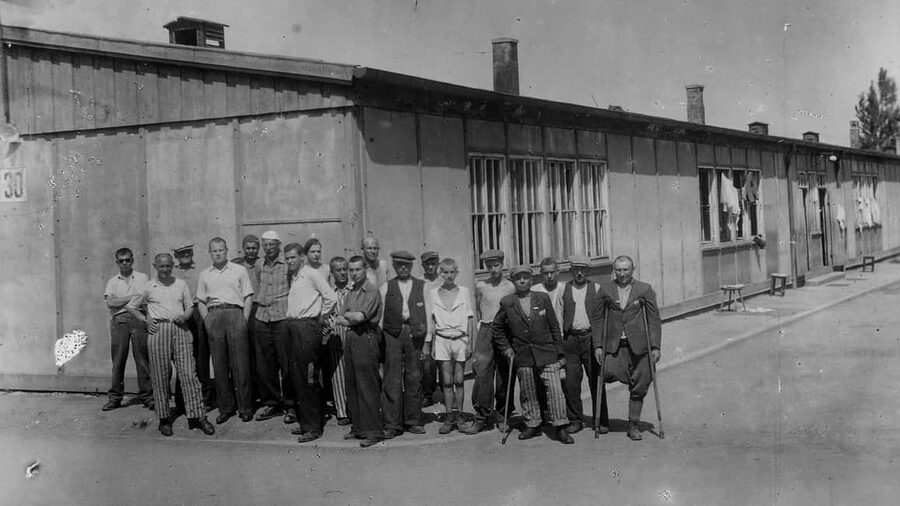
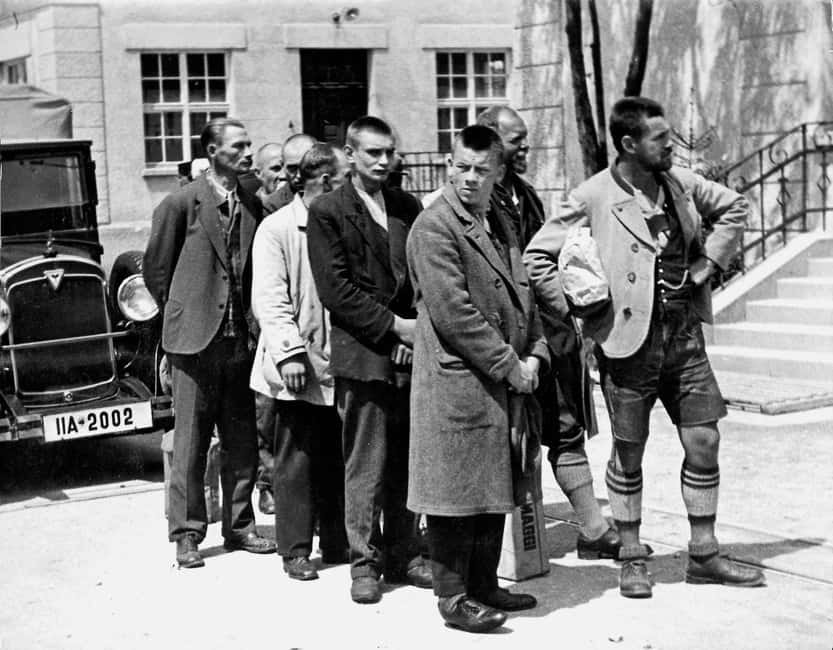
Dachau was the first regular Nazi concentration camp, opened shortly after Adolf Hitler became chancellor in 1933. It began as a place for political prisoners, but its purpose widened as the Nazi regime persecuted Jews, Romani people, homosexuals, artists, intellectuals, and many others.
Over 12 years, more than 200,000 people from across Europe were imprisoned in Dachau and its nearly 100 sub-camps. About 41,500 are estimated to have died through starvation, disease, overwork, medical experiments, executions, and other forms of abuse.
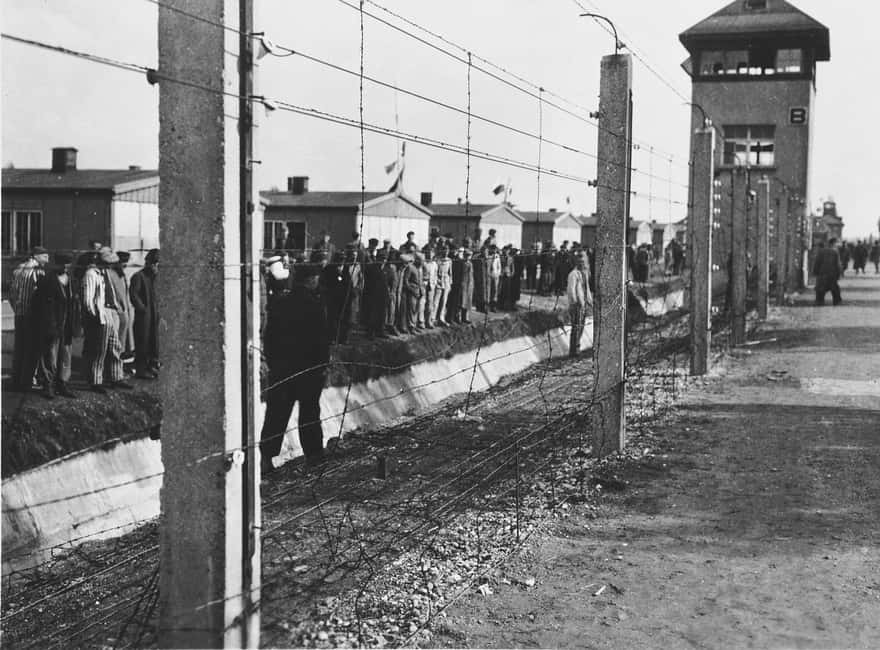
That scale can be hard to grasp in a paragraph. At the memorial, the subject becomes physical. You walk the same broad camp street, enter surviving or reconstructed buildings, and see the spaces used for roll calls, punishment, imprisonment, and killing.
I think the value of a guided visit is especially clear here. Dachau can look stark and spare, with large open areas and relatively few original structures. Without historical explanation, you may miss how the camp worked and why each part of the site mattered. A trained guide gives the buildings and empty spaces their proper context, without turning the visit into a parade of grim facts.
This is also not a tour for casual sightseeing. You should arrive ready for a difficult subject and give yourself a quiet evening afterward if possible.
More Concentration Camp Memorial Tours in Munich
- Dachau Concentration Camp Memorial Site Tour from Munich by Train
★ 4.5 · 5,637 reviews - From Munich: Dachau Memorial Site Day Tour
★ 4.8 · 2,723 reviews - From Munich: Dachau Memorial Site Half-Day Trip
★ 4.7 · 2,526 reviews
From Munich to Dachau in a private SUV
The tour begins with pickup in Munich and takes about 30 minutes to reach the memorial by Jeep or SUV. Hotel pickup and drop-off are included, which makes the outing simple for you, especially if you are staying in central Munich and do not want to work out the regional train and bus connection.
The vehicle is one of the clearest practical advantages of this experience. You do not need to change transport near Dachau, watch the clock for a return connection, or find the memorial entrance on your own. The ride also keeps the group together from the start.
The tradeoff is price. At $371 per person, this is expensive compared with a public-transport visit or a larger group excursion. The value depends on how much you care about door-to-door convenience, a maximum group of four, and a live guide.
For two people, the per-person cost is a considerable premium for private transportation and personal attention. If four people share the group, the price feels easier to justify, particularly if you would otherwise pay for taxis or prefer not to navigate Munich’s transport system.
I would contact the provider through WhatsApp at +49 151 57490411 before the day of the tour. One verified booking reports a driver no-show, while the other available accounts praise the experience highly. That contrast makes a quick confirmation worthwhile. Ask for the pickup time, meeting details, vehicle description, and confirmation that your reservation is on the schedule.
Three hours inside the Dachau Memorial
The main visit lasts about three hours. That is a sensible length for this site. You have enough time to see the principal areas and hear the historical explanation, but the schedule does not ask you to spend an entire day at a place that can be emotionally exhausting.
The visit includes a guided tour and time for self-guided exploration. That combination is useful. A guide can explain the structure of the camp and point out what matters, then you can pause at the memorial areas that affect you most.
Much of the route is outdoors. Wear shoes suitable for steady walking and clothing for the forecast. Bring water, since water is included in the tour, but food cannot be bought or eaten on the memorial grounds. You should plan to eat before or after the visit rather than expect a snack break inside.
The roll-call area
The roll-call area was central to daily camp life. Prisoners could be forced to stand for long periods while guards counted them and punished the group for an alleged failure or escape.
Today, the open space may appear plain. That is part of the challenge. Your guide helps you understand how a seemingly empty area functioned as a place of control, fear, and collective punishment.
Other memorial sites within reach of Munich:
- From Munich: Dachau Memorial Site Full-Day Tour
★ 4.9 · 1,406 reviews - Dachau Concentration Camp Memorial Tour with Train from Munich
★ 4.5 · 955 reviews - Early-Start Dachau Memorial Half-Day Tour from Munich
★ 5.0 · 942 reviews - Guided Dachau Concentration Camp Memorial Site Tour with Train from Munich
★ 5.0 · 920 reviews
The barracks and camp street
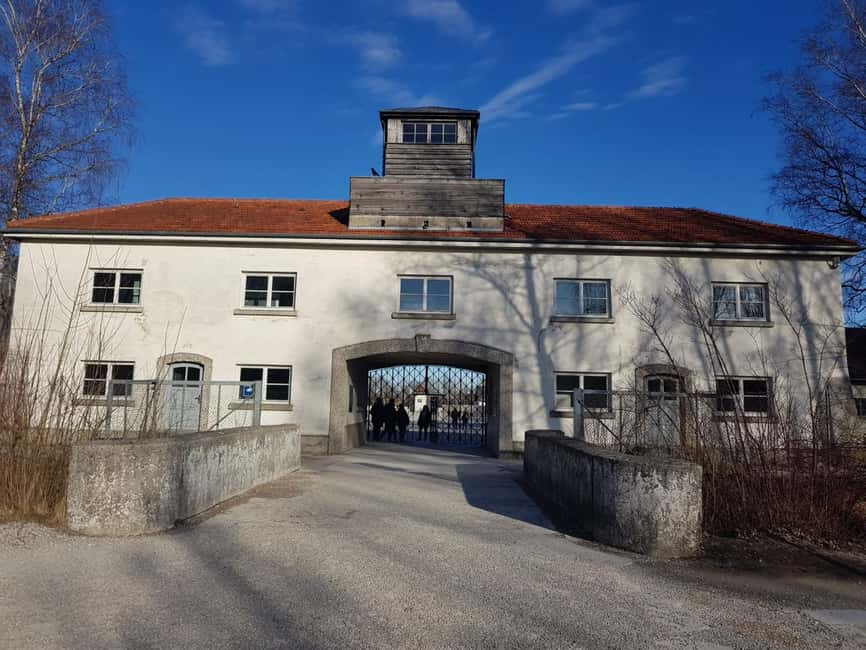
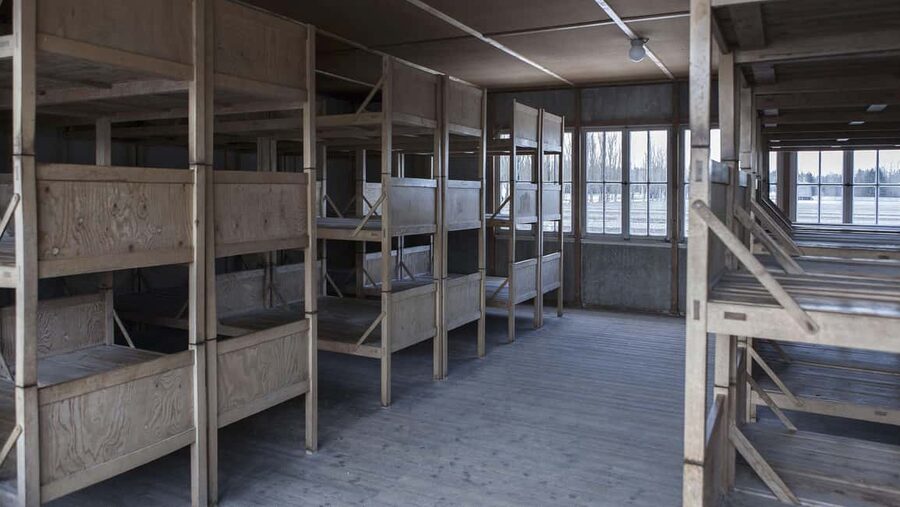
The camp street and barracks show the planned, institutional nature of Dachau. This was not a disorderly prison camp. It was an organized system built to control people through confinement, forced labor, deprivation, and terror.
Some buildings are original and others are reconstructed, so a careful guide matters. You need to know which structures survive from the camp period and which have been rebuilt to show the layout. The setting is not simply an old collection of buildings. It is a carefully presented memorial where absence and reconstruction both carry meaning.
The bunker
The bunker was the camp prison, used for detention and punishment. This section of the visit can feel especially claustrophobic and severe, even when the physical spaces are quiet.
I appreciate having a guide here because the bunker is not a place where you can learn everything from architecture alone. The important issue is how punishment and isolation fit into the broader camp system. Your guide should explain that system with restraint and respect, rather than rely on shock value.
The crematorium
The crematorium area is among the most difficult parts of the memorial. It is connected to mass death and to the Nazi system of killing and disposing of bodies.
The tour also covers executions and medical experiments. These subjects are presented as part of the history of Dachau, not as sensational highlights. That distinction matters. You are visiting a memorial to people who suffered and died, not an attraction built around horror.
A guide can change what you understand
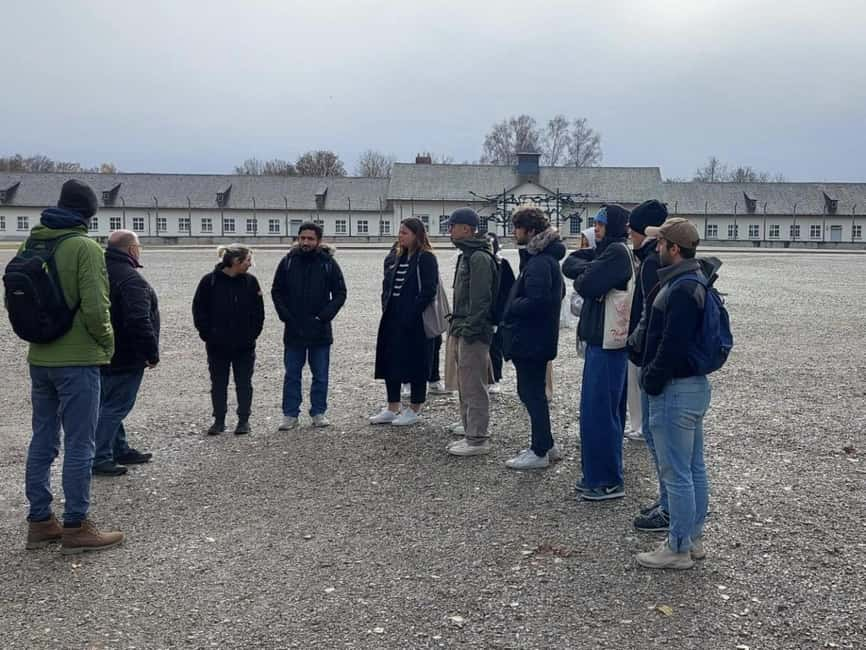
The strongest feature of this experience is the live explanation. Two five-star accounts specifically praise Markus for giving detailed information, moving the group through the exhibits carefully, and adding more context than a visitor might gather alone.
I cannot promise that Markus will lead your departure, but his name gives you a useful benchmark for the guide service. The tour is offered in English and Spanish, and an audio guide is available as another way to follow the material.
A good guide should help you connect individual places with the larger Nazi system. Dachau was not only a prison camp. It also served as a training center for the SS, sometimes described as a school of violence. Personnel trained there carried methods of terror to other camps.
That context turns separate stops into a connected story. The barracks relate to forced labor and overcrowding. The bunker relates to punishment. The crematorium relates to murder and the consequences of mass death. The memorial becomes easier to understand as part of a network that spread across Nazi-occupied Europe.
The guide’s tone matters just as much as the facts. The supplied accounts describe Markus as moving the group through the site with emotional sensitivity. That is what you want here: clear history, no theatrics, and enough time to think.
The memorial created by survivors
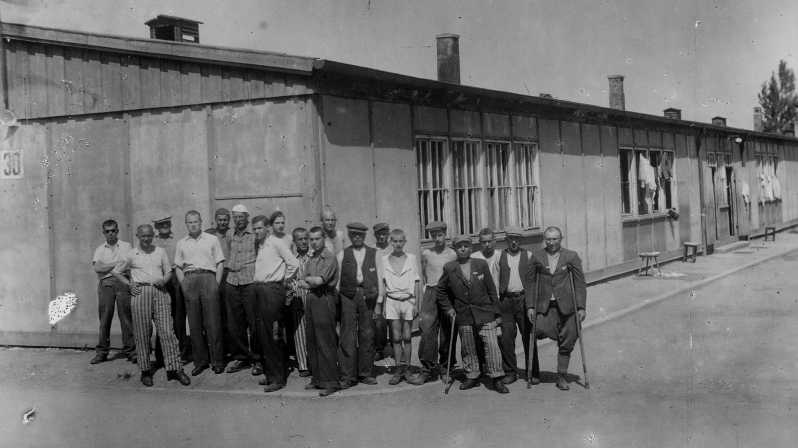
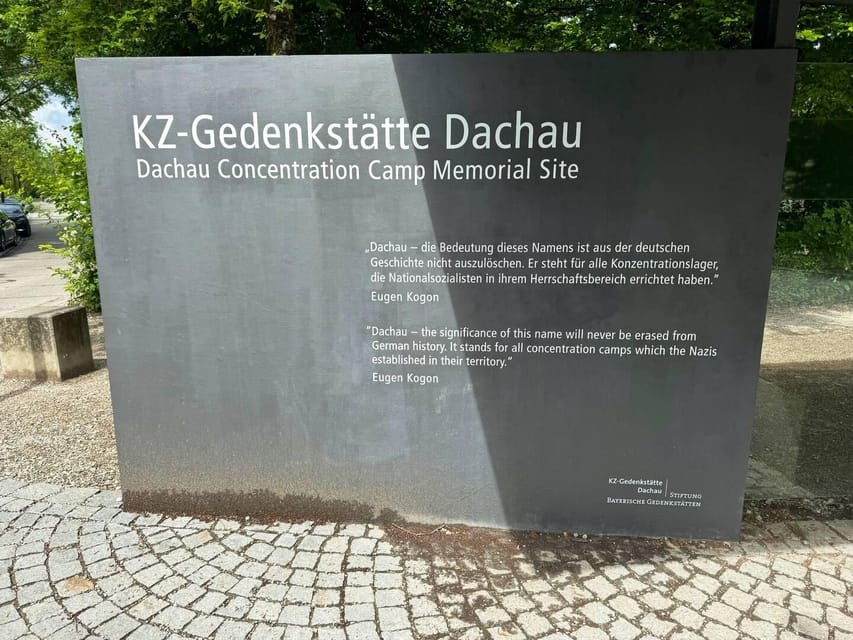
The Dachau Concentration Camp Memorial was established in 1965 at the initiative of concentration camp survivors. Its purpose is not simply to preserve old buildings. It also keeps alive the memory of the people imprisoned and killed there, while explaining how the camp system operated.
Nearly 800,000 people visit the memorial each year. That number can make the site sound crowded, but this particular tour limits its group to four. You still visit a major memorial with many other people over the course of a day, yet your immediate group remains small.
The memorial is about 20 kilometers northwest of Munich, close to the old town of Dachau. The short drive makes it practical as a half-day outing. You leave Munich, spend a focused morning or afternoon at the site, and return to the city without giving up an entire day of your itinerary.
The camp was liberated by US forces on April 29, 1945. That date marks the end of the camp’s operation, not the end of the suffering caused by the Nazi regime. A careful tour places liberation within the wider collapse of the Third Reich and the Allied defeat of Nazi Germany.
What the $371 price really buys
At $371 per person, this is not a budget tour. The fee covers transportation, all entrance fees, hotel pickup and drop-off in Munich, drinks, water, and a three-hour guided visit.
The real purchase is time and ease. You do not need to arrange the route yourself, find the memorial, or share a large coach with dozens of people. With only four participants, you can usually expect the guide’s attention to remain close to the group, though the exact level of personal discussion depends on the guide and group.
The price makes the most sense for:
- You want a private or near-private experience.
- You are short on time in Munich.
- You prefer a car to public transport.
- You want historical interpretation rather than a self-guided visit.
- You are traveling with a small group willing to share the cost.
It makes less sense if you are comfortable using public transportation, already have a strong background in Dachau, or mainly want to walk around independently. The memorial itself can be visited without this level of transport service, so the premium is for convenience and guidance rather than access to a secret part of the site.
Free cancellation up to 24 hours before departure and reserve-now, pay-later booking make the financial risk easier to manage. Still, I would not treat those policies as a substitute for confirming the pickup, given the reported no-show.
Who should book this Dachau tour
I would recommend this experience to adults and older teens who want a serious, guided introduction to Dachau and value a small group. It is also a strong fit if you have only one free half-day in Munich and do not want transport logistics to consume your attention.
The tour suits you if you learn best through explanation. Dachau contains important information that is not always obvious from the site itself, and the guide’s historical framing can prevent a confusing or incomplete visit.
It is less suitable for young children, since those under 14 are not permitted. It is also not ideal if you are looking for a light cultural outing or a quick photo stop. The subject is painful, and the experience asks for patience and respect.
Wear comfortable footwear. Keep water with you. Avoid planning a meal on the grounds. Most of all, leave room in your schedule for the emotional weight of what you will see.
Should you book it?
Book this tour if you want Dachau explained by a live guide, prefer private SUV transport from Munich, and can share the $371 cost with a small group. The three-hour memorial visit is long enough to cover the main areas without turning the day into an endurance test.
I would be cautious if price is your main concern or if you are comfortable arranging public transport yourself. I would also confirm the booking directly through WhatsApp before departure. The historical content and guide praise are strong, but the reported no-show is a real practical warning.
For the right visitor, this is a focused and respectful way to visit one of Germany’s most important memorial sites. It does not make Dachau easier to face. It helps you understand what you are seeing.
FAQ
How long does the Dachau tour from Munich last?
The full experience lasts five hours. Travel by SUV takes about 30 minutes each way, and the guided visit at the Dachau Memorial Site lasts about three hours.
Is hotel pickup included?
Yes. Pickup and drop-off at hotels in Munich are included in the tour.
How many people can join the tour?
The experience is limited to four participants, making it a small-group tour with private transportation.
Which languages are available?
The live tour is offered in English and Spanish. An audio guide is also available.
Can children join the tour?
No. Children under 14 years old are not permitted.
What should I bring and wear?
Bring water, wear suitable walking shoes, and dress for the weather. Much of the visit takes place outdoors. Food cannot be purchased or eaten on the memorial grounds.
Just added in Munich
- Pub crawl incl. Oktoberfest museum guided tour with beer tasting (private)★ 5.0 · 5 reviews
- South Tyrolean specialties and wine tasting★ 5.0 · 5 reviews
- Short & sweet: Tasting the Viktualienmarkt★ 4.8 · 37 reviews
- Size Matters Beer Tour Munich★ 4.6 · 105 reviews
- Secret Food Tours Munich★ 4.8 · 5 reviews
- Munich: Romantic Wine Experience for Two at Viktualienmarkt★ 4.2 · 14 reviews
- Munich: Resistance against Hitler – Historical Walking Tour★ 5.0 · 5 reviews
- Residence of Munich private tour with skip the line ticket★ 5.0 · 4 reviews
Concentration Camp Memorial Tours, compared.
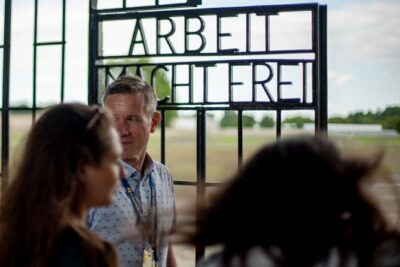
Sachsenhausen Concentration Camp Tour in English
Read our review →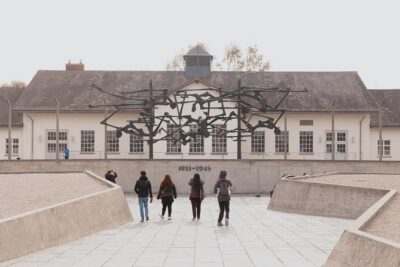
Dachau Concentration Camp Memorial Site Tour from Munich by Train
Read our review →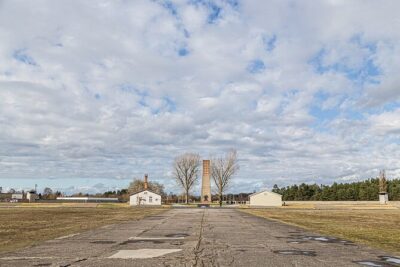
Sachsenhausen Concentration Camp Memorial Tour
Read our review →
Sachsenhausen Concentration Camp Bus Tour in English from Berlin
Read our review →
Sachsenhausen Concentration Camp Memorial Tour (Max. 15 Guests)
Read our review →
Sachsenhausen Concentration Camp and Potsdam Tour
Read our review →Browse the lists this tour appears in