
Reviewed · CRIME, WITCHES & CEMETERY TOURS
About Vikings, kings and cheeky monks (Medieval Schleswig)
Schleswig’s story comes alive in its old harbor quarter, where Viking-era trade, Danish kings, fishermen, and monks all left their mark. This 90-minute walk links the cathedral, old town, Holm fishing settlement, and St. John’s Monastery into one easy history lesson with a cozy northern feel.
I like the way the tour connects big historical changes to things you can still see today. I also like its small price, German-speaking guide, and flexible style, since the guide can respond to questions and adjust the walk. The main consideration is that the tour is in German, and the mainly historical presentation may not hold every child’s attention.
Key points to know before booking
- Schleswig Cathedral exterior: See one of the city’s defining landmarks, with interior entry available for an extra charge when timing allows.
- Holm fishing settlement: Learn how local fishermen protected their special rights through the 1480 Schleibrief issued by Danish King Christian I.
- Viking-era trade story: Hear why Schleswig once mattered far beyond the region, and why its role in the trade network later faded.
- St. John’s Monastery: Visit one of Schleswig-Holstein’s best-preserved medieval monasteries and hear about the monks who did not always behave like saints.
- German-language guiding: The tour suits German speakers best, with a guide who can handle questions and tailor the discussion.
- Strong value: At $17 per person for 1.5 hours, it is an inexpensive way to get your bearings and add context to a day in Schleswig.
Why Schleswig’s old harbor matters
The best part of this walk is its sense of connection. You are not simply shown a cathedral, a harbor, and a monastery as separate sights. The route explains how these places relate to Schleswig’s rise, its changing fortunes, and the shape of the town you see today.
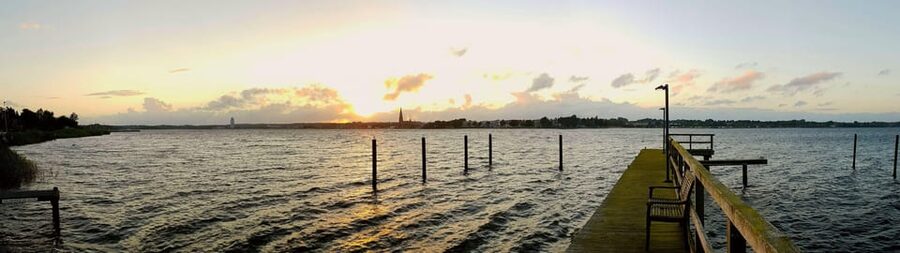
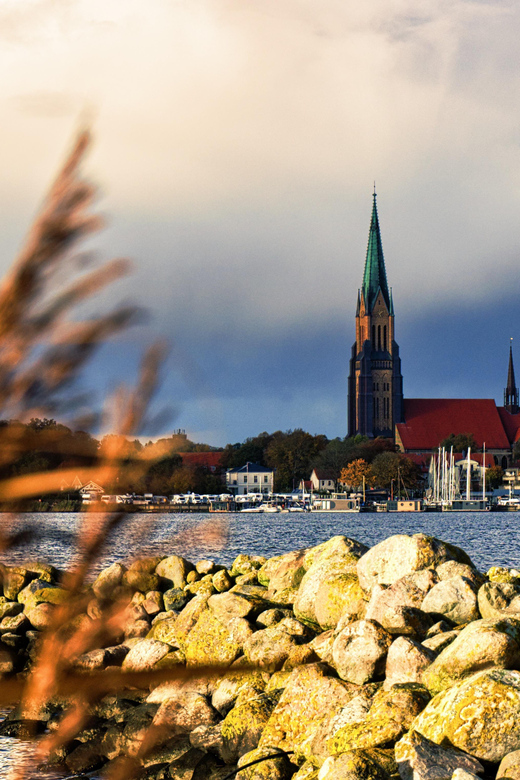
In the early Middle Ages, Schleswig was a major trading town with activity centered near what is now the city harbor. The Schlei, the long waterway beside Schleswig, served as an important shipping route. Goods, people, and ideas moved through the area, helping the town gain importance well beyond northern Germany.
That makes the harbor more than a pleasant photo stop. It gives you a way to picture Schleswig as a working port rather than only the quiet historic town you see today. The tour asks a useful question: why did Schleswig lose its special place in the trading network? You will hear how changes in this period affected both the town and its status.
I like this approach because it gives you a reason to pay attention to the water and streets around you. A guide can point out the modern harbor while explaining the older activity that once made this part of Schleswig so important. The setting also brings a calm, Nordic feel to the walk, with the hygge idea of comfort and quiet woven into the history.
More Crime, Witches & Cemetery Tours across Germany
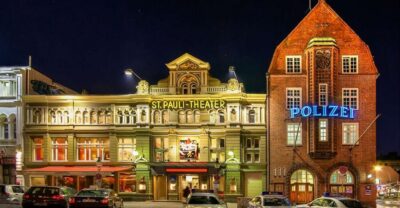
- Hamburg: Sex and Crime in St. Pauli Tour for Ages 18+
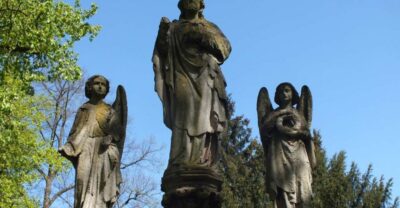
★ 4.7 · 15,447 reviews - Cologne: Melaten Cemetery Life, Love and Death Tour
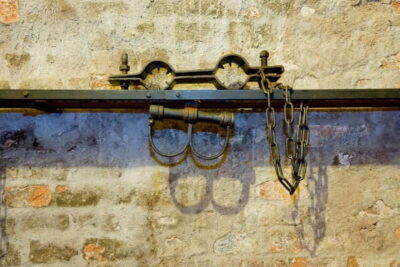
★ 4.9 · 2,728 reviews - Nuremberg: Medieval Dungeons Guided Tour
★ 4.8 · 1,726 reviews
Meeting at Rathausmarkt in central Schleswig
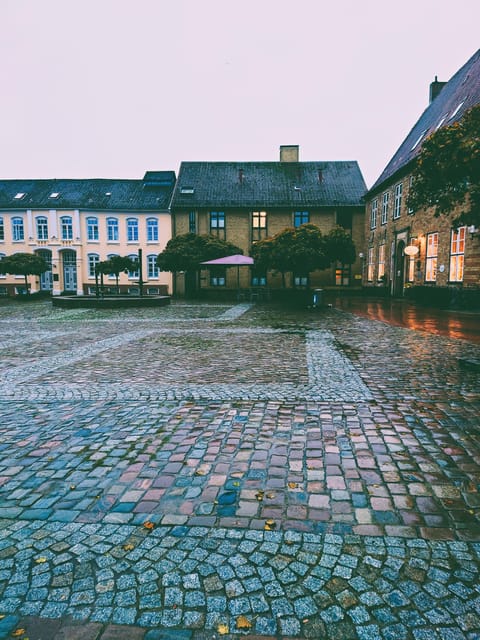
The walk begins at Rathausmarkt, in front of the Alte Apotheke restaurant. This is a practical meeting point in the heart of town, so you can reach it without first finding a distant coach stop or transport connection.
Starting in the central square also gives the guide a natural place to explain how Schleswig developed. From here, the route moves through the old town toward its main historic sights. Since the tour lasts only 1.5 hours, the pace is likely to be focused rather than leisurely. You should arrive ready to walk and listen, rather than expecting long stops at each building.
The meeting point is especially useful if you are visiting Schleswig for a short time. You can use the walk to get your bearings, then return to places that interest you for a closer look. The tour is wheelchair accessible, which helps make the central route practical for more people, though you may still want to confirm the exact conditions of the route when booking.
Schleswig Cathedral and the Danish royal connection
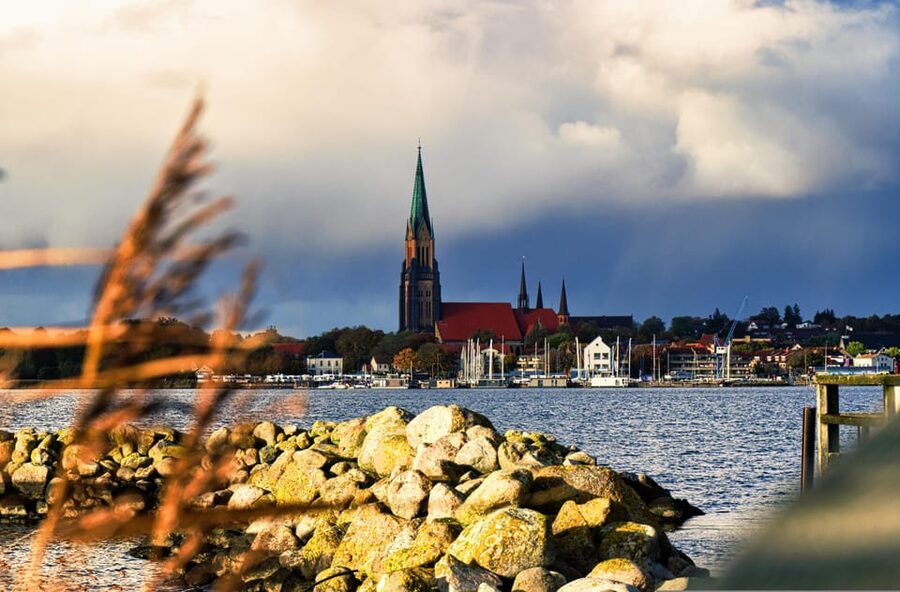
The cathedral is one of the central sights of the walk, but the standard tour includes an exterior visit only. That detail matters. If you want to study the interior, you may be able to add an indoor visit for an extra fee, depending on the time of day.
Outside, the cathedral provides a clear entry point into Schleswig’s medieval story. The guide explains the church’s importance and its connection with Danish kings. Schleswig was not just a local settlement. Its location and trading role gave it political weight, and the cathedral formed part of that larger story.
I like that the tour does not pretend an exterior look is the same as a full cathedral visit. You get the building’s setting and historical role within the main price, but interior access is treated separately. If religious art, architecture, or the cathedral’s inside spaces are your main reason for visiting, ask ahead about the added visit and its timing.
For most people, the exterior stop works well as part of a wider town walk. The cathedral is one chapter in a longer story, not the entire experience. You will see how church, royal power, commerce, and town life overlapped in medieval Schleswig.
The old town and the question of lost importance
As the walk continues through Schleswig’s picturesque old town, the guide traces the town’s movement from early medieval importance to later change. This is where the tour’s central question becomes useful: what caused Schleswig to lose its strong place in regional trade, and what changed in the town afterward?
The information provided for the walk does not give a single simple answer, which is a good sign. Medieval towns rarely change for just one reason. Your guide is expected to explain the shift through the broader story of shipping, trade, and local development rather than presenting a string of dates without context.
This section should appeal to you if you enjoy understanding why a town looks the way it does. Streets and buildings become evidence of past power and past decline. You are encouraged to look for traces of the city’s former importance, including places that now seem quiet but once connected Schleswig to wider commerce.
The strongest part of the guiding style appears to be its flexibility. Several bookings received high marks for an informative and entertaining walk, and one group specifically found that the guide adapted the route and discussion to its questions. That is useful on a history tour. You can ask about a building, a local custom, or the relationship between Schleswig and Denmark instead of simply following a fixed speech.
Same base, a different kind of day out:
- Berlin: Reichstag, Dome and Government District Guided Tour
★ 4.7 · 18,288 reviews - Berlin: 1-Hour City Tour by Boat with Guaranteed Seating
★ 4.3 · 16,993 reviews - Hamburg: 1.5-Hour Harbor and Speicherstadt Day Cruise
★ 4.6 · 14,200 reviews - From Munich: Neuschwanstein & Linderhof Castle Full-Day Trip
★ 4.5 · 12,494 reviews
Holm, the fishing settlement beside the Schlei
The route’s most distinctive stop is Holm, an old fishing settlement tied closely to the Schlei. This part of Schleswig gives the tour a more personal and local scale. The story is no longer only about kings, trade routes, and church power. It is also about fishermen protecting their livelihood.
You will hear about the old special rights held by the fishermen of Holm. These rights were reinforced by the Schleibrief, a document issued by Christian I of Denmark in 1480. That detail gives the settlement a strong link to both local working life and Danish rule.
I find this one of the most useful historical details in the experience because it shows how authority worked at ground level. A royal document was not just a piece of court history. It could confirm practical rights for a community that depended on the Schlei.
The fishing settlement also adds variety to the walk. After the cathedral and central old town, Holm offers a different kind of historic setting. You can consider how people lived beside the water and why access to fishing mattered so much. The route helps you see the Schlei not just as scenery, but as the reason many local customs and disputes existed.
If your interest is limited to grand buildings, this portion may feel less dramatic. If you want a closer look at ordinary work and local identity, it is likely to be one of the tour’s best sections.
St. John’s Monastery and Schleswig’s cheeky monks
The final major stop is St. John’s Monastery, described as one of the best-preserved medieval monasteries in Schleswig-Holstein. Its condition gives you a rare chance to connect the town’s present appearance with medieval religious life.
The monastery also supplies the tour’s playful edge. The title refers to cheeky monks, and the guide asks why not all of Schleswig’s monks had a good reputation. That promise of humor matters. A walk focused only on politics, dates, and religious institutions can become dry. A story about monks behaving badly gives the history a human face.
You should still expect an educational visit rather than a comedy show. The humor supports the history, helping you remember that medieval religious communities were made up of people with flaws, rivalries, and habits of their own. The monastery can then be understood as part of daily town life, not only as a preserved monument.
The return toward the starting point also gives the route a satisfying shape. You begin in the center, move through the cathedral and old town, continue to Holm and the monastery, then come back with a clearer sense of how Schleswig’s different districts fit together.
What the $17 price really gets you
At $17 per person, this is a strong-value introduction to Schleswig. You receive a guided 90-minute walk covering several of the city’s key historic areas. The price is low enough to make sense even if you have only a short visit or want a basic orientation before exploring on your own.
The value comes from the links between the stops. You could visit the cathedral exterior, harbor, Holm, and monastery independently, but you would miss the central story about trade, Danish royal power, fishing rights, and medieval town life. A good local guide saves you from treating each sight as an isolated photo opportunity.
The main limitation is what the price does not include. Cathedral interior access costs extra when it is available, so budget more if seeing inside is important to you. The listing does not give a separate price for that addition, so ask about it before the walk begins.
The tour also offers reserve-now, pay-later booking and free cancellation up to 24 hours before the start. Those terms are handy if your Schleswig plans depend on weather or a changing day schedule. They do not change the content of the walk, but they reduce the risk of fitting it into a busy trip.
Is this a good family tour?
The experience is described as suitable for families and groups, but you should match it to your children’s interests. One participant found the tour very informative but would not recommend it for children. That is a fair warning for families with younger children who may want active sightseeing rather than a sustained history talk.
Older children and teenagers who enjoy castles, kings, monks, or Viking-era stories may get more from it. The references to fishermen’s rights and badly behaved monks also give the guide material to make the past easier to picture.
The German-only format is the bigger issue for many families. If your group is not comfortable listening to German, you will lose much of the tour’s value. The guide can respond to questions and adjust the discussion, but the activity is not advertised with English guiding or translation.
For adults, history students, local residents, and anyone curious about Schleswig’s connection to Denmark, the format makes more sense. You get a compact explanation without committing half a day.
Practical details that affect your choice
The tour lasts 1.5 hours and includes a live German-speaking guide. It is wheelchair accessible, and the central meeting point at Rathausmarkt makes arrival straightforward. Starting times vary, so you need to check availability for your preferred day.
Wear comfortable shoes suited to a town walk. The route includes several areas and historic sites, so you should expect to move between stops rather than remain in one square. The information provided does not give a precise distance, group size, or detailed surface conditions, so anyone with specific mobility needs should confirm the route details before booking.
The cathedral interior is not part of the basic experience. You may be able to arrange it for an added charge based on the time of day. If you want both the walk and the inside visit, plan the timing early rather than assuming the two will automatically fit together.
The tour is also a good choice for a first afternoon in Schleswig. Afterward, you can decide which parts of the city deserve a longer look. The harbor and Holm may appeal to you for their local character, while the cathedral and monastery offer more reason to pause over architecture and religious history.
Should you book Vikings, Kings and Cheeky Monks?
Book this tour if you want a short, affordable introduction to Schleswig that ties together the cathedral, old town, harbor, Holm, and St. John’s Monastery. I especially recommend it if you enjoy local history explained through real places, rather than a list of dates.
The strongest reasons to go are the $17 price, the focused 90-minute route, and the mix of royal, commercial, religious, and working-class history. The guide’s ability to respond to questions is another plus, particularly if you prefer a conversation to a fixed script.
Think twice if you need English guiding, want a full cathedral interior visit included, or are bringing young children who may not enjoy a history-heavy walk. For German speakers with an interest in Schleswig’s medieval past, this is an economical and well-shaped way to understand the city before exploring it on your own.
FAQ
Where does the tour begin?
The meeting point is Rathausmarkt in central Schleswig, in front of the Alte Apotheke restaurant.
How long does the walking tour last?
The tour lasts 1.5 hours.
What language is the tour in?
The live tour guide speaks German. German is the only language specified for this activity.
Is the tour wheelchair accessible?
Yes, the activity is listed as wheelchair accessible.
Is entry to Schleswig Cathedral included?
The standard tour includes an outdoor visit to Schleswig Cathedral. An interior visit may be available for an additional charge, depending on the time of day.
What places does the route cover?
The walk covers the exterior of Schleswig Cathedral, the old town, the city harbor, the Holm fishing settlement, and St. John’s Monastery.
What is the price?
The listed price is $17 per person.
Can I cancel the booking?
Yes. You can cancel up to 24 hours in advance for a full refund.
Can I reserve now and pay later?
Yes. You can reserve your place and pay later, which keeps your plans flexible.
Just added in Germany
- Private One way Airport Transfer Berlin Airport To Berlin★ 3.5 · 17 reviews
- Private Walking Tour: Berlin Wall, Cold War and Checkpoint Charlie★ 5.0 · 37 reviews
- Modern Berlin Private Walking Tour: Diverse, Vibrant and Exciting German Capital★ 5.0 · 13 reviews
- Private Day Trip to Potsdam from Berlin by Train★ 4.5 · 27 reviews
- City Explorer: Potsdam Private Day Trip★ 4.5 · 10 reviews
- Berlin Private Custom 5-Hour Tour by Car★ 5.0 · 30 reviews
- Private Half-Day Sightseeing Tour in Berlin★ 3.5 · 6 reviews
- Berlin Private Custom Tour in a Minivan, East and West★ 5.0 · 123 reviews
Crime, Witches & Cemetery Tours, compared.
Raven Black Witches and Executioners Walking Tour
Read our review →Browse the lists this tour appears in