
Reviewed · WALKING TOURS
Mannheim, guided Walking Tour: Discover Mannheim
Mannheim’s story begins with a grand palace, but this walk quickly shows you more than royal architecture. You’ll move from the former residence of the Wittelsbach prince-electors through churches, shopping streets, museum buildings, memorials, and elegant squares. I like the clear route and the mix of old and new. Friedrichsplatz adds Art Nouveau design and contemporary art, while the view of the water tower gives the tour a satisfying finish.
I also like that the guide focuses on stories, not a long parade of dates. One recent participant praised the way the tour included personal city memories and felt more like a coherent walk than a history lecture. The main caution is time: two hours covers a lot, and one recent booking found the schedule too short. This is an orientation tour, not a deep visit inside every landmark.
Key points at a glance
- Start at a major Baroque palace: Meet in the palace courtyard, not simply at the street address.
- See Mannheim’s central landmarks on foot: The route links the Jesuit Church, museum buildings, Planken, Friedrichsplatz, and the water tower.
- Hear the story in German: A qualified live guide explains both Mannheim’s past and its present-day character.
- Get more than dates: The commentary includes stories and lived city history, which makes the walk easier to follow.
- Plan for all weather: The tour runs in rain or shine, so comfortable shoes and suitable clothing matter.
- Good value for a first look: At $17 per person, the tour is reasonably priced for two hours with a guide, though food, drinks, and transport are extra.
Starting beneath Mannheim’s Baroque palace
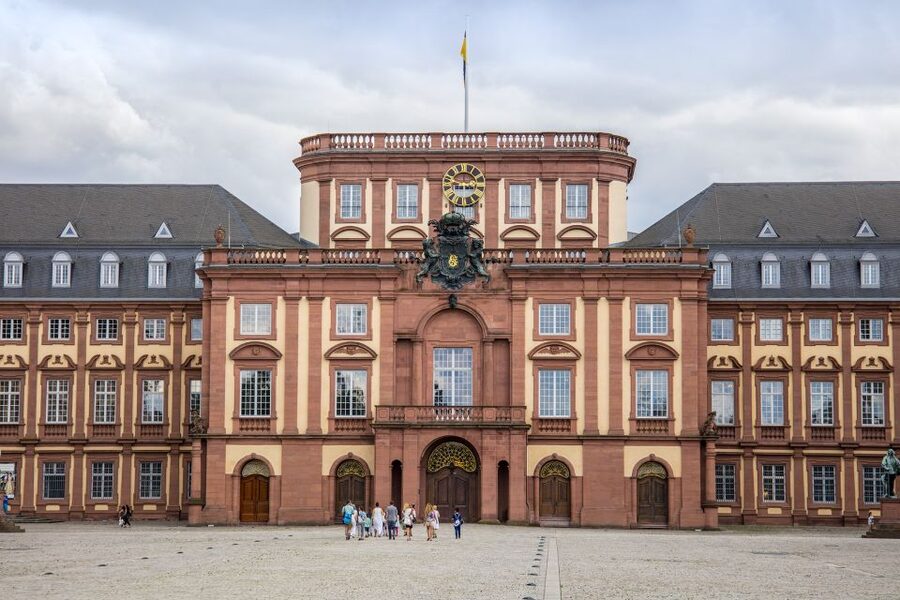
Your meeting point is in front of the entrance to the courtyard of the Baroque palace. This detail matters. The address, Bismarckstraße 14, covers several buildings, so you should look for the courtyard itself rather than relying only on the street number.
The palace gives the tour a strong opening. It was the former residence of the prince-electors of the House of Wittelsbach and is described as the second-largest Baroque palace in Europe. Even if you do not enter the interior, the exterior sets the scale and tone of Mannheim’s political past.
I like beginning here because the palace gives your guide an easy way to explain how Mannheim developed around power, government, and court life. You are not starting with an anonymous city square. You are starting at the building that explains why this part of town looks and feels so formal.
Bring comfortable shoes. The distance is manageable, but the walk includes several stops and city streets. Since the tour continues in rain or shine, a small umbrella or weatherproof layer is sensible when the forecast looks uncertain.
More Walking Tours across Germany
- Discover Berlin Half-Day Walking Tour
★ 5.0 · 9,624 reviews - Berlin: Third Reich and Cold War 2 Hour Walking Tour
★ 4.9 · 6,830 reviews - Munich: Third Reich & WWII Walking Tour
★ 4.6 · 6,181 reviews
The Jesuit Church and Mannheim’s grand center
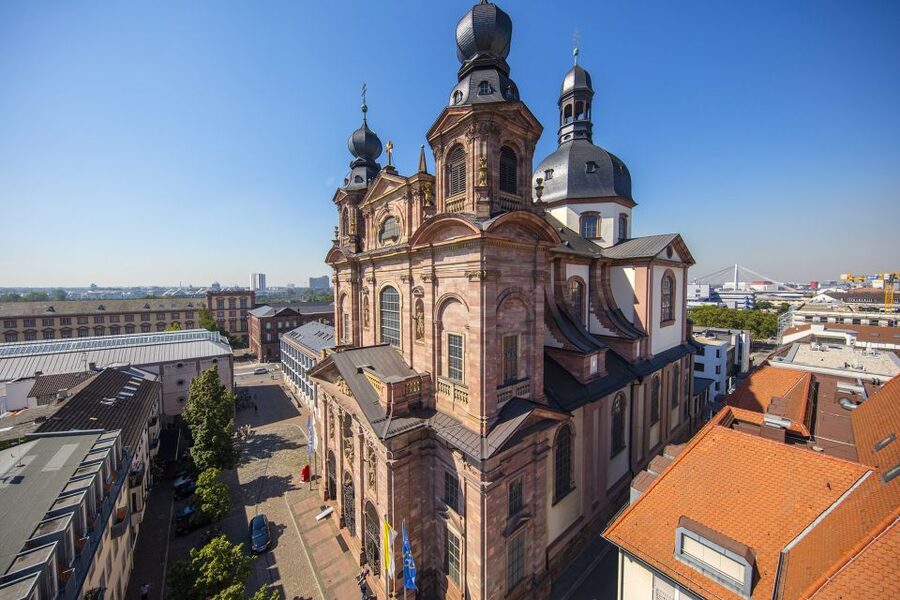
From the palace, the route continues to the Jesuit Church nearby. This is one of the tour’s most useful pairings: a former royal residence followed by a major religious building. The contrast helps you see how civic and religious power shaped the city center.
The church is presented as part of Mannheim’s central story rather than as an isolated photo stop. Your guide explains why it matters and places it within the surrounding streets. That context is valuable because a quick glance at a large church can otherwise leave you with little more than a picture.
The pace should suit you if you want an overview before exploring on your own. You will see the church and learn about it, but the two-hour format does not suggest a long interior study or an extended architecture lecture. If you want detailed decorative analysis, a separate visit may be needed.
The German-speaking guide is a key part of the walk. The tour is offered in German, and the guide is described as qualified and live rather than recorded. One of the strongest features is the use of stories and city memories instead of stopping to list one date after another. That style can make Mannheim easier to understand, especially if you are new to the city.
Planken, the city’s main shopping street
The walk then reaches Planken, Mannheim’s main shopping street in the center. This is where the city’s everyday life comes into view. Palaces and churches explain the past, but Planken shows how the center functions now.
I like this part because it prevents the tour from becoming a procession of grand buildings. You get a sense of the city as a place where people shop, meet, eat, and pass through on ordinary days. The guide also talks about Mannheim’s varied food scene and modern spirit, so Planken becomes more than a shopping stop.
Do not expect a dedicated shopping break. The purpose is to understand the street and its place in the center, not to browse every store. If you want to return for shopping or a meal, the tour helps you recognize the area and decide where to spend more time later.
The route also includes several charming squares, monuments, and memorials. These smaller places can be easy to miss when you explore alone. With a guide, you get a reason to pause and hear how individual sites connect to Mannheim’s eventful past.
Reiss-Engelhorn Museums and the city’s public spaces
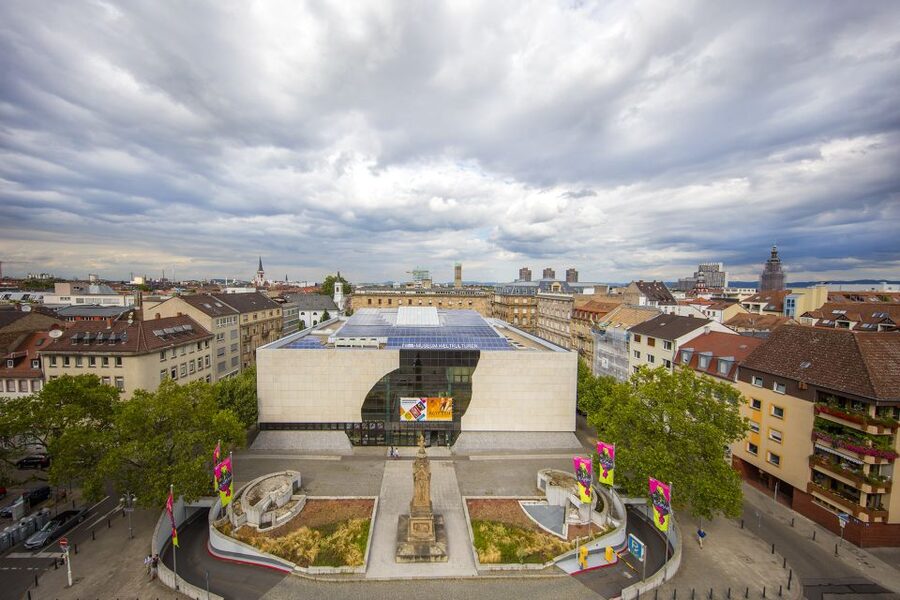
The assembled buildings of the Reiss-Engelhorn Museums are another stop along the route. The walk does not promise a museum visit or an indoor exhibition, so think of this as an architectural and civic orientation. You see where the museum complex fits into the center and learn why it belongs in the city story.
This is a useful choice for anyone considering a longer stay in Mannheim. After the walk, you can decide if the museums deserve more of your time. The guided introduction gives you a starting point without using up the whole afternoon inside one institution.
The same applies to the monuments and memorials along the way. Mannheim’s past is not presented only through palace walls. It also appears in public spaces, markers, and reminders of people and events. The exact emphasis can depend on the guide, but the route is designed to make these details part of the city rather than background scenery.
Because the guide speaks German, this tour is best for you if you can follow everyday spoken German with reasonable comfort. The activity details do not promise an English option, translation, or printed material in another language. That is an important point to check before booking.
A few more things to do in Germany worth a look
- Berlin: Reichstag, Dome and Government District Guided Tour
★ 4.7 · 18,288 reviews - Dresden: Semperoper Tickets and Guided Tour
★ 4.7 · 12,102 reviews - Berlin: Government District around the Reichstag Guided Tour
★ 4.7 · 8,447 reviews - Hamburg: Elbphilharmonie Plaza Guided Tour
★ 4.7 · 5,882 reviews
Friedrichsplatz, Art Nouveau, and contemporary Mannheim
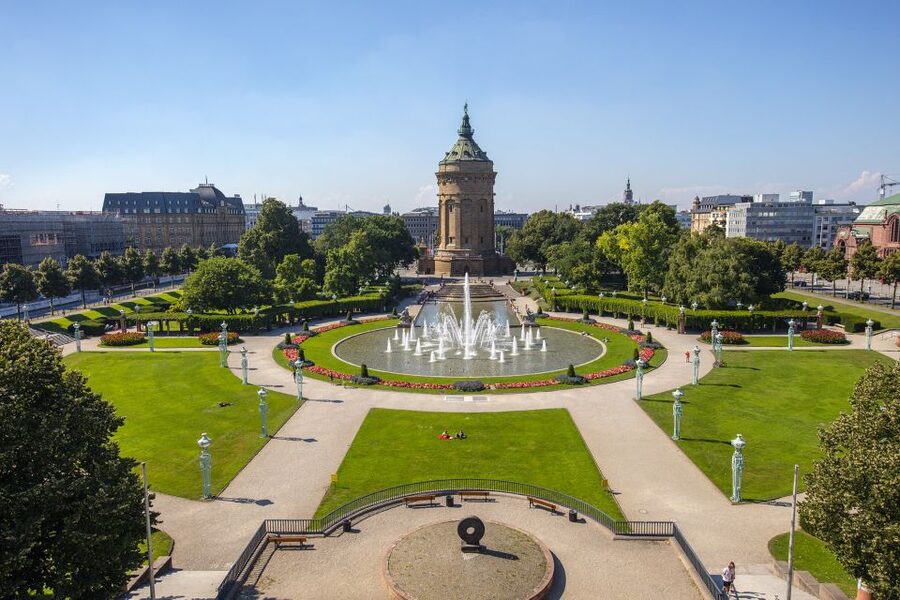
Friedrichsplatz changes the mood of the walk. The square is known for its Art Nouveau atmosphere, and the tour also points out contemporary works of art. This combination gives you a useful view of Mannheim as a city that does not treat its past as the whole story.
I especially like the balance here. The palace and Jesuit Church provide historic weight, while Friedrichsplatz shows design and art in a more open public setting. You can look at the square as a piece of architecture, but you can also consider how modern works of art share space with older city features.
The guide also uses this part of the walk to discuss Mannheim’s current character and food scene. That makes the tour practical. You are not only collecting facts for a photograph. You are learning what kind of city you are standing in and what you might want to explore after the tour.
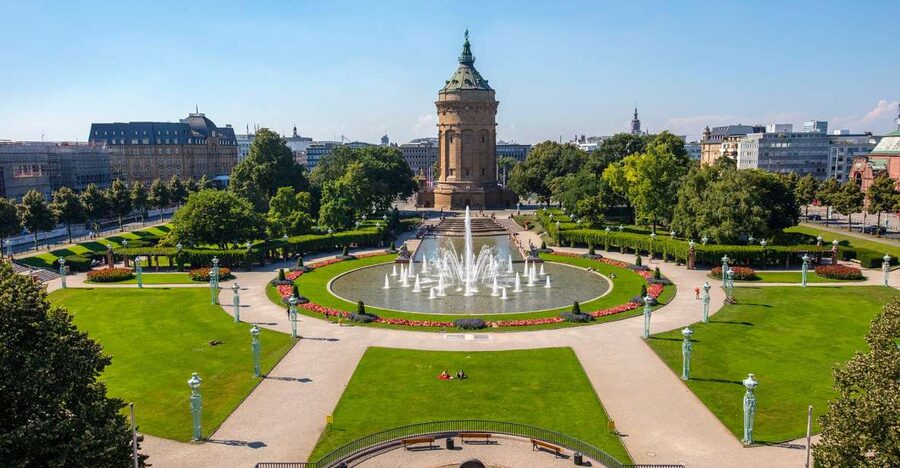
The finish comes with a view of Mannheim’s landmark historic water tower. It is a strong endpoint because it gives you a clear image to carry away. After several streets and squares, the tower provides a recognizable reference point and helps you understand how the central areas fit together.
What two hours can realistically cover
Two hours is enough for a useful first orientation, but it is not enough for a slow examination of every stop. You will make several visits from the outside, listen to explanations, and walk between them. The result is a broad picture of Mannheim rather than a series of long individual visits.
One recent participant found the time too short. That criticism is fair if you prefer to linger, take many photographs, or ask detailed questions at every landmark. The tour is better suited to someone who wants a well-shaped introduction and plans to explore selected places independently afterward.
The guide’s storytelling style may also affect how much ground you cover. A tour built around lived city history can take more time than a list of dates. I consider that a positive trade, but you should know that the route is not designed as a fast checklist.
For the best use of the two hours, arrive ready to walk and save your detailed shopping, museum, and food plans for after the tour. Listen for the places you want to revisit. Mannheim is easier to explore once you know how its main center is connected.
Is $17 a fair price?
At $17 per person, this is a sensible price for a two-hour guided walk. You are paying for a qualified live guide and a planned route through several important parts of central Mannheim. The value is strongest if you are visiting for the first time or have limited time in the city.
The price does not include food, drinks, or transportation to and from the meeting point. That keeps the cost simple, but you should allow for your own refreshments and make your way to the palace courtyard independently.
The tour is also flexible from a booking point of view. You can cancel up to 24 hours in advance for a full refund, and you can reserve now while paying later. These terms help if your Mannheim plans may change, though the central question remains whether you can follow the tour in German.
Who should book this city walk?
I would choose this tour if you want a compact introduction to Mannheim’s main center, prefer stories to a dense list of dates, and are comfortable listening in German. It should suit first-time visitors, short-stay visitors, and anyone who wants help deciding which buildings, squares, museums, and shopping areas deserve a second look.
It is also a good choice if you enjoy seeing a city in layers. The route moves from a princely palace to a church, a shopping street, museum buildings, memorials, Art Nouveau surroundings, public art, and a historic tower. That range gives you a better sense of Mannheim than a single monument visit would.
I would hesitate if you need English commentary, want to enter every landmark, or dislike walking outdoors in poor weather. Dogs are not allowed on public tours, and the route runs in rain or shine. Bring suitable clothing and shoes, then treat the walk as a starting point for the rest of your day.
Should you book the Discover Mannheim walk?
Book it if you want a fairly priced, story-led introduction to central Mannheim in German. The palace, Jesuit Church, Planken, Friedrichsplatz, and water tower provide a well-chosen chain of sights, while the guide’s focus on personal city stories keeps the tour from feeling like a string of dates.
Skip it if you need a slower, highly detailed tour or a different language. Two hours moves quickly, and one recent participant felt the time was tight. For most visitors who want orientation, context, and a clear route through the city center, $17 is a reasonable investment.
FAQ
Where does the Mannheim walking tour begin?
Meet in front of the entrance to the courtyard of the Baroque palace. The address is Bismarckstraße 14, 68161 Mannheim, but it includes several buildings, so look specifically for the palace courtyard.
How long does the tour last?
The walking tour lasts two hours.
What language is the tour offered in?
The tour is conducted in German with a live guide.
What sights are included?
The route includes the Baroque palace, Jesuit Church, Planken shopping street, Reiss-Engelhorn Museum buildings, several squares, monuments and memorials, Friedrichsplatz, contemporary art, and the historic water tower.
Is food or drink included?
No. Food and drinks are not included in the tour price.
Is transportation to the meeting point included?
No. You must arrange your own transportation to and from the meeting point.
Are dogs allowed on the tour?
No. Pets are not allowed on public tours.
What should I bring?
Bring comfortable shoes and clothing suitable for the weather. The tour takes place in rain or shine.
Just added in Germany
- Berchtesgaden: Via Ferrata Beginner Tour of Schützensteig★ 4.7 · 15 reviews
- Berlin: Energizing 2-Hour Morning Segway Tour★ 4.7 · 35 reviews
- Berlin: Thrilling E-Scooter Adventure Tour★ 4.4 · 66 reviews
- Bayreuth: German City Walking Tour (Tourist Info)★ 4.7 · 202 reviews
- Beelitz-Heilstätten: Baum&Zeit Tree Top Walk Entry Ticket★ 4.9 · 7 reviews
- Beer Bike & Party Bike: Unforgettable Berlin City Tour incl. pickup★ 5.0 · 5 reviews
- Bavaria: Beginner Canyoning Tour★ 4.5 · 10 reviews
- Bayreuth: Christmas city tour in German★ 4.9 · 12 reviews
Walking Tours, compared.

Third Reich Berlin: Hitler and WWII Walking Tour
Read our review →
Browse the lists this tour appears in