
Reviewed · WALKING TOURS
Berlin: Discover Berlin Walking Tour
Berlin’s past is packed into a surprisingly walkable stretch of central streets. This tour links the Brandenburg Gate, Checkpoint Charlie, Museum Island, Bebelplatz, and Hitler’s bunker site into one clear story, moving from Prussian Berlin through the Nazi years, the Cold War, and the city you see today. It is less about admiring façades and more about understanding what happened on the ground beneath your feet.
I like two things here. First, the guides connect major events instead of treating each sight as a separate photo stop. Second, the route gives you a useful first look at central Berlin for $23, with a shorter or longer option and guides such as Anja, Philipp, Gregor, Tobi, and Georgia bringing different personal styles. The main consideration is simple: this is a rain-or-shine walking tour, and Berlin’s winter cold can make two to four hours outdoors a serious test of your coat.
Key points to know before booking
- Berlin’s main landmarks in one walk: Brandenburg Gate, Checkpoint Charlie, Museum Island, Berlin Cathedral, Palace Square, Bebelplatz, the Berlin Wall, and the bunker site all fit into the historical route.
- A story-led approach: The guide ties together medieval beginnings, Prussian power, the German Empire, Nazism, the Cold War, reunification, and modern Berlin.
- Strong individual guides: Anja brings historian and archaeologist training, while Gregor adds family memories of Berlin’s changes. Tobi, Philipp, Georgia, Walid, and others are praised for humor, clarity, and warmth.
- Two time choices: Pick a 2-hour or 4-hour version according to your schedule and how much history you want to cover.
- Useful for first-time visitors: You see the big central sights while learning what deserves a return visit on your own.
- Dress for the forecast: The tour runs in rain, snow, and cold, so comfortable shoes and weatherproof clothing matter.
Why this walk works as a first look at Berlin
Berlin can be hard to read at first. Its famous sights are spread through a city shaped by war, division, demolition, reconstruction, and political argument. A grand building may sit beside an empty patch of ground because the building that once occupied it was destroyed. A plain stretch of pavement may mark an event more important than any palace.
That is where a good guide earns the fee. Rather than giving you a string of dates, the tour creates a route through the forces that shaped Berlin. You move from royal power to dictatorship, from dictatorship to a divided city, and from division to reunification.
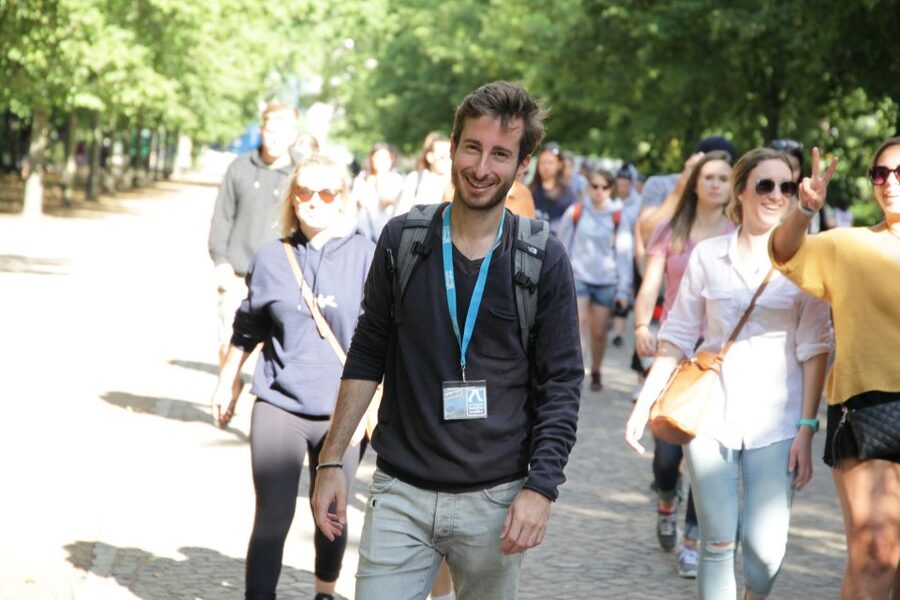
The strongest guide style, based on the information available, is warm and direct. Anja, described as a historian and archaeologist, is noted for setting events and people into a clear context. Gregor brings family memories of growing up while Berlin changed. Philipp combines history with current city life and personal experience. Tobi and Walid add humor and keep the pace easy to follow.
That variety matters because a walking tour depends heavily on the person leading it. The subject can become grim and dense. The best guides make space for questions, use humor carefully, and pause in sheltered places when the weather turns rough.
Other walks around Berlin:
- Discover Berlin Half-Day Walking Tour
★ 5.0 · 9,624 reviews - Berlin: Third Reich and Cold War 2 Hour Walking Tour
★ 4.9 · 6,830 reviews - Berlin’s Best: 2 Hour Walking Tour Third Reich and the Cold War
★ 5.0 · 5,486 reviews
Brandenburg Gate and the story of power
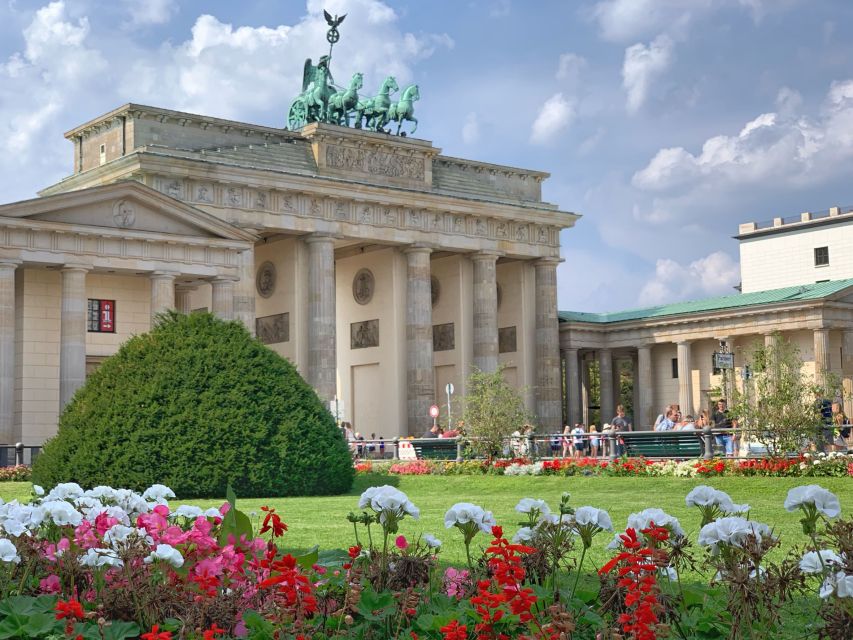
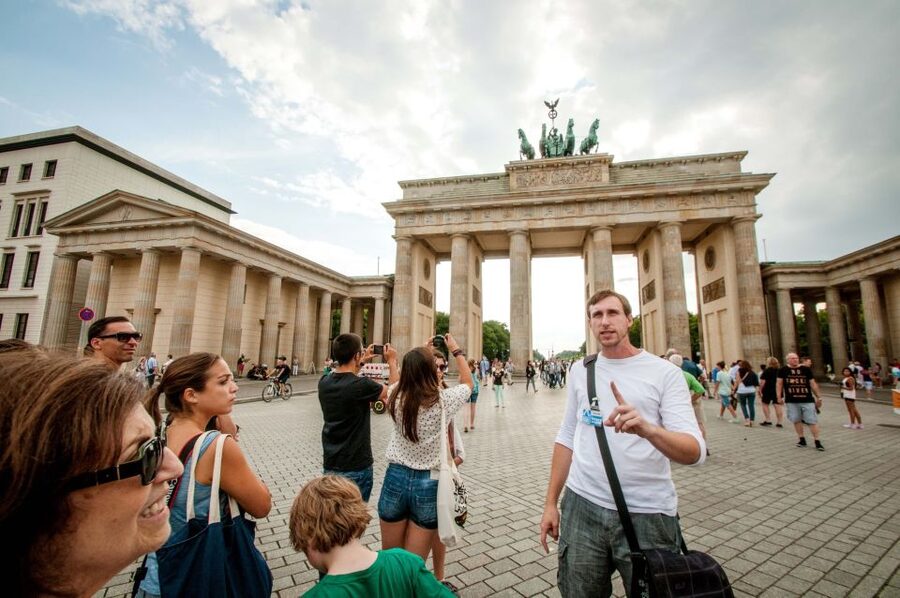
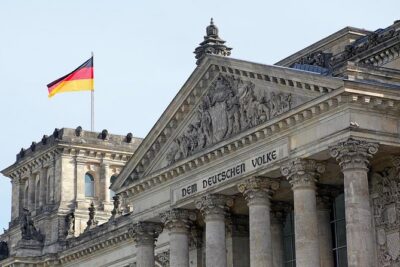
The Brandenburg Gate is an obvious place to begin a Berlin visit, but it is more than a handsome neoclassical gateway. The tour uses it to explain Berlin’s years as a Prussian and imperial capital, then follows the gate through the Nazi period, the Cold War, and reunification.
You will hear about the people and political movements that used Berlin as a stage. The guide may also connect the city’s story to figures such as Albert Einstein, Marlene Dietrich, and John F. Kennedy. These personal links help keep the tour from becoming only a march through government buildings.
The gate is also a good reminder that Berlin’s symbols have changed meaning. Once a royal entrance, it later sat beside the Berlin Wall and became a potent image of a divided city. Today it represents unity, but the route gives you the harder parts of that story as well.
Expect people, traffic, and plenty of photographs here. The guide’s explanation is the main event, so stay close enough to hear and save your picture-taking for a natural pause.
Bebelplatz and the moral weight of an open square
Bebelplatz looks spacious and formal, surrounded by important buildings. Its historical meaning is much darker. This is the site of the Nazi book burning, an event that showed how the regime attacked free thought and public debate before the full horror of its rule became clear.
The stop works because the setting is not hidden away in a museum. You are standing in an ordinary public square, among university and state buildings, while the guide explains how propaganda and repression entered daily life.
A thoughtful guide can make this moment useful without turning it into a lecture. The point is not only to remember one act of destruction. It is to see how cultural control, intimidation, and political power can appear in a public place.
Bebelplatz is also a good example of why you should take notes or mark the location for a later return. The square is easy to pass without knowing what happened there.
The Holocaust Memorial and the debate over design
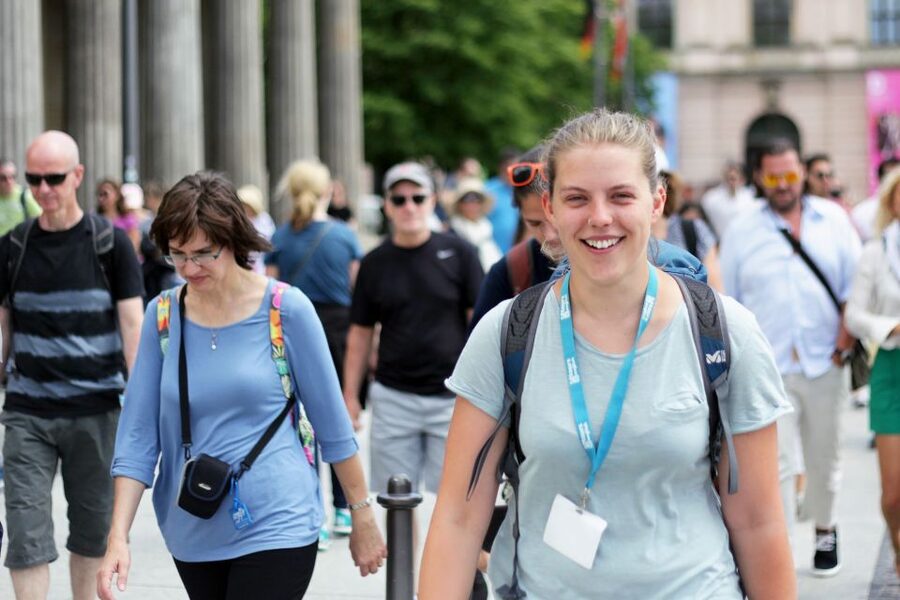
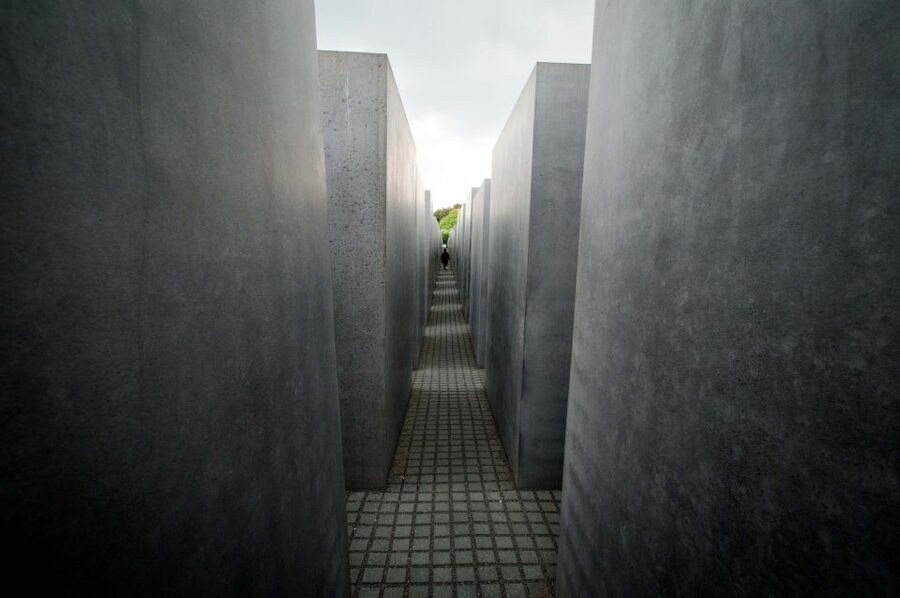
The Memorial to the Murdered Jews of Europe brings the tour into one of Berlin’s most difficult subjects. The concrete blocks are powerful, but the design has also raised questions about how a city should remember mass murder.
Your guide explains the controversy around the memorial’s form and the story it tells. That matters because the site is not simply a monument to photograph. Its meaning depends on how you move through it, how you understand its purpose, and how it fits into modern Germany’s effort to face the crimes of the Nazi period.
The tour also places the memorial near the government district and Brandenburg Gate, showing how present-day Berlin lives beside its most painful history. I appreciate that kind of context. You are not asked to treat the memorial as an isolated object.
The guide may also point out nearby locations connected with the Nazi leadership. Keep your expectations realistic: the tour takes you to significant sites and explains them, but it is primarily a walking and storytelling experience, not a museum visit.
Same base, a different kind of day out:
- Berlin: Reichstag, Dome and Government District Guided Tour
★ 4.7 · 18,288 reviews - Berlin: 1-Hour City Tour by Boat with Guaranteed Seating
★ 4.3 · 16,993 reviews - Berlin: Boat Tour Along the River Spree
★ 4.4 · 11,252 reviews - Berlin: Hop-on Hop-off Bus Tour with Live Commentary
★ 4.3 · 8,579 reviews
The bunker site and the final days of Hitler’s regime
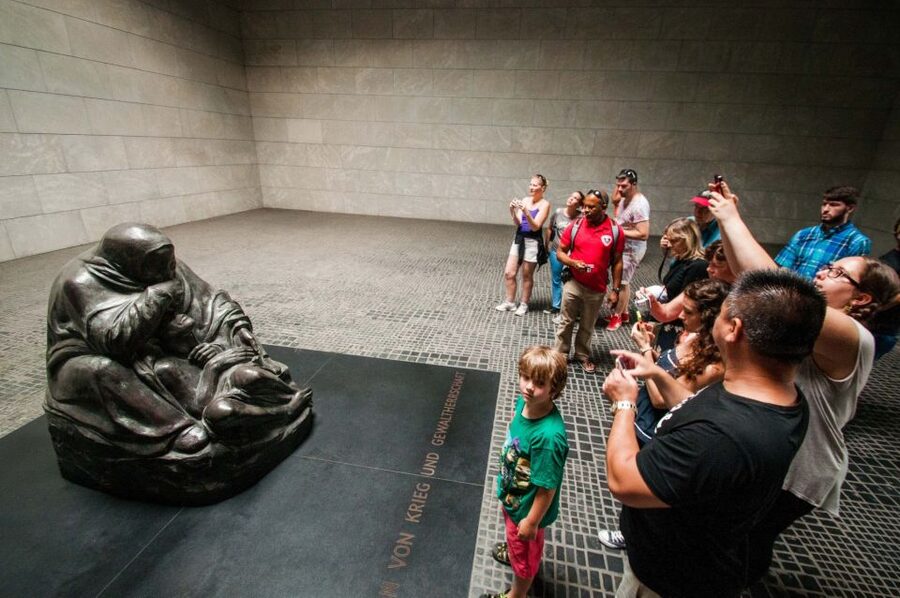
One of the most striking stops is the site above Hitler’s bunker, where he took his life in April 1945. The location does not look like a dramatic historic ruin. That contrast is part of what makes the stop effective.
You stand above the place where the Nazi leadership collapsed while the guide explains the last days of the war and the destruction around Berlin. The absence of a grand visible structure also reflects the complicated question of how such places should be marked. Berlin has had to remember the crimes of the regime without creating a shrine to its leaders.
This is a serious part of the walk. The guide’s tone matters, and the strongest approach is factual, restrained, and clear. It is also a stop that may unsettle you, especially if you have come to Berlin wanting only monuments and attractive streets. That discomfort is useful. Berlin’s story cannot be told honestly without it.
Checkpoint Charlie and the Cold War city
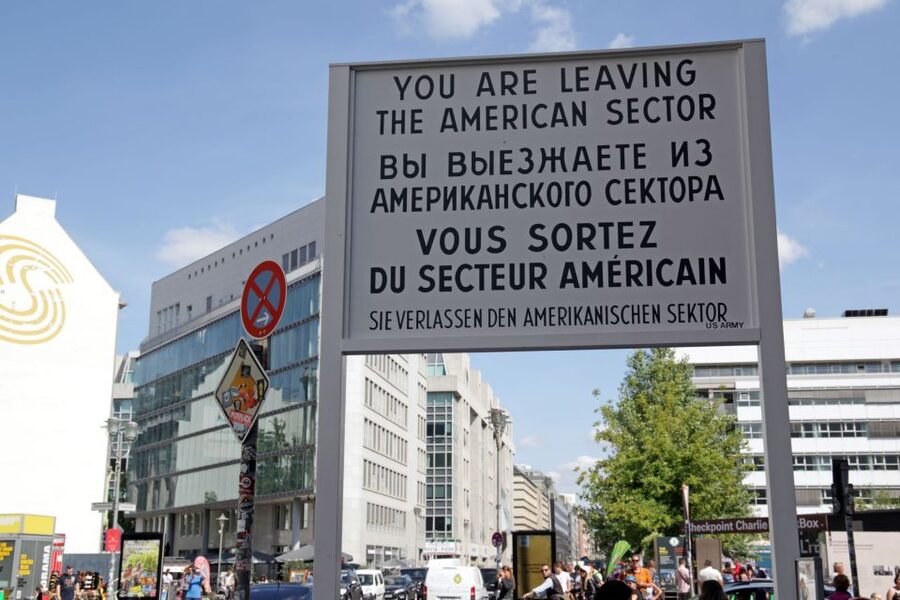
Checkpoint Charlie shifts the focus from dictatorship to division. This former crossing point became one of the best-known symbols of the Berlin Wall and the confrontation between the United States and the Soviet Union.
The guide explains how the border worked and tells stories of attempted escapes. These accounts give the Cold War a human scale. Instead of seeing the Wall only as a political boundary, you begin to picture the risks taken by people who wanted to cross it.
The area today is busy with visitors and modern commercial activity. Some people find that distracting, especially if they expect a preserved historical scene. I think the contrast is worth discussing. The site shows how memory, tourism, and city life overlap in central Berlin.
Checkpoint Charlie is also useful for orientation. After the tour, you can return to explore nearby Cold War sites or use the area as a starting point for the rest of your day.
Museum Island, Berlin Cathedral, and Palace Square
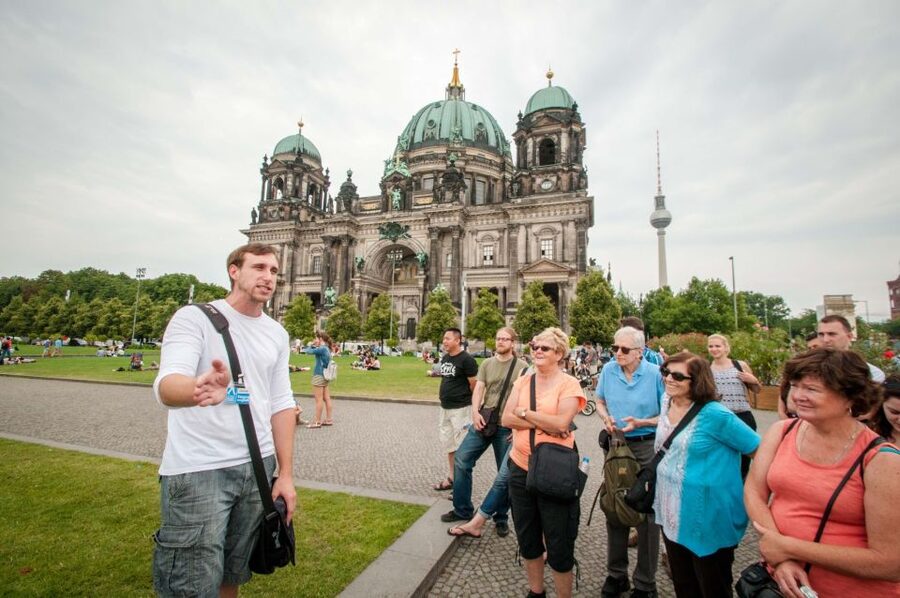
Museum Island gives the walk a different tone. Here the focus shifts toward Berlin’s royal, imperial, cultural, and architectural identity. Berlin Cathedral and Palace Square help explain how the city’s center was built, damaged, reshaped, and debated.
The guide connects the buildings to changing ideas about German power and national identity. Palace Square is especially useful because its appearance reflects modern arguments about reconstruction and historical memory. Berlin often rebuilds, replaces, or reinterprets its past rather than leaving every ruin untouched.
Do not confuse this part of the tour with a museum visit. The guide takes you through the area and explains the sites from outside. If you want to enter Berlin Cathedral or one of the museums, plan separate time and admission.
Museum Island also helps break up the heavier Nazi and Cold War material. You get architecture, politics, art, and urban change in the same walk. That balance keeps the experience from becoming emotionally exhausting.
Medieval Berlin, famous residents, and modern life
The tour reaches further back than the twentieth century. Your guide explains Berlin’s early beginnings, including its swampy medieval origins, before moving through Prussian rule and the imperial period.
That long view is valuable. Without it, Berlin can seem like a city created only by war and the Wall. You learn that the twentieth century transformed an older capital with its own institutions, ambitions, and social life.
The people woven into the story make the timeline easier to remember. Albert Einstein helps connect Berlin with science. Marlene Dietrich brings in cinema, performance, and the experience of leaving Germany. John F. Kennedy links the city to the Cold War and the international attention focused on divided Berlin.
The strongest guides also connect history with modern Berlin. Philipp is praised for bringing current culture into the story, while Gregor’s family experiences offer a personal sense of how the city changed. These details can help you notice that reunification is not an old, finished event. It still shapes the way Berlin looks and feels.
Choosing two hours or four hours

The shorter option suits you if you have limited time, want a first orientation, or are traveling with children who may not enjoy a long history lesson. Gregor’s guide style, for example, was described as easy to follow for a group that included a 13-year-old. A good guide can make serious material accessible without flattening it.
Choose the longer version if Berlin’s history is a main reason for your visit. Four hours gives the guide more room to explain connections, answer questions, and place the major sights in a larger story. It also gives you more walking, so do not book it casually if you dislike being on your feet.
The route covers a lot. You should expect regular stops rather than nonstop walking, but the total distance and pace depend on the option booked and the day’s conditions. Wear shoes you can trust and bring water.
A private group is available. That option may appeal to families or friends who want more control over questions and pace. The standard price is listed at $23 per person, which is strong value if you want a history-based introduction to central Berlin. You are paying for interpretation and structure, not entry to museums or transport.
What the guide quality means for your experience
The repeated strengths are clear: guides explain difficult subjects plainly, keep the pace comfortable, welcome questions, and use humor without losing sight of the material.
Anja’s academic background may appeal to you if you want careful context. Philipp’s mix of history and present-day Berlin suits people who want to understand the city beyond its monuments. Gregor’s family memories add a local angle, while Tobi, Walid, Georgia, Stefan, Luisa, and others are praised for energy, warmth, and clear storytelling.
Names are not guaranteed, so book this for the format rather than a particular person. Still, the range of praised guides suggests that the provider has built a strong team rather than relying on one star presenter.
The weather point deserves emphasis. The tour operates in rain and snow, and some guides adapt by stopping in sheltered areas. You should still bring a warm layer, waterproof outerwear, and gloves in winter. On a cold day, the difference between a good experience and a miserable one may be as simple as proper clothing.
Who should book this Berlin walking tour?
Book it if you are visiting Berlin for the first time and want the city’s main historical locations explained in one organized walk. It is especially useful if you have only one full day and need help deciding which places deserve a closer look later.
It also suits history-minded families, couples, and private groups. The guides seem comfortable with questions and with explaining complex subjects in plain language. You will get the most from it if you are willing to engage with difficult topics rather than treating the route as a checklist of photo stops.
You may want something else if you prefer indoor museums, a relaxed sightseeing bus, or a tour focused mainly on food and neighborhoods. This experience covers central landmarks, but its real subject is Berlin’s political past.
Should you book it?
Yes, if you want a well-priced introduction to Berlin’s major sights and the events that connect them. The $23 fee is reasonable for two to four hours with a live guide, especially when the tour helps you understand places that can look ordinary without context.
Choose the longer option for serious history, the shorter one for a first orientation, and dress for the weather either way. If you leave knowing why Brandenburg Gate, Checkpoint Charlie, Bebelplatz, Museum Island, the Wall, and the bunker site matter, the walk has done its job.
FAQ
How long does the Berlin walking tour last?
You can choose a tour lasting about 2 hours or a longer option lasting up to 4 hours. Starting times depend on availability.
What languages are available?
The tour is offered in English and German.
Is the tour private?
A private group option is available. The meeting point may vary according to the option you book.
What sights does the tour cover?
The route includes Brandenburg Gate, Checkpoint Charlie, Museum Island, Berlin Cathedral, Palace Square, Bebelplatz, parts of the Berlin Wall, the Holocaust Memorial area, and the site above Hitler’s bunker.
Does the tour enter museums or buildings?
The provided details describe a walking tour of significant places and sights. They do not state that museum or building admission is included.
What should I bring?
Bring weather-appropriate clothing and comfortable shoes. The tour takes place outdoors in rain or shine.
Can I cancel the tour?
You can cancel up to 24 hours before the tour for a full refund. A reserve-now, pay-later option is also available.
Just added in Berlin
- Berlin: Energizing 2-Hour Morning Segway Tour★ 4.7 · 35 reviews
- Berlin: Thrilling E-Scooter Adventure Tour★ 4.4 · 66 reviews
- Beelitz-Heilstätten: Baum&Zeit Tree Top Walk Entry Ticket★ 4.9 · 7 reviews
- Beer Bike & Party Bike: Unforgettable Berlin City Tour incl. pickup★ 5.0 · 5 reviews
- AXE THROWING EXPERIENCE IN BERLIN★ 4.7 · 24 reviews
- Alternative Berlin / Street art tour – Private group★ 5.0 · 6 reviews
- Berlin: Alternative & Street Art Tour★ 4.5 · 6 reviews
- Berlin: 2.5-Hour Beer & Sunset Sightseeing Boat Cruise★ 4.6 · 61 reviews
Walking Tours, compared.

Third Reich Berlin: Hitler and WWII Walking Tour
Read our review →
Browse the lists this tour appears in