
Reviewed · WALKING TOURS
Augsburg: Walking Tour with Fuggerei
Augsburg’s most memorable stop is the Fuggerei, a walled social settlement where the past feels unusually close. This two-hour walking tour also brings you to the Augustus Fountain, Lech canals, Römerlager/Brechthaus, and old-town streets tied to the Fugger family, Mozart, and Bertolt Brecht.
I like the way the tour pairs famous sights with everyday city details, especially the gentle water sounds around the fountains and canals. I also like that admission to the Fuggerei and the Römerlager/Brechthaus is included. The main point to weigh is timing: the 2 PM option is bilingual, while the 11 AM tour is in German, and the route covers a lot in two hours.
Key points to know before you book
- The Fuggerei is the main prize: Your ticket takes you inside the world’s oldest social settlement.
- The 2 PM tour includes the Römerlager/Brechthaus: This option is offered in German and English.
- Augsburg’s water system is part of the story: You pass canals and ornate fountains linked to the city’s UNESCO World Heritage Sites.
- The route connects famous names: Look for traces of the Fugger family, Mozart’s Augsburg family ties, and Bertolt Brecht.
- The price is reasonable for what is included: At $22, you get a guided walk plus two admissions.
- Bring your own listening setup if desired: The optional elysium sound system requires your smartphone, headphones, and an internet connection.
Starting at the Tourist-Information Augsburg
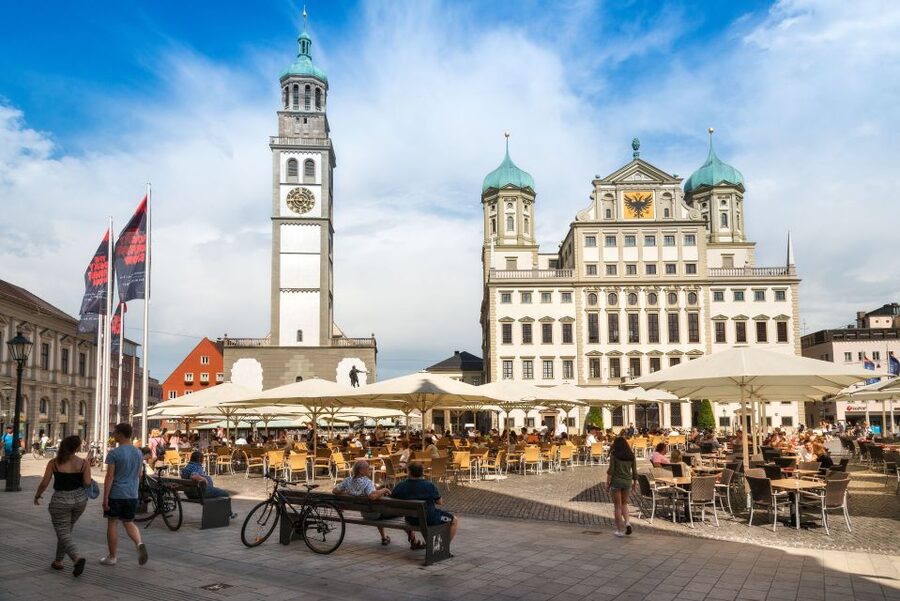
You meet at the Tourist-Information Augsburg, a practical starting point in the city center. Since this is a walking tour, you do not spend time waiting for a bus or transferring between sights. Arrive ready to walk, with comfortable shoes and your phone if you plan to use the optional sound amplification system.
The tour lasts two hours. That is long enough to cover several of Augsburg’s headline sights, but short enough to fit into a day trip or a first afternoon in town. You will get a guided introduction rather than a slow, room-by-room museum visit, so the value comes from the links between places.
The guides speak German or English. The 11 AM departure is in German, while the 2 PM tour is bilingual in German and English. From July 19 through the end of September, Thursday through Sunday, an additional English group runs at 2 PM, but you need to select the specific English option when booking.
More Walking Tours across Germany
- Discover Berlin Half-Day Walking Tour
★ 5.0 · 9,624 reviews - Berlin: Third Reich and Cold War 2 Hour Walking Tour
★ 4.9 · 6,830 reviews - Munich: Third Reich & WWII Walking Tour
★ 4.6 · 6,181 reviews
The Augustus Fountain and Augsburg’s water story
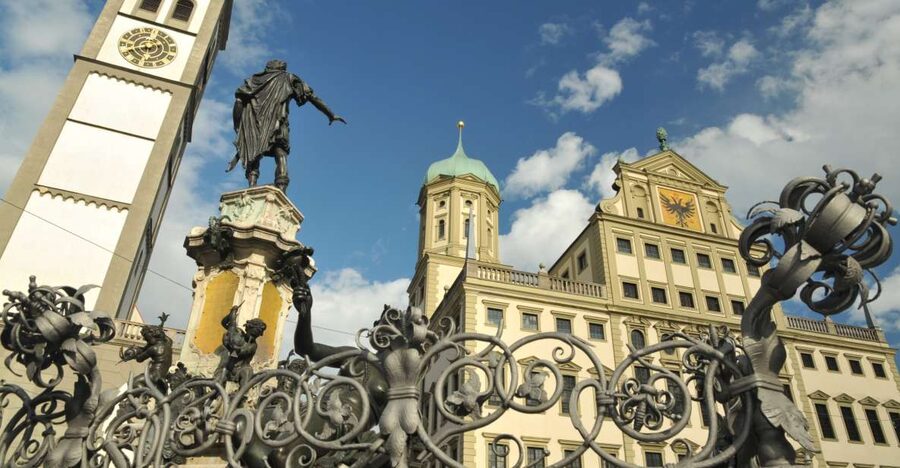
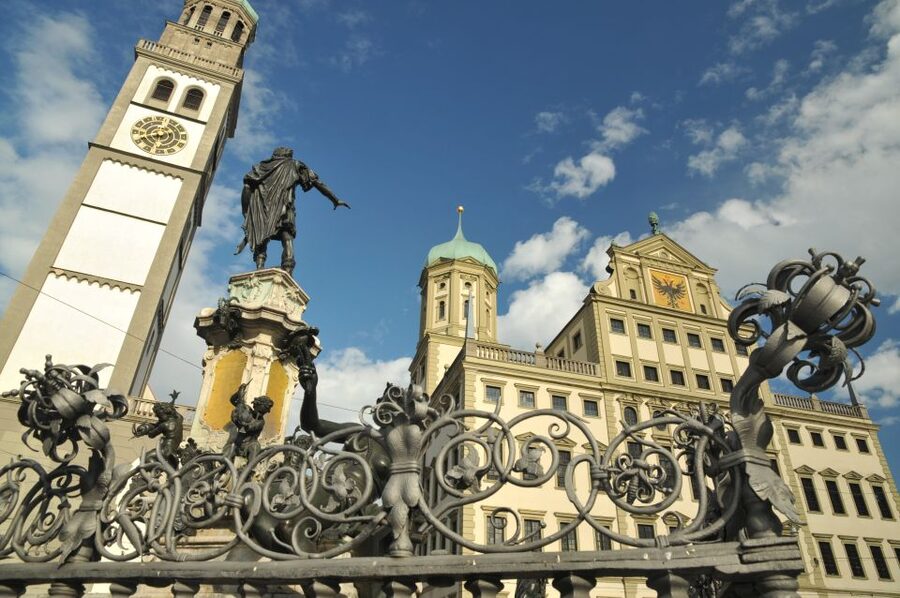
One of the first pleasures of an Augsburg walk is simply hearing water in the middle of the city. The Augustus Fountain is an ornate 16th-century monument, and its sound gives the tour a pleasant rhythm as you move through the center.
The fountain is not just decoration. It belongs to the wider group of canals, waterworks, and fountains that help explain Augsburg’s UNESCO World Heritage designation. The tour passes several of these sites, including the Lech canals, so you get a useful sense of how water shaped the city rather than seeing one isolated monument.
I find this part especially helpful if you are new to Augsburg. A quick look at a fountain can feel like a minor stop, but a guide can connect it to the city’s engineering, public spaces, and long development. You also get a break from facts delivered indoors. The gentle splash of water makes the walk feel less like a checklist.
Do not expect a specialist engineering tour. The route uses Augsburg’s water sites as part of a wider city introduction. If canals and historic infrastructure are your main interest, you may want more time on your own after the tour.
Entering the Fuggerei, Augsburg’s most unusual stop
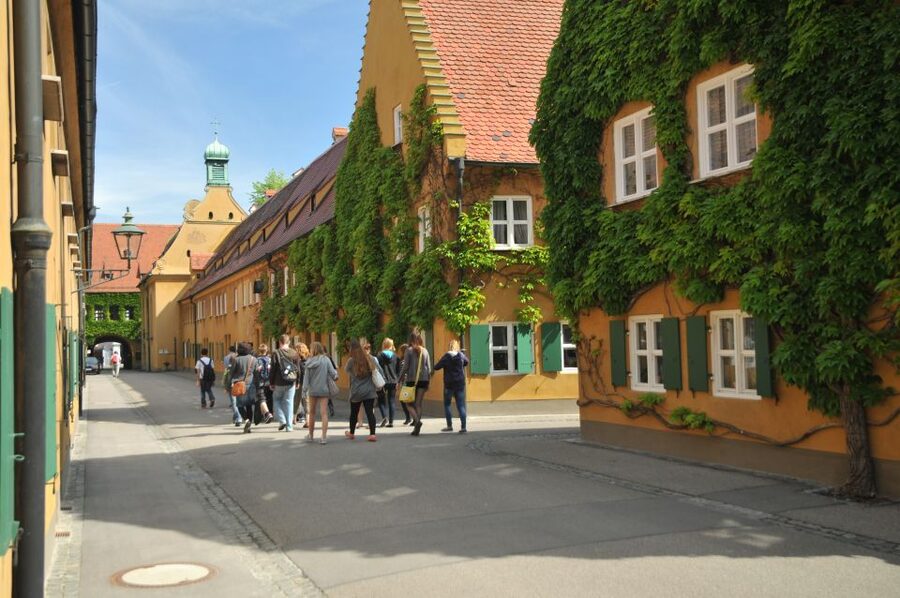
The Fuggerei is the heart of this experience. Founded as a social settlement, it is recognized as the world’s oldest of its kind. The setting gives you a direct look at a very different approach to housing and charity, connected to the powerful Fugger family.
Your entrance ticket is included, which matters because the Fuggerei is more than a sight you simply pass from the street. You go inside the settlement and see a place with its own identity within Augsburg. The narrow streets and modest homes offer a sharp contrast to the wealth associated with the Fugger name.
This is also where the tour becomes more than a standard old-town walk. The Fuggers were a prominent German upper-bourgeois family and major European bankers. Their influence helps explain why Augsburg has such grand civic buildings, fountains, and religious foundations. The settlement shows another side of that story, one tied to social responsibility and daily life.
Allow yourself to notice the small scale of the place. A guided visit can point out what makes the settlement unusual, while the setting gives you room to think about how an old charitable institution still fits into a modern city. The tour does not present Augsburg only through grand monuments. It adds people, housing, and social ideas to the picture.
The practical limit is time. You receive an entrance visit as part of a larger route, not an extended independent exploration. If the Fuggerei is your top priority, plan to stay focused during this section and consider returning later if the opening arrangements allow. The included admission makes the tour a good first look.
Following the Fugger family through the old town
The Fugger family gives Augsburg a strong historical thread. Their banking success reached across Europe, and traces of their influence appear in the city center. A guide helps you connect names, buildings, and public works instead of meeting the Fuggers as a single isolated fact.
This is one reason I prefer taking the walk early in your Augsburg visit. You will hear references that can make later sightseeing easier to understand. A fountain, church, civic building, or district may carry more meaning once you know how commerce and family power shaped the city.
The route moves through charming old-town streets, so the experience is not limited to major monuments. You get the useful in-between spaces too: streets that connect one landmark to another, views of the historic center, and a better sense of how the attractions fit together.
The tour is also a good option for visitors who want orientation without spending half a day in a museum. You get a compact city overview, then you can choose which sites deserve a longer visit. The guide’s role is important here, since the visible city can otherwise seem like a collection of attractive but unrelated buildings.
Same base, a different kind of day out:
- Berlin: Reichstag, Dome and Government District Guided Tour
★ 4.7 · 18,288 reviews - Berlin: 1-Hour City Tour by Boat with Guaranteed Seating
★ 4.3 · 16,993 reviews - Hamburg: Sex and Crime in St. Pauli Tour for Ages 18+
★ 4.7 · 15,447 reviews - Hamburg: 1.5-Hour Harbor and Speicherstadt Day Cruise
★ 4.6 · 14,200 reviews
Mozart and Brecht, two very different Augsburg connections
Augsburg’s connection to Mozart is through his father, who was born in the city. That detail adds a personal thread to the walk and shows how the city’s importance reaches beyond its own monuments. You are not simply following a local family story. You are also seeing how Augsburg connects to broader German and European culture.
Bertolt Brecht gives the tour a very different voice. The route includes the Brechthaus, linking the city to one of Germany’s best-known playwrights and poets. Brecht’s connection is not treated as a decorative name on a plaque. It forms part of the story of how Augsburg produced and influenced notable figures.
The combination of Mozart and Brecht works well because it keeps the walk varied. One connection reaches into music and family origins; the other leads toward literature and theater. You may not get a long biography of either man in two hours, but you will leave with clear reasons to notice their Augsburg ties.
The Brechthaus is paired with the Römerlager in the included entrance ticket at 2 PM. This gives the route a useful change of scale, moving from the city’s later cultural figures to its Roman past. Check the time option carefully if seeing this interior stop matters to you, since the provided schedule specifically lists the entrance at 2 PM.
The Römerlager and the layers beneath modern Augsburg
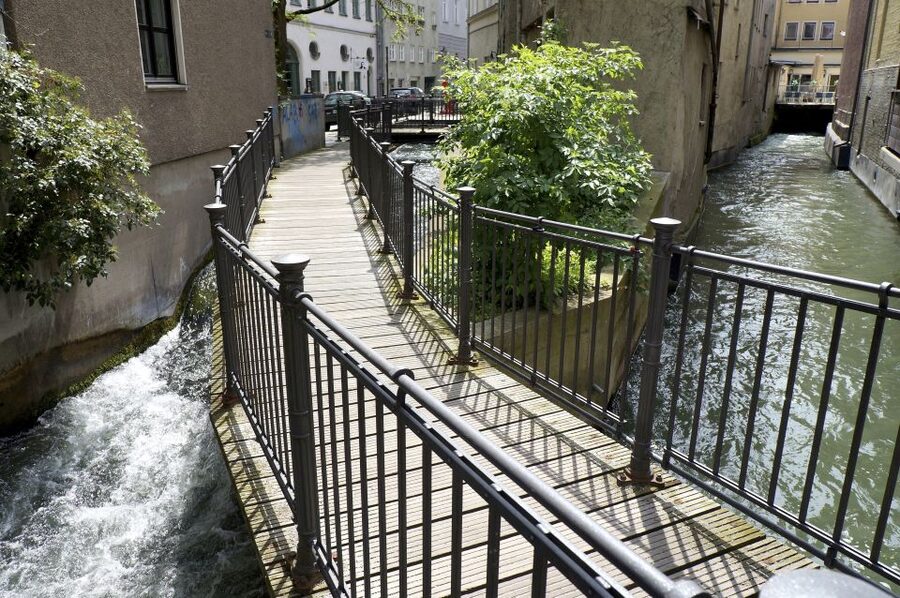
The Römerlager adds an older layer to the tour. Augsburg is not only a medieval and early modern city, and this stop helps place its later streets within a much longer timeline. Seeing the Roman connection alongside the Fuggerei and Brechthaus gives you a compact view of the city’s changing roles.
This is a good example of why a guided route can be more useful than wandering without a plan. In a short distance, you move between Roman history, banking power, social housing, water engineering, and modern literature. The guide provides the thread that keeps these subjects from feeling random.
The visit is not presented as a full archaeological day. Instead, it is one part of a brisk city route. If you have a strong interest in Roman Augsburg, treat this as an introduction and use it to decide what you want to study next. The included ticket still adds value, especially for a visitor with only a few hours in town.
What the two-hour pace feels like
Two hours sounds generous until you count the Fuggerei, fountains, canals, old-town streets, cultural figures, UNESCO sites, and interior entrances. Expect a steady walk with regular stops rather than long periods at one location.
I would choose comfortable shoes and avoid overloading the same day with another tightly scheduled walking tour. The activity is wheelchair accessible, which makes it suitable for many visitors, though a walking route through an old town can still feel busy in terms of sightseeing pace. The available information confirms accessibility but does not describe the exact street surfaces or route details.
The optional elysium sound amplification system may help you follow the guide, especially if the group is spread along a street or fountain area. It is free, but you must bring your own smartphone, headphones, and internet connection. If you prefer not to use it, ask the guide where to position yourself so you can hear clearly.
A 2 PM start is useful if you arrive in Augsburg late morning or want time for lunch first. It also gives you the bilingual format in German and English. The 11 AM German tour is the earlier choice, but it is not the right option if you need English commentary.
Is $22 a fair price?
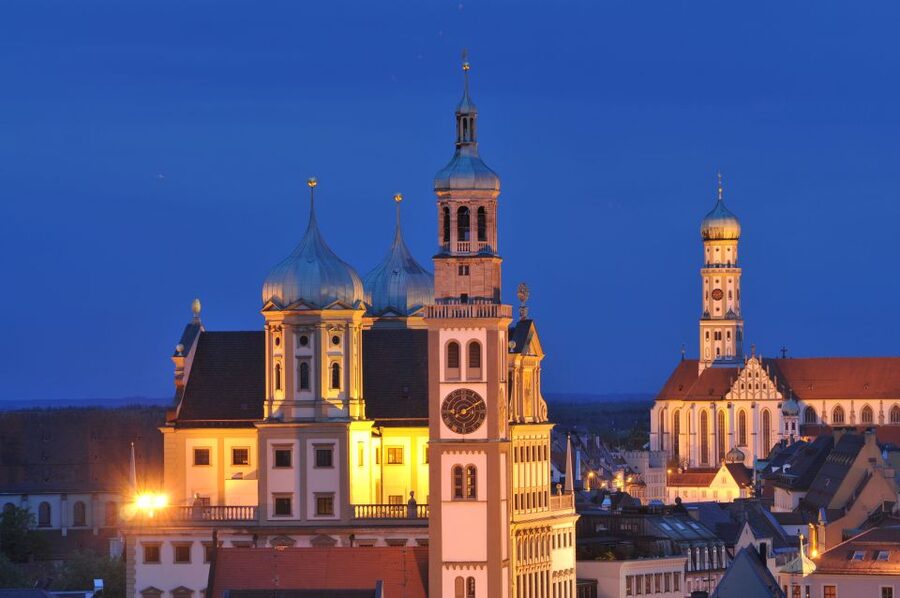
At $22 per person, this tour offers solid value if you want both guidance and admission to the main paid stops. The Fuggerei entrance is included, as is the entrance to the Römerlager/Brechthaus at 2 PM. You are also paying for a two-hour walking route through several major parts of central Augsburg.
The price is less compelling if you plan to walk the old town alone and only want exterior views. Augsburg is easy to enjoy at street level, and you could see fountains, canals, and many old-town streets without joining a group. The tour earns its cost through the explanations, the organized route, and the included entries.
I would especially consider it good value on a short visit. You get a quick orientation, several strong landmarks, and enough historical context to make later independent sightseeing more rewarding. It is also a sensible first activity for anyone who does not know which parts of Augsburg deserve their limited time.
Free cancellation up to 24 hours in advance and the reserve-now, pay-later option make the booking less restrictive. Hotel pickup and drop-off are not included, but the central meeting point means you arrange your own way to the Tourist-Information Augsburg.
Who should book this Augsburg walk?
This tour suits first-time visitors, day trippers, couples, families, and anyone who prefers a clear route through a historic city. It is particularly useful if the Fuggerei is high on your list and you want its admission handled as part of a wider experience.
It also suits visitors who like history in small, connected pieces. You will hear about banking, Roman Augsburg, social housing, water systems, music, and theater in one compact walk. That mix gives you a broad introduction without committing to a full day indoors.
You may want a different plan if you prefer unstructured wandering, photography stops, or long visits at each attraction. Two hours leaves limited time to linger. Visitors seeking a specialist tour of Augsburg’s water system, Roman archaeology, or Brecht would likely need additional sightseeing beyond this route.
The language choice deserves careful attention. Pick the 11 AM German tour if you are comfortable following a German-only guide. Pick the 2 PM bilingual tour for German and English, or choose the seasonal English option when it is available from July 19 through the end of September on Thursday through Sunday.
My advice before you go
Bring headphones and a smartphone with internet access if you want the free sound amplification system. Wear shoes suited to two hours on foot, and arrive at the Tourist-Information Augsburg with enough time to find the meeting point without rushing.
Keep the Fuggerei in mind as the tour’s anchor. The fountains, canals, Roman material, and famous names are all worthwhile, but the social settlement is the stop that gives this outing its most distinctive character. The walk is at its best when you let those different pieces explain Augsburg together.
The experience has a strong rating of 4.6 from 2,245 bookings, and the most useful takeaway is clear: it is designed to be informative without becoming a long lecture. It packs in plenty of context, and the Fuggerei visit gives the route a memorable center.
Should you book this tour?
Book it if you want an efficient introduction to Augsburg with the Fuggerei included. At $22, the combination of a local guide, a two-hour central walk, and two admissions is a sensible deal, especially for a first visit or a short stop.
Skip it if you already know Augsburg well, dislike fixed pacing, or want to spend most of your time inside one site. For everyone else, choose the language and departure time carefully, make the Fuggerei your priority, and use the tour as a map for exploring more of the city afterward.
FAQ
Where does the Augsburg walking tour meet?
The meeting point is the Tourist-Information Augsburg.
How long does the walking tour last?
The tour lasts two hours.
What languages are available?
The tour is available in German and English. The 11 AM tour is in German, while the 2 PM tour is bilingual in German and English.
Is the Fuggerei entrance included?
Yes. The entrance ticket to the Fuggerei is included in the tour price.
Is the Römerlager/Brechthaus entrance included?
Yes. The entrance ticket is included for the 2 PM tour.
What should I bring for the optional sound system?
Bring your smartphone, headphones, and an internet connection. The elysium sound amplification system is optional and free of charge.
Is the tour wheelchair accessible?
Yes, the activity is listed as wheelchair accessible.
Just added in Germany
- Berchtesgaden: Via Ferrata Beginner Tour of Schützensteig★ 4.7 · 15 reviews
- Berlin: Energizing 2-Hour Morning Segway Tour★ 4.7 · 35 reviews
- Berlin: Thrilling E-Scooter Adventure Tour★ 4.4 · 66 reviews
- Bayreuth: German City Walking Tour (Tourist Info)★ 4.7 · 202 reviews
- Beelitz-Heilstätten: Baum&Zeit Tree Top Walk Entry Ticket★ 4.9 · 7 reviews
- Beer Bike & Party Bike: Unforgettable Berlin City Tour incl. pickup★ 5.0 · 5 reviews
- Bavaria: Beginner Canyoning Tour★ 4.5 · 10 reviews
- Bayreuth: Christmas city tour in German★ 4.9 · 12 reviews
Walking Tours, compared.




Third Reich Berlin: Hitler and WWII Walking Tour
Read our review →
Browse the lists this tour appears in