
Reviewed · WALKING TOURS
Augsburg’s Water Management System – City Walking Tour
Augsburg’s water story is hiding in plain sight. On this two-hour walk, you follow narrow Lech canals, grand fountains, and old waterworks that helped shape the city. The finale is Rotes Tor, home to the oldest existing waterworks in central Europe.
I like the route’s mix of everyday city corners and big civic monuments. I also like that guides such as Brigitte Plonner can turn an engineering subject into a lively conversation. The main caution is that the experience can feel fact-heavy, especially in wet weather or with a guide who leans hard on dates and historical detail.
Key points to know before you book
- Rotes Tor is the standout stop: See the oldest existing waterworks in central Europe at one of Augsburg’s most important historic gates.
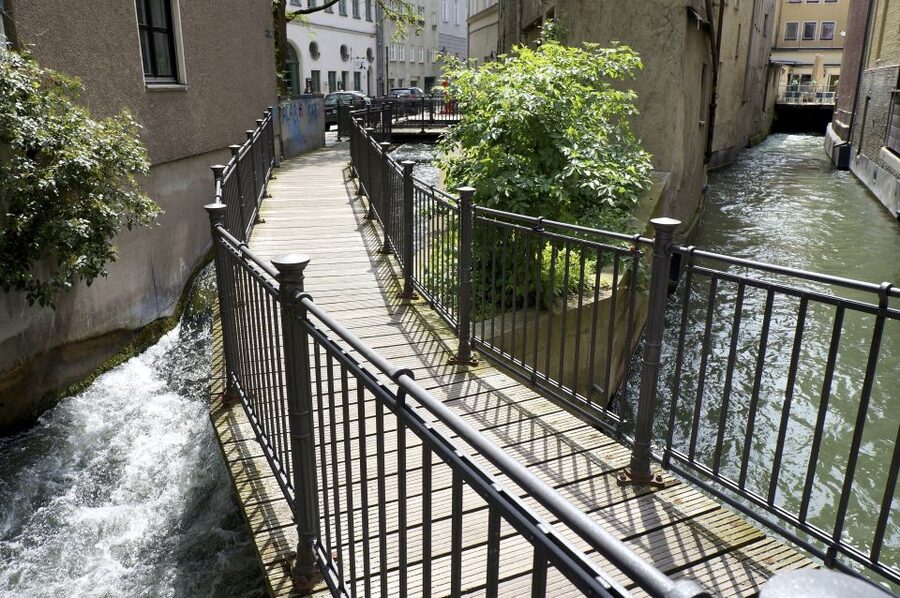
- The canals are part of daily city life: The small waterways in the Lech quarter run beside red-roofed houses and cobbled streets.
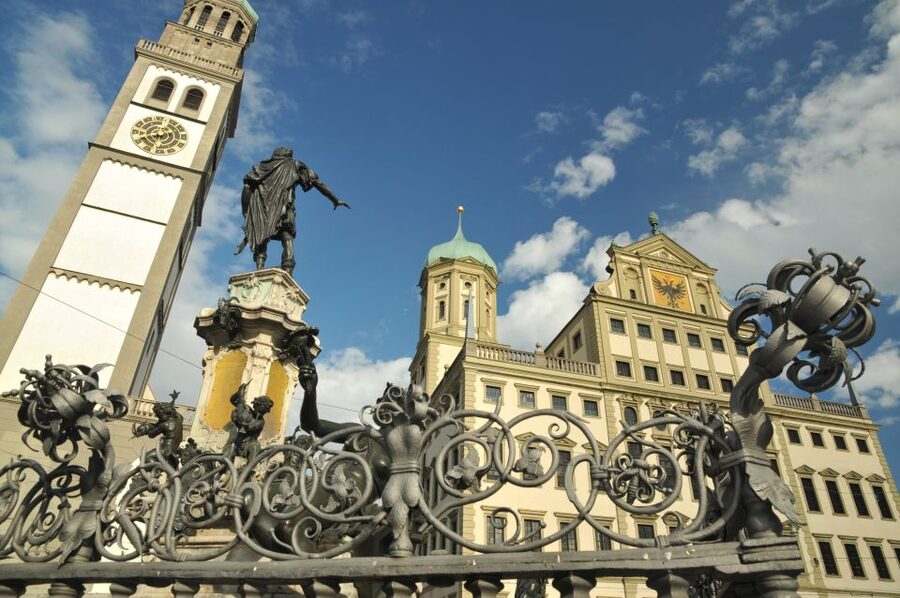
- Three major fountains anchor the route: The Augustus, Merkur, and Herkules fountains show how Augsburg made water both useful and grand.
- The tour covers only some of 22 UNESCO elements: Two hours gives you a focused introduction, not every part of the full system.
- Bring your own listening setup if you want it: The optional elysium sound system works with your smartphone, internet connection, and headphones.
- Budget about €17 before currency conversion: The listed price is €14 per person plus a €3 administration fee, roughly $20 depending on exchange rates.
Why Augsburg’s water system is worth two hours
Augsburg’s water management system is not one isolated museum piece. It is a network of canals, fountains, waterworks, and related structures spread through the city. This walking tour helps you see those parts as one working idea rather than as unrelated sights.
That matters because the water is easy to miss if you explore Augsburg on your own. You may notice a channel beside a street or admire a fountain in a square, but a guide explains how each feature fits into the city’s long effort to control, distribute, and display water.
The system is recognized as a UNESCO World Heritage Site. On this tour, that label becomes more useful because you see several physical elements in place: the Lech canals, public fountains, and the waterworks at Rotes Tor.
You should not expect a full technical course. One useful point from the tour’s format is that the focus is more on the history of Augsburg’s water supply than on detailed machinery or engineering methods. If you want dates, civic development, and the role of water in city life, this should suit you. If you want a close technical explanation of pumps, pressure, and construction, you may find the treatment fairly light.
More Walking Tours across Germany
- Discover Berlin Half-Day Walking Tour
★ 5.0 · 9,624 reviews - Berlin: Third Reich and Cold War 2 Hour Walking Tour
★ 4.9 · 6,830 reviews - Munich: Third Reich & WWII Walking Tour
★ 4.6 · 6,181 reviews
Starting in the Old Town with fountains overhead
The meeting point is in front of the Tourist Information Center, in the heart of Augsburg. From there, the walk heads through the Old Town, where the route uses cobbled streets and city squares to introduce the water system.
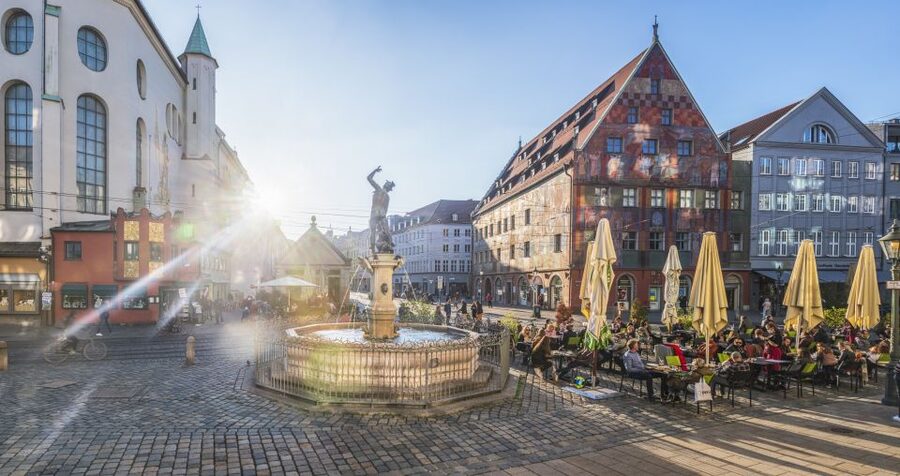
The fountains are not minor decorations along the way. The Augustus Fountain, Merkur Fountain, and Herkules Fountain are among the most striking sights on the route. They show how water served a public purpose while also giving Augsburg impressive civic symbols.
The Augustus Fountain is especially useful as an opening example. It connects the city’s public image with its water supply, giving you a clear sense that Augsburg treated water as both a practical resource and a sign of civic pride.
The Merkur and Herkules fountains add variety. You are not simply looking at pipes or channels. You are seeing water presented through sculpture, urban design, and public space. A guide can point out details that are easy to pass by when you are focused only on the surrounding buildings.
I would pay attention to the setting as much as the fountains themselves. The value comes from the relationship between the monument, the square, and the wider network of water features. This is a city walk first, so you also get a useful orientation to central Augsburg along the way.
Following the small canals in the Lech quarter
The route then moves into Augsburg’s Lech quarter. Here, the tone changes from grand fountains to smaller canals running through an older residential part of the city.
You walk beside narrow waterways, red-roofed houses, and cobblestone streets. This section gives the tour its most intimate feel. The water system is no longer represented by a monumental fountain. It becomes part of the texture of the neighborhood.
The Lech canals are one of the strongest reasons to choose this tour instead of simply reading about Augsburg’s UNESCO designation. You can see how water threads through the built environment and understand that the system is spread across ordinary streets, not just preserved inside a formal exhibit.
The setting also brings practical points. Wear comfortable shoes, as requested for the tour, and dress for the weather. Cobblestones can make a long walk less comfortable in thin footwear, while rain can change the mood of this outdoor experience. The route is listed as wheelchair accessible, but anyone who needs a particularly smooth surface should keep the cobbled streets in mind and confirm current route details before booking.
This part of the walk may appeal most to you if you enjoy older neighborhoods and small details. It is less about ticking off a famous monument and more about noticing how canals and houses occupy the same space.
Rotes Tor and the oldest existing waterworks in central Europe
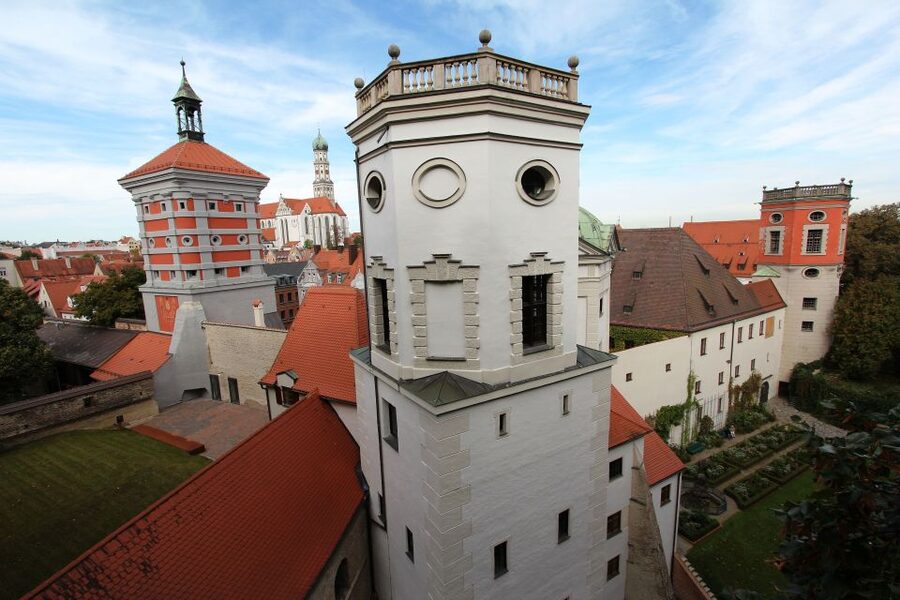
The walk ends at the imposing Rotes Tor, or Red Gate. This is where the water story becomes easiest to grasp as a piece of civic infrastructure.
The waterworks here are described as the oldest existing waterworks in central Europe. That claim gives the stop real weight, but the guide’s explanation is what makes it useful. You learn why the site mattered and how it fits into Augsburg’s wider water system.
Do not expect an entry-heavy museum visit. Entry tickets to attractions are not included, and the experience is built around a guided walk through the city rather than a series of indoor admissions. The Rotes Tor stop is valuable because the guide brings the site into the story of Augsburg’s water supply.
The route covers several of the system’s 22 elements, but not all of them. That is a sensible limit for a two-hour tour. You get a clear sample of the canals, fountains, and waterworks without spending an entire day chasing every listed site.
A few more things to do in Germany worth a look
- Berlin: 1-Hour City Tour by Boat with Guaranteed Seating
★ 4.3 · 16,993 reviews - Leipzig: City History Canal Sightseeing Tour on a Motorboat
★ 4.7 · 6,232 reviews - Cologne: Panoramic City Cruise
★ 4.3 · 5,698 reviews - Berlin: City Sightseeing Hop-On Hop-Off Bus Tour
★ 4.1 · 4,233 reviews
What the guide adds to the walk
The quality of this experience depends heavily on the guide. The tour is offered in German or English, with a live guide rather than an audio-only format.
Brigitte Plonner is one guide associated with especially strong delivery. Her approach is described as clear, engaging, and open to conversation. A small group can make that style even more useful, since you have more room to ask questions and follow an interesting point.
You may also get a guide who sticks closely to historical dates and facts. That can be helpful if you prefer a structured explanation, but it may feel dry if you are looking for personal stories, local anecdotes, or colorful characters. One recent experience in rainy weather was still informative, yet the presentation was described as particularly factual and lacking much anecdotal detail.
That contrast is worth keeping in mind. This is not a performance built around jokes or dramatic storytelling. It is a city history walk with a strong educational purpose. The best fit is someone who enjoys learning how a place developed and does not need every stop turned into a personal tale.
The tour has earned an overall rating of 4.5 from 168 reviews, with repeated praise for being informative and worthwhile. The high points focus on the guide’s ability to explain Augsburg’s water system clearly. The weaker comments focus on presentation style, not on the route or subject itself.
The optional elysium sound system
The tour offers free, optional use of the elysium sound amplification system. You need to bring your own smartphone, an internet connection, and headphones.
This may be useful if the group is large, if street noise makes listening difficult, or if you prefer not to stand close to the guide. It is also one more reason to arrive with your phone charged and ready. The system is optional, so you can simply listen directly if you prefer.
Because the walk takes place outdoors, sound conditions can vary. The amplification option does not change the route, but it can make the guide’s explanation easier to follow while you are looking at a fountain or moving along a canal.
Price, timing, and practical value
The advertised cost is about $20 per person. The detailed price is €14 per person plus a €3 administration fee, for a listed total of €17 before any currency conversion or booking display differences.
That is fair value if you want a guided introduction to several UNESCO-related sights in one compact outing. You are paying for a live guide, a two-hour walking route, and context that would be difficult to gather quickly from signs around the city.
The value is strongest for a first visit to Augsburg. The tour gives you a framework for seeing the city afterward. Once you understand the relationship between the canals, fountains, and waterworks, you can notice the system more clearly as you continue exploring.
The value is weaker if you plan to spend only a few minutes in Augsburg and mainly want to photograph the fountains. You can see some of the public sights without booking a tour, and no attraction entry is included. The fee makes sense when explanation is part of what you want.
The tour lasts two hours, with starting times based on availability. That length is long enough to cover the Old Town, Lech quarter, and Rotes Tor without committing half a day. It also fits neatly into a larger Augsburg itinerary.
You can cancel up to 24 hours in advance for a full refund, and the reserve-now, pay-later option keeps your plans flexible. The meeting point in front of the Tourist Information Center is central and easy to use as a fixed starting point.
Who will enjoy this Augsburg walking tour
I would choose this tour for you if you like city walks that explain how a place works. It suits history fans, architecture fans, and anyone curious about old infrastructure hiding in plain sight.
It is also a good choice for a short stay. In two hours, you see several important parts of Augsburg and gain a useful story that ties them together. The English and German options make it practical for international visitors and German-speaking residents alike.
Families with older children may find the water theme more engaging than a standard list of dates and rulers, though the experience remains a formal walking tour. You should be ready to walk for two hours and listen to a fair amount of historical information.
This tour may not suit you if you want extensive access inside waterworks, detailed engineering demonstrations, or a route built around food and shopping. It is also not the best pick if you strongly prefer personal anecdotes to historical explanation.
Rain is another consideration. The tour runs outdoors, so weather-appropriate clothing matters. A rainy day will not erase the fountains or canals, but it can make a fact-heavy presentation feel even more serious.
Should you book the Augsburg water management tour?
Book it if you want a compact, guided explanation of why Augsburg’s canals, fountains, and waterworks matter. The combination of the Lech quarter, the three major fountains, and Rotes Tor gives you a good range of sights for the price.
I would especially recommend it early in your Augsburg visit. You will then recognize the water system as you walk around the city later. Look for a guide who encourages questions if that matters to you, and bring comfortable shoes, weather protection, and headphones for the optional sound system.
Skip it if you are seeking a technical tour or a highly theatrical local story. The most dependable strength here is clear historical information, while the storytelling style can vary. For most first-time visitors who want context without giving up an entire day, the two-hour route is a sensible buy.
FAQ
How long does the Augsburg water management tour last?
The walking tour lasts two hours.
Where does the tour meet?
Meet the guide in front of the Tourist Information Center.
What languages are available?
The live tour guide is available in German and English.
Does the tour visit the Rotes Tor waterworks?
Yes. The route ends at the waterworks at Rotes Tor, described as the oldest existing waterworks in central Europe.
Are attraction entry tickets included?
No. Entry tickets to attractions are not included in the tour price.
What should I bring?
Bring comfortable shoes and clothing suited to the weather. You can also bring your smartphone, headphones, and an internet connection if you want to use the optional elysium sound amplification system.
Just added in Germany
- Berchtesgaden: Via Ferrata Beginner Tour of Schützensteig★ 4.7 · 15 reviews
- Berlin: Energizing 2-Hour Morning Segway Tour★ 4.7 · 35 reviews
- Berlin: Thrilling E-Scooter Adventure Tour★ 4.4 · 66 reviews
- Bayreuth: German City Walking Tour (Tourist Info)★ 4.7 · 202 reviews
- Beelitz-Heilstätten: Baum&Zeit Tree Top Walk Entry Ticket★ 4.9 · 7 reviews
- Beer Bike & Party Bike: Unforgettable Berlin City Tour incl. pickup★ 5.0 · 5 reviews
- Bavaria: Beginner Canyoning Tour★ 4.5 · 10 reviews
- Bayreuth: Christmas city tour in German★ 4.9 · 12 reviews
Walking Tours, compared.




Third Reich Berlin: Hitler and WWII Walking Tour
Read our review →
Browse the lists this tour appears in