Reviewed · TOURS IN BERLIN
The Old Berlin Tour: Travel Through Time With a Historian
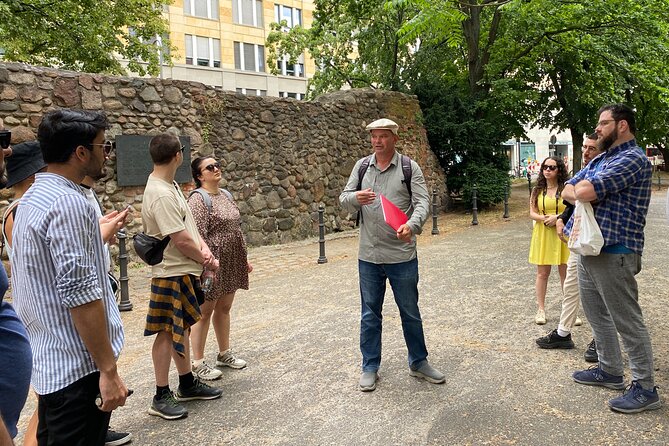
Berlin is a city that rewards you for looking twice. On this two-hour walk, historian Sean Stewart uses Alexanderplatz, medieval ruins, St. Mary’s Church, and Nikolaiviertel to show how Berlin was built, destroyed, rebuilt, and repeatedly reinterpreted. The tour is less about collecting postcard views and more about learning how to read the city’s clues.
I like the small maximum of eight people, which should make it easier to ask questions and keep close to the guide. I also like the unusual focus on vanished streets, surviving fragments, and reconstructed places, rather than simply marching between Berlin’s most famous sights. The main consideration is that this is a history-heavy walking tour, so it may feel less satisfying if you want major interiors, long museum visits, or a broad tour by vehicle.
Key points at a glance
- Alexanderplatz reveals a vanished Berlin: Begin at the city’s busy central square while learning about streets and buildings that no longer exist.
- A medieval ruin breaks up the modern city: Franziskaner Klosterkirche offers one of Berlin’s clearest links to its medieval past.
- St. Mary’s Church connects faith and city life: This important medieval church adds another layer to the story of old Berlin.
- Nikolaiviertel is reconstructed, not untouched: The quarter looks old, but its modern rebuilding raises useful questions about authenticity.
- Sean Stewart leads the walk: He is described as a professional historian with a strong command of Berlin and European history.
- The route ends near Berlin Cathedral: Starting at Alexanderplatz Station and finishing at Am Lustgarten makes the walk easy to fit into a day of sightseeing.
Why this walk changes the way you see Berlin
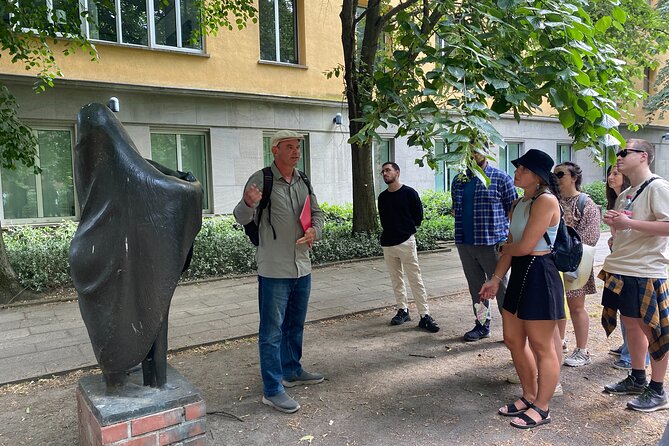
Berlin can seem like a city made almost entirely of modern layers. War, division, redevelopment, and reunification have altered its center so often that the past is not always easy to spot. This walk gives you a way to connect those fragments.
Instead of treating history as a list of dates, Sean Stewart links buildings and open spaces to the forces that shaped them. You begin with the Middle Ages, move through the imperial period and later destruction, and reach the Berlin Wall era and modern city. That broad time span gives you a useful framework before you visit museums or explore on your own.
I especially like the idea of studying places that are missing. A vanished street can tell you as much about Berlin as a surviving church. You learn to notice gaps, rebuilt façades, changes in scale, and the contrast between old-looking architecture and genuinely old remains.
The pace is designed for walking rather than rushing. The listed stops allow about 15 minutes each, with time between them for movement and explanation. Two hours is long enough to give the city a clear historical shape without taking over your entire day.
Other trips people book in Berlin:
- Berlin: Reichstag, Dome and Government District Guided Tour
★ 4.7 · 18,288 reviews - Berlin: 1-Hour City Tour by Boat with Guaranteed Seating
★ 4.3 · 16,993 reviews - Berlin: Boat Tour Along the River Spree
★ 4.4 · 11,252 reviews
Alexanderplatz: begin with what is no longer there
The walk starts at Espresso House Alea 101, Rathausstraße 6, near Alexanderplatz Station, at 11:00 am. Alexanderplatz is a practical meeting point because it is easy to reach by public transportation and well known in central Berlin.
The first stop is not simply about the square you see today. The focus is on vanished streets and buildings, which makes Alexanderplatz a useful introduction to Berlin’s habit of changing its own face. You begin by thinking about absence: what was here, what disappeared, and what replaced it.
That approach is more revealing than a quick photograph of the square. Modern Berlin is often easier to understand when you know what the present city has covered up. Sean’s method, according to the details available about his tours, is to teach you how to read the city instead of encouraging you to photograph every building without a reason.
Allow about 15 minutes here. The square itself can be busy, so stay close to the group and listen carefully. Since this is an outdoor explanation rather than a museum visit, comfortable shoes and weather-appropriate clothing matter.
Franziskaner Klosterkirche: a rare medieval fragment
From Alexanderplatz, the route continues to Franziskaner Klosterkirche, described as Berlin’s only medieval romantic ruin. It is an important change of mood. You move from a major modern square to a fragment that points directly toward Berlin’s earlier centuries.
A ruin can sometimes explain destruction more clearly than a restored building. Broken walls and incomplete forms leave room for questions about what happened, what survived, and why the remains were preserved. Here, Sean can place the church within the larger story of medieval Berlin and show you how unusual it is to find such a visible remnant in the city center.
The stop lasts about 15 minutes and admission is free. You should not expect a lengthy interior visit or a full architectural tour. Its value is in the explanation and the setting, particularly if you have already seen Berlin’s more polished landmarks and want something less predictable.
This is also one of the places where the small group helps. A ruin is easy to overlook when you walk past it alone. With a historian pointing out why it matters, an apparently quiet site becomes part of the city’s larger argument about survival and change.
St. Mary’s Church: faith, age, and urban memory
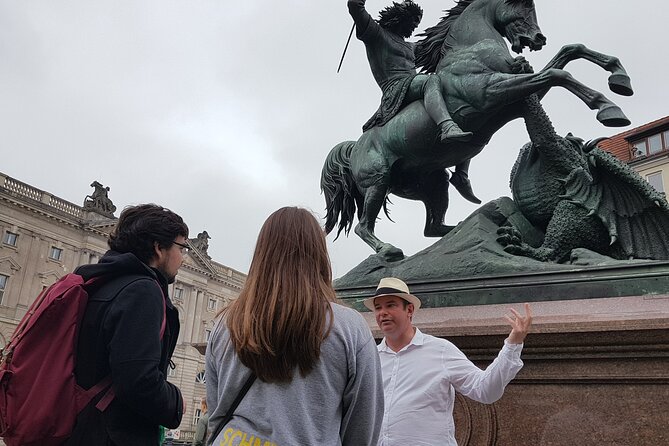
St. Mary’s Church brings the route to another major link with medieval Berlin. It is described as an important church from medieval times, giving the tour a chance to discuss religious life and the role of old churches in the city’s development.
The church is not presented as an isolated monument. It forms part of a story about the historic center, where religious buildings, civic power, and urban growth have long been close together. You get more from the stop if you listen for how the church relates to the surrounding city rather than treating it as a single photo opportunity.
Again, the planned visit is about 15 minutes. That is enough for historical orientation, but not enough for an extended art or architecture study. If you want to examine every detail inside, you will need to return on your own.
The route’s strength is the way each stop adds a different kind of evidence. Alexanderplatz offers vanished streets. Franziskaner Klosterkirche offers a ruin. St. Mary’s Church offers a surviving institution. Together, they show that old Berlin is not one neat preserved quarter. It is a collection of remains, reconstructions, and places whose meaning has shifted.
Same base, a different kind of day out:
- Discover Berlin Half-Day Walking Tour
★ 5.0 · 9,624 reviews - Berlin: Hop-on Hop-off Bus Tour with Live Commentary
★ 4.3 · 8,579 reviews - Berlin: Government District around the Reichstag Guided Tour
★ 4.7 · 8,447 reviews - Berlin: Reichstag, Plenary Chamber, Cupola & Government Tour
★ 4.6 · 8,422 reviews
Nikolaiviertel: old-looking Berlin with a complicated story
Nikolaiviertel is the most playful and possibly most thought-provoking stop. It is described as Berlin’s reconstructed medieval Disneyland, a blunt phrase that tells you not to accept the quarter at face value.
The area presents an old-fashioned version of Berlin, but reconstruction is part of its identity. That does not make it useless or uninteresting. It gives you a chance to ask what a city chooses to rebuild, how a historic image is created, and whether a place can carry historical meaning even when much of what you see is modern reconstruction.
This is where the guide’s attention to contradiction and irony can be especially useful. The goal is not to dismiss Nikolaiviertel as fake, nor to pretend it is untouched medieval Berlin. You look at both sides. The quarter can help you picture the old city while also showing how later generations edited that picture.
The listed stop lasts about 15 minutes. You will get the most from it if you pay attention to the difference between appearance and evidence. That habit is one of the best reasons to take this walk. Berlin often asks you to decide what is original, what is rebuilt, and what is being presented as historic for modern purposes.
From medieval Berlin to the Berlin Wall
The four named stops focus strongly on the old center, but the tour’s stated subject reaches from medieval times to the Berlin Wall. That larger span matters because Berlin’s history cannot be separated into tidy periods.
A medieval church, an imperial city center, wartime destruction, postwar division, and the Berlin Wall all belong to the same urban story. The tour helps you see how one period leaves problems for the next. Streets change, buildings vanish, symbols are reused, and political decisions affect what remains visible.
The precise amount of time devoted to each period is not specified, so you should expect the guide to shape the emphasis according to the group and the route. This is not a formal lecture with a printed schedule of dates. It is a guided interpretation of central Berlin, with the city itself serving as the evidence.
That makes the walk a useful first or second activity in Berlin. If it is your first visit, it can give you a map of the city’s past before you tackle larger museums and memorials. If you have already seen the main sights, it can help you notice less obvious details and put familiar places into a wider frame.
Sean Stewart’s approach to guiding
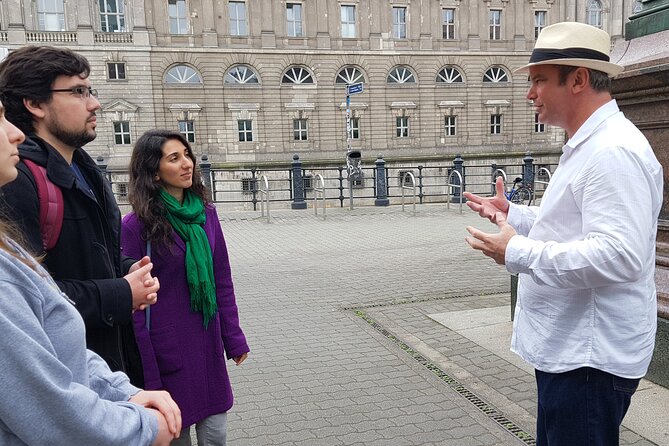
The experience includes a professional historian and English-speaking guide, Sean Stewart. The available details describe him as someone who knows Berlin’s courtyards and can adjust the walk to the interests of the group.
One useful detail from the feedback is that he first asks about your previous visits and what you want to see. That matters for a city like Berlin, where many people arrive having already seen the Brandenburg Gate, the Reichstag, or the major Wall sites. If you have covered the standard landmarks, tell him. The route may become more useful when he knows you want alternative context rather than another basic introduction.
His approach also appears to favor explanation over constant photography. You will need to pay attention, not just follow along while taking pictures. That is a fair trade on a history walk. The best information may concern a courtyard, a missing street, or an odd reconstruction that is easy to miss in a standard sightseeing program.
The group maximum is eight people. That is small enough for direct questions and should help the guide keep the conversation personal. The number is still large enough that you should not assume the tour will be customized entirely around one person’s interests.
What the $23 price gets you
At $23, this is a modestly priced way to spend two hours with a historian in central Berlin. The fee covers the professional guide and the walking experience. Food, drinks, and admission charges are not included, though the four listed stops are free.
The value depends on how you like to sightsee. If you want paid interiors, transport between distant areas, or a full day of structured activity, this will not replace those options. If you want a clear historical framework and access to places you might pass without understanding, the price is reasonable.
I see the strongest value in the guide’s interpretation. Berlin’s central sights are easy to visit alone, but it is harder to know why a ruin matters, what disappeared from Alexanderplatz, or how to think about a reconstructed medieval quarter. You are paying for connections between those places.
The tour also leaves room in your schedule. Starting at 11:00 am and ending at Berlin Cathedral gives you the rest of the day for the cathedral, nearby museums, lunch, or another part of Berlin. The endpoint at Am Lustgarten is particularly convenient for continuing your sightseeing in the historic center.
Practical advice before you go
Wear shoes suited to a two-hour city walk. The route is described as easy-paced, but you will still be outdoors and on your feet for the duration.
Bring water, especially in warm weather. Food and drinks are not included, and no refreshment stop is specified. Since the tour requires good weather, check the forecast before you leave.
Use the mobile ticket and meet at Espresso House Alea 101, Rathausstraße 6, at 11:00 am. The meeting point is near Alexanderplatz Station. Confirm the exact location in your booking details so you do not confuse the starting café with the ending point at Berlin Cathedral.
The tour allows service animals, is near public transportation, and is suitable for most people. Since the activity takes place outdoors, your comfort will depend more on weather and walking ability than on formal admission requirements.
Free cancellation is available if you cancel at least 24 hours before the start time. Cancellations inside that window are not refunded, and changes are not accepted. If poor weather or an insufficient number of participants cancels the tour, you will be offered another date or experience, or a full refund.
Who should book this Berlin walk?
I would choose this tour if you want history explained in place, especially if you enjoy questions about what has disappeared, what has been rebuilt, and how political change shapes a city.
It suits first-time visitors who want a useful orientation without a large group. It also suits repeat visitors who have already seen Berlin’s headline sights and want a different look at the center. The route is particularly good for anyone interested in medieval Berlin, urban reconstruction, and the way the city’s past remains visible in fragments.
You may want another activity if your priority is entering several monuments, taking extensive photos, or covering a large part of Berlin in one morning. The tour is built around interpretation, not a checklist of interiors.
Should you book it?
Book it if $23 feels like a fair price for two hours of focused history, a small group, and a guide who can connect ordinary-looking places to Berlin’s larger story. Sean Stewart’s emphasis on courtyards, contradictions, vanished streets, and reconstructed districts gives the walk more character than a basic landmark tour.
Skip it if you want a fast overview by bus or a schedule packed with admissions. For history-minded visitors, though, this is a smart way to begin understanding central Berlin, and the finish near Berlin Cathedral makes it easy to continue exploring on your own.
FAQ
How long is The Old Berlin Tour?
The tour lasts approximately two hours.
What time does the tour start?
The tour starts at 11:00 am.
Where does the tour begin?
It begins at Espresso House Alea 101, Rathausstraße 6, 10178 Berlin, near Alexanderplatz Station.
Where does the tour end?
The tour ends at Berlin Cathedral, Am Lustgarten, 10178 Berlin.
What language is the tour conducted in?
The tour is conducted in English by an English-speaking guide.
How large is the group?
The tour has a maximum of eight participants.
Can I cancel for a full refund?
Yes. You can receive a full refund if you cancel at least 24 hours before the experience start time. Cancellations made less than 24 hours before the start time are not refunded.
Just added in Berlin
- Modern Berlin Private Walking Tour: Diverse, Vibrant and Exciting German Capital★ 5.0 · 13 reviews
- Private One way Airport Transfer Berlin Airport To Berlin★ 3.5 · 17 reviews
- Private Walking Tour: Berlin Wall, Cold War and Checkpoint Charlie★ 5.0 · 37 reviews
- Private Day Trip to Potsdam from Berlin by Train★ 4.5 · 27 reviews
- City Explorer: Potsdam Private Day Trip★ 4.5 · 10 reviews
- Berlin Private Custom 5-Hour Tour by Car★ 5.0 · 30 reviews
- Private Half-Day Sightseeing Tour in Berlin★ 3.5 · 6 reviews
- Berlin Private Custom Tour in a Minivan, East and West★ 5.0 · 123 reviews
Tours in Berlin, compared.
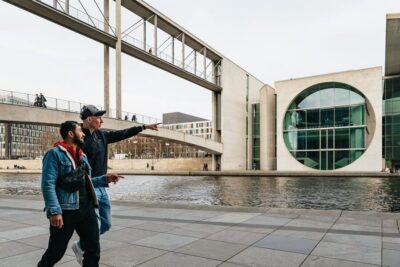
Reichstag, Dome and Government District Guided Tour
Read our review →
1-Hour City Tour by Boat with Guaranteed Seating
Read our review →

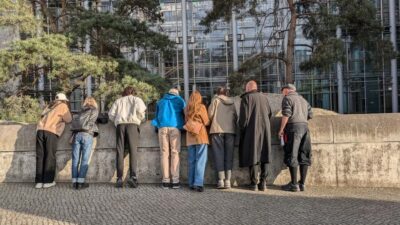
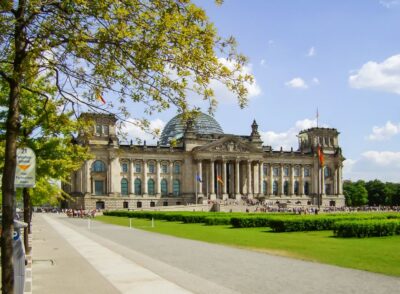
Reichstag, Plenary Chamber, Cupola & Government Tour
Read our review →