
Reviewed · CRIME, WITCHES & CEMETERY TOURS
Rostock: Tour with the Rostocker Executioner
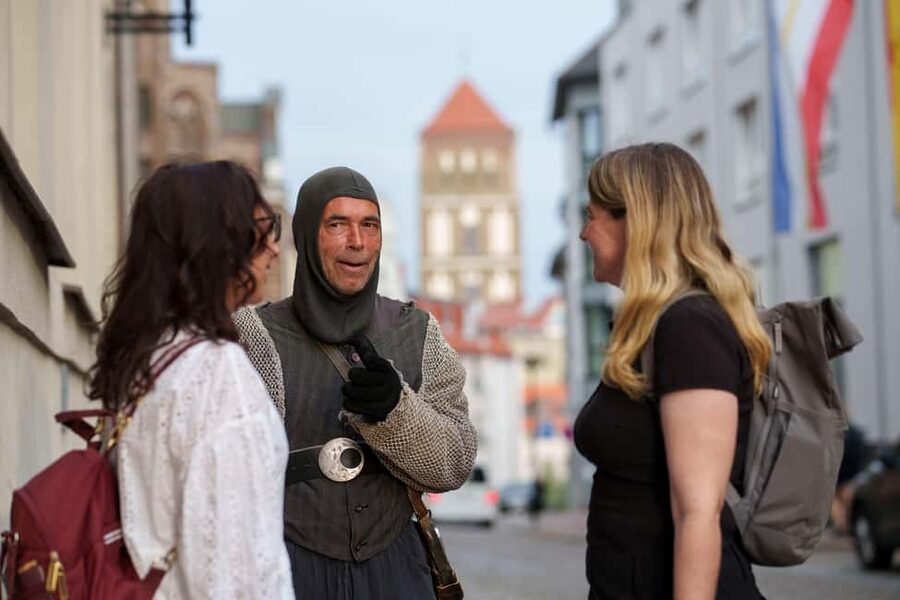
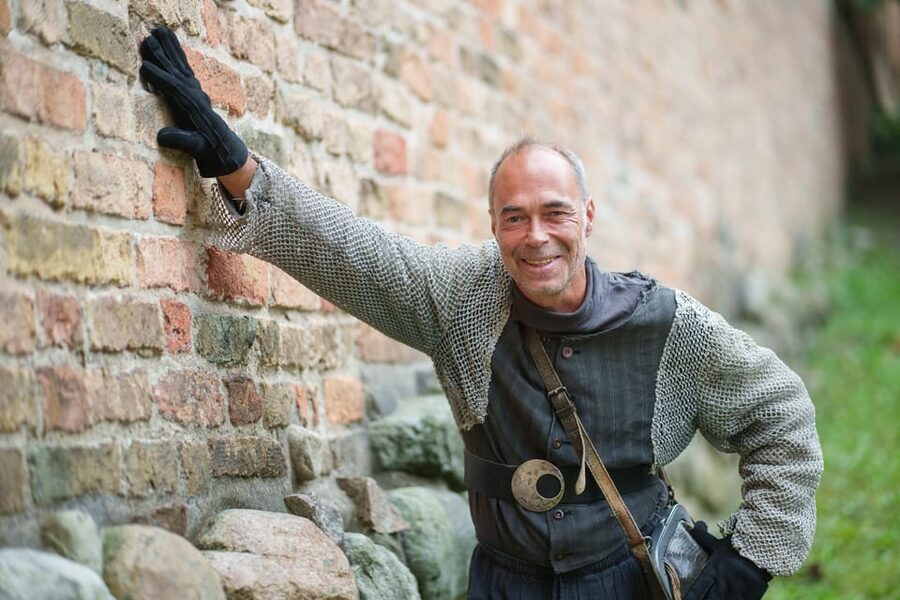
Rostock’s old town takes on a darker character when you follow a trained actor dressed as the executioner. Over 1.5 hours, you move from the town hall through historic streets and courtyards while hearing about punishments, criminals, public order, and the grim work behind medieval justice.
I like the mix of odd historical details and dark humor, especially the sparrow tax, the disposal of privies, and why hair had to come off the streets. I also like that the route brings in architecture and local criminal stories, not just torture. The main drawback is clear: the tour is in German, and one review found the guide spoke quickly at times.
Key points at a glance
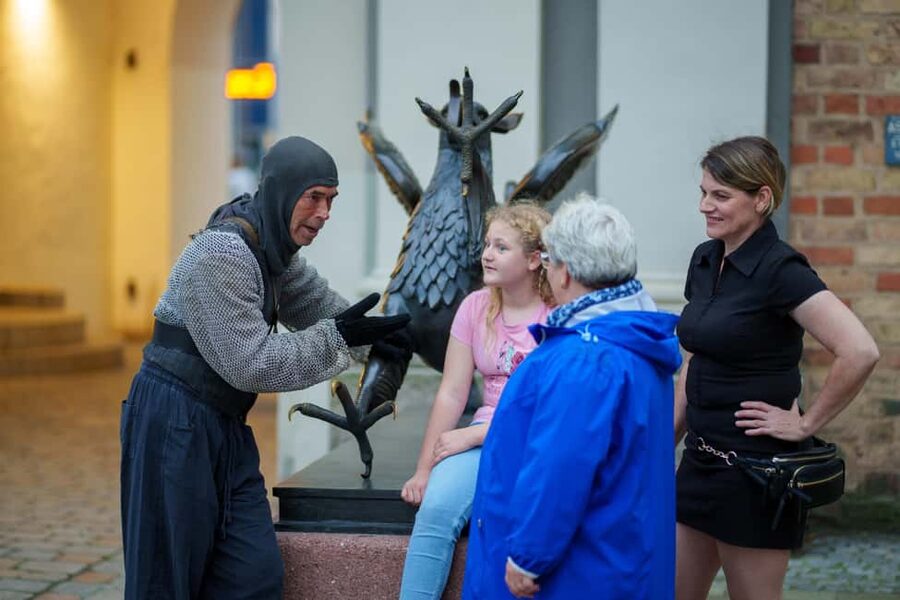
- A 1.5-hour walk through old Rostock: The route links the town hall, Kerkhoff, Krahnstöverhaus, Kuh and Steintor, New Market, St. Mary’s Church, and Heiligengeisthof.
- A theatrical guide with real historical purpose: A trained actor plays Rostock’s executioner and explains the job, legal system, and punishments of the period.
- More than tales of death: You also hear about sanitation, street rules, taxes, architecture, and everyday duties.
- German-language experience: You need enough German to follow a fast-moving spoken tour.
- Best for adults and older teens: Children under 14 are not accepted, and the walk is not suitable for people with mobility impairments.
- Low-cost city sightseeing: At $16 per person, the tour gives you a focused way to understand Rostock’s old center while adding a strong theatrical element.
Meeting Rostock’s executioner beneath the town hall

The tour begins under the arcades in front of Rostock’s town hall. That is a useful meeting point in the center, and the instructions add a touch of theater: there will be only one hangman and only one executioner waiting there.
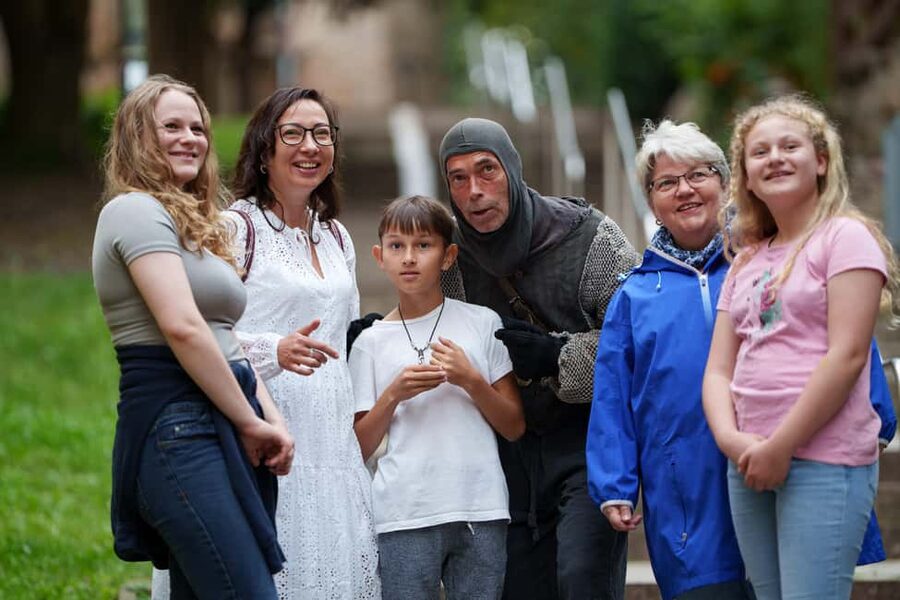
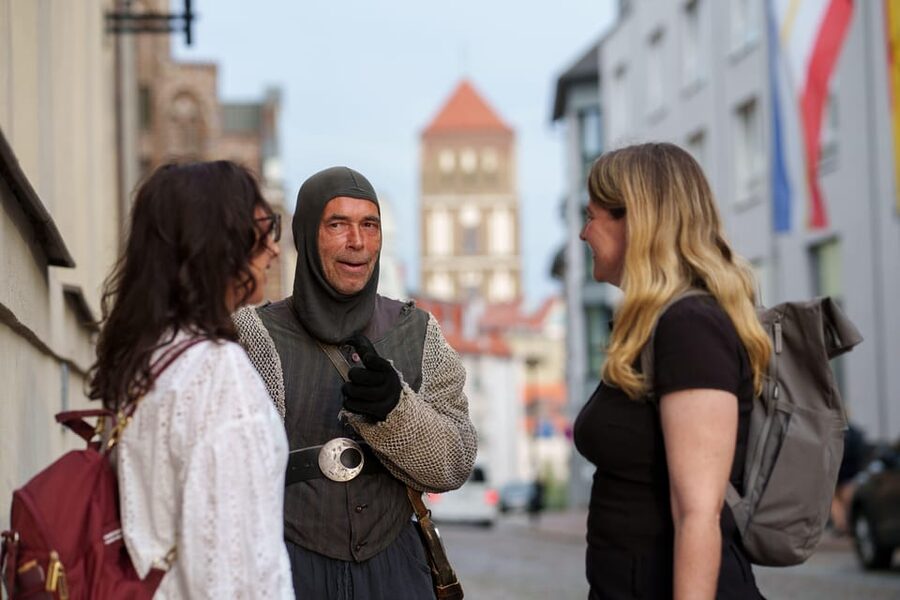
You are not joining a generic city walk led by someone listing dates and names. The guide is a trained actor playing the town executioner, which gives the tour a clear voice and point of view. Tobias Hamann is the experience provider, while the supplied information does not identify the individual actor by name.
That distinction matters. The character is not simply a costume placed on top of a standard sightseeing route. The executioner’s work provides the thread connecting the places you visit. You learn what he did, how the courts worked, and how punishment was carried out or discussed in Rostock.
Expect an entertaining tone rather than a solemn lecture. The material includes frightening stories, but also curious details and jokes. That balance is one of the tour’s strongest features. You get a sense of how strange daily rules could be, without spending the whole walk on graphic descriptions of death.
Other dark corners of Rostock:
- Hamburg: Sex and Crime in St. Pauli Tour for Ages 18+
★ 4.7 · 15,447 reviews - Cologne: Melaten Cemetery Life, Love and Death Tour
★ 4.9 · 2,728 reviews - Nuremberg: Medieval Dungeons Guided Tour
★ 4.8 · 1,726 reviews
The old town as a stage
The route takes you through Rostock’s old district, described as the city’s oldest and most beautiful area. The walk includes the town hall, Kerkhoff, Krahnstöverhaus, Kuh and Steintor, New Market, St. Mary’s Church, and Heiligengeisthof.
You should think of this as a connected walk through the center rather than a stop-by-stop attraction tour. The value comes from hearing how each place fits into the city’s older system of law, trade, religion, and public life.
At the town hall, the setting naturally introduces authority and jurisdiction. This is where the tour’s questions about courts and punishment have a clear home. The executioner’s job only makes sense when you understand the people and institutions that ordered punishment, so the opening location helps frame the rest of the walk.
Kerkhoff and Krahnstöverhaus add architectural interest. The tour is not limited to the executioner’s trade. A review specifically noted that the guide also explained architecture, which is useful if you want to see more than a dark-story performance.
Kuh and Steintor bring the route into Rostock’s medieval street setting. The names themselves are part of the city’s older character, while the walk lets you connect gates, streets, and urban space with the practical work of keeping order.
New Market and St. Mary’s Church broaden the picture again. The subject is not only what happened in a courtroom or at a place of punishment. The route shows how the executioner’s world sat within the larger public life of Rostock.
The final named stop, Heiligengeisthof, keeps the tour rooted in the old center. The route is compact enough to fit into a 1.5-hour visit, but the subject matter moves quickly. You will get more from it if you pay attention to the guide’s explanations rather than treating the walk as background entertainment.
What the executioner actually did
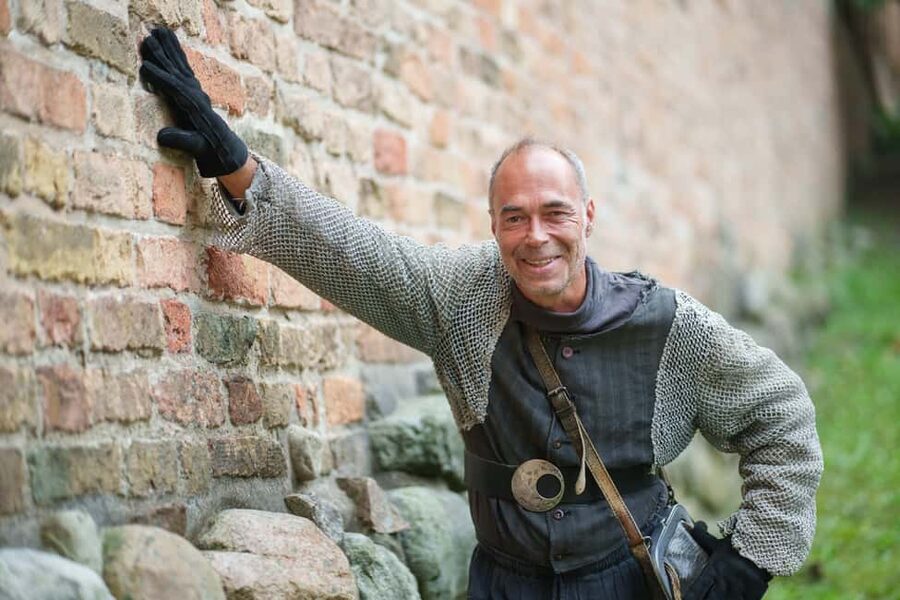
One of the most useful parts of this experience is its focus on the executioner’s wider duties. The role involved more than carrying out death sentences. The tour explains the work, the legal system behind it, and the punishments used at the time.
That wider view helps correct a common modern image. An executioner was not simply a figure who appeared at the end of a trial. The tour presents the office as part of a larger system of jurisdiction and public order.
You hear about criminal cases in Rostock and the way punishment shaped the city. The stories give local detail to subjects that can otherwise feel distant or abstract. Instead of only hearing that medieval societies used harsh penalties, you get a sense of how those rules affected a specific town.
The tone is deliberately mixed. Some anecdotes are scary. Others are funny or strange. That combination makes the material easier to follow, but you should still expect the tour to deal with death, crime, and torture. It is not a light family walk.
The experience also asks you to notice how much old punishment survives in modern speech. You may be surprised by the number of everyday expressions linked to medieval forms of torture and death. This is a clever way to connect the past with language you already use.
The sparrow tax and other odd duties
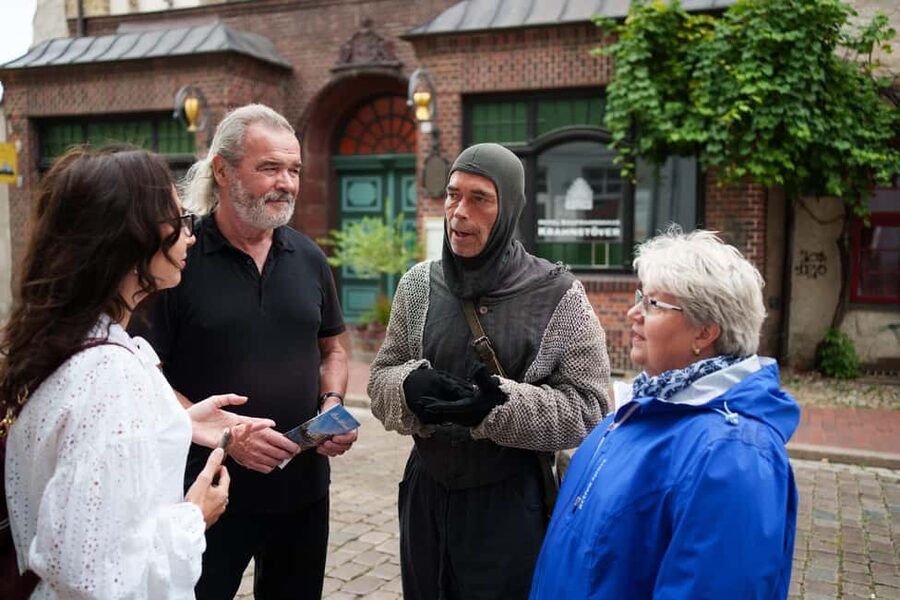
The tour’s most memorable details are likely to be the small rules that sound almost absurd today. The sparrow tax is one example. The information provided does not spell out every detail of the tax, so you should expect the executioner to explain its place in Rostock’s older system rather than arrive with a simple modern comparison.
You also hear about the Ausbringen der Priveten, a term connected with the disposal of privies. This is the sort of subject that makes a city’s past feel practical rather than polished. Medieval and early modern towns had sanitation problems, and someone had to deal with them.
Another question asks why the hair had to come off the streets. Again, the appeal is in the unexpected detail. A city’s rules were not limited to serious crimes. Hair, waste, animals, cleanliness, and public behavior could all become matters for regulation.
These topics make the walk valuable even if you have little interest in executions. You see how law reached into ordinary life. Taxes, waste removal, street cleanliness, and punishment all belonged to the same broad effort to control a crowded town.
I particularly like this part of the experience because it avoids turning the past into a parade of famous people and major events. A sparrow tax or a rule about hair may sound minor, but such details show how people actually experienced authority.
Same base, a different kind of day out:
- Rostock: Guided tour of the historic city center
★ 4.5 · 311 reviews - Best Berlin Shore Excursion from Warnemunde or Rostock Port
★ 4.8 · 200 reviews - Rostock: City Walking Tour
★ 4.9 · 198 reviews - Rostock: Full-Day, Half-Day, or Sunset Sailing Experience
★ 4.7 · 174 reviews
Criminal stories, torture, and modern language
The criminal stories give the tour its most dramatic edge. You hear about cases connected with Rostock and about the executioner’s role in dealing with crime. The exact stories can vary with the guide’s presentation, so you should expect a lively spoken account rather than a printed list of cases.
The tour also covers medieval methods of torture and death. This subject can be disturbing, particularly for younger participants, which helps explain the minimum age of 14. The performance aims to be entertaining, but the subject itself remains serious.
What makes the topic more useful is the link to modern language. The guide points out how forms of torture and execution have entered common expressions. You may recognize familiar phrases in a new way after the walk.
The theatrical format helps here. A trained actor can give the material rhythm and personality, making a long explanation of legal practice easier to absorb. At the same time, you should remember that the guide is presenting a character. The humor and drama are part of the design, not a neutral academic seminar.
If you prefer museum labels, quiet interpretation, or detailed archaeological discussion, this may not be your ideal way to study Rostock. If you learn best through stories and performance, the format should work much better.
How fast is the tour?
The stated duration is 1.5 hours, and the route covers several named places. That gives you enough time for a focused look at the old center without taking up half a day.
The amount of material is also the main pacing issue. One review praised the tour as full of information but felt there were many facts in a short time. Another noted that the guide sometimes spoke quickly. Those comments point to a practical concern for anyone using German as a second language.
You should arrive ready to listen closely. If a point matters to you, ask a question when there is a pause. The guide is described as willing to answer additional questions, which adds value for people who want more than the prepared performance.
The 1.5-hour format is also a strength. You get a substantial historical walk, but the experience remains easy to fit around other Rostock plans. It could work well before dinner, after a museum visit, or as a way to orient yourself in the old center.
The walk is not suitable for people with mobility impairments. The supplied information does not give a detailed route surface, step count, or seating arrangements, so you should not assume the walk can be adapted.
German language and age limits
This is a German-language tour. The live guide speaks German, and the humor depends on understanding spoken details, wordplay, and historical terms.
If you have intermediate German, you may follow the main story but miss some of the faster jokes or side comments. The tour’s strong information load makes language ability more important than it would be on a simple landmark walk.
The minimum age is 14. That rule is practical, given the subjects of crime, torture, execution, and death. The theatrical tone may soften the material, but it does not remove the darker content.
I would choose this for adults, older teenagers, history fans, and people who enjoy local stories with a macabre edge. It could also suit German speakers who already know Rostock and want to hear a different version of the city.
Several people with long experience of Rostock found new material in the tour. That is a useful sign for local residents and repeat visitors. You do not need to know the city in advance, but the experience can still add something if you have already seen the main sights.
Is $16 a fair price?
At $16 per person, this is a reasonable price for a 1.5-hour guided walk in central Rostock. You are paying for a live performance, a local historical theme, and access to a route that ties several old-town locations together.
The value is strongest if you want interpretation rather than simple orientation. You can walk around the town hall, New Market, and St. Mary’s Church on your own, but you will not automatically learn about the executioner’s duties, the sparrow tax, privy disposal, or the language of medieval punishment.
The price is less attractive if you cannot follow German well. In that case, you may see the same streets but miss much of the content that makes this experience distinct.
The tour also offers free cancellation up to 24 hours before the start and a reserve-now, pay-later option. Those terms make it easier to fit into a changing day, especially if your Rostock schedule depends on weather or transport.
Who should book this Rostock walk?
I would book it if you enjoy local history told through unusual details. The tour is not trying to cover every major Rostock sight. Instead, it uses the executioner to explain law, crime, hygiene, architecture, and public behavior.
It is a good match for:
- Adults and older teenagers who are comfortable with dark subjects
- German speakers or people confident enough to follow a spoken German tour
- Repeat visitors who want a new angle on Rostock
- History fans who prefer stories to formal lectures
- People looking for a short, affordable activity in the old town
I would skip it if you need English interpretation, have limited mobility, or want a gentle family activity for younger children. I would also think twice if graphic or theatrical treatment of punishment makes you uncomfortable.
The tour seems especially useful early in your stay because it introduces several central places while giving you a framework for understanding the city’s older rules. It also works late in a visit, when you have already seen Rostock’s main buildings and want something more unusual.
Should you book the Rostock executioner tour?
Book this tour if you want Rostock’s old center explained through crime, punishment, strange regulations, and the daily work of a medieval executioner. The strongest reasons to go are the theatrical guide, the unusual local details, and the mix of humor with serious history.
Keep your expectations realistic. This is a German-language walking performance, not a quiet museum tour or a full architectural study. The guide may speak quickly, and the subject matter is not suitable for children under 14.
At $16 for 1.5 hours, it offers good value for the right audience. If you can follow German and enjoy a little darkness with your city history, I would add it to a Rostock itinerary.
FAQ
How long does the Rostock executioner tour last?
The tour lasts 1.5 hours.
How much does the tour cost?
The listed price is $16 per person.
Where does the tour meet?
You meet under the arcades in front of Rostock’s town hall.
What language is the tour in?
The live tour is conducted in German.
Who leads the experience?
A trained actor portrays Rostock’s executioner and serves as the tour guide. Tobias Hamann is the experience provider.
What places does the tour visit?
The route includes the town hall, Kerkhoff, Krahnstöverhaus, Kuh and Steintor, New Market, St. Mary’s Church, and Heiligengeisthof.
Is the tour suitable for children and people with mobility impairments?
Children under 14 are not permitted, and the experience is not suitable for people with mobility impairments.
Just added in Rostock
- Rostock: Private Guided Walking Tour★ 5.0 · 4 reviews
- Rostock: Hot Rod Harbor City Tour★ 4.9 · 16 reviews
- Rostock: Electric Boat Rental on the Warnow River★ 4.8 · 106 reviews
- Rostock: Hot Rod Sightseeing Tour to Warnemünde★ 5.0 · 19 reviews
- Berlin and Sachsenhausen: Shore Trip from Warnemünde Port★ 4.8 · 40 reviews
- Discover Rostock: A Guided City Tour for Cruise Guests★ 3.7 · 7 reviews
- Distillery tour with guide!★ 4.7 · 14 reviews
- Brewery tour with guide!★ 4.8 · 13 reviews
Crime, Witches & Cemetery Tours, compared.



Raven Black Witches and Executioners Walking Tour
Read our review →Browse the lists this tour appears in