
Reviewed · WALKING TOURS
Rostock: City Walking Tour
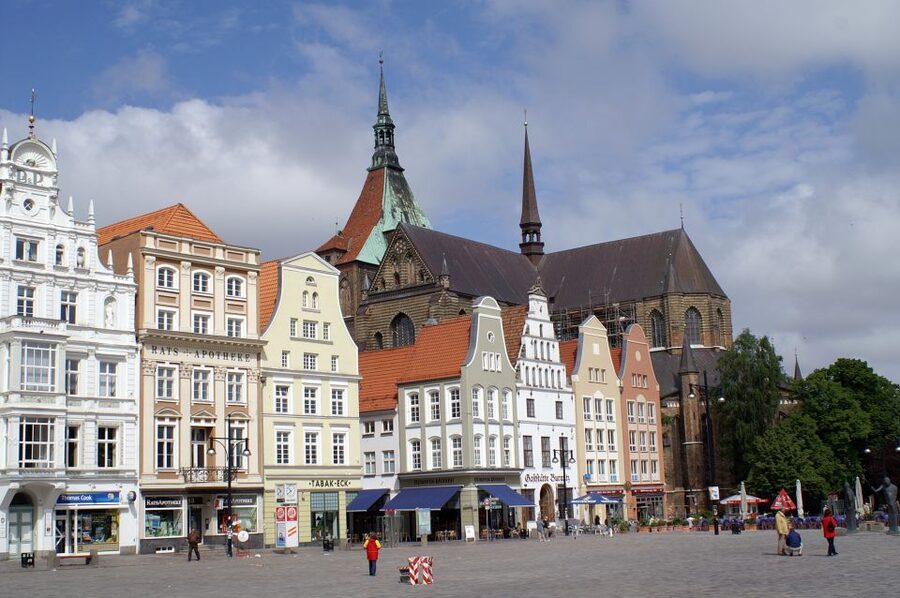
Rostock’s appeal comes into focus on foot, where medieval churches, Hanseatic streets, and the old harbor area sit within a compact town center. This private two-hour walk gives you a useful first look without turning the outing into a long lesson packed with dates.
I like the small private format and the guide’s practical approach. You can ask questions as you go, and the tour keeps its attention on seeing the city rather than spending ten minutes on every chapter of Hanseatic history. The main consideration is that the tour is conducted in German and is not suited to people with mobility impairments.
Key points
- Private group for up to six: You get a more personal walk and can ask questions along the way.
- Meeting beneath the Rathaus griffin: The town hall entrance gives you a clear, central starting point.
- A broad old-town route: Expect the town hall, Gothic churches, medieval city wall, university square, harbor area, alleys, and riverside boulevards.
- Two hours with a walking focus: The pace favors seeing the city and understanding its layout over a long historical lecture.
- German-language guiding: This is best for you if you are comfortable following a tour in German.
- Strong overall satisfaction: The tour has a 4.9 rating from 198 bookings, with particular praise for clear explanations and good organization.
Starting beneath Rostock’s griffin
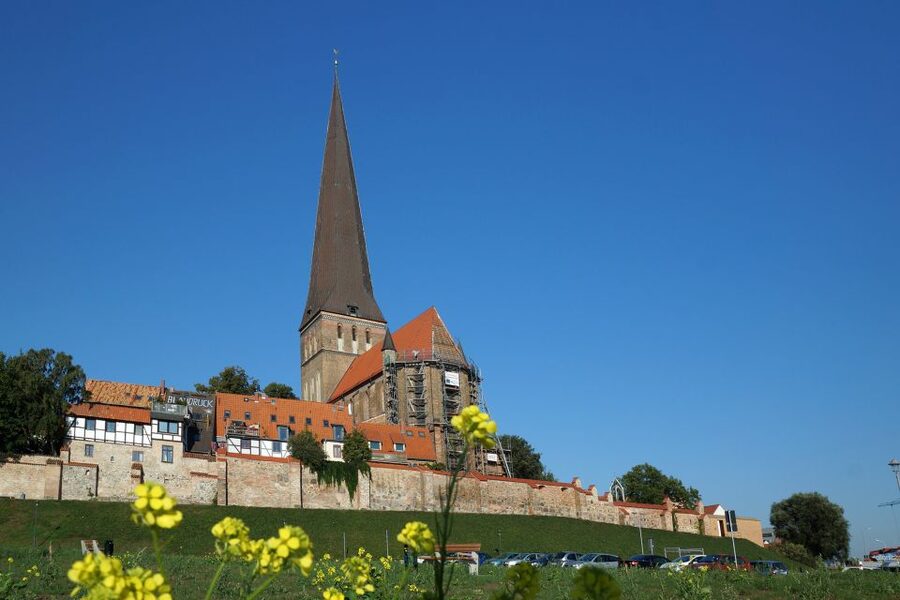
Your meeting point is in front of Rostock Rathaus, at the main entrance beneath the symbol of the Greif, or griffin. That detail matters. Rostock’s center has several streets and squares close together, so using a recognizable emblem is more useful than relying on a vague address.
The town hall is also a fitting place to begin. It puts you directly in the old center, where the city’s civic past and surviving medieval architecture meet. From here, your guide can set the scene before leading you through the surrounding streets.
The activity is offered by Rostock Guide Anne Kirchmann. The booking information names German as the tour language, but it does not promise an English-language guide. If you need English, confirm that before paying.
More Walking Tours across Germany
- Discover Berlin Half-Day Walking Tour
★ 5.0 · 9,624 reviews - Berlin: Third Reich and Cold War 2 Hour Walking Tour
★ 4.9 · 6,830 reviews - Munich: Third Reich & WWII Walking Tour
★ 4.6 · 6,181 reviews
A compact route through the old town
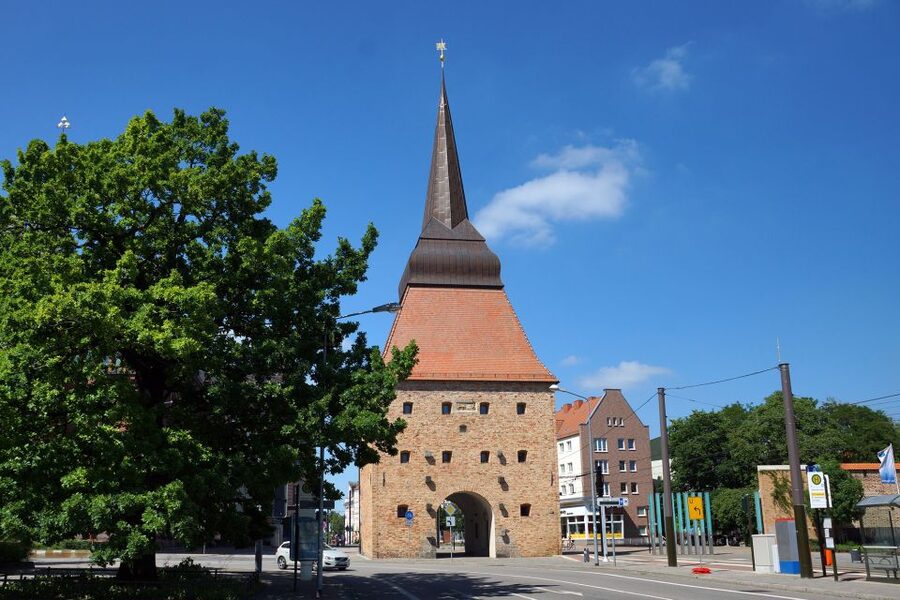
The route is designed as an overview rather than a visit to one single monument. You’ll move through old-town lanes, open squares, riverside streets, and the historic harbor area, giving you several ways to read Rostock.
That variety is one of the tour’s strengths. You are not looking only at church fronts or only at the waterfront. Instead, you get a sense of how civic buildings, religious landmarks, trade routes, university life, and defensive walls fit together.
I especially like this format for a first morning or afternoon in Rostock. After two hours, you should have a mental map of the central sights and a better idea of which streets deserve a second look on your own.
The route is described broadly rather than as a fixed list of timed stops. Your exact order may depend on the guide, local conditions, and the group’s questions. That flexibility is useful in a private tour, though you should not book it expecting an entry ticket or an extended interior visit at every landmark.
Town hall, churches, and the city’s public face
The Rathaus is more than a meeting point. It gives the tour a natural way to explain Rostock as a Hanseatic city, with the town center shaped by trade, civic government, and regional influence.
You’ll also see Gothic churches among the key sights. Their tall forms help explain the scale and confidence of medieval Rostock, while their locations show how important religious buildings were to daily life and the old town’s design.
The guide’s role here is to connect what you see with the city around it. A good walking tour helps you notice details that can be easy to pass by, such as the relationship between a square and the buildings around it, or why a church occupies a certain place in the old center.
The strongest praise for this experience centers on clear explanations without an overload of dates. That makes the tour a good fit if you want context but do not want a lecture. You can ask questions during the walk, and the private setting should make it easier to steer the conversation toward architecture, local life, or the parts of Rostock that interest you most.
Medieval walls and old-town alleys
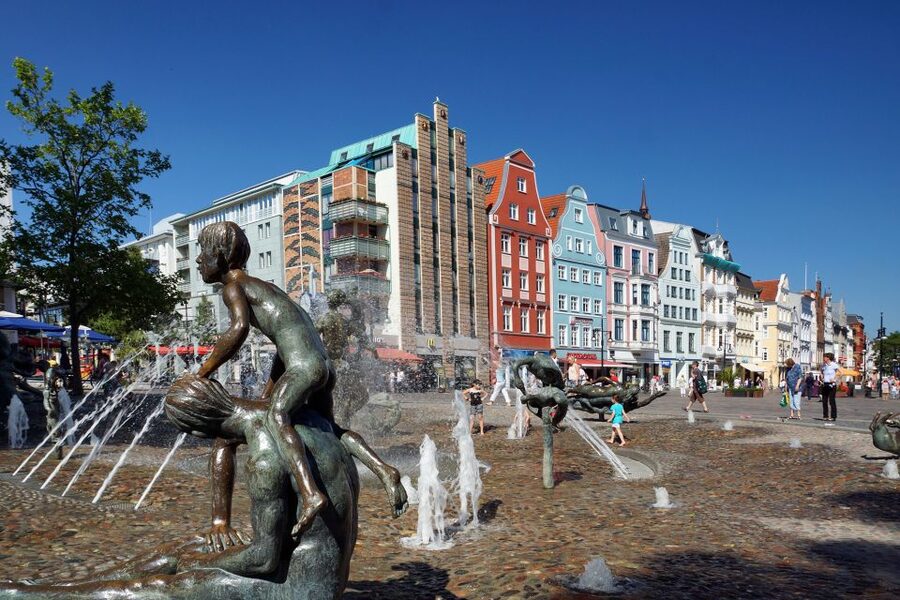
The medieval city wall adds a different layer to the walk. A wall is not just a piece of old masonry. It shows where the historic town needed protection and helps you understand the limits of the medieval city.
The old-town alleys offer a closer, street-level view. Wide squares can show you Rostock’s public face, but narrower lanes reveal how the town is arranged behind its major buildings. You may find quieter corners and less obvious details here, especially with a guide who knows which routes are worth pointing out.
Do not expect a formal museum presentation. The value is in seeing the wall, lanes, and historic structures in relation to each other. You are learning by walking through the setting rather than standing in one room and looking at objects behind glass.
The route is still a city walk, so comfortable footwear is sensible. The activity is specifically marked as unsuitable for people with mobility impairments, and the combination of old streets, walking time, and changing surfaces may be tiring for anyone who has difficulty walking.
A few more things to do in Germany worth a look
- Berlin: 1-Hour City Tour by Boat with Guaranteed Seating
★ 4.3 · 16,993 reviews - Leipzig: City History Canal Sightseeing Tour on a Motorboat
★ 4.7 · 6,232 reviews - Cologne: Panoramic City Cruise
★ 4.3 · 5,698 reviews - Berlin: City Sightseeing Hop-On Hop-Off Bus Tour
★ 4.1 · 4,233 reviews
The harbor area and riverside boulevards
The historic harbor area broadens the story beyond churches and civic buildings. Rostock’s identity has long been tied to water, trade, and movement, so the waterfront helps explain why the city developed where it did.
The riverside boulevards should give you a change of pace from the tighter old-town streets. You’ll see the city from a more open angle and can compare the historic center with later parts of Rostock’s urban development.
The description also points from medieval architecture to the twentieth century. That is useful because Rostock is not presented as a perfectly preserved medieval set. You get a look at how the city changed over time, even if the two-hour format means the treatment will be selective.
If your main interest is port operations, shipbuilding, or a long account of maritime trade, this may feel too brief. The harbor section is part of a wider town walk, not a specialist waterfront tour.
University Square and later Rostock
University Square adds another piece to the city’s character. It shifts attention away from walls and churches toward education and public life.
Together with the medieval buildings and twentieth-century references, it gives the walk a wider time frame. You are not simply hearing about a distant past. You are seeing how different periods share the same city center.
This range is particularly useful if you have only a short stay in Rostock. In two hours, you can sample the city’s major themes and then decide what deserves more time. You may choose to return to a church, spend longer near the water, or explore another section of the old town after the guide leaves.
The tour does not promise a deep treatment of every era. Its job is to help you get oriented. One useful distinction from the feedback is that the walk keeps moving and avoids spending too long on Hanseatic background. For many people, that is exactly the right balance.
Why the private format matters
The price is $147 per group of up to six people, not $147 per person. If you fill all six places, the cost works out to $24.50 per person. For a couple, the effective cost is much higher, but you are paying for a private guide rather than joining a large shared group.
That price can make sense for a family or group of friends who want to stay together. You can ask questions freely, keep the focus on architecture or local stories, and avoid a guide speaking to a crowd of strangers.
The private format also helps with pace. A group of six can usually pause more easily than a large tour, though the activity is still a walking tour with a set two-hour duration. The guide is included, but no attraction admissions, food, or transport are listed.
I would compare the cost with your priorities. If you simply want a quick stroll and a few facts, a self-guided walk may cost less. If you value a local person who can explain the setting and answer questions, the private arrangement offers better value, especially when shared among several people.
Who will enjoy this Rostock walk?
I would recommend this tour most strongly to:
- You are visiting Rostock for the first time and want a clear introduction.
- You have two hours and want to cover several parts of the center.
- You prefer a private setting over a large scheduled group.
- You enjoy architecture, city design, churches, walls, and waterfront areas.
- You speak German well enough to follow explanations and ask questions.
- You want history in manageable portions rather than a long academic talk.
It may not suit you if you need an English-language tour, cannot walk comfortably for two hours, or want extensive interior visits. It is also not the best choice for a specialist interested in one narrow subject, since the experience spreads its attention across the old town, harbor, university area, and later city development.
The booking flexibility is helpful. You can cancel up to 24 hours before the start for a full refund, and you can reserve now while paying later. Starting times vary, so you need to check availability for your date.
What the feedback tells me about the experience
The tour has a 4.9 rating from 198 reviews, which is unusually strong. The repeated themes are useful: clear background information, a well-run appointment, and a guide who keeps the walk pleasant rather than overloading you with numbers.
One July booking described the focus as a real walk through the city instead of ten minutes on Hanseatic history. That is a valuable clue for deciding if the tour fits your style. You’ll get historical context, but the main event is moving through Rostock and seeing its major places.
Another recent assessment praised the two-hour explanation as informative without too many dates and noted that questions were welcome. That is the balance I would want from a short city introduction.
A few brief comments are less detailed, but the overall pattern is consistent. The tour seems strongest when you want friendly orientation, useful background, and a route that keeps its attention on the city itself.
Should you book it?
Book this Rostock walking tour if you want a private two-hour overview in German, especially with a small group that can share the $147 cost. The route covers the town hall, Gothic churches, medieval wall, old lanes, harbor, riverside streets, and university square, giving you a solid introduction without a heavy history lecture.
Think twice if you need English, have limited mobility, or want a specialist harbor tour or detailed monument interiors. For the right audience, this is a practical way to get your bearings and see why Rostock’s old center is worth exploring on foot.
FAQ
How long is the Rostock city walking tour?
The tour lasts two hours.
How much does the tour cost?
The price is $147 per private group of up to six people.
Is the tour private?
Yes. The activity is offered as a private group tour.
Where do I meet the guide?
Meet in front of Rostock Rathaus at the main entrance, beneath the symbol of the Greif, or griffin.
What language is the tour conducted in?
The listed tour language is German.
What sights are included?
The walk covers key parts of Rostock’s town center and historic harbor area, including the town hall, Gothic churches, medieval city wall, old-town alleys, riverside boulevards, and university square.
Is a guide included?
Yes. An expert guide is included in the price.
Is the tour suitable for people with mobility impairments?
No. The activity is listed as unsuitable for people with mobility impairments.
Can I cancel the booking?
Yes. You can cancel up to 24 hours in advance for a full refund. You can also reserve now and pay later.
Just added in Germany
- Berchtesgaden: Via Ferrata Beginner Tour of Schützensteig★ 4.7 · 15 reviews
- Berlin: Energizing 2-Hour Morning Segway Tour★ 4.7 · 35 reviews
- Berlin: Thrilling E-Scooter Adventure Tour★ 4.4 · 66 reviews
- Bayreuth: German City Walking Tour (Tourist Info)★ 4.7 · 202 reviews
- Beelitz-Heilstätten: Baum&Zeit Tree Top Walk Entry Ticket★ 4.9 · 7 reviews
- Beer Bike & Party Bike: Unforgettable Berlin City Tour incl. pickup★ 5.0 · 5 reviews
- Bavaria: Beginner Canyoning Tour★ 4.5 · 10 reviews
- Bayreuth: Christmas city tour in German★ 4.9 · 12 reviews
Walking Tours, compared.





Third Reich Berlin: Hitler and WWII Walking Tour
Read our review →
Browse the lists this tour appears in