
Reviewed · OLD TOWN WALKING TOURS
Premiumstadtführung (historische Altstadt und Schlossberg)
Quedlinburg is best understood on foot, one crooked lane and carved timber façade at a time. This two-hour tour links the UNESCO old town with Schlossberg, giving you both the everyday medieval streets below and the grand collegiate church above.
I like the clear route and the practical food tips along the way. I also like that children and teenagers up to 16 go free, making this a good-value introduction for families. The main catch is the German-only guide, plus cobbles and a steep section that can become slippery in winter.
- Market-square starting point: Meet at the green-signed city information office in the heart of Quedlinburg.
- 1100 years of history: Follow the story from the medieval town hall and churches to Schlossberg.
- Half-timbered details: See several styles of traditional timber framing in the old lanes.
- Named cultural stops: Pass Klopstock-Haus, the Lyonel-Feininger Museum, Schlossgarten, and St. Servatii.
- Food advice included: Your guide points out culinary places worth considering after the walk.
- Family-friendly price: Children and adolescents up to age 16 join without charge.
Quedlinburg in Two Hours: What This Walk Really Covers
Quedlinburg is not a town you should rush through with a camera and a checklist. Its appeal lies in the way the pieces fit together: a market square, narrow lanes, old churches, wooden houses, and a hilltop church that changes your sense of the town.
This tour gives you a useful framework. In two hours, you move from the civic center to the religious and cultural heart of Quedlinburg. You are not simply looking at old buildings. You are learning why the town grew where it did, how its streets developed, and why the half-timbered houses matter.
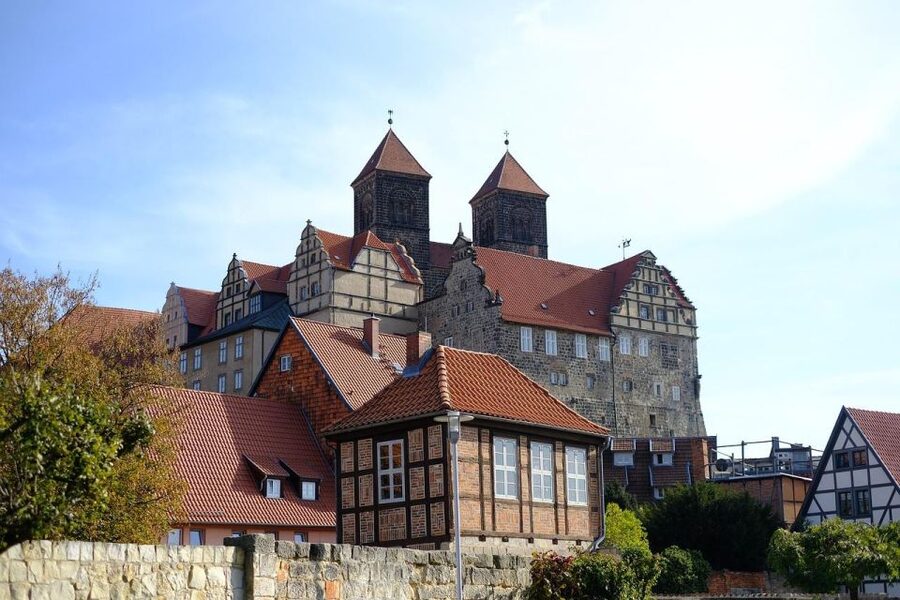
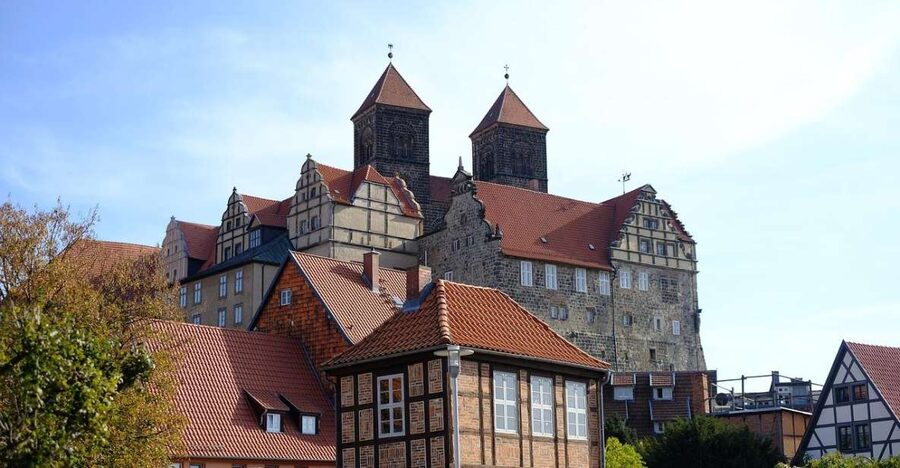
The route is split between the historic old town and Schlossberg. That balance is important. The lower section gives you the street-level character of Quedlinburg. The hill adds the larger view and the major landmark, St. Servatii collegiate church.
The tour is conducted in German. If you understand German well, you can expect fuller value from the explanations and the chance to ask questions. If you do not, the buildings and street pattern are still worthwhile, but the spoken history will be harder to follow.
Starting at the Market Square and Town Hall
You meet directly in front of the Quedlinburg city information office on the market square. Look for the green sign. At the agreed time, your guide is expected to be there to check your ticket and begin the walk.
This is a sensible meeting point because you start in the middle of town rather than spending time finding a remote departure spot. The market square also gives you an immediate visual lesson in Quedlinburg. Civic buildings, church towers, and old façades gather around an open public space, making it easy to see how town life once centered on trade and local government.
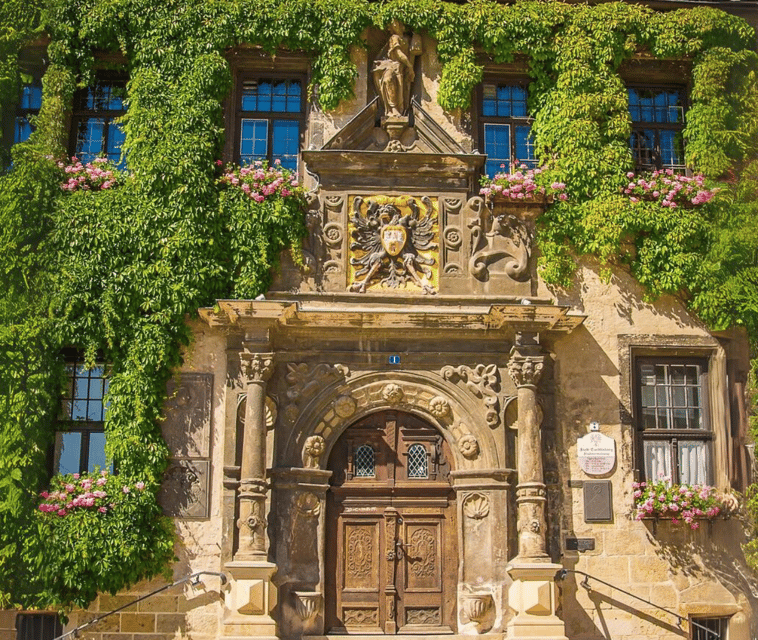
The town hall is one of the early highlights. An explanation here helps you read the building as more than a handsome backdrop. You can consider how authority was displayed in the town and how the square connected public business with daily commerce.
I would arrive a few minutes early. The meeting point is easy to identify, but the square can be busy with people, signs, and surrounding buildings. Having your ticket ready keeps the start simple.
More Old Town Walking Tours across Germany
- Dresden: Semperoper and Old Town Tour
★ 4.8 · 5,735 reviews - Nuremberg: Old Town Guided Walking Tour
★ 4.6 · 2,416 reviews - Munich: Old Town & Viktualienmarkt City Walk in German
★ 4.7 · 2,304 reviews
From St. Benedikti to Schuhhof and Hölle
The old town portion includes the market church of St. Benedikti, Schuhhof, Hölle, Blasii Church, and the Half-Welfare Museum. These names may sound like a list, but together they create the most characterful part of the route.
The market church of St. Benedikti keeps you close to the town’s commercial center. The churches are useful reference points as you walk because Quedlinburg’s story is not confined to one grand monument. Religious buildings, markets, homes, and narrow passageways all sit close together.
Schuhhof and Hölle are especially good places to slow down. Their names and lanes hint at the old town’s irregular shape. Here, you get the sort of close view that a bus tour cannot provide: timber frames, tight corners, changing rooflines, and the small shifts in the street that reveal how the town grew over time.
Blasii Church adds another layer to the walk. The tour also passes the Half-Welfare Museum, giving you a chance to connect local architecture with the practical life of the people who lived and worked in these buildings.
The value of a guide is strongest in this section. Without context, a half-timbered house can become one attractive façade after another. With explanation, you can begin to notice the variety of timber patterns and understand why Quedlinburg is famous for its building stock.
Half-Timbered Houses Up Close
Quedlinburg is known for its large collection of half-timbered buildings, but the point is not simply to count them. Look at the beams, the spacing, and the way each façade meets the street.
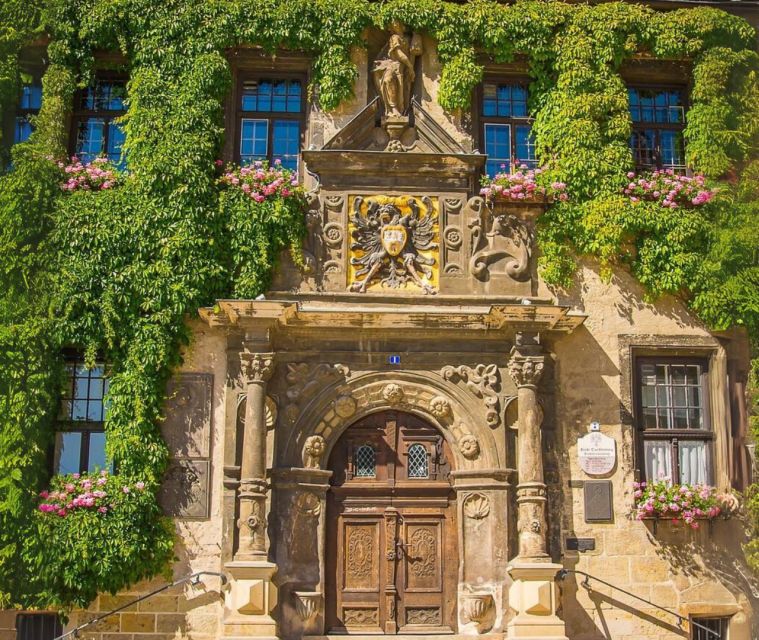
The tour’s route through medieval lanes lets you see this architecture at close range. You are not viewing a distant old-town silhouette. You are walking beside the houses, where small decorative details and uneven lines become visible.
I like this part for practical reasons. It teaches you how to keep looking after the tour ends. You may begin by noticing only the overall color and shape of a house. Then you start spotting carved details, different framing patterns, and changes from one building to the next.
The town’s age also becomes easier to grasp here. Quedlinburg’s story reaches back more than 1100 years, but the age is not presented as a single date. It appears in layers, with civic buildings, churches, homes, and lanes showing different parts of the town’s development.
Your guide also introduces famous people connected with Quedlinburg. The supplied information does not name those personalities or the individual guides, so you should not expect a fixed cast of stories to be advertised in advance. The main point is that the town’s past includes people as well as buildings.
The Climb to Schlossberg
The tour then heads toward Schlossberg, the hill that gives Quedlinburg its most memorable change of scale. The old town is intimate and close-packed. From the hill, the setting opens up and the collegiate church becomes the focus.
This section is physically more demanding than the market square and lane walking. You will encounter cobblestones and a steeper stretch on Schlossberg. Wear shoes with a firm sole, and take extra care if the ground is wet, icy, or snowy.
The walk operates in rain or sunshine. That is useful to know when planning, because this is not an indoor tour with a covered alternative. A cold or wet day will change your comfort, even if it does not change the route.
Winter conditions deserve special attention. One scheduled walk was canceled when the Schlossberg was considered too slippery, and an alternative appointment was offered for the following day. If you visit during freezing weather, check conditions before setting out and keep your phone available for updates.
The hill is still a worthwhile part of the tour. It connects the lower town with the major landmark above, and it gives the story a strong finish. If the climb is likely to be difficult for you, consider this before booking rather than assuming the route is flat.
Same base, a different kind of day out:
- Berlin: Reichstag, Dome and Government District Guided Tour
★ 4.7 · 18,288 reviews - Berlin: 1-Hour City Tour by Boat with Guaranteed Seating
★ 4.3 · 16,993 reviews - Hamburg: Sex and Crime in St. Pauli Tour for Ages 18+
★ 4.7 · 15,447 reviews - Hamburg: 1.5-Hour Harbor and Speicherstadt Day Cruise
★ 4.6 · 14,200 reviews
Klopstock-Haus and the Lyonel-Feininger Museum
The Schlossberg route includes Klopstock-Haus and the Museum Lyonel-Feininger. These stops broaden the walk beyond medieval architecture.
Klopstock-Haus connects Quedlinburg with a famous literary figure. Even if you do not know much about Klopstock before arriving, the stop gives the town a personal and cultural dimension. It shows that Quedlinburg’s importance is not limited to its streets and churches.
The Lyonel-Feininger Museum adds a modern artistic note to a very old setting. Its presence helps prevent the town from feeling like a preserved stage set. Quedlinburg has an ongoing cultural life, and this museum gives you a reason to think about how artists have responded to the town and its surroundings.
The tour does not include an interior visit to St. Servatii collegiate church. That matters if you are booking mainly to see the church’s inside. You will reach the church and learn about the Schlossberg setting, but entry into the collegiate church is not part of this activity.
Schlossgarten and St. Servatii Collegiate Church
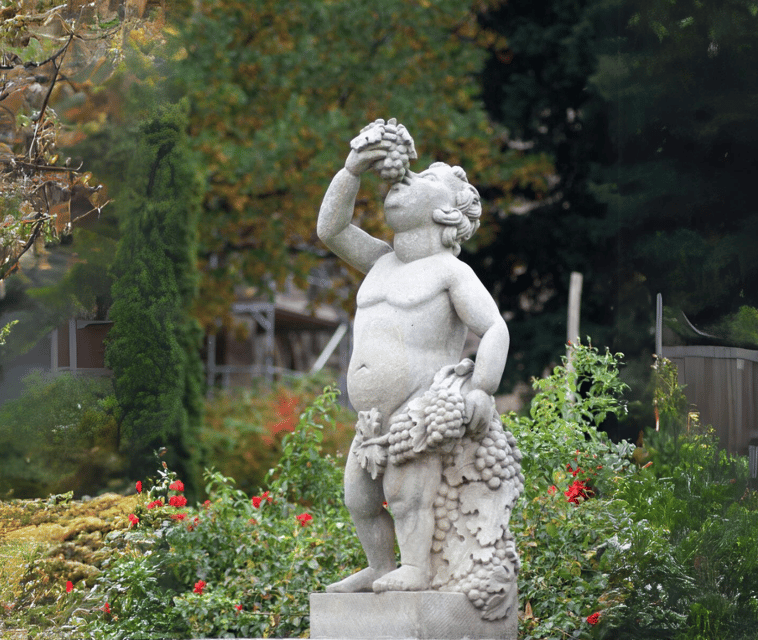
Schlossgarten provides a quieter part of the hilltop route before the final visit to St. Servatii. Gardens can be easy to overlook on a tightly planned city walk, but here the setting helps you understand the hill as more than a single monument.
The collegiate church is the major visual finish. Its position above the old town gives the route a clear sense of arrival. You have already seen Quedlinburg from its lanes and squares. At Schlossberg, the town’s structure makes more sense as a whole.
The church is also where the tour’s limitation is most obvious. You do not go inside St. Servatii. If interior architecture, religious art, or the church treasury is your main reason for visiting, you will need to arrange that separately if an opening is available.
Still, seeing the building as part of Schlossberg has real value. The hilltop setting explains why this place became the town’s great landmark. The tour lets you connect the collegiate church with the old town below rather than treating it as an isolated stop.
Food Advice at the End of the Walk
The guide provides recommendations for culinary places in Quedlinburg. This is a small inclusion, but I find it useful after a walking tour. You finish with a better sense of where the town’s central areas are, then you can choose a café or restaurant without wandering at random.
Keep seasonal opening patterns in mind. In January, several restaurants were closed at the same time, leaving limited choices for lunch. That is not a fault in the tour itself, but it is a practical reason to plan food before arriving in the quietest winter months.
The food advice is also more useful because it comes after you have walked through the town. You can match a recommendation with the area you already know, rather than trying to decode a restaurant name from a map.
Price, Value, and Family Savings
At about $10 per person, this is a low-cost way to get a structured introduction to Quedlinburg. The price covers two hours with a live German-speaking guide and includes both the old town and Schlossberg.
The value is strongest if you would otherwise walk past the buildings without understanding their connections. A self-guided stroll can show you the façades, but it may not explain the town’s 1100-year story, famous residents, churches, or the reason the hilltop matters.
Families get an especially good deal because children and adolescents up to 16 are free. That can make the tour a practical choice when you want young people to see more than the most obvious photo stops.
The price does not include entry inside St. Servatii, so factor that into your plans if you want an interior visit. Also remember that the guide is German-only. Paying for a spoken tour makes less sense if you cannot follow German, unless you are mainly seeking a route and visual introduction.
The activity has a 4.4 rating from 627 ratings, which suggests a generally dependable experience with some important exceptions. The strongest praise centers on detailed explanations, a friendly guide, and group sizes that allow questions. Those are exactly the qualities I would want from a town walk.
Who Will Get the Most From This Tour
I would recommend this walk to first-time visitors who want a clear orientation before exploring Quedlinburg on their own. It is also a good fit for anyone who enjoys architecture but wants help reading what they see.
Families should look closely at the free-child policy. The two-hour length is long enough to provide substance without taking up an entire day, though younger children may find the cobbles and hill less appealing than the buildings.
German-speaking visitors are the best match because all guiding is in German. The walk can still be visually appealing if you speak another language, but the main service is the guide’s explanation, not simply escorting you from one monument to another.
You should reconsider the tour if you need step-free paths, dislike uneven surfaces, or plan to visit during icy weather. The steep Schlossberg section is not a minor detail. It is part of the route and can affect safety.
Booking Tips for a Smoother Visit
The tour lasts two hours, and starting times vary by availability. Check the schedule for the date you want rather than assuming a fixed departure.
Meet at the city information office on Quedlinburg’s market square and look for the green sign. Arriving slightly early gives you time to locate the meeting point, prepare your ticket, and adjust clothing or footwear before the walk begins.
The activity allows cancellation up to 24 hours before the start for a full refund. You can also reserve and pay later, which helps if your German itinerary is still changing.
Bring weather-appropriate clothing because the tour runs in rain or sunshine. Firm footwear is more important than fashionable footwear here. The combination of cobbles, old lanes, and the Schlossberg climb rewards comfort.
Should You Book the Quedlinburg Old Town and Schlossberg Tour?
Book it if you want the town’s main story in one compact walk, especially if you speak German and like architecture, local personalities, and old streets. The route covers enough ground to give you a useful map in your head, while the low price and free admission for children make it easy to justify.
Skip it if you mainly want to enter St. Servatii, need an entirely level route, or cannot follow German. In those cases, a self-guided visit or a separate church visit may suit you better.
For most first visits, I think the tour is a smart starting point. It takes you from the market square through Quedlinburg’s half-timbered lanes and up to the hilltop church, then leaves you with food suggestions and a clearer idea of where to spend the rest of your day.
FAQ
Where does the tour begin?
It begins at the Quedlinburg city information office on Quedlinburger Marktplatz. Look for the green city information sign.
How long does the tour last?
The walking tour lasts two hours.
What language is the tour conducted in?
The live tour guide speaks German.
What places are included in the old town section?
The old town route includes the town hall, the market church of St. Benedikti, Schuhhof, Hölle, Blasii Church, and the Half-Welfare Museum.
What places are included on Schlossberg?
The Schlossberg section includes Klopstock-Haus, the Museum Lyonel-Feininger, Schlossgarten, and St. Servatii collegiate church.
Can I go inside St. Servatii collegiate church during the tour?
No. Entry inside St. Servatii collegiate church is not included.
Is the tour suitable in bad weather?
Yes. The tour takes place in rain or sunshine. Dress for the conditions.
Is the route difficult to walk?
The route includes cobblestone paths and a steeper section on Schlossberg.
Do children pay for the tour?
Children and adolescents up to age 16 can join free of charge.
Just added in Germany
- Berchtesgaden: Via Ferrata Beginner Tour of Schützensteig★ 4.7 · 15 reviews
- Berlin: Energizing 2-Hour Morning Segway Tour★ 4.7 · 35 reviews
- Berlin: Thrilling E-Scooter Adventure Tour★ 4.4 · 66 reviews
- Bayreuth: German City Walking Tour (Tourist Info)★ 4.7 · 202 reviews
- Beelitz-Heilstätten: Baum&Zeit Tree Top Walk Entry Ticket★ 4.9 · 7 reviews
- Beer Bike & Party Bike: Unforgettable Berlin City Tour incl. pickup★ 5.0 · 5 reviews
- Bavaria: Beginner Canyoning Tour★ 4.5 · 10 reviews
- Bayreuth: Christmas city tour in German★ 4.9 · 12 reviews
Old Town Walking Tours, compared.
Old Town & Viktualienmarkt City Walk in German
Read our review →
The Night Watchman Old Town Walking Tour in German
Read our review →
New Old Town and Highlights German-Language Tour
Read our review →

Browse the lists this tour appears in