
Reviewed · FOOD TOURS
Nuremberg: Christmas City Culinary Tour
Nuremberg’s Christmas market is more than rows of wooden stalls and mugs of hot wine. This two-hour walking tour explains why the Christkindlesmarkt became one of Germany’s best-known Christmas markets, then takes you through several market areas with food and drink along the way. Guides including Martina, Claudia, and Justina have earned especially strong praise for their clear local knowledge and warm manner.
I like the tour’s mix of tasting and storytelling. You get proper time in the Hauptmarkt, but you also visit the Children’s Market, the International Christmas Market, and the Partner Cities Market near St. Sebaldus Church. The tastings are useful, too: sausage, Lebkuchen, hot wine, and other seasonal foods give you a better sense of what the market is for, not just what it looks like.
The main drawback is the setting. The central market can be very crowded, making it hard to hear or move between stalls. Meeting instructions have also caused confusion, since the guide may wait on Fleisch Bridge near Starbucks rather than directly in front of the café. Arrive early, look for the guide, and do not bring a large bag.
Key points to know before booking
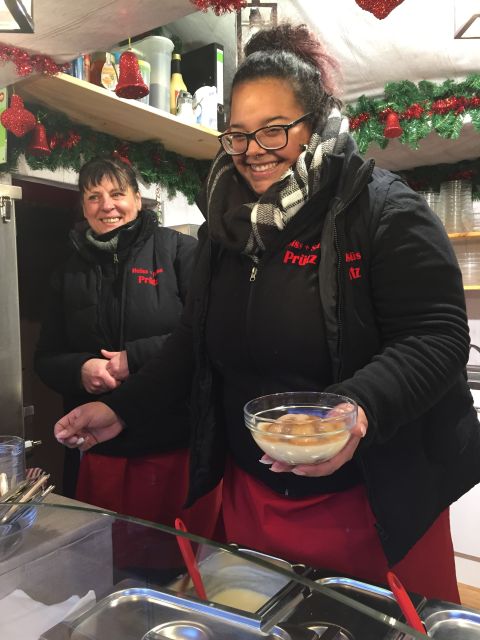
- You taste classic Nuremberg Christmas foods, including sausage, Lebkuchen, and hot wine.
- The route covers several market areas, not only the main market on Hauptmarkt.
- The tour lasts two hours, with guided stops at Fleisch Bridge, Hauptmarkt, Hans-Sachs-Platz, and St. Sebaldus Church.
- Guides speak English or German, with Martina, Claudia, and Justina singled out for especially friendly, well-prepared guiding.
- The main market can be difficult to cross at busy times, so comfortable shoes and patience matter.
- The tour runs in all weather, and you can cancel up to 24 hours ahead for a full refund.
Why this Nuremberg Christmas tour works
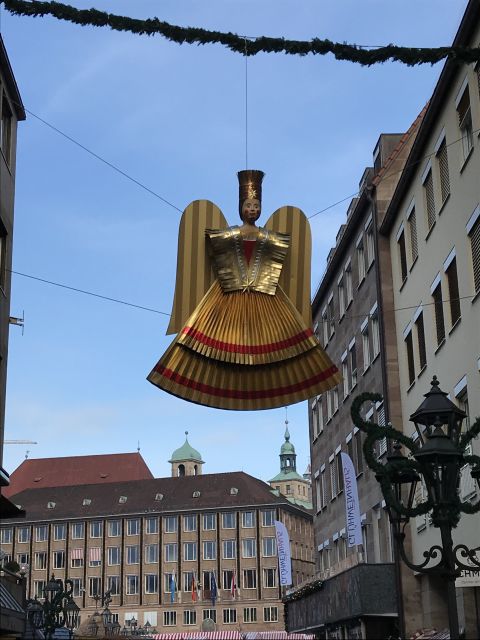
I like this experience because it gives the Christmas market a sense of place. You are not simply pointed toward a sausage stall and told to enjoy yourself. The guide explains how German Christmas markets developed, why Nuremberg’s market became so important, and how local customs continue today.
That context matters. Nuremberg’s Christmas market is famous enough to attract large crowds, but fame alone does not tell you what to eat, which market areas are worth seeing, or how the different sections fit together. A guide helps you get your bearings early, then gives you a route you can follow later on your own.
The food also has a practical purpose. You sample seasonal specialties while hearing the stories behind the market. Sausage, Lebkuchen, and hot wine are not random snacks added to a sightseeing walk. They are the edible part of the Christmas tradition, and tasting them makes the tour feel tied to the place.
The tour has a 4.6 rating from 40 reviews, with repeated praise for the guides’ preparation, local insight, and friendly approach. Martina receives particular praise for explaining how old market customs continue today. Claudia is noted for combining history with warm drinks and signature foods, while Justina is praised for making the route engaging and easy to understand.
Other eating walks in Nuremberg:
- “Rotes Bier” and “Blaue Zipfel”. A historical-culinary walk
★ 4.4 · 190 reviews - Hamburg: Schanzenviertel Culinary Tour
★ 4.6 · 2,051 reviews - Hamburg: Elbphilharmonie Plaza and HafenCity Food Tour
★ 4.7 · 1,711 reviews
Starting at Fleisch Bridge near Starbucks
The listed starting area is Fleisch Bridge, with Starbucks used as a nearby reference point. The exact meeting point can vary according to the option booked, so you should read the final instructions carefully.
This is the one part of the tour that deserves extra attention. One group had trouble finding the guide because some people waited directly at Starbucks while the guide stood on the bridge near the café. In a crowded Christmas market, that small difference matters. Arrive a little early and check both the bridge and the café entrance.
The first guided explanation at Fleisch Bridge is brief, about five minutes. Think of it as an orientation rather than a full sightseeing stop. You meet the guide, learn how the walk will work, and begin moving toward the central market.
Do not bring luggage or a large bag. The market streets can be tight, and a bulky case will make the walk uncomfortable for you and everyone around you. Wear warm clothing and shoes that can handle two hours on foot, since the tour takes place outside and continues in rain or snow.
Hauptmarkt and the Christkindlesmarkt
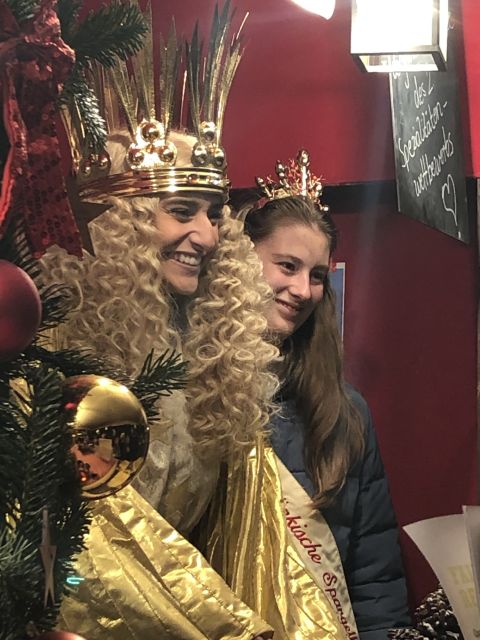
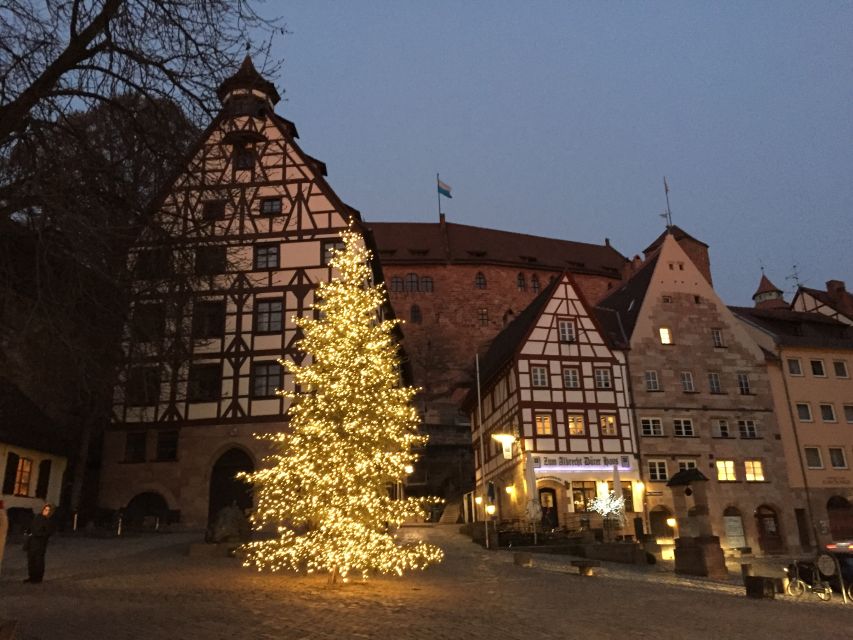
The main section of the experience takes place at Hauptmarkt, the central square where you encounter the famous Nuremberg Christmas market. The tour spends about 30 minutes here at one point, with more time returning later in the route.
This is where the guide explains the market’s long history and the Christ Child tradition. You will hear why Nuremberg is closely linked with the Christkindlesmarkt and how the market became a symbol of German Christmas culture.
The setting is impressive, but it is also the busiest part of the tour. At peak times, people move slowly between the stalls, and it may be hard to stay close to the guide. Keep your attention on the meeting point and listen carefully when the guide stops the group.
The reward is a first taste of the market’s food culture. Sausage is one of the key local foods, and you may also try Lebkuchen, the spiced Christmas biscuit associated with Nuremberg. Hot wine helps take the edge off the winter weather and gives you a classic market experience without requiring you to guess which stall to choose.
The tastings are described as substantial rather than tiny samples. One person specifically praised the portions as full size, while also wishing for one more tasting. That tells you something useful about the value: you should not expect a full meal, but the food stops can amount to more than a token bite.
Hans-Sachs-Platz and a less familiar market view
The route continues to Hans-Sachs-Platz for about 20 minutes of guiding and tasting. This stop gives the walk some breathing room after the central square and helps show that Nuremberg’s Christmas program is not limited to one famous cluster of stalls.
The value here is variety. You can compare the feel of a secondary market area with the packed Hauptmarkt, while the guide continues explaining local foods and customs. If the main square feels too crowded, this part of the route may be easier to enjoy.
The tour is not presented as a serious food class, so do not book it expecting detailed culinary instruction about every ingredient or recipe. One review specifically wished for more food-focused discussion. The emphasis is broader: local history, market traditions, and a handful of representative foods.
That balance will suit you if you want a cultural walk with tastings. If your priority is eating as much as possible or learning the technical details of Nuremberg sausage and Lebkuchen production, you may want a more specialized food tour.
Other Christmas trips in Nuremberg:
- Private Christmas Tour in Münster including Glühwein
★ 4.9 · 54 reviews - Freiburg: Christmas Tour with Drag Queen Betty BBQ
★ 4.6 · 46 reviews - From Rüdesheim: 2-hour Christmas Boat Tour on the Rhine
★ 4.3 · 44 reviews - Dresden with a touch of Xmas: English small group tour
★ 4.7 · 41 reviews
Returning to Hauptmarkt for more seasonal food
The group returns to Hauptmarkt for another guided section of about 25 minutes. This second look is useful because markets change as you move through them, and a guide can point out details you might miss during a first pass.
You also get another food stop. The exact vendor choices are not specified, so you should think of the menu as a selection of typical Christmas-market treats rather than a fixed restaurant-style tasting. Sausage, Lebkuchen, and hot wine are among the named foods and drinks.
This return visit also helps you use the market independently. A good market tour should not only fill two hours. It should leave you with enough confidence to return later, order something without guesswork, and move through the stalls with a plan. One person returned to the market the next day and felt comfortable knowing where to go and what was worth buying.
That is one of the strongest practical benefits here. You get an introduction before spending your own money. You can then come back for another drink, a different snack, or a gift that caught your eye.
The Children’s Market and German Christmas customs
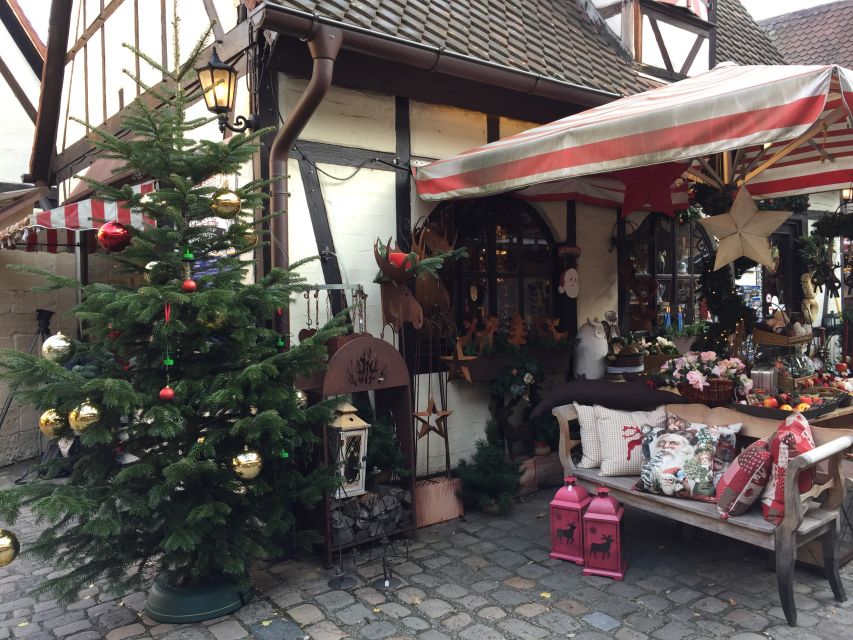
The route includes the Children’s Market, described locally as the Christkindlesmarkt in the tour information. This stop broadens the experience beyond the main square and gives the guide a chance to discuss how Christmas markets serve different audiences.
The Children’s Market is also a useful contrast with the main market. You are not seeing the same stalls repeated in another place. Instead, the tour shows how Nuremberg presents Christmas traditions in more than one setting.
The guide uses this part of the walk to explain German Christmas customs and the cultural role of the markets. That makes the tour especially helpful if this is your first visit to Germany during the Christmas season. You learn not only what to eat, but why the market matters to local tradition.
Do keep your expectations realistic about time. Two hours passes quickly, and the group cannot stop at every stall or give a long explanation of every custom. The tour offers a well-chosen introduction rather than an exhaustive study of Nuremberg’s Christmas program.
The International Christmas Market
The International Christmas Market is another important part of the route. Here, the focus shifts from Nuremberg’s own traditions to the wider connection between Christmas markets in different countries.
This stop adds variety to the walk. After hearing about local sausage, Lebkuchen, and the Christ Child tradition, you can see how international influences fit into the city’s Christmas celebration. It gives the tour a broader frame without losing its local focus.
The experience is still food-led, so you should expect more tasting and guiding rather than a long museum-style explanation. The guide may help you compare the local market with international offerings, but the supplied details do not promise a set list of countries or foods.
I see this as a strong reason to choose the tour over a simple stroll through Hauptmarkt. You visit more than the postcard view, and you get an explanation of how the market has grown into a wider cultural event.
St. Sebaldus Church and the Partner Cities Market
The tour continues to St. Sebaldus Church and ends around the Market of the Partner Cities between the church and the Town Hall. The church provides a clear landmark for the final part of the route, while the nearby stalls complete the market circuit.
This area is valuable because it helps you understand the layout of central Nuremberg. You are not dropped into the main square and left to figure out the rest. By the end, you have walked through several connected market zones and know where the main sights are located.
There is another guided food stop here, listed at about 20 minutes. You can finish with a seasonal bite or drink while the guide wraps up the story of Nuremberg’s market traditions.
The tour ends at either Hauptmarkt or Nuremberg Town Hall. Those are convenient central locations, but the exact drop-off point may depend on the option booked. If you have a dinner reservation or another timed activity, leave some flexibility rather than scheduling it immediately after the advertised two-hour finish.
Food portions, drink, and the value of $57
At $57 per person, this is not the cheapest way to walk through a Christmas market. You are paying for a live guide, several culinary stops, and a planned route through multiple market areas.
The value improves if you care about context. Buying sausage, Lebkuchen, and hot wine on your own will cost less, but it will not explain the Christ Child tradition, the history of the market, or the difference between the main, children’s, international, and partner-city sections.
The food portions also matter. The available comments describe them as generous and delicious, though one person wanted an additional tasting. I would treat the tour as a light meal or substantial snack, not a replacement for dinner.
The price makes the most sense for a first visit, especially if you have limited time in Nuremberg. A guide can help you avoid wandering through the same crowded streets and can point you toward foods you might otherwise overlook. If you already know the market well, the cost is harder to justify unless you want the historical explanation and organized tastings.
The guides make the difference
The strongest part of this experience is the guiding. Martina is repeatedly praised for being friendly, professional, and well prepared. Claudia is described as combining local history with food and warm drinks in an engaging way. Justina is praised for looking after the group and sharing her affection for Nuremberg.
The guide’s role matters even more in a crowded market. A clear meeting point, strong voice, and good group management can determine whether you hear the story or spend the walk trying to find the guide. The positive comments suggest that the guides generally handle the route well, but the meeting confusion near Starbucks is worth remembering.
English and German are available. If you want to ask questions, listen closely, and follow the guide’s explanation, choose the language in which you are most comfortable.
The tour is wheelchair accessible, although the market crowds may still affect how easily you move between stalls. Since the activity takes place rain or shine, warm layers and sensible shoes are essential for everyone.
Who should book this tour?
I would recommend it to a first-time visitor who wants an easy introduction to Nuremberg’s Christmas markets without spending hours planning a route. It suits couples, families, and small groups who enjoy local food but also want the story behind the stalls.
It is especially useful if you want to return to the market later on your own. The route gives you a basic map of the central market areas, and the food stops help you decide what you want to try again.
You may want to skip it if you dislike crowds, prefer a quiet sit-down meal, or want a highly technical food tour. The main market can be hard to cross, and the food discussion is part of a wider cultural walk rather than the sole focus.
Should you book the Nuremberg Christmas City Culinary Tour?
Book it if you want history, orientation, and tasting in one compact two-hour walk. The best reasons are the range of market areas, the well-liked guides, and the chance to sample classic foods while learning about Nuremberg’s Christmas traditions.
The $57 price is fair when you value a guide and several tastings, but less attractive if you only want to browse stalls and buy your own snacks. Arrive early at the Fleisch Bridge area, confirm whether the meeting point is on the bridge or near Starbucks, dress for winter weather, and bring no large luggage.
For a first visit to Nuremberg at Christmas, this is a useful way to get started. It gives you enough local background to make the market feel like more than a pretty crowd around a food stall.
FAQ
How long does the Nuremberg Christmas City Culinary Tour last?
The tour lasts two hours.
What foods and drinks are included?
Named tastings include sausage, Lebkuchen, hot wine, and other seasonal culinary treats.
Which languages are available?
The live guide speaks English or German.
Where does the tour start?
There are two listed starting options, and the meeting point may vary according to the option booked. Fleisch Bridge and Starbucks are used as the starting references.
Where does the tour finish?
The tour has two possible drop-off locations: Hauptmarkt Nürnberg or Rathaus Nürnberg.
Does the tour visit more than the main Christmas market?
Yes. The route includes the main market at Hauptmarkt, the Children’s Market, the International Christmas Market, and the Market of the Partner Cities near St. Sebaldus Church and the Town Hall.
Is the tour wheelchair accessible?
Yes, the activity is listed as wheelchair accessible.
What should I bring?
Bring comfortable shoes and warm clothing.
Can I bring luggage or a large bag?
No. Luggage and large bags are not allowed.
What happens if it rains?
The tour takes place rain or shine, so you should dress for the weather.
Can I cancel the booking?
You can cancel up to 24 hours in advance for a full refund. You can also reserve now and pay later.
Just added in Nuremberg
- Tour en español al Campo Zeppelin★ 5.0 · 8 reviews
- Stein: Public guided tour of the “Old Mine” museum★ 4.5 · 18 reviews
- “Rotes Bier” and “Blaue Zipfel”. A historical-culinary walk★ 4.4 · 190 reviews
- Nuremberg: Old Town Guided Tour By Bus★ 4.4 · 198 reviews
- Nürnberg kennenlernen: Highlights in der Altstadt★ 4.7 · 189 reviews
- Nuremberg: Bar and Club Tour with Free Shots and Free Entry★ 3.8 · 23 reviews
- Nürnberg Bachelor(ette) Party with Night PubCrawl★ 4.2 · 5 reviews
- Nuremberg: Tour of Former Nazi Party Rally Grounds★ 5.0 · 43 reviews
Food Tours, compared.
Elbphilharmonie Plaza and HafenCity Food Tour
Read our review →
Berlin Center Food Tour with 8+ Authentic Local Tastings
Read our review →
Beer and Food Tour with Dinner & Oktoberfest Museum
Read our review →
Browse the lists this tour appears in