
Reviewed · WALKING TOURS
Münster Private Guided Walking Tour
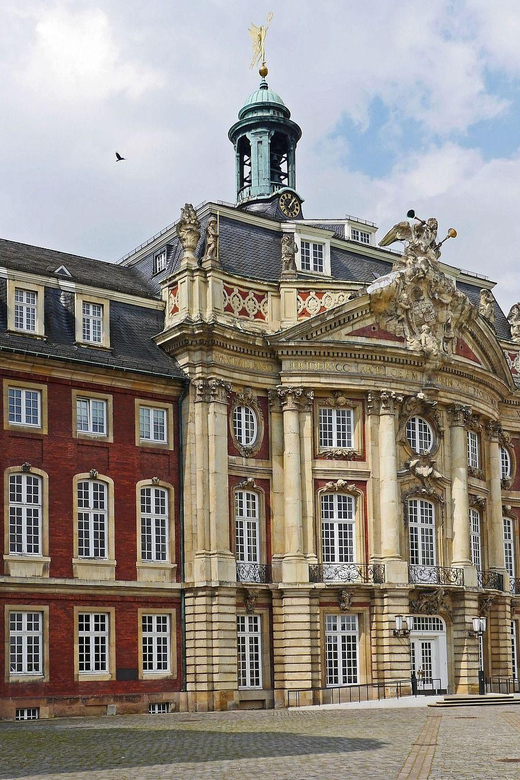
Münster’s story turns sharply at the Peace of Westphalia, where negotiations ended the Thirty Years’ War in 1648. This private walk connects that event with the Münster Rebellion, the cathedral, Hanseatic trade, and the city’s modern bicycle culture.
I like the personal format, since your guide can adjust the walk on the spot. I also like the mix of major sights and local character, from the outside of the Historical Town Hall to the astronomical clock in St Paulus Dom. The main caution is simple: this is a walking tour, not a bus tour, and the advertised meeting point and group limit have caused confusion, so confirm both before you go.
Key points to know before booking
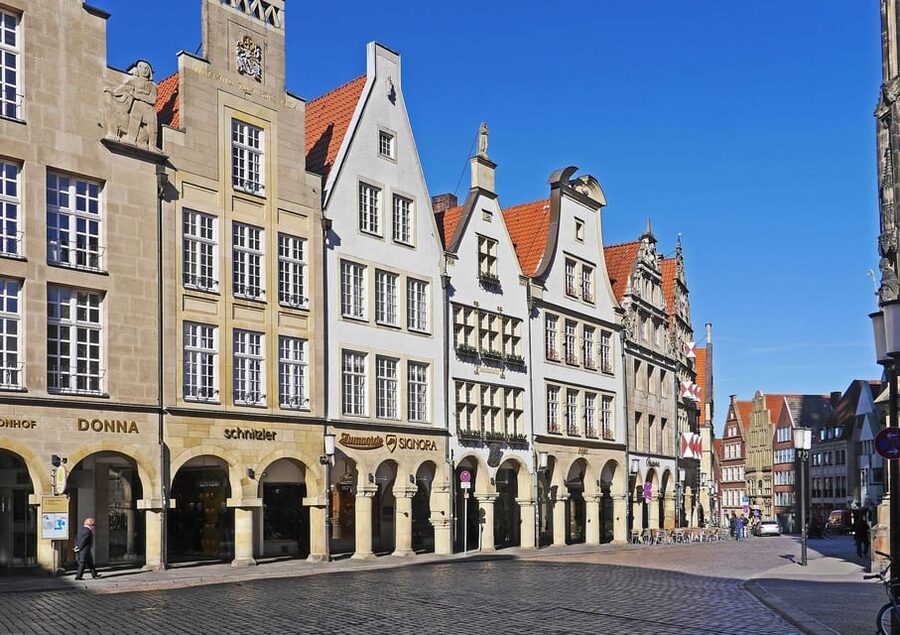
- A two-hour walk through Münster’s Old Town: Expect an on-foot introduction rather than a ride around the city.
- A powerful European story: The tour explains the Peace of Westphalia, the Münster Rebellion, and the Thirty Years’ War.
- St Paulus Dom anchors the route: You see the 13th-century cathedral and its late-medieval astronomical clock.
- Private guiding gives you flexibility: The local guide can adjust the experience for your group during the walk.
- Guide quality matters: Greta Verduyn received especially warm praise for keeping children, teenagers, and adults interested.
- Check the details before departure: The stated meeting point is in front of the Town Hall at Stadthaus 1, Klemensstraße 10, but one booking reported that the actual location differed.
Münster’s story begins at the Peace of Westphalia
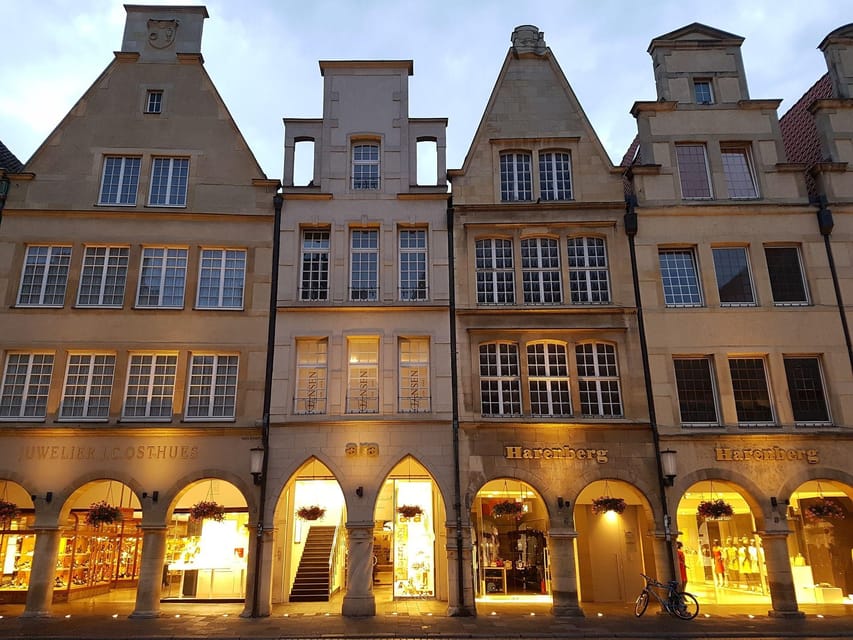
Meet your guide in front of the Town Hall, at Stadthaus 1 on Klemensstraße 10, according to the stated instructions. The tour then sets off through central Münster, where a short walk can cover a surprising amount of European history.
The central theme is the Peace of Westphalia, signed in 1648 after the Thirty Years’ War. Münster played a key role in those negotiations, and the tour takes you to the place associated with the signing. That gives the walk more weight than a simple look at old façades. You are seeing a city tied to a major change in how European states settled conflict.
The tour also covers Münster’s earlier role as a bishop’s seat, a member of the Hanseatic League, and a university city. Those labels matter because they explain the city’s character. Religious power shaped the cathedral and old center. Trade brought merchant families and wider connections. The university helps give Münster its youthful energy today.
Your guide is there to connect these periods rather than present a list of dates. You might hear how the city moved from medieval church authority and merchant trade to modern education and environmental thinking. Since the tour is private, you can ask for more detail about the period that interests you most.
Other walks around Munster:
- Münster: Old Town Historical Walking Tour by “Geo Epoche”
★ 4.7 · 51 reviews - Discover Berlin Half-Day Walking Tour
★ 5.0 · 9,624 reviews - Berlin: Third Reich and Cold War 2 Hour Walking Tour
★ 4.9 · 6,830 reviews
The Münster Rebellion and the cost of religious conflict
Münster’s past is not all polished stone and peaceful trade. The tour includes the Münster Rebellion, one of the city’s most dramatic episodes.
The rebellion grew from intense religious and political conflict in the 16th century. The supplied tour information does not promise a specific building interior or a dedicated museum stop for this subject, so expect the guide to explain the events as part of the city walk and its architecture. That format can work well if you want the basic story placed in the streets where the city developed.
The subject also leads back to the Thirty Years’ War and the negotiations that followed. You get a useful contrast: Münster was once caught in violent religious upheaval, then later became a setting for diplomacy. A good guide can make that change easy to follow without turning the walk into a lecture.
I would pay attention here if you enjoy political history. The story gives Münster a sharper edge than its calm bicycle streets might suggest. If you prefer only art, shopping, and pretty squares, this section may feel heavier than expected.
Prinzipalmarkt and the Old Town façades
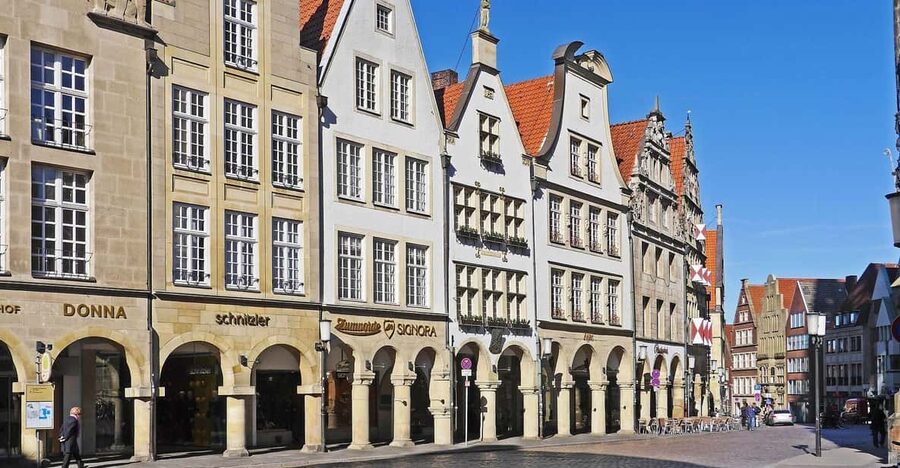
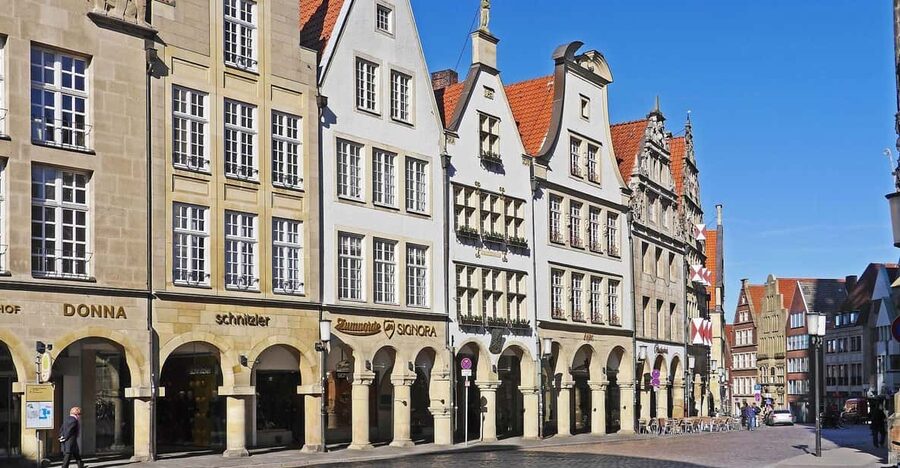
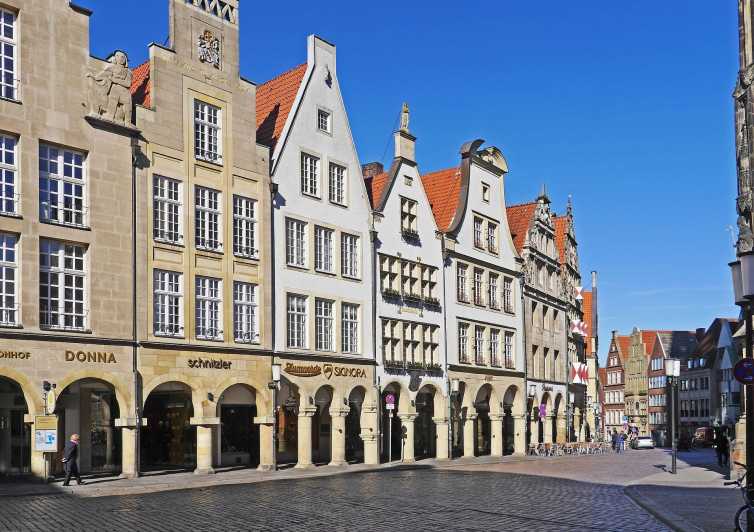
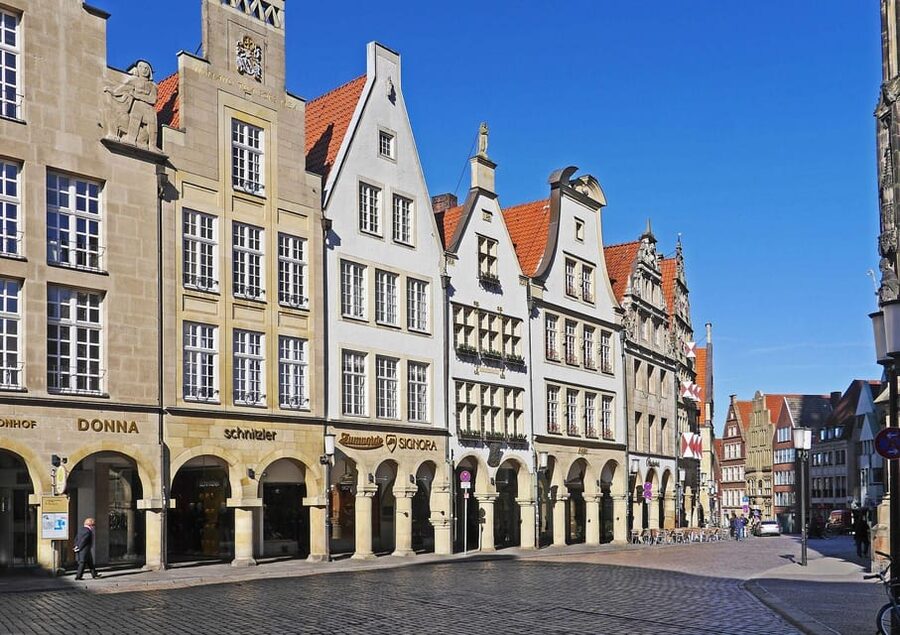
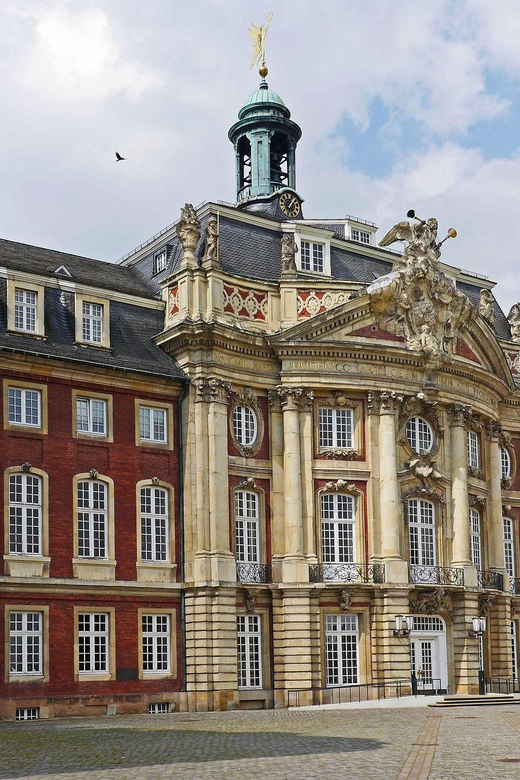
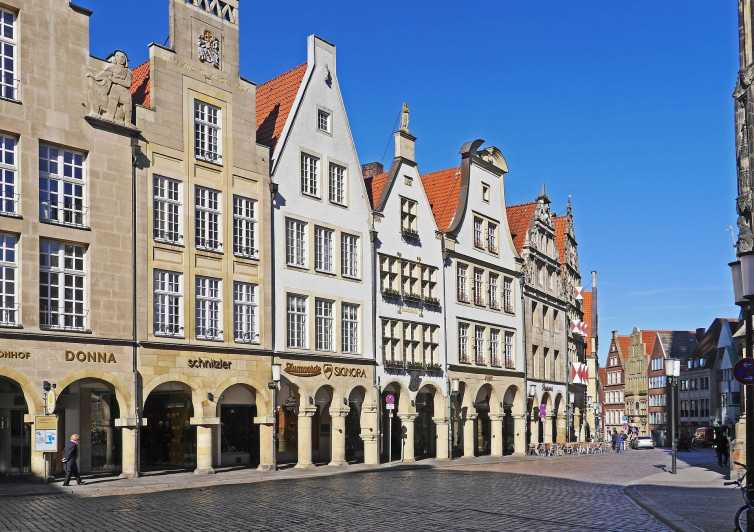
A walk through the Old Town brings you to Prinzipalmarkt, one of Münster’s key historic streets. The area connects medieval urban life with the merchant families who still conduct business in the city.
The architecture carries much of the tour’s meaning. Münster has been a religious center, a trading city, and a university town, and those roles appear in its public buildings and streets. Your guide can point out how the built environment reflects the city’s changing fortunes.
The route includes the outside of the Historical Town Hall. This is an important practical detail. The experience does not include entrance fees, and the description specifically promises the exterior, so you should not book expecting a long indoor visit to the building.
That limitation is not necessarily a weakness. A two-hour tour has to choose its priorities, and an exterior explanation lets the guide keep moving through the central streets. If you want to enter the Town Hall or another sight, ask the guide about possible customization and budget separately for admission.
The walking pace should suit people who want a broad introduction rather than a single-site study. Still, the tour is not a bus excursion. One German review strongly objected to the use of bus-tour wording and pointed out that the group included people over 70. If anyone in your party has trouble walking, treat the two-hour duration as a real physical commitment and clarify the format before booking.
St Paulus Dom and the astronomical clock
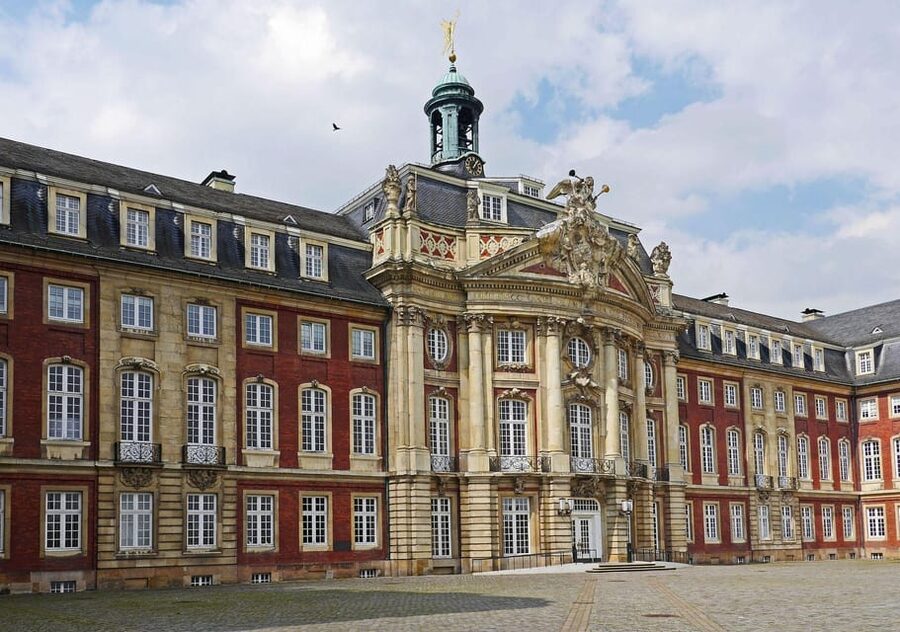
St Paulus Dom is the architectural anchor of the tour. The 13th-century cathedral sits in the center of Münster, surrounded by the streets of Prinzipalmarkt and the old commercial heart of town.
The cathedral matters for more than its size. It represents Münster’s long role as a bishop’s seat and gives you a direct link to the Middle Ages. Even from the outside, the building helps explain why this city became such an important religious center in northern Germany.
Inside, the late-medieval astronomical clock is a major point of interest. The supplied information calls it a notable feature, but entrance fees are not included, so check with your guide about whether the walking route includes access or only an exterior explanation. Admission arrangements can affect how much time remains for the rest of the Old Town.
I like this part of the route because the clock adds a human touch to the cathedral. It is not only a grand religious building. It is also a piece of medieval science, craftsmanship, and daily timekeeping. If you care about historic technology, ask the guide to spend a little extra time here.
A few more things to do in Munster worth a look
- Münster: Private Guided Rickshaw City Tour
★ 4.8 · 143 reviews - Private Christmas Tour in Münster including Glühwein
★ 4.9 · 54 reviews - Private crime city tour by rickshaw including guide
★ 5.0 · 21 reviews - Münster: Private Guided Sculptures Tour on a Rickshaw
★ 5.0 · 12 reviews
A city built around bicycles
Münster is known for its bicycle culture, and the tour places the old monuments in a modern setting. The city has roughly 280,000 inhabitants and about 500,000 bicycles, according to the supplied description. The exact population figures vary in the material, but the main point is clear: bicycles are central to daily life here.
That helps explain why the walk feels different from a standard medieval-city visit. You are not touring a preserved relic. You are moving through a working university city where historic streets share space with a large cycling population.
Keep your attention up as you walk. The bicycle culture is part of the experience, but it also affects how you move through the center. Listen for approaching riders and follow your guide’s route rather than stopping casually in passageways.
The city’s cycling system also gives the tour a modern theme. Münster is presented as a model for greener urban life in Germany and beyond. The guide may connect that reputation with the streets you are walking, showing how a city with 1,200 years of history continues to change.
The Picasso Museum and options for customizing the walk
Münster is home to the Pablo Picasso Museum, described as the only museum in Germany dedicated to the artist. The museum is mentioned as one of the city’s cultural highlights, but an entrance ticket is not included and the tour does not promise a museum visit.
That distinction matters. If Picasso is your main reason for visiting, this two-hour walk may help you get oriented, but you should plan the museum as a separate stop and allow extra time. Ask the guide whether the route can be adjusted to include the exterior or a nearby explanation.
The private format gives you room to shape the outing. The experience allows possible customization with your local guide on the spot. That does not guarantee a completely different itinerary, but it means you can raise priorities such as the cathedral, Peace of Westphalia sites, merchant history, bicycles, or art.
For a family group, you might ask for shorter explanations and more visual stops. For a history-focused group, request more detail on the Münster Rebellion and the Thirty Years’ War. For a first visit, keep the standard highlights so you do not spend the entire walk on one subject.
What the two-hour format really gives you
Two hours is enough for a useful first look at Münster, especially with a private guide who knows what your group wants to see. It is not enough for a full museum visit, an extensive cathedral study, and a detailed tour of every historic building.
You will likely spend the time moving between central landmarks and hearing the stories that connect them. The format favors breadth: Peace of Westphalia, Old Town, Town Hall exterior, Prinzipalmarkt, St Paulus Dom, the astronomical clock, bicycle culture, and the city’s university identity.
That makes the tour a good choice near the beginning of a Münster stay. You can use the walk to decide where to return on your own. The cathedral or Picasso Museum may deserve more time, while the bicycle streets and merchant architecture are best understood as part of the city’s overall character.
The private setting also gives you a chance to ask direct questions. You are not waiting for a large group to catch up, and you can ask the guide to explain a confusing period again. The guide speaks English or German, so choose the language that lets you follow the historical details comfortably.
Guide quality and the personal format
The guide can make or break a history walk. Greta Verduyn received particular praise for engaging children from age nine through nineteen as well as adults. That is useful evidence for families, since keeping several age groups interested during a history tour is not easy.
The activity uses a local professional guide who stays with your group only. You are not sharing the walk with strangers, and the guide can adjust the presentation to your interests. The experience is sold for a private group, with the stated limit of up to 15 people.
There is one important qualification. A German booking reported that the maximum group size was not accurate and also said the meeting point information was wrong. Because the listing details have caused confusion, confirm the final group size and precise meeting location after booking. Do not simply assume that the published information will be enough on the day.
The overall rating is 4.5 from 18 reviews, and the strongest praise focuses on the guide and the tour itself. Another high rating called the experience great but considered the price high. That is a fair reading of the product: the value depends heavily on how many people share the fee and how much you value a private guide.
Is $294 good value?
At $294 per group, the price looks steep for one or two people. For a full group of 15, it works out to about $19.60 per person. With 10 people, it is about $29.40 each. With five people, the cost rises to about $58.80 per person.
That makes the tour most attractive for a family, reunion, school-age group, or group of friends who want a private introduction. A couple may find a shared group walk better value if one is available. On the other hand, a private guide can be worth paying for if you need English, want to set the pace, or have very specific interests.
Remember that entrance fees are not included. If you plan to visit the Picasso Museum or enter St Paulus Dom, those costs come on top of the tour price. The advantage is that you pay for the guide and walking experience rather than being forced into a package of admissions you may not want.
The reserve-now-and-pay-later option gives you flexibility, and cancellation is free up to 24 hours in advance for a full refund. Those terms are useful if your German itinerary is still shifting.
Who should book this Münster walk?
I would choose this tour if you want a private orientation to Münster and care about how the city’s medieval, religious, political, and modern sides fit together. It suits first-time visitors, families who want a guide to adjust the storytelling, and history fans interested in the Peace of Westphalia and Münster Rebellion.
It also suits groups that want English or German guiding without joining a large public walk. The private format is especially useful when your group has mixed interests. One person can ask about the cathedral, another about bicycles, and another about the Picasso Museum.
I would hesitate if you want a bus tour, have limited walking ability, or expect extensive indoor sightseeing. The experience is on foot, lasts two hours, and does not include entrance fees. If your priority is the Picasso Museum, arrange that separately.
Should you book it?
Book this Münster tour if you can share the $294 cost across a decent-sized group and want a flexible walk led by a local guide. Its best feature is the connection between major European events and the streets, churches, and civic buildings of the city.
Before paying, confirm three things: that the experience is a walking tour, the exact meeting point, and the actual group limit. If those details are settled, the tour offers a compact and useful first look at Münster, with enough historical substance to guide the rest of your visit.
FAQ
Where does the Münster walking tour meet?
The stated meeting point is in front of the Town Hall, Stadthaus 1, Klemensstraße 10, 48143 Münster. Because the meeting point has caused confusion, confirm the final location before the tour.
How long does the tour last?
The tour lasts two hours.
Is this a walking tour or a bus tour?
It is a private walking tour. The route includes the Old Town, Prinzipalmarkt, the outside of the Historical Town Hall, and St Paulus Dom.
What languages does the guide speak?
The live guide is available in English or German.
Is the tour private?
Yes. It is offered as a private group experience with a local professional guide who stays with your group.
How many people can join?
The stated capacity is up to 15 people per group. Since one booking reported that the group limit was not accurate, confirm the final capacity before departure.
Are entrance fees included?
No. Entrance fees are not included in the tour price.
Does the tour include the Picasso Museum?
The Picasso Museum is one of Münster’s highlighted attractions, but a museum entrance is not included. The tour description does not promise a museum visit, so ask the guide about the route and plan admission separately.
Can the tour be customized?
Possible customization with the local guide is offered on the spot. You can discuss your group’s interests, but the exact changes depend on the guide and available time.
Just added in Munster
- Private crime city tour by rickshaw including guide★ 5.0 · 21 reviews
- Münster: Private pub crawl with insider guide & free shots★ 4.6 · 11 reviews
- Münster: Old Town Historical Walking Tour by “Geo Epoche”★ 4.7 · 51 reviews
- Münster Old Town: Outdoor Escape Game★ 4.1 · 14 reviews
- Münster: Private Guided Sculptures Tour on a Rickshaw★ 5.0 · 12 reviews
- Münster: Old Town Crime Mystery Tour★ 4.0 · 35 reviews
- Münster Escape Tour Kreuzviertel★ 4.2 · 8 reviews
- Münster: Beer Tasting Rickshaw Tour★ 4.7 · 56 reviews
Walking Tours, compared.

Third Reich Berlin: Hitler and WWII Walking Tour
Read our review →
Browse the lists this tour appears in