

Reviewed · OLD TOWN WALKING TOURS
Münster: Old Town Highlights Guided Tour
Münster’s old town packs a surprising amount of drama into a compact walk. A cathedral, headless saints, iron cages, religious rebels, merchant power, and a peace treaty that ended the Thirty Years’ War all fit into this 90-minute route. The Anabaptist story gives the tour its sharpest edge, while the Peace Hall shows how local streets connect to European history.
I like the tour’s clear focus on the city’s major sights, especially the Dom, Prinzipalmarkt, St. Lamberti Church, and Historic City Hall. I also like the practical length and low $16 price. The main drawback is simple: the tour is held in German, so you need a strong enough command of the language to follow a detailed historical talk.
Key points to know before you book
- The Anabaptist cages still hang from St. Lamberti’s tower, a stark reminder of Münster’s turbulent 16th century.
- The Peace Hall inside Historic City Hall links Münster to the Peace of Westphalia, signed in 1648.
- The tour lasts 1.5 hours, enough time for the main sights without taking over your day.
- A German-speaking guide leads the walk, with an entertaining and informative approach.
- Children under six join free, which helps families keep the cost down.
- The meeting point is easy to identify, opposite the Historic City Hall beneath the Michaelisplatz sign.
Why Münster’s old town tells an unusually dramatic story
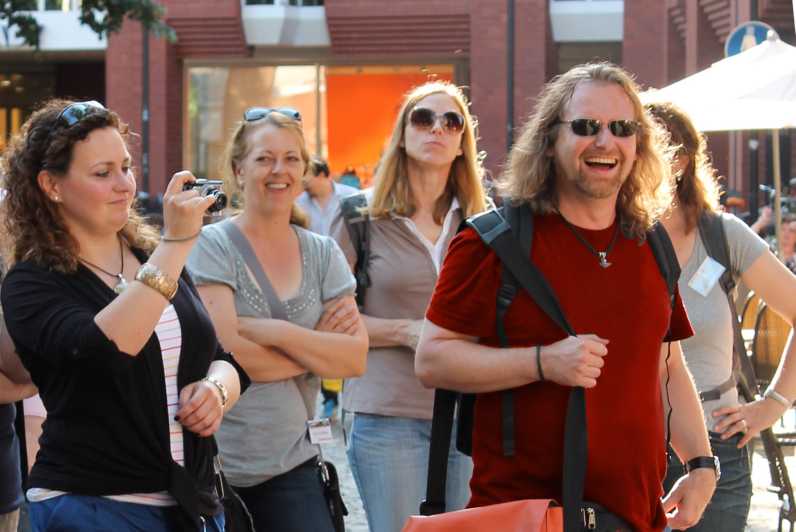
Münster can look orderly at first glance: a cathedral, handsome squares, old churches, and carefully restored buildings. This tour helps you read the conflicts behind that attractive surface. The city grew from a small Saxon settlement called Mimigernaford, and its development was shaped by two competing powers: the clergy and the merchants.
That tension is especially useful to understand early in the walk. It explains why the old town is not just a collection of pretty façades. The cathedral area reflects ecclesiastical authority, while the market and civic buildings show the growing strength of commerce and urban government.
I like this approach because it gives you a way to interpret Münster after the tour ends. Instead of seeing isolated monuments, you begin to understand why religious and civic buildings sit where they do, and why the city’s appearance reflects old arguments about who should control it.
The guide also connects local events to wider European history. Münster’s story moves from medieval church power to Protestant and Catholic conflict, then to the radical Anabaptist takeover, and finally to the negotiations that helped end the Thirty Years’ War. That is a lot of ground, but the 90-minute format keeps the focus on the city rather than turning into a general lecture on Germany.
More Old Town Walking Tours across Germany
- Dresden: Semperoper and Old Town Tour
★ 4.8 · 5,735 reviews - Nuremberg: Old Town Guided Walking Tour
★ 4.6 · 2,416 reviews - Munich: Old Town & Viktualienmarkt City Walk in German
★ 4.7 · 2,304 reviews
Starting at St. Paul’s Cathedral and Mimigernaford
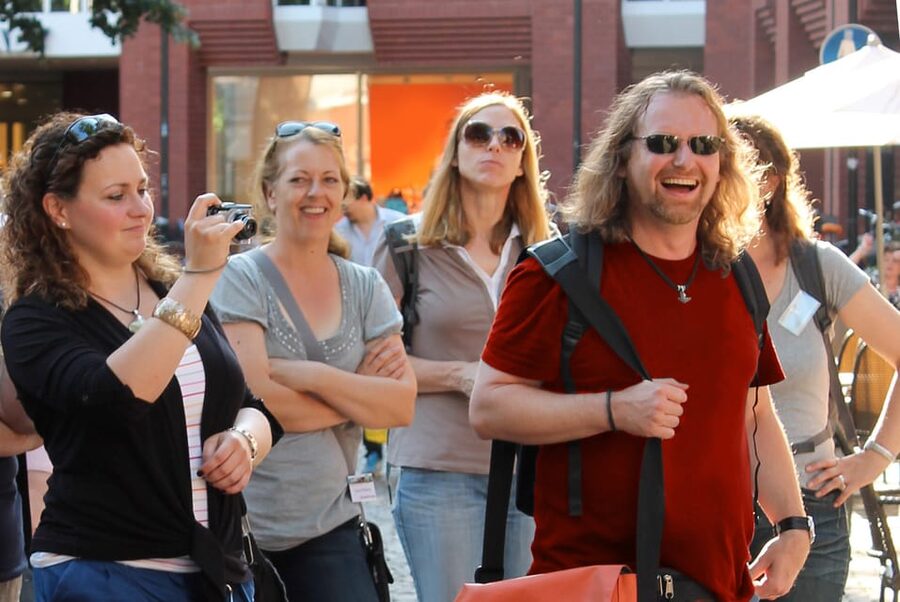
The walk begins near the Historic City Hall, but the cathedral provides one of the most important historical anchors. At St. Paul’s Cathedral, you learn how Mimigernaford developed into Münster and why the cathedral’s surrounding area had special legal and political status.
The term cathedral immunity refers to the area around the cathedral that operated under the church’s authority. It was more than a religious zone. It had its own rules and privileges, and it helped give the clergy a powerful position inside the growing town.
This is where the old dispute between merchants and clergy becomes concrete. Münster’s merchants wanted room to trade and govern their own affairs, while the cathedral authorities defended their influence. The conflict helps explain the city’s layout and the way religious and commercial spaces developed side by side.
You do not need to arrive with a background in medieval German history. The useful part is the connection between the small settlement and the city you see today. The cathedral is not treated as a single impressive building. It becomes the starting point for understanding how Münster gained status and power.
The cathedral stop also gives the tour a strong beginning for anyone seeing Münster for the first time. If you arrive early, you can use the area to get oriented before the walk starts. The stated meeting point is opposite the Historic City Hall, beneath the sign marked Michaelisplatz and close to the Rathausrelief. Look for the guide carrying an orange bag with the k3 sign.
The Anabaptists, a pointed tower, and headless saints
The most unusual part of the tour concerns Münster’s Anabaptist period in the 16th century. The movement took control of the city, and its rule left physical reminders that remain visible in the old town.
At the Überwasserkirche, you learn why the church tower still lacks its point. The story is tied to the Anabaptist takeover and the violence and upheaval that followed. The church also has saints who remain headless, another visible mark of the period.
These details are memorable because they are not just dates in a timeline. You can look at a missing tower point or a damaged religious figure and connect it to a specific political and religious crisis. I find this kind of history easier to retain than a long list of names and years.
The story is also a useful warning against viewing old European cities as untouched relics. Münster’s churches and public buildings have been altered by conflict, power struggles, and changing beliefs. The damage is part of the city’s story, not an unfortunate footnote.
The tour does not present the Anabaptists as a colorful curiosity. Their rule was serious and disruptive, and its end was harsh. That balance matters. You get the striking visual details, but also the political setting that made the episode so important.
St. Lamberti Church and the iron cages

The market church of St. Lamberti provides one of the tour’s most powerful stops. Three iron cages hang from the church tower, and they symbolize the end of the Anabaptist movement in Münster.
The cages are hard to miss once you know what you are looking at. They are also easy to misunderstand without context, so the guide’s explanation adds real value. You learn how the tower keeper worked there and how the church tower functioned as part of the city’s public life.
This stop shows how Münster used architecture to display authority. The tower was not only a religious landmark. It also served as a visible place where the city communicated punishment, order, and control.
For me, this is the point where the tour’s title, old town highlights, becomes more than a sightseeing promise. You are not simply stopping at a church because it is attractive. You are seeing how one building carries several layers of religious, civic, and political meaning.
The surrounding market area also helps place the story in everyday urban life. Merchants, clergy, civic officials, and ordinary residents all shaped the old town. The guide’s job here is to connect the dramatic event to the streets and buildings where people actually lived and worked.
A few more things to do in Germany worth a look
- Berlin: Reichstag, Dome and Government District Guided Tour
★ 4.7 · 18,288 reviews - Dresden: Semperoper Tickets and Guided Tour
★ 4.7 · 12,102 reviews - Berlin: Government District around the Reichstag Guided Tour
★ 4.7 · 8,447 reviews - Hamburg: Elbphilharmonie Plaza Guided Tour
★ 4.7 · 5,882 reviews
Prinzipalmarkt and Münster’s civic heart
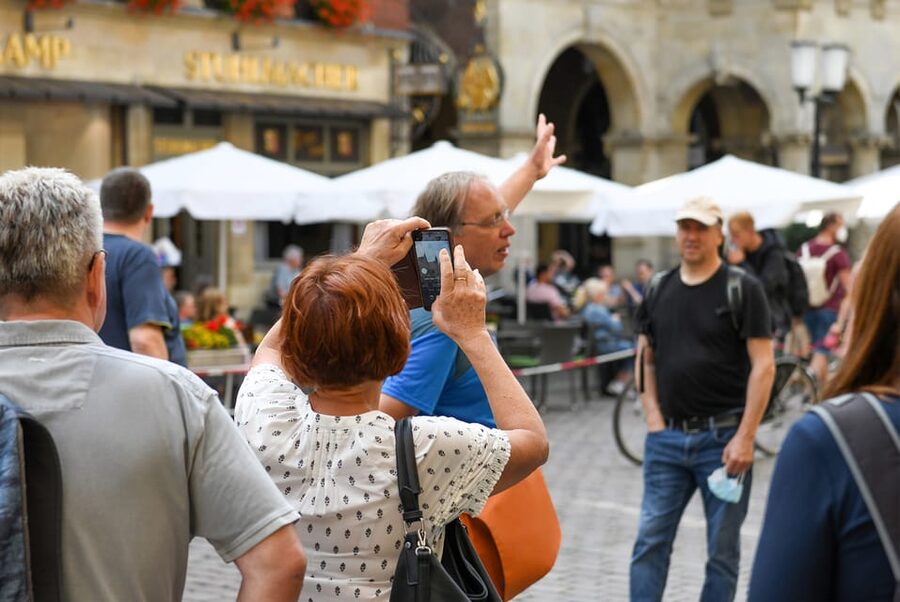
The Prinzipalmarkt is one of the essential sights included in the walk. Its arcaded buildings and orderly rows make it one of Münster’s defining urban spaces, but the tour gives you more than a quick photo stop.
Here you can connect the city’s commercial ambitions to the earlier rivalry between merchants and clergy. The market was not merely a place to buy goods. It represented the growing importance of civic and economic life within Münster.
I like having the Prinzipalmarkt included because it gives the tour a visual pause after the darker Anabaptist material. The square’s architecture is elegant and composed, yet its story still involves competition for influence and control.
A guide can also point out how the market relates to the nearby churches and City Hall. That relationship is important. Münster’s old town works best when you read its buildings together, rather than treating each one as a separate monument.
The tour is not designed as a shopping walk, and you should not expect time for browsing or long photo breaks. Its value is in seeing the square within the city’s political story. If you want an unhurried look at every façade, you may need to return on your own after the tour.
Historic City Hall and the Peace Hall
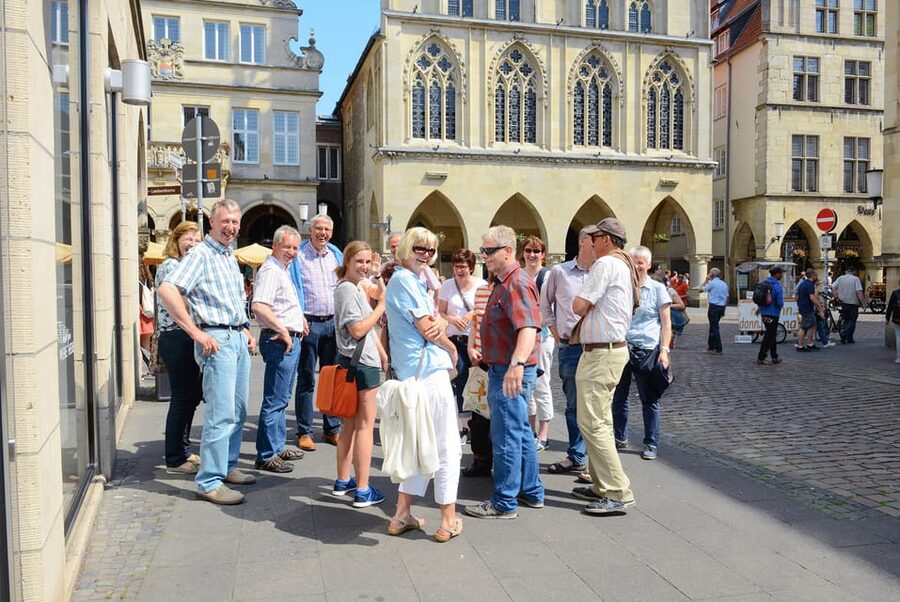
The Historic City Hall is another major stop, and the Peace Hall is its most important room. This is where the Dutch and Spanish peace agreement was signed as part of the Peace of Westphalia in 1648.
That agreement helped bring the Thirty Years’ War to an end, after years of destruction and suffering across much of Europe. The room gives Münster a place in a major turning point, and the guide explains why the negotiations matter beyond the city itself.
The useful point is not simply that a famous treaty was signed here. Münster hosted negotiations that involved different powers and religious interests, and the city became associated with a new effort to settle major conflicts through diplomacy.
The Peace Hall also gives the tour a civic counterpoint to the cathedral and churches. Earlier stops show religious authority and religious conflict. Here, the focus shifts to municipal government and international negotiations.
Access details for the inside of the Peace Hall are not specified, so you should not assume that every departure includes the same interior visit or that the room is open at all times. The Historic City Hall is definitely part of the sightseeing route, and the tour description identifies the Peace Hall as the place where the peace was signed.
This is one reason the meeting point is convenient. You begin directly opposite the building at Michaelisplatz, near the Rathausrelief. You are already in the center of Münster’s civic story before the guide says a word.
Erbdrostenhof and Clemenskirche: Baroque Münster
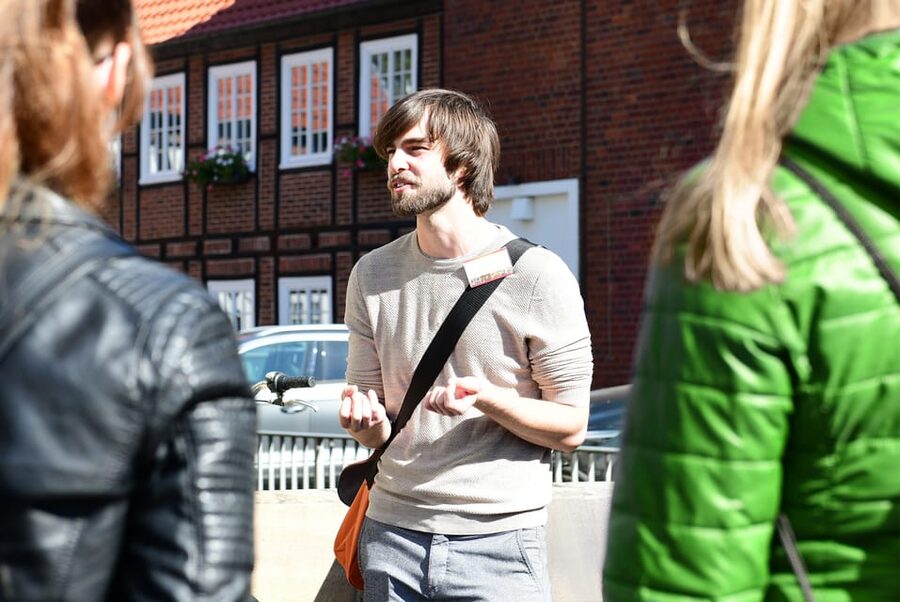
The walk also introduces you to two buildings by Johann Conrad Schlaun, one of Westphalia’s best-known Baroque master builders. Erbdrostenhof and Clemenskirche show a different side of Münster from the medieval cathedral and Gothic church towers.
These buildings help you see how the city changed over time. Münster’s identity is not limited to medieval religious architecture. Schlaun’s work added a more decorative and formal Baroque character, and his style remains an important part of the city’s appearance.
Erbdrostenhof is useful as an example of aristocratic and civic ambition. Clemenskirche adds a religious building in a different architectural language. Taken together, the two stops show how later patrons reshaped Münster while keeping the old town’s historic core intact.
I appreciate this portion because it prevents the route from becoming too narrowly focused on conflict. You get political history, church history, urban development, and architecture in one compact walk.
The guide’s explanation matters here. Without context, Baroque buildings can blur together for a first-time visitor. Knowing that both are linked to Schlaun gives you a simple detail to remember and a reason to look more closely at their forms.
What the guide adds to a 90-minute walk
The strongest practical reason to book a guided walk is the guide’s ability to connect details that you might otherwise pass without noticing. A missing tower point, headless saints, iron cages, and a treaty room are all more meaningful when the story links them.
The tour’s feedback is especially strong on guide quality. One recent participant described the guide as punctual, friendly, well informed, and willing to answer every question. Another found the route entertaining and informative, with stops in corners that are easy to miss on your own.
Those points matter more than polished presentation alone. A city walk works best when the guide starts on time, keeps the pace moving, and can respond when you ask why a building looks the way it does. The available feedback also suggests that the 90-minute duration feels well judged.
Still, expectations matter. This is a German-language tour, and the main value comes through spoken explanation. If you understand only basic German, you may see the sights but miss the connections between them. An English-language option is not listed, so check carefully before booking if language is a concern.
The walk is also not built around long visits inside every building. Think of it as a guided introduction to Münster’s old town, with selected historical explanations and exterior highlights. You will likely get the most from it if you plan to revisit one or two favorite places afterward.
Is $16 good value for Münster?
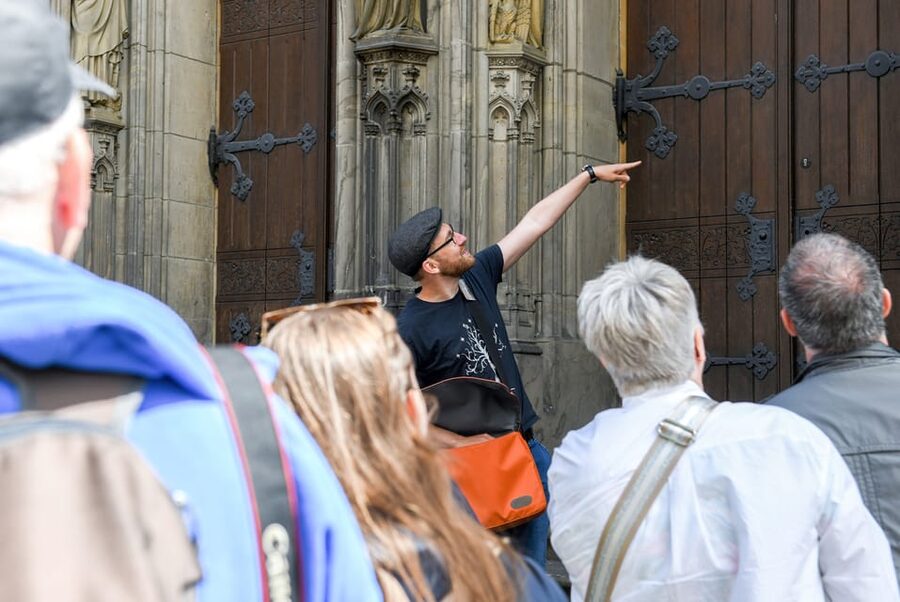
At $16 per person, the price is reasonable for a 1.5-hour guided walk through the historic center. You are paying about $10.67 per hour for a live guide who covers the cathedral, St. Lamberti Church, Prinzipalmarkt, Historic City Hall, the Peace Hall, and Schlaun’s Baroque buildings.
The value is strongest if you are new to Münster. A self-guided walk can show you the same streets, but it may not explain why the Überwasserkirche has no pointed tower or why cages hang from St. Lamberti’s tower. Those details are exactly where a guide earns the fee.
Families also benefit because children from birth through age five join free. The 90-minute length is manageable for many families, though the historical content is aimed more at adults and older children than very young kids.
Flexible booking improves the practical value. You can reserve now and pay later, and cancellation is free up to 24 hours before the tour for a full refund. Those terms are useful if your Münster schedule depends on train times, weather, or a changing day plan.
The reported overall rating is 4.7 out of 5 from 286 ratings, which supports the view that the experience is consistently well received. Still, the language limitation remains the key value question. If you cannot follow German comfortably, a cheaper tour in a language you understand would likely be a better use of your money.
Who should book this Münster walk?

I would recommend this tour to first-time visitors who want a clear introduction to Münster without spending half a day on a walking route. It suits people who enjoy history, church architecture, political stories, and the small physical clues that reveal a city’s past.
It is also a good fit if you want an efficient first look before exploring independently. After the tour, you can return to the cathedral, City Hall, or another building that caught your attention. The route gives you a working map of the old town and several stories to carry into the rest of your visit.
Families with young children should appreciate the free admission for ages zero to five, but parents should remember that the tour is conducted in German. Older children who understand German may find the cages, damaged saints, and Anabaptist episode more memorable than a standard architecture walk.
I would be cautious about booking if you want a relaxed photography outing, an English explanation, or a long interior visit at each sight. The tour is compact and story led. Its strength is the guide’s interpretation, not extended free time.
Should you book the Old Town Highlights Guided Tour?
Book it if you understand German and want Münster’s main sights to make sense as one connected story. For $16, you get a focused route through the cathedral district, St. Lamberti, Prinzipalmarkt, Historic City Hall, the Peace Hall, and Schlaun’s Baroque buildings.
The tour is especially worthwhile for its unusual details: the Anabaptist cages, the tower without a point, and the headless saints. Add the 1648 Peace of Westphalia, and Münster’s old town becomes far more memorable than a simple collection of attractive streets.
Skip it if German is not suitable for you or if you prefer exploring at your own pace. For everyone else, the manageable length, free entry for children under six, flexible booking terms, and strong guide feedback make this a sensible first activity in Münster.
FAQ
How long does the Münster Old Town Highlights Guided Tour last?
The tour lasts 1.5 hours.
What language is the tour conducted in?
The tour is conducted in German with a live German-speaking guide.
How much does the tour cost?
The price is $16 per person.
Can children join the tour for free?
Yes. Children aged zero through five can take part for free.
Where is the meeting point?
Meet opposite the Historic City Hall beneath the sign marked Michaelisplatz, close to the Rathausrelief. The guide carries an orange bag with the k3 sign.
Which Münster sights are included?
The tour includes the Dom, St. Lamberti Church, Prinzipalmarkt, Historic City Hall, and the Peace Hall. It also covers the Überwasserkirche, Erbdrostenhof, and Clemenskirche.
Can I cancel the tour for a full refund?
Yes. You can cancel up to 24 hours in advance for a full refund. You can also reserve now and pay later.
Just added in Germany
- Berchtesgaden: Via Ferrata Beginner Tour of Schützensteig★ 4.7 · 15 reviews
- Berlin: Energizing 2-Hour Morning Segway Tour★ 4.7 · 35 reviews
- Berlin: Thrilling E-Scooter Adventure Tour★ 4.4 · 66 reviews
- Bayreuth: German City Walking Tour (Tourist Info)★ 4.7 · 202 reviews
- Beelitz-Heilstätten: Baum&Zeit Tree Top Walk Entry Ticket★ 4.9 · 7 reviews
- Beer Bike & Party Bike: Unforgettable Berlin City Tour incl. pickup★ 5.0 · 5 reviews
- Bavaria: Beginner Canyoning Tour★ 4.5 · 10 reviews
- Bayreuth: Christmas city tour in German★ 4.9 · 12 reviews
Old Town Walking Tours, compared.

Old Town & Viktualienmarkt City Walk in German
Read our review →

The Night Watchman Old Town Walking Tour in German
Read our review →
New Old Town and Highlights German-Language Tour
Read our review →

Browse the lists this tour appears in