Reviewed · TOURS IN BERLIN
Kreuzberg Tour – Kriminell und kuschelig
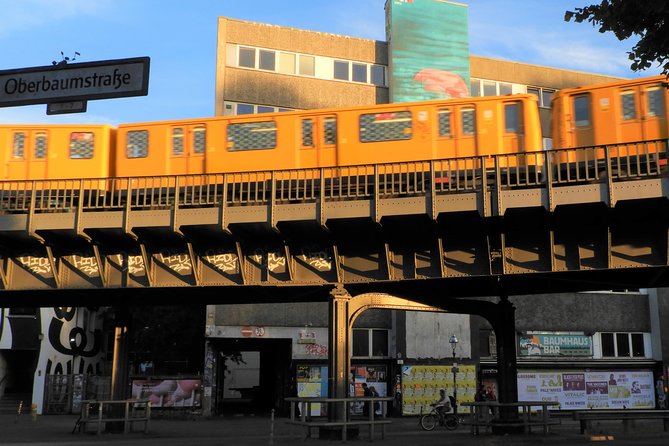
Kreuzberg makes more sense when you walk it with someone who can connect its crowded courtyards, political past, immigrant communities, and modern street life. This two-hour tour begins at Kotti, follows streets and backways including Oranienstraße, and ends near Curfew Bar.
I like the clear historical thread, from a 19th-century working-class district to a center of political and cultural change. I also like the practical local angle: guides such as Sammy offer Berlin tips you can use for the rest of your trip, not just a list of sights.
The main thing to consider is the walking pace. You need to keep up with the guide, and the tour is not a good choice if you have major walking problems. Food, drinks, and the often-hoped-for Berlin schnapps are not included.
Key points to know before booking
- Kotti gives you an immediate Kreuzberg introduction: The tour starts at one of the neighborhood’s central gathering points, making it a useful place to begin understanding the area.
- Oranienstraße brings the past into view: You explore large building complexes and back courtyards linked to Kreuzberg’s working-class era.
- Politics is part of the story: The route explains why left-wing ideas took root among many local workers and how political change shaped the district.
- Sammy may lead the walk: His approach combines detailed knowledge with stories from both Kreuzberg’s older past and its recent changes.
- The tour is compact and social: You get about two hours, with a maximum group size of 25 people and a steady walking pace.
- The value is in interpretation, not entry tickets: At $27.27, you are paying for context, local guidance, and orientation rather than admission to attractions.
Why Kreuzberg is best understood on foot
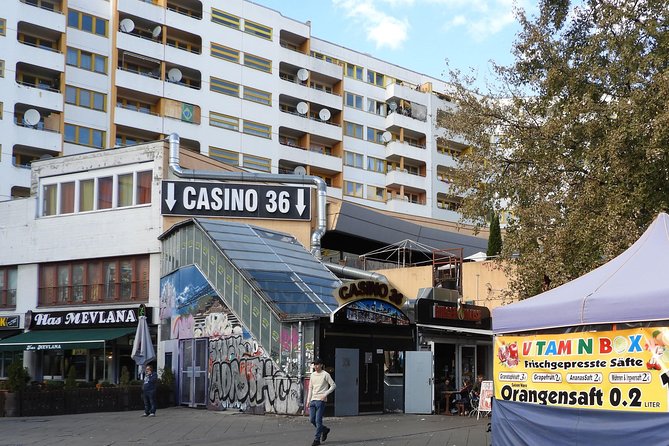
Kreuzberg is not a single postcard view. It is a neighborhood of contrasts, and the contrast becomes clearer as you move from a major crossroads into quieter streets and old building complexes.
The tour begins at Kotti, the familiar short name for Kottbusser Tor. From here, your guide sets out the basic story of Kreuzberg, including its working-class roots, changing population, political life, and present-day culture. That opening matters because the district can otherwise feel like a pile of disconnected impressions: busy streets, old facades, parks, bars, political posters, and backstreets.
I like tours that explain how a place developed rather than simply point at attractive corners. This one uses the streets as evidence. You hear how Kreuzberg grew in the middle of the 19th century as a working-class neighborhood, with large housing complexes built to accommodate many people.
The walk also helps you notice what casual sightseeing can miss. A facade may look handsome from the street, but the more telling space can be behind it. The route takes you toward courtyards and backyards, where the physical design of old housing reveals how tightly people once lived.
Other trips people book in Berlin:
- Berlin: Reichstag, Dome and Government District Guided Tour
★ 4.7 · 18,288 reviews - Berlin: 1-Hour City Tour by Boat with Guaranteed Seating
★ 4.3 · 16,993 reviews - Berlin: Boat Tour Along the River Spree
★ 4.4 · 11,252 reviews
Kotti sets the tone for the walk
Kotti is an energetic starting point, and the guide uses it to give you bearings before the group moves into the neighborhood. You receive a short introduction to Kreuzberg’s life, culture, and past, then continue on foot through streets that show different sides of the district.
This is not a sightseeing route built around famous monuments. The attraction is the neighborhood itself. You get a guided look at streets, parks, major avenues, and less obvious passages, with the guide explaining how they fit into the larger story.
That format works well if you have already seen Berlin’s main landmarks and want something more local. It also works early in a Berlin visit, since the guide can recommend places and help you understand where you are. The tour is not a substitute for a museum or a formal architecture walk, but it offers a useful first layer of context.
The group can include up to 25 people. That is large enough to give the walk a social feel, but small enough for a guide to keep everyone together if the group stays attentive. You should expect a public walking tour rather than a private conversation. If you want to ask questions, do so when the guide pauses.
Oranienstraße and the crowded backyards
One of the most interesting parts of the route is Oranienstraße, where the guide uses old building complexes to explain daily life in Kreuzberg’s working-class years.
The housing was often arranged around several courtyards, with some homes located in a fifth or sixth backyard. From today’s point of view, that layout can be hard to picture. The walk gives you a chance to see the spaces and imagine a neighborhood where fresh air was scarce and many people lived with very little room.
The tour explains that some workers did not rent an entire flat or even a private room. Instead, people could rent an eight-hour stay on a mattress. That detail turns a broad statement about poverty into something concrete. You understand that overcrowding was not a side note. It shaped how people slept, worked, raised families, and viewed the city around them.
I find this kind of detail more useful than a string of dates. You come away with a sense of how the buildings worked and why Kreuzberg developed such a strong community identity. The backyards are not simply old architectural features. They help explain the social pressure that shaped local politics.
How working-class life shaped Kreuzberg politics
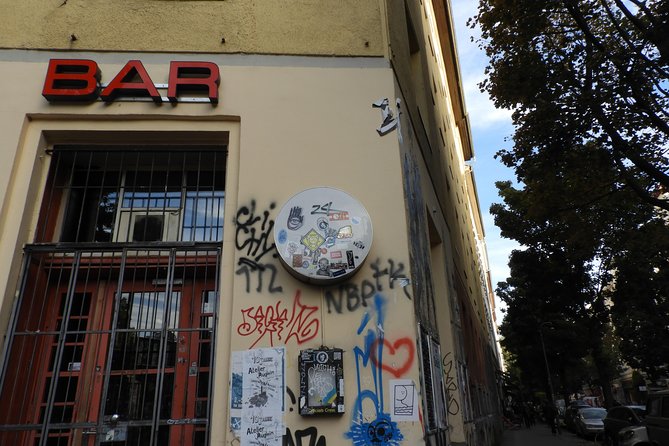
The tour links housing conditions and working life with Kreuzberg’s political character. Many people in the working class held radical left-wing views, and the neighborhood became associated with political activity and social change.
Your guide puts that history into a local setting rather than treating it as an abstract chapter in German history. Streets and buildings become part of the explanation. The point is not to reduce Kreuzberg to politics, but to show why political ideas became so visible here.
The route also covers more recent and contemporary changes. The guide discusses political, historical, and modern shifts that have altered the district over time. That wider frame is one reason the walk earns strong marks from people looking for more than surface-level sightseeing.
Sammy is specifically praised for having detailed knowledge of Kreuzberg and Berlin, along with an engaging and humorous way of telling the story. You should not assume he will lead every departure, but the experience clearly depends on the guide’s ability to make these connections. The tour includes a motivated guide and detailed background information, so the quality of the explanation is central to what you are buying.
Same base, a different kind of day out:
- Discover Berlin Half-Day Walking Tour
★ 5.0 · 9,624 reviews - Berlin: Hop-on Hop-off Bus Tour with Live Commentary
★ 4.3 · 8,579 reviews - Berlin: Government District around the Reichstag Guided Tour
★ 4.7 · 8,447 reviews - Berlin: Reichstag, Plenary Chamber, Cupola & Government Tour
★ 4.6 · 8,422 reviews
What the guide adds to the streets
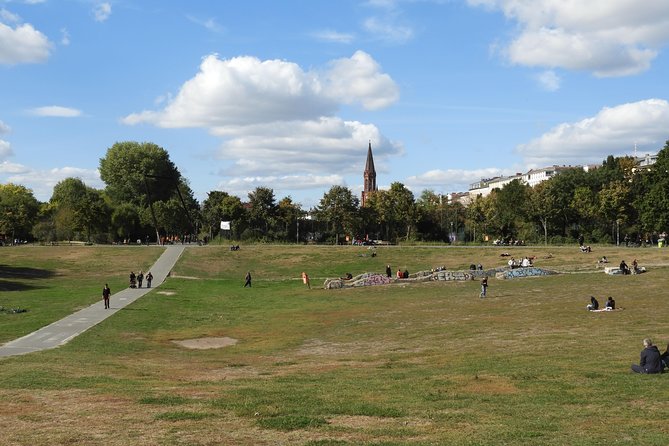
A neighborhood walk can be disappointing if the guide only recites facts. This one is designed around explanation and storytelling, with a route that moves through the heart of Kreuzberg rather than stopping at one main attraction.
The strongest guide style for this subject is measured rather than theatrical. The available feedback describes a good pace, without rushing or wasting time. That is important because two hours is long enough to build a story but short enough that the guide needs to keep moving.
Sammy’s name appears in several especially positive comments, with praise for stories from both the older and more recent past. You may hear about the neighborhood’s political life, social changes, and everyday culture in the same walk. That mix helps you understand why Kreuzberg feels different from a standard historic center.
You also receive suggestions for the rest of your stay. The exact recommendations depend on the guide and the group’s questions, but this local orientation is a real benefit. If you are deciding where to spend an evening or which part of Berlin deserves more time, ask directly.
The $27.27 price and what you receive
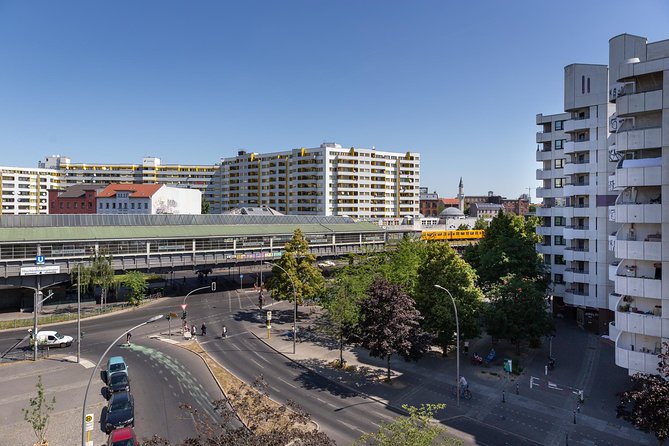
At $27.27 per person, the tour sits in the affordable range for a guided city walk. You are not paying for attraction admission, a meal, transportation, or hotel service. You are paying for about two hours of a guide’s time, route planning, historical explanation, and local context.
That is good value if you enjoy walking and would otherwise spend part of your day trying to piece together Kreuzberg’s story on your own. It is less compelling if you only want a quick list of photo stops or prefer to explore independently.
The price includes the guide, background information, and the two-hour tour. Hotel pickup and drop-off are not included, and food and drinks are extra unless specifically stated. The tour ends at Curfew Bar on Falckensteinstraße, but the supplied details do not say that a drink or bar visit is included.
The tour is generally booked about 13 days ahead. That gives you a useful planning clue, especially if your dates are fixed. Booking earlier is sensible if you want a particular day, though no guarantee is given about a specific guide.
Timing, meeting points, and walking demands
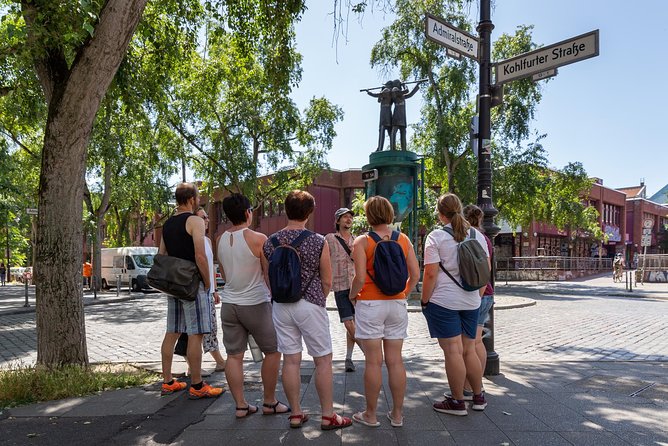
The stated duration is approximately two hours. You begin at Reichenberger Str. 174, 10999 Berlin, and finish at Curfew Bar, Falckensteinstraße 47, 10997 Berlin. The route therefore does not return you to the starting point.
Both locations are near public transportation, which makes the tour practical to add to a day of sightseeing. Check the meeting point carefully before setting out, since arriving at the wrong end of the route would be an avoidable nuisance.
You should wear comfortable shoes and be ready to walk continuously. The operator specifically warns that the tour is not recommended for people with major walking problems because you need to keep up with the guide. The route includes streets, parks, avenues, and backstreets, so you should not expect a seated talk.
The minimum age is 18. That may suit adults looking for a more direct discussion of Kreuzberg’s political and social past. Most people can participate, but the walking requirement still matters more than the general age rule.
What the tour does especially well
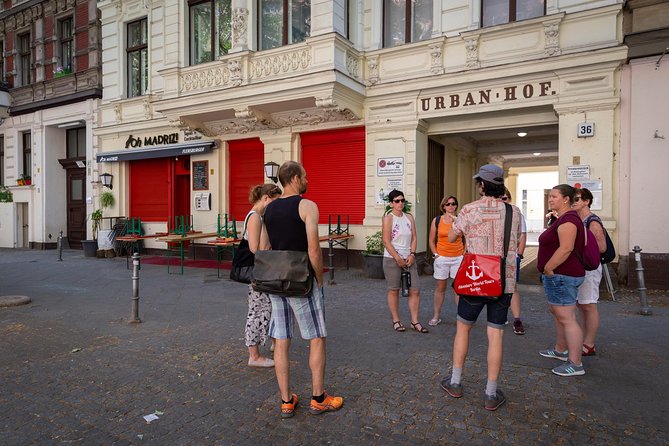
The strongest part of the experience is its ability to connect ordinary places with larger forces. You are not just told that Kreuzberg was poor, political, or multicultural. You see how housing, work, migration, and local streets helped produce that identity.
The old courtyards are especially valuable because they make the working-class story tangible. The discussion of eight-hour mattress rentals is another detail that stays with you. It gives the neighborhood’s past a human scale without turning the walk into a formal lecture.
The guide’s style is another plus. The feedback points to an informative and pleasant walk, with clear expertise and humor. One especially useful sign is the repeated praise for the pace. A guide who is too fast can turn a neighborhood tour into a chase, while a guide who talks too long can leave you tired before the route is done.
The experience also provides a different view of Berlin. You are not focusing on imperial buildings, major museums, or famous memorials. Instead, you are looking at how residents lived and how a district changed over time. That makes this a good companion to Berlin’s major attractions.
Limits to keep in mind
The route is compact, so it cannot explain every part of Kreuzberg in two hours. You receive an introduction and a guided walk, not a full social history of the district.
The group size can reach 25 people. That is reasonable for a public tour, but it means the experience may feel less personal than a small private walk. You may also need to move closer during explanations if the group spreads out.
The tour is conducted on foot and requires a steady pace. Anyone with serious mobility limits should choose a different activity. There is no hotel pickup, no included food or drink, and no stated transport during the route.
One piece of feedback wished for a typical Berlin schnapps. Treat that as a useful expectation check: do not book this as a tasting tour. It is a history and neighborhood walk, and refreshments are not part of the stated package.
Who should book the Kreuzberg walk
I would choose this tour if you want to understand why Kreuzberg has such a strong identity and you enjoy learning through streets rather than displays. It suits first-time Berlin visitors who want local orientation, as well as returning visitors who have already seen the major sights.
It is particularly useful for people interested in working-class history, urban housing, politics, migration, and recent change. The tour also fits anyone who likes to ask a local guide for practical ideas about the rest of a trip.
I would skip it if you dislike walking, need frequent rest stops, or want a food-focused experience. Independent explorers may also prefer to wander on their own, though they will miss the connections between the courtyards, political life, and neighborhood change.
The tour has a 4.7 rating from 22 reviews, with 91 percent recommending it. Those figures are encouraging, but the real reason to book is more specific: the route and guide turn Kreuzberg’s ordinary streets into an understandable story.
Should you book it?
Book the Kreuzberg Tour if you want a focused, affordable introduction to one of Berlin’s most discussed neighborhoods. At $27.27, the value is strong for two hours of guided context, especially with a guide such as Sammy who can explain both older history and recent change.
Plan for a one-way walk from Reichenberger Str. to Falckensteinstraße, and arrive ready to keep pace. If you want food, drinks, or a schnapps stop, arrange that separately. For an adult who wants Kreuzberg explained rather than simply photographed, this is a sensible addition to a Berlin itinerary.
FAQ
How long is the Kreuzberg Tour?
The tour lasts approximately two hours.
Where does the tour start?
It starts at Reichenberger Str. 174, 10999 Berlin, Germany.
Where does the tour end?
It ends at Curfew Bar, Falckensteinstraße 47, 10997 Berlin, Germany.
Is the tour conducted on foot?
Yes. This is a public walking tour through Kreuzberg, including streets, parks, avenues, and backstreets.
What is the maximum group size?
The tour can have a maximum of 25 people.
What is the minimum age?
The minimum age is 18.
Is hotel pickup included?
No. Hotel pickup and drop-off are not included.
Are food and drinks included?
No. Food and drinks are not included unless specifically stated.
Is the tour suitable for people with major walking problems?
It is not recommended for people with major walking problems because participants need to keep up with the guide.
Can I cancel for a refund?
Yes. You can cancel at least 24 hours before the start time for a full refund. Cancellations made less than 24 hours before the start time are not refunded.
Just added in Berlin
- Private One way Airport Transfer Berlin Airport To Berlin★ 3.5 · 17 reviews
- Private Walking Tour: Berlin Wall, Cold War and Checkpoint Charlie★ 5.0 · 37 reviews
- Modern Berlin Private Walking Tour: Diverse, Vibrant and Exciting German Capital★ 5.0 · 13 reviews
- Private Day Trip to Potsdam from Berlin by Train★ 4.5 · 27 reviews
- City Explorer: Potsdam Private Day Trip★ 4.5 · 10 reviews
- Berlin Private Custom 5-Hour Tour by Car★ 5.0 · 30 reviews
- Private Half-Day Sightseeing Tour in Berlin★ 3.5 · 6 reviews
- Berlin Private Custom Tour in a Minivan, East and West★ 5.0 · 123 reviews
Tours in Berlin, compared.
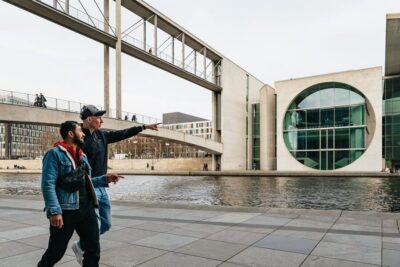
Reichstag, Dome and Government District Guided Tour
Read our review →
1-Hour City Tour by Boat with Guaranteed Seating
Read our review →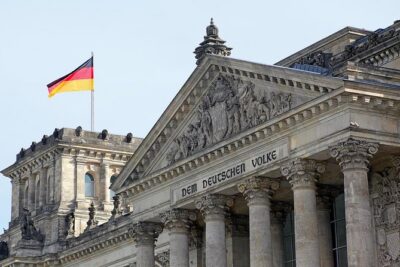
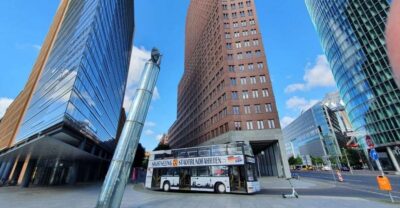
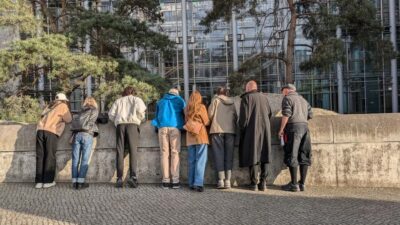
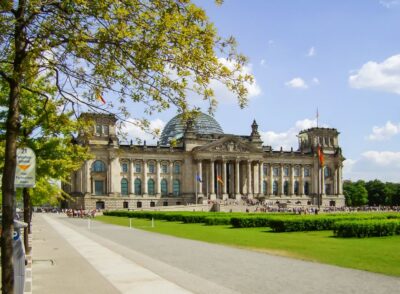
Reichstag, Plenary Chamber, Cupola & Government Tour
Read our review →