
Reviewed · MUSEUMS
Heusenstamm:tour of the Depot of the museum of communication
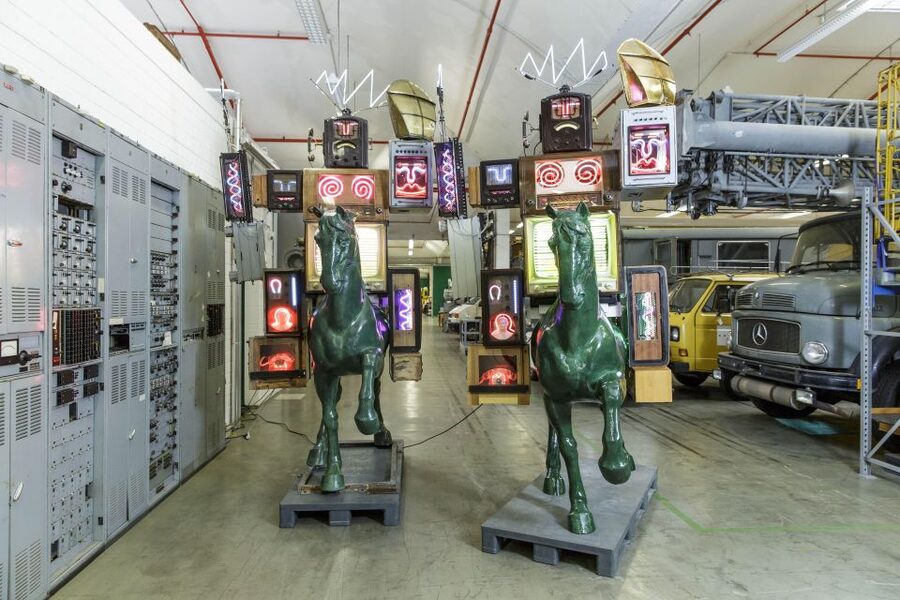
The big surprise here is the scale. Heusenstamm holds the Museum of Communication’s working collection, with 375,000 objects ranging from 1930s television sets to full-size buses, sleighs, and telephone boxes. The 90-minute guided walk gives you a useful first look at a storehouse far too large to show in Frankfurt.
I like the chance to see the world’s largest collection of telephones, and I like the odd mix of polished design pieces beside huge, practical vehicles. The main drawback is simple: an hour and a half cannot do justice to such a large collection, and the tour is offered in German only.
Key points to know before you go
- 375,000 objects in one depot: You see selected highlights from a collection much larger than the public display in Frankfurt.
- Early television and radio: Follow the path from tube receivers to internet radio and see design icons from broadcasting history.
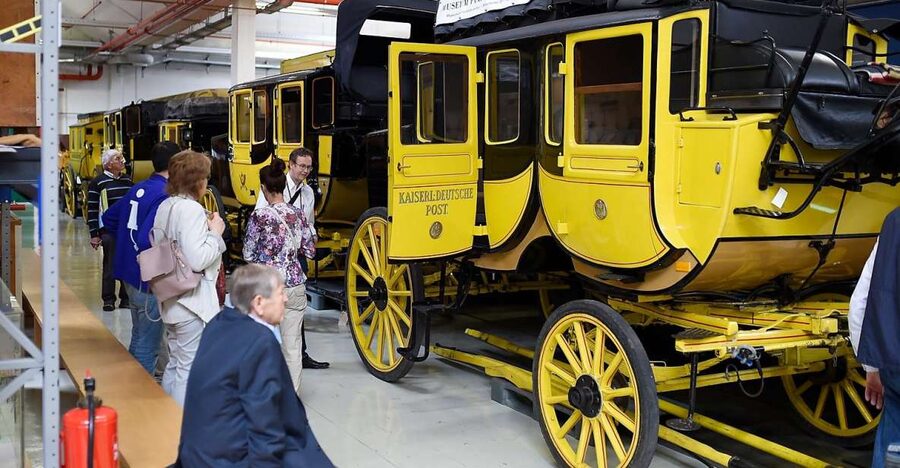
- Full-size objects: Sleighs, buses, and telephone boxes give the tour a physical scale that ordinary museum cases cannot match.
- German-speaking guide: The background and explanations are in German, so language ability matters.
- Frankfurt admission included: Your ticket also covers the Museum of Communication in Frankfurt.
- Allow extra time on Friday afternoon: Roads near Heusenstamm can be crowded, and the entrance may be partly hidden by a farm sales stand.
Why Heusenstamm is different from Frankfurt
The Frankfurt Museum of Communication is the polished public face of the collection. Heusenstamm shows you the working depth behind it. This is a depot, not a tidy row of galleries designed to present every object in a neat story.
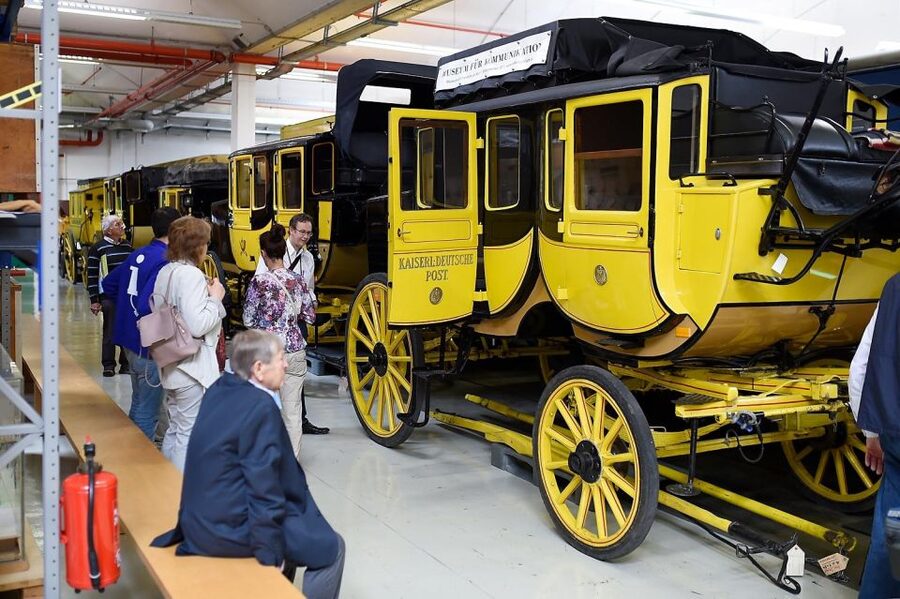
That difference is the point. You may see objects that are too large, too numerous, or too specialized for the Frankfurt museum. A telephone box is easy to understand in a display case, but a row of large communications equipment, a bus, or a sleigh gives you a better sense of how communication once fit into daily life.
The tour is best understood as a guided selection. You will not see all 375,000 objects, and you should not expect to. The collection is simply too large. Instead, the guide helps you make sense of a few important sections and explains why particular pieces matter.
One visitor who returned to the depot after an earlier visit made the useful point that there is more to see than can fit into 90 minutes. That is not a flaw in the tour so much as a warning about expectations. Come for an introduction, not a complete survey.
More Museums across Germany
- Berlin: Jewish Museum Berlin Entrance Ticket
★ 4.5 · 8,393 reviews - Berlin: DDR Museum Tickets
★ 4.3 · 3,443 reviews - Berlin: Natural History Museum Entrance Ticket
★ 4.6 · 3,382 reviews
From early messaging to internet radio
The central story is the changing way people send and receive information. The tour places old communication tools beside later developments, helping you see the leaps rather than just a line of dated objects.
You begin with the idea of early messaging, when sending news or instructions over distance was slow, costly, or uncertain. The displays then move through telephones, radio, and television toward modern internet radio. The pleasure comes from seeing familiar technology stripped of its normal background noise. A telephone becomes an object with design, engineering, and social history.
The telephone collection is a major reason to book. It is described as the largest collection of telephones in the world, so this is not just a quick look at a few old desk sets. You might find differences in shape, materials, and function that show how the telephone changed from a specialist device into an everyday household object.
I especially like that the tour does not stop at the first successful invention. It also shows human inventiveness in building global networks. That wider angle helps you connect the objects to the systems behind them. A radio is not only a box with knobs. A telephone is not only a handset. Each one depends on a network that links people across distance.
1930s television and the rise of radio design
The rare television sets from the 1930s are among the most unusual objects on the route. Television was still a new and highly specialized medium at that time. Seeing its early hardware gives you a clear reminder that home entertainment once required bulky equipment and unfamiliar technology.
You can also see design icons from radio history. This matters because radio changed both communication and domestic life. It carried news, music, and shared events into homes, while its casing became part of the furniture.
The tour traces development from tube receivers to internet radio. That long span gives you a useful comparison between old and new. Early tube receivers look built around large physical components. Internet radio depends on a digital network and can deliver sound without the same visible machinery.
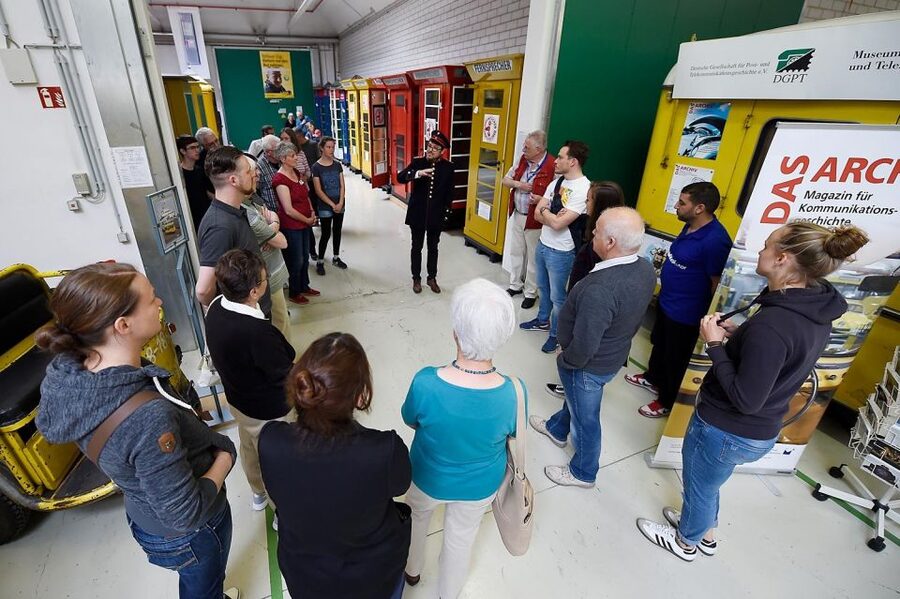
The guide’s role is important here. Without explanation, a collection of radios can become a row of similar boxes. In German, the guide provides the context that links a particular object to a larger change in technology or design. If you understand German well enough for a museum talk, you should get much more from the visit.
The large objects that make the depot memorable
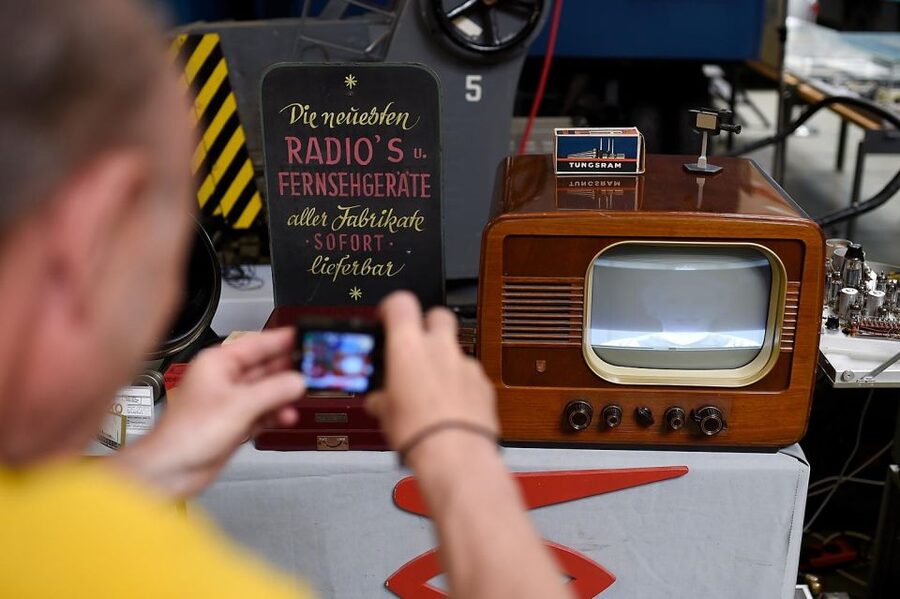
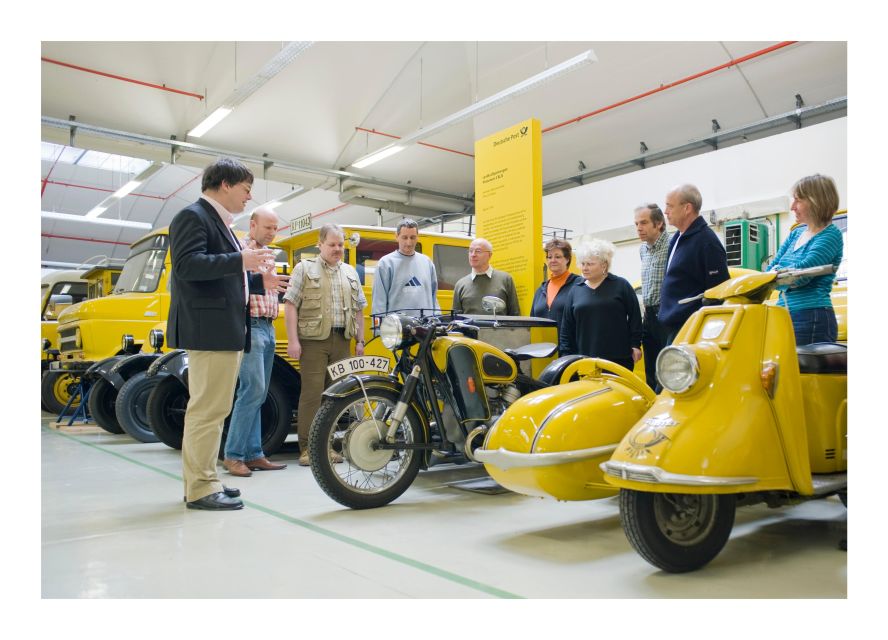
Small objects can tell a detailed story, but large objects make the depot feel special. Sleighs, buses, and telephone boxes are not the sort of pieces you usually expect to find among radio sets and telephones.
These objects also show that communication is not confined to wires and screens. Vehicles carried people, mail, and information. Telephone boxes made public communication possible before nearly everyone carried a phone. A sleigh suggests an earlier way of moving through difficult conditions while staying connected to wider networks.
The chance to photograph yourself with rare historic vehicles is one of the more playful parts of the visit. It gives you a way to remember the scale of the collection, rather than taking home only pictures of small exhibit labels.
Still, expect a storage collection rather than a theme park. The appeal is in the authentic objects and the sense of seeing behind the public museum. You should not expect every vehicle to be presented with a long, polished interpretation.
Same base, a different kind of day out:
- Berlin: Reichstag, Dome and Government District Guided Tour
★ 4.7 · 18,288 reviews - Berlin: 1-Hour City Tour by Boat with Guaranteed Seating
★ 4.3 · 16,993 reviews - Hamburg: Sex and Crime in St. Pauli Tour for Ages 18+
★ 4.7 · 15,447 reviews - Hamburg: 1.5-Hour Harbor and Speicherstadt Day Cruise
★ 4.6 · 14,200 reviews
The art collection adds another layer
The depot also includes more than 300 paintings, ranging from the 17th century to contemporary works. At first, this may seem separate from telephones and broadcasting equipment. In practice, it widens the idea of communication.
Paintings communicate through image, symbol, and style. The collection lets you shift from machines that transmit sound or messages to works that carry meaning through visual form. The range from the 17th century to modern positions also gives the tour a long time span beyond the history of electronic media.
The art collection may not receive as much time as the communication technology. The 90-minute route has a lot to cover, and the guide must make choices. If art is your main interest, the tour may feel like an introduction rather than a full art visit. If you enjoy unexpected connections, it is a welcome part of the depot.
What the 90-minute itinerary feels like
The tour is a guided walking visit through the depot. You enter with the group, receive the main orientation from the German-speaking guide, and move through selected areas of the collection.
The route combines small and large objects. One moment may focus on a telephone or receiver, while the next may place you beside a bus, sleigh, or telephone box. That change of scale keeps the visit from becoming a long march past similar cases.
A sensible way to approach the tour is to choose a few themes before you arrive. You might focus on the early days of messaging, the history of telephones, radio design, or the move from tube technology to internet radio. With so much in view, a simple question in mind helps you remember what you see.
You should also leave room for a return visit. The collection is far larger than the tour, and the short schedule means you will notice objects you cannot study closely. The first visit gives you a map. A second visit, if available, would let you spend more time with the sections that caught your attention.
Price, timing, and practical value
The tour costs $16 per person and lasts 1.5 hours. Entry to the Heusenstamm depot is included, as is admission to the Museum of Communication in Frankfurt. That combination gives the ticket better value than a depot tour alone, especially if you plan to visit both locations.
The value depends on your interests. If you like technology, design, social history, or unusual museum collections, the price is reasonable because you receive both a guided depot visit and a Frankfurt museum admission. If you want a quick, highly polished attraction with a simple storyline, the depot may feel more specialized.
The tour is offered in German. This is the most important practical limitation. You can still look at the objects without strong German, but the guide’s explanation is a central part of the experience. German speakers will get the full benefit. Others should consider whether visual interest alone is enough for them.
Plan your arrival carefully, particularly on Friday afternoon. Roads can be crowded, and the entrance was partly obscured by a farm sales stand on one occasion. Give yourself extra time instead of aiming to arrive at the last minute.
Food and drinks are not included. The tour is short enough that this is not a major problem, but plan your meal separately.
You can cancel up to 24 hours before the start for a full refund, and you can reserve now while paying later. Those terms are useful if your schedule is still shifting.
Who will enjoy this most
I would recommend the depot to anyone who wants more than a standard museum display. The collection has real scale, unusual objects, and a clear connection between everyday technology and wider social change.
It is particularly well suited to:
- People interested in telephones, radios, television, and design
- Museum visitors who enjoy storage collections and behind-the-scenes settings
- Families with an interest in machines and large historic vehicles
- German speakers who want detailed background from a live guide
- Anyone already planning to visit the Museum of Communication in Frankfurt
The tour may be less suitable if you need a program in English or want to explore at your own pace. It is also not ideal for someone who expects to see every major object in a collection of 375,000 pieces.
The overall rating is 4.8 from 54 bookings, and the strongest praise centers on the collection’s scale and the guide’s background explanations. That matches the practical reality: the objects are the main attraction, while the guide helps you understand what you are looking at.
Should you book the Heusenstamm depot tour?
Book it if you enjoy rare technology, full-size historic objects, and the story behind modern communication. The combination of the depot entry and Frankfurt museum admission makes $16 a fair price, especially for a museum-focused day.
Skip it if you need an English-language tour, dislike guided visits, or want a compact attraction that can be fully seen in one sitting. The depot is too large for that.
For the right visitor, the best reason to go is not one famous object. It is the sense of scale. You get to see how much material sits behind a public museum, from early television to radio design, telephones, paintings, buses, and sleighs. Allow extra time to find the entrance, arrive ready for German explanations, and treat the 90 minutes as a first look at a collection you could not possibly finish in one visit.
FAQ
Where is the tour located?
The guided tour takes place at the Museum of Communication depot in Heusenstamm, Hessen, Germany.
How long does the tour last?
The guided walking tour lasts 1.5 hours.
What language is the tour in?
The live tour guide speaks German.
What is included in the price?
The price includes entry to the Museum Depot in Heusenstamm, the 1.5-hour guided walking tour, and entry to the Museum of Communication in Frankfurt.
Is food included?
No. Food and drinks are not included.
How many objects are in the collection?
The collection contains 375,000 objects from the history of communication.
What types of objects can I see?
You can see 1930s television sets, radio design pieces, telephones, sleighs, buses, telephone boxes, and other communication-related objects.
Are paintings included in the collection?
Yes. The art collection contains more than 300 paintings dating from the 17th century to contemporary works.
What is the price per person?
The listed price is $16 per person.
Can I cancel the booking?
Yes. You can cancel up to 24 hours in advance for a full refund. You can also reserve now and pay later.
Just added in Germany
- Private One way Airport Transfer Berlin Airport To Berlin★ 3.5 · 17 reviews
- Private Walking Tour: Berlin Wall, Cold War and Checkpoint Charlie★ 5.0 · 37 reviews
- Modern Berlin Private Walking Tour: Diverse, Vibrant and Exciting German Capital★ 5.0 · 13 reviews
- Private Day Trip to Potsdam from Berlin by Train★ 4.5 · 27 reviews
- City Explorer: Potsdam Private Day Trip★ 4.5 · 10 reviews
- Berlin Private Custom 5-Hour Tour by Car★ 5.0 · 30 reviews
- Private Half-Day Sightseeing Tour in Berlin★ 3.5 · 6 reviews
- Berlin Private Custom Tour in a Minivan, East and West★ 5.0 · 123 reviews
Museums, compared.



Skip-the-Line: Berlin Wall Museum at Checkpoint Charlie
Read our review →
Browse the lists this tour appears in