Reviewed · TOURS IN BERLIN
Discover Berlin Express Tour: 2hr Highlights
Berlin’s modern story is packed into this two-hour historical walk, from the grand Brandenburg Gate to the tense Cold War border at Checkpoint Charlie. Along the way, you face the Holocaust, Hitler’s final days, the fall of Berlin, and the division of Germany without spending hours in museums or on public transport.
I like the tight route and the way it links major sights into one clear story. I also like the serious memorial stops, especially the Sinti and Roma Memorial and the Memorial of the Murdered Jews of Europe. The trade-off is simple: two hours gives you an excellent first look, but not much time for long explanations or entering buildings.
- Brandenburg Gate to Checkpoint Charlie: A direct route through Berlin’s most important central sights.
- Modern German history: The focus stays on Nazism, World War II, the Holocaust, and the Cold War.
- Thoughtful memorials: Visit the Sinti and Roma Memorial, the Politicians’ Memorial, and the Memorial of the Murdered Jews of Europe.
- Outdoor-only format: You look at buildings and sites from outside, with no interior admissions included.
- English academic guide: The tour is led in English, with an experienced guide assigned to your group.
- Practical two-hour length: A good fit for a first morning, a short stay, or a quick introduction before exploring alone.
A Fast Walk Through Berlin’s Hardest Chapters
This is not a broad tour of every Berlin neighborhood. It is a focused walk through the city center, built around the events that shaped modern Germany.
You begin at Pariser Platz and finish at Checkpoint Charlie. That direction matters. The route moves from imperial Berlin and national unity into dictatorship, genocide, war, division, and the Cold War. In a short time, you see how one city can carry several very different identities.
The price is $23 per person, which I consider reasonable for a live, guided introduction to central Berlin. You are paying for the guide’s explanation and the structure of the route, not for tickets or museum entry. Since every stop is outdoors, your value depends heavily on how much you want context while looking at places that can otherwise seem plain or confusing.
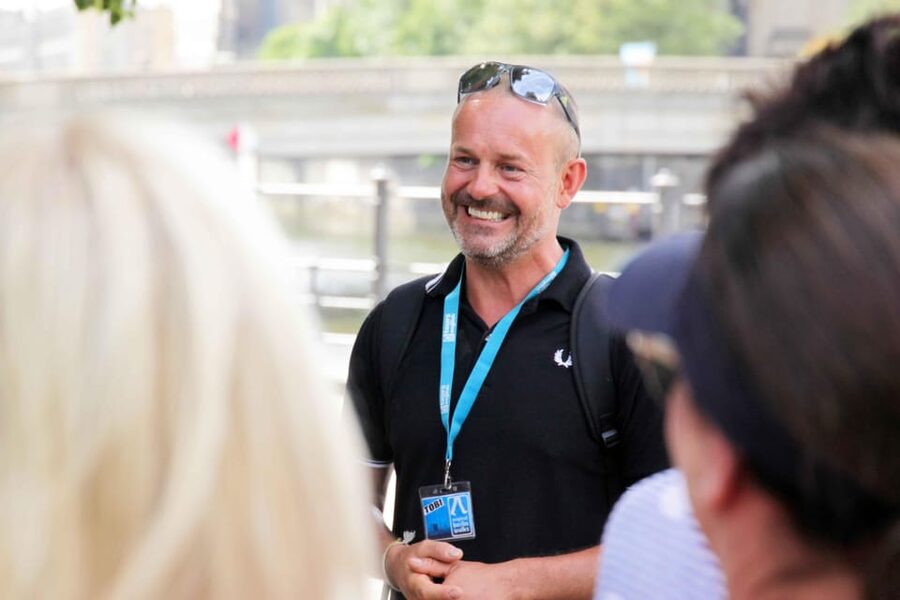
The experience has a 4.9 rating from 27 reviews. One English-language outing was led by Dylan, who was praised for giving useful information while leaving room for questions. Another comment called the tour informative without being too long. That matches the format well: this is an efficient orientation, not an all-day historical seminar.
Pariser Platz and the Brandenburg Gate
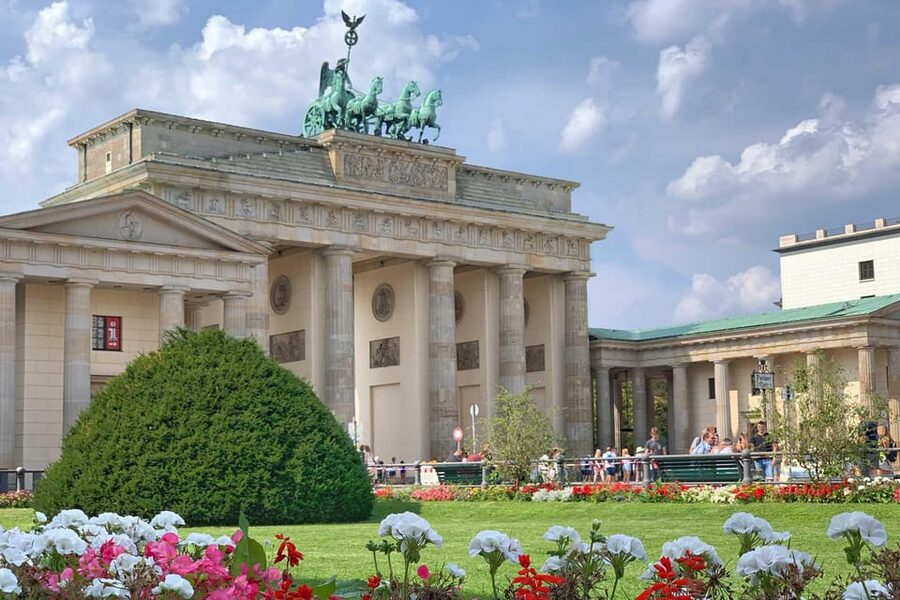
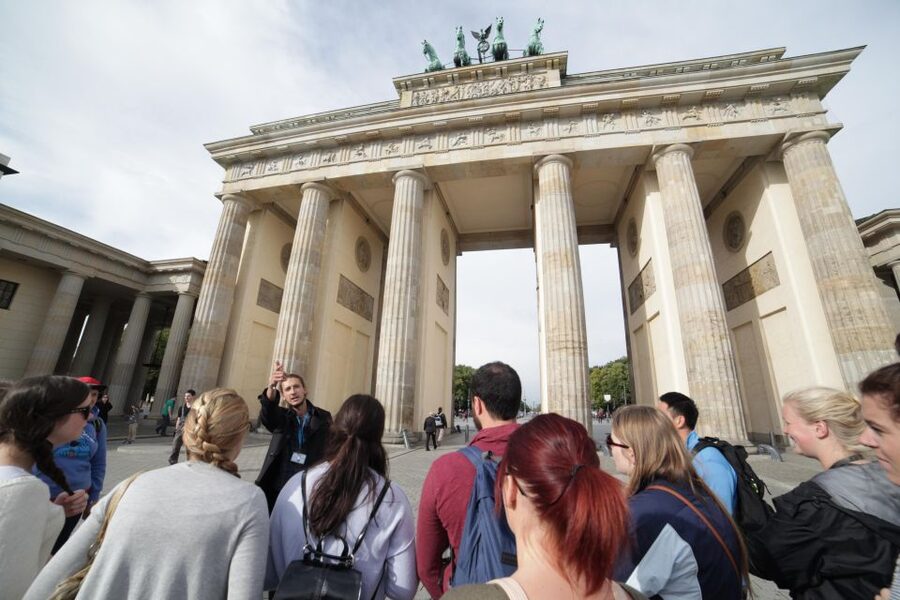
The walk starts in front of the Tourist Information Office at Pariser Platz. Look for the meeting point near the square, where the Brandenburg Gate dominates the scene.
Pariser Platz is a good opening chapter because its polished appearance can hide how much Berlin has changed. The neoclassical buildings and broad public space create a formal setting, while the guide places the gate within Berlin’s political story. You learn why this landmark now represents unity and peace, rather than simply being an impressive arch for photographs.
The Brandenburg Gate is one of the tour’s most recognizable stops, but its importance goes beyond its columns. It has been connected with Prussian power, wartime damage, German division, and reunification. A guide helps you see the gate as a symbol that changed meaning over time.
The stop is listed for about 10 minutes at Pariser Platz, with additional guided explanation at the gate. That is enough for a clear introduction, though you should not expect a long architectural study. If you want detailed information about the sculptures, construction, or nearby buildings, plan to return later.
Other trips people book in Berlin:
- Berlin: Reichstag, Dome and Government District Guided Tour
★ 4.7 · 18,288 reviews - Berlin: 1-Hour City Tour by Boat with Guaranteed Seating
★ 4.3 · 16,993 reviews - Berlin: Boat Tour Along the River Spree
★ 4.4 · 11,252 reviews
Remembering Sinti and Roma Victims
From the Brandenburg Gate, the route reaches the Sinti and Roma Memorial. This is one of the most valuable stops because it brings attention to a group often overlooked in quick tours of Berlin.
The memorial honors the thousands of Sinti and Roma people murdered during the Holocaust. Its setting encourages a quieter pause than the grand spaces near the gate. The guide explains the persecution and why public memory must include more than one victim group.
This stop also gives the tour a wider moral frame. The walk is not only about famous political figures or dramatic buildings. It asks you to consider how Nazi persecution reached communities across Europe and why memorials have different forms and purposes.
Allow yourself to slow down here. The overall tour moves at a steady pace, and this is one place where listening matters more than taking a photograph. Because the tour does not enter buildings, the guide’s explanation is especially important at memorial sites.
The Reichstag and the Politicians’ Memorial
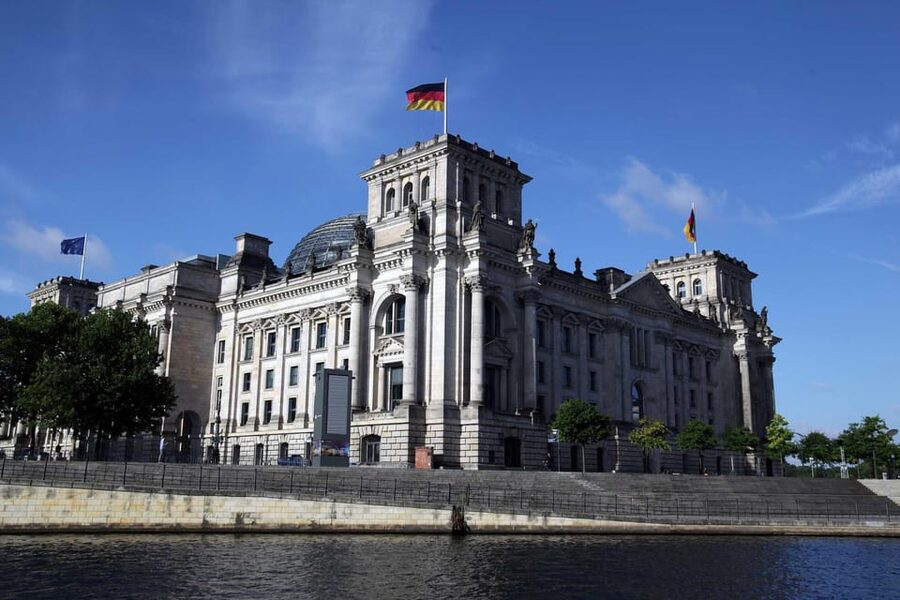
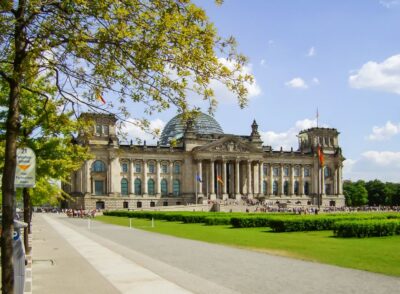
The Reichstag comes next. Germany’s parliamentary building is both an architectural landmark and a symbol of the country’s political changes.
From outside, you hear about the building’s place in the Weimar Republic, its connection to the Nazi period, and its role in present-day Germany. The route does not include entry to the Reichstag, so you will not visit the dome or interior rooms. Still, the exterior gives the guide a strong setting for explaining how German democracy was damaged, destroyed, and rebuilt.
Nearby, the Politicians’ Memorial adds a more personal dimension. It remembers political figures who faced persecution during turbulent periods of German history. This stop shifts attention from institutions to individuals who paid a price for political resistance or public service.
I like this pairing because the Reichstag represents the state, while the memorial points toward the people affected by political repression. In a short tour, that contrast helps keep the story from becoming a list of buildings.
The Soviet War Memorial in the Tiergarten
The route then enters the Tiergarten for the Soviet War Memorial. This is a solemn World War II site dedicated to Soviet soldiers who died in the Battle of Berlin.
The memorial’s scale and design make it one of the more imposing stops on the walk. The guide explains the fighting at the end of the war and the memorial’s place in Berlin’s postwar story. You are not just looking at a monument to victory. You are also considering the destruction of the city and the human cost of the final battle.
This part of the route gives you a needed break from dense city streets. Even so, remember that the tour remains a walking experience. Comfortable shoes are essential, and weather-appropriate clothing matters because the main program takes place outside.
The memorial can also raise questions about memory and political symbolism. The tour introduces that setting without turning the entire visit into a specialist study of Soviet monuments. If you want extensive detail on military history, you may need a separate museum visit.
Same base, a different kind of day out:
- Discover Berlin Half-Day Walking Tour
★ 5.0 · 9,624 reviews - Berlin: Hop-on Hop-off Bus Tour with Live Commentary
★ 4.3 · 8,579 reviews - Berlin: Government District around the Reichstag Guided Tour
★ 4.7 · 8,447 reviews - Berlin: Reichstag, Plenary Chamber, Cupola & Government Tour
★ 4.6 · 8,422 reviews
The Memorial of the Murdered Jews of Europe
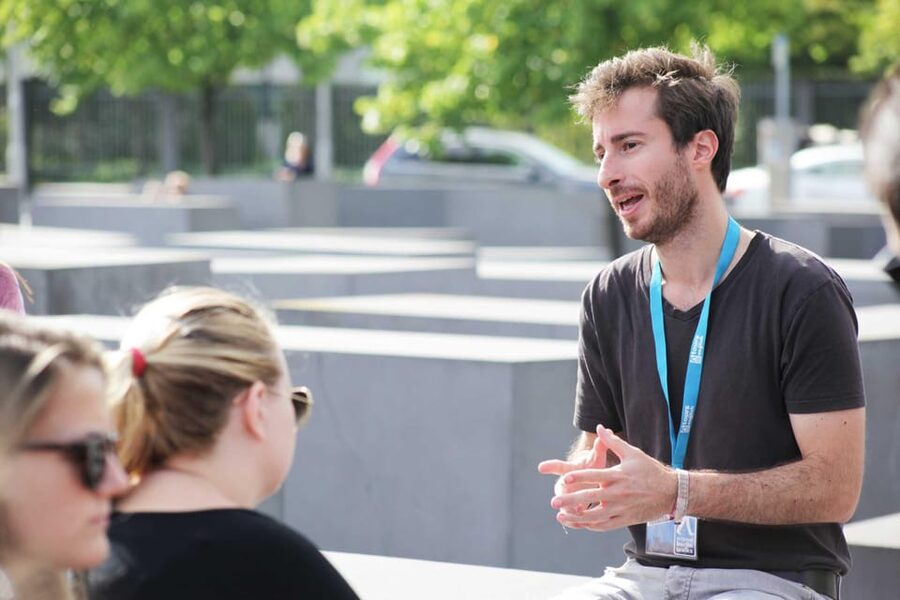
The Memorial of the Murdered Jews of Europe is one of the tour’s central stops. Its field of concrete slabs creates a powerful space for reflection, but the guide’s explanation helps you approach it with historical care.
The memorial does not offer a simple statue or a single scene to understand. As you move among the slabs, the space changes around you. The walk explains the scale of the Holocaust and the place of public remembrance in modern Berlin.
I consider this an important reason to choose the tour rather than simply photographing the Brandenburg Gate and moving on. The guide connects the memorial to the people murdered and to the broader history of Nazi persecution.
You should expect a thoughtful explanation, not a long period of private exploration. Since the tour has several more stops ahead, the group cannot spend unlimited time here. If the memorial affects you strongly, return later on your own for a slower visit.
Hitler’s Bunker Site and the Finance Ministry
The tour continues to the site of Hitler’s bunker. The location is intentionally understated. You do not enter an underground complex or see a preserved room. Instead, you stand above the place where Hitler spent his final days as the Third Reich collapsed.
That simplicity is part of the lesson. The site is not presented as a shrine or spectacle. The guide explains the end of the Nazi regime and why the bunker’s location matters to Berlin’s postwar identity.
For many people, this is a memorable stop because the physical setting can seem ordinary. The contrast between the site’s historical importance and its lack of dramatic remains helps you understand how much of Berlin’s past is buried beneath everyday streets.
The route also passes the Finance Ministry. The building provides a modern contrast to the wartime sites and opens a discussion about the history held within its walls. You do not go inside, so the value here comes from the explanation and the connection to the surrounding story.
The Berlin Wall at the Topography of Terror
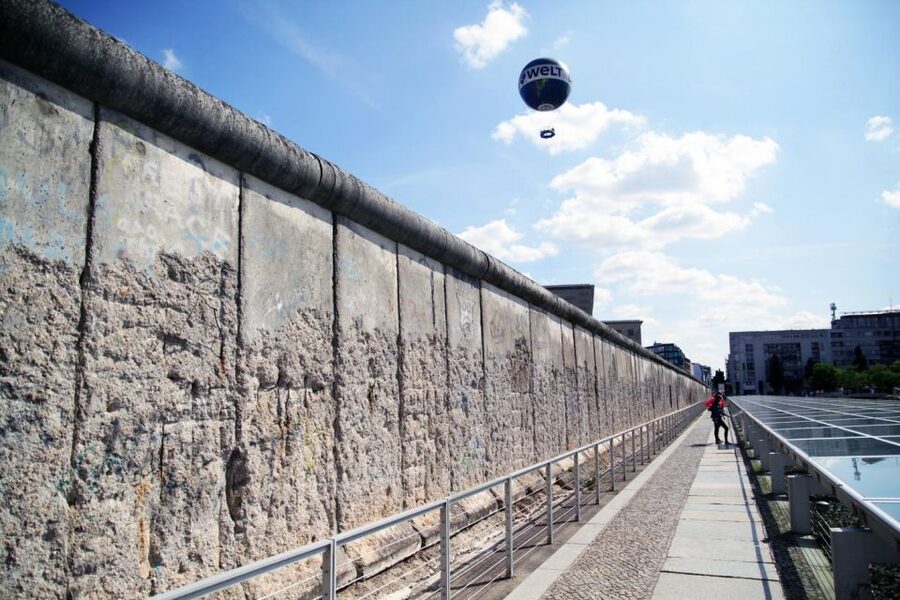
The next section moves into Berlin’s divided past. At the Topography of Terror, you see remnants of the Berlin Wall and learn how the city was split during the Cold War.
This is a useful stop because it connects the Nazi period to the postwar political order that followed. Berlin was not simply rebuilt after 1945. It became a front line between competing systems, with streets, families, and daily routines divided by a physical barrier.
The Topography of Terror area also carries its own Nazi-era significance. The tour’s focus here is the Berlin Wall and the Cold War, but the setting reinforces how closely the city’s political chapters overlap.
The surviving wall sections are not enough to show the full scale of the former border on their own. The guide’s explanation helps you picture the division and understand why this location matters. If you want a detailed account of escape attempts, border technology, or life in East Berlin, you will need more time elsewhere.
Finishing at Checkpoint Charlie
The walk ends at Checkpoint Charlie, the best-known former crossing point between East and West Berlin. During the Cold War, this was a place of inspections, international tension, espionage, and attempted escapes.
The stop makes a clear ending because the tour has moved from dictatorship and war to a divided city and the long pursuit of freedom. Your guide explains the checkpoint’s role and the stories associated with crossing between the two sides.
Checkpoint Charlie is also one of Berlin’s most commercialized historical sites. The location is famous, but the surrounding area can feel more like a busy sightseeing zone than a preserved border crossing. That makes the historical explanation especially useful. It separates the real political importance of the checkpoint from the modern photo opportunities around it.
The tour finishes here rather than returning to Pariser Platz. That is convenient if you want to continue toward central Berlin, but you should plan your onward route from Checkpoint Charlie.
What the Two-Hour Format Really Gives You

The route covers a lot of ground in a short time. You see the Brandenburg Gate, Reichstag, memorials, bunker site, Finance Ministry, Berlin Wall, Topography of Terror, and Checkpoint Charlie, with the Soviet War Memorial included along the way.
That range is the main benefit. You get a map of central Berlin’s major historical sites and a basic sequence connecting them. For a first visit, this can save time and prevent you from treating each location as an isolated photo stop.
The limitation is pace. Two hours leaves little room for long questions, private reflection, or unexpected detours. You should think of the experience as a strong introduction. It is not a replacement for the longer three-and-a-half to four-hour Discover Berlin tour, and booking both is not recommended because some sites overlap.
The express format suits you best if your schedule is tight or you want a guided start before exploring independently. It is less suitable if you want detailed military history, extensive Holocaust education, or visits inside Berlin’s museums and government buildings.
Practical Details Before You Book
The tour is conducted in English by an experienced academic guide. Guide assignments can vary, though Dylan led one outing and was noted for clear explanations and helpful answers.
Wear comfortable shoes. You will walk between several central sites, and the experience is outdoors from start to finish. Bring clothing suited to the weather, since there is no indoor portion included.
The activity is wheelchair accessible and described as wheelchair friendly. If you need route-specific information about surfaces or the exact pace, confirm those details before booking, since the provided information does not describe every section of the walk.
You can cancel up to 24 hours before the start for a full refund. Reserve now and pay later is also available, which helps if your Berlin schedule is still shifting.
Is This Two-Hour Berlin Walk Worth $23?
At $23, I think this is good value if you want a concise, guided introduction to Berlin’s 20th-century history. The route includes many major sites, and the English guide adds the context that signs and photographs cannot provide.
The price is less compelling if you plan to spend several days studying Berlin’s history in museums and already understand the city’s major landmarks. In that case, you may prefer to explore at your own pace and spend longer at fewer memorials.
Book it if you want an efficient first orientation, a clear route, and serious discussion of Berlin’s Nazi and Cold War past. Skip it if you dislike brisk walking, want interior access, or prefer a slow, highly detailed examination of each site. For most short visits, I would choose this express tour early in the stay, then return on your own to the memorials that deserve more time.
FAQ
Where does the tour begin?
It begins at Pariser Platz, in front of the Tourist Information Office.
Where does the tour finish?
The tour ends at Checkpoint Charlie.
How long is the walking tour?
The experience lasts two hours.
Is the tour conducted in English?
Yes. The tour includes a live English-speaking guide.
Does the tour enter any buildings?
No. The tour is conducted outdoors, and building entry is not included.
What should I bring?
Bring comfortable shoes and clothing suitable for the weather.
Just added in Berlin
- Private One way Airport Transfer Berlin Airport To Berlin★ 3.5 · 17 reviews
- Private Walking Tour: Berlin Wall, Cold War and Checkpoint Charlie★ 5.0 · 37 reviews
- Modern Berlin Private Walking Tour: Diverse, Vibrant and Exciting German Capital★ 5.0 · 13 reviews
- Private Day Trip to Potsdam from Berlin by Train★ 4.5 · 27 reviews
- City Explorer: Potsdam Private Day Trip★ 4.5 · 10 reviews
- Private Half-Day Sightseeing Tour in Berlin★ 3.5 · 6 reviews
- Berlin Private Custom Tour in a Minivan, East and West★ 5.0 · 123 reviews
- Berlin Private Custom 5-Hour Tour by Car★ 5.0 · 30 reviews
Tours in Berlin, compared.
Reichstag, Dome and Government District Guided Tour
Read our review →
1-Hour City Tour by Boat with Guaranteed Seating
Read our review →
Reichstag, Plenary Chamber, Cupola & Government Tour
Read our review →