Reviewed · TOURS IN BERLIN
Clash of Titans: Battle for Seelow Heights WW2 tour
The Seelow Heights battlefield is not a neat memorial park. It is a scattered stretch of eastern Germany where forests, fields, roads, railway lines, bunkers, and old trenches still help explain the final Soviet assault toward Berlin in April 1945. This tour connects those places into a clear story, taking you from the museum to the ground where the fighting happened.
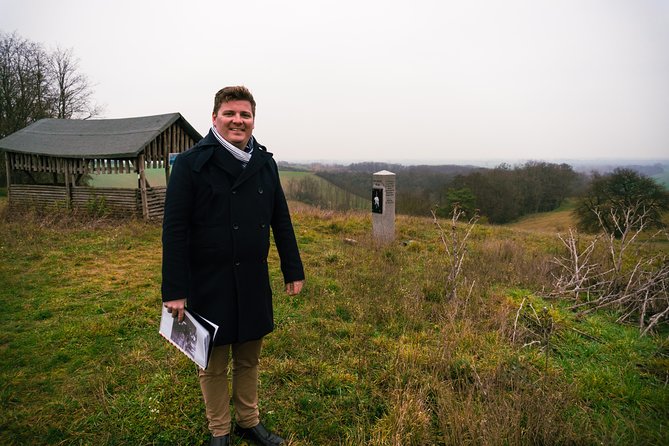
I like the small group of no more than seven, which gives your guide room to answer detailed questions and adjust the pace. I also like the way the tour follows the battle in sequence, from the Soviet assembly area near Reitwein to German defensive positions and the final desperate actions at Jahnsfelde.
The main consideration is the distance from Berlin and the rough walking. This is a full seven-hour day, and some stops involve forest paths, fields, and uneven ground. You should bring sturdy shoes, weatherproof clothing, and patience for a subject that is grim rather than lighthearted.
Key points about the Seelow Heights battlefield tour
- See the 1945 battlefield in context: The route links the museum, Soviet command positions, German defenses, railway lines, cemeteries, and withdrawal routes.
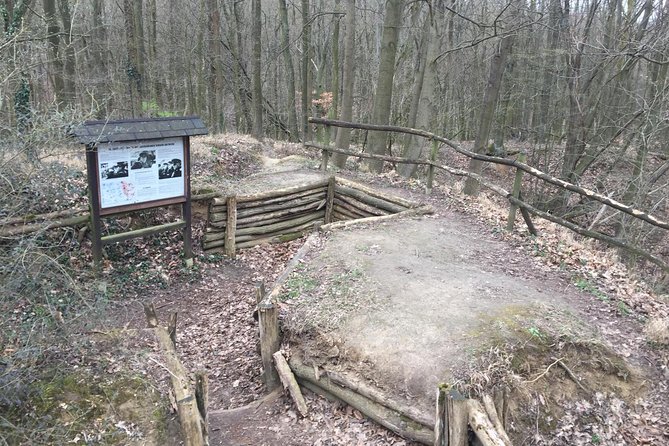
- Walk through surviving trenches and bunker remains: At Reitwein, you can examine parts of the network used during the assault, including the area associated with Marshal Zhukov’s command post.
- Learn from guides who focus on military detail: Matt and Steve are named in the tour material and are known for maps, photographs, timelines, and detailed answers.
- Ride between widely scattered sites: An air-conditioned vehicle saves you from trying to connect rural locations by public transport.
- Expect an intimate group: The maximum is seven people, and the tour can still operate with a very small booking group.
- Pack for the ground, not just the museum: Sturdy footwear matters, and lunch is not included in the listed price.
Why Seelow Heights matters to a Berlin visit
Many Berlin history tours focus on the city itself: the Wall, the Reichstag, the bunker sites, and the final days of the Nazi regime. Seelow Heights gives you a different view of that ending. Here, you are looking at the battle that opened the eastern route toward Berlin.
The attack began on April 16, 1945, when Soviet and Polish forces pushed against German defenses along the Oder River and the heights beyond it. The numbers involved were enormous. The Soviet 1st Belorussian Front assembled 768,000 infantry, including 78,556 soldiers from the Polish 1st Army, along with 3,059 tanks, 16,934 artillery pieces and mortars, and 3,279 combat aircraft.
Those figures can feel abstract in a book. The value of this tour is that your guide keeps returning to the ground. A road, a ridge, a railway station, and a line of trees begin to show why the assault slowed and why the German defenders could hold the heights for several days.
This is a serious military history tour, but you do not need to arrive as an expert. The guides use maps and photographs to explain the movements, and the stops are arranged so the battle develops in front of you. If you already know the Eastern Front, you can ask detailed questions. If you do not, the tour gives you a workable timeline without assuming too much.
Other trips people book in Berlin:
- Berlin: Reichstag, Dome and Government District Guided Tour
★ 4.7 · 18,288 reviews - Berlin: 1-Hour City Tour by Boat with Guaranteed Seating
★ 4.3 · 16,993 reviews - Berlin: Boat Tour Along the River Spree
★ 4.4 · 11,252 reviews
The museum at Seelow Heights sets the scene
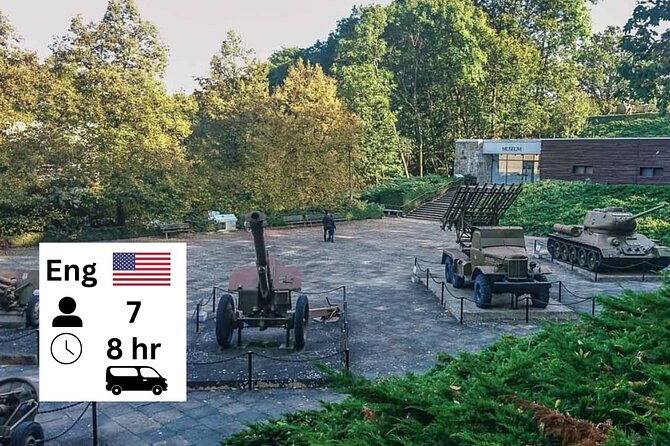
Your first stop is the Gedenkstätte Seelower Höhen, the memorial and museum at Seelow Heights. You spend about 40 minutes here, with admission included.
The guide first explains the Berlin-Seelow offensive and points out key displays. One useful feature is a 3D model showing the Soviet 1st Belorussian Front bunker and trench network. You later visit part of that system, so the model gives you a visual reference before you reach the woods.
After the introduction, you have time to look around on your own. That balance works well. You receive the essential explanation first, then you can focus on displays that interest you instead of trying to absorb the entire museum while walking as a group.
I would pay close attention to the topography shown here. The later stops make more sense once you understand the relationship between the Oder Valley, the lower ground, and the Seelow Heights. The Germans were defending high ground, while the attacking forces had to cross exposed approaches and heavily defended positions.
The museum is also the most structured part of the day. After this stop, the experience becomes more like a field lesson, with the guide pointing out places that may look ordinary at first glance.
Reitwein reveals the Soviet starting point
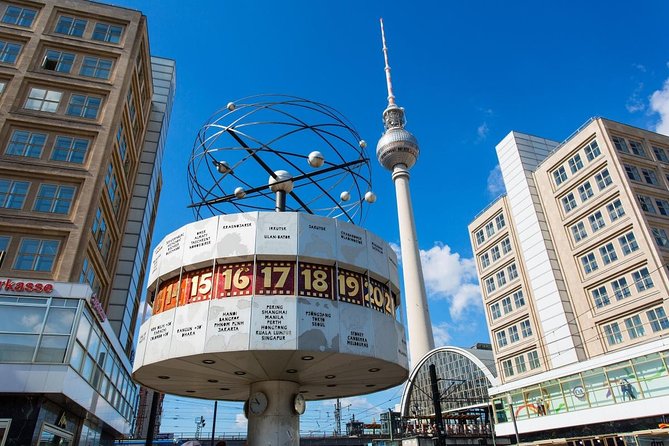
The next drive takes you to Reitwein, a small town that played an important role in the Soviet advance. You spend about 20 minutes here before walking toward the forest positions.
Reitwein was the starting area for the 1st Belorussian Front assault on Seelow and the later advance toward Berlin. That makes it a useful place to pause before discussing the attack. The town itself is not presented as a grand attraction. Its value comes from its position in the battle plan.
This is where a guide can make a major difference. Without a map or explanation, a quiet village tells you very little about a massive offensive. With the route laid out, you can understand why forces gathered here and how the advance moved west.
The tour then continues on foot through the forest. This is one of the more memorable sections because the surviving bunker and trench remains are not separated from the setting. You walk to them rather than simply looking at a sign beside a car park.
Forest trenches and Zhukov’s command position
The walk to the bunker and trench network takes about 30 minutes. The remains include parts of the Soviet positions and the area associated with Marshal Georgy Zhukov’s command bunker and observation point.
This is one of the strongest parts of the tour for anyone who wants to connect military decisions with actual ground. You can see where the command structure was placed and look out toward the area the attacking forces had to cross. The guide uses the position to explain how the battle unfolded rather than treating the bunker as an isolated relic.
Bring proper footwear here. The route is not simply a paved museum path, and the supplied experience specifically recommends sturdy shoes. Mud, roots, uneven forest ground, and wet weather can change the feel of this walk. The tour is accessible to most people, but it is not the right choice if you need a fully smooth, indoor route.
The guide’s pacing also matters. Matt is noted for taking care of the slowest walker, while still keeping the group moving so all the stops fit into the day. In a group capped at seven, it is easier to pause for questions or allow someone a little extra time.
Same base, a different kind of day out:
- Discover Berlin Half-Day Walking Tour
★ 5.0 · 9,624 reviews - Berlin: Hop-on Hop-off Bus Tour with Live Commentary
★ 4.3 · 8,579 reviews - Berlin: Government District around the Reichstag Guided Tour
★ 4.7 · 8,447 reviews - Berlin: Reichstag, Plenary Chamber, Cupola & Government Tour
★ 4.6 · 8,422 reviews
Dolgelin Railway station and the German defense
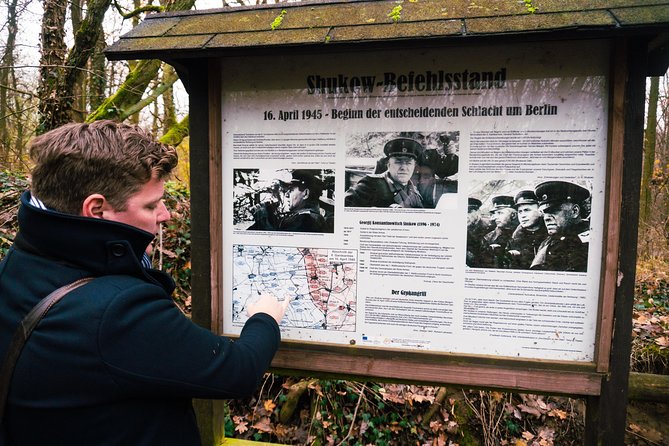
The route continues to Dolgelin Railway station, where a German command post was established by Colonel Scheunemann of the 303rd Infantry Division. You spend about 20 minutes here.
This stop helps shift the focus from the attacking army to the people trying to hold the heights. The German positions were designed to make the approach into a shooting gallery. Soviet and Polish troops had to cross ground covered by defensive fire while facing prepared positions and difficult terrain.
The railway setting is useful because it shows how ordinary infrastructure became part of the battle plan. A station, road, or field can serve as a command point, supply route, observation position, or defensive barrier. The tour repeatedly asks you to look at familiar places in military terms.
The word brutality is not used lightly here. By April 1945, German forces were trying to delay an attack that was driving toward Berlin, while the Soviet and Polish troops faced enormous resistance before reaching the capital. The guide keeps the focus on the human cost and the tactical choices rather than turning the battlefield into a collection of dramatic anecdotes.
Lietzen adds graves and a much older past
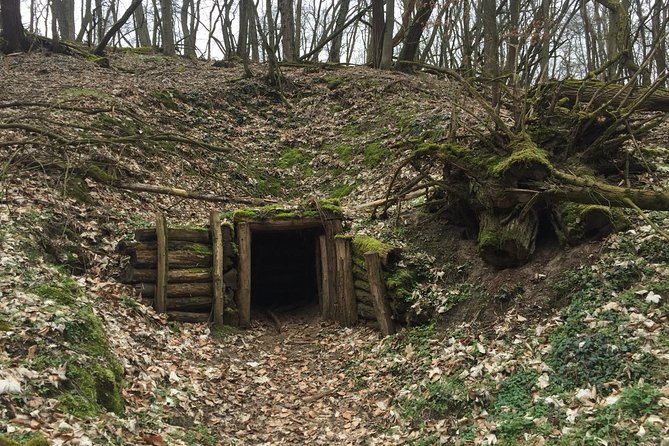
On the return route, the vehicle follows part of the original direction of the Soviet advance and passes through Lietzen. The stop lasts about 30 minutes and includes a German field cemetery.
The cemetery is important because the wartime graves continue to receive remains found in the area. That gives the stop a quiet, unsettled quality. The battle is not simply sealed away in the past when discoveries still add names and bodies to the site.
Lietzen also brings a change of historical scale. The town has a manor house associated with the Knights Templar and a barn said to be Germany’s oldest, dating in part to the medieval period. These details are not the main purpose of the tour, but they show how the 1945 fighting took place among places with centuries of earlier history.
I like this stop because it prevents the day from becoming only a study of weapons and troop movements. A cemetery asks you to think about the people lost on both sides, while the older buildings remind you that the war cut through settled communities rather than an empty training ground.
Jahnsfelde and the final defensive stand
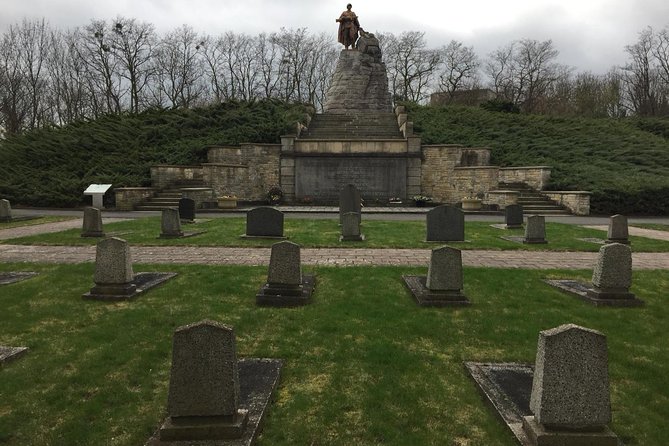
The final battlefield stop is Jahnsfelde, where you spend about 20 minutes. A sports field now occupies the site of a former German field hospital. The hospital was attacked by Soviet aircraft despite its Red Cross markings.
The stop also covers the last stand of the 3rd Battalion of Artillery Regiment 18. During the German withdrawal, the unit was caught at a crossroads by advancing Soviet armor. It quickly formed defensive positions and is credited with destroying an estimated 100 tanks.
The cost was severe: eight officers lost their lives, more than 160 others were killed, over two-thirds of the battalion was wounded, and every gun was lost. These figures make the final stop a stark counterpoint to the huge Soviet force described earlier. A unit could inflict major damage and still be effectively destroyed.
This part of the tour is especially useful for understanding how chaotic the final days were. The map may show arrows moving west, but on the ground, units were improvising, retreating, and trying to protect wounded men while armored forces closed in.
What the vehicle, group size, and timing mean
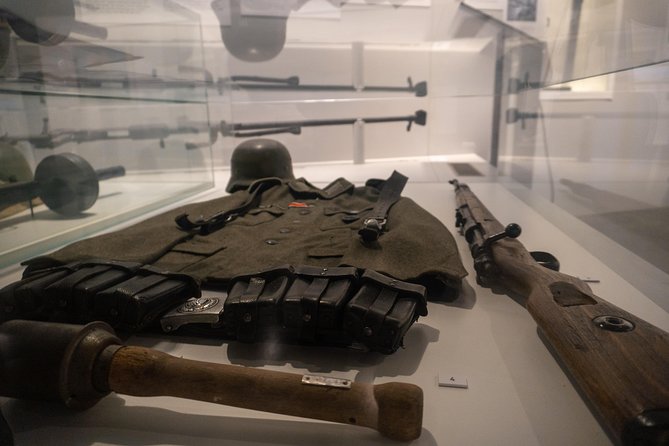
The tour starts at 9:15 a.m. from Alexanderplatz at Dircksenstraße 2 and lasts about seven hours, sometimes closer to seven or eight depending on the day. You return to Berlin at the end, normally to the meeting point or an agreed central location.
The vehicle is air-conditioned and includes Wi-Fi and a small bottle of water. That matters because the sights are spread across rural areas. You are not wasting the day figuring out separate trains, buses, and walks between locations.
The small group is another practical advantage. With no more than seven people, you can hear the guide clearly and ask about specific units, commanders, maps, or battlefield movements. The experience can feel almost like a private lesson when the booking group is very small. One booking even resulted in a one-person tour, with the guide still visiting all the planned sites.
The schedule is active but not rushed at every stop. There are several short visits of 20 to 30 minutes, one longer museum stop, and walking in the forest. This suits you if you want a connected overview of the battle. It may feel too slow for someone who only wants a quick photo stop, or too fast for someone who wants to study every museum display at length.
Price, lunch, and what to pack
At $167.74 per person, the tour costs more than a simple city excursion, but the comparison is not quite fair. You are paying for a full day of rural transport, museum admission, a small group, and a guide who handles the military explanation at several scattered sites.
The value is strongest if you would otherwise struggle to reach Seelow Heights independently. Public transport will not recreate this route easily, and the important places are spread out. The price also includes the time needed to connect the museum, trenches, railway station, cemetery, and final defensive position.
Lunch is not included. The schedule may allow a meal stop, and the supplied experiences describe a traditional German restaurant lunch, but you should budget separately and confirm the plan for your departure date. Some people also received tea, cake, fruit, and cookies from the guide, but these should be treated as possible extras rather than guaranteed inclusions.
Pack:
- Sturdy walking shoes or boots
- Weatherproof clothing
- Water, even though a small bottle is provided
- Money for lunch
- A phone or camera, if you want to record maps and memorial details
The tour requires good weather. If poor weather forces cancellation, you are offered another date or a full refund. You can cancel for a full refund up to 24 hours before the start time, but late cancellations and changes are not accepted.
Who should book this battlefield day
I would choose this tour if you have a serious interest in World War II, the Eastern Front, battlefield archaeology, or the final campaign against Berlin. It also works for someone who knows little about the subject but wants a clear, guided introduction rather than a dense academic lecture.
The guides, especially Matt and Steve, are described as engaging and able to speak with both committed military history fans and complete newcomers. Matt’s background as a former soldier is also mentioned in the tour material, and his use of maps, photographs, and detailed timelines helps make the battle easier to follow.
You should think twice if you want a relaxed sightseeing day with little walking, a guaranteed hotel pickup, or a tour centered on Berlin’s main landmarks. The standard meeting point is Alexanderplatz, while hotel transfers may need to be arranged separately and can involve an added cost. Confirm that detail before booking.
Service animals are allowed, the activity is near public transportation, and most people can take part. Still, the forest and field sections mean that mobility needs should be considered carefully.
Should you book the Seelow Heights tour?
Book it if you want to see where the final Soviet drive toward Berlin began to break through German defenses, and if you value explanation over spectacle. The best parts are the trench walk near Reitwein, the view from the former command area, and the way the guide connects quiet modern places to the battle fought there.
At $167.74, it is a fair buy for a full day of transport and focused guiding, especially in a group of seven or fewer. Bring boots, plan for lunch, and expect difficult subject matter. If that sounds worthwhile, this is one of the most direct ways to understand the Battle of Seelow Heights from the ground itself.
FAQ
How long is the Battle for Seelow Heights tour?
The tour lasts approximately seven hours, though the day may run closer to seven or eight hours depending on the schedule and stops.
Where does the tour start?
It starts at 9:15 a.m. at Alexanderplatz, Dircksenstraße 2, 10179 Berlin, Germany.
Where does the tour end?
The activity ends back in Berlin at the meeting point or at a central location arranged with the guide.
What is included in the price?
The price includes an air-conditioned vehicle, museum admission, Wi-Fi, and a small bottle of water.
Is lunch included?
No. Lunch is not included in the tour price, so you should budget separately.
How many people can join the tour?
The maximum group size is seven people.
Do I need special footwear?
Sturdy footwear is recommended because parts of the tour follow forest paths, trenches, fields, and other uneven ground.
What happens if bad weather cancels the tour?
If poor weather causes cancellation, you are offered a different date or a full refund. You can also cancel for a full refund if you do so at least 24 hours before the start time.
Just added in Berlin
- Private One way Airport Transfer Berlin Airport To Berlin★ 3.5 · 17 reviews
- Private Walking Tour: Berlin Wall, Cold War and Checkpoint Charlie★ 5.0 · 37 reviews
- Modern Berlin Private Walking Tour: Diverse, Vibrant and Exciting German Capital★ 5.0 · 13 reviews
- Private Day Trip to Potsdam from Berlin by Train★ 4.5 · 27 reviews
- City Explorer: Potsdam Private Day Trip★ 4.5 · 10 reviews
- Private Half-Day Sightseeing Tour in Berlin★ 3.5 · 6 reviews
- Berlin Private Custom Tour in a Minivan, East and West★ 5.0 · 123 reviews
- Berlin Private Custom 5-Hour Tour by Car★ 5.0 · 30 reviews
Tours in Berlin, compared.
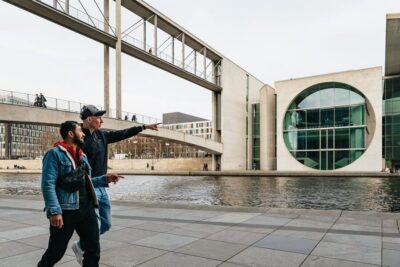
Reichstag, Dome and Government District Guided Tour
Read our review →
1-Hour City Tour by Boat with Guaranteed Seating
Read our review →
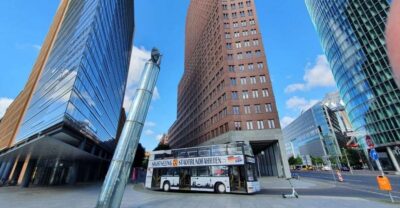
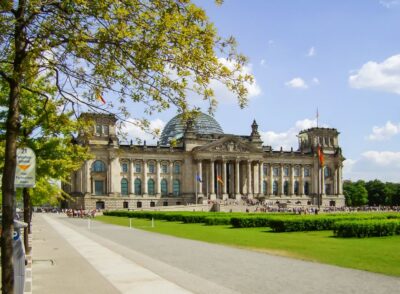
Reichstag, Plenary Chamber, Cupola & Government Tour
Read our review →