
Reviewed · GERMANY
Bremerhaven: German Emigration Center Entrance Ticket
Bremerhaven’s German Emigration Center turns migration history into a personal journey. You follow an individual emigrant from a European quay to a passenger ship, Ellis Island, and New York, using an electronic iCard that activates audio stations and interactive displays. It is history you can hear, see, and work through, not just read on a wall.
I like two things especially: the museum connects the huge story of 7 million Europeans with the life of one person, and the free Family Research room gives you a chance to investigate your own family. The recreated ship interiors, including a 1929 ocean liner, also give the story a human scale.
Plan your visit carefully. You need to arrive at least two hours before closing, and the research computers can be occupied when the museum is busy. The old ship sections are narrow, too, so wheelchair users can get around but may need to maneuver carefully on the tight intermediate decks.
Key points to know before you go
- Follow one emigrant with an electronic iCard: Your boarding pass activates sound stations and interactive displays throughout the visit.
- Experience three eras of passenger shipping: Recreated ship areas show how conditions changed over time, including life aboard the Columbus in 1929.
- Reach Ellis Island and New York: The route includes an immigration test, an entry permit, and a look at life after arrival.
- Research your own ancestors: The Family Research room offers free help from a trained assistant.
- Allow a proper visit: Arrive at least two hours before closing so you are not forced to rush the exhibition.
- Expect a hands-on museum: The experience uses sound, scenery, and interactive technology, although computer stations may be occupied.
Why Bremerhaven became a gateway to the New World

The German Emigration Center tells the story of people who left Europe through Bremerhaven in search of a different life. Its subject covers 300 years of immigration and emigration, with particular attention to the great movement of Europeans to the New World.
That broad time span matters. Migration was not one single event with one single cause. People left for different reasons, and they faced different conditions depending on the period, the ship, and the country they hoped to enter.
The museum gives you a way to understand those changes without reducing the story to dates and statistics. Your electronic boarding pass assigns you an individual emigrant. As you move through the exhibits, that person’s story helps you connect the larger movement of millions with a single decision to leave home.
I find this approach more useful than simply reading about population numbers. A figure such as 7 million people can feel distant. A named individual waiting at a quay, saying goodbye to family and preparing for an uncertain future, makes the decision to leave much easier to grasp.
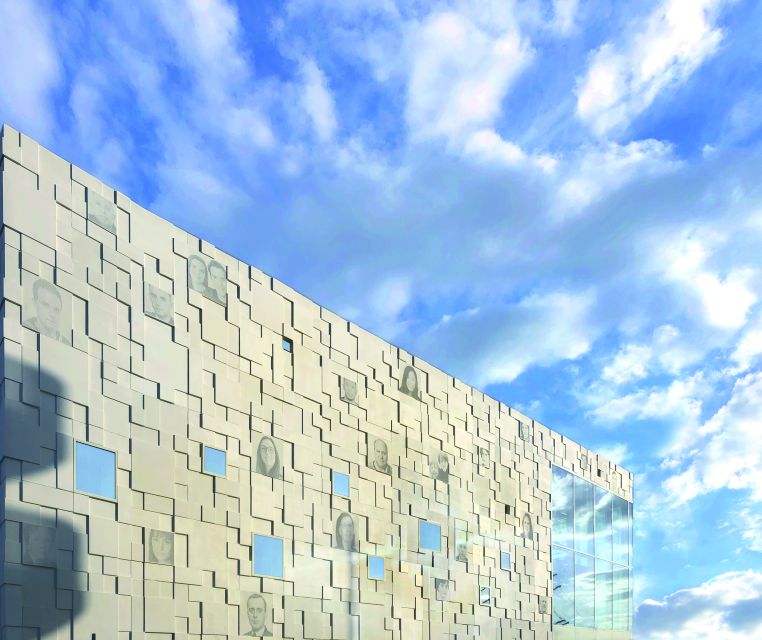
The museum is in Bremerhaven, in Germany’s State of Bremen, and the entrance is at Columbusstraße 65. The visit begins and ends at the main entrance, so you can plan it as a self-contained stop during time in the city.
A few more things to do in Germany worth a look
- Dresden: Semperoper Tickets and Guided Tour
★ 4.7 · 12,102 reviews - Berlin: Jewish Museum Berlin Entrance Ticket
★ 4.5 · 8,393 reviews - Berlin: Berlin Story Bunker Entry Ticket
★ 4.6 · 6,759 reviews
Start at the quay with a personal story
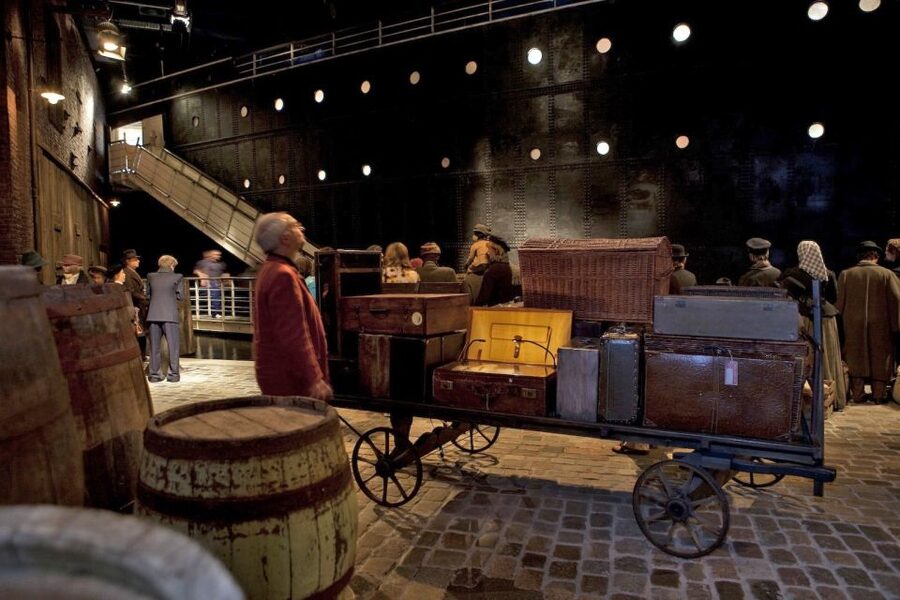
At the beginning, you meet emigrants from different parts of Europe at the quay. This is an emotional point in the route because departure is presented as a real human break, not just a transport detail.
Your iCard helps guide the experience. Each card contains the story of one person and activates audio points and interactive displays. Listen for the individual details as you move through the museum. The card gives you a thread to follow, which makes the many rooms easier to understand.
The quay is also where the museum’s tone becomes clear. This is not only a display about ships and ports. It is about people leaving behind familiar places, family members, language, work, and daily routines.
You should take your time here rather than treating it as a quick introduction. The museum’s strongest moments come when you connect the setting with the person on your iCard. The goodbye at the quay prepares you for the practical difficulties that follow.
Board ships from three passenger eras

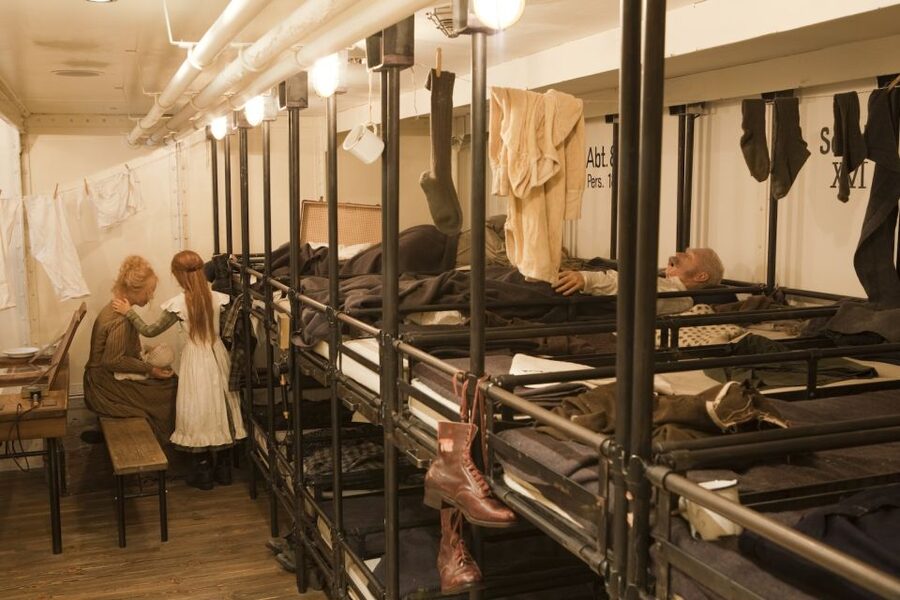
The route continues aboard recreated sections of passenger ships from three periods. This is one of the most effective parts of the visit because ship travel can be hard to picture from written descriptions alone.
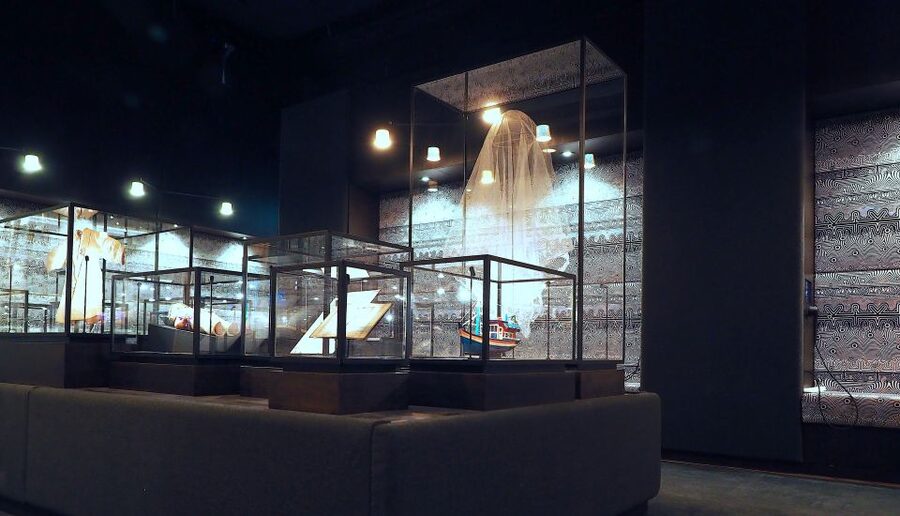
You get a glimpse of conditions aboard the Columbus in 1929, along with ship settings from other eras. The point is not simply to admire an old vessel. The rooms help you consider what an ocean crossing meant for people with different levels of money and comfort.
Ship interiors also bring some practical limitations. The old emigrant-ship decks are narrow, and you may need to move carefully through them. If you use a wheelchair, the museum is accessible, but tight areas can require extra maneuvering. That detail is worth knowing before you arrive, especially if you prefer a relaxed pace.
Give yourself room to pause at the audio stations. The experience is designed to involve your senses, and rushing from one display to the next can weaken that effect. The museum works best when you listen, look closely, and let each part of the route register before moving on.
The ship sections also provide a useful contrast between different periods of passenger travel. You can see how a long voyage was shaped by the era in which it took place. The museum does not ask you to imagine an abstract crossing. It places you inside the spaces where that crossing happened.
Take the immigration test at Ellis Island
After the Atlantic crossing, the route brings you to the immigration station on Ellis Island. Here, you face an immigration test at the legal desk.
This part changes the mood. Leaving Europe was one major step, but reaching the New World did not guarantee admission. The legal desk shows that arrival involved rules, paperwork, and judgment from officials.
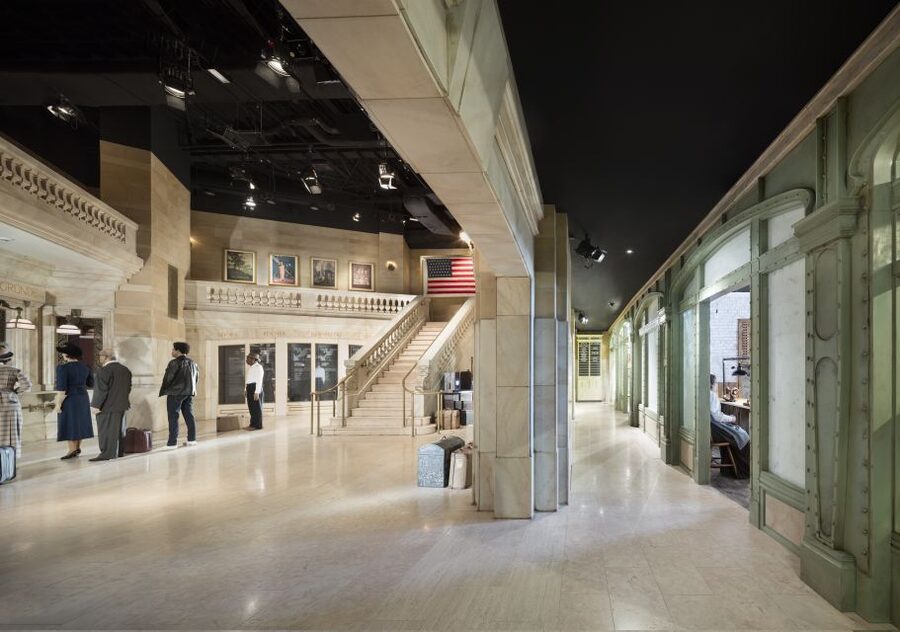
With your entry permit in hand, you continue toward Grand Central in New York. That transition is important because it moves the story beyond the ship. The journey does not end when a passenger reaches land. A new set of questions begins: Where will you go? How will you work? How will you build a life?
The Ellis Island section gives the museum a clear sequence. You leave home, cross the ocean, present yourself to immigration authorities, and enter a new city. It is easy to follow, even if you are not already familiar with the history of migration to the United States.
I also like the way this part shows migration as a process rather than a single dramatic moment. Departure, travel, inspection, and settlement each carried their own pressures. The route lets you consider all of them in order.
Same base, a different kind of day out:
- Berlin: Reichstag, Dome and Government District Guided Tour
★ 4.7 · 18,288 reviews - Berlin: 1-Hour City Tour by Boat with Guaranteed Seating
★ 4.3 · 16,993 reviews - Hamburg: Sex and Crime in St. Pauli Tour for Ages 18+
★ 4.7 · 15,447 reviews - Hamburg: 1.5-Hour Harbor and Speicherstadt Day Cruise
★ 4.6 · 14,200 reviews
See what life could mean in New York
At Grand Central and in the later exhibition halls, the focus shifts to life in the New World. You learn more about what emigrants faced after reaching New York and can explore the causes and effects of migration in greater detail.
This is where the museum expands beyond one family or one crossing. The personal route remains useful, but the wider displays give you context. You can consider why people moved, what they hoped to find, and how migration affected both the places they left and the places where they settled.
The strongest visits balance the two levels. Follow your iCard closely, but also stop to read and listen to the broader material. The individual story gives the exhibition feeling. The larger halls help you understand the forces behind it.
You may want to leave extra time for this part instead of assuming the ship route is the whole museum. The experience includes several exhibition halls, and the museum presents 300 years of immigration and emigration rather than only one period.
The displays are described as an award-winning collection, but the more important point for your planning is their range. You are not visiting a small room about one port. You are entering a major museum devoted to migration, with personal stories, reconstructed settings, audio material, and research tools.
Search for your family in the Family Research room
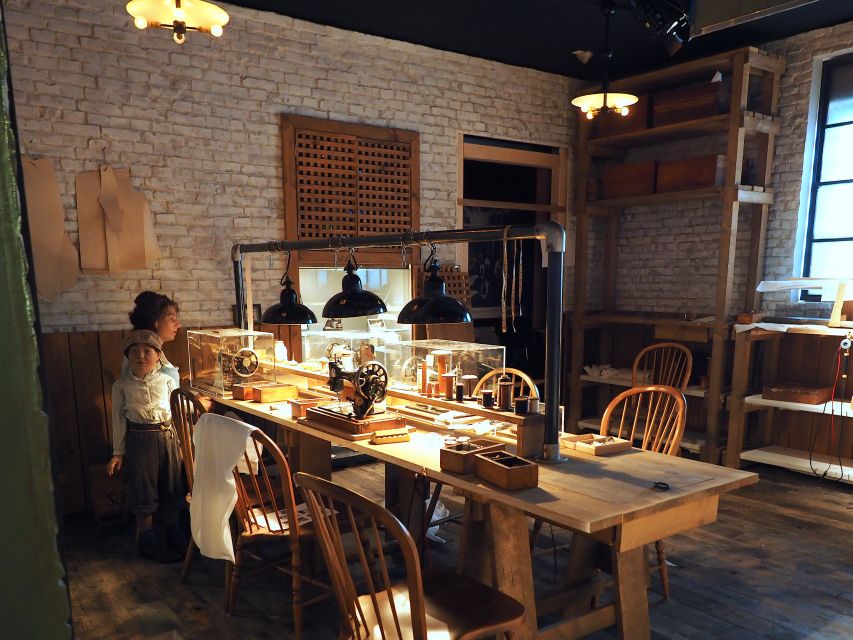
Once you finish the main route, you can use the Family Research room to investigate ancestors who emigrated. This service is free, and a trained assistant is available to help you with the search.
That free help adds real value to the admission price. You do not need to arrive with a fully prepared family tree to make the room worthwhile, but the information you bring may affect how far your search can go. Names, places, and approximate dates can give you useful starting points.
The research room also changes the visit from a general museum experience into something personal. You may find a connection to a relative who left Europe, or you may simply learn how difficult it can be to trace an individual through migration records.
Do not leave this room until the final few minutes. The computers can be occupied, and the available research stations may not be open immediately when you arrive. If family history is one of your main reasons for visiting, put aside a reasonable amount of time for this section.
The museum does not promise that every search will produce a dramatic discovery. That is part of the honest value of the room. You receive free assistance and access to research facilities, but genealogy often depends on the records that survive and the information you already have.
How much time and money should you plan?
Admission costs about $23 per person and is valid for one day. For a museum with a full historical route, interactive technology, recreated ship spaces, and a free family research service, that price can be reasonable if you plan to spend several hours inside.
The value is strongest for people who enjoy museums that ask you to participate. You receive an electronic boarding pass, follow an assigned story, listen at audio stations, complete an immigration test, and move through recreated environments. This is more involved than a quick walk through framed photographs.
If you only have a short window in Bremerhaven, the ticket may feel less useful. You are told to arrive at least two hours before closing, and that advice is practical. The museum has enough material to punish a rushed visit.
The ticket covers admission only. Food and drinks are not included, so plan those separately. Free cancellation is available up to 24 hours in advance, and you can reserve now and pay later if you want to keep your plans flexible.
The museum is wheelchair accessible, though the narrow decks require care and maneuvering. Assistance dogs are allowed, but other pets are not.
Who will get the most from this museum?
I would recommend the German Emigration Center to anyone interested in family history, migration, social history, or the experience of ocean travel. It is especially useful if you want a museum that gives you a clear route instead of asking you to piece together a collection of unrelated displays.
Families can use the personal iCard format to give children or teenagers a simple story to follow. The ship areas and interactive stations offer more variety than a long series of text panels. Still, younger children may not connect with every part of the 300-year story, especially the sections focused on policy and the causes of migration.
People researching ancestors should plan around the Family Research room. Arrive with any names and dates you have, and do not assume the computer work will be instant. If all stations are occupied, you may need to wait.
History-minded visitors should expect an emotional visit. The departure scenes deal with separation, uncertainty, and the difficult choice to leave home. The museum does not treat migration as a simple adventure story, and that is one reason it feels useful.
Visitors who dislike interactive museums may find the electronic boarding pass and activated displays a little programmed. The format is not a quiet, traditional gallery visit. You are guided through a designed experience, with sound and recreated settings shaping the pace.
Practical tips for a better visit
Use the main entrance at Columbusstraße 65 and start with enough time in hand. Arriving two hours before closing is the minimum sensible plan, not an invitation to rush in at the last moment.
Keep your iCard with you throughout the route. It links the personal story to the audio points and interactive displays, so losing track of it would weaken the experience.
If you want to use the Family Research room, make it part of your plan from the start. Bring family names, locations, and approximate dates if you know them. Allow time to wait for a computer and to speak with the trained assistant.
Wear practical clothing for moving through the ship recreations. The narrow decks are part of what makes them convincing, but they are not the place for a hurried visit or wide turns.
The museum is best treated as a half-day cultural stop rather than a quick attraction between other appointments. Food and drinks are not included, so handle those before or after your visit.
Should you book the German Emigration Center?
Book it if you want migration history presented through individual lives, ship settings, sound, and hands-on displays. The personal iCard journey gives the museum a clear structure, while the free Family Research room adds a useful reason to stay longer.
Think twice if you have less than two hours, dislike interactive presentation, or need wide, effortless access through every exhibit area. Wheelchair access is available, but the old ship decks are tight.
At about $23, the ticket offers good value for a substantial visit, especially if you use the family research facilities. Set aside the time, arrive well before closing, and let the story move from the quay to the ship, Ellis Island, New York, and your own family records.
FAQ
Where is the German Emigration Center located?
The museum is located at Columbusstraße 65 in Bremerhaven, in Germany’s State of Bremen. Use the main entrance there.
How long is the ticket valid?
The entrance ticket is valid for one day. Starting times depend on availability.
How much does admission cost?
The listed price is $23 per person. Food and drinks are not included.
Can I research my own ancestors?
Yes. The Family Research room offers a free service, and a trained assistant can help you investigate your family’s emigration history.
Is the museum wheelchair accessible?
Yes, the museum is wheelchair accessible. The narrow intermediate decks in the old emigrant ships may require careful maneuvering.
Are pets allowed inside?
Pets are not allowed. Assistance dogs are permitted.
Just added in Germany
- Berchtesgaden: Via Ferrata Beginner Tour of Schützensteig★ 4.7 · 15 reviews
- Berlin: Energizing 2-Hour Morning Segway Tour★ 4.7 · 35 reviews
- Berlin: Thrilling E-Scooter Adventure Tour★ 4.4 · 66 reviews
- Bayreuth: German City Walking Tour (Tourist Info)★ 4.7 · 202 reviews
- Beelitz-Heilstätten: Baum&Zeit Tree Top Walk Entry Ticket★ 4.9 · 7 reviews
- Beer Bike & Party Bike: Unforgettable Berlin City Tour incl. pickup★ 5.0 · 5 reviews
- Bavaria: Beginner Canyoning Tour★ 4.5 · 10 reviews
- Bayreuth: Christmas city tour in German★ 4.9 · 12 reviews