
Reviewed · CLASSIC CAR & TRABI TOURS
Berlin Trabi Museum: Day Ticket
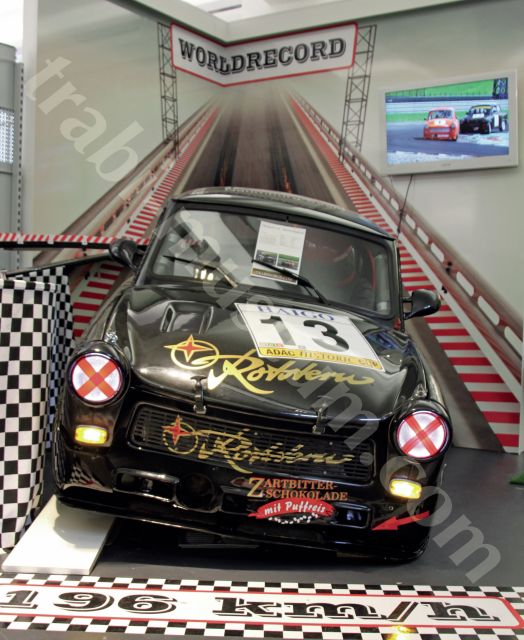
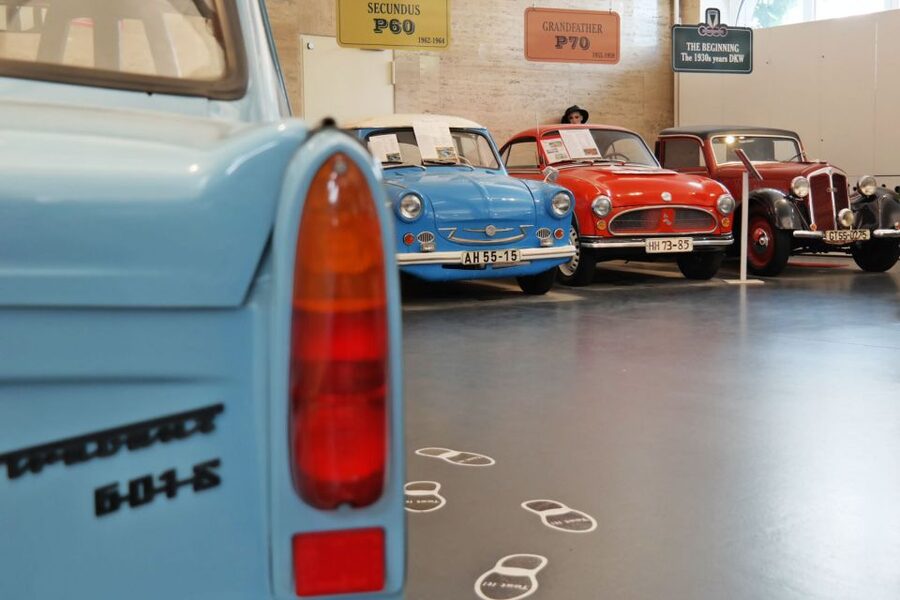
The Trabi Museum puts East Germany’s most famous car in a compact, cheerful setting beside Checkpoint Charlie. You’ll see 14 vehicles, from early development models to camping and military versions, plus rare examples such as the Trabant P70 with its wooden undercarriage and the fastest Trabi on display.
I like two things here: the cars show how one basic design served many purposes, and the short films and miniature GDR world give the vehicles some political and social context. The main drawback is size. This is a small museum, so visitors expecting a large transport collection may finish in less than an hour.
Key points
- Fourteen Trabants at Checkpoint Charlie: See the famous East German car in several forms, including civilian, camping, racing, and military versions.
- A rare P70: The museum displays a Trabant P70 with a wooden undercarriage, an unusual detail for car fans.
- The fastest Trabi: One vehicle focuses on speed rather than the car’s usual practical, modest image.
- Short films and a miniature GDR world: The lightshow theater adds visual context to the cars and their former home.
- A one-day admission ticket: At $10 per person, the ticket works best as a short, focused stop during a day around Checkpoint Charlie.
- Trabi Safaris are separate: You can drive a Trabant along the former Wall or choose another route, but the museum ticket covers entry only.
Why the Trabi matters in Berlin
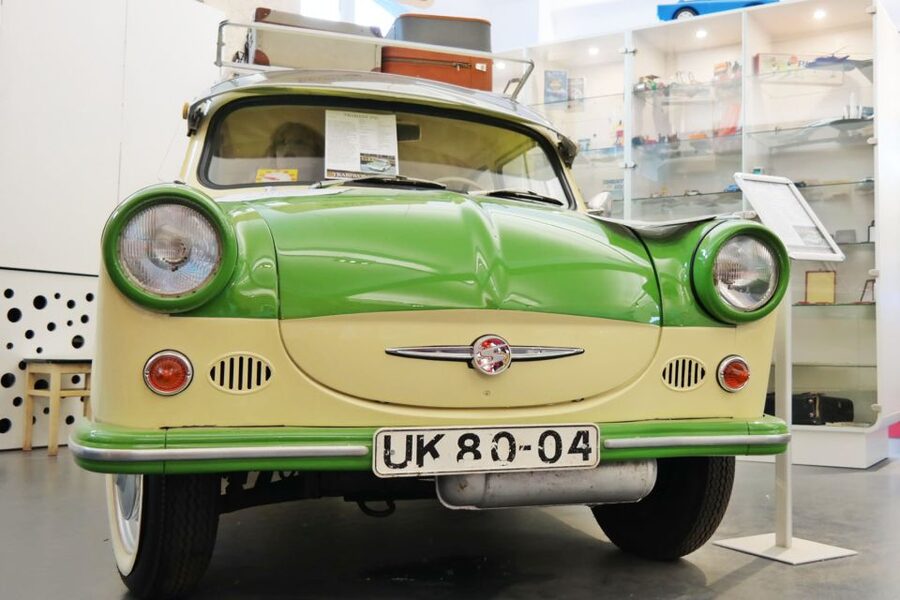
The Trabant was not simply an old car. In the former German Democratic Republic, it was the everyday vehicle many people knew best. Production of the Rennpappe, a nickname that refers to its light body, began in 1958 at the VEB Automobilwerk Zwickau.
That date gives the collection a useful starting point. The museum is not only about unusual cars. It shows the long life of one basic vehicle design and the different jobs it was expected to handle.
For you, the appeal is partly mechanical and partly historical. The Trabant helps explain daily life in East Germany in a way that a political exhibit alone cannot. A family car, camping vehicle, military model, or racing machine all point to a different use of the same limited automotive system.
You should also keep your expectations in check. The museum is not a large automobile hall with rows of hundreds of vehicles. Its value comes from the variety within a small collection, its central location, and the playful way it presents a familiar symbol of the former GDR.
Other rides in something old:
- Berlin: 75-minute Trabi Safari
★ 4.8 · 2,854 reviews - Berlin Self-Drive Trabi Tour with Guide
★ 4.5 · 410 reviews - Berlin: The Wall Ride Guided Trabi Tour
★ 4.7 · 157 reviews
Finding the museum at Zimmerstrasse
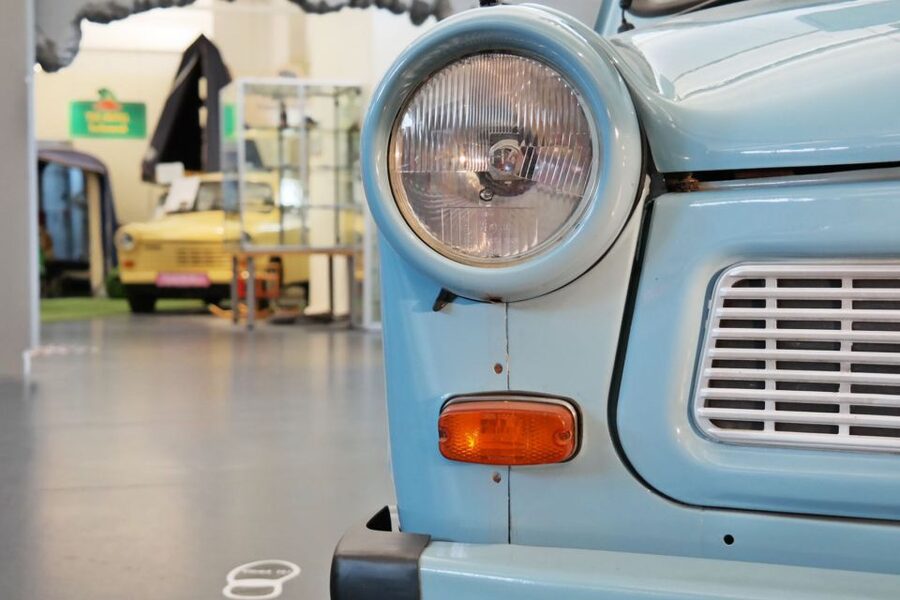
The address is Zimmerstrasse 14 to 15, 10969 Berlin, a short distance from Checkpoint Charlie. That location makes the museum easy to pair with the former Wall crossing, nearby Wall exhibitions, and other sights in central Berlin.
The entrance can cause a little confusion. If the door at Zimmerstrasse 14 to 15 is closed, cross the street and look for TrabiWorld at Zimmerstrasse 97 to 100. This is a useful detail to note before you arrive, especially if you are visiting independently and do not have a host pointing the way.
The ticket is valid for one day. There is also skip-the-ticket-line access, which can save a little time during a busy sightseeing day. The museum offers assistance in English and German, and the experience is wheelchair accessible.
You do not need to set aside a full morning or afternoon just for the museum. The collection is compact. Instead, treat it as a focused stop in the Checkpoint Charlie area, then continue to other nearby sights.
The first Trabants and the car’s development
Inside, the cars are arranged to show different stages in the Trabant’s development. This lets you compare the shape and purpose of the vehicles rather than seeing 14 examples that all look alike.
The early models help explain how the car became the people’s car of East Germany. The Trabant was made for ordinary transport, not luxury. Its small size and practical design suited a country where car ownership and production were tightly limited.
The museum also points to the car’s construction and identity. The P70 with its wooden undercarriage is one of the more unusual displays. It gives you a specific detail to look for, rather than asking you to admire the cars only from a distance.
I find this kind of object especially useful in a museum setting. A broad statement about East German manufacturing can feel abstract. A wooden undercarriage, a simple cabin, or a modified body makes the story more concrete.
Do not expect a long technical lecture for every model. The experience is better suited to visitors who enjoy seeing the actual objects and picking up the wider story through the display, films, and setting.
Camping, military, and racing Trabants
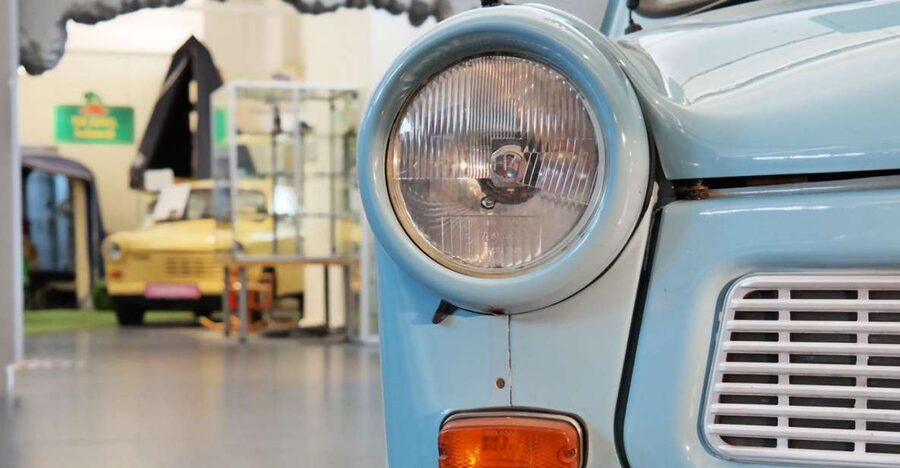
The collection becomes more interesting when the cars move beyond ordinary family transport. You’ll see camping Trabants and military vehicles, showing how the same small car could be adapted for very different needs.
The camping examples bring out the practical side of the Trabant. A car designed for modest everyday travel could also become part of a holiday setup. The military versions show a different role, with the vehicle placed in a more official setting.
Then there is the fastest Trabi. This is a fun contrast with the car’s usual reputation as slow and basic. It gives the display a little energy and prevents the museum from becoming a simple line of standard models.
These variations are the reason I would recommend the museum to anyone curious about design and daily life, even if you are not a devoted car enthusiast. The collection asks a simple question: what could people do with this vehicle? The answer is more varied than its plain exterior suggests.
The drawback remains the museum’s scale. Because only 14 vehicles are shown, you won’t get a full survey of every Trabant model or every stage of East German car production. The displays work best as a lively introduction rather than a major automotive study.
Other museums and galleries in Berlin:
- Berlin: Jewish Museum Berlin Entrance Ticket
★ 4.5 · 8,393 reviews - Berlin: Natural History Museum Entrance Ticket
★ 4.6 · 3,382 reviews - Berlin: Neues Museum Entry Ticket
★ 4.6 · 3,261 reviews - Skip-the-Line: Berlin Wall Museum at Checkpoint Charlie
★ 4.1 · 2,041 reviews
The lightshow theater and miniature GDR
The lightshow theater adds a change of pace after the cars. Short films about the Trabant are shown there, giving you moving images and a more entertaining way to absorb the subject.
This matters because the Trabant is tied to memory as much as machinery. A film can show the car in use and help you understand why it became such a powerful symbol of East Germany. The theater also makes the museum more approachable for children and for anyone who would rather not read a long series of technical panels.
You can also visit a miniature GDR world. This small-scale setting gives the collection a broader frame. Instead of seeing the Trabant as an isolated object, you can connect it with the country and society that produced it.
The theater and miniature display are not a replacement for a major history museum. They are short, visual additions that make a brief visit feel more varied. If you have limited time, make sure you include them rather than looking only at the cars.
What the $10 ticket is really worth
At $10 per person, admission is reasonably priced for a central Berlin attraction, but the value depends on your plans. If you are already visiting Checkpoint Charlie, the museum offers an easy extra stop without requiring a separate trip across the city.
I would not buy this ticket expecting hours of entertainment. The collection is small, and one short review described the museum as very small. That criticism is fair if you compare it with a large national transport museum.
The stronger case for the ticket is its focus. You get 14 vehicles, rare examples, films, and the miniature GDR world in one compact visit. The price is easier to justify if you enjoy unusual local history, cars, or the everyday side of the Cold War.
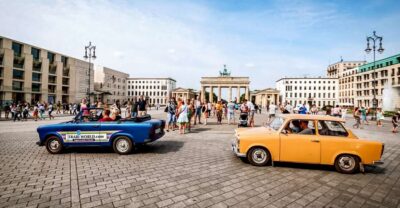
The ticket does not include a Trabi Safari. Driving a Trabant is a separate activity offered through TrabiWorld Trabi-Safari. You can choose a route through East or West Berlin, follow the former Wall, or select another route, but you should plan and pay for that experience separately.
If you want to drive a Trabi, the museum can be your introduction rather than the complete activity. See the cars first, then decide if getting behind the wheel is worth adding to your day.
How long to allow for the visit
The admission is valid for one day, but the information provided does not set a fixed visit length or a specific start time. Since the museum contains 14 vehicles and a small theater presentation, you might find it works well as a short stop rather than a full-day outing.
That flexible timing is useful in Berlin. You can visit before or after Checkpoint Charlie, fit it around a Wall-related walking route, or stop in when the weather is poor.
The museum’s compact size also makes it suitable for families who want a manageable attraction. Children can focus on the unusual cars, the fastest Trabi, the miniature setting, and the films without facing a huge hall that takes hours to cross.
On the other hand, serious car fans may want to allow extra time to compare the models carefully. The museum gives you a concentrated collection, so the length of your visit will depend on how closely you study each vehicle.
Who will enjoy this museum most
I would choose this experience for four kinds of visitors:
- First-time Berlin visitors: The Checkpoint Charlie location makes it easy to connect the cars with the city’s divided past.
- Car fans: The unusual P70, fastest Trabi, camping models, and military vehicles provide clear points of interest.
- Families: The films and miniature GDR world add variety beyond reading display panels.
- Cold War history fans: The Trabant offers a practical look at life in East Germany through an object people used every day.
You may want to skip it if your main interest is a large collection of luxury cars, detailed engineering displays, or a long guided museum program. This is a small, themed museum with a light touch.
The language options are English and German. That makes the experience easier for international visitors, though the ticket details do not specify the exact amount of English material available in every part of the museum.
Pairing the museum with Checkpoint Charlie
The museum’s location is one of its best practical features. Checkpoint Charlie is already a major Berlin stop, so adding the Trabi Museum can give your visit a different angle.
Checkpoint Charlie focuses on borders, escape attempts, and the division of Berlin. The Trabant focuses on ordinary transport and the material side of life in East Germany. Together, they create a fuller picture than either subject alone.
I like this pairing because it keeps the history grounded. After seeing a former border crossing, you can look at the small car that carried families, campers, soldiers, and racers. The contrast helps you think about the period beyond the most familiar Cold War photographs.
Still, do not confuse the museum with a full history of the Berlin Wall. It contributes one focused subject. You will need other sights if you want a broader explanation of the city’s division.
Booking, cancellation, and access
You can reserve the ticket and pay later, which keeps your plans flexible. Free cancellation is available up to 24 hours in advance for a full refund.
The activity is wheelchair accessible. English and German support is available through the host or greeter, and the meeting point is clearly given at Zimmerstrasse 14 to 15, with the TrabiWorld alternative across the street if the first door is closed.
Because the ticket is valid for one day, check the available starting times when you book. The listing does not give a fixed opening schedule in the supplied details, so it is sensible to confirm the time that fits your Berlin plans.
Should you book the Berlin Trabi Museum?
Book it if you want a compact, affordable stop that connects East German daily life with Berlin’s Cold War story. The 14 vehicles, rare P70, fastest Trabi, films, and miniature GDR world give you more variety than a simple car display.
Skip it if you expect a large museum or a long, technical tour. At $10, the price is fair for a focused attraction near Checkpoint Charlie, but the small size is the key fact to remember.
For most visitors, I would treat it as a short add-on rather than the main event. If the cars make you curious about driving one, consider adding a separate Trabi Safari. The museum shows you what the Trabant was, while the safari lets you experience how it feels on the road.
FAQ
Where is the Berlin Trabi Museum?
The museum is at Zimmerstrasse 14 to 15, 10969 Berlin, near Checkpoint Charlie. If the door is closed, cross the street and look for TrabiWorld at Zimmerstrasse 97 to 100.
How many vehicles are displayed?
The museum displays 14 different Trabants and related vehicles.
What kinds of Trabants can I see?
You can see different stages of the vehicle’s development, along with camping Trabants, military vehicles, a Trabant P70 with a wooden undercarriage, and the fastest Trabi.
Does the ticket include a Trabi Safari?
No. The ticket includes entry to the Trabi Museum only. A Trabi Safari, including routes along the former Wall or through East and West Berlin, is a separate activity.
Is the museum available in English?
English and German are available. The host or greeter can assist in English or German.
Is the museum wheelchair accessible?
Yes. The activity is listed as wheelchair accessible.
Just added in Berlin
- Private One way Airport Transfer Berlin Airport To Berlin★ 3.5 · 17 reviews
- Private Walking Tour: Berlin Wall, Cold War and Checkpoint Charlie★ 5.0 · 37 reviews
- Modern Berlin Private Walking Tour: Diverse, Vibrant and Exciting German Capital★ 5.0 · 13 reviews
- Private Day Trip to Potsdam from Berlin by Train★ 4.5 · 27 reviews
- City Explorer: Potsdam Private Day Trip★ 4.5 · 10 reviews
- Berlin Private Custom 5-Hour Tour by Car★ 5.0 · 30 reviews
- Private Half-Day Sightseeing Tour in Berlin★ 3.5 · 6 reviews
- Berlin Private Custom Tour in a Minivan, East and West★ 5.0 · 123 reviews
Classic Car & Trabi Tours, compared.


Test Drive Electric Vehicles from the VW brand (ID. model)
Read our review →

Browse the lists this tour appears in