
Reviewed · TOURS IN BERLIN
Berlin Reunited and Revived! 3-Hour Alternative Tour
Berlin’s story makes the most sense when you leave the postcard sights behind. This private three-hour tour links Mitte, Prenzlauer Berg, Friedrichshain, and Kreuzberg, showing how a divided capital changed after 1989 and how those changes affect daily life now.
I like the clear contrast between restored Mitte and the still-defiant alternative districts. I also like the finish at the Turkish Market, where food, fabric, local produce, crafts, and occasional music bring the city’s mixed character into one lively setting.
The main drawback is its limited schedule: tours run only on Tuesdays and Fridays from April through October. At $352 per group, it is good value for a larger party, but expensive if only one or two people are sharing the fee.
Key points to know before booking
- Four neighborhoods in three hours: See how Mitte, Prenzlauer Berg, Friedrichshain, and Kreuzberg took different paths after reunification.
- Kulturbrauerei in Prenzlauer Berg: A former brewery now used for culture and the arts, with a story that mirrors East Berlin’s wider changes.
- East Side Gallery: Discuss the painted remains of the Berlin Wall and the political ideas behind Berlin’s street art.
- A private group format: The $352 price covers up to 20 people, making the cost far more reasonable for a family or larger group.
- A Turkish Market finale: End beside the Landwehr Canal among food stalls, fabrics, farmers, artisans, and possible live music.
- Experienced named guides: Past tours have been led by Tom, Maria, and JJ, with English and German available.
Why this tour shows more than postcard Berlin
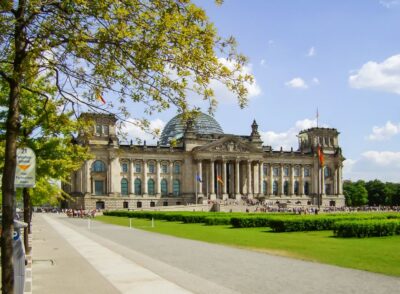
Berlin is easy to misread if you only visit the Brandenburg Gate, Reichstag, and major museums. Those places matter, but they do not fully explain the city’s present-day character.
This tour takes a different route. Instead of treating the fall of the Berlin Wall as a finished historical event, it follows the consequences into neighborhoods, housing debates, business districts, art spaces, and markets.
I like that approach because Berlin’s reunification story is not tidy. Some buildings were restored. Some districts became fashionable. Some residents gained new opportunities, while others faced rising rents and pressure from corporate businesses.
The tour is also designed for a private group, so your guide can speak to your interests more directly than on a large scheduled walk. The group limit is generous, though a party of 20 will naturally feel less intimate than a small family group.
The advertised price is $352 for the whole group. Divide that among 20 people and it works out to $17.60 each for three hours with a guide. For four to eight people, it becomes a more noticeable expense, but the private format can still make sense if you want one booking, one meeting arrangement, and a tour focused on your group.
Other three-hour trips in Berlin:
- Berlin Highlights 3-Hour Bike Tour
★ 5.0 · 948 reviews - Berlin Highlights: 3-Hour Bike Tour
★ 4.9 · 809 reviews - Berlin: 3-Hour Street Art Tour
★ 4.7 · 778 reviews
Mitte and the return of the old city
The first part of the route looks at Mitte, the central district that was neglected during Berlin’s division and then restored after the Wall fell.
This is a useful starting point because it shows the physical side of reunification. Buildings that had been overlooked or allowed to decay gained new attention once the political border disappeared. Restoration brought back much of their earlier appearance and helped make Mitte one of the city’s most sought-after central areas.
You will not just hear that Berlin changed. You will see how quickly central property and public attention shifted once the old division ended.
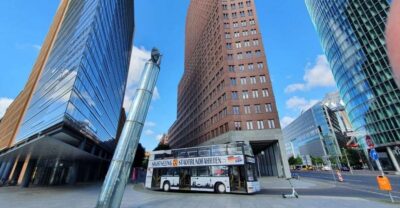
Mitte also introduces one of the tour’s main questions: who benefits when a district is repaired and rediscovered? Restored facades can make a neighborhood more attractive, but the same process can bring higher prices and a more corporate feel.
That balance is important. This is not a tour that treats every new café, office, or renovation as progress. It asks you to look at what was gained and what may have been lost.
Prenzlauer Berg and the Kulturbrauerei
Next comes Prenzlauer Berg, a district known in the 1990s as an artistic center. Its story is one of Berlin’s clearest examples of change arriving in stages.
After reunification, artists and alternative-minded residents helped give the area a new identity. Later, young professionals and families moved in, drawn by the neighborhood’s location and character. The result is a district with an appealing past and a more polished present.
The tour visits the Kulturbrauerei, a former brewery that has been converted into a center for culture and the arts. Its brick buildings and reused industrial setting make the site a practical example of how old East Berlin spaces found new purposes.
I like this stop because it avoids a simple before-and-after story. The Kulturbrauerei is not just an old building preserved for decoration. It shows how a place tied to industrial work became part of the cultural economy after reunification.
For you, the key question is how much time the guide spends inside the cultural complex and how much is spent walking around the district. The available information confirms the visit, but not a detailed schedule of exhibitions or performances, so you should treat it as a neighborhood and architecture stop rather than a guaranteed event.
Friedrichshain and the alternative Berlin
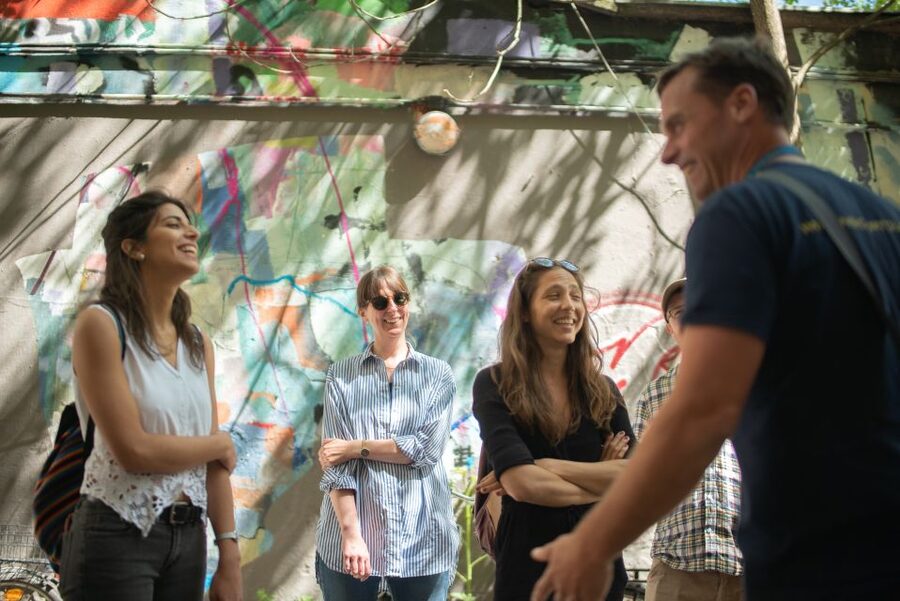
The route then turns toward Friedrichshain, one of the districts associated with Berlin’s alternative scene.
Here the conversation moves from restoration to resistance. Left-wing residents continue to push back against corporate businesses and landlords raising rents. That tension is part of daily life in a city that gained international attention and new investment after the Wall fell.
You will hear about gentrification, which simply means an area becomes more desirable and costly as new residents, businesses, and investment arrive. In Berlin, the process has been especially visible in former East Berlin districts that once had cheaper rents and room for unusual projects.
The tour’s value lies in connecting the political issue to actual streets and buildings. You are not just given a definition of gentrification. You are shown neighborhoods where competing ideas about ownership, culture, and the future of the city meet.
Friedrichshain may appeal most to you if you want Berlin beyond formal monuments. It also requires an open mind. The tour discusses conflict between residents and commercial interests, but it cannot resolve those arguments in three hours.
Same base, a different kind of day out:
- Berlin: Reichstag, Dome and Government District Guided Tour
★ 4.7 · 18,288 reviews - Berlin: 1-Hour City Tour by Boat with Guaranteed Seating
★ 4.3 · 16,993 reviews - Berlin: Boat Tour Along the River Spree
★ 4.4 · 11,252 reviews - Discover Berlin Half-Day Walking Tour
★ 5.0 · 9,624 reviews
East Side Gallery and the meaning of Berlin’s street art
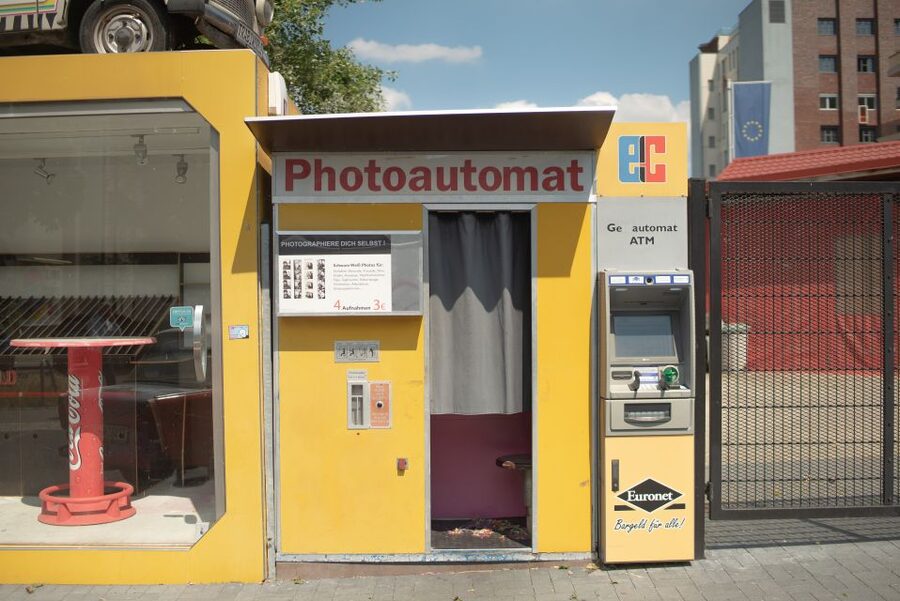
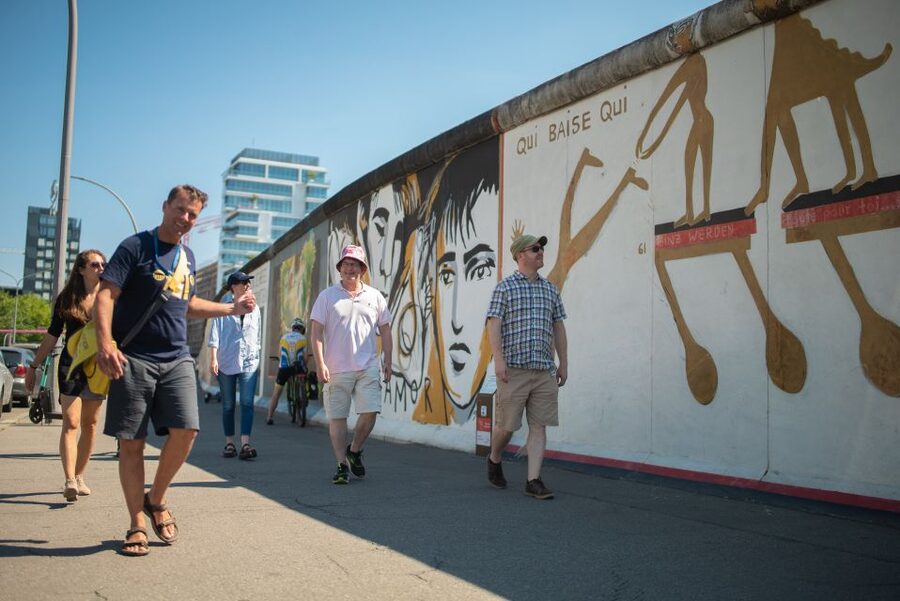
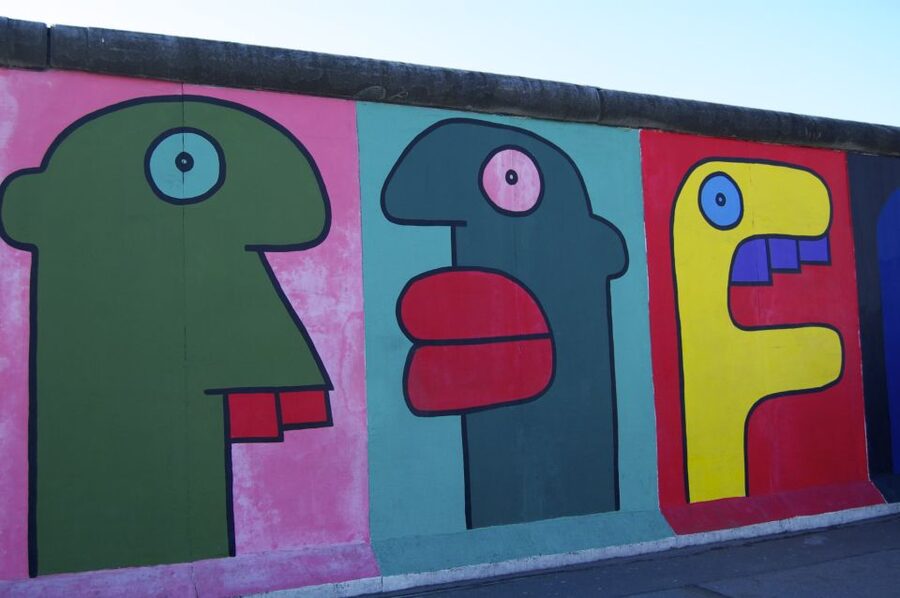
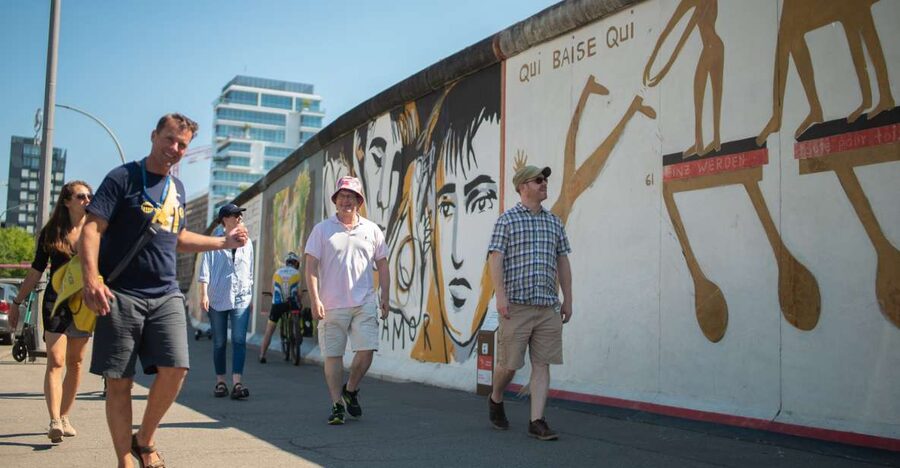
The East Side Gallery is one of the major stops. This colorful section of the Berlin Wall is now described as the world’s largest open-air gallery.
The paintings make the former border easier to understand as a physical object. A wall that once divided families and controlled movement became a public canvas. That reversal is powerful, but the art is not simply cheerful decoration.
Your guide will discuss the political ideas behind Berlin’s street art scene and the reasons artists used public walls to express anger, hope, humor, and protest. This gives the East Side Gallery more weight than a quick photo stop.
I like that the tour places the gallery inside the larger story of Friedrichshain and Kreuzberg. You see the art, then connect it to questions about who controls public space and how a city presents its own past.
The East Side Gallery is also one of the most recognizable parts of the itinerary, so it may be busier than the quieter neighborhood stops. If your priority is solitude, this is not the place to expect it. If your priority is context, the guide’s explanation should make the visit more worthwhile.
Kreuzberg, migration, and a changing city
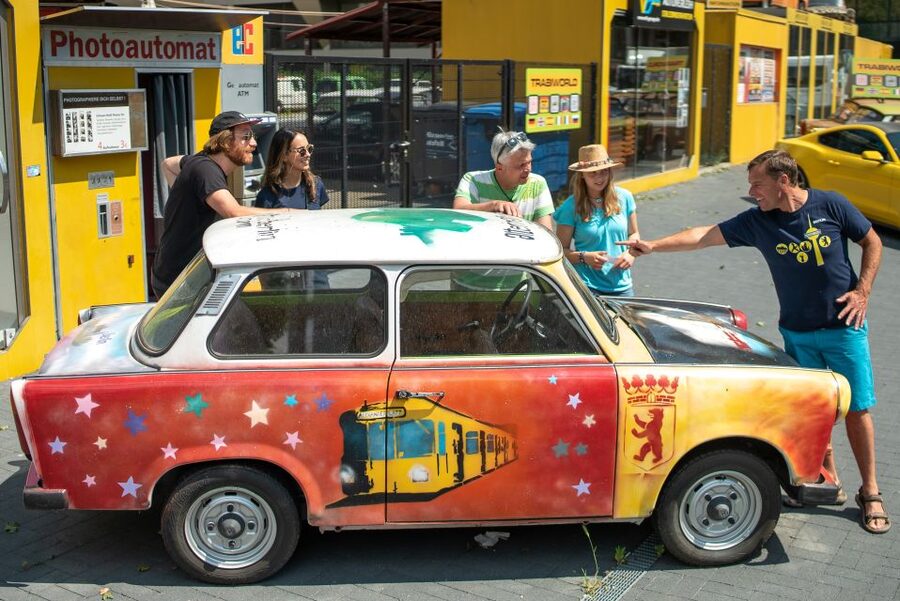
Kreuzberg brings another side of Berlin into view. The district is closely linked with alternative politics, immigrant communities, street art, and resistance to property pressure.
The tour uses Kreuzberg to explain how the city’s population has shaped its culture. That matters because Berlin is not only the product of German reunification. It is also a city formed by people who arrived from many places and built businesses, neighborhoods, and cultural traditions here.
You will hear more about the struggle between long-term residents, new corporate interests, and landlords seeking higher rents. The subject can feel political, but it is also practical. Housing prices affect where people can live, which shops survive, and whether a district keeps its old social mix.
Do not expect a full social history of Kreuzberg in one part of a three-hour tour. Instead, use this stop as a grounded introduction to the forces shaping the district now.
The Turkish Market beside the Landwehr Canal
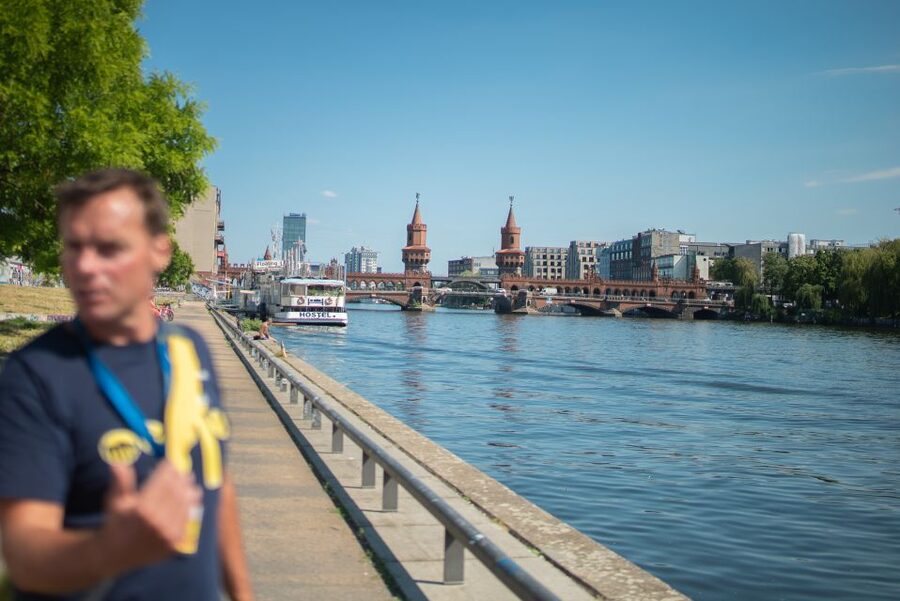
The tour ends at the Turkish Market, an outdoor bazaar on the banks of the Landwehr Canal.
Its origins are in fresh produce, Turkish food, and brightly patterned fabrics. Today, it also includes Berlin artisans, local farmers, and occasional impromptu live music. That mix gives the market a broader role than a place to buy lunch.
This is a good ending because it brings the tour back to ordinary city life. After hearing about walls, restoration, art, landlords, and corporate expansion, you finish among food, commerce, music, and people from different backgrounds.
Food and drinks are not included, so bring money if you want to purchase something at the market. The tour details do not promise a specific food tasting or market purchase, so think of this as a guided stop rather than a meal package.
The market’s setting beside the canal also gives the final section a change of pace. You can look at Berlin’s social mix in action instead of only hearing about it in historical terms.
A private tour with a human guide
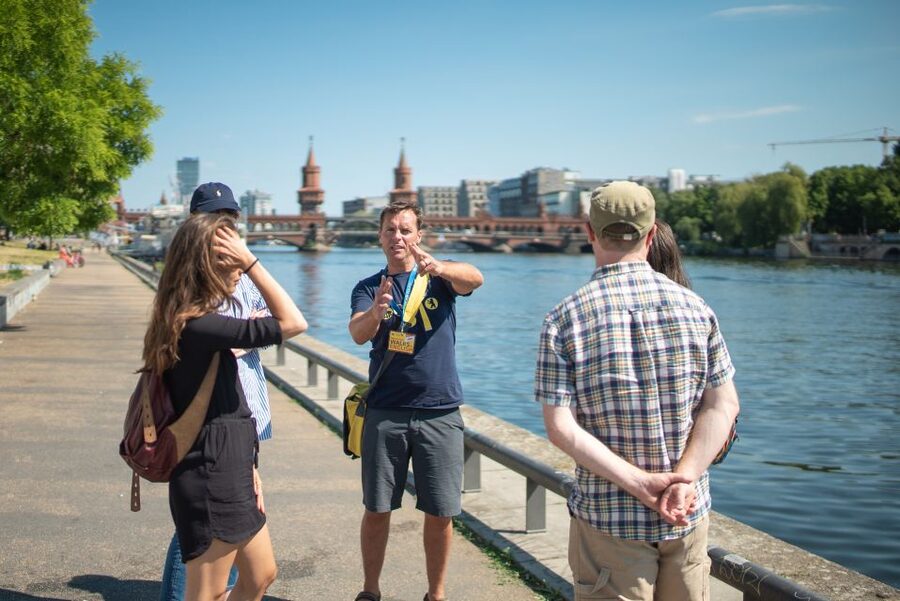
The tour is offered in English or German, and the guide is live rather than recorded. That matters on a subject with so many competing interpretations.
Past guides have included Tom, Maria, and JJ. Tom was praised for an American style of humor and an engaging manner. Maria was described as lively and interesting, while JJ led an English-language tour with particular energy and humor for a group that included a Chinese exchange student.
Those details suggest that the guide’s personality is an important part of the experience. The material covers politics, housing, economics, migration, and art, so a dry presentation would make the route feel heavy. A guide who can explain difficult subjects with warmth and humor will make the three hours easier to follow.
Because this is a private group, you can ask questions without worrying about holding up a large public tour. The stated maximum is 20 people, so ask yourself how many people are in your party before booking. The format is private, but the maximum does not guarantee a small group.
Timing, meeting arrangements, and comfort
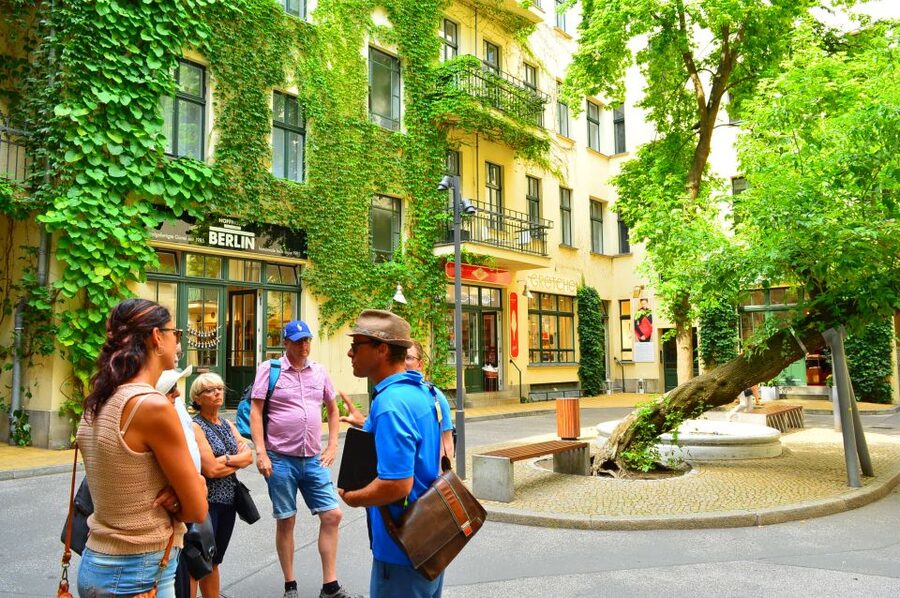
Tours run on Tuesdays and Fridays from April through October. That narrow schedule is the biggest practical limitation, especially if your Berlin visit is short or your plans are already fixed.
Hotel pickup is included. You are asked to wait in your hotel lobby five minutes before the scheduled pickup, and the guide will wear a yellow name tag for recognition.
Bring weather-appropriate clothing. The experience is a walking tour, and the route links several districts, so comfort matters more than dressing for a formal sightseeing stop.
The tour is listed as wheelchair accessible. If you use a wheelchair, confirm the exact pickup and route arrangements when booking, since the tour covers several neighborhoods and specific street conditions are not detailed.
Free cancellation is available up to 24 hours before the start for a full refund. You can also reserve now and pay later, which helps if you are still arranging a larger group.
Who should book this Berlin tour?
I would choose this tour if you have already seen Berlin’s main monuments or want a first visit that focuses on how the city works today.
It suits adults, older children, students, and anyone interested in urban change, politics, architecture, migration, street art, or housing. The route gives you enough background to understand why different districts feel so different.
It is less suitable if you want a museum-heavy experience, a detailed account of Berlin’s wartime history, or a food tour with included tastings. The subject is post-reunification Berlin, not every chapter of the city’s past.
The tour is also a strong choice for families and groups. With 20 people covered by one price, the cost becomes attractive for a full party. For a couple, the same fee is harder to justify unless the private format is especially important to you.
Should you book it?
Book it if you want to understand Berlin through its neighborhoods rather than collect another list of famous sights. The four-district route, East Side Gallery, Kulturbrauerei, and Turkish Market give you a clear look at the city’s changes since the Wall fell.
The strongest reason to go is the mix of places and questions. You see restored Mitte, changing Prenzlauer Berg, alternative Friedrichshain, politically charged Kreuzberg, and a market shaped by Berlin’s diverse population.
Skip it if Tuesdays and Fridays do not fit your schedule, or if you want a cheaper shared walking tour. For a group of several people, though, the $352 private rate can be sensible, and the lively guide style associated with Tom, Maria, and JJ adds real value to a complicated subject.
FAQ
How long does the Berlin Reunited and Revived tour last?
The tour lasts three hours.
Which Berlin neighborhoods does the tour visit?
The route includes Mitte, Prenzlauer Berg, Friedrichshain, and Kreuzberg.
Is the tour private?
Yes. It is a private group tour for up to 20 people.
What languages are available?
The live guide can conduct the tour in English or German.
Is hotel pickup included?
Yes. You should wait in your hotel lobby five minutes before the scheduled pickup time. The guide will wear a yellow name tag.
When do the tours operate?
Tours run on Tuesdays and Fridays from April through October. Availability should be checked for exact starting times.
Just added in Berlin
- Private One way Airport Transfer Berlin Airport To Berlin★ 3.5 · 17 reviews
- Private Walking Tour: Berlin Wall, Cold War and Checkpoint Charlie★ 5.0 · 37 reviews
- Modern Berlin Private Walking Tour: Diverse, Vibrant and Exciting German Capital★ 5.0 · 13 reviews
- Private Day Trip to Potsdam from Berlin by Train★ 4.5 · 27 reviews
- City Explorer: Potsdam Private Day Trip★ 4.5 · 10 reviews
- Berlin Private Custom Tour in a Minivan, East and West★ 5.0 · 123 reviews
- Berlin Private Custom 5-Hour Tour by Car★ 5.0 · 30 reviews
- Private Half-Day Sightseeing Tour in Berlin★ 3.5 · 6 reviews
Tours in Berlin, compared.
Reichstag, Dome and Government District Guided Tour
Read our review →
1-Hour City Tour by Boat with Guaranteed Seating
Read our review →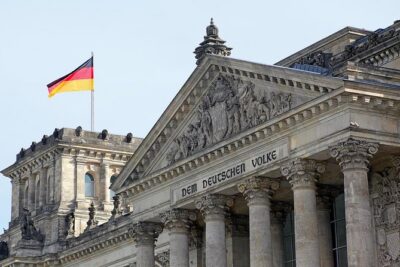
Reichstag, Plenary Chamber, Cupola & Government Tour
Read our review →

Browse the lists this tour appears in