
Reviewed · MUSEUMS
Berlin: Museum Island Guided Walking Tour
Berlin’s Museum Island packs an astonishing amount of Berlin into a small area: royal ambition, wartime damage, socialist government, river trade, and a modern museum quarter. This two-hour walking tour links those pieces on foot, beginning near U Rotes Rathaus and finishing outside the Humboldt Forum.
I like the route’s variety. You move from the narrow Nikolaiviertel to grand buildings, old ships, the Spree, and the broad Lustgarten. I also like the small group, limited to 10 people, and the local approach. Guide Carlo has been singled out for his enthusiasm, broad command of Berlin’s past, and willingness to continue beyond the scheduled two hours when the discussion is flowing.
The main point to consider is that this is an outdoor walking tour, not a museum admission tour. You’ll see the five museums and their architecture, but the price does not list interior entry or museum tickets. The tour runs rain or shine, and the live language is German.
Key points at a glance
- Museum Island from the outside: Walk among five UNESCO World Heritage museums and learn how their buildings fit together.
- A useful Berlin history route: Connect medieval Nikolaiviertel, Prussian monuments, Nazi and wartime scars, the GDR government district, and today’s Humboldt Forum.
- Berlin Cathedral and Lustgarten: See two of central Berlin’s most recognizable sights in the same open public space.
- Riverfront details: Visit the historic harbor and ship lock, with old ships adding a less expected side of central Berlin.
- Small German-speaking group: The group is limited to 10 participants, making questions easier than on a large city walk.
- A guide who may run long: Carlo has sometimes extended the tour to roughly two and a half hours when the group wanted more explanation.
Why this walk helps you read central Berlin
Museum Island can look simple on a map. In person, it is a dense set of buildings and open spaces, and it is easy to see them as isolated sights. A good walking route gives you the connections: why the museums were placed here, how the river shaped the city, and how Berlin’s political center shifted over time.
That context matters because Berlin’s center was repeatedly altered. Royal projects, war destruction, division between East and West, reunification, and new cultural projects all appear within a short walk. You are not only looking at impressive façades. You are learning why they are there and what changed around them.
At $43 per person, the tour is priced above a basic self-guided walk, but the value rests almost entirely on the guide. You are paying for a compact route and a live explanation in a small group. If you only want photographs of the cathedral, you can do that for free. If you want help making sense of the buildings and the city’s political past, the price is easier to justify.
Other museums and galleries in Berlin:
- Berlin: Jewish Museum Berlin Entrance Ticket
★ 4.5 · 8,393 reviews - Berlin: Natural History Museum Entrance Ticket
★ 4.6 · 3,382 reviews - Berlin: Neues Museum Entry Ticket
★ 4.6 · 3,261 reviews
Meeting at U Rotes Rathaus
The meeting point is directly outside exit A of U Bhf. Rotes Rathaus, in the direction of Rathausstrasse, Spandauer Strasse, and Schlossplatz. Look for the guide with the Get Your Guide, You in Berlin flag.
This is a practical starting point because you are already near several central sights. Still, allow a few minutes to find the correct exit. Berlin’s central stations can have several stairways and street directions, and the tour begins on foot rather than with a long orientation session.
The listed starting location is Donkey Republic, while the detailed meeting instructions specify U Rotes Rathaus exit A. Follow the station-exit directions when planning your arrival. If you are using public transportation, check the current route before leaving, since this tour does not include hotel pickup.
The walking pace should suit most people who are comfortable on city streets, but wear proper walking shoes. There is no promise of shelter, and the tour operates on public holidays and in wet weather, so check the forecast and bring clothing that matches it.
Nikolaiviertel: Berlin’s older-looking beginning
From the station, the route heads through Nikolaiviertel. This quarter gives the walk an early change of mood. Instead of starting with only monumental government buildings, you begin among a more intimate part of central Berlin before heading toward the large-scale architecture of Museum Island.
The quarter is useful as a first lesson in Berlin’s complicated appearance. What you see today relates to the city’s older core, but Berlin’s center has been damaged, rebuilt, and reshaped many times. A local guide can point out how the area fits into that story rather than treating it as a simple preserved old town.
I like this opening because it prevents Museum Island from feeling cut off from the rest of Berlin. You cross from an urban neighborhood toward the Spree and the monumental center. That transition helps you understand that the island was part of a larger civic and political project.
The drawback is that the Nikolaiviertel portion is a short walking segment, not a full neighborhood tour. If you want a detailed study of every street and building there, you will need extra time on your own.
Museum Island and its five major museums
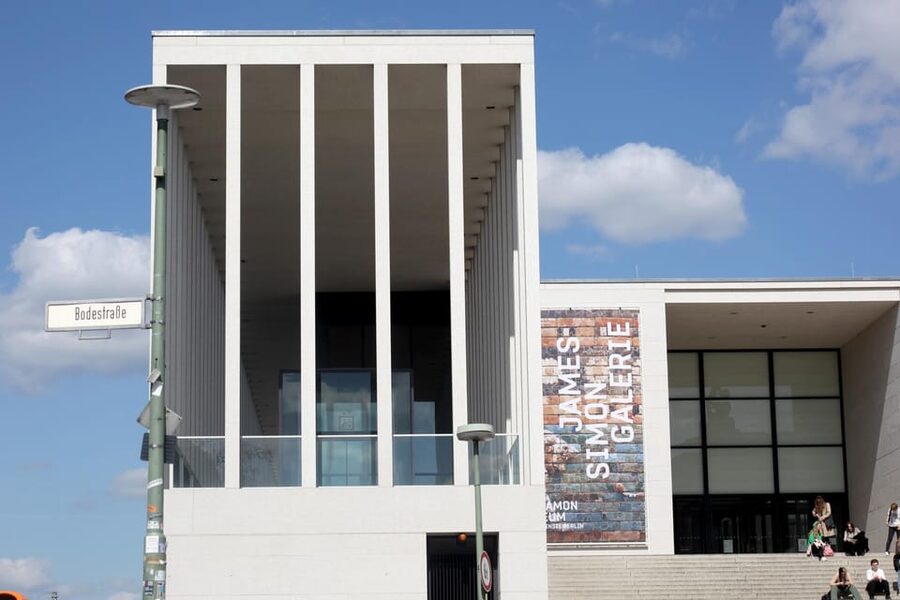
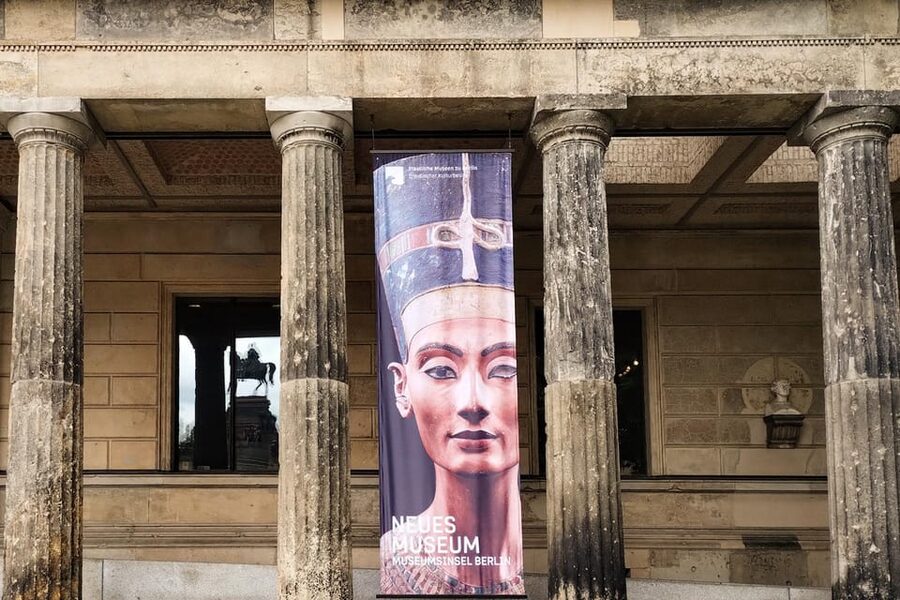
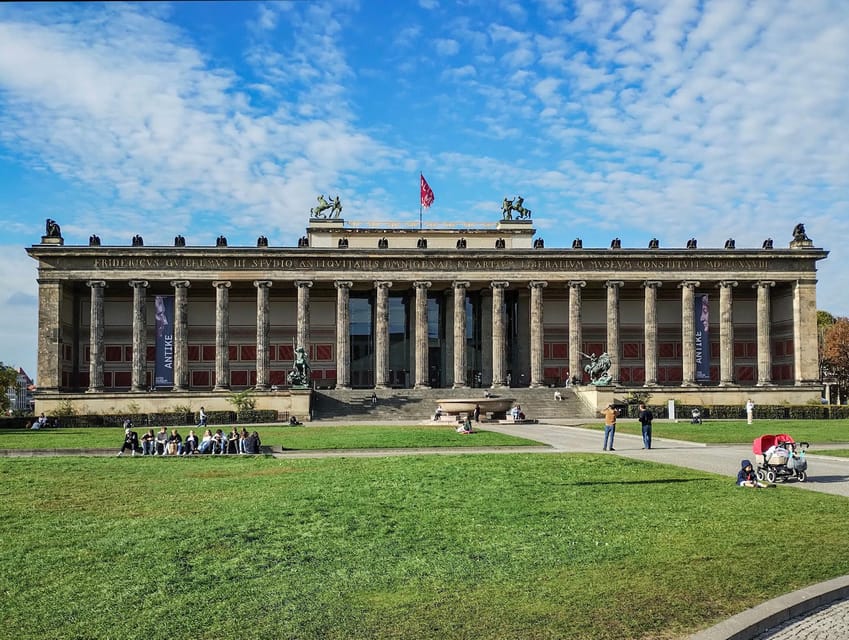
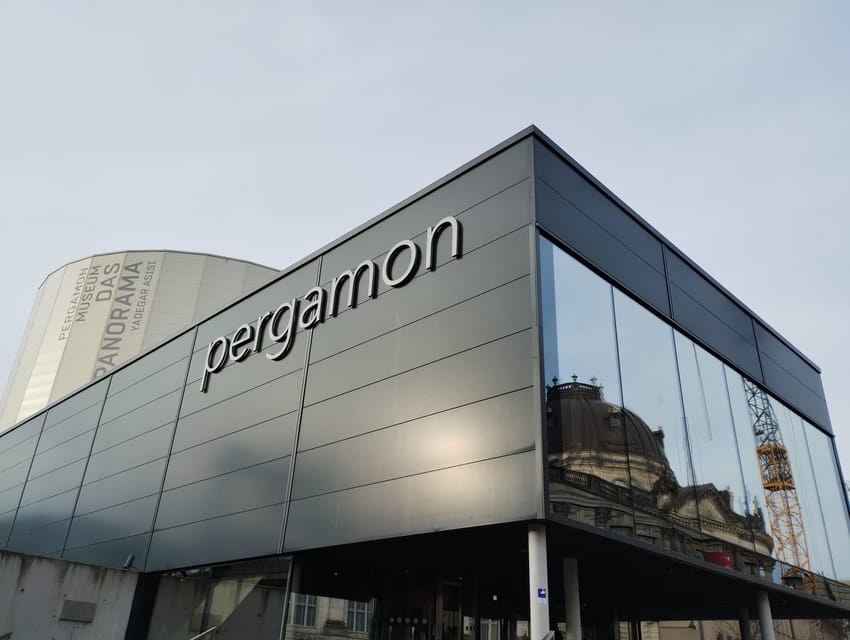
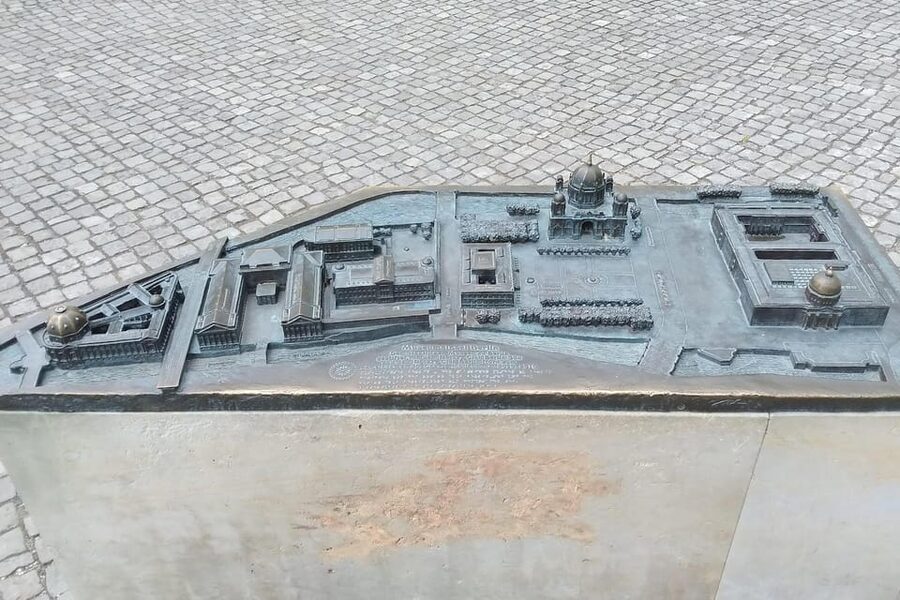
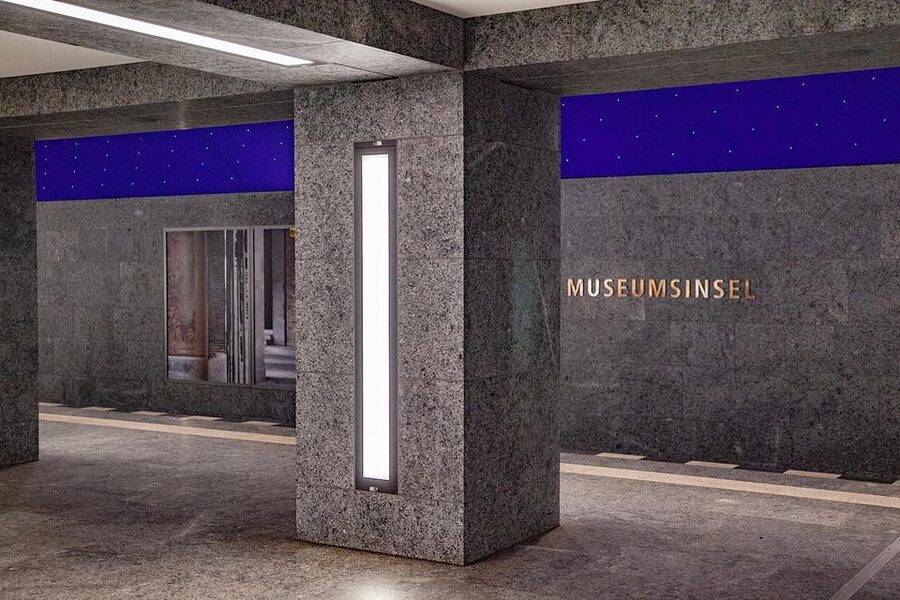
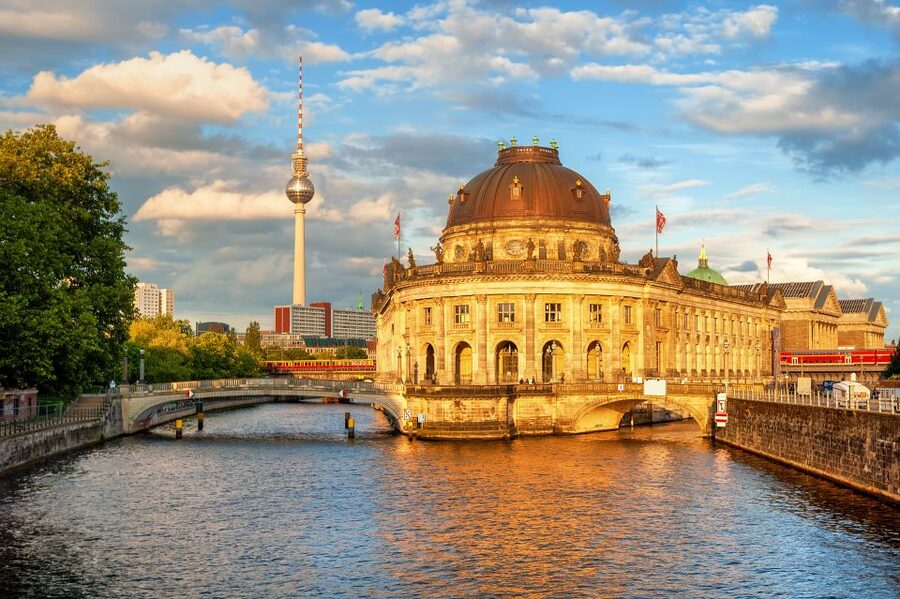
The heart of the experience is Museum Island, one of Europe’s most important museum groupings and a UNESCO World Heritage site. The route takes you around the island and past all five listed museums, focusing on their buildings, position, and role in Berlin’s cultural center.
This is where the guide’s storytelling matters most. The buildings were designed by prominent architects of their periods, and the island presents an unusual concentration of grand museum architecture. You can compare different façades and see how the institutions were planned as a group rather than as unrelated attractions.
The walk is especially useful if you are deciding which museum to enter later. You can get your bearings, see the outside of each building, and ask questions before spending money on admission. Since interior entry is not included, treat this portion as an architectural and historical introduction.
Museum Island is also an active public area, not just a collection of façades. You will be walking outdoors beside the Spree and among open civic spaces. On a busy day, the area may feel crowded, and the guide’s voice can be harder to hear. The small group helps, but you should still stay close and listen carefully when moving through public areas.
Do not expect a quiet, scholarly lecture with a long stop at every museum. Two hours must cover several sites. The strength is the broad connection between them, while the tradeoff is limited time for any single building.
Other walks around Berlin:
- Discover Berlin Half-Day Walking Tour
★ 5.0 · 9,624 reviews - Berlin: Third Reich and Cold War 2 Hour Walking Tour
★ 4.9 · 6,830 reviews - Berlin: Discover Berlin Walking Tour
★ 4.9 · 5,998 reviews - Berlin’s Best: 2 Hour Walking Tour Third Reich and the Cold War
★ 5.0 · 5,486 reviews
Berlin Cathedral and the wide-open Lustgarten
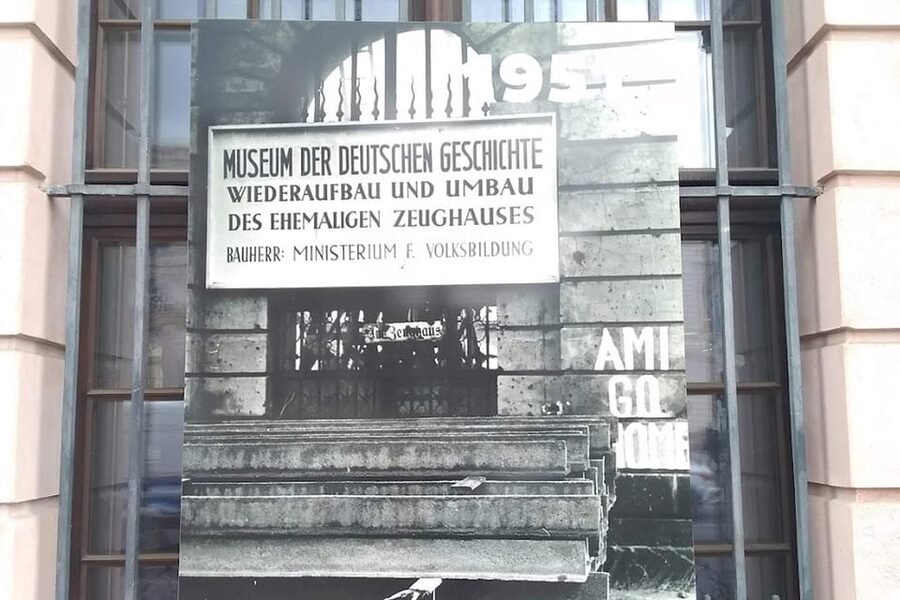
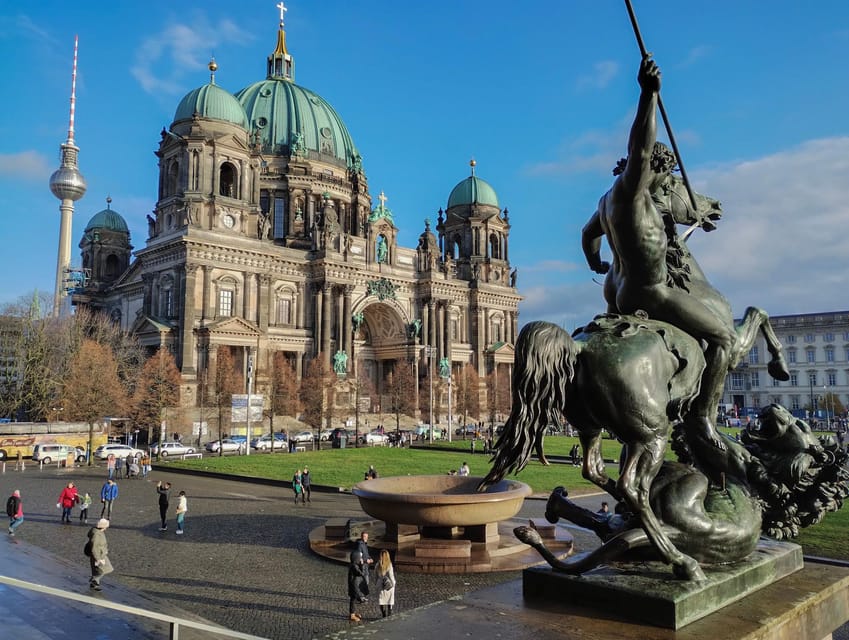
The walk continues through Lustgarten, the large open space in front of Berlin Cathedral. This is one of the strongest visual moments of the route. The cathedral’s monumental scale makes more sense when you see it across the open garden rather than from a narrow street.
Lustgarten also gives you a pause from close building-to-building walking. You can look across the space, take in the cathedral, and understand how public ceremony and power were presented in the center of Berlin. The guide uses this setting to discuss the city’s changing political and cultural identity.
I find open spaces like this valuable because they let you read the city at a distance. Details on a façade matter, but the relationship between the cathedral, the museums, and the open ground tells you just as much. Bring a camera, but listen before moving on. The explanation is the part you cannot repeat by simply walking past later.
The cathedral is viewed as part of the walk, and the tour does not include an interior visit. If you want to see the church inside or climb for views, plan a separate visit and allow extra time after the tour. The finish at the Humboldt Forum makes that easy to organize, since you remain in the same central area.
The Spree, historic harbor, and ship lock
A pleasant surprise is the route’s attention to Berlin’s maritime side. You head toward the historic harbor and ship lock, where old ships are docked. This is a different view of the capital, one that reminds you that Berlin developed along waterways as well as around palaces, offices, and museums.
The harbor section adds texture to the walk. Museum Island can seem devoted entirely to art and architecture, but the water explains how goods, people, and industry moved through the city. The ship lock is also the sort of detail many independent visitors might pass without understanding.
This part should appeal to you if you like urban history beyond famous landmarks. It is not a long boat ride or a separate harbor cruise. You remain on foot, looking at the water, ships, and river structures while the guide explains their place in Berlin.
Because the tour covers several areas, the harbor stop may be more of a focused visit than a long linger. If old boats and waterways are your main interest, you may want to return later and explore at your own pace.
The former GDR government district
The route also addresses the former government district of the German Democratic Republic. This is one of the most worthwhile parts for anyone trying to understand Berlin after World War II. Museum Island is often associated with Prussian kings and major art collections, but the surrounding center also carries the physical and political story of East Germany.
A guide can help you notice how the district functioned and how reunification changed the city’s center. The tour does not treat Berlin as a city frozen in imperial grandeur. It places the GDR period alongside the older monuments and the newer museum projects.
That balance is important. You get a more honest picture of Berlin than a route that visits only postcard sights. The city’s past includes power, destruction, division, and reconstruction, and this walk brings those layers together within a manageable distance.
The amount of detail will depend on the guide and group questions. Carlo has been praised for making complex Berlin history easier to follow and for explaining it with enthusiasm. If you enjoy asking questions, the group size of no more than 10 gives you a better chance to do so than a large coach or crowded public tour.
Finishing outside the Humboldt Forum
The tour ends outside the Humboldt Forum. This is a useful final stop because it connects the old center with Berlin’s current cultural plans. The building is dedicated to human history, art, and culture, and its position near Museum Island makes it a logical place to finish a walk about the city’s museums and public identity.
Ending here also gives you choices. You can stop after the tour, continue looking around the surrounding area, or plan a separate visit to the Humboldt Forum. The tour itself ends outside, so do not assume that your $43 includes entry.
A final stop outside a museum may sound less dramatic than ending inside one, but it keeps the tour focused. You are not rushed through a collection while trying to stay with the group. Instead, you finish with the building and its setting fresh in your mind, then decide what deserves more of your time.
What the two-hour format really means
Two hours is enough for a strong introduction, but it is not enough to explore every museum, neighborhood, and historical period in detail. Expect a steady walking route with short stops, explanations, and transitions between sites.
Some tours end exactly on schedule. This one may not. Carlo has extended the route to around two and a half hours when the group wanted more information, without making the experience feel hurried. That can be a bonus if your schedule is open. It can be a problem if you have a timed museum entry, restaurant reservation, or another tour immediately afterward.
I would leave at least 30 minutes of breathing room after the stated finish. That gives you time for questions, photographs, and the possibility that the guide continues slightly beyond two hours.
The live language is German. That is essential when deciding if the tour fits you. The supplied activity details do not list English as an available tour language, so you should choose this walk only if you can follow a German-speaking guide comfortably.
Group size, weather, and practical value
The small group is limited to 10 participants. That is a meaningful advantage in a walking tour through public spaces. You are less likely to disappear at the back of a large crowd, and it is easier to ask about a building or historical point while the group is gathered.
There is no transportation included beyond the normal task of reaching the meeting point and walking between stops. The route is best for you if you enjoy exploring at street level and do not need frequent vehicle transfers.
The tour runs rain or shine and on public holidays. Bring comfortable shoes and weather-appropriate clothing. In wet weather, the open parts around Lustgarten, the river, and the harbor may be less pleasant, but you still receive the same route and explanation. A rainy day is not a reason to book casually, but the policy is clear.
Cancellation is flexible: you can cancel up to 24 hours in advance for a full refund. You can also reserve now and pay later, which helps if your Berlin schedule is still changing.
Who should book this Museum Island walk?
I would choose this tour if you want a clear first orientation to central Berlin, especially if you are interested in how imperial, GDR, and modern Berlin fit together. It is also a good match if you prefer architecture and public spaces to spending two straight hours inside one museum.
It suits independent visitors who want to continue exploring after the guide leaves. You can use the route to decide which museum deserves a longer visit, then return with a better sense of direction.
It is less suitable if you want museum interiors, a long cathedral visit, or a tour in English. It is also not the right choice for anyone who dislikes walking outdoors in uncertain weather.
Should you book it?
Book this walk if a German-speaking guide works for you and you want more than a checklist of central Berlin sights. The route combines Museum Island, Berlin Cathedral, Lustgarten, the Spree, the harbor, the former GDR government district, and the Humboldt Forum in a compact package.
The strongest reason to choose it is the guide-led interpretation, especially if Carlo is leading your departure. His reported habit of extending the tour and explaining Berlin’s complicated past with energy suggests a personal, flexible experience rather than a rushed script.
Skip it if you need guaranteed English, museum admission, or a tightly timed two-hour finish. For everyone else, $43 is fair for a small-group introduction to one of Berlin’s most important areas, provided you see it as an outdoor history walk and not a museum tour.
FAQ
How long does the Museum Island walking tour last?
The stated duration is two hours. The tour may run longer, with some departures lasting about two and a half hours.
Where does the tour meet?
Meet at exit A of U Bhf. Rotes Rathaus, toward Rathausstrasse, Spandauer Strasse, and Schlossplatz. Look for the guide carrying the Get Your Guide, You in Berlin flag.
Where does the tour finish?
The tour finishes outside the Humboldt Forum.
Is the tour offered in English?
The listed live tour language is German. No English-language option is specified.
Does the tour enter the museums?
The activity includes a guided walking tour around Museum Island and past its five UNESCO-listed museums. Museum entry is not listed as included.
Does the tour include Berlin Cathedral admission?
The route includes viewing Berlin Cathedral while walking through Lustgarten. Admission inside the cathedral is not listed as included.
How large is the group?
The tour is limited to 10 participants.
What should I bring?
Bring comfortable shoes and clothing suitable for the weather. The tour runs in rain or shine and on public holidays.
Just added in Berlin
- Modern Berlin Private Walking Tour: Diverse, Vibrant and Exciting German Capital★ 5.0 · 13 reviews
- Private One way Airport Transfer Berlin Airport To Berlin★ 3.5 · 17 reviews
- Private Walking Tour: Berlin Wall, Cold War and Checkpoint Charlie★ 5.0 · 37 reviews
- Private Day Trip to Potsdam from Berlin by Train★ 4.5 · 27 reviews
- City Explorer: Potsdam Private Day Trip★ 4.5 · 10 reviews
- Berlin Private Custom 5-Hour Tour by Car★ 5.0 · 30 reviews
- Private Half-Day Sightseeing Tour in Berlin★ 3.5 · 6 reviews
- Berlin Private Custom Tour in a Minivan, East and West★ 5.0 · 123 reviews
Museums, compared.
Skip-the-Line: Berlin Wall Museum at Checkpoint Charlie
Read our review →
Browse the lists this tour appears in