Reviewed · TOURS IN BERLIN
Berlin: Modernist Architecture Tour in the Hansaviertel
Hansaviertel is where Berlin’s past and future sit side by side. In two hours, you move from 19th-century villas and famous residents to the concrete and glass apartment blocks of Interbau 1957, West Berlin’s answer to the city’s postwar crisis.
I like the route for two reasons: it gives you a quieter side of central Berlin, and it treats architecture as social history rather than a parade of famous names. The stop connected with lost Jewish life adds needed weight, while guide Morgan brings the story alive with wide-ranging answers and lively detail.
The main drawback is that this is a walking tour with about two hours of standing and moving between stops. It suits older children and adults best, and anyone hoping to enter lots of buildings or museums should know that the focus is on the streets and exteriors.
Key points to know before you book
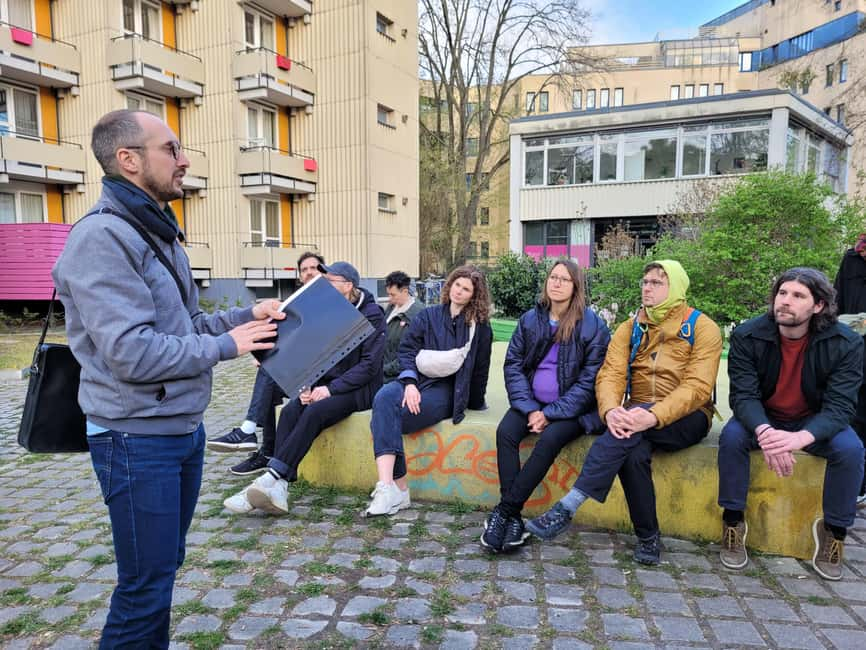
- Interbau 1957 reshaped a bomb-damaged district: Hansaviertel became a West Berlin showcase for new ideas about housing, open space, and modern city life.
- Major architects appear along one compact route: Look for work associated with Walter Gropius, Oscar Niemeyer, Alvar Aalto, and other modernist figures.
- The story begins before the concrete: The tour explains Hansaviertel as a 19th-century middle- and upper-class district of villas and gardens.
- A Jewish memorial adds a serious historical pause: You learn about a major Jewish community destroyed through Nazi persecution and wartime destruction.
- Morgan is the named guide: The tour is offered in English or German, and Morgan is described as lively, detailed, and able to handle many questions.
- The price is modest for a focused guided walk: At $23 per person, the value depends on how much context you want beyond simply looking at buildings.
Why Hansaviertel makes a better architecture walk than you might expect
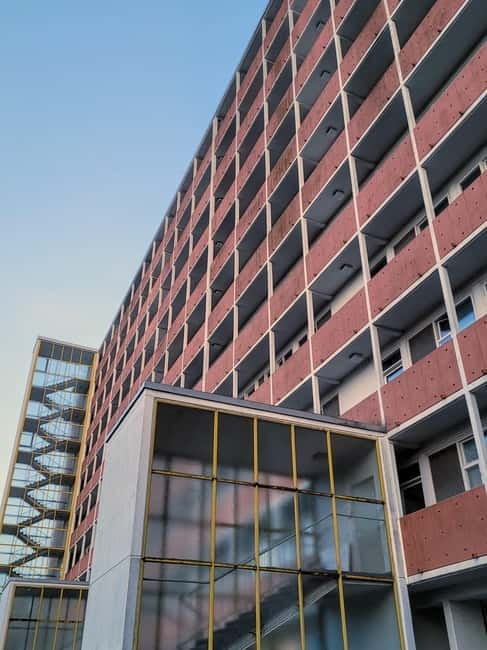
Berlin gives you plenty of famous architecture, from grand state buildings to fragments of the Wall. Hansaviertel offers something different: a whole neighborhood built around an argument.
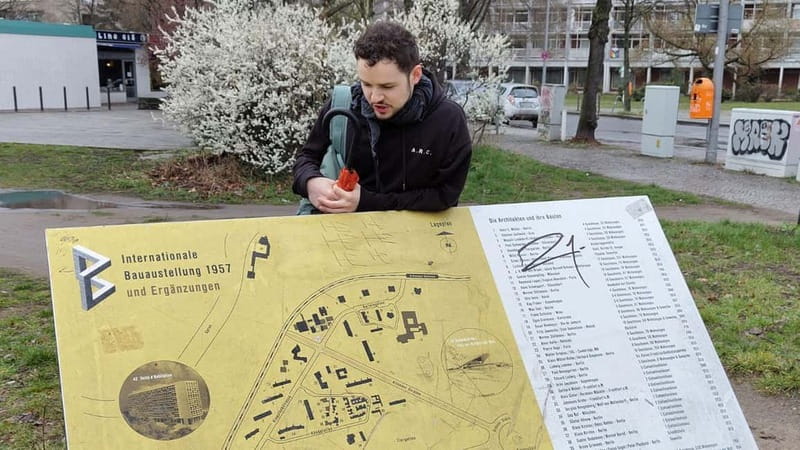
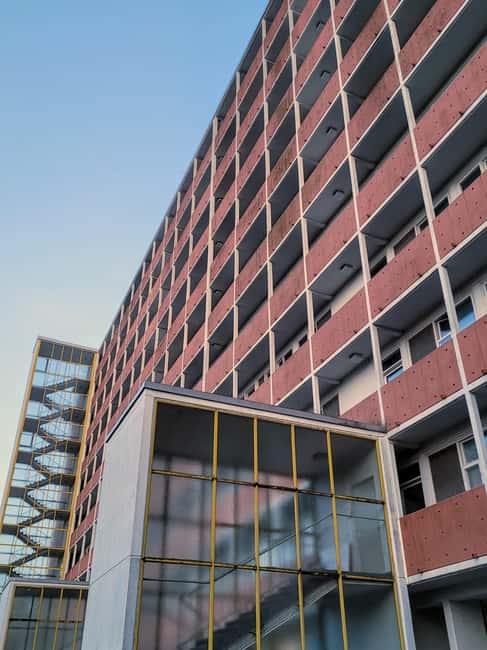
After World War II, West Berlin needed housing and a new public identity. In 1957, the Interbau international architecture exhibition turned part of Hansaviertel into a demonstration of modern urban living. Architects from Germany and abroad were invited to create buildings that looked forward, not back.
That political setting matters. Hansaviertel was not just a housing project. It was also part of the Cold War contest between East and West Berlin. The district offered a Western model of the future, with modern apartment buildings, open areas, and designs by prominent architects.
I like tours that explain why buildings look the way they do. Here, curved balconies, clean lines, towers, and open spacing become clues to the hopes of the 1950s. The question is not only whether the buildings look modern today. You also consider what sort of daily life the architects hoped to create.
The neighborhood sits between the Spree and the Tiergarten, so the setting feels calmer than Berlin’s best-known central sights. Streets shaded by trees and the nearby river help you notice the contrast between older Berlin and postwar planning.
Other trips people book in Berlin:
- Berlin: Reichstag, Dome and Government District Guided Tour
★ 4.7 · 18,288 reviews - Berlin: 1-Hour City Tour by Boat with Guaranteed Seating
★ 4.3 · 16,993 reviews - Berlin: Boat Tour Along the River Spree
★ 4.4 · 11,252 reviews
Starting beside Tiergarten Station and Biergartenquelle
The meeting point is in front of the Berlin-Tiergarten S-Bahn station, at the Siegmunds Hof and Bachstraße exit, next to Biergartenquelle. Look for the guide with the orange umbrella.
This is a practical starting point because the S-Bahn station gives you a clear public transport reference. You do not need to hunt for an obscure doorway or museum entrance. Still, Berlin stations can have several exits, so use the exact exit information and arrive with enough time to get your bearings.
The beer garden makes the meeting place easy to identify, but food and drinks are not included. You may buy something separately if it is open, but do not treat that as part of the tour arrangements. Bring water and wear comfortable shoes.
The walk lasts about two hours. The guided Hansaviertel portion is listed as roughly 1.5 hours, with the overall activity lasting two hours. That makes this a manageable addition to a day in Berlin, but you should still expect to walk and stand for most of the time.
The older Hansaviertel, before modernism arrived
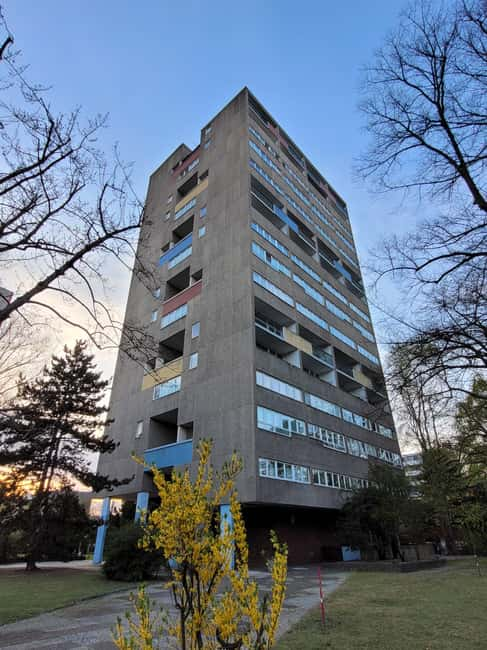
The first part of the story reaches back to the late 19th century, when Berlin’s population was growing at remarkable speed. Hansaviertel developed as a middle- and upper-class area, with villas, gardens, and carefully finished façades.
This opening section keeps the tour from becoming a simple parade of postwar apartment blocks. You see that the district already had a distinct identity before the war. The later rebuilding did not happen on empty ground. It replaced a neighborhood with its own social life and architectural character.
The area’s former residents include Rosa Luxemburg, Nelly Sachs, and Käthe Kollwitz. Their names help connect the streets to Berlin’s cultural and political life. The tour uses these people to show that Hansaviertel was not only a collection of buildings. It was also home to writers, artists, and political figures.
For you, the value is context. Without this first chapter, the 1950s buildings might seem like an isolated experiment. With it, you can better understand the scale of the change and the human cost of rebuilding after destruction.
Do not expect a preserved villa district throughout the walk. The point is the contrast between the old character of Hansaviertel and the modern district that followed. Some travelers may prefer a tour devoted entirely to famous architects, but I think the older material gives the walk a stronger shape.
A quiet memorial to Jewish life lost
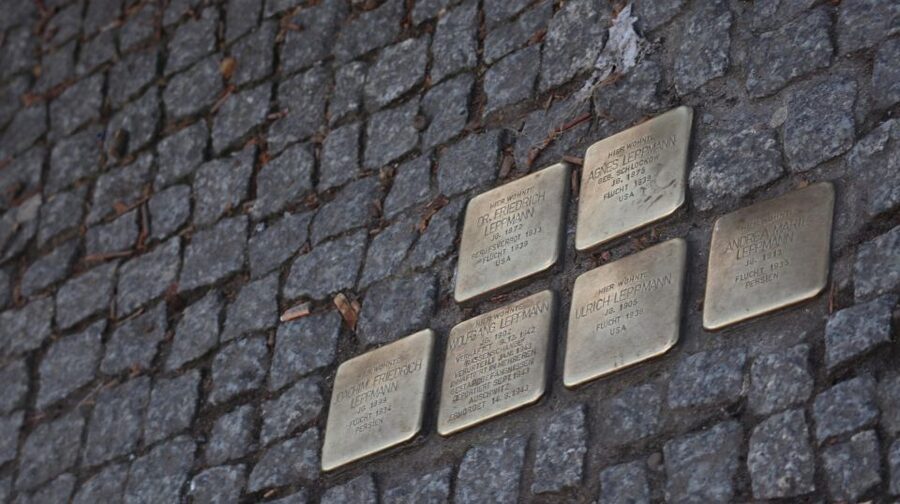
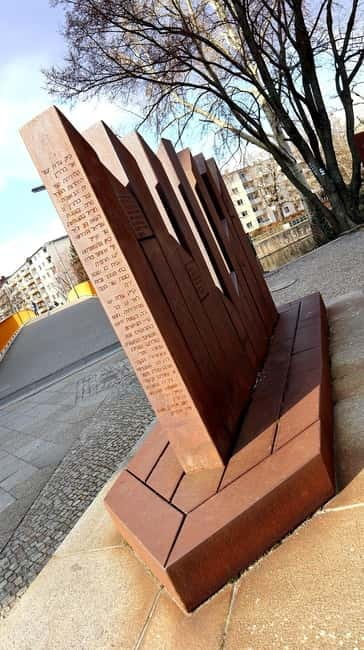
The tour also stops at a memorial connected with one of Berlin’s significant Jewish communities. The neighborhood was destroyed socially by Nazi persecution and physically through persecution, war, and Allied bombing.
The information provided does not name a specific museum or memorial building, so you should expect a historical site or memorial stop rather than a long indoor museum visit. It is a quiet part of the route, and that change in mood is important.
The stop reminds you that urban destruction is not only about buildings. A street can lose its people, institutions, traditions, and memory long before the last wall comes down. That makes the later rebuilding of Hansaviertel more complicated than a simple story of progress.
I value this part because it prevents the modernist material from floating free of Berlin’s darker past. You are not asked to admire postwar design without thinking about what disappeared before it. The walk connects persecution, bombing, reconstruction, and political messaging within a small area.
This is also one reason the tour is recommended for ages 14 and up. The subject matter has real historical weight, and younger children may find two hours of architecture and political history demanding.
Same base, a different kind of day out:
- Discover Berlin Half-Day Walking Tour
★ 5.0 · 9,624 reviews - Berlin: Hop-on Hop-off Bus Tour with Live Commentary
★ 4.3 · 8,579 reviews - Berlin: Government District around the Reichstag Guided Tour
★ 4.7 · 8,447 reviews - Berlin: Reichstag, Plenary Chamber, Cupola & Government Tour
★ 4.6 · 8,422 reviews
Interbau 1957 and West Berlin’s answer to the future
The tour’s main turn comes with Interbau 1957. West Berlin used the international architecture exhibition to present a new vision of city life on land cleared by wartime destruction.
The architects were not all working from one identical formula. Walter Gropius, Oscar Niemeyer, Alvar Aalto, and other major modernists brought their own ideas and styles. The result is a district where you can compare different approaches within a relatively compact walk.
You will learn about the thinking behind the buildings, not only their appearance. Modernist planning often aimed to give residents more light, air, open space, and efficient housing. The buildings were meant to support a new way of living after the cramped conditions and wartime devastation associated with the old city.
That promise is worth testing. Does a building still feel modern? Does an open plan make a neighborhood more pleasant? Does a bold design improve daily life, or does it mainly look impressive in photographs?
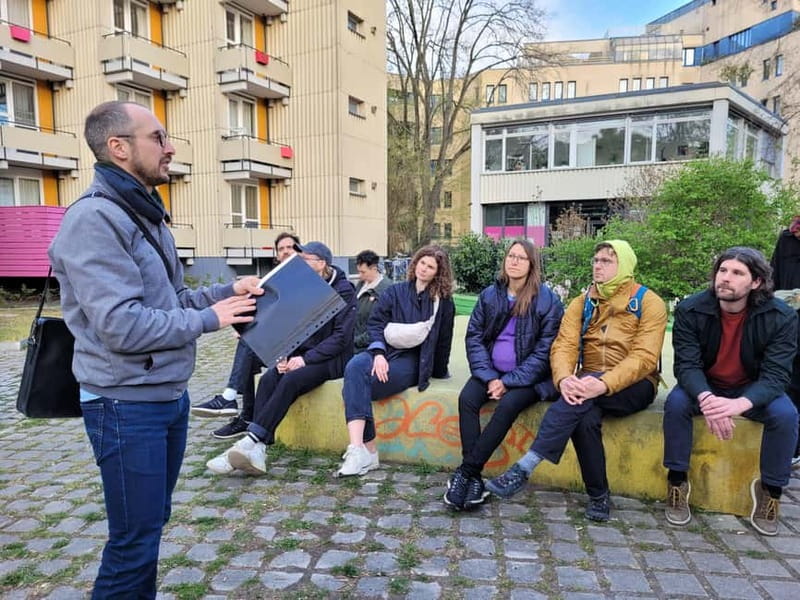
A good guide makes room for those questions. Morgan is described as taking the group through the older and newer parts of Hansaviertel in a lively way, while handling a broad range of questions and side conversations. That is especially useful here, since modernist architecture can become dry if it is reduced to dates and names.
Gropius, Niemeyer, Aalto, and the human scale
The architects matter, but their names are not the whole point. Gropius, Niemeyer, and Aalto are useful reference points for comparing how different designers handled housing, movement, light, and the relationship between private apartments and shared space.
You may already know some of their work from museums or architecture books. Seeing their ideas in a functioning neighborhood changes the experience. You can look at the buildings in relation to paths, trees, nearby blocks, and the spaces between them.
The district also raises a practical question: what happens when experimental architecture becomes ordinary housing? The buildings were designed to signal a new age, but residents still needed homes that worked day after day. The tour asks you to consider both the visual ambition and the practical side of urban design.
I would not book this expecting access to private apartments. Entry to museums or monuments is not included, and the description centers on a guided walk through the district. You will mainly study the buildings and their setting from public areas.
That limitation is also part of the value. You get a direct look at the neighborhood as a piece of living Berlin, rather than a museum display separated from daily life.
The Cold War story behind the concrete
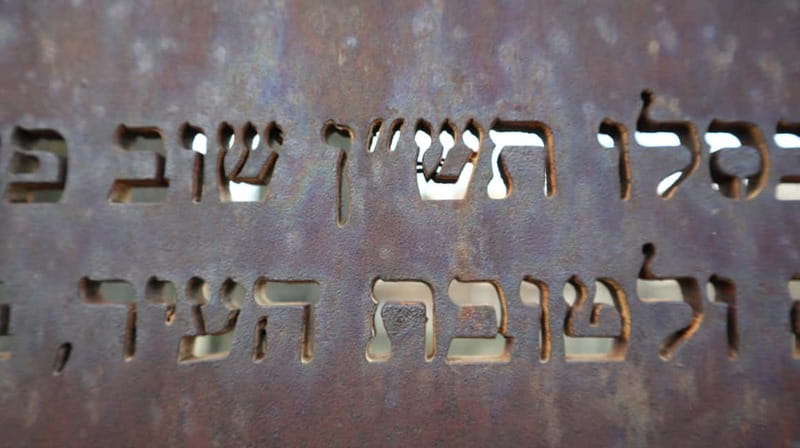
Hansaviertel makes the most sense when you remember that Berlin was divided and politically contested. In 1957, architecture carried a message. West Berlin wanted to show that its future could be open, modern, international, and distinct from the city’s eastern half.
The tour explains how rubble and vacant land became a stage for that message. The buildings were practical housing, but they also represented a political choice about how a city should be rebuilt.
This does not mean every building succeeds equally, or that modernist planning solved every urban problem. The strength of the walk is that it lets you ask those questions instead of handing you a simple verdict.
I like the way Hansaviertel compresses several decades into one route. You begin with imperial Berlin, pass through Jewish life and Nazi persecution, confront wartime destruction, and arrive at Cold War reconstruction. The buildings give you a visible record of those changes.
You also get a break from Berlin’s busiest sights. The district’s position near the Tiergarten and Spree gives the walk a quieter rhythm. That calm is useful when you are trying to notice details, but it also means the tour may feel less dramatic than a walk around the Brandenburg Gate or the Berlin Wall.
How the $23 price works for you
At $23 per person, this is a reasonably priced specialist walk. You are paying for a live guide who can connect architecture with Berlin’s political and social history, not for admission to a major attraction.
The value is strongest if you would otherwise walk through Hansaviertel without understanding what you are seeing. A modern apartment block can look plain or strange when encountered alone. With the Interbau story, its shape, position, and scale have a purpose.
The price is less compelling if you only want quick photographs of famous buildings. You will spend much of the two hours listening, walking, and considering ideas. That is a good trade for someone interested in architecture, city planning, Jewish history, or postwar Berlin, but not necessarily for every first-time visitor.
The tour includes an expert local guide. Food, drinks, and entry to museums or monuments are not included. Since no extra admission is built into the price, the cost is easy to understand and there are no listed add-ons to budget for.
Free cancellation up to 24 hours before the start and the reserve-now, pay-later option also make it easier to fit into a changing Berlin schedule.
Who should take this walk
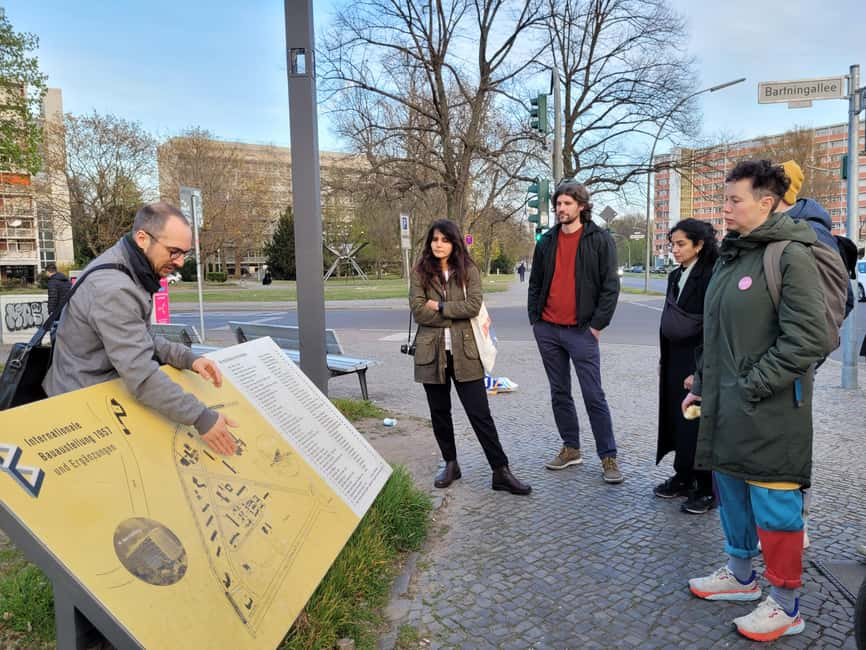
I would recommend Hansaviertel to adults and teenagers from about age 14 who enjoy buildings with a story behind them. It is particularly well suited to architecture students, city planners, history readers, and anyone who wants a quieter Berlin neighborhood with serious content.
It also works well on a second or third day in Berlin, after you have seen the major central sights. The tour gives you another way to understand the city without repeating the usual checklist.
You should be comfortable walking and standing for approximately two hours. Comfortable shoes and water are sensible. The activity is wheelchair accessible, but because the tour takes place outdoors, you may want to confirm the exact route and current conditions when booking if you have specific mobility needs.
Children are not formally barred, but the recommendation is for ages 14 and up. All minors must have an adult with them.
The tour is offered in English and German. Morgan is the named guide associated with the detailed description, but guide assignment can vary, so check the language and time when you reserve.
A practical note about the finish
The route is described as ending at Hansaplatz, while the meeting instructions also say the activity ends back at the meeting point. Those details do not fully match.
Hansaplatz is a logical endpoint for a Hansaviertel walk, but you should confirm the final location before booking if you have a restaurant reservation, train connection, or another timed activity afterward. Do not schedule a tight connection immediately after the two-hour walk.
Should you book the Hansaviertel tour?
Book it if you want Berlin explained through its buildings, and if you enjoy seeing how politics shapes ordinary streets. The combination of 19th-century villas, a memorial to destroyed Jewish life, and Interbau’s bold postwar architecture gives the walk more range than a standard architecture outing.
Skip it if you want indoor museum visits, famous landmark interiors, or a fast-paced highlights tour. This is a patient walk, with time for history, questions, and close attention to the neighborhood.
For $23, I think it is a strong choice for anyone curious about modernist design and postwar Berlin. Wear good shoes, bring water, and allow extra time around the stated finish point. The tour’s real reward is not one spectacular building. It is learning how an entire district became an argument about what Berlin should be.
FAQ
Where does the tour begin?
It begins in front of the Berlin-Tiergarten S-Bahn station at the Siegmunds Hof and Bachstraße exit, next to Biergartenquelle.
How do I identify the guide?
Look for the guide carrying an orange umbrella.
Where does the tour finish?
The route information names Hansaplatz as the finish, while the meeting information also says the activity ends back at the meeting point. Confirm the final location when booking.
How long does the activity last?
The full activity lasts two hours. The guided Hansaviertel portion is listed as about 1.5 hours.
What languages are available?
The live tour is available in English and German.
How much does the tour cost?
The listed price is $23 per person.
Is food or drink included?
No. Food and drinks are not included.
Are museum or monument admissions included?
No. Entry to museums or monuments not specifically included in the route is not covered.
Is the tour suitable for children?
There is no strict age restriction, but it is recommended for ages 14 and up because of the historical content. Minors must be accompanied by an adult.
What should I bring?
Bring comfortable shoes and water. You should be prepared to walk and stand for about two hours.
Just added in Berlin
- Private One way Airport Transfer Berlin Airport To Berlin★ 3.5 · 17 reviews
- Private Walking Tour: Berlin Wall, Cold War and Checkpoint Charlie★ 5.0 · 37 reviews
- Modern Berlin Private Walking Tour: Diverse, Vibrant and Exciting German Capital★ 5.0 · 13 reviews
- Private Day Trip to Potsdam from Berlin by Train★ 4.5 · 27 reviews
- City Explorer: Potsdam Private Day Trip★ 4.5 · 10 reviews
- Private Half-Day Sightseeing Tour in Berlin★ 3.5 · 6 reviews
- Berlin Private Custom Tour in a Minivan, East and West★ 5.0 · 123 reviews
- Berlin Private Custom 5-Hour Tour by Car★ 5.0 · 30 reviews
Tours in Berlin, compared.
Reichstag, Dome and Government District Guided Tour
Read our review →
1-Hour City Tour by Boat with Guaranteed Seating
Read our review →
Reichstag, Plenary Chamber, Cupola & Government Tour
Read our review →