
Reviewed · TOURS IN BERLIN
Berlin: Karl-Marx-Allee 2-Hour Tour
Karl-Marx-Allee is Berlin’s grand socialist boulevard, built to show what a new East Germany could achieve. Its huge apartment blocks, ceremonial towers, and broad axis can feel severe at first, but a guide helps you read the politics in the stone. The two-hour walk takes you from Frankfurter Tor through Friedrichshain toward Strausberger Platz, with architecture doing much of the talking.
I especially like the chance to see Frankfurter Tor’s twin towers up close and to connect the grand buildings with everyday life in the arcaded apartments. I also like the use of old photos, posters, and anecdotes, a detail praised in connection with guide Tobias. The main consideration is simple: this is an outdoor walking tour, so two hours of looking upward and covering a long boulevard may feel less appealing in poor weather or if you prefer Berlin’s museums.
Key points at a glance
- Frankfurter Tor’s distinctive towers: Begin with one of Berlin’s clearest architectural symbols.
- A nearly two-kilometer socialist boulevard: Follow the former Frankfurter Allee and Stalinallee as it became Karl-Marx-Allee.
- Arcaded housing in Friedrichshain: See how grand state planning was applied to ordinary homes.
- Josef Kaiser’s Kosmos cinema: Examine a major public building from East Germany’s city-building period.
- Strausberger Platz as a city gateway: Read the tall buildings and open space as a carefully planned entrance to the socialist center.
- History made visual: Old photographs, posters, and personal stories help explain what the buildings meant.
Why Karl-Marx-Allee is worth two hours
Karl-Marx-Allee is not just a long street with oversized buildings. It is a physical record of changing political ideas. The road first carried the name Frankfurter Allee, then became Stalinallee, and later received its present name. Those changes track Berlin’s shifting political eras, and the boulevard lets you see that story without entering a museum.
I find the scale useful rather than merely impressive. The street was planned to make a statement, with broad open space, formal buildings, and monumental entrances. At the same time, it was also meant to house people. The tour helps you hold both ideas at once: this was state architecture, but it was also a place where families lived, shopped, worked, and watched films.
The route covers almost two kilometers of the boulevard, though the activity lasts two hours. That gives the guide time to pause at important buildings instead of rushing past them. You will spend much of the visit outside, so wear comfortable shoes and prepare for a steady walk.
Other two-hour trips in Berlin:
- Berlin: Third Reich and Cold War 2 Hour Walking Tour
★ 4.9 · 6,830 reviews - Berlin’s Best: 2 Hour Walking Tour Third Reich and the Cold War
★ 5.0 · 5,486 reviews - Berlin: 2-Hour Lake Oberhavel Cruise from Tegel
★ 4.4 · 577 reviews
Frankfurter Tor and the opening view
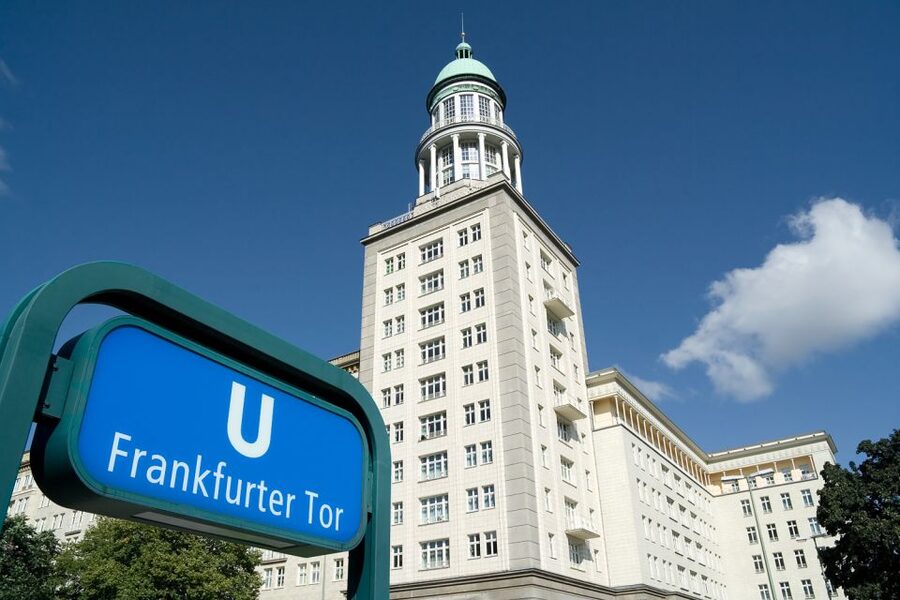
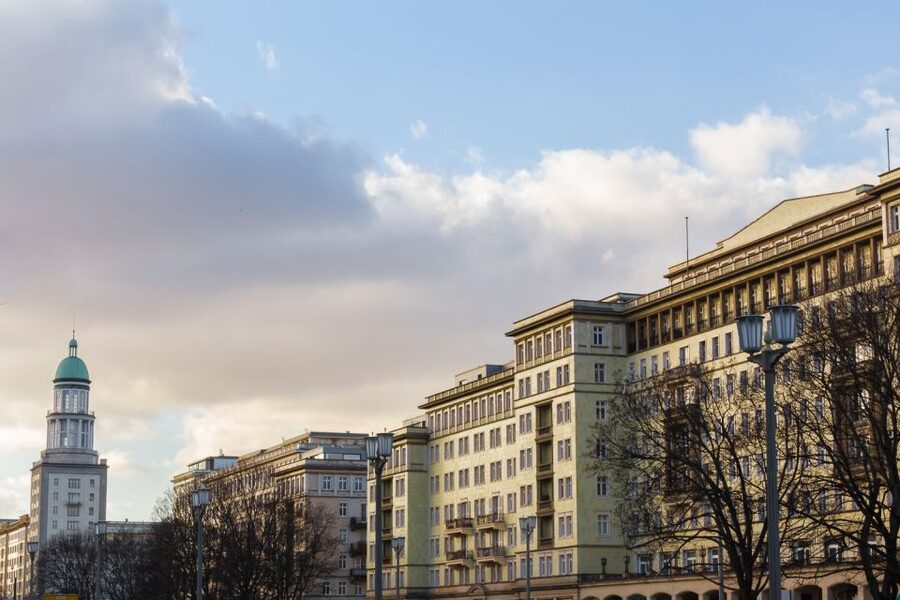
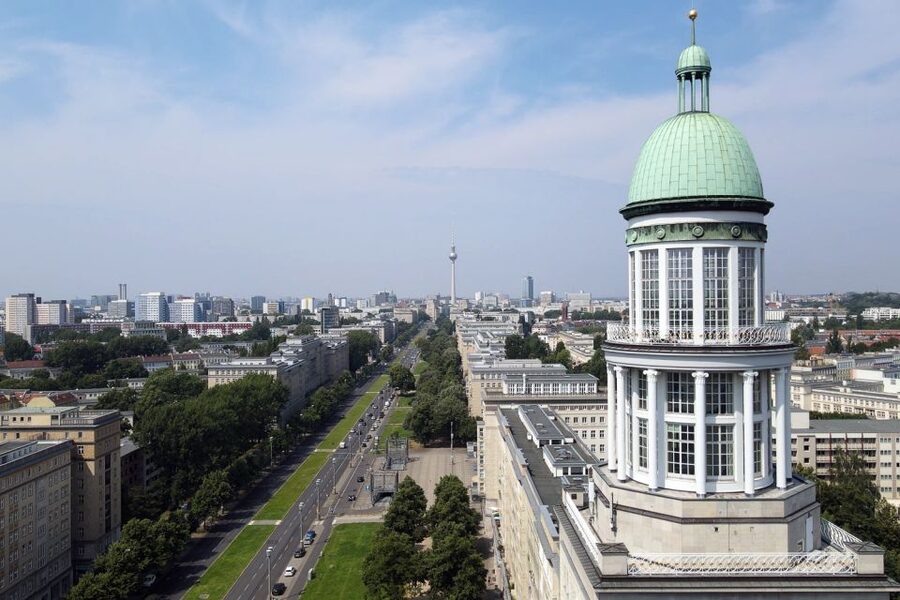
Frankfurter Tor is the visual hook of the tour. Its distinctive towers rise at the eastern end of Karl-Marx-Allee and give the boulevard a strong sense of arrival. They are the sort of buildings that make more sense when you see their relationship to the street, rather than viewing them as isolated towers in a photograph.
Here, pay attention to the symmetry and the way the buildings frame the road. The design is meant to feel organized and ceremonial. A guide can point out how this entrance announces the boulevard’s importance and how the towers differ from ordinary residential architecture.
This is also a good place to begin asking what the street was designed to communicate. The buildings were not meant to disappear into the background. They projected confidence, order, and a particular vision of the city. The effect can seem grand, even theatrical, and that is part of the point.
The area is especially useful for photographers, architecture students, and anyone trying to understand Berlin beyond its better-known historic center. You get a strong first view quickly, but the tour does not stop with the famous facade. It uses Frankfurter Tor as an introduction to the longer story.
Friedrichshain’s arcaded apartment buildings
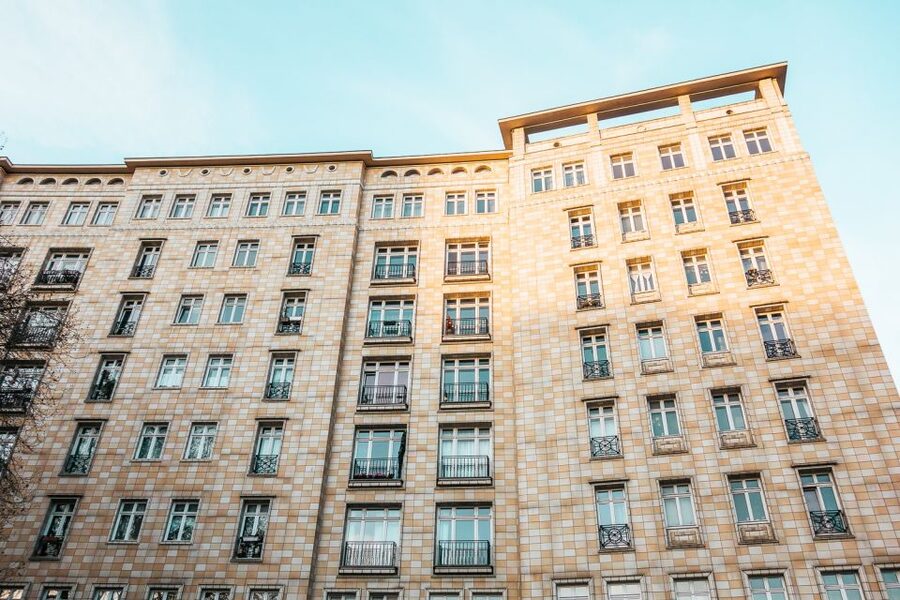
The apartment blocks in Friedrichshain bring the scale down from civic spectacle to residential life. Their arcades are among the most interesting details on the walk. They show how the project combined monumental city planning with housing, giving ordinary apartment buildings a more formal public face.
I like this part because it makes the boulevard easier to understand. The architecture was not only about official ceremonies or grand avenues. People lived in these buildings. The arcades create a covered edge between the street and the homes, adding rhythm to the long blocks and giving the residential buildings a carefully designed appearance.
Your guide can help you notice details that are easy to miss on a self-guided stroll. The route is visually consistent, so after a while individual buildings can blur together. Historical photographs, old posters, and anecdotes add needed contrast, showing how the street looked and functioned at different points in its life.
Do not expect a small village atmosphere here. Karl-Marx-Allee is broad and imposing by design. If you prefer narrow lanes, older facades, and irregular streets, you may find the scale a little impersonal. If you enjoy urban planning, the repeated forms and formal arrangement are the main attraction.
The Kosmos cinema and public life
The Kosmos cinema, designed by Josef Kaiser, adds a different kind of story to the route. It was a public building, not simply another apartment block, and it shows how entertainment fit into the planned socialist city.
A cinema tells you something about daily life that a government office cannot. Public architecture had to serve more than political display. It also had to provide places for films, leisure, and shared experiences. The Kosmos helps balance the usual picture of Karl-Marx-Allee as a street of ideology and housing.
The building is worth seeing as part of the full sequence. On its own, it may not explain the entire boulevard, but in context it helps you notice the range of uses built into the area. Your guide can connect the cinema’s design to the wider building program and explain why Josef Kaiser’s work matters here.
This stop also gives the walk a change of pace. After the repeated apartment facades, a major public building provides a clear focal point. If architecture is your main reason for booking, this is one of the stops to pay close attention to.
Same base, a different kind of day out:
- Berlin: Reichstag, Dome and Government District Guided Tour
★ 4.7 · 18,288 reviews - Berlin: 1-Hour City Tour by Boat with Guaranteed Seating
★ 4.3 · 16,993 reviews - Berlin: Boat Tour Along the River Spree
★ 4.4 · 11,252 reviews - Discover Berlin Half-Day Walking Tour
★ 5.0 · 9,624 reviews
Hochhaus an der Weberwiese and the early high-rise idea
The high-rise building known as Hochhaus an der Weberweise is another important stop. Its place on the route helps show that Karl-Marx-Allee was not built from one single formula. The boulevard developed through different architectural stages, with high-rise construction playing a role in the early vision for the area.
You will get more from this building if you compare it with the later apartment blocks and the formal towers at Frankfurter Tor. Look for changes in scale, purpose, and visual effect. The tour is useful here because a guide can explain how individual structures fit into the larger plan instead of treating each building as a separate curiosity.
The spelling of the name may appear as Weberweise in tour information, so keep that wording in mind when checking maps or notes. The key point is its role as a high-rise landmark connected to the development of this part of Friedrichshain.
This stop is also a reminder that the boulevard was not created in one simple moment. Its design reflects a changing post-war city and the desire to present a new urban future. The buildings are political documents, but you can read them through their shapes, spacing, and relationship to the street.
The partial ruins of the Church of the Resurrection
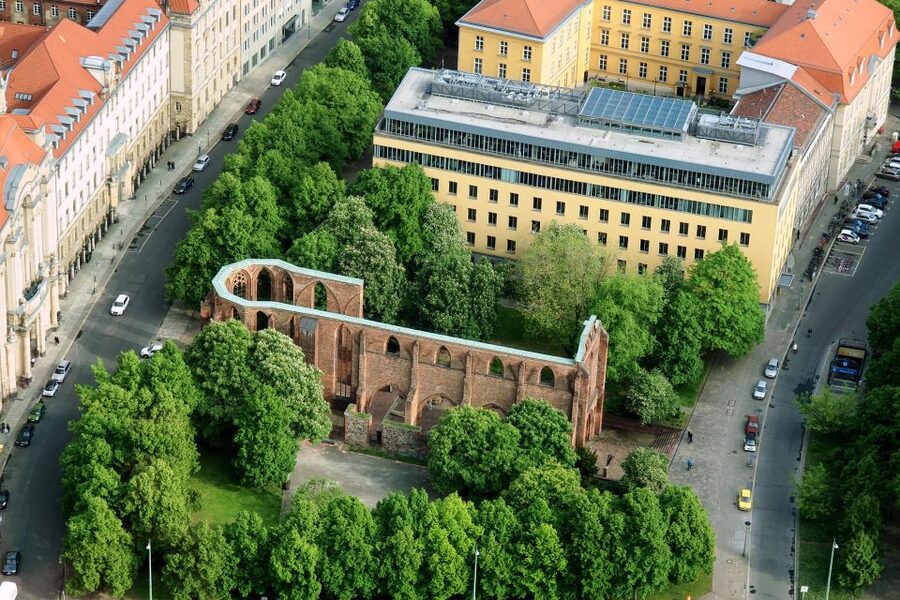
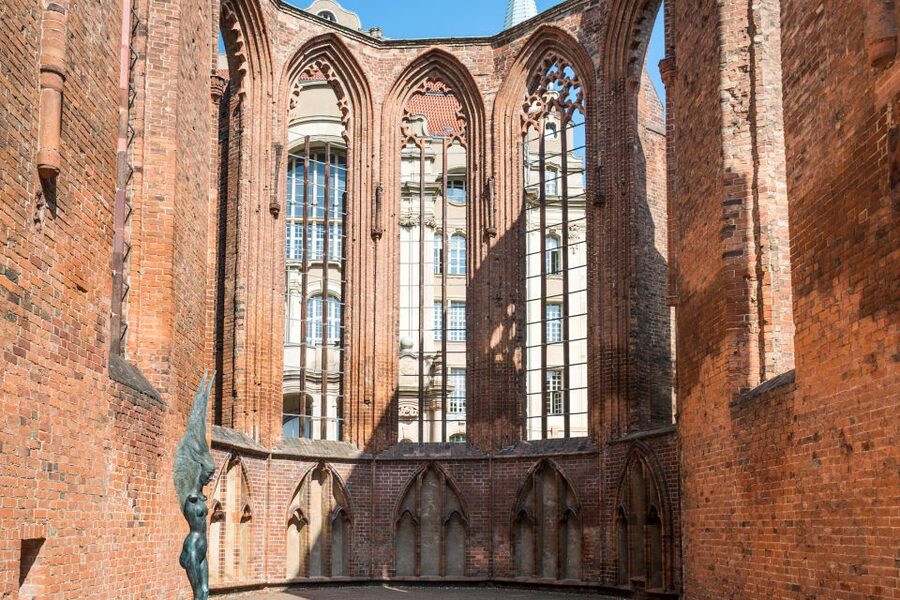
The partial ruins of the Church of the Resurrection offer the route’s most striking contrast. Among the planned apartment blocks and monumental public buildings, the remains of a damaged church point to an older and more complicated Berlin.
The ruins matter because they interrupt the clean visual order of Karl-Marx-Allee. They remind you that the city was not built from an empty page. War, destruction, rebuilding, and political change all shaped what survived and what was replaced.
Do not expect a complete church visit. The attraction is the surviving portion and the way it fits into the surrounding city. Its incomplete condition is exactly what makes it meaningful. You see a fragment of an earlier Berlin beside a boulevard created to express a new political age.
This is one of the places where a guide adds real value. Without context, you might register the ruins as an unusual remnant and move on. With an explanation, you can understand the contrast between inherited religious architecture and the socialist city planned around it.
Strausberger Platz and the gateway to the center
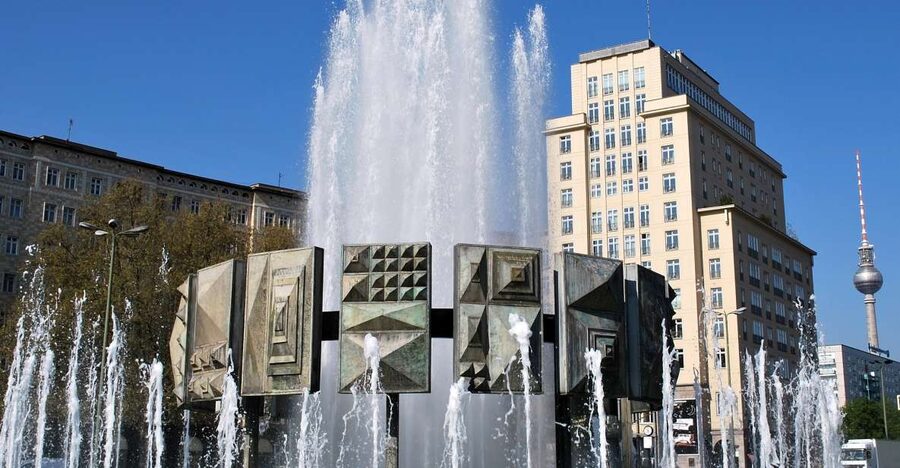
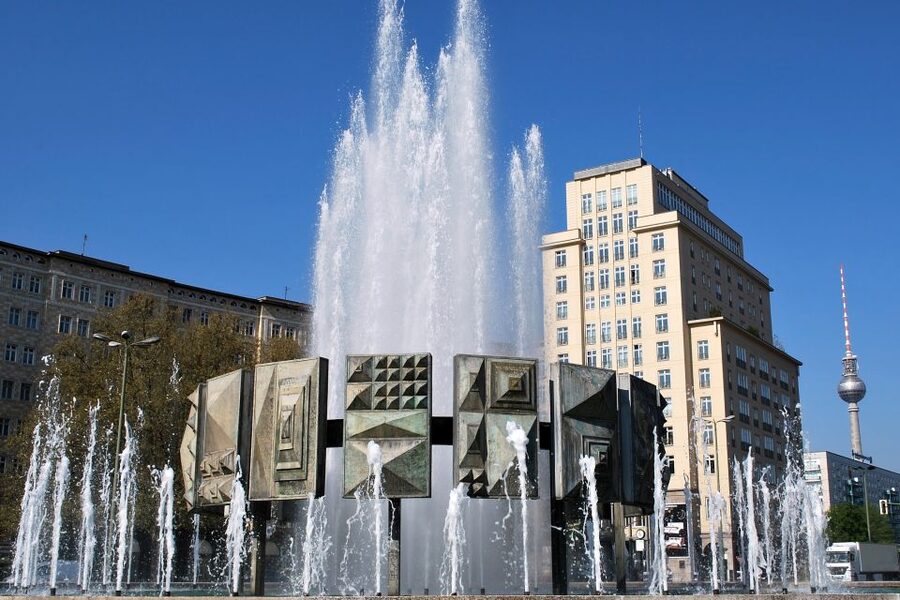
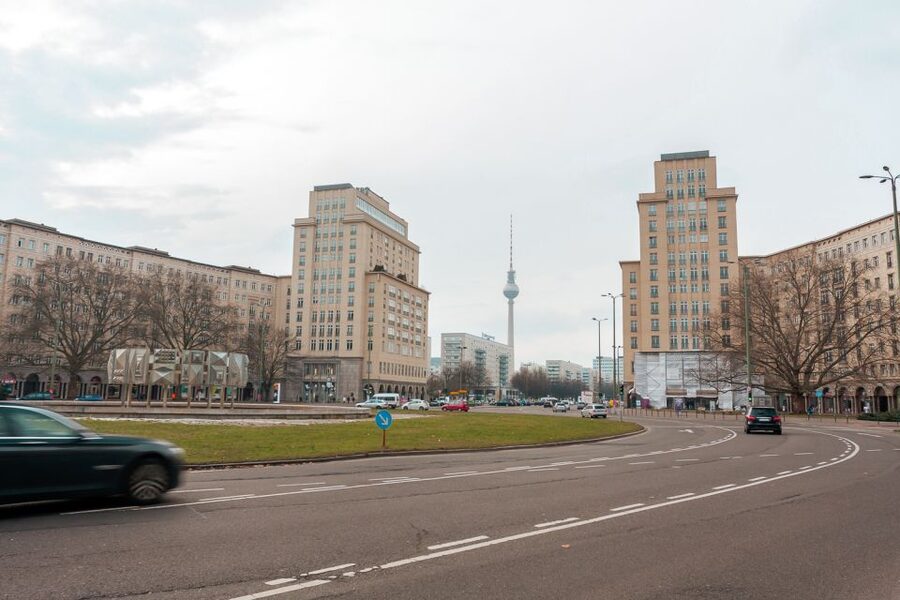
Strausberger Platz gives the tour a strong finish. Its distinctive high-rise buildings were designed as a gateway to the socialist city center, so the open space and surrounding towers should be read as one composition.
The square helps you understand how city planners controlled movement and views. It was not simply a traffic junction. It was a formal arrival point, with tall buildings shaping the approach and giving the boulevard a clear sense of direction.
I like ending here because the tour has moved from a famous entrance, through housing and public buildings, to a space designed to announce the center ahead. The route gains meaning as you go. Frankfurter Tor may provide the most recognizable image, but Strausberger Platz helps explain the boulevard’s full urban purpose.
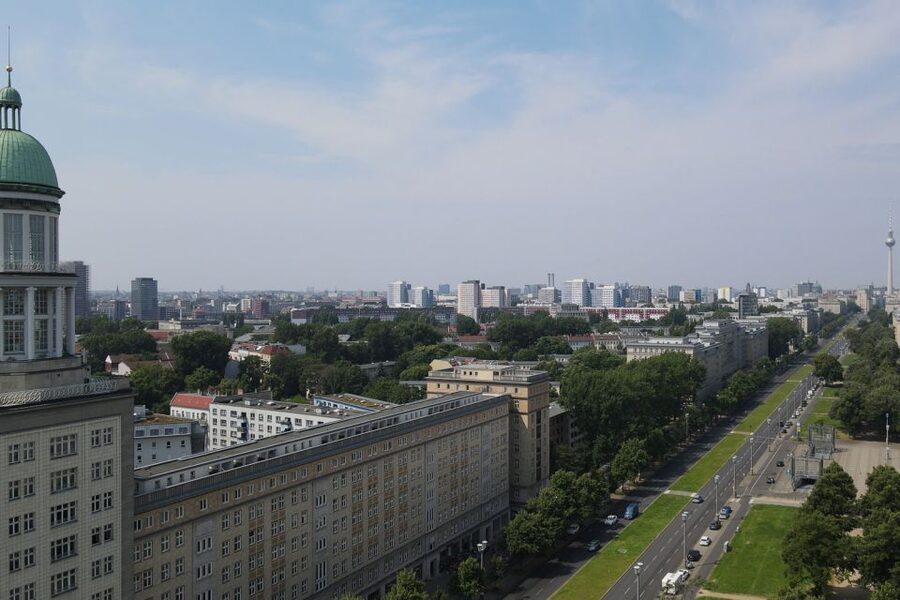
It is also a practical place to pause and take in what you have seen. The buildings can feel repetitive when viewed one by one. From the square, the planning becomes easier to grasp. You can see how the parts work together as a long, deliberate axis.
How the guide changes the experience
A self-guided walk will show you the buildings, but it may not tell you why they are arranged as they are or how the street changed names and political meaning. The live guide is the main reason to pay for this experience.
Tobias is one guide named in connection with the tour. He is described as passionate, communicative, and strong at explaining the area’s history. His use of historical photographs, old posters, and anecdotes gives you visual comparisons while you stand in front of the present-day buildings.
That approach suits Karl-Marx-Allee particularly well. Much of the story is about change over time, so a photograph can reveal what the street once looked like more clearly than a long explanation. Personal stories and small details also keep the walk from becoming a dry architecture lecture.
The tour is offered in English or German. If you book in English, confirm the language option and meeting point for your selected departure, since the meeting location can vary. The experience includes a walking tour and an expert guide, but not hotel pickup or drop-off.
Is $23 a fair price?
At $23 per person, the tour is reasonably priced for a two-hour guided walk, especially if you care about architecture, post-war Germany, or Berlin’s divided history. You are paying for interpretation rather than entry tickets. There are no major indoor admissions listed, so the value depends on how much you want the boulevard explained.
I would pay for it if Karl-Marx-Allee is new to you and you want more than a photo stop at Frankfurter Tor. The guide’s historical material, the connections between the buildings, and the explanation of the street’s name changes give the walk a purpose that you may not get from wandering alone.
If you already know the architecture well, or if you are happy to research the route yourself, the price may feel less necessary. The boulevard is public, and you can see its main structures without joining a tour. The paid experience earns its keep through context, pacing, and details such as the Kosmos cinema, the church ruins, and the role of Strausberger Platz.
A two-hour duration is also a sensible compromise. It is long enough to cover the key sites but short enough to fit beside a museum visit or another Berlin plan. The tradeoff is that the tour remains focused on the boulevard. It is not a general Friedrichshain walking tour.
Who should book this Karl-Marx-Allee walk?
I would recommend it to anyone interested in architecture, urban planning, socialism, East German history, or the physical story of post-war Berlin. It also suits repeat visitors who have already seen Brandenburg Gate, Museum Island, and the Berlin Wall sites and want a different side of the city.
The tour works especially well for people who learn through buildings. You do not need specialist background, since the guide supplies the political and architectural context. You should, however, enjoy outdoor walking and be willing to spend two hours examining large urban spaces rather than entering a series of museums.
Families with older children may find the changing names, towers, cinema, and ruined church easier to remember than a traditional lecture. Architecture students and photographers will have plenty to study. Anyone seeking cafés, shopping, or small historic lanes should choose a different outing.
The overall rating is 5 from 116 reviews, with repeated praise for the guide’s energy, historical detail, and well-chosen route. The strongest practical lesson is that this tour gives you access to visual details you might miss alone, including artwork and less obvious parts of the area.
Should you book it?
Book this tour if you want Berlin’s socialist past explained through real streets and buildings rather than only through museum displays. The best reasons are Frankfurter Tor, the arcaded housing, the Kosmos cinema, the church remains, and the final view across Strausberger Platz.
Skip it if you dislike long, open boulevards or want a broad tour covering many parts of Berlin. For $23, though, the walk offers solid value for architecture and history fans. Bring comfortable shoes, choose the right language, and leave room in your schedule for two hours outside. You will come away with a clearer sense of how Karl-Marx-Allee was built, renamed, and used to present a new city.
FAQ
How long does the Karl-Marx-Allee tour last?
The walking tour lasts two hours.
What language is the tour offered in?
The live tour guide can lead the experience in German or English.
What does the tour include?
It includes a walking tour and an expert guide.
Is hotel pickup included?
No. Hotel pickup and drop-off are not included.
Where does the tour meet?
The meeting point can vary depending on the option you book. Check the details for your selected option.
How much does the tour cost?
The listed price is $23 per person.
Can I cancel for a full refund?
Yes. You can cancel up to 24 hours in advance for a full refund.
Do I have to pay when I book?
The reserve now and pay later option allows you to reserve a place without paying immediately.
Which sites are included on the route?
The route includes Frankfurter Tor, the arcaded apartment buildings in Friedrichshain, the Kosmos cinema, Hochhaus an der Weberweise, the partial ruins of the Church of the Resurrection, and Strausberger Platz.
Who provides the tour?
The experience provider is Sonderweg-Berlin.
Just added in Berlin
- Modern Berlin Private Walking Tour: Diverse, Vibrant and Exciting German Capital★ 5.0 · 13 reviews
- Private One way Airport Transfer Berlin Airport To Berlin★ 3.5 · 17 reviews
- Private Walking Tour: Berlin Wall, Cold War and Checkpoint Charlie★ 5.0 · 37 reviews
- Private Day Trip to Potsdam from Berlin by Train★ 4.5 · 27 reviews
- City Explorer: Potsdam Private Day Trip★ 4.5 · 10 reviews
- Berlin Private Custom 5-Hour Tour by Car★ 5.0 · 30 reviews
- Private Half-Day Sightseeing Tour in Berlin★ 3.5 · 6 reviews
- Berlin Private Custom Tour in a Minivan, East and West★ 5.0 · 123 reviews
Tours in Berlin, compared.
Reichstag, Dome and Government District Guided Tour
Read our review →
1-Hour City Tour by Boat with Guaranteed Seating
Read our review →
Reichstag, Plenary Chamber, Cupola & Government Tour
Read our review →

Browse the lists this tour appears in