Reviewed · TOURS IN BERLIN
Berlin: Hansaviertel “The City of Tomorrow” Guided Tour
Berlin’s Hansaviertel is a neighborhood built from a bold postwar idea: replace a damaged district with a spacious, modern city for the future. This two-hour walk brings that idea to life through apartment blocks, private homes, public buildings, and the 1957 International Building Exhibition. The architecture is the star, but the political story behind it gives the tour real weight.
I especially like the chance to see buildings by several important architects in one compact area, including Walter Gropius and Arne Jacobsen. I also like the personal touch brought by guides such as Tobias and Mr. Schwabe, whose humor and clear explanations have helped make the walk appealing to both architecture fans and people who live in Berlin. The main consideration is timing: a winter start later in the day may mean less daylight.
Key points at a glance
- A postwar city experiment: Learn how Hansaviertel was rebuilt for the 1957 International Building Exhibition.
- Architecture by major names: See the Gropius-Haus, Van den Broek House, Schwippert House, and Müller-Rehm/Siegmann House.
- Public life as design: Visit Hansaplatz station, the library, hospital, Kaiser-Friedrich Memorial Church, and Academy of Art.
- A guide-led walk: Tobias and Mr. Schwabe are among the guides praised for friendly explanations, humor, and strong subject knowledge.
- A useful two-hour format: Long enough for context, short enough to fit around other Berlin plans.
- Good access and flexibility: The tour is wheelchair accessible, offered in English or German, and allows cancellation up to 24 hours before departure.
Why Hansaviertel tells a different Berlin story
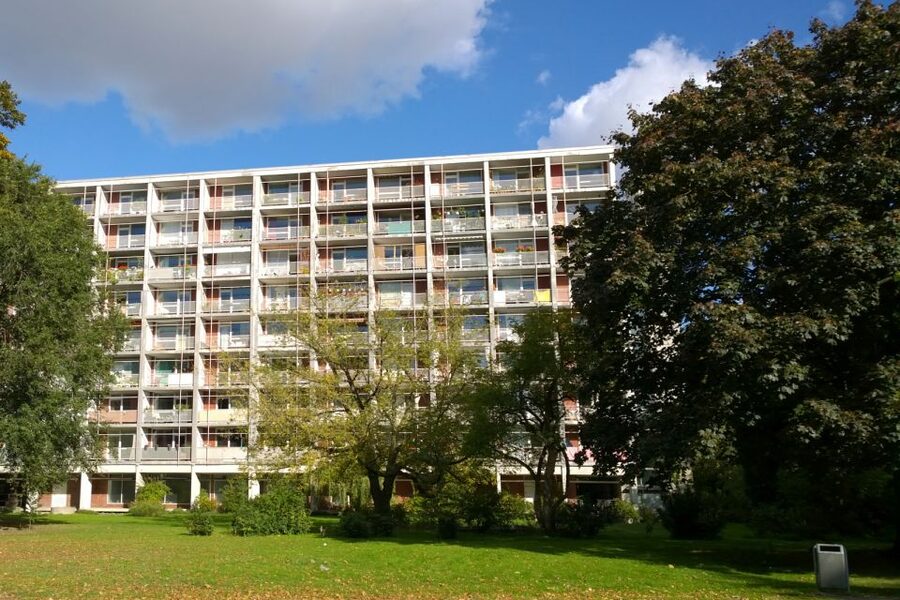
Most first-time visits to Berlin focus on the Brandenburg Gate, the Berlin Wall, Museum Island, or the grand avenues of Mitte. Hansaviertel offers a quieter but equally revealing view of the city. Here, the story is told through buildings rather than monuments.
The district was redesigned after wartime destruction according to modern urban planning ideas. The goal was a structured, spacious city, with room between buildings, fresh air, greenery, light, and housing designed for modern life. That sounds simple now, but in the 1950s it was a forceful statement about how a democratic West Berlin should look and function.
The International Building Exhibition of 1957 gave the project its public stage. Architects from Germany and abroad were invited to create homes and civic buildings that represented a new direction. Hansaviertel became a kind of open-air showcase for modern architecture.
Your guide helps connect the clean lines and open spaces to Berlin’s larger political story. The area was not just rebuilt for practical reasons. It also presented a contrast to the monumental planning associated with East Berlin, especially the long apartment avenue later known as Karl-Marx-Allee. This makes Hansaviertel valuable even if you are not trained in architecture. You are looking at a neighborhood shaped by competing ideas about society, design, and the future.
A few more things to do in Berlin worth a look
- Berlin: Reichstag, Dome and Government District Guided Tour
★ 4.7 · 18,288 reviews - Berlin: Government District around the Reichstag Guided Tour
★ 4.7 · 8,447 reviews - Berlin: Hidden Backyards Guided Walking Tour
★ 4.8 · 5,360 reviews
Starting with the Berlin Pavilion and Müller-Rehm/Siegmann House
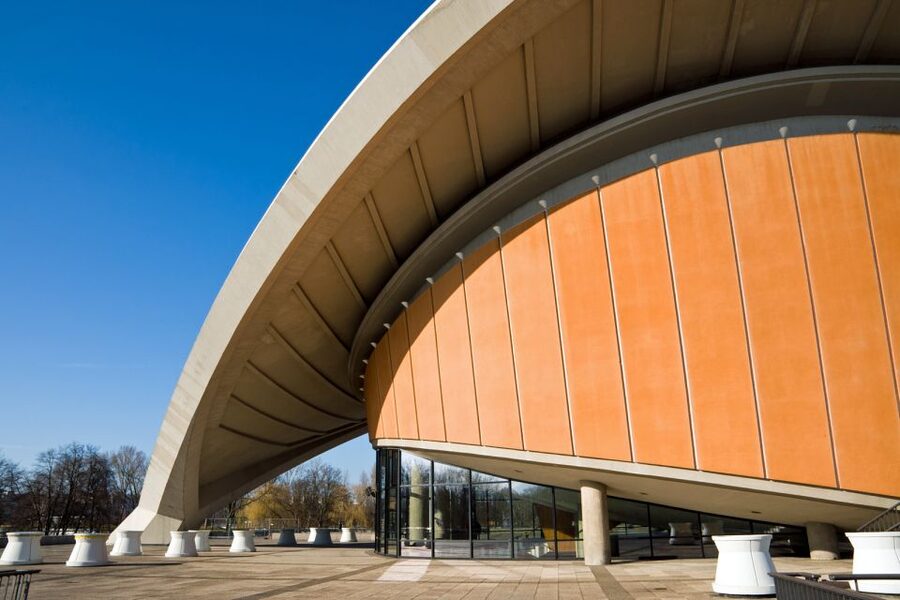
The walk includes the Berlin Pavilion, an early stop that helps set the tone. It gives you a chance to look at the design language of the district before moving among the residential buildings.
The Müller-Rehm/Siegmann House is another useful introduction. Hansaviertel is not made up only of huge apartment blocks. Its architects also experimented with smaller-scale homes, different layouts, and varied relationships between buildings and open space. That mix keeps the walk from becoming a procession of similar façades.
Your guide can point out the choices that are easy to miss on your own. Look for the way buildings are positioned, how windows shape the outer appearance, and how private living spaces relate to shared areas. The point is not simply to admire a building’s surface. It is to understand the ideas behind it.
I would bring a phone or small camera, but try not to spend the whole walk photographing façades. The useful part of this tour is the explanation of why the buildings look and sit as they do.
The Gropius-Haus and the problem of modern living

The Gropius-Haus is one of the tour’s main architectural highlights. Its name links it to Walter Gropius, one of the best-known figures in modern architecture. For many visitors, this is the stop that gives the tour its strongest connection to the wider story of twentieth-century design.
The building also raises practical questions. Modernist architecture often aimed to simplify life through rational plans, efficient construction, and clear forms. But a building can look elegant from the outside while raising very ordinary questions about comfort, privacy, maintenance, and daily use.
That tension is part of what makes Hansaviertel interesting. You are not being asked to admire every building without question. Instead, you can consider how the ideals of the 1950s have aged. Some ideas still look fresh. Others reveal the limits of planning a whole neighborhood around a single vision of the future.
The tour is strongest when the guide moves between design and daily life. Tobias, in particular, has been praised for making the subject lively and for answering many questions patiently. That matters here, since modern architecture can seem abstract until someone explains how it was meant to serve the people living inside it.
Church, Swedish House, and the human scale
The Kaiser-Friedrich Memorial Church adds a different mood to the route. It is not simply another modernist residence. Its presence helps show how the new Hansaviertel was meant to function as a complete district, with places for worship, community life, housing, culture, and transport.
The Swedish House adds another national voice to the exhibition area. Hansaviertel brought together architects and design ideas from several countries, so the neighborhood is not a single architect’s project. You can compare different approaches to materials, proportions, balconies, windows, and the use of open ground.
This variety is one of the best reasons to take the tour with a guide. Alone, you might notice that one structure feels more severe while another feels more welcoming. With context, those differences become part of the district’s purpose.
The route is leisurely rather than a hard march through Berlin. That makes it easier to pause and look closely, though you should still expect a fair amount of walking outdoors. Wear comfortable shoes and dress for the weather, since the experience takes place in the neighborhood rather than inside a series of museums.
Same base, a different kind of day out:
- Berlin: 1-Hour City Tour by Boat with Guaranteed Seating
★ 4.3 · 16,993 reviews - Berlin: Boat Tour Along the River Spree
★ 4.4 · 11,252 reviews - Discover Berlin Half-Day Walking Tour
★ 5.0 · 9,624 reviews - Berlin: Hop-on Hop-off Bus Tour with Live Commentary
★ 4.3 · 8,579 reviews
Hansaplatz station and the neighborhood in motion
Hansaplatz station shows how transport was included in the postwar plan. The U-Bahn connection was not an afterthought. It helped link the residential district to the rest of Berlin and supported the idea of a modern neighborhood that could work as part of a larger city.
Stations are often treated as purely functional places. Here, the station belongs to the architectural story. It helps you think about how residents would move between home, work, culture, and the wider city.
The Hansaviertel Library and Hansaviertel Hospital add another layer. These buildings show that the neighborhood was planned around services, not just housing. A successful district needs more than attractive apartments. It needs places for reading, health care, worship, transport, and community life.
This is where the tour moves beyond architecture as a visual subject. You begin to see urban planning as a promise about everyday life. The district was intended to offer a healthier, more open form of city living, with public buildings woven into the residential setting.
For anyone interested in planning, this part of the walk may be especially useful. You can examine how the original idea of a spacious city survives, and where later changes may have affected the original plan. The tour does not turn Hansaviertel into a frozen museum. It presents a living neighborhood with a strong design identity.
Van den Broek House and Schwippert House
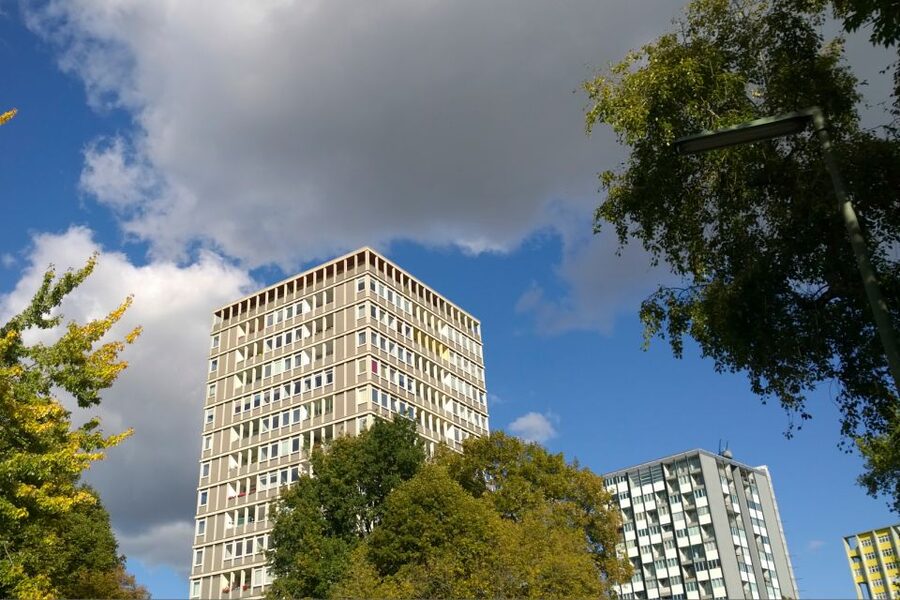
The Van den Broek House and Schwippert House continue the tour’s survey of individual architectural responses. These stops are valuable because they show that the 1957 exhibition was not based on one approved style.
You will see how architects handled the challenge of creating modern homes within a shared district. Some buildings emphasize broad openings and horizontal lines. Others use a more compact form or a stronger relationship between private interiors and shared outdoor space.
The guide’s job here is to help you compare rather than simply collect names. You may find one building visually striking while another seems plain. That is fine. The useful question is what each architect was trying to achieve, and how those choices fit the larger plan for Hansaviertel.
The tour’s pace gives you room to form your own opinion. That is important because modernist architecture can divide people. Some visitors love the clean geometry and lack of ornament. Others prefer older buildings with more decoration and visible layers of time. Hansaviertel offers a good setting for that debate.
The Academy of Art and a cultural finish
The Academy of Art is one of the tour’s strongest cultural stops. It shows that the district was intended to support creative and civic life, not just provide housing.
The building also helps broaden the story of the 1957 exhibition. Hansaviertel was about more than solving a housing shortage. It was a public statement about culture, education, and the kind of society West Berlin wanted to build after the war.
By this point, the route has taken you through homes, transport, health care, a library, a church, and cultural buildings. That range is what gives the experience its shape. You are not looking at isolated architectural objects. You are seeing the parts of a planned neighborhood and asking how well they work together.
The Academy of Art is also a good reminder that the district’s appeal is not limited to specialists. You can enjoy the buildings for their forms and materials, then listen for the larger questions about rebuilding, identity, and public life.
What the two-hour format gives you
Two hours is a sensible length for Hansaviertel. The area has enough material to fill that time without forcing you into an exhausting half-day commitment.
You get a guided introduction to the 1957 exhibition, a series of named buildings, and a clear sense of how the neighborhood fits into Berlin’s divided postwar story. The format works well alongside major museum visits or a day spent in central Berlin.
The tradeoff is that you should not expect a detailed interior tour of every building. The experience is primarily a walking tour of the district, and several locations are viewed from outside. If your main goal is to enter private residences or spend long periods inside each structure, this may feel limited.
That said, the outside view is often enough to understand the main ideas. The placement of the buildings, their distance from one another, and their relationship to streets and open space are central to the project.
Starting times vary, and the meeting point can depend on the option you book. The operator can also organize tours beginning from specific points at certain times. Check those details carefully before you set your day around the walk.
Guides, language, and access
The tour is offered in English and German. Guides including Tobias and Mr. Schwabe have been praised for friendly, engaging presentations, humor, patience, and strong command of Berlin’s architecture and history.
That personal approach matters. A dry list of architects would not be enough here. You want someone who can explain why a building matters, answer questions, and connect Hansaviertel to the wider city. The guide can also help you notice details that might pass unnoticed when you walk through the district alone.
The tour is wheelchair accessible, which makes it a useful option for visitors who need an accessible way to explore a historic neighborhood. Still, because it is an outdoor walking experience, you should confirm the specific meeting point and route details when booking.
The activity includes the walking tour and guide. No separate museum admission or meal is described, so plan for a neighborhood walk rather than a ticketed indoor attraction.
Is $23 a fair price?
At $23 per person, the tour offers good value if you have a real interest in Berlin’s architecture, planning, or postwar politics. You are paying for two hours of focused interpretation rather than simply walking through the area and reading a few plaques.
The price is less compelling if you only want a general orientation to Berlin. Hansaviertel is not the city’s most famous sightseeing district, and its appeal depends on your willingness to look closely at buildings and listen to the ideas behind them.
For architecture fans, the value is clear. You get several named buildings, a range of architects, and the wider story of the 1957 International Building Exhibition in one compact outing. For Berlin residents or repeat visitors, it offers a part of the city that is easy to miss even after living there for years.
The booking terms also reduce the risk. You can reserve now and pay later, and cancel up to 24 hours in advance for a full refund. That is useful when Berlin weather or a changing schedule makes outdoor plans uncertain.
Who should book the Hansaviertel walk?
I would recommend this tour to you if you enjoy:
- Modern architecture and postwar design
- Berlin’s political and urban history
- Neighborhoods away from the main sightseeing route
- Guided walks with time for questions
- Seeing how transport, housing, culture, and public services fit into one plan
It is especially well suited to repeat visitors, architecture students, design fans, and Berlin residents who have not yet explored Hansaviertel. It can also work for first-time visitors who want one quieter experience alongside the city’s major sights.
You may want to choose another activity if you prefer museums, interiors, or fast-moving sightseeing. The walk asks you to slow down and compare buildings. That is its strength, but it will not suit everyone.
Should you book it?
Book this Hansaviertel tour if you want to understand Berlin through its buildings and postwar choices, not only through famous landmarks. The combination of the 1957 exhibition, modernist homes, civic buildings, Hansaplatz station, and guides such as Tobias gives the walk a clear purpose.
The main drawback is narrow focus. You will not cover all of Berlin, and some people may find two hours of modernist architecture too specialized. But at $23, the cost is modest, the route is manageable, and the subject opens a useful window onto a less familiar part of the city.
I would choose it on a free afternoon, especially if you have already seen central Berlin and want a more thoughtful neighborhood experience. For architecture and history fans, this is one of the better ways to see how Berlin tried to build its future after catastrophe.
FAQ
How long does the Hansaviertel tour last?
The walking tour lasts two hours.
What languages are available?
The tour is available in English and German.
Is the tour wheelchair accessible?
Yes, the activity is listed as wheelchair accessible.
What buildings and sights are included?
The route includes the Berlin Pavilion, Müller-Rehm/Siegmann House, Gropius-Haus, Kaiser-Friedrich Memorial Church, Swedish House, Hansaplatz U-Bahn station, Hansaviertel Library, Hansaviertel Hospital, Van den Broek House, Schwippert House, and Academy of Art.
What is the focus of the tour?
The tour focuses on Hansaviertel’s redevelopment for the 1957 International Building Exhibition, modern urban planning, postwar Berlin, and the work of national and international architects.
Can I cancel the booking?
You can cancel up to 24 hours before the tour for a full refund. You can also reserve the activity and pay later.
Just added in Berlin
- Modern Berlin Private Walking Tour: Diverse, Vibrant and Exciting German Capital★ 5.0 · 13 reviews
- Private One way Airport Transfer Berlin Airport To Berlin★ 3.5 · 17 reviews
- Private Walking Tour: Berlin Wall, Cold War and Checkpoint Charlie★ 5.0 · 37 reviews
- Private Day Trip to Potsdam from Berlin by Train★ 4.5 · 27 reviews
- City Explorer: Potsdam Private Day Trip★ 4.5 · 10 reviews
- Berlin Private Custom 5-Hour Tour by Car★ 5.0 · 30 reviews
- Private Half-Day Sightseeing Tour in Berlin★ 3.5 · 6 reviews
- Berlin Private Custom Tour in a Minivan, East and West★ 5.0 · 123 reviews
Tours in Berlin, compared.
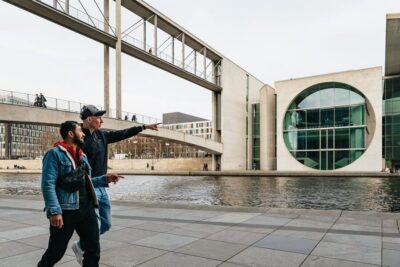
Reichstag, Dome and Government District Guided Tour
Read our review →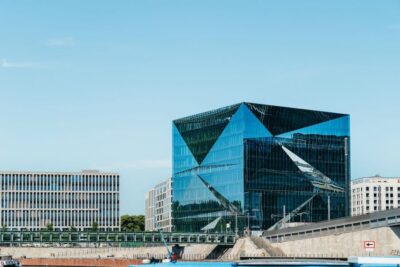
1-Hour City Tour by Boat with Guaranteed Seating
Read our review →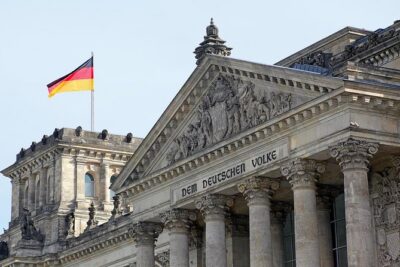
Reichstag, Plenary Chamber, Cupola & Government Tour
Read our review →