
Reviewed · TOURS IN BERLIN
Berlin: Entry to Alte Nationalgalerie
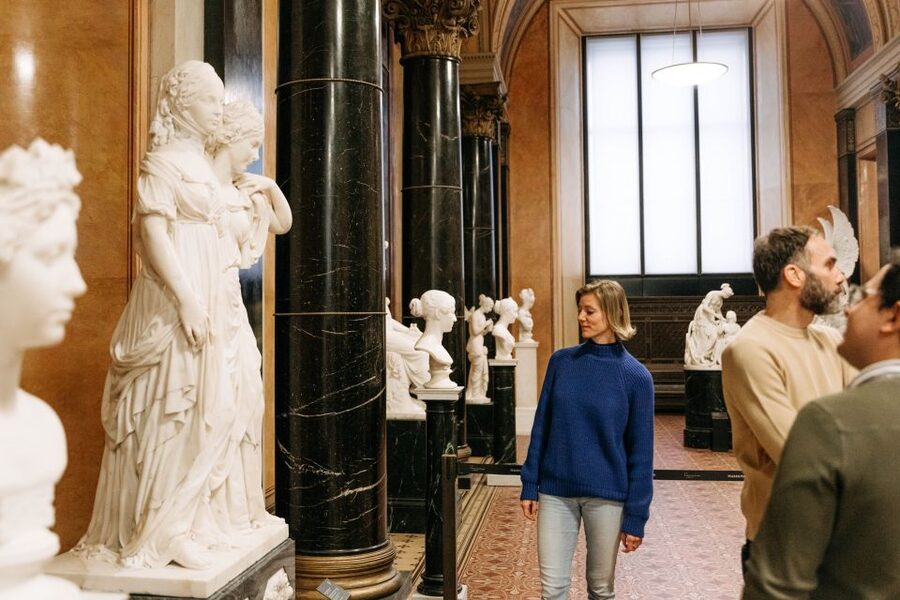
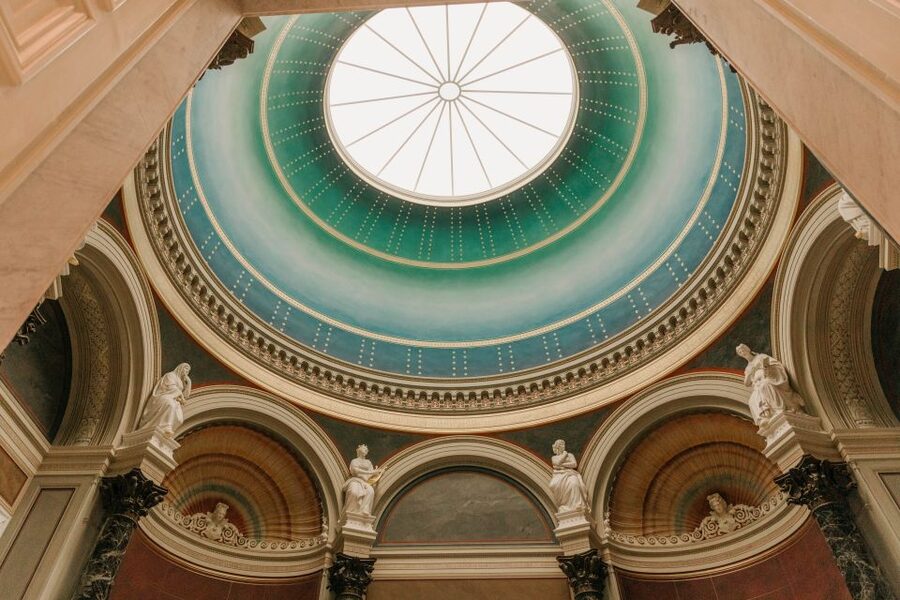
The most memorable part of Berlin’s Alte Nationalgalerie is the way the building and its art work together. You climb into a grand 19th-century museum devoted largely to the changing face of European art, from idealized Classicism and Romantic longing to Impressionist light and early Modernity.
I like the clear sweep through art history, and I like having an audio guide included rather than paying extra at the door. Friedrich’s The Monk by the Sea and Menzel’s Eisenwalzwerk are major draws. The main caution is practical: galleries can close temporarily, and the Impressionist rooms have not always been open, so check current access before booking.
Key points to know before you go
- Art from Classicism to early Modernity: The collection covers several major 19th-century movements in one visit.
- Friedrich’s The Monk by the Sea: This spare Romantic painting is one of the museum’s essential stops.
- French Impressionism: Look for works by Manet, Monet, and Renoir.
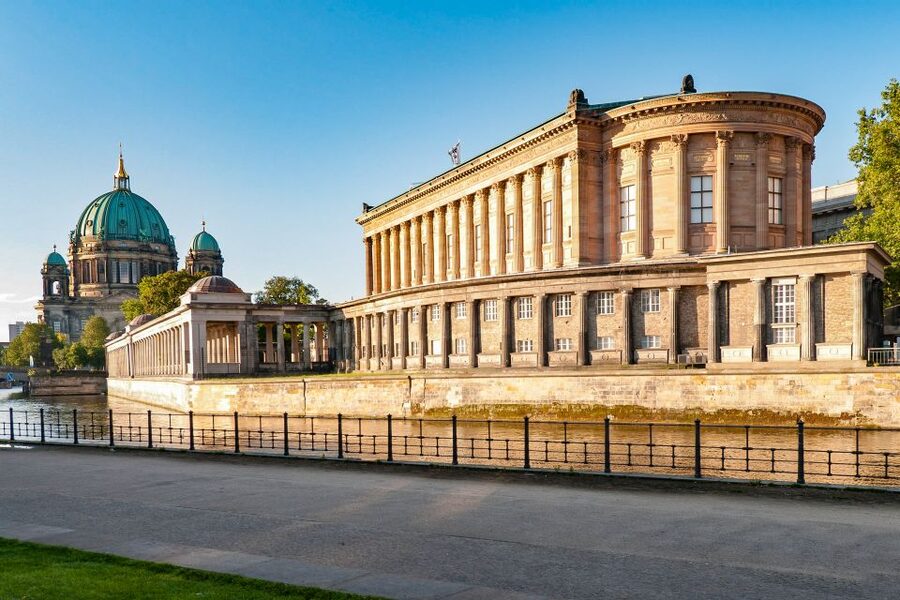
- A grand Museum Island setting: The gallery belongs to Berlin’s UNESCO-listed Museum Island complex.
- Audio guide included: You can add context at your own pace without joining a scheduled group tour.
- Timed entry matters: Enter within 15 minutes of your booked timeslot, and do not bring a backpack.
Why the Alte Nationalgalerie deserves a place in your Berlin plan
The Alte Nationalgalerie is not simply a room full of famous paintings. It was conceived as a sanctuary for art and science, an idea linked to Friedrich Wilhelm IV. That ambition still shapes your visit. The building gives the collection a formal setting, while the art itself shows Europe moving from polished ideals toward personal feeling, social observation, fleeting light, and new forms.
The museum occupies one of the most important cultural addresses in Berlin. It is part of Museum Island, the UNESCO World Heritage Site on the Spree, so you can combine this visit with other museums on the island. Your ticket covers only the Alte Nationalgalerie, however. It does not include entry to the neighboring institutions.
For $14 per person, the value depends on how much time you give it. If you appreciate 19th-century painting and sculpture, the price is reasonable, especially since an audio guide is included and the ticket is valid for one day. If your main interest is ancient Egypt, classical antiquity, or 20th-century art, another Museum Island museum may suit you better.
Other trips people book in Berlin:
- Berlin: Reichstag, Dome and Government District Guided Tour
★ 4.7 · 18,288 reviews - Berlin: 1-Hour City Tour by Boat with Guaranteed Seating
★ 4.3 · 16,993 reviews - Berlin: Boat Tour Along the River Spree
★ 4.4 · 11,252 reviews
Entering the 1876 gallery on Museum Island
Your visit begins at the visitor entrance on Bodestraße, at the Alte Nationalgalerie itself. The ticket provides skip-the-ticket-line entry, which is useful at a major central museum, though you still need to arrive within 15 minutes of the booked timeslot.
That narrow arrival window is worth taking seriously. Berlin’s Museum Island is easy to reach on foot from several central sights, but delays can happen when you are moving between attractions. Give yourself enough time to find Bodestraße and the correct entrance rather than arriving at the last minute.
The museum opened in 1876 as the third museum on Spree Island. Its collection began with a major donation from banker Joachim Heinrich Wilhelm Wagener, who gave works by artists associated with the Düsseldorf school and Belgian history painters to the Prussian state. That original foundation helps explain why the collection has both national ambition and a broad European reach.
You are not required to join a group. This is an independent museum visit, with an audio guide included. That arrangement suits you if you prefer to linger over one painting, move quickly through a room, or pause without waiting for a guide.
Following the 19th-century story
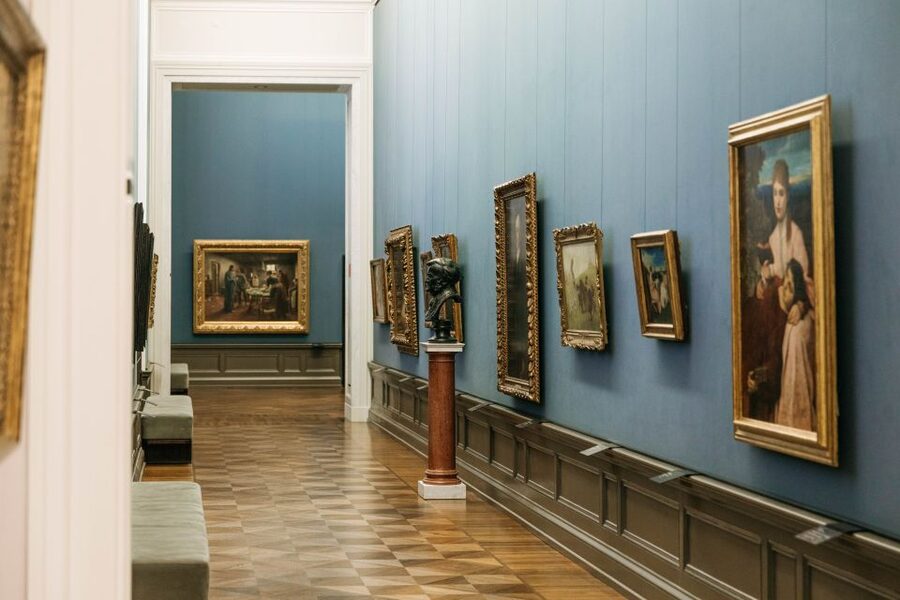
The collection is best understood as a journey through changing artistic priorities. Classicism favors order, noble subjects, and controlled form. Romanticism turns toward emotion, nature, mystery, and the inner life. Biedermeier brings a more intimate view of daily existence, while Impressionism tests what painting can do with light, atmosphere, and a fleeting moment.
Early Modernity then begins to loosen older rules even further. The museum allows you to see these shifts in one place rather than treating each movement as an isolated lesson. You can compare the smooth finish of one room with the freer brushwork of another, then notice how artists changed their subjects as well as their technique.
The exact display can change. One particularly useful point to remember is that a favorite room may not be available during your visit. A third floor was closed during one visit, and the Impressionist rooms were closed during another. If Manet, Monet, or Renoir is your main reason for coming, check the current museum information before you commit to a non-refundable ticket.
Friedrich, Menzel, and the essential paintings
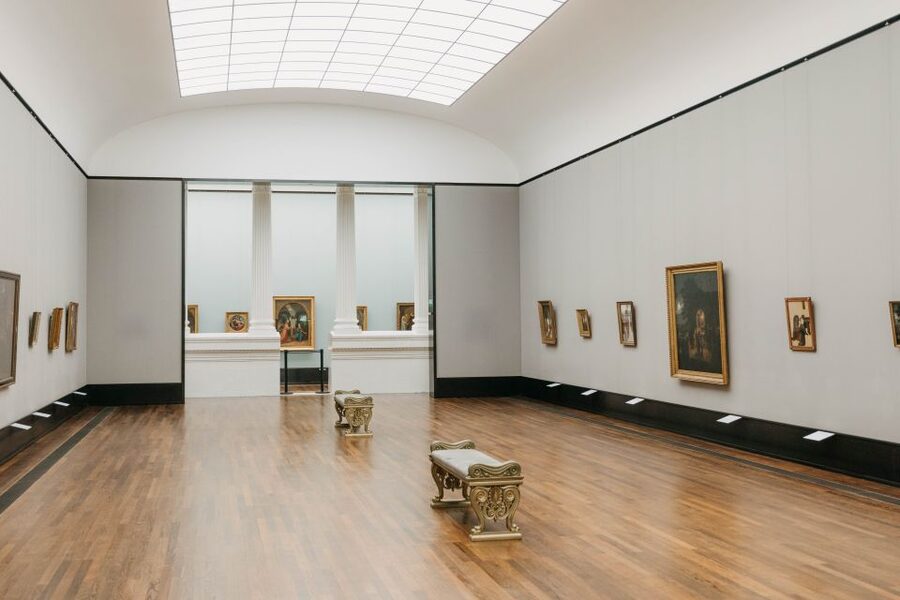
Caspar David Friedrich’s The Monk by the Sea is one of the museum’s defining works. The painting is spare and quiet, with a small human figure facing a broad stretch of sea and sky. It rewards a few unhurried minutes. You do not need a long explanation to feel its tension, but the audio guide can help place it within German Romanticism and the period associated with Goethe.
Friedrich’s Gothic Cathedral at the Water offers another route into the same world. Its architecture, water, and atmosphere turn a recognizable subject into something more inward and dreamlike. Together, these paintings show why Friedrich remains such a strong reason to visit the museum.
Adolph Menzel’s Eisenwalzwerk gives you a sharp contrast. Instead of solitude and distant horizons, you face the industrial workplace and the physical force of labor. The subject brings modern industry into the museum, while the detail asks you to look closely at bodies, machinery, and the heat of the setting.
The so-called Group of Princesses provides a different kind of experience. It connects the collection to portraiture, court life, and the social world of the period. Look at it alongside the more inward Romantic works and you get a broader picture of 19th-century Germany, not just a parade of famous canvases.
Same base, a different kind of day out:
- Discover Berlin Half-Day Walking Tour
★ 5.0 · 9,624 reviews - Berlin: Hop-on Hop-off Bus Tour with Live Commentary
★ 4.3 · 8,579 reviews - Berlin: Government District around the Reichstag Guided Tour
★ 4.7 · 8,447 reviews - Berlin: Reichstag, Plenary Chamber, Cupola & Government Tour
★ 4.6 · 8,422 reviews
French Impressionism in a formal Berlin setting
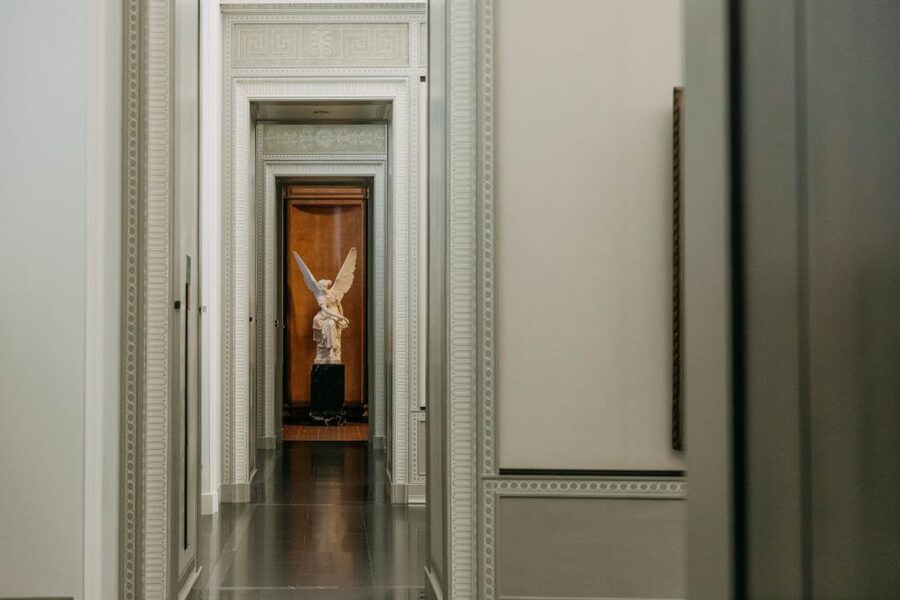
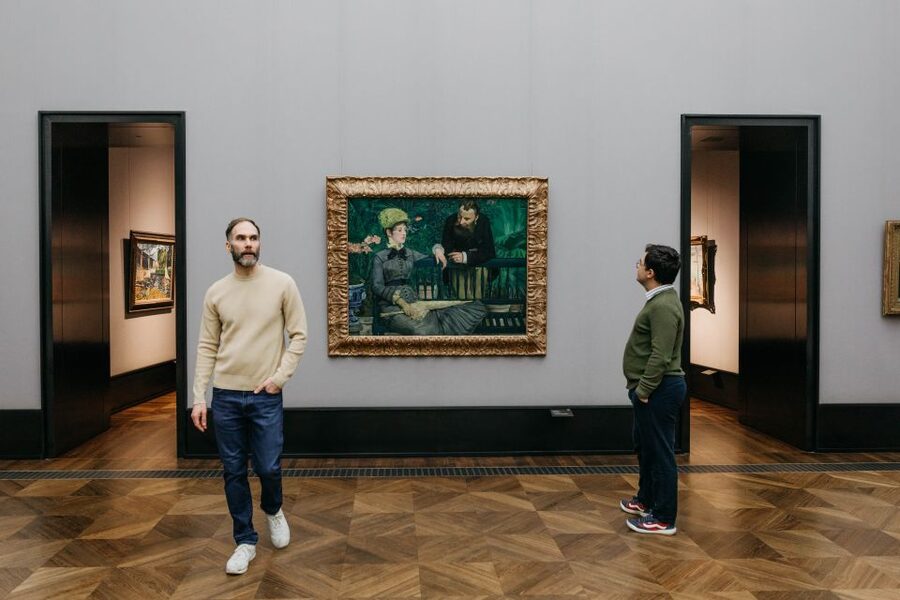
The French Impressionist works by Manet, Monet, and Renoir offer one of the museum’s liveliest changes of pace. After the stillness and controlled forms of earlier rooms, Impressionist painting can feel more immediate. The interest lies in how color, light, and brushwork suggest a scene rather than describe every detail.
I would plan extra time here if these artists are important to you. The Impressionist paintings are a major reason many people choose this gallery, and a closed second floor can change the value of the visit for that audience. This is not a minor issue if you have limited time in Berlin and are choosing the museum mainly for French painting.
The display also reaches toward the era of the Secession, with works connected to artists such as Max Liebermann, Franz von Stuck, and Gustav Klimt. The precise works on view can change, but the presence of these artists shows the collection moving toward the artistic breaks of roughly 1880 to 1920.
One enjoyable detail is the presence of exhibition posters and a series of self-portraits. The self-portraits can feel like closing credits after the main collection, while the posters connect the paintings to the public life of exhibitions. They are easy to hurry past, but they add a human and historical note to the visit.
Sculpture, tombs, and the parts people hurry past
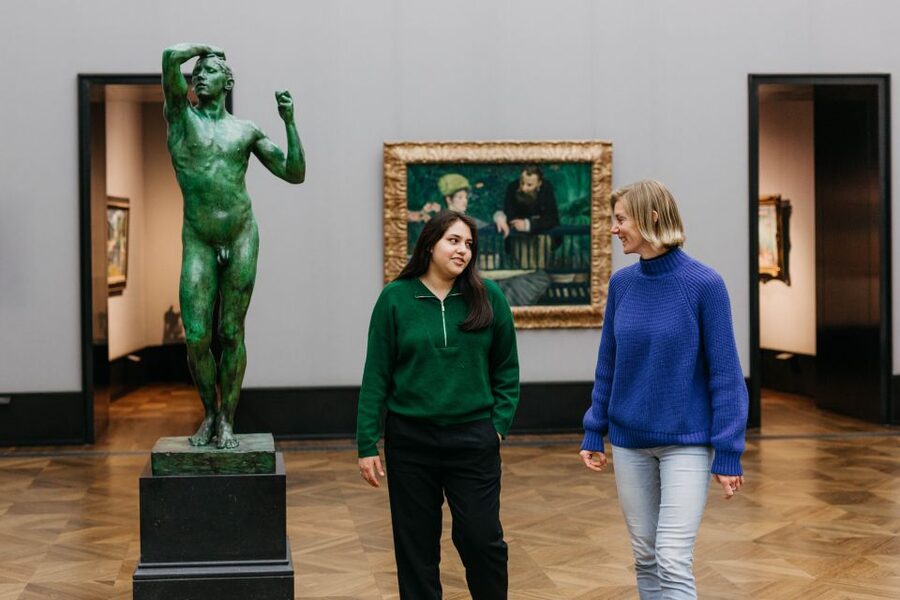
Do not treat the Alte Nationalgalerie as a painting museum only. Sculpture gives the visit weight and variety, especially when your eyes need a rest from framed works.
The Sleeping Beauty is one of the memorable sculptures to seek out. Its subject is familiar, but marble changes the story. Stone has to suggest softness, sleep, and the body’s vulnerability, and the contrast between the material and the subject gives the work much of its appeal.
Another important stop is Shadow’s marble tomb for Count Alexander von der Mark, made in 1790. It predates the gallery’s 1876 opening and provides a direct link to earlier neoclassical taste. It is worth seeing not only as a memorial, but also as an example of the polished marble technique and formal emotion that shaped the period.
These sculptures break up the sequence of painted movements. They also remind you that the 19th-century art world was not divided into neat categories. Artists and patrons continued to draw on classical subjects even as new approaches to modern life began to appear.
How to use the audio guide well
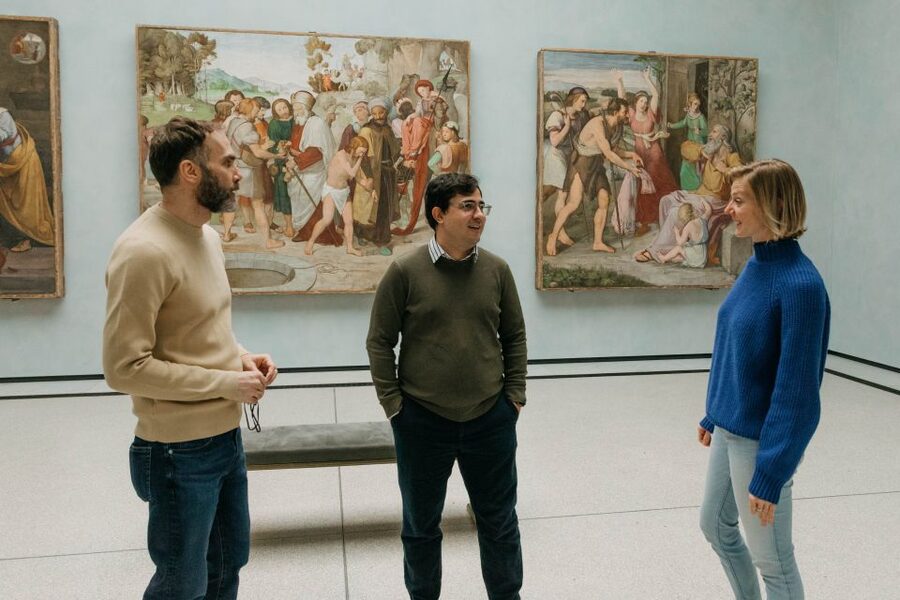
The included audio guide is one of the stronger practical features of this ticket. It lets you add background when you want it, without forcing you to follow a fixed tour or remain with a group.
I would use it selectively. Start with the major works, including The Monk by the Sea, Eisenwalzwerk, the Group of Princesses, and the marble tomb. Then use it for a movement or artist that interests you. Listening to every available explanation can make a museum visit feel like homework, especially if you are also visiting other Berlin museums.
The audio guide is also useful when a painting’s subject or historical setting is unfamiliar. The collection spans several styles and periods, so a little context can help you notice why one work belongs to Romanticism while another points toward Impressionism or early Modernity.
No individual guide names are provided because this is not a named-guide tour. You set the pace yourself, with the museum and the audio guide providing the structure.
Timing, access, and what to bring
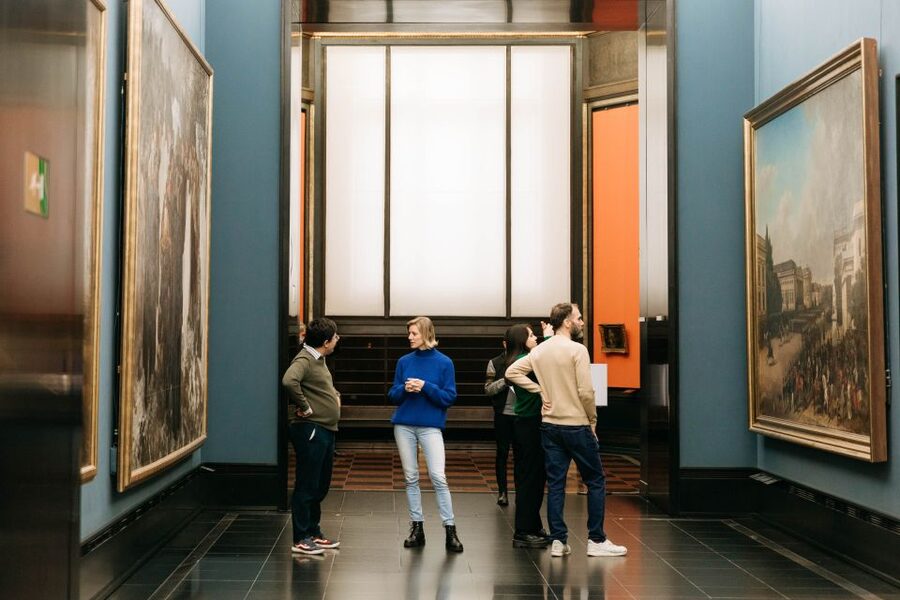
The ticket is valid for one day, but entry is tied to a booked timeslot. You must enter within 15 minutes of that slot. Once inside, you can take the time you need within the museum’s opening arrangements for that day, though no exact visit length is provided.
The entire building is wheelchair accessible. That makes the museum a practical choice for visitors who need step-free access, though it remains sensible to confirm current conditions if a particular gallery or exhibition matters to you.
Backpacks are not allowed. Bring a smaller bag and avoid arriving with a large daypack, especially if you are spending the day around Museum Island. Transportation is not included, so you arrange your own way to Bodestraße.
The ticket is non-refundable. That makes checking the date, entry time, and current gallery access especially important. A little planning is worthwhile when the rooms you most want to see may occasionally be closed.
Who will enjoy this museum most
I would recommend the Alte Nationalgalerie to you if you want a focused look at 19th-century European art rather than a general survey of all periods. It works particularly well for anyone interested in German Romanticism, Friedrich, Menzel, French Impressionism, or the movement toward early Modernity.
It is also a good choice for visitors who enjoy architecture and setting as much as individual works. The building’s formal role on Museum Island gives the collection a sense of occasion, and the sculpture rooms add welcome variety.
Families can make good use of the visit, especially because exhibition talks and guided programs are offered for children and adults on various themes. The ticket itself does not promise a particular talk or tour, so check what is scheduled if that is important to your plans.
I would be more cautious if you have only a short time in Berlin and are interested mainly in one closed gallery. The $14 price is fair for the collection and audio guide, but it becomes less attractive if the paintings you came to see are not accessible.
Should you book the Alte Nationalgalerie?
Book it if you want a well-presented route through Classicism, Romanticism, Biedermeier, Impressionism, and early Modernity, with major works by Friedrich and Menzel, French Impressionist paintings, sculpture, and an audio guide included.
Before paying, check three things: the booked entry time, the current opening of the Impressionist rooms, and whether you can manage without a backpack. If those details work for you, this is a strong, reasonably priced Museum Island ticket and one of Berlin’s best stops for 19th-century art.
FAQ
Where is the Alte Nationalgalerie?
The museum is at the visitor entrance on Bodestraße, 10178 Berlin, on Museum Island.
What does the ticket include?
The ticket includes entry to the Alte Nationalgalerie and an audio guide.
Does the ticket include other Museum Island museums?
No. Tickets to the other museums on the island are not included.
How long is the ticket valid?
The ticket is valid for one day.
Do I need to enter at a specific time?
Yes. You should enter within 15 minutes of the timeslot you booked.
Is the ticket refundable?
No. The activity has a non-refundable cancellation policy.
Is the building wheelchair accessible?
Yes. The entire building is wheelchair accessible.
Can I bring a backpack?
No. Backpacks are not allowed inside.
Which major artists can I see?
The collection includes works associated with Caspar David Friedrich, Adolph Menzel, Manet, Monet, Renoir, Max Liebermann, Franz von Stuck, and Gustav Klimt. The exact display can change.
Is transportation included?
No. You arrange your own transportation to the museum.
Just added in Berlin
- Berlin: Energizing 2-Hour Morning Segway Tour★ 4.7 · 35 reviews
- Berlin: Thrilling E-Scooter Adventure Tour★ 4.4 · 66 reviews
- Beelitz-Heilstätten: Baum&Zeit Tree Top Walk Entry Ticket★ 4.9 · 7 reviews
- Beer Bike & Party Bike: Unforgettable Berlin City Tour incl. pickup★ 5.0 · 5 reviews
- AXE THROWING EXPERIENCE IN BERLIN★ 4.7 · 24 reviews
- Alternative Berlin / Street art tour – Private group★ 5.0 · 6 reviews
- Berlin: Alternative & Street Art Tour★ 4.5 · 6 reviews
- Berlin: 2.5-Hour Beer & Sunset Sightseeing Boat Cruise★ 4.6 · 61 reviews
Tours in Berlin, compared.
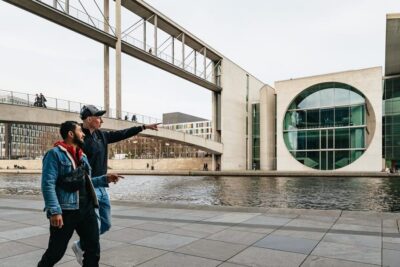
Reichstag, Dome and Government District Guided Tour
Read our review →
1-Hour City Tour by Boat with Guaranteed Seating
Read our review →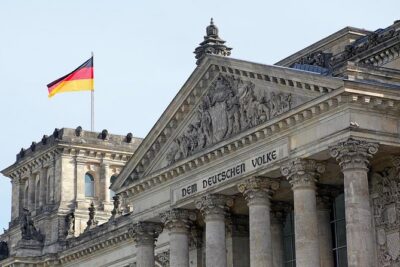


Reichstag, Plenary Chamber, Cupola & Government Tour
Read our review →

Browse the lists this tour appears in