Reviewed · TOURS IN BERLIN
Berlin and Car Culture Tour
Berlin’s car story begins at Potsdamer Platz, where the city connects modern architecture, old traffic systems, and the birth of the automobile. This tour follows that story from Karl Benz’s invention to Tesla and today’s electric-car debate, then finishes with a long look at classic motor vehicles in Moabit.
I like the clear three-part shape and the contrast between old and new. I also like that guide Martin Sacan brings both Berlin history and car expertise to the walk, rather than treating automobiles as isolated museum objects. The main consideration is transport: your AB-zone ticket is not included, and the tour ends at Beusselbrücke rather than back at the starting point.
Key points at a glance
- Potsdamer Platz connects Berlin to the first automobile patent: Learn about Karl Benz, the excitement around early motorcars, and Germany’s oldest traffic light.
- Leipziger Platz shifts the subject to electric cars: See modern vehicles, including a Tesla made near Berlin, and discuss where the car industry may be heading.
- Moabit gets the most time: The final 90-minute stop focuses on classic and timeless motor vehicles in Berlin.
- Martin Sacan leads the experience in English: His background in Berlin history and automobiles shapes the storytelling.
- Your AB-zone transport ticket is extra: Plan for local travel between the tour’s starting and ending points.
- The group can reach 30 people: The size may feel social rather than intimate, especially during the vehicle-focused sections.
Why Berlin is a fitting place for a car history tour
Berlin is a useful city for understanding the automobile because the story here is not limited to one showroom or one famous vehicle. The tour begins at a place tied to the early history of the automobile, then moves to the political and practical questions surrounding electric transport.
That gives you a helpful timeline. You start with the excitement caused by Karl Benz’s invention, look at how cars shape city streets, and then consider what may replace the combustion engine. The experience is not only about polished vehicles. It also asks why people wanted cars in the first place and what modern cities expect from them now.
I especially like the way the tour places technology in a city setting. Potsdamer Platz gives you a public square and a traffic landmark. Leipziger Platz brings in current electric vehicles. Moabit provides the longer period for appreciating motor vehicles as objects of design and engineering.
The tour is offered in English and lasts about three hours. That is long enough to create a proper story, but short enough to fit into a busy Berlin schedule. You should still allow extra time for getting to the first meeting point and continuing from the final stop.
Other trips people book in Berlin:
- Berlin: Reichstag, Dome and Government District Guided Tour
★ 4.7 · 18,288 reviews - Berlin: 1-Hour City Tour by Boat with Guaranteed Seating
★ 4.3 · 16,993 reviews - Berlin: Boat Tour Along the River Spree
★ 4.4 · 11,252 reviews
Potsdamer Platz and the first automobile story
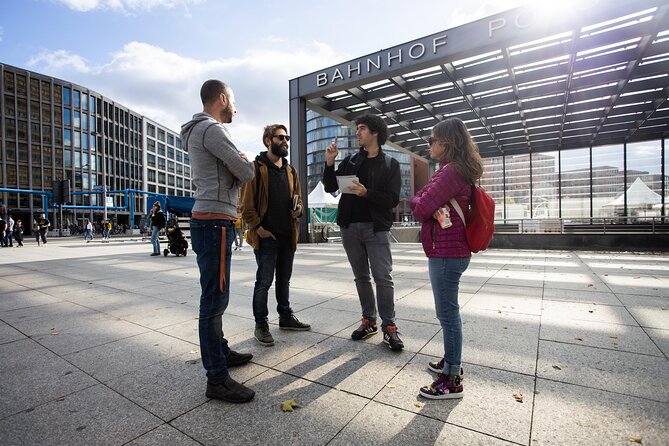
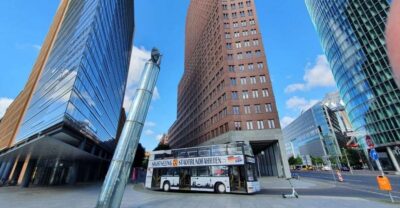
The tour starts at Potsdamer Platz 10, 10785 Berlin. This is the most historically focused part of the experience, and it sets up the main question: how did the automobile change Berlin and the wider world?
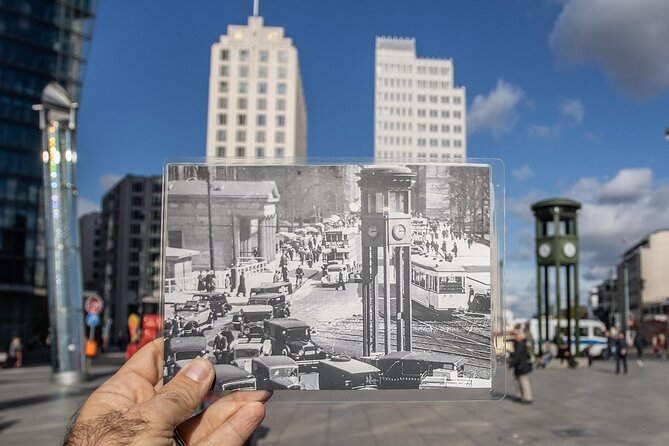
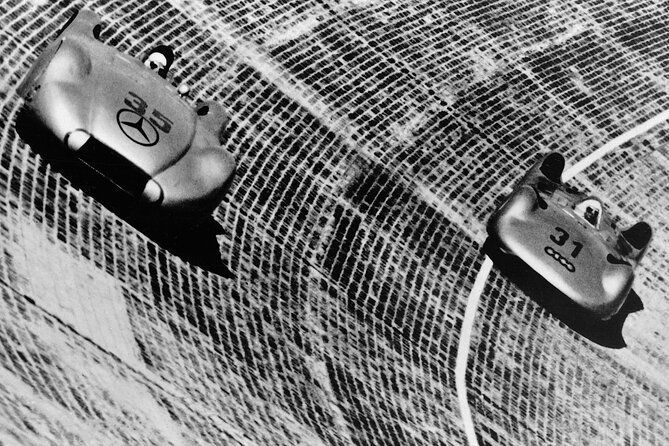
More than a century ago, Berlin issued the patent for what is described as the first automobile in history. A few meters from this location, you discuss Karl Benz’s invention and the reaction it caused. The word furor is important here. Early cars were not simply accepted as useful machines. They were new, noisy, unusual, and capable of changing how people moved through a city.
You also see Germany’s oldest traffic light. That detail helps connect the invention of the car with the practical problems that followed. Once more vehicles entered city streets, traffic needed rules, signals, and organized movement. A traffic light may seem ordinary now, but in this setting it becomes evidence of a major change in daily life.
The stop lasts about 30 minutes and admission is free. I would expect this section to work best for anyone who likes history told through specific places. You are not just hearing a date or a technical fact. You are standing near a location linked to the birth of the motorcar and looking at a city that had to adjust to it.
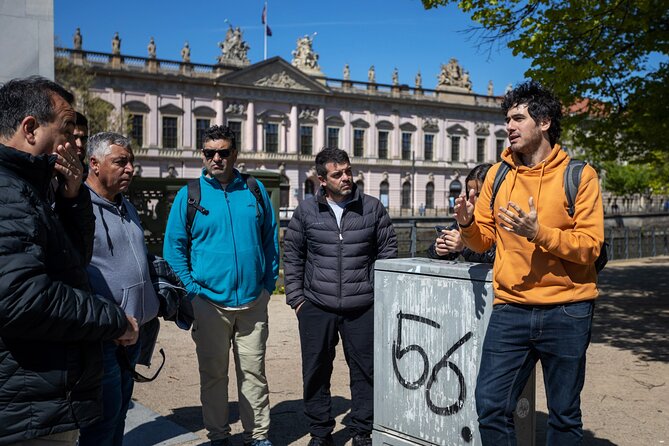
The short time also keeps the opening lively. Do not expect a full museum visit or a lengthy mechanical lesson here. The value comes from the guide’s explanation and the location itself. Martin Sacan’s combination of Berlin history and automobile knowledge is particularly important at this point, since the stop needs both local context and technical background.
Leipziger Platz and Berlin’s electric-car question
From the early automobile, the tour moves to Leipziger Platz and the future of mobility. The tone changes from historical explanation to discussion. You look at some of the most advanced electric cars of the present day and consider what they mean for the industry.
A Tesla manufactured near Berlin is part of this section. You also get into the cars, giving this stop a more direct, hands-on quality than a simple street-side explanation. The supplied details do not specify which other vehicles you will see, so I would treat this as a chance to examine current electric-car design rather than a guaranteed lineup of particular models.
The questions are practical and political at the same time. Are electric cars truly the future of the automotive industry? Are they mainly a politically correct choice? When will combustion engines be finished? These are useful questions because they move the tour beyond admiration for new technology. You can consider cost, public policy, manufacturing, and the habits that car owners may need to change.
This section lasts about 30 minutes. That gives you enough time for a focused look, but not enough for a full technical workshop. If you are deeply interested in battery range, charging systems, or detailed engineering specifications, you may want to ask Martin Sacan questions during the stop. The experience promises discussion and access to the cars, but it does not provide a published list of technical topics.
I like the placement of Leipziger Platz in the route. It prevents the tour from becoming a nostalgic look at old automobiles. You see that car culture is still changing, and Berlin is part of that change. The nearby Tesla connection also makes the discussion feel local rather than abstract.
Moabit and 90 minutes with timeless motor vehicles
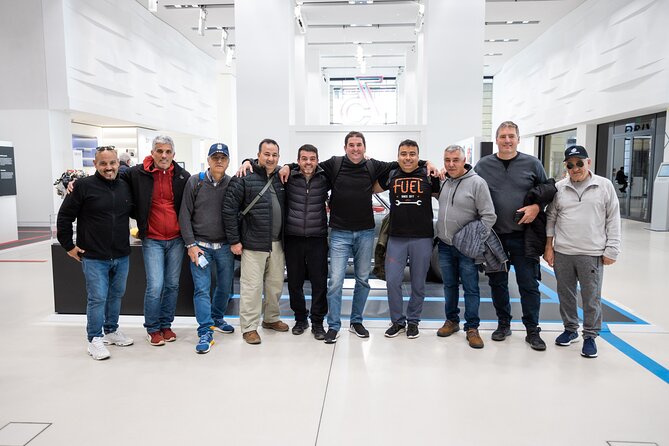
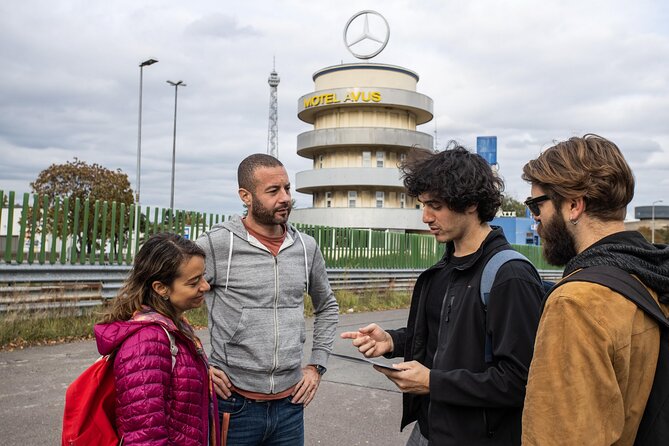
Moabit receives the longest portion of the tour, about one hour and 30 minutes. Here, you enjoy what is described as Berlin’s best timeless motor jewels. The information does not name each vehicle or give a formal museum title, so you should expect a collection or display of classic motor vehicles without assuming a fixed list of makes and models.
The longer time matters. Classic cars need more than a quick glance if you want to notice their shape, age, design choices, and place in automobile culture. This is also the part most likely to appeal to people who enjoy cars as crafted objects, not only as transport.
You can use the first two stops as preparation for Moabit. At Potsdamer Platz, you learn why cars mattered. At Leipziger Platz, you consider where cars are going. In Moabit, you spend time with the machines themselves. That sequence gives the tour a natural rhythm: origins, future, then appreciation.
The final stop may be the highlight for dedicated car fans, but it is also the section where the tour’s limited published detail matters most. You are not given a vehicle list, a museum name, or information about indoor facilities. If a particular marque or model is the reason you want to book, contact the provider before paying rather than assuming it will be present.
The endpoint is listed as Berlin Beusselstraße, Beusselbrücke, 10551 Berlin. Since the tour does not return to Potsdamer Platz, note the finish when planning your day. Your included entrance access covers the places visited, but your daily public transport ticket remains your responsibility.
Same base, a different kind of day out:
- Discover Berlin Half-Day Walking Tour
★ 5.0 · 9,624 reviews - Berlin: Hop-on Hop-off Bus Tour with Live Commentary
★ 4.3 · 8,579 reviews - Berlin: Government District around the Reichstag Guided Tour
★ 4.7 · 8,447 reviews - Berlin: Reichstag, Plenary Chamber, Cupola & Government Tour
★ 4.6 · 8,422 reviews
The value of a $50.57 three-hour tour
At $50.57 per person, this is not a bargain-priced stroll, but the value depends on how much you want from the guide. You are paying for a three-hour themed experience, English-language commentary, access to the places visited, and a route that links early automobile history, electric vehicles, and classic cars.
The strongest value is the specialized subject. General city tours may mention Berlin’s transport history in passing. This experience builds the whole afternoon around it. If you already care about cars, the focused storytelling can be more useful than a broad sightseeing tour.
The price is easier to justify if you also value Martin Sacan’s interpretation. A car collection alone can show you beautiful vehicles, but it may not explain how the automobile affected Berlin or why electric vehicles are changing the industry. The tour links those subjects.
There are limits. Admission is listed as free at the individual stops, and the AB-zone transport ticket is extra. That means the price is mainly for the guided experience rather than a costly entrance package. A group of up to 30 people may also affect how personal the conversation feels.
I would compare this tour with your interests, not with the price of a standard walking tour. If you want a broad introduction to Berlin’s landmarks, this is too narrow. If you want a focused look at cars, transport, and technology, the three-hour format gives you a fair amount of material for the cost.
Who will enjoy this Berlin car tour most
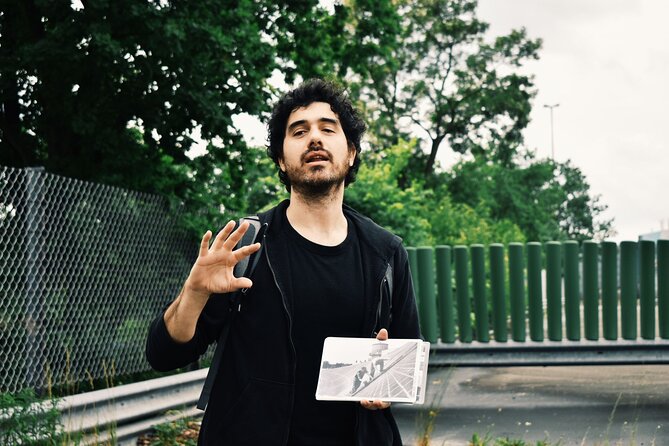
This experience suits you if you like automobiles but also want historical context. You do not need to be a mechanic. The route covers invention, urban change, modern electric cars, and classic vehicles, so there are several ways into the subject.
It should work particularly well for:
- Car enthusiasts who want more than a showroom visit
- Visitors interested in Karl Benz and early automobile history
- People curious about Tesla and electric mobility
- Berlin visitors who have already seen the main central sights
- Couples, families, or small groups with a shared interest in vehicles
- Anyone who prefers a guide-led experience in English
It may be less suitable if you want a quiet museum visit at your own pace. The tour has a set route, a three-hour duration, and a group limit of up to 30 people. It also involves moving between locations, so it is not simply a single indoor collection.
The published information says most participants can take part, and service animals are allowed. The meeting points are near public transportation. Still, you should consider the route and ask the provider directly if you have specific mobility needs, since the details do not describe walking distances or the exact conditions at each stop.
Timing, meeting points, and the small details that matter
Begin at Potsdamer Platz 10, 10785 Berlin. The experience ends at Beusselbrücke in the Beusselstraße area, 10551 Berlin. These are not the same place, so do not schedule a tight appointment back near the starting point immediately afterward.
You need a daily AB-zone transport ticket. It is not included in the tour price, and this is an easy cost to miss when comparing options. Keep the transport requirement in mind when working out your real budget.
The tour is available in English and accepts mobile tickets. Confirmation normally arrives at booking, unless you book within one hour of departure. In that case, confirmation comes as soon as possible and depends on availability.
The group maximum is 30 people. That is large enough to make the experience feel organized and social, though you should not expect a private tour. Martin Sacan’s attentive style is a plus, but a larger group can make it harder to ask every question during the shorter stops.
You can cancel free of charge up to 24 hours before the start time for a full refund. Changes or cancellations inside that 24-hour period are not accepted and are not refunded. The tour also requires a minimum number of participants. If that minimum is not met and the experience is canceled, you are offered another date or experience, or a full refund.
Should you book the Berlin and Car Culture Tour?
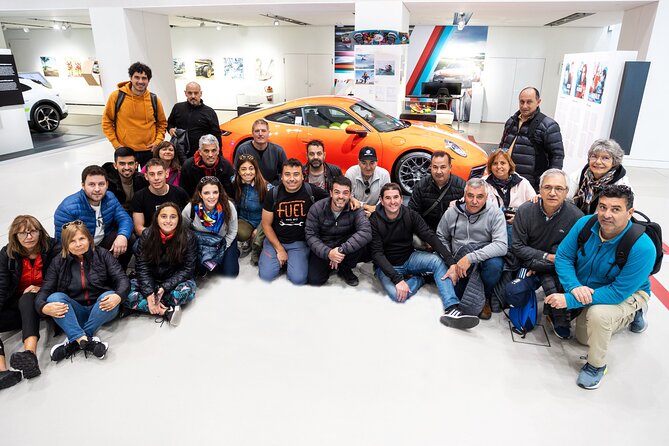
Book it if you want a focused, guided look at Berlin through automobiles. The route offers a satisfying range: Karl Benz and the first automobile story at Potsdamer Platz, electric cars and a Tesla made near Berlin at Leipziger Platz, then 90 minutes with classic motor vehicles in Moabit.
I would especially choose it for a car enthusiast who wants local history along with the machines. The main strengths are the clear three-part route, Martin Sacan’s car and Berlin background, and the mix of early invention, current technology, and timeless vehicles.
Skip it if you want a general Berlin overview, a private experience, or a guaranteed list of specific classic cars. Also check the AB-zone transport cost and plan for the different ending point. For the right audience, this is a compact way to see how Berlin’s streets, industry, and car culture have changed.
FAQ
Where does the Berlin and Car Culture Tour start?
The tour starts at Potsdamer Platz 10, 10785 Berlin, Germany.
Where does the tour end?
The tour ends at Berlin Beusselstraße, Beusselbrücke, 10551 Berlin, Germany.
How long does the tour last?
The experience lasts approximately three hours.
What language is the tour offered in?
The tour is offered in English.
Is public transportation included?
No. You need to purchase a daily Berlin AB-zone transport ticket separately.
Are entrance fees included?
Yes. Entrance access to all places visited is included.
What will I see at Potsdamer Platz?
You will learn about Karl Benz’s invention, the early reaction to the automobile, and Germany’s oldest traffic light. The area is also connected with Berlin’s role in the patent for the first automobile.
What happens at Leipziger Platz?
You will look at advanced electric cars, see a Tesla manufactured near Berlin, get into the cars, and discuss the future of electric and combustion vehicles.
How much time is spent in Moabit?
The Moabit stop lasts about one hour and 30 minutes and focuses on timeless motor vehicles in Berlin.
How large can the group be?
The tour can have a maximum of 30 participants.
Just added in Berlin
- Private One way Airport Transfer Berlin Airport To Berlin★ 3.5 · 17 reviews
- Private Walking Tour: Berlin Wall, Cold War and Checkpoint Charlie★ 5.0 · 37 reviews
- Modern Berlin Private Walking Tour: Diverse, Vibrant and Exciting German Capital★ 5.0 · 13 reviews
- Private Day Trip to Potsdam from Berlin by Train★ 4.5 · 27 reviews
- City Explorer: Potsdam Private Day Trip★ 4.5 · 10 reviews
- Berlin Private Custom 5-Hour Tour by Car★ 5.0 · 30 reviews
- Private Half-Day Sightseeing Tour in Berlin★ 3.5 · 6 reviews
- Berlin Private Custom Tour in a Minivan, East and West★ 5.0 · 123 reviews
Tours in Berlin, compared.
Reichstag, Dome and Government District Guided Tour
Read our review →
1-Hour City Tour by Boat with Guaranteed Seating
Read our review →
Reichstag, Plenary Chamber, Cupola & Government Tour
Read our review →