
Reviewed · TOURS IN BERLIN
Berlin: Alternative & Street Art Tour
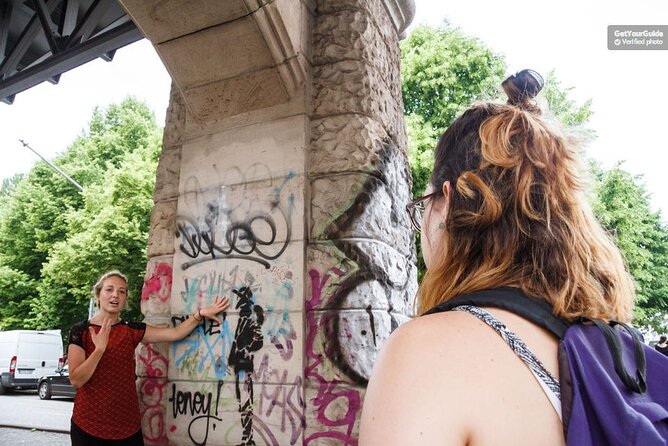
Berlin’s alternative culture is not tucked away in a museum. It is painted across walls, played through clubs, argued over in politics, and built into odd corners of the city. This three-hour tour takes you from street art in Mitte and Friedrichshain to the squatting, revolution, and gentrification stories of Kreuzberg.
I like the personal guide format, since Damien and Antonio are praised for their enthusiasm and clear insight. I also like the mix of major art sites, music culture, beaches, treehouses, and political history. The main consideration is that the route changes with the guide’s interests, so you should expect a strong introduction rather than a fixed checklist of every stop.
Key points to know before you book
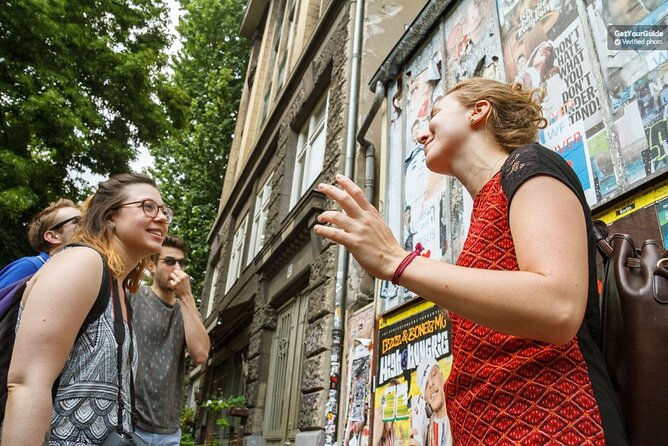
- Berlin’s alternative culture in three hours: The tour connects street art, punk, techno, squatting, politics, and gentrification.
- Several memorable stops: Possible sights include Haus Schwarzenberg, YAAM beach, Künstlerhaus Bethanien, SO36, RAW Gelände, and the treehouse on the wall.
- A guide-led personal view: Damien and Antonio are among the guides associated with especially warm feedback, but the focus can change from one tour to the next.
- Good photo opportunities: Murals, graffiti, unusual buildings, urban treehouses, and Berlin’s rough-edged streets give you plenty to photograph.
- Simple meeting point: Meet beneath the TV tower, in front of Vapiano, and return to the same place.
- Fair pricing with a few extras: At $23 per person, the tour offers three hours of local context, but food, drinks, transport tickets, and gratuities cost extra.
Why Berlin’s street art needs a little context
You can see graffiti in Berlin without a guide. What you cannot easily see is the argument behind it.
A painted wall may point to a political cause, a neighborhood struggle, an artist’s style, or the city’s long fight over who gets to use public space. This tour gives those images a setting. You are not simply stopping for photographs. You are hearing how Berlin’s alternative scenes grew through music, protest, squatting, and a dislike of official rules.
The tour covers different parts of the city, including Mitte, Friedrichshain, and Kreuzberg. That range matters. Berlin does not have one single alternative district with one fixed identity. Each area has its own mix of art, nightlife, political history, and redevelopment.
You can expect the guide to connect street art with wider themes such as revolution and gentrification. That makes the experience more useful than a quick mural walk, especially if you want to understand why artists and musicians have long been drawn to Berlin.
Other street art to go and find in Berlin:
- Berlin: City Street Art Guided Walking Tour
★ 4.8 · 886 reviews - Berlin: 3-Hour Street Art Tour
★ 4.7 · 778 reviews - Alternative Berlin / Street art tour – Private group
★ 5.0 · 6 reviews
Starting beneath the TV tower
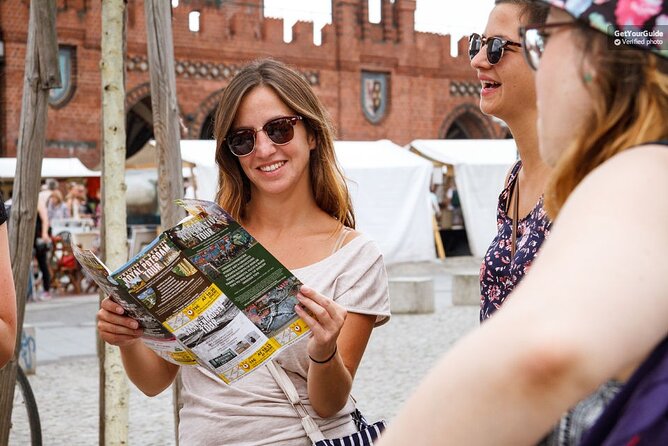
The meeting point is easy to identify: beneath the TV tower, in front of Vapiano. This is a practical place to begin because the tower is one of Berlin’s clearest landmarks, and you do not need to search for a small side street or private office.
The tour ends back at the same meeting point. That makes planning easier if you have a dinner reservation, another museum visit, or a train to catch later. Still, I would avoid booking something immediately afterward. The tour lasts three hours, and the pace or final discussion may vary.
You should arrive ready for a walking tour in all kinds of weather. It operates rain or shine, so bring a rain jacket, comfortable shoes, and something to protect your phone or camera. Berlin’s streets can feel very different in wet weather, but the art and stories do not disappear when the sky turns gray.
The tour is offered in English with a live guide. It is also listed as wheelchair accessible, though the route can change according to the guide and the day. If you need very specific route details, confirm them before booking.
Haus Schwarzenberg and the Mitte art scene
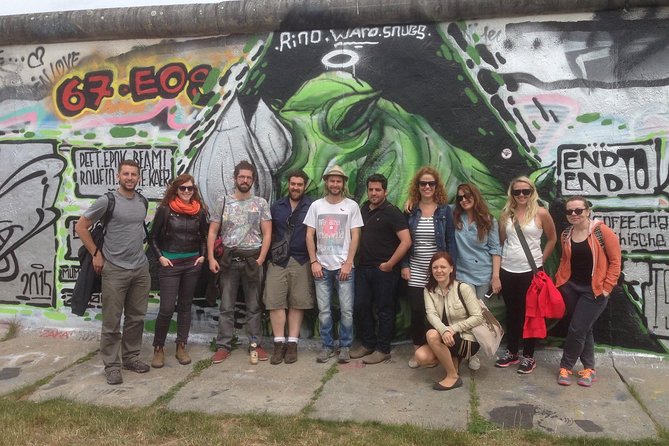
Haus Schwarzenberg is one of the tour’s strongest possible stops. It is a concentrated example of Berlin’s rough, creative side, with street art and alternative cultural spaces packed into an urban setting.
The value here is not only visual. A guide can help you read the layers of paint and explain why a place like this matters to Berlin’s artists. You may see works that are striking, strange, political, or deliberately temporary. That changing quality is part of the point. Street art is not a permanent gallery collection, and the city keeps rewriting its walls.
This stop should suit photographers and anyone who wants a quick introduction to Berlin’s urban art. If you are looking for polished monuments and tidy presentation, it may feel chaotic. That is also why it works. The setting shows how Berlin’s alternative culture often grows in imperfect, reused spaces.
Friedrichshain, graffiti, and the changing city
The Friedrichshain portion focuses on street art and graffiti. Here, the guide may explain styles, local scenes, and the role of artists in shaping the look of the neighborhood.
I like this part because it gives you a way to look at Berlin after the tour ends. You may begin to notice tags, large murals, political messages, and small pieces that you would otherwise walk past. The guide’s own interests matter here, so one tour may put more weight on visual details while another spends more time on the social story behind them.
Gentrification is an important thread. Berlin’s alternative districts attract people precisely because they feel open, creative, and less polished. Once that character draws attention, rents and development can change the same streets. The tour presents this tension through the history of squatting, art, nightlife, and neighborhood change.
Do not expect a final answer to Berlin’s housing and development problems. Expect a clearer sense of why the city’s creative identity can be both a source of pride and a cause of conflict.
Same base, a different kind of day out:
- Berlin: Reichstag, Dome and Government District Guided Tour
★ 4.7 · 18,288 reviews - Berlin: 1-Hour City Tour by Boat with Guaranteed Seating
★ 4.3 · 16,993 reviews - Berlin: Boat Tour Along the River Spree
★ 4.4 · 11,252 reviews - Discover Berlin Half-Day Walking Tour
★ 5.0 · 9,624 reviews
The treehouse on the wall
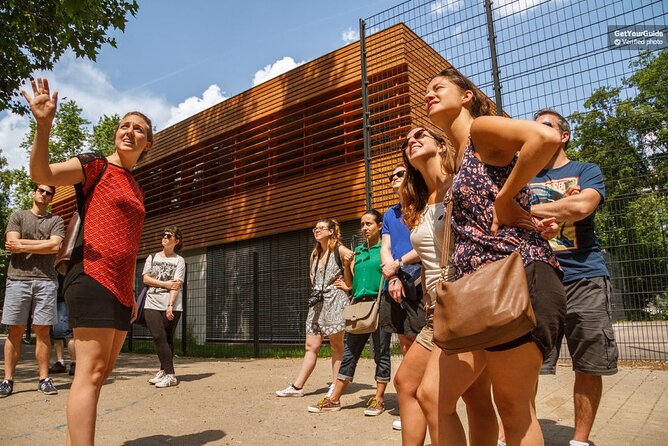
The treehouse on the wall is one of the tour’s more unusual sights. It offers a break from the standard list of museums, churches, and grand public buildings.
This kind of stop shows how Berlin’s alternative culture can take physical form in unexpected places. A treehouse can be playful, political, improvised, or all three at once. The guide’s explanation is important because the structure itself may not tell you why it is there or what it represents.
For you, the appeal is simple: it is memorable, photogenic, and different from the usual Berlin attractions. It also helps show that the tour is not limited to painted walls. The experience includes ways people have occupied, decorated, and reimagined city space.
Kreuzberg, SO36, and the squatting story
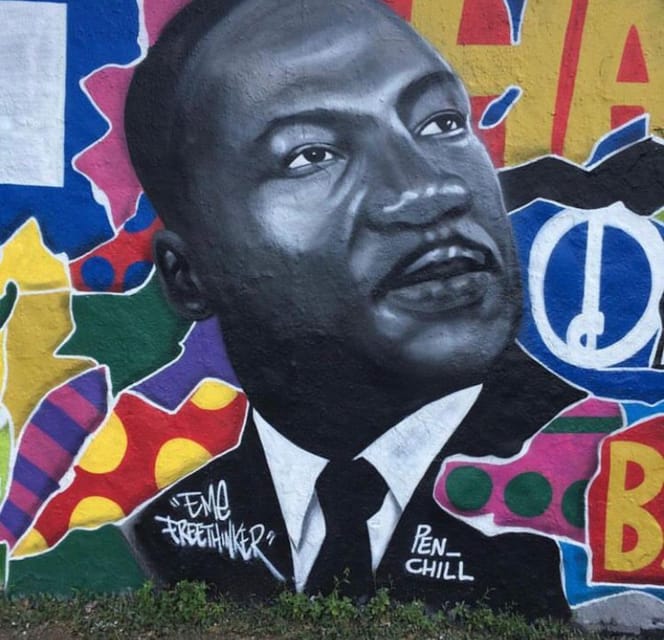
Kreuzberg brings the tour’s political and social history into sharper focus. The route’s changing emphasis can include squatting, revolution, gentrification, and the local culture around SO36.
SO36 is closely tied to Berlin’s punk and alternative music identity within this tour. The guide may explain how music scenes and political movements overlapped, giving the neighborhood a reputation that reached far beyond Berlin.
This is where a strong guide makes a real difference. Dates and labels alone do not explain why Kreuzberg became so important. You need the connection between cheap or unused spaces, people organizing outside official systems, music, protest, and the later pressure of redevelopment.
The tour does not present Kreuzberg as a frozen relic. That is useful. Alternative culture changes, and the neighborhood continues to deal with the effects of its own popularity. You will hear about a city that values its rebellious past while also trying to manage the cost of that identity.
YAAM beach and Berlin’s unexpected waterfront culture
YAAM beach adds a different mood to the route. Berlin is inland, yet it has several places where people create a beach atmosphere beside the water. YAAM represents the city’s relaxed, multicultural, music-focused side within this alternative tour.
This stop broadens the experience beyond graffiti and political walls. You may hear more about music, social spaces, and the ways Berliners use areas that were not designed as traditional tourist attractions.
The word beach can set the wrong expectation if you imagine a resort. This is better understood as an urban hangout and cultural setting. You are visiting it for its character and role in Berlin’s alternative life, not for a classic seaside holiday.
It is also a good reminder that the tour is about how Berliners use their city. The best parts are often not grand attractions. They are places where people gather, make music, paint, argue, and build a scene.
Künstlerhaus Bethanien and the role of artists
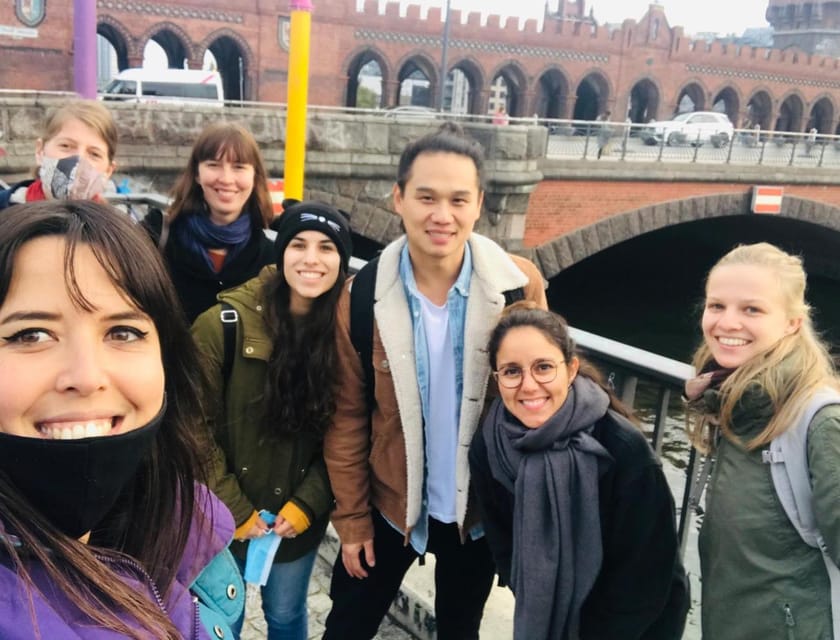
Künstlerhaus Bethanien adds an artist-focused stop to the route. Its inclusion helps explain why Berlin has attracted so many creative people.
The guide can connect the building and its artistic role to the city’s broader appeal. Artists need room to work, places to meet, and a culture that allows experimentation. Berlin’s alternative identity grew from that need, but the same attention can create pressure on the spaces artists depend on.
This is a useful stop if you want more than a collection of colorful walls. It places artists within the city’s ongoing story. You can see how art is not only decoration. It can be a way to claim space, question power, and keep a neighborhood’s identity visible.
The route may not spend equal time at every location. Since the guide’s professional background and personal interests shape the day, you should treat the named stops as a picture of the tour’s range, not a guaranteed minute-by-minute schedule.
RAW Gelände and Berlin after dark
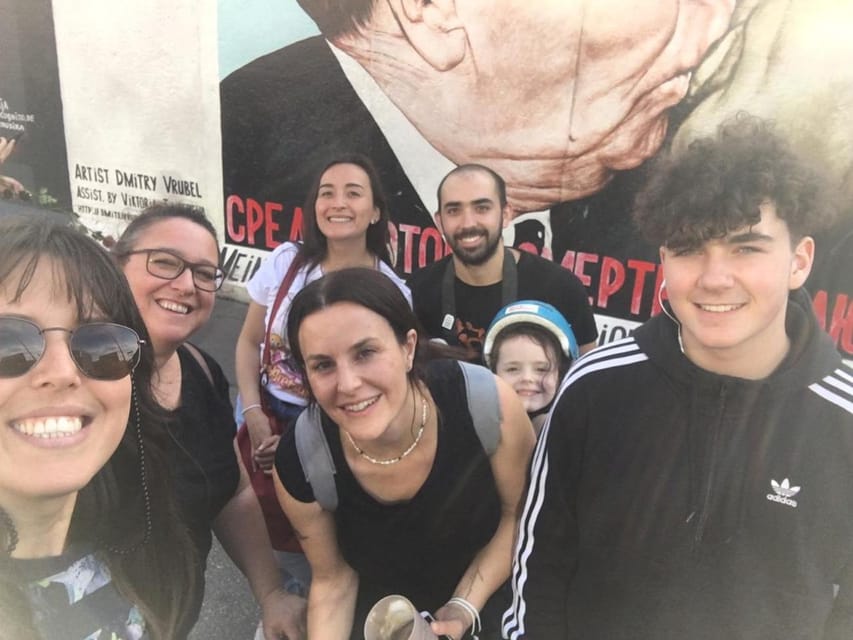
RAW Gelände brings the tour back to the connection between art, nightlife, and reused industrial space. It is one of the places that can help you understand why Berlin’s alternative culture appeals to musicians, clubgoers, artists, and people who want something outside the standard city center.
The guide may focus on punk, techno, graffiti, or the politics of using old industrial areas. These subjects fit together here. Spaces that once served a practical purpose can become places for music, art, food, and informal gatherings.
A drawback is that a three-hour tour cannot give every stop a full treatment. If RAW Gelände is especially important to you, ask your guide about it at the start. The same advice applies to SO36, YAAM, or Haus Schwarzenberg. You have a better chance of getting the emphasis you want if you explain your interests early.
What the guide adds to the experience
The guide is the heart of this tour. The route itself includes places you could reach independently, but the stories connect them.
Damien is described as an enthusiastic guide who gives a pleasant introduction to Berlin’s alternative side. Antonio Castello is also singled out for making the experience work especially well. Those details suggest that the tour benefits from a guide who enjoys the subject rather than simply reciting a prepared route.
Because the focus changes with each guide, I would treat the variation as part of the experience. One guide may spend more time on graffiti and photography. Another may lean toward music, squatting, politics, or gentrification.
The best approach is to arrive with a few questions. Ask about the history of a piece, the difference between street art and graffiti, the role of techno, or what has changed in Kreuzberg. An engaged question can turn a general introduction into a more useful conversation.
Is $23 a good value?
At $23 per person, I consider this a reasonable price for a three-hour guided look at a side of Berlin that is hard to understand from guidebooks alone.
You are paying for time, local interpretation, and a route that links several neighborhoods and themes. The value is strongest if you are curious about art, music, politics, and the city’s alternative communities. It is weaker if you want a tightly scheduled sightseeing tour with guaranteed long stops at every named location.
Food and drinks are not included. Transportation tickets are also separate, and gratuities are not included. Keep those costs in mind, especially since the route may cover more than one neighborhood.
The reserve-now and pay-later option gives you some flexibility. You can hold a place without paying immediately, and cancellation is free up to 24 hours before the start time. Those policies make the tour easier to fit into a changing Berlin schedule.
Who should take this tour?
I would recommend it to first-time visitors who want to see a side of Berlin beyond the Brandenburg Gate and Museum Island. It is also useful early in a trip because it can help you decide which neighborhoods, art spaces, and music areas deserve more of your time.
The tour suits:
- People interested in street art and graffiti
- Fans of punk, techno, and alternative music culture
- Visitors curious about squatting, protest, and gentrification
- Photographers looking for unusual city scenes
- Anyone who prefers local stories to formal sightseeing
- Families and mixed-age groups, since the activity is listed as suitable for all ages
It may not suit you if you want a quiet, polished, or highly predictable outing. The subject matter is social and political, and the city spaces can feel rough around the edges. That is part of the experience, but it will not appeal to everyone.
My booking advice
Book this tour if you want a three-hour introduction to Berlin’s creative and rebellious side, especially if you value a guide’s personal viewpoint. At $23, it is a sensible way to place street art, punk, techno, squatting, and gentrification into one larger story.
I would book it near the start of your stay and wear comfortable shoes. Tell the guide which subjects interest you most, and remember that the named stops can change. If you need a fixed route or want to spend substantial time at each site, choose a more specialized tour. If you want a lively first look at the people and ideas that helped shape modern Berlin, this is a good pick.
FAQ
Where does the Berlin Alternative and Street Art Tour start?
The tour starts beneath the TV tower, in front of the Vapiano restaurant.
Where does the tour end?
The activity ends back at the same meeting point beneath the TV tower.
How long does the tour last?
The tour lasts three hours.
What language is the tour offered in?
The tour is conducted in English with a live English-speaking guide.
What places may be included?
The tour may include Haus Schwarzenberg, YAAM beach, Künstlerhaus Bethanien, the treehouse on the wall, SO36, and RAW Gelände.
Is the route always the same?
No. The tour can vary slightly depending on the guide’s professional background and personal interests, with changing focus in Mitte, Friedrichshain, and Kreuzberg.
Is transportation included?
Transportation tickets are not included. Food, drinks, and gratuities are also separate.
Does the tour operate in bad weather?
Yes. The tour takes place rain or shine.
Can I cancel for a full refund?
Yes. You can cancel up to 24 hours in advance for a full refund. You can also reserve your place and pay later.
Just added in Berlin
- Berlin: Energizing 2-Hour Morning Segway Tour★ 4.7 · 35 reviews
- Berlin: Thrilling E-Scooter Adventure Tour★ 4.4 · 66 reviews
- Beelitz-Heilstätten: Baum&Zeit Tree Top Walk Entry Ticket★ 4.9 · 7 reviews
- Beer Bike & Party Bike: Unforgettable Berlin City Tour incl. pickup★ 5.0 · 5 reviews
- AXE THROWING EXPERIENCE IN BERLIN★ 4.7 · 24 reviews
- Alternative Berlin / Street art tour – Private group★ 5.0 · 6 reviews
- Berlin: 2.5-Hour Beer & Sunset Sightseeing Boat Cruise★ 4.6 · 61 reviews
- Berlin City: 2 Hour Guided Fat Tire E-Scooter Tour★ 4.8 · 16 reviews
Tours in Berlin, compared.
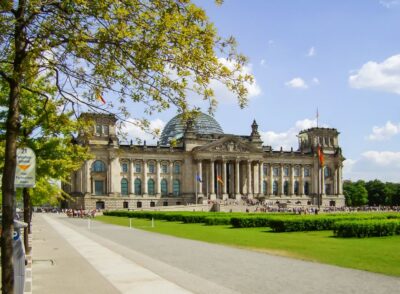
Reichstag, Dome and Government District Guided Tour
Read our review →
1-Hour City Tour by Boat with Guaranteed Seating
Read our review →
Reichstag, Plenary Chamber, Cupola & Government Tour
Read our review →
Browse the lists this tour appears in