Reviewed · TOURS IN BERLIN
Berlin: The Feuerle Collection Meditation Experience
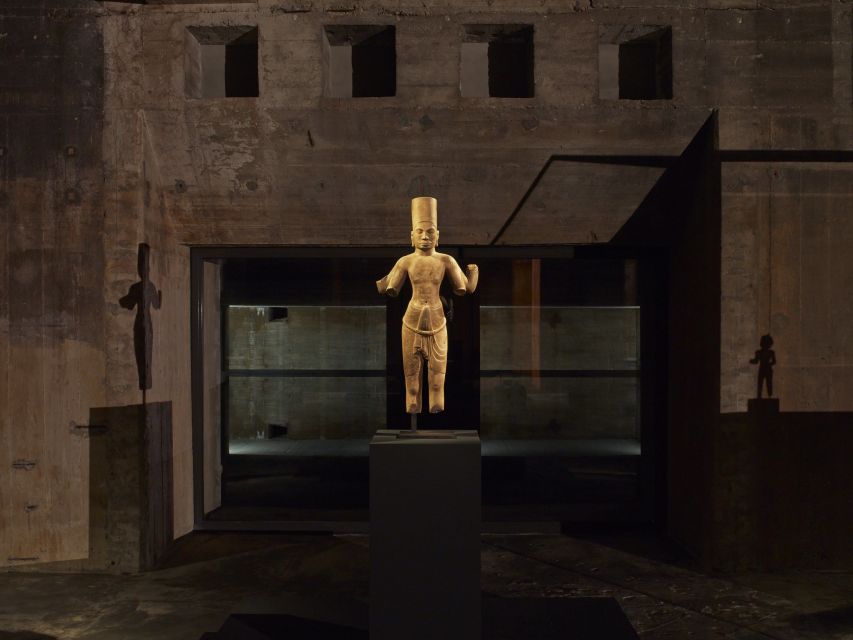
The Feuerle Collection offers something rare in Berlin: an art visit built around silence. For one hour, you leave your phone aside and move through the Sound Room and underground Lake Room before sitting quietly among Khmer sculptures, Imperial Chinese furniture, and modern works. You can meditate, think, or simply look.
I like the sharp contrast between the ancient objects and contemporary art. I also like the freedom of the format: no guide, lecture, or forced group exercise. The main consideration is just as clear. If you want stories, dates, and expert explanations, this is not the right museum visit.
Key points to know before you book
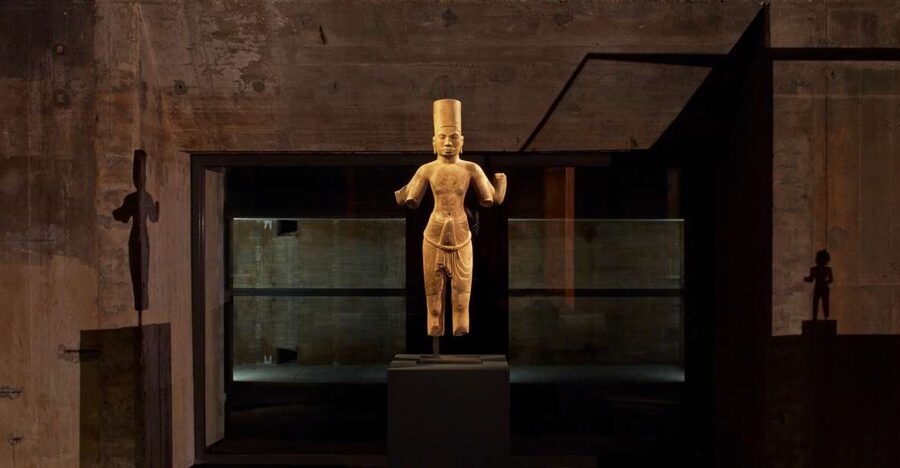
- An unusual setting: The route leads through a Sound Room and an underground Lake Room before reaching the art.
- Ancient and modern together: Khmer sculpture, Imperial Chinese furniture, and contemporary works share the same quiet setting.
- A true phone break: The experience is designed as a silent, mobile-detox hour.
- Meditation is optional: You may sit on the provided mat, use a blanket, or walk quietly through the collection.
- No guided tour: You receive no spoken explanation of the artists or objects during the visit.
- Best for adults and older teens: Children under 16 are not permitted, and the one-hour visit suits people who value calm over activity.
Why this Berlin art visit feels different
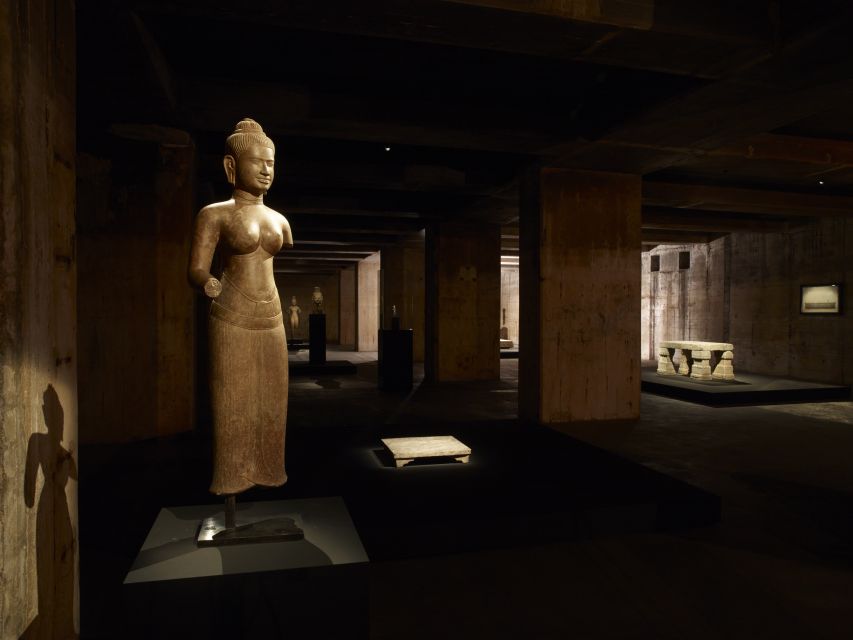
Most museum visits ask you to move from object to object, read labels, and keep a steady pace. The Feuerle Collection asks for the opposite. You slow down, stay quiet, and give your attention to the room itself.
That change matters. Ancient Khmer sculptures and Imperial Chinese furniture can be visually demanding. They are not presented as quick photo stops. The format gives you time to sit near them and notice shape, texture, age, and proportion without a guide filling every pause.
The contemporary works add another layer. Artists named for this experience include Anish Kapoor, Cristina Iglesias, Adam Fuss, Zeng Fanzhi, James Lee Byars, and Nobuyoshi Araki. Their work sits beside objects from very different periods, creating the unexpected pairings that define the collection.
You may find that these juxtapositions either sharpen your attention or leave you wishing for more explanation. Both reactions are fair. This is an encounter with art through mood and concentration, not a standard museum lesson.
Other trips people book in Berlin:
- Berlin: Reichstag, Dome and Government District Guided Tour
★ 4.7 · 18,288 reviews - Berlin: 1-Hour City Tour by Boat with Guaranteed Seating
★ 4.3 · 16,993 reviews - Berlin: Boat Tour Along the River Spree
★ 4.4 · 11,252 reviews
Passing through the Sound Room
The visit begins with a passage through the Sound Room. The name signals the importance of atmosphere, but the supplied information does not describe a performance, concert, or spoken presentation. Treat it as part of the route into the collection rather than a separate show.
The quiet is central here. You are encouraged to put your phone away and keep the visit silent. That makes the first moments useful for settling down before you reach the main artworks.
If you have just come from a busy day in Berlin, this pause can help you change pace. If you are looking for an active attraction with a lot to do, the same quiet may feel restrictive. The experience works best when you accept that stillness is the main activity.
The underground Lake Room
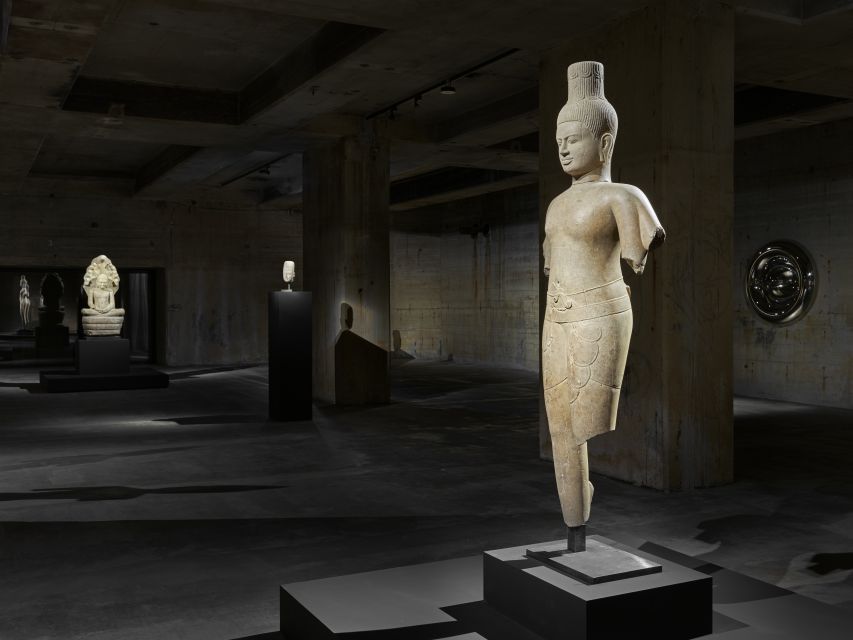
From the Sound Room, you continue into the underground Lake Room. This passage is one of the experience’s most unusual features. You are not simply entering another gallery. You are walking through a deliberately atmospheric space before stopping among the collection.
The Lake Room gives the visit a sense of movement without turning it into a conventional tour. You may walk through it quietly, pause, and then settle into meditation. The route itself is part of the experience, so avoid treating it as a quick corridor between two galleries.
The collection is open only for this meditation-focused visit during the one-hour session. That distinction is important. You should not expect to browse at your usual museum speed or return later to inspect individual objects with a guide.
Khmer sculptures from the seventh to thirteenth centuries
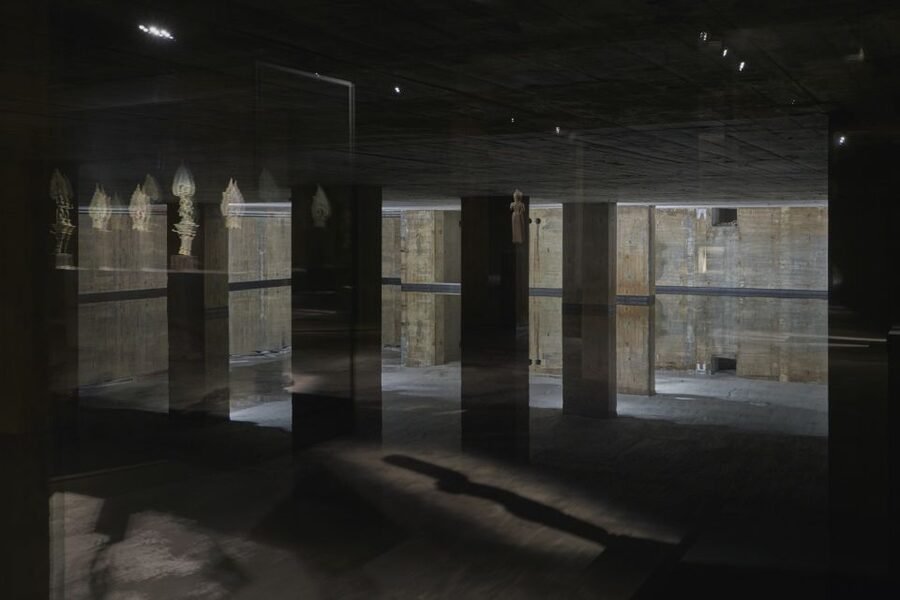
The collection includes early Khmer sculptures dating from the seventh to the thirteenth century A.D. These works provide the oldest artistic presence in the room and give the visit a strong sense of time.
You can use the quiet setting to look at the sculptures slowly rather than trying to identify every detail. Notice how a single object changes when you sit with it for several minutes. The experience is not built around a list of facts, so your attention becomes the main tool.
That freedom is valuable if you enjoy making your own observations. It is less useful if you want a clear account of each sculpture’s origin, religious meaning, or place in Khmer art. No guided commentary is included, and the activity information specifically says this is not a guided tour.
Same base, a different kind of day out:
- Discover Berlin Half-Day Walking Tour
★ 5.0 · 9,624 reviews - Berlin: Hop-on Hop-off Bus Tour with Live Commentary
★ 4.3 · 8,579 reviews - Berlin: Government District around the Reichstag Guided Tour
★ 4.7 · 8,447 reviews - Berlin: Reichstag, Plenary Chamber, Cupola & Government Tour
★ 4.6 · 8,422 reviews
Imperial and Scholar Chinese furniture
The Chinese furniture ranges from the second century B.C. to the seventeenth century A.D. The collection also includes Scholar furniture, bringing a different kind of visual interest to the room.
Furniture can be easy to overlook in a museum, especially beside sculpture and famous contemporary names. Here, the quiet format gives you a chance to study the furniture as art rather than as background decoration. Consider its lines, materials, and sense of restraint as you sit nearby.
The combination of Imperial and Scholar furniture also broadens the visit beyond sculpture. You are looking at objects connected to use, status, study, and interior space, but you will not receive a lecture spelling out those links. The value comes from having time to look, not from acquiring a ready-made interpretation.
Contemporary works by six named artists
The collection places contemporary art beside much older objects. Works associated with Anish Kapoor, Cristina Iglesias, Adam Fuss, Zeng Fanzhi, James Lee Byars, and Nobuyoshi Araki form the modern side of the experience.
This is where the collection’s unusual pairings become most apparent. Ancient Khmer sculpture can change the way you see a contemporary piece, while the contemporary work can make an older object feel less distant. You are encouraged to sit with those contrasts rather than resolve them.
The artists also bring different kinds of work into the same visit. The result may feel coherent through atmosphere rather than through a single period or style. I like that approach for visitors who enjoy art that raises questions without answering them immediately.
You should also be comfortable with the possibility of erotic material. One description of the experience specifically points to Chinese and erotic art as part of its appeal. If that subject is not suitable for you or your group, check carefully before booking.
Meditation, quiet looking, or simply sitting
Meditation is not mandatory. You may use the yoga mat and blanket, sit quietly, walk through the collection, or simply look at the art without following a formal practice.
This makes the visit more flexible than the word meditation might suggest. You do not need to arrive with a meditation background. You only need to respect the silent setting and allow the hour to move at a slower pace.
The mat and blanket are included, which is useful because you do not need to bring special equipment. Still, the format may not suit everyone. If you prefer to stay active, ask questions, take photos, or discuss what you see as you go, you may find the rules limiting.
The mobile detox is a major part of the experience. Put your phone away and treat the hour as a break from notifications. You will get more from the visit if you do not spend it wondering when you can check a message.
What the $25 price gets you
At $25 per person, this is not priced like a full museum day. You are paying for a focused one-hour visit in a distinctive setting, with access to the collection, a yoga mat, and a blanket.
The value depends on what you want from art. For a visitor seeking an unusual hour of calm and a chance to sit among important objects, the price is reasonable. You are getting a carefully controlled experience rather than a large amount of viewing time.
For someone who measures value by the number of galleries, labels, and historical explanations, the price may feel less attractive. There is no guided tour, and the visit lasts only one hour. I would book it for the atmosphere and the chance to look slowly, not as a substitute for a traditional museum tour.
The collection’s mix of periods also helps the price feel worthwhile for the right person. You are not seeing only one type of object. You get Khmer sculpture, Chinese furniture, and contemporary art within the same quiet route.
Who will enjoy this most
This experience suits you if you enjoy art, silence, unusual exhibition design, or a short break from your phone. It also works well for people who like to form their own impressions rather than hear an expert explain every piece.
It is a good choice for a solo visitor who wants a calm hour, a couple with similar interests, or a small group willing to keep quiet. One visitor described it as an extraordinary and relaxing experience in a small group, which fits the format well.
You may also enjoy it if Chinese art interests you, especially the furniture and the more sensual side of the collection. The historical range is wide, from the second century B.C. to the seventeenth century A.D. for the Chinese furniture and from the seventh to thirteenth centuries for the Khmer sculptures.
This is not a strong choice for children under 16, since they are not allowed. It is also not ideal if you want an introductory art lesson, a social activity, or a fast-paced sightseeing stop.
Practical points for your one-hour visit
The activity lasts one hour, so plan to be ready for a concentrated visit rather than a long afternoon. Starting times vary, and you should check availability when choosing your session.
The collection is wheelchair accessible. That is useful for visitors who need step-free access, though the supplied details do not explain the exact route or facilities. If you need specific accessibility arrangements, confirm them before booking.
You can cancel up to 24 hours in advance for a full refund. A reserve-now, pay-later option is also available, which helps if your Berlin schedule is still changing.
No guide’s name is provided because this is not a guided experience. You should not expect a host to lead a meditation class or explain the collection in detail. The staff may manage entry, but the visit itself is designed for quiet personal use.
The main limitation: no explanation of the art
The most important point to understand is simple: this is not a guided tour. You enter the collection for meditation and quiet looking, not for a spoken account of Khmer sculpture, Chinese furniture, or contemporary art.
That can be liberating. You are free to give one object five minutes of attention without being moved along. You can also ignore formal meditation and enjoy the art in your own way.
It can also leave gaps. If you want to know why a certain piece matters, how the objects were acquired, or how the artists connect, you will need another museum visit or your own research. I would pair this experience with a conventional art tour if you want both atmosphere and context during your time in Berlin.
Should you book the Feuerle Collection meditation experience?
Book it if you want a quiet, unusual hour with art and can accept a self-guided format. The Sound Room, underground Lake Room, ancient Khmer sculptures, Chinese furniture, and modern works create a setting unlike a normal gallery visit.
Skip it if you want a guide, detailed interpretation, photography, conversation, or a longer museum session. At $25, the experience offers good value for visitors who want stillness and focused looking, but less value for anyone seeking a full cultural briefing.
For the right person, the best part is the permission to stop. You do not have to rush from label to label. You can sit, look, and let the contrasts between centuries do the work.
FAQ
How long does the Feuerle Collection meditation experience last?
The experience lasts one hour.
How much does the experience cost?
The price is $25 per person.
Is this a guided tour?
No. It is not a guided tour. The collection is open for meditation and quiet viewing only.
Do I have to meditate?
No. Meditation is optional. You may walk around quietly or simply enjoy the art.
What rooms do I visit?
The experience includes the Sound Room and the underground Lake Room, along with the collection’s artworks.
What art can I see?
You can see Khmer sculptures from the seventh to thirteenth centuries A.D., Imperial and Scholar Chinese furniture dating from the second century B.C. to the seventeenth century A.D., and contemporary works by Anish Kapoor, Cristina Iglesias, Adam Fuss, Zeng Fanzhi, James Lee Byars, and Nobuyoshi Araki.
Are yoga mats and blankets provided?
Yes. A yoga mat and blanket are included.
Can children attend?
No. The experience is not suitable for children under 16.
Is the experience wheelchair accessible?
Yes. The activity is wheelchair accessible.
Can I cancel for a refund?
Yes. You can cancel up to 24 hours in advance for a full refund. A reserve-now, pay-later option is also available.
Just added in Berlin
- Private One way Airport Transfer Berlin Airport To Berlin★ 3.5 · 17 reviews
- Private Walking Tour: Berlin Wall, Cold War and Checkpoint Charlie★ 5.0 · 37 reviews
- Modern Berlin Private Walking Tour: Diverse, Vibrant and Exciting German Capital★ 5.0 · 13 reviews
- Private Day Trip to Potsdam from Berlin by Train★ 4.5 · 27 reviews
- City Explorer: Potsdam Private Day Trip★ 4.5 · 10 reviews
- Berlin Private Custom 5-Hour Tour by Car★ 5.0 · 30 reviews
- Private Half-Day Sightseeing Tour in Berlin★ 3.5 · 6 reviews
- Berlin Private Custom Tour in a Minivan, East and West★ 5.0 · 123 reviews
Tours in Berlin, compared.
Reichstag, Dome and Government District Guided Tour
Read our review →
1-Hour City Tour by Boat with Guaranteed Seating
Read our review →



Reichstag, Plenary Chamber, Cupola & Government Tour
Read our review →